
Car Brands That Raised Prices the Most Over the Last Decade
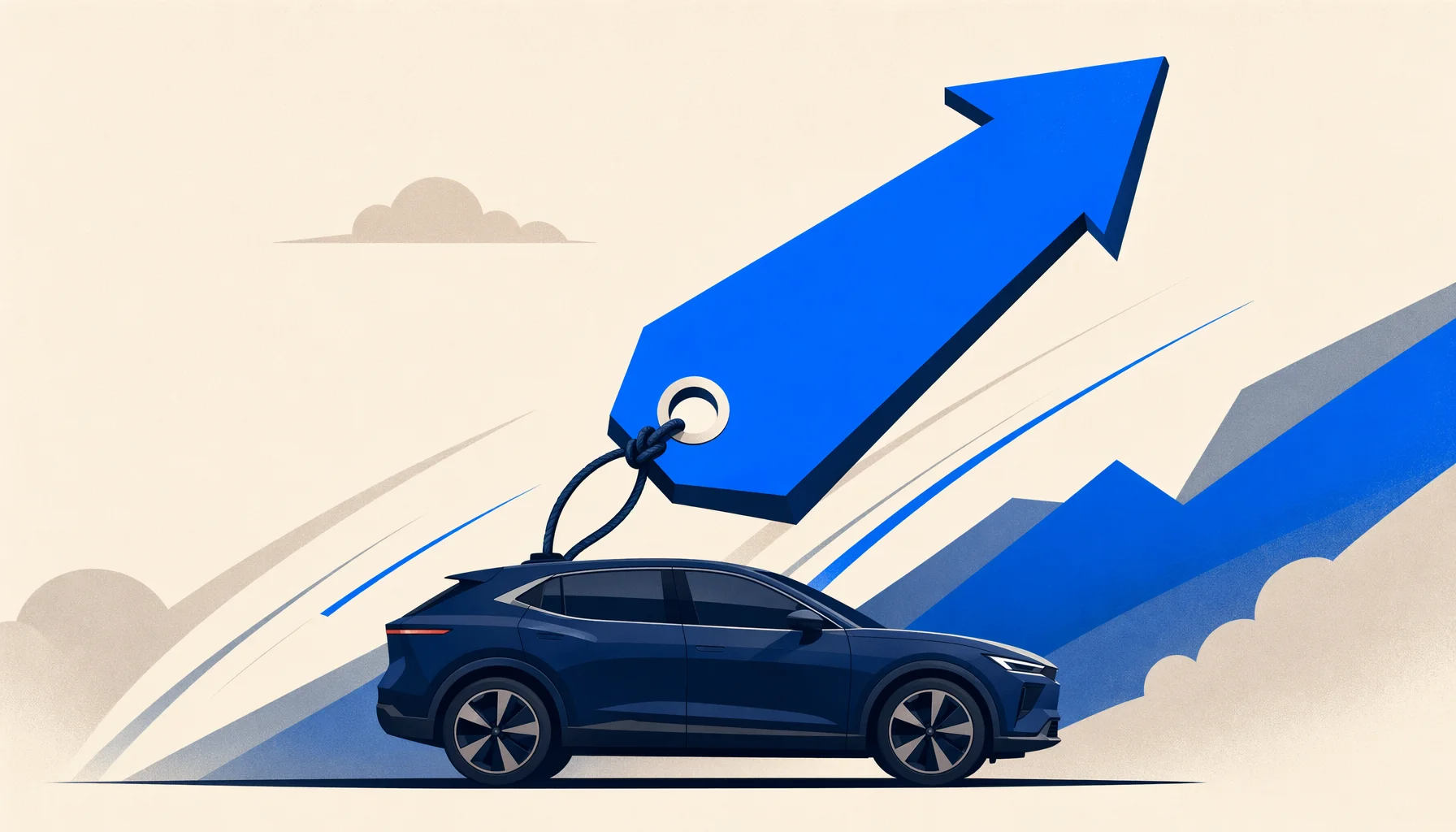
Over the past decade, the average new car in America got about 46% more expensive — but the pain was not spread evenly. Some automakers held the line near inflation. Others blew past it by 15 to 19 percentage points, quietly killing off every affordable model in their lineup along the way. Below is the ranking of the car brands that raised prices the most over the last decade, based on Kelley Blue Book’s own Average Transaction Price data from 2015 and 2025, benchmarked against inflation and household income.
The short version: Stellantis (Chrysler, Dodge, Jeep, Ram) raised prices 60.1%, Ford 57.7%, and Hyundai-Kia 55.8% — while the Consumer Price Index rose just 41.3%.
The receipt: how prices moved vs. everything else (2015 → 2025)
| What changed | 2015 | 2025 | % Change |
|---|---|---|---|
| Average new-car transaction price (KBB, industry-wide) | $34,428 | $50,326 | +46.2% |
| Consumer Price Index (all items, BLS) | 233.7 | 330.2 | +41.3% |
| US median household income (Census ACS) | $55,775 | $81,604 | +46.3% |
Sources: Cox Automotive / KBB ATP data, US Bureau of Labor Statistics CPI, US Census ACS median income.
The average new-car price tracked median income almost exactly — but that is the industry average. The automakers that beat the industry average are the ones below.
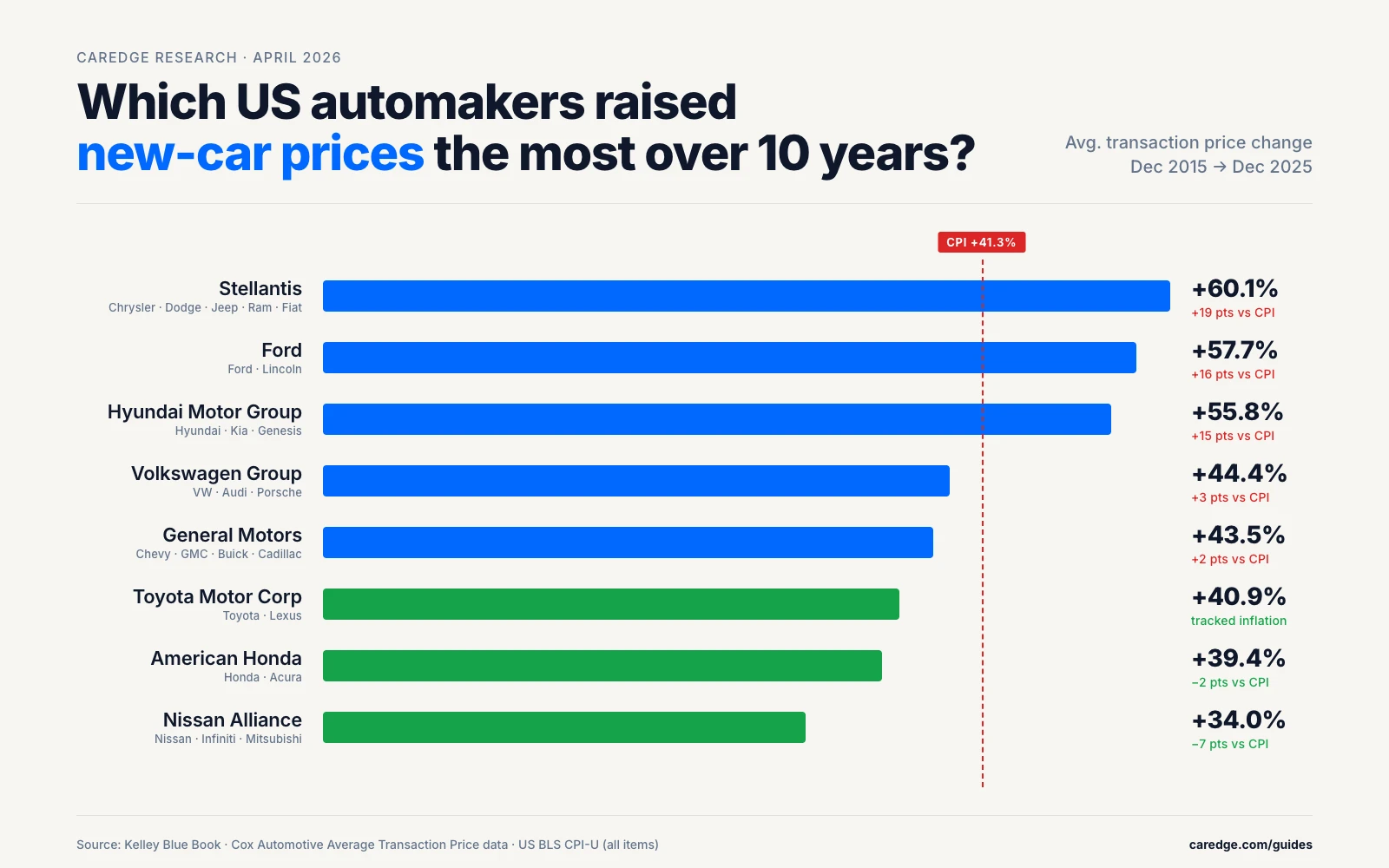
How we ranked it
Kelley Blue Book’s December 2015 press release reported Average Transaction Prices (ATP) at the manufacturer-group level rather than the individual-brand level, so this ranking compares parent companies — Toyota Motor Corp, American Honda, Ford Motor Company, General Motors, Hyundai-Kia, Stellantis (2015: Fiat-Chrysler), Nissan’s alliance, and Volkswagen Group. Each group’s ATP reflects every car and light truck it sold in the US, weighted by volume. For reference, we’ve also included a cheapest-model-then-vs-now callout for each group so you can see how the bottom of the lineup moved.
All figures are nominal US dollars. “Inflation-adjusted” comparisons use the all-items Consumer Price Index (CPI-U, NSA) from January 2015 to March 2026. All MSRPs include mandatory destination fees.
#8. Nissan / Renault-Nissan-Mitsubishi — Prices Rose 34.0%
2015 ATP: $27,512 → 2025 ATP: $36,878 (+34.0%, 7.3 points below CPI)
Nissan’s alliance is the only mainstream automaker group whose prices actually trailed inflation over the past decade. That is not because Nissan suddenly became a bargain — it’s because the Nissan Versa is still here. At $18,330, the Versa S is the only new car in America starting under $20,000, and Nissan has kept it alive even as every competitor dropped their own sub-$20K nameplate.
- Cheapest 2015 model: Nissan Versa S sedan — $12,815 incl. destination. (Nissan press kit)
- Cheapest 2025 model: Nissan Versa S — $18,330. (Nissan press release)
- Casualties since 2015: Versa Note hatch (2019), Cube, Infiniti Q40/Q60 coupe, Mitsubishi Mirage (final 2024 MY).
Shopping the alliance in 2025? See current Nissan inventory.
#7. American Honda — Prices Rose 39.4%
2015 ATP: $27,896 → 2025 ATP: $38,884 (+39.4%, 1.9 points below CPI)
Honda also came in under inflation — but barely, and mostly because the Civic and CR-V remained volume anchors. The real story is what got cut: the Fit, the Insight, and at Acura, the ILX and RLX. In 2015 you could buy a brand-new Honda Fit LX for $16,345. Today, the cheapest new Honda you can buy is a $25,400 Civic LX sedan.
- Cheapest 2015 model: Honda Fit LX manual — $16,345. (Honda News)
- Cheapest 2025 model: Honda Civic LX sedan — $25,400. (Honda News)
- Casualties since 2015: Fit (2020), Insight (2022), Acura ILX (2022), Acura RLX (2020).
See current Honda inventory or check Honda’s resale-value track record on CarEdge.
#6. Toyota Motor Corporation — Prices Rose 40.9%
2015 ATP: $32,349 → 2025 ATP: $45,584 (+40.9%, 0.4 points below CPI)
Toyota tracked almost exactly with inflation — a surprise if you’ve been reading headlines about rising Toyota prices, but the math is what it is. Toyota benefits from enormous volume on the Corolla, RAV4, and Camry, and those workhorse nameplates have crept up at a more measured pace than the luxury and truck-heavy lineups at rival groups. That said, the entry-level 2015 Yaris at $15,670 and the Scion iQ at $16,050 are both long gone.
- Cheapest 2015 model: Toyota Yaris 3-door L manual — $15,670. (Toyota pressroom)
- Cheapest 2025 model: Toyota Corolla LE sedan — $23,860. (KBB)
- Casualties since 2015: Scion brand (wound down 2016), Toyota Yaris (US, 2020), Toyota Avalon (2022).
Current Toyota inventory on CarEdge.
#5. General Motors — Prices Rose 43.5%
2015 ATP: $38,902 → 2025 ATP: $55,805 (+43.5%, 2.2 points above CPI)
GM is where the “trucks and SUVs only” repositioning shows up clearly in the math. In 2015, Chevrolet was still selling the Spark for a little over $13,000 and the Cruze and Sonic sat right behind it. Today, every one of those nameplates is dead, the cheapest Chevrolet is a Trax at $21,895, and GMC’s average transaction price — now $67,196 according to Cox Automotive — is higher than most luxury brands were in 2015.
- Cheapest 2015 model: Chevrolet Spark LS manual — $13,095. (KBB)
- Cheapest 2025 model: Chevrolet Trax LS — $21,895. (KBB)
- Casualties since 2015: Spark (2022), Sonic (2020), Cruze (2019), Impala (2020), Buick Verano (2017), Buick LaCrosse (2019), Cadillac ATS/CTS (2019). GM deleted every passenger car under $20K and most of its sedans along with them.
Shopping GM brands? See new Chevrolet, GMC, Buick, or Cadillac inventory on CarEdge.
#4. Volkswagen Group — Prices Rose 44.4%
2015 ATP: $40,461 → 2025 ATP: $58,440 (+44.4%, 3.1 points above CPI)
Volkswagen Group’s ATP already reflected premium positioning in 2015 because it includes Audi and Porsche alongside mainstream VW. Over the decade, the Audi and Porsche ATPs climbed aggressively, while VW killed the Golf (non-GTI), Passat, and Beetle — leaving a lineup heavier on Atlas and Tiguan SUVs, ID.4 EVs, and a Jetta that is now auto-only.
- Cheapest 2015 model: VW Jetta S manual — $18,145. (VW press)
- Cheapest 2025 model: VW Jetta S — $23,220, auto-only. (Car Connection)
- Casualties since 2015: Golf non-GTI (2021), Passat (2022), Beetle (2019).
See Volkswagen inventory on CarEdge.
#3. Hyundai Motor Group — Prices Rose 55.8%
2015 ATP: $24,961 → 2025 ATP: $38,893 (+55.8%, 14.5 points above CPI)
Hyundai Motor Group is the clearest example of a “mainstream” automaker repositioning upward. Genesis didn’t exist as a standalone brand in 2015 — it launched in November that year — and its arrival alone pulled the group’s ATP higher. Then Hyundai killed the Accent in 2022, Kia killed the Rio in 2023, and Kia replaced the Forte with the pricier K4 in 2025. What was once the cheapest car-brand entry point in America — a $14,815 Kia Rio — is now a $20,550 Hyundai Venue.
- Cheapest 2015 model: Kia Rio LX sedan manual — $14,815. (Kia Media)
- Cheapest 2025 model: Hyundai Venue SE — $20,550. (Hyundai USA)
- Casualties since 2015: Hyundai Accent (2022), Kia Rio (2023), Kia Forte (replaced by pricier K4, 2025). Genesis spun off as a separate luxury brand in 2017.
Current Hyundai, Kia, and Genesis inventory on CarEdge.
#2. Ford Motor Company — Prices Rose 57.7%
2015 ATP: $37,061 → 2025 ATP: $58,445 (+57.7%, 16.4 points above CPI)
Ford’s climb is almost entirely a lineup story. In 2015, the cheapest Ford in the US was a Fiesta S sedan at $15,405. Today, Ford doesn’t sell a single passenger car in North America except the Mustang. The cheapest new Ford you can buy is a Maverick XL hybrid pickup at $28,145 — and even that’s now a truck, not a car. The 2015 Focus ($16,810) and Fusion ($22,260) that used to anchor the middle of the lineup are all gone.
- Cheapest 2015 model: Ford Fiesta S sedan — $15,405. (KBB)
- Cheapest 2025 model: Ford Maverick XL hybrid SuperCrew — $28,145. (Ford.com)
- Casualties since 2015: Fiesta (2019), Focus (2018), Fusion (2020), Taurus (2019), C-Max (2018). Ford exited passenger cars entirely in North America except the Mustang.
Current Ford and Lincoln inventory on CarEdge.
#1. Stellantis / Fiat-Chrysler — Prices Rose 60.1%
2015 ATP: $34,619 → 2025 ATP: $55,418 (+60.1%, 18.8 points above CPI)
Stellantis — the post-2021 group that includes Chrysler, Dodge, Jeep, Ram, Fiat, and Alfa Romeo — is the car brands winner of this decade’s price-increase race, and it’s not particularly close. Prices rose 60% against 41% CPI. The method was brutal and simple: kill every affordable model, stop selling passenger cars entirely, and sell only trucks, SUVs, and muscle cars that start above $25,000. The Jeep Compass at $27,495 is now the cheapest way into the entire group. Ram alone averages $64,607 in 2025 — more expensive than the average Mercedes-Benz.
- Cheapest 2015 model: Fiat 500 Pop hatchback — $16,845. (KBB)
- Cheapest 2025 model: Jeep Compass Sport — $27,495. (Jeep.com)
- Casualties since 2015: Dodge Dart (2016), Chrysler 200 (2017), Dodge Avenger, Jeep Patriot (2017), Fiat 500 hatch (2019). FCA/Stellantis exited the sub-$20K market entirely and no longer sells a passenger car under $25,000.
Current Stellantis inventory on CarEdge: Jeep, Ram, Dodge, Chrysler.
The full ranking
| Rank | Automaker Group | 2015 ATP | 2025 ATP | % Change | vs. CPI (+41.3%) |
|---|---|---|---|---|---|
| 1 | Stellantis / Fiat-Chrysler | $34,619 | $55,418 | +60.1% | +18.8 pts |
| 2 | Ford Motor Company | $37,061 | $58,445 | +57.7% | +16.4 pts |
| 3 | Hyundai Motor Group | $24,961 | $38,893 | +55.8% | +14.5 pts |
| 4 | Volkswagen Group | $40,461 | $58,440 | +44.4% | +3.1 pts |
| 5 | General Motors | $38,902 | $55,805 | +43.5% | +2.2 pts |
| 6 | Toyota Motor Corp | $32,349 | $45,584 | +40.9% | −0.4 pts |
| 7 | American Honda | $27,896 | $38,884 | +39.4% | −1.9 pts |
| 8 | Nissan Alliance | $27,512 | $36,878 | +34.0% | −7.3 pts |
| — | US industry average | $34,428 | $50,326 | +46.2% | +4.9 pts |
What to buy instead: the three groups that didn’t outpace inflation
If your goal is a brand-new car that hasn’t been hit by the worst of the decade’s price inflation, three mainstream groups stand out — Nissan’s alliance, Honda, and Toyota. Each of the three raised prices less than CPI over 2015-2025, and each still sells a passenger car under $26,000.
- Best value today: The Nissan Versa at $18,330 is still the only new car in America under $20,000.
- Best resale-adjusted value: Honda Civic and Toyota Corolla both sit in the top 10 of CarEdge’s depreciation rankings, meaning the “sticker price plus depreciation” you’ll actually feel is lower than the sticker alone suggests.
Before you shop any of these, check total cost of ownership — fuel, insurance, maintenance, and depreciation can easily double the sticker over five years.
FAQ
Which car brand raised prices the most from 2015 to 2025? Among mainstream US automakers, Stellantis (the group that includes Chrysler, Dodge, Jeep, Ram, Fiat, and Alfa Romeo) raised new-car prices the most — 60.1% over the decade, based on Kelley Blue Book Average Transaction Price data. Ford followed at 57.7% and Hyundai-Kia at 55.8%.
Have new car prices outpaced inflation? On average, yes. The industry-wide average new-car transaction price rose 46.2% between December 2015 and December 2025, while the Consumer Price Index rose 41.3% over the same window. Five of the eight major US automaker groups raised prices faster than CPI; three did not.
What is the average price of a new car in 2025? The average new-car transaction price in the US was $50,326 in December 2025, per Cox Automotive / Kelley Blue Book data. That’s up from $34,428 in December 2015.
Which car brand raised prices the least? Nissan’s alliance (Nissan + Infiniti, with Mitsubishi added after 2017) raised prices the least among mainstream US automakers — 34.0% over the decade, which is 7.3 points below CPI. Honda came second at 39.4% and Toyota third at 40.9%.
Why do car prices keep going up? Three reasons, all visible in this ranking. Automakers killed their cheapest models and replaced them with larger, more expensive vehicles (Ford, Stellantis). Brands added luxury or near-luxury sub-brands like Genesis, pulling group averages up. And every automaker shifted the mix of trims sold, pushing buyers toward higher-content versions. Raw content costs and supply-chain inflation explain part of the rise, but the lineup decisions explain more.
Methodology and sources
Average Transaction Price (ATP) figures are from Kelley Blue Book / Cox Automotive, reported at the manufacturer-group level for December 2015 and the brand-aggregated equivalent for December 2025. ATP reflects what buyers actually paid — including options, incentives, and discounts — not MSRP. All cheapest-model MSRPs include the mandatory destination fee and cite the manufacturer’s press release or KBB model page. “Inflation” refers to the all-items Consumer Price Index (CPI-U, NSA) as reported by the US Bureau of Labor Statistics; the window used is January 2015 to March 2026. Median household income is from the US Census ACS 1-year estimates.
Last updated: April 2026.
Sponsored by Insurify
Are you overpaying for car insurance?
Compare rates from top carriers in under 5 minutes. CarEdge users save an average of $996/year on auto insurance.
*Disclosure: CarEdge may earn a commission when you compare insurance quotes through our partner, Insurify. This does not influence our editorial content.*