


 CarEdge Insights

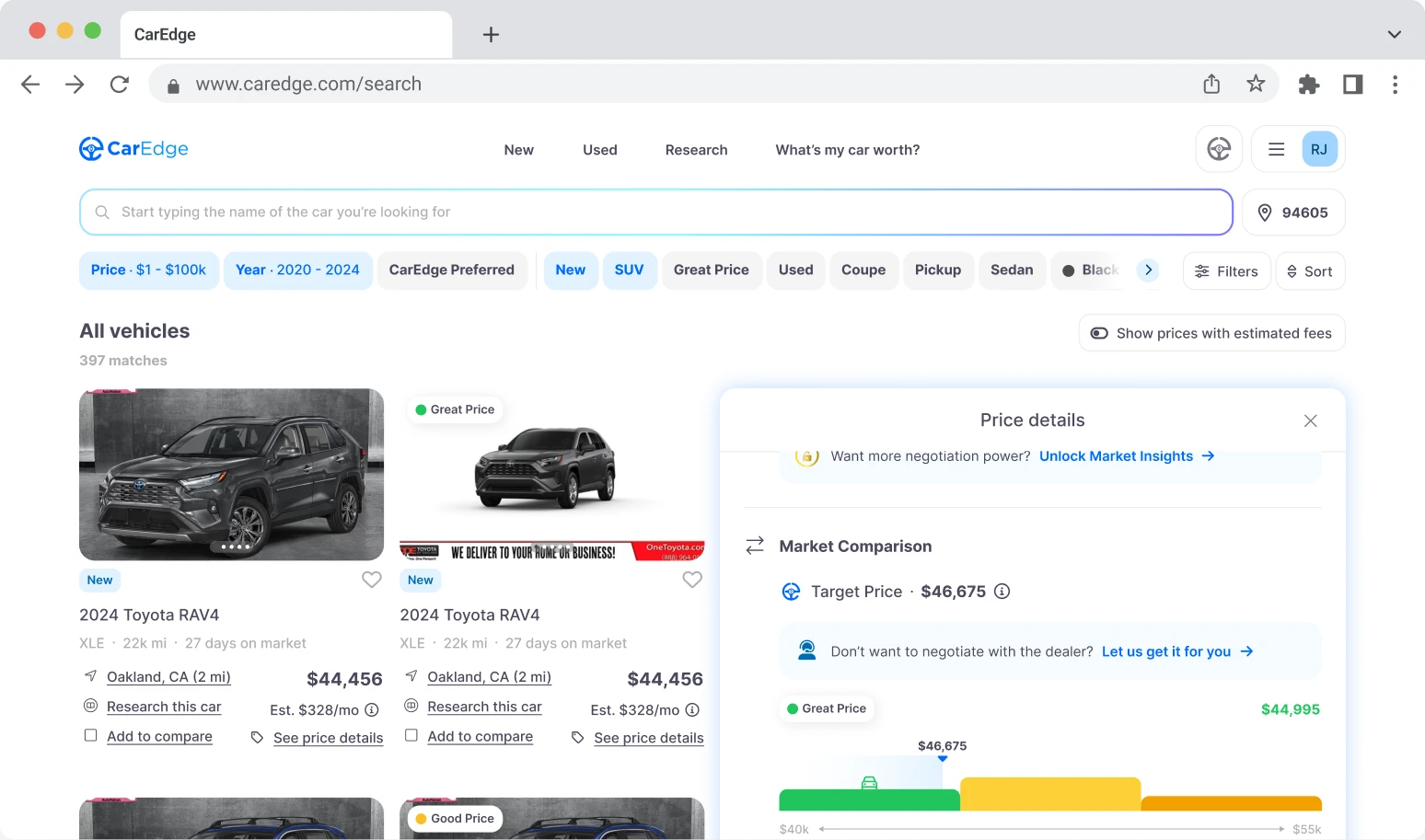



Imagine arriving back at the dealership as you complete the test drive on a vehicle you’ve been researching for weeks. As delighted as you are to confirm that it meets your requirements—on paper and in person—anticipation builds as you consider the next logical step: negotiations. When the salesperson asks, “How did it go? Are we ready to talk numbers?” beads of sweat start to form.
You don’t need an advanced degree in negotiating strategies to get the best deal on a car in 2026. We spoke to CarEdge co-founder and 43-year industry veteran Ray Shefska to find out how the car buying pros negotiate with confidence. Follow the steps below to guide the conversation toward the one number that will make or break the sale.
1. Focus On One Variable at a Time
There’s no doubt that several variables affect the car-buying process. All at the same time, you might be considering what monthly payment you can afford, how much down payment you can make, and whether to buy new or used. However, you can simplify the process by focusing on one thing at a time. In most cases, isolating these variables provides additional data to help you make a more informed final decision.
For example, focusing on your monthly car allowance gives you a dollar amount to keep in mind for expenses like your car payment, insurance, and maintenance. We recommend staying within the 10% rule to protect your overall finances. If you want a specific type of car—like a sedan or an SUV—you can narrow your options further. When you’re at the dealership, the most important variable you need to focus on is the out-the-door (OTD) price.
It’s ALWAYS best to focus on the out-the-door price before discussing any other number.
2. Negotiate the Out-the-Door (OTD) Price

It’s important to recognize that the OTD price on a vehicle is completely separate from the Monroney sticker price that’s typically displayed on the car’s window. Dealers will advertise the sticker price to attract potential buyers, but the final price you pay could be thousands of dollars more. The out-the-door price represents the amount you agree to pay for the vehicle plus all of the following fees (or more):
- Taxes
- Title
- Registration
- Document fees
- Dealer add-ons
- Accessories
By sticking to your guns and asking for the OTD price upfront, you’re signaling to the salesperson that you’re ready to talk numbers—but only based on the car’s value, not how much you can pay toward the vehicle’s final price every month. This shift in conversation works in your favor because you can determine whether you’re getting a fair price and what additional fees the dealership’s trying to sneak into your final deal.
Another key benefit of getting an OTD price in writing is that you can then take that offer to other dealers, and have them compete your for your business! But always get your OTD price in writing.
Before you shop, see the Out-the-Door Price with our FREE calculator.
3. Steer Clear of Conversations About Monthly Budget
Before we delve too far into this step, let’s make one thing clear: you should absolutely stay within your full budget when you’re looking to purchase a car. We recommend you use the 10% rule as a guide to avoid stretching yourself too thin financially. However, any discussions of a monthly budget fail to address the overall amount you’re paying for the car—the OTD price—which is the more important figure to focus on during negotiations.
Car deals can (and often will) use your monthly budget against you. In 2026, we’re seeing something that was once unthinkable: the rise of 84-month car loans, and sometimes even longer terms. The reason is simple: As car prices are pushed higher, it’s a lot easier to convince buyers that they can afford it if the monthly payment stays the same. They do this by extending the loan repayment period.
Why is this bad for drivers? Not only will you be paying more in interest with longer loan terms, you’re much more likely to end up in negative equity, meaning that you owe more than your car is worth. If you end up selling or trading-in your car, you’ll actually OWE money for it.
In simple terms, avoid discussing your monthly budget with any salesperson. Stay far away from loans longer than 72 months.
After all, monthly budgets can fluctuate according to how much you put down and what loan term lengths you negotiate. Avoid sharing concrete numbers because the less you say, the better. It’s okay to play hardball without being too hard about it, because you want to demonstrate that you’re willing to work with them if they’ll reciprocate.
4. Pay Cash, Finance, or Lease? Keep your options open
Whether you decide to pay in cash, obtain a loan, or opt for a lease, keep your options open. Insist on negotiating the out-the-door price first and then following up with how you’d like to proceed from there. If the salesperson mentions any current finance or lease incentives, they should be in addition to the OTD price as a bonus, not a reason to fold on negotiations and pay more.
When you know the out-the-door price, you can then focus on the next variable: whether paying in cash, financing a loan, or signing a lease best suits your financial situation. Remember, vehicles are not investments, but it’s worth the time it takes to seek out exceptional finance offers if you’re ready to pull the trigger. If you want to try out leasing instead, check out our guide to leasing and how to interpret your lease purchase agreement.
5. Treat Your Trade-In as a Separate Transaction
Convenience can actually cost you money at the car dealership. When you bundle the trade-in of your current vehicle with the purchase of your next one, you risk losing out on both ends. Any appraisals or purchase agreements for your trade-in should be handled separately, especially if you still owe money on your existing vehicle.
👉 Trade-In Tactics For Success — the complete guide!
Approach Your Next Car Purchase With Confidence
Admittedly, this tried-and-true process of getting a better deal on your next car purchase does take time and initiative. If you struggle with either or both, partner with a CarEdge Concierge to make car buying easy. Our experts handle every step of the process, from reaching out to dealerships and coordinating test drives to reviewing the paperwork and scheduling delivery for you.





0 Comments