

What EVs Qualify For the New Tax Credit? See the Winners and Losers

Update: On August 16, 2022, President Biden signed the Inflation Reduction Act of 2022 into law. Within the 755 page bill is a massive, and controversial, revision of the electric vehicle tax credit (more on that here). Frankly, it’s a mix of good and bad news. The new incentives are sure to accelerate the growth of domestic production in the United States, however many models are losing the credit due to strict limits on eligibility.
Important Note: The IRS and Department of Energy have issued guidance, which can be found here and here. The vehicle price caps do not begin until January 1, 2023, which means that luxury EVs like the Lucid Air and Rivian R1T will qualify UNTIL the new year. These models are not on this list, as their inclusion is only for the rest of 2022.
The original 200,000 sale cap that took the previous tax credit away from Tesla and GM will be removed on January 1, 2023. EVs from these two automakers will not be eligible until after 1/1/2023.
We recommend checking out these official notices from the government for more information.
EV Tax Credit Requirements
Although the Inflation Reduction Act’s language dictates that the Treasury Secretary will finalize several aspects of the new EV tax credit, many provisions and eligibility requirements are now final.
The revised EV tax credit adds the following requirements for eligibility:
- As soon as the bill is signed by the President, final assembly must be in the United States, Canada or Mexico. That starts now.
- Beginning in 2023, 40% of battery minerals (by value) must be sourced from the U.S, or countries we have free trade agreements with. This requirement increases by 10% from 2024-2028. The battery mineral sourcing requirement is worth $3,750 in the form of either a federal tax credit (starting 1/1/2023) or rebate (starting 1/1/2024).
- Beginning in 2023, 50% of battery components must be sourced from the U.S, or countries we have free trade agreements with. This requirement increases by 10% from 2024-2028. The battery component sourcing requirement is worth an additional $3,750, for a total of $7,500.
- The price cap for sedans is $55,000; for SUVs, trucks and vans, the cap is $80,000. Price caps begin on January 1, 2023.
- A point-of-sale rebate option begins in 2024.
Plug-in hybrids (PHEVs) will qualify, as long as they meet the requirements listed above. More on that below.
For additional information on the many changes in this new EV tax credit, see our resource here.
Electric Vehicle Models That Will NOT Qualify for the New EV Tax Credit in 2023
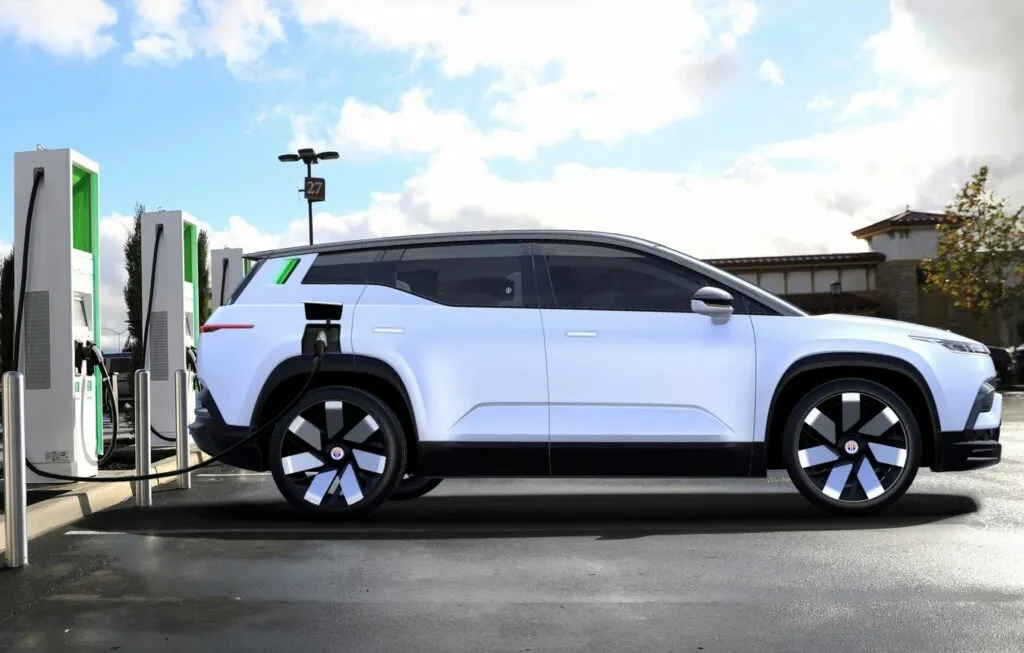
The much-anticipated Fisker Ocean won’t qualify. It’s assembled by Magna in Europe.
These are the electric vehicles that will NOT qualify for the new EV tax credit, and why.
Audi – all e-tron variants
(final assembly overseas). Audi is considering building EVs in America soon.
BMW i4 and iX
(final assembly overseas)
Fisker Ocean
(final assembly overseas). Magna, who produces the Fisker Ocean, is considering building the EV in the United States.
Hyundai IONIQ 5 and Genesis GV60
(final assembly overseas; A new factory will open in Georgia in a few years, and a senator is trying to return eligibility sooner.)
Hyundai Kona and Kia Niro electrics
(final assembly overseas)
Jaguar I-PACE
(final assembly overseas)
Kia EV6
(final assembly overseas)
Lexus RZ
(final assembly overseas)
Lucid Air
(too expensive)
Nissan Ariya
(final assembly overseas)
Polestar EVs
(final assembly overseas; the Polestar 3 EV will be assembled in the U.S.)
Porsche Taycan
(too expensive… by a lot)
Rivian R1T and R1S
(too expensive)
Subaru Solterra
(final assembly overseas)
Tesla Model 3
(too expensive, RWD batteries produced overseas)
Tesla Model S and Model X
(too expensive)
Toyota bZ4X
(final assembly overseas)
Volvo C40 and XC40 Recharge
(final assembly overseas)
These Electric Vehicles Are Most Likely to Qualify for the New EV Tax Credit in 2023
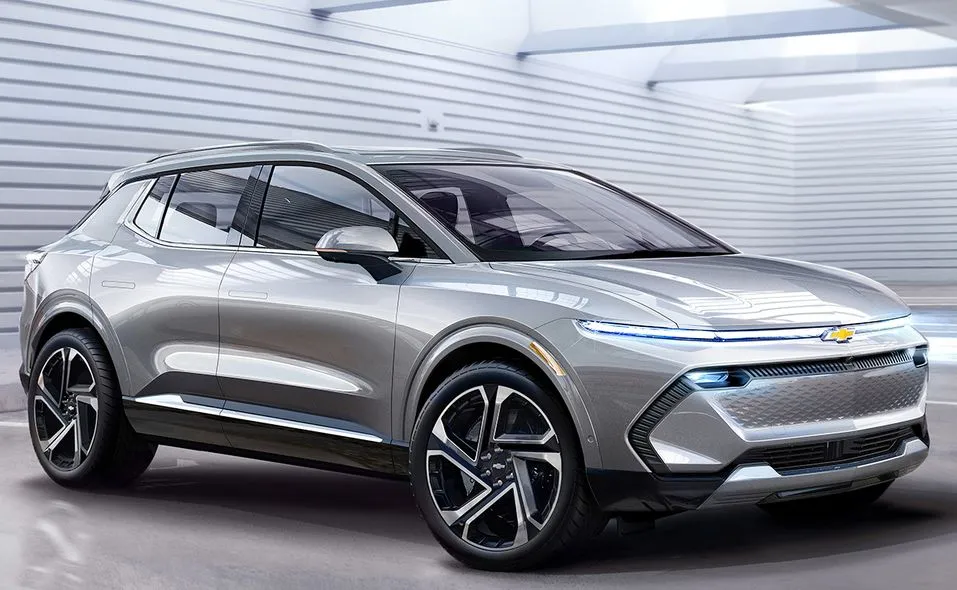
The 2024 Chevrolet Equinox EV is likely to qualify
Cadillac Lyriq
This EV will be built in America, and powered by GM’s Ultium batteries. It is likely to qualify for at least $3,750, of the full $7,500.
Chevrolet Bolt
Currently the most affordable EV in America, it’s built in America with batteries manufactured in Michigan. It is likely to qualify for at least $3,750 of the full $7,500, depending on battery mineral sourcing.
Chevrolet Blazer EV
Recently revealed, this EV will be built in America, and is powered by GM’s Ultium batteries. It is likely to qualify for at least $3,750, and possibly the full $7,500. We don’t know where GM intends to source battery minerals.
Chevrolet Equinox EV
This EV will be built in America, and powered by GM’s Ultium batteries. It is likely to qualify for at least $3,750, and possibly the full $7,500. As with all other GM EVs, we don’t yet know where GM intends to source battery minerals.
Chevrolet Silverado EV
GM will manufacture this EV in America, with GM’s own Ultium batteries. It is likely to qualify for at least $3,750, and possibly the full $7,500, depending on battery mineral sourcing. We do know that the battery components will have assembly in America.
Honda Prologue
General Motors will make the Prologue for Honda in the United States using U.S.-made Ultium batteries. It is likely to qualify for at least $3,750, and possibly the full $7,500.
Nissan Leaf
Nissan builds the Leaf in Smyra, Tennessee. The AESC-supplied batteries are also assembled there, but it’s not clear where minerals are sourced from. The Leaf should qualify for at least $3,750, and perhaps the full $7,500. Nissan has plans for the impending retirement of the Leaf, so it’s not clear if one of America’s only affordable EVs will even be on sale next year.
Tesla Model Y
This is the top-selling EV in America. Final assembly is in Texas and California. Battery components sourcing is from Tesla and Panasonic in Texas and California. Battery mineral sourcing is unknown. It is likely to qualify for at least $3,750, and possibly the full $7,500.
Volkswagen ID.4
Final assembly is in Chattanooga, TN (for select VIN numbers, check with your dealer representative). SK Innovation makes the battery components in Georgia. Battery mineral sourcing is unknown. It is likely to qualify for at least $3,750, and possibly the full $7,500.
What About Ford? It depends on battery sourcing.
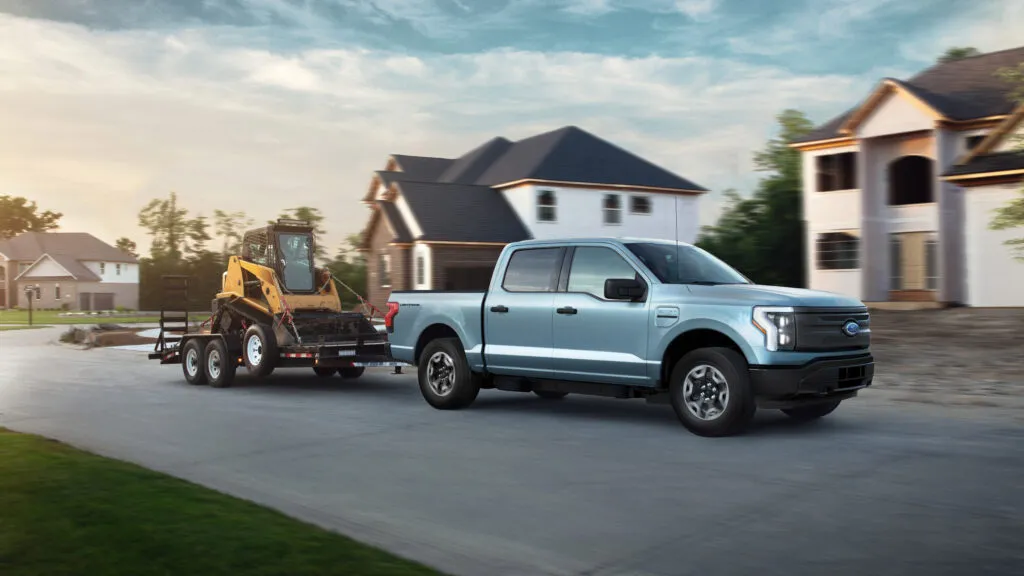
2022 Ford F-150 Lightning may qualify, depending on battery sourcing
Ford Mustang Mach-E and F-150 Lightning
Ford currently makes the Mustang Mach-E in Mexico with batteries from LG Chem. LG Chem manufactures these battery cells in Poland, but the battery pack assembly is in North America. It’s unclear if Ford’s battery assembly meets the 40% battery component requirement. Unfortunately, Ford just signed an agreement with Chinese battery manufacturers CATL to supply batteries for upcoming Ford Mustang Mach-E’s. This may disqualify the automaker briefly. Ford has already announced plans for two battery plants in Kentucky and Tennessee.
Will Plug-In Hybrids Be Eligible For the New Tax Credit?
Plug-in hybrids (PHEVs) WILL be eligible, but they must meet the same requirements listed above, and have a minimum battery capacity of 7 kilowatt-hours.
With the Made-in-America requirement beginning as soon as the bill as signed, most plug-in hybrids won’t be eligible. This includes the RAV4 Prime, Prius Prime, Hyundai Santa Fe PHEV, Hyundai Tucson PHEV and some BMW PHEVs, such as the 330e made in Germany. The popular X5 and X3 PHEVs are among those that will qualify, as long as the MSRP stays under $80,000.
The Chrysler Pacifica Hybrid should qualify for at least half of the new credit. It is manufactured in Ontario with batteries assembled in Michigan.
Jeep PHEVs, such as the Wrangler 4xe and Grand Cherokee PHEV, should qualify for at least half of the new credit. The Wrangler 4xe is made in Toledo, Ohio, however it’s unclear where the Samsung SDI batteries are sourced from.
Used EV Tax Credit
Beginning on January 1, 2023, America’s first used electric vehicle tax credit begins. Eligibility requirements are strict:
- Selling price is capped at $25,000
- The vehicle must be sold by a dealer and be at least 2 years old
- The income is cap is $75,000 for individuals, $112,500 for head-of-household, and $150,000 for join filers.
It’s Not a Done Deal, But It Could Be Soon
The Inflation Reduction Act has been signed into law, so the ‘Made in North America’ requirement has begun. The Treasury Secretary will set the final rules for other portions of the EV tax credit, and that must happen before the end of this year. We’ll update this page as more information becomes available.
Next: U.S. EV Market Share Increased in Q2 2022
Get the most when you sell your car.
Compare and choose multiple offers in minutes:
Sponsored by Insurify
Are you overpaying for car insurance?
Compare rates from top carriers in under 5 minutes. CarEdge users save an average of $996/year on auto insurance.
*Disclosure: CarEdge may earn a commission when you compare insurance quotes through our partner, Insurify. This does not influence our editorial content.*