NEVER Answer These 5 Questions at the Dealership (2026 Update)

Key Takeaways
- When buying a car, you'll get the best deal when you control the conversation from start to finish.
- Never be a monthly payment shopper. Always negotiate the out-the-door price to get the complete picture.
- Stick to your budget, and don't let anyone rush you. Expect dealership salespeople to try and speed up your decision-making.
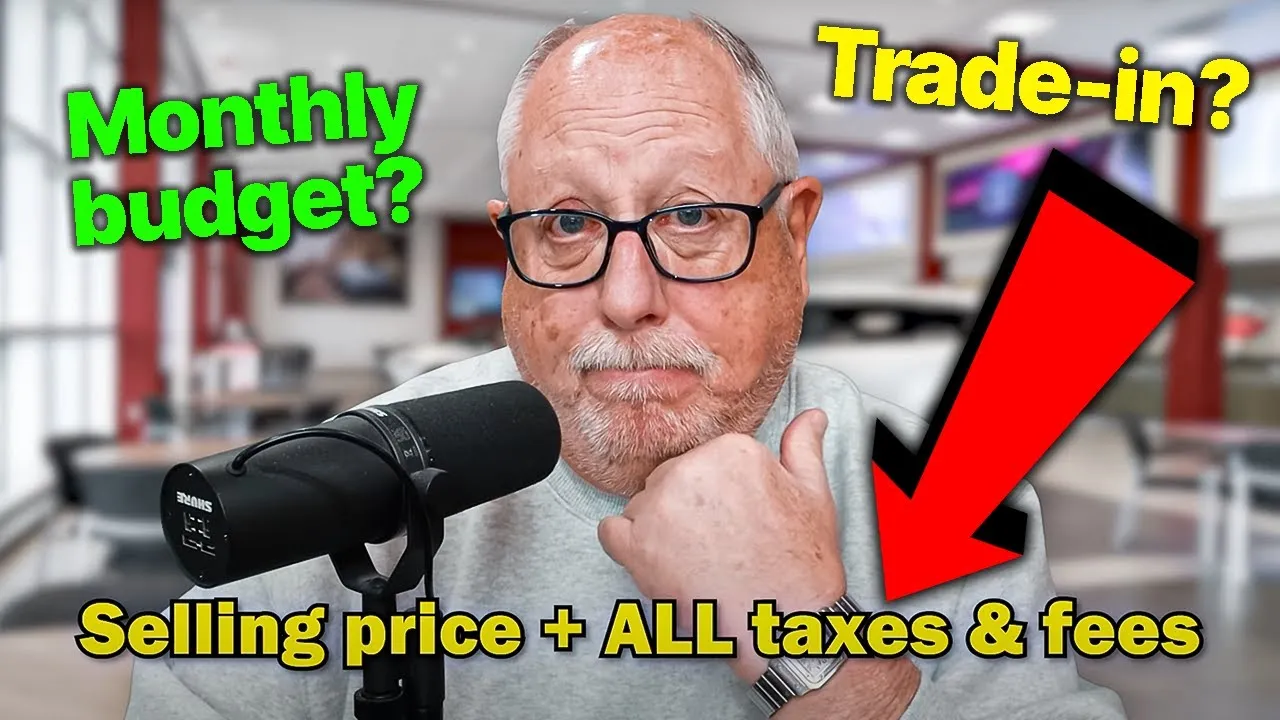
After 43 years on both sides of the dealership desk, CarEdge co-founder Ray Shefska has seen every negotiation tactic in the book. And here’s something most car buyers don’t realize: the questions a salesperson asks in the first five minutes can cost you thousands of dollars before you even start negotiating.
These aren’t just innocent conversation starters. They’re carefully designed information-gathering tools that shift negotiating power away from you and directly into the dealer’s hands. In 2026, with dealership profit margins under pressure and inventory levels normalizing, these tactics are more aggressive than ever.
Let’s break down the five questions you should never answer directly—and exactly what to say instead.
Question #1: “What Do You Currently Drive?”
Why This Question Is Dangerous
This seems like friendly small talk, but it’s actually the opening move in a complex strategy. When you tell them what you drive, you’re revealing:
- Your potential trade-in vehicle (giving them time to lowball the appraisal)
- Your current payment range (they’ll assume you can afford something similar)
- Your lifestyle and priorities (luxury buyer vs. budget-conscious)
- Whether you’re desperate for a new car (if your current vehicle is old or problematic)
In 2026, with trade-in values fluctuating more than ever due to the stabilizing used car market, this information is particularly valuable to dealers. Check out our guide to trading-in, and stick to your plan!
The Right Response
Instead of answering directly, say:
“I’m here to learn about this vehicle first. Let’s focus on what you have available.”
Or if they push:
“I might have a trade, I might not—depends on the numbers we agree on for this car first.”
Ray’s Pro Tip
“Never let them appraise your trade-in before you’ve negotiated the purchase price of the new vehicle. These are two separate transactions, and combining them only benefits the dealer. Get the best price on the new car first, then introduce the trade-in as a separate negotiation.“
Question #2: “What Monthly Payment Are You Looking For?”
Why This Is the Most Expensive Question
This is the single biggest trap in car buying, and it’s become even more prevalent in 2026 as dealers lean heavily into payment-focused selling. Here’s what happens when you give them a monthly payment target:
- They’ll hit that exact payment by extending your loan term to 72, 84, or even 96 months
- You’ll pay tens of thousands more in interest over the life of the loan
- They can inflate the vehicle price because you’re only focused on the monthly cost
- They’ll pack in overpriced add-ons because “it only adds $20 per month”
In 2026, the average new car loan has stretched to 68 months with the average payment hitting $739. Don’t become another statistic.
The Right Response
Say this instead:
“I don’t shop by monthly payment. What’s your best out-the-door price on this vehicle?”
We’ve been saying it for years: The out-the-door price is the only price you should be negotiating. Use this free calculator to see how it works.
If they persist:
“I have my own financing arranged. I’m only discussing the vehicle price today.”
Ray’s Real-World Example
“I’ve watched salespeople take a customer who said “I can afford $500 per month” and show them vehicles they could have bought for $400 per month with a shorter loan term. That extra $100 over 72 months? That’s $7,200 in unnecessary spending, plus thousands more in interest.“
Question #3: “Are You Paying Cash or Financing?”
Why Dealers Ask This Early
This question serves multiple purposes for the dealer:
- If you’re financing, they make money on the loan (dealer reserve from the lender)
- If you’re paying cash, they know they need to build profit into the vehicle price
- It tells them how motivated you are (cash buyers often negotiate harder)
- They can steer you toward their financing even if you have better rates elsewhere
In 2026, dealer financing kickbacks have actually increased as manufacturers push captive financing programs. The dealer might make $1,500-$3,000 just on your loan—incentive to push you away from your credit union’s better rate.
The Right Response
Keep your cards close:
“I haven’t decided yet. What’s your best price on the vehicle?”
Or more firmly:
“That depends on the deal we work out. Let’s talk about the car first.”
The Strategic Play
Even if you’re paying cash, Ray recommends acting like you’ll finance initially. “Get their best price, then “change your mind” and pay cash. Why? Because dealers often give better prices when they think they’ll profit on financing. Yes, it’s a game—but they taught us how to play it.“
Question #4: “What Will It Take to Get You in This Car Today?”
The Pressure Behind This Classic Line
This question appears helpful on the surface, but it’s actually a closing technique designed to:
- Create artificial urgency (“this deal is only good today”)
- Get you to name your highest acceptable price
- Skip the negotiation process entirely
- Make you feel like you’re in control when you’re actually giving up leverage
In 2026, with inventory levels much healthier than the shortage years of 2021-2023, there’s absolutely no reason to be in a rush unless you’ve done your homework and know you’re getting a fair deal.
The Right Response
Shut down the pressure:
“I’m not making a decision today. I’m gathering information and comparing options.”
Or:
“I need to see your best offer first, then I’ll take time to consider it.”
Ray’s Perspective
“When I was selling, this question was explicitly designed to create urgency and get a commitment. Here’s the truth: that “special price” they can offer you today? It’ll be there tomorrow. And next week. The best deals come from patient buyers who don’t fall for artificial deadlines.“
Question #5: “What Would Your Dream Car Look Like?”
Why This Seems Harmless But Isn’t
This feels like the salesperson is being helpful and understanding your needs, but they’re actually:
- Identifying your emotional triggers (the features you’ll pay extra for)
- Steering you toward higher-priced models with better profit margins
- Building an emotional connection to a vehicle before discussing price
- Finding out which features they can use to justify a higher price
In 2026’s market, feature-loaded vehicles carry significantly higher profit margins. That’s why automakers and dealers alike love to sell big trucks and SUVs. That panoramic sunroof and premium audio system? They cost the dealer far less than they’ll charge you.
The Right Response
Stay focused on the vehicle in front of you:
“I’m interested in this specific model we’re looking at. Let’s discuss this one.”
Or:
“I’ve done my research on what I need. What’s your best price on this configuration?”
The Upsell Trap
Ray says to watch out for this trap, and always stick to your budget. “Once you start describing your “dream car,” the salesperson will conveniently discover they have something “even better” that matches your description—at a much higher price point. Stick to your researched vehicle choice and don’t get emotionally sidetracked.“
The Master Strategy: Control the Conversation
Ray’s 4-Step Approach to Dealership Negotiations
After spending decades on both sides of the desk, here’s the approach that consistently gets CarEdge readers the best deals:
Step 1: Do Your Homework Before You Arrive
- Know the exact vehicle you want (make, model, trim, options)
- Research fair market value using tools like CarEdge, Edmunds, and KBB
- Get pre-approved for financing from your bank or credit union
- Know your trade-in value from multiple sources
Step 2: Control the Initial Conversation
- Deflect all five questions we discussed above
- Focus exclusively on the out-the-door price of the specific vehicle
- Don’t discuss trade-ins, financing, or monthly payments yet
- Take notes on everything they say
Step 3: Negotiate One Thing at a Time
- First: Get the best purchase price on the new vehicle
- Second: Negotiate your trade-in value (if applicable)
- Third: Compare their financing to your pre-approval
- Fourth: Review and decline unnecessary add-ons
Step 4: Be Willing to Walk Away
- This is your most powerful tool
- If they won’t meet fair market value, leave
- You can always come back if they call with a better offer
- There are plenty of dealers who will work with an informed buyer
What’s Changing in 2026: New Dealer Tactics
Market Mandatory Accessories (MMA)
Dealers in 2026 are increasingly adding “market mandatory accessories” to vehicles before they hit the lot—things like paint protection, nitrogen-filled tires, or wheel locks. These typically cost the dealer $100-$300 but get marked up to $1,500-$3,000.
How to handle it: Negotiate these items down or off entirely. They’re not mandatory—they’re dealer profit centers.
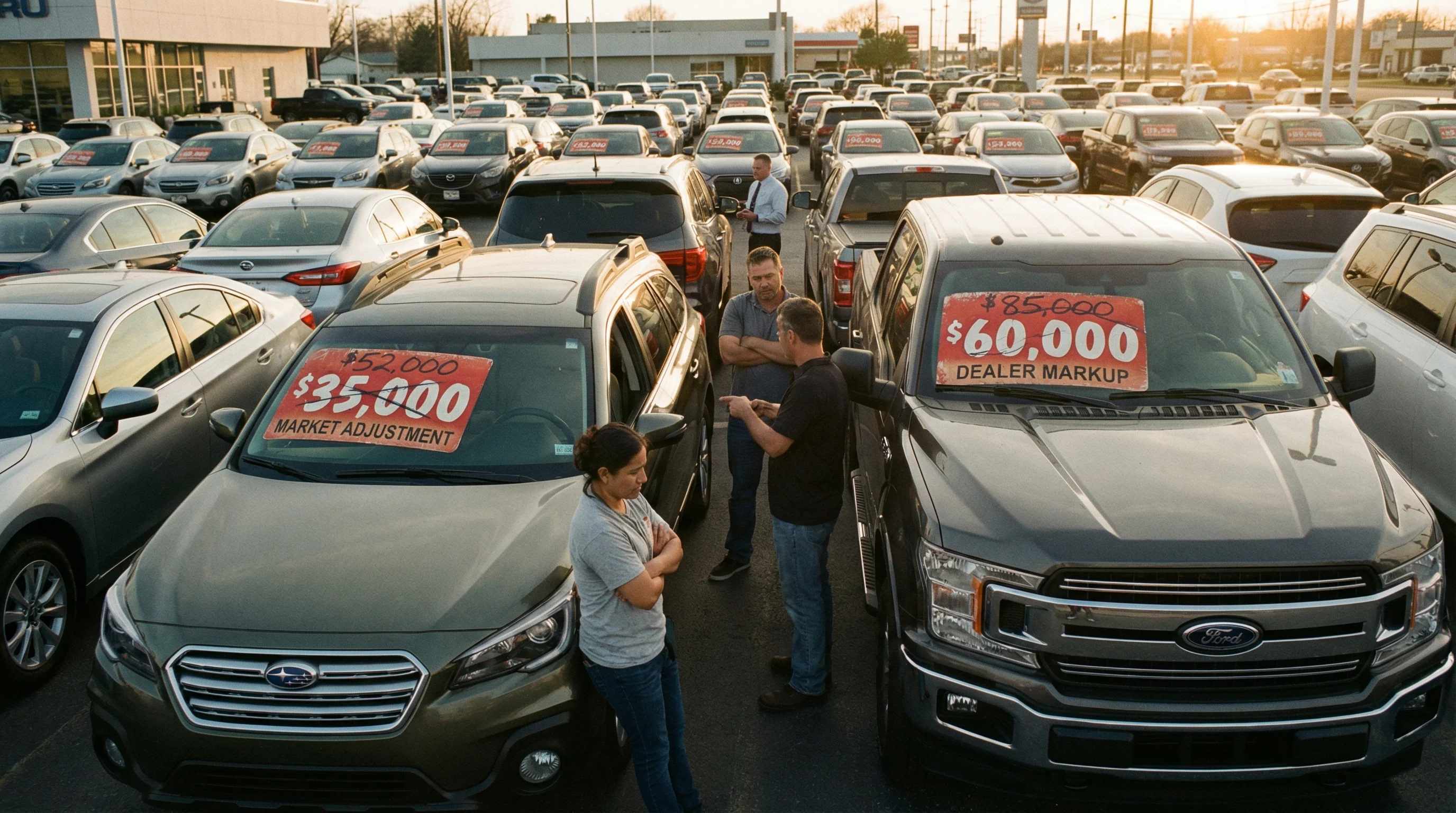
“Market Adjustment” Rebranding
After the backlash against ADM (Additional Dealer Markup) during the shortage years of 2021-2023, some dealers now call these markups “market adjustments” or “market price corrections.” It’s the same thing with a friendlier name.
How to handle it: Any price above MSRP requires justification. You should never pay over MSRP for the vast majority of models in 2026. Most models can be successfully negotiated to 5-10% below MSRP, or even more for leftover 2025 models.
Digital Retailing Tactics
More dealers are using online tools that ask you to input your trade-in info, desired payment, and financing preference before you ever visit. These are the same five questions in digital form.
How to handle it: Use online tools to research and identify vehicles, but don’t provide specific trade-in or financing information until you’re ready to negotiate in person.
Real-World Success Story: How These Tactics Saved $4,800
A CarEdge reader emailed us last month about her experience buying a 2026 Honda CR-V. She watched our content on YouTube and implemented these exact strategies:
- Deflected the monthly payment question, insisted on out-the-door pricing
- Got the vehicle price negotiated first ($2,400 below initial offer)
- Negotiated trade-in separately ($1,200 more than initial appraisal)
- Used her credit union financing instead of dealer financing (saved $1,200 in interest over the loan term)
Total savings: $4,800 by simply controlling the information flow and negotiating strategically.
The Bottom Line: Information Is Power
In 2026, the dealers who succeed are those who understand that informed buyers do their homework. The five questions we covered today are designed to extract information from you before you’ve extracted fair pricing from them.
Your goal walking into a dealership should be simple: keep your cards close, deflect these information-gathering questions, and focus relentlessly on one number—the out-the-door price of the specific vehicle you want.
Remember Ray’s golden rule from 43 years in the business: “The person with the most information and the least urgency wins the negotiation.”
Don’t answer these five questions directly. Don’t rush into a deal. Don’t let emotion override research. And for the love of everything, don’t focus on monthly payments.
Do your homework, control the conversation, and negotiate one item at a time. That’s how you drive off the lot with a fair deal—and how you avoid leaving thousands of dollars on the table.
Your Action Plan
Before your next dealership visit:
- Print out or screenshot these five questions and responses
- Research fair market value for your target vehicle
- Get pre-approved for financing from 2-3 sources
- If trading in, get appraisals from online buyers like CarMax and Carvana
- Role-play deflecting these questions with a friend or family member
- Commit to walking away if you don’t get a fair deal
The 2026 car market is vastly different from the shortage years, and dealers know they need to work harder for your business. Use that to your advantage by being the informed, prepared buyer who knows exactly which questions to deflect—and how to deflect them.
Happy car shopping, and remember: the best deal is the one where you control the conversation from start to finish.
Sponsored by Insurify
Are you overpaying for car insurance?
Compare rates from top carriers in under 5 minutes. CarEdge users save an average of $996/year on auto insurance.
*Disclosure: CarEdge may earn a commission when you compare insurance quotes through our partner, Insurify. This does not influence our editorial content.*