


 CarEdge Insights

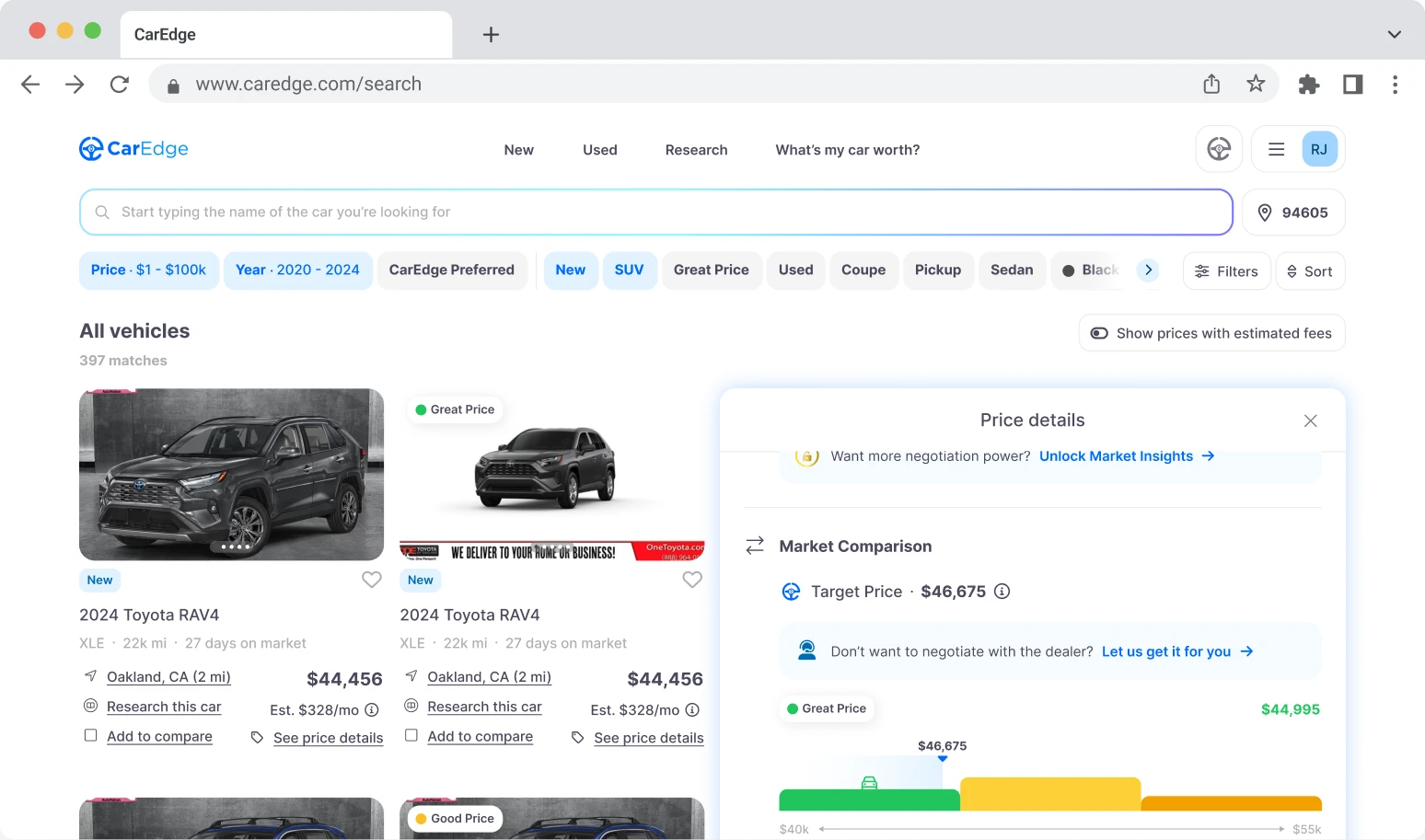



The car buying game has fundamentally changed. In 2026, the smartest shoppers walk into dealerships with the same information dealers once kept behind closed doors—and it’s completely free. This shift in power dynamics is forcing a new kind of negotiation, one where informed buyers set the terms instead of reacting to sales tactics.
Let’s break down exactly how educated car shoppers are winning deals in 2026, using real negotiation strategies that work.
Why Monthly Payment Goals Are a Trap
The first question most dealerships ask is: “What’s your monthly payment goal?” It sounds helpful, but it’s actually a negotiation tactic designed to shift your focus away from the vehicle’s actual price.
When you anchor a negotiation around monthly payments, dealers gain enormous flexibility to adjust loan terms, interest rates, and hidden fees while keeping your payment within your stated range. You might hit your $500/month target, but you could be paying thousands more over the life of the loan than necessary.
Smart buyers in 2026 shut this down immediately. Instead of discussing payments, they focus on one number:
- Out-the-door price – The total amount including all taxes, fees, and charges
This approach forces transparency and keeps the negotiation focused on value rather than affordability theater.
The Power of Market Data
Here’s what changed everything: pricing intelligence that was once dealer-exclusive is now available to anyone with an internet connection. Tools like CarEdge provide:
- Invoice pricing – What the dealer actually paid the manufacturer
- Days on lot – How long the vehicle has been sitting unsold
- Local inventory levels – How many similar vehicles are for sale nearby
- Recent sales data – How many have sold in the last 45 days
In our example negotiation, the buyer came prepared with specific numbers: MSRP of $63,435, invoice of $59,311, and the knowledge that the F-150 had been on the lot for 84 days. This intel completely reframes the conversation.
When a vehicle has been sitting for nearly three months, the dealer is carrying floor plan costs and wants to move it. An informed buyer can leverage this without being aggressive—simply acknowledging the reality shifts negotiating power.
The key is having this data before you contact the dealer. Once you’re in the negotiation, having specific numbers on hand signals that you’re serious and informed.
The Right Way to Approach a Dealer in 2026
Modern car buying starts with research, not test drives. Here’s the smart sequence:
Step 1: Do Your Homework
- Identify the exact vehicle (stock number or VIN)
- Pull invoice pricing and market data
- Understand incentives and rebates
- Check how long it’s been on the lot
- Research fair market values
Step 2: Make Initial Contact
- Reference the specific vehicle by stock number
- State your interest in test driving
- Clearly indicate you want to discuss selling price, not payments
- Mention you have pricing information without being confrontational
Step 3: Frame the Negotiation
- Lead with out-the-door pricing as your focus
- Acknowledge the vehicle’s time on lot (if applicable)
- Express that you’re a serious buyer ready to move quickly
- Avoid revealing your exact offer until after the test drive
Step 4: Negotiate with Data
- Use invoice as your baseline, not MSRP
- Factor in hold-back and dealer cash when present
- Reference comparable recent sales
- Be willing to walk away—there are always other dealers
What to Say When They Ask for a Monthly Budget
Salespeople are trained to steer you toward payment discussions. Here’s how to redirect:
Dealer: “What monthly payment are you looking for?”
You: “I’m not focused on the monthly payment right now. I want to make sure we agree on a fair selling price first. Once we settle on the out-the-door number, we can structure financing however makes sense.”
This response is firm but not adversarial. It signals experience without creating tension.
Use ‘Days on Lot’ to Your Advantage
Every day a vehicle sits on a dealer lot costs money. Most dealerships pay floor plan interest to finance their inventory—typically $20-50 per day per vehicle depending on its value.
An F-150 that’s been sitting for 84 days has cost the dealer roughly $1,680-$4,200 in carrying costs alone. That’s before accounting for lost opportunity (that lot space could hold faster-moving inventory) and depreciation risk.
This context doesn’t mean you strong-arm the dealer, but it does mean they’re motivated to move aged inventory. A reasonable offer on a vehicle with high days-on-lot is likely to get serious consideration, especially if you’re a qualified buyer ready to close quickly.
How Car Pricing Works: Numbers That Matter
When negotiating a car deal, it’s helpful to know exactly how much profit for the dealership is built into each sale. No matter what the salesperson tells you, you do have plenty of room to negotiate savings! Here’s a quick breakdown of the pricing hierarchy:
- MSRP (Manufacturer Suggested Retail Price) – The sticker price; almost never what you should pay
- Invoice price – What the dealer paid; your starting negotiation point
- Hold-back – Additional dealer profit (typically 2-3% of MSRP) returned by the manufacturer after sale
- Dealer cash/incentives – Manufacturer bonuses to dealers for moving specific inventory
- Selling price – The agreed vehicle price before taxes and fees
- Out-the-door price – The total including all taxes, registration, and legitimate fees
Your goal is to negotiate a selling price between invoice and MSRP, closer to invoice especially on aged inventory, then verify the out-the-door price includes only legitimate fees.
How This Looks in Practice
In the example negotiation, the buyer:
- Identified a specific vehicle by stock number
- Came armed with invoice pricing ($59,311 vs. MSRP of $63,435)
- Knew the vehicle had been on the lot for 84 days
- Redirected payment-focused questions to price discussions
- Positioned themselves as an informed, serious buyer
This approach immediately shifts the dynamic. The salesperson recognizes they’re dealing with someone who’s done research, which tends to accelerate the negotiation process and reduce back-and-forth games.
The Bottom Line
Buying a car in 2026 isn’t about being the toughest negotiator or playing games—it’s about being informed. When you walk in with invoice pricing, inventory age, and market data, you’re negotiating from a position of knowledge rather than reacting to sales tactics.
The dealers who adapt to this new reality focus on service, transparency, and efficiency. The ones who don’t quickly find themselves losing deals to competitors who respect informed buyers.
Your goal isn’t to squeeze every last dollar out of a dealer. It’s to pay a fair price based on actual market conditions and vehicle cost structure. With the right information and approach, that’s exactly what you’ll accomplish.
The power shift in car buying is real, and it’s permanent. Smart shoppers in 2026 are leveraging it to save thousands while making the process faster and less stressful for everyone involved.

![10 Cars with the Lowest Cost of Ownership [2026 Data]](https://caredge.com/wp-content/uploads/2026/02/2026-Toyota-Corolla-Hatchback-400x250.png)



0 Comments