
CarEdge saved me over 4,500 dollars on a brand new Honda Pilot. I can't say thank you enough.
Price intelligence
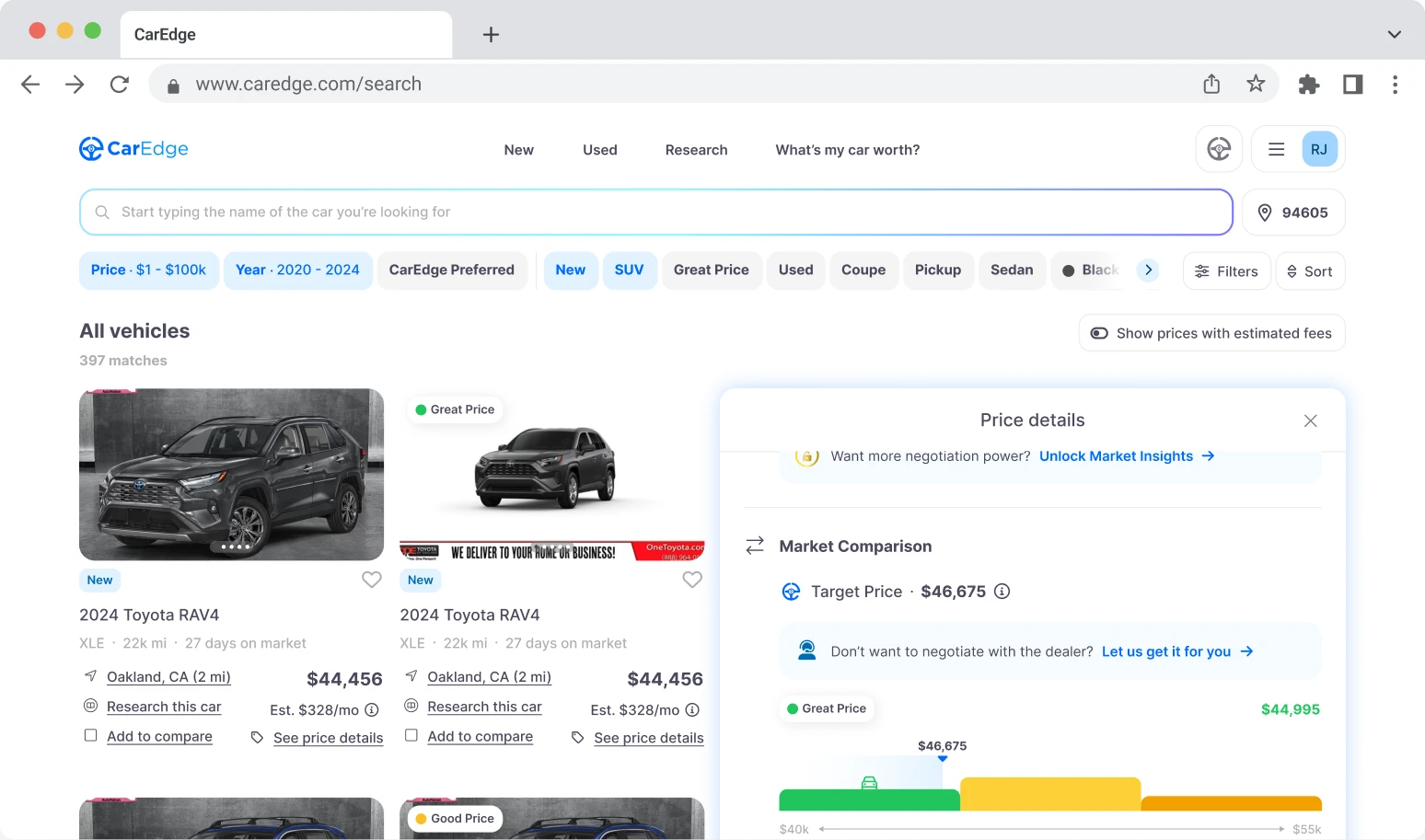
Find a wide range of vehicle listings with market insights on new and used listings near you.

What can I do with CarEdge?
 CarEdge Insights
What can I do with CarEdge?
Get access to exclusive information so you can make an informed car buying decision — all in one place.

Find a wide range of vehicle listings with market insights on new and used listings near you.
Track your vehicle’s value and cash in when the time is right to sell.

Access to our proprietary data to help you find the right car, at the right price. Find these unlocked on every listing after subscribing.

With our expert-led, tech-enabled car buying service, we will locate, negotiate, and deliver your vehicle so you can get a new car hassle free.


Help us personalize your CarEdge experience — it only takes a second.
Your answers help us personalize your CarEdge journey — we’ll follow up with tips and next steps that match your buying timeline.
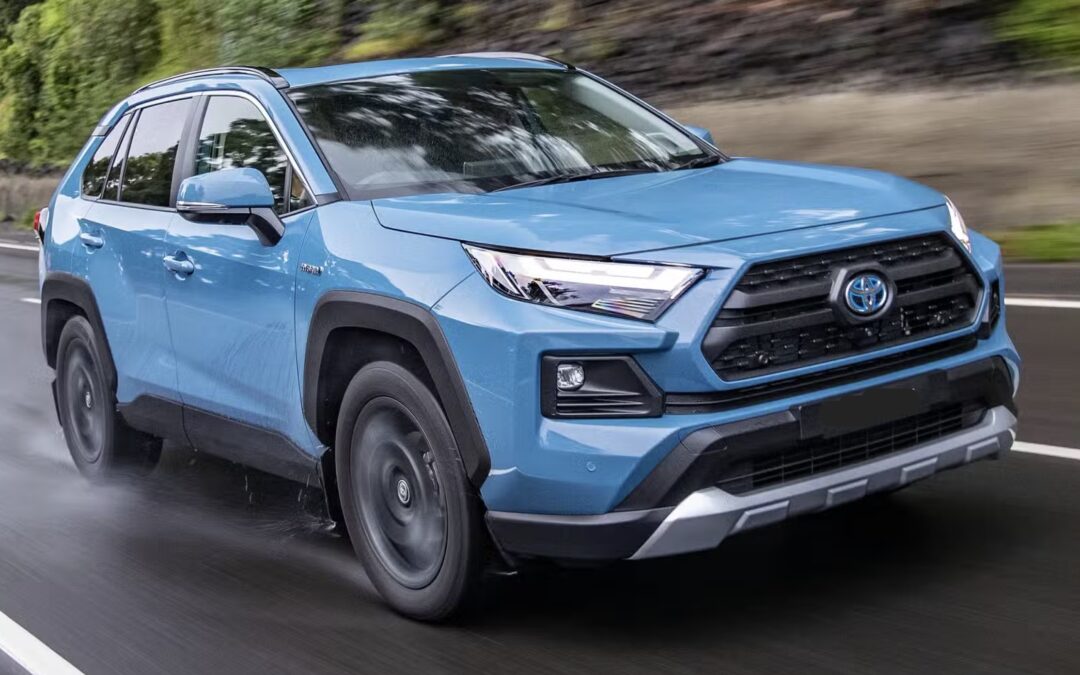
More drivers are considering a hybrid in March as escalating conflict in the Middle East suggests higher oil prices are likely. In fact, data from CarEdge Pro shows that hybrid daily sales rates are already on the rise.
While the demand for hybrid cars, SUVs, and trucks is rising, it’s still a buyer’s market for many popular models. We’ve curated this list of the top hybrid deals for March to keep you ahead of the curve. As always, these offers may be regional in nature, and are usually reserved for well-qualified buyers.
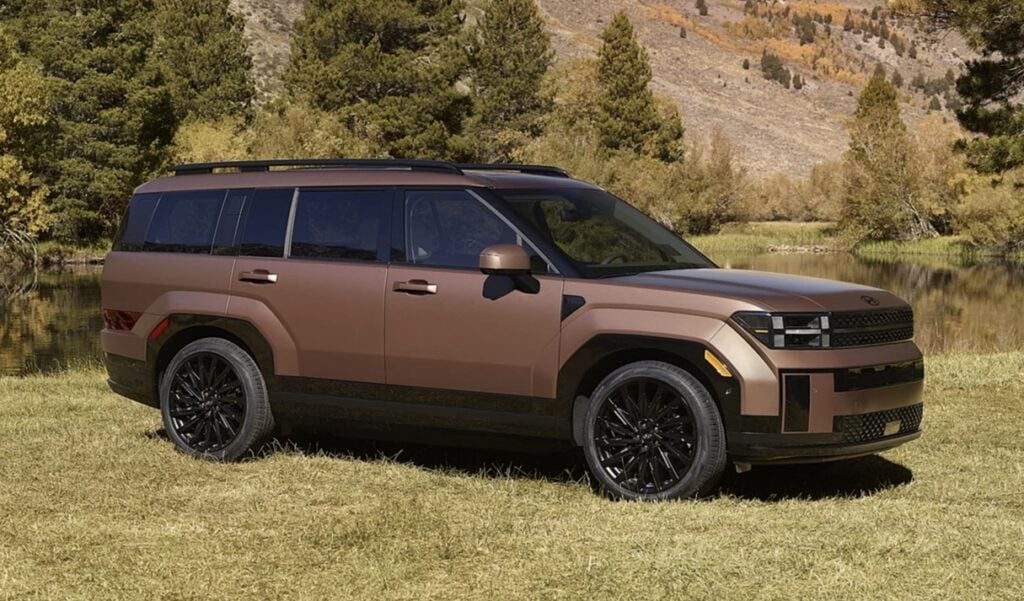
Hyundai is offering two strong ways to get into the 2026 Santa Fe Hybrid this month. Finance at 0% APR for 60 months with no payments for 90 days. This zero percent financing offer becomes even more compelling when you consider the average 60-month new-car loan rate sits at 6.98%.
Prefer to lease? The Santa Fe Hybrid is available from $379/month for 36 months with $3,999 due at signing, valid through March 31.
The offer applies to select 2026 Santa Fe Hybrid trims for well-qualified buyers; check with local dealers for eligible models in your area. Fuel economy ranges from 36 combined MPG with front-wheel drive to 34 combined MPG with HTRAC all-wheel drive — strong numbers for a family-sized SUV.
See Santa Fe Hybrid listings with local market data
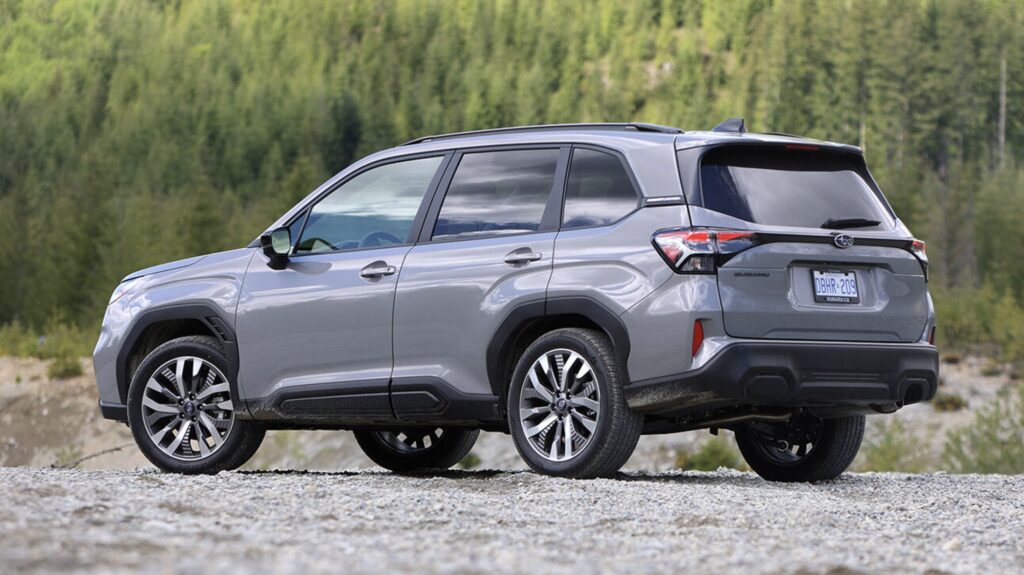
If you’re shopping for a compact hybrid SUV, you’ll want to consider Subaru’s financing offer for all four of its 2025 Forester hybrid trims. Through March 31, these trims are available at 0% APR for 75 months.
The 2025 Forester marks the start of the model’s new sixth-generation with a redesign introducing a boxier exterior, a quieter cabin, more supportive seats, and larger infotainment touchscreens. These additions are complemented by standard AWD and a high 8.7-inch ground clearance, both of which help compensate for a slightly lower fuel economy of 34/35 city/highway mpg.
If rugged SUV adventuring is your style, prioritize test driving the 2025 Forester hybrid.
See Forester Hybrid listings with local market data
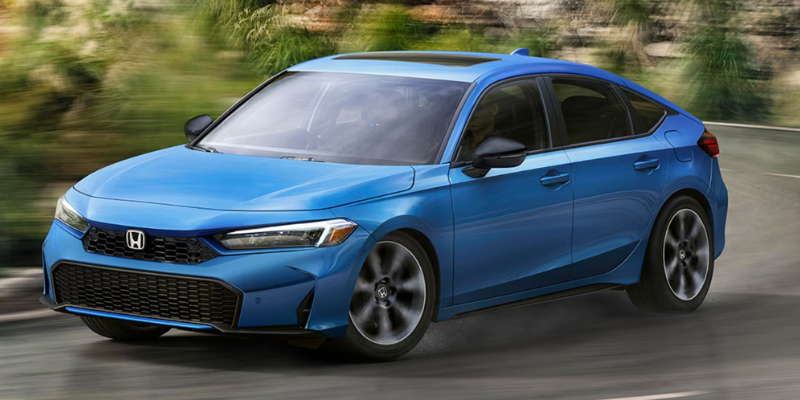
Are you considering a Honda hybrid sedan, but would prefer a 2026 compact model? Through March 31, you can finance a 2026 Honda Civic hybrid at 4.49% APR for 24-48 months, or at 5.49% APR for 49-60 months. Like the 2025 Accord hybrid offer, this deal applies to select 2026 Civic hybrids. However, both 2026 Civic hybrid trims have lower starting prices than any 2025 Accord’s hybrid and slightly better combined fuel economy at 49 MPG.
See Civic Hybrid listings with local market data
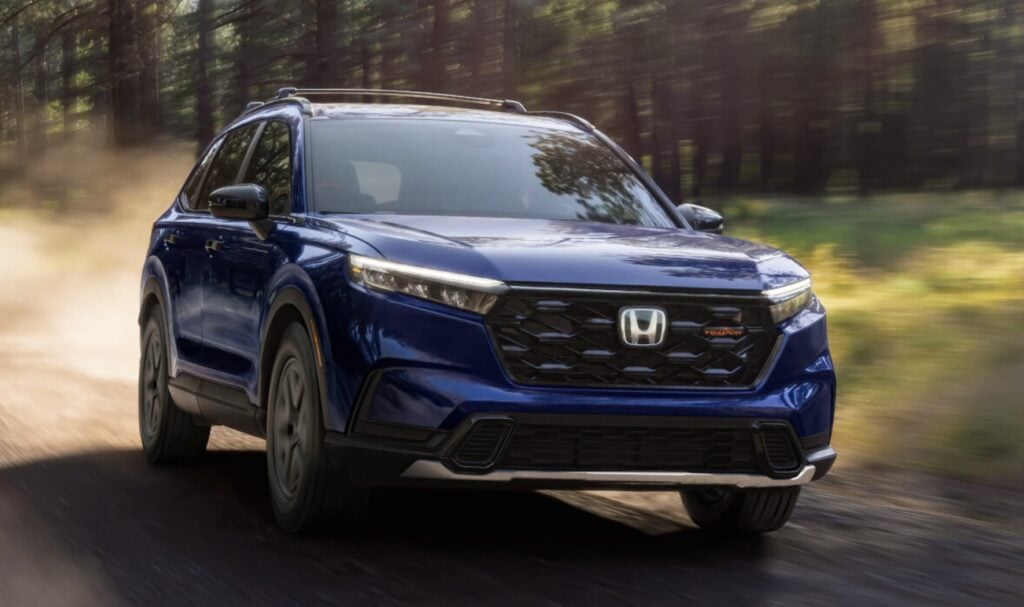
The 2026 CR-V Hybrid is one of our list’s most competitive offers. Through March 30, you can finance select trims of this compact SUV at 2.99% APR 24-36 months or 3.99% APR 37-60 months. Unlike the 2025 Accord hybrid and 2026 Civic hybrid, the 2026 CR-V hybrid offers available all-wheel drive (AWD), which won’t significantly affect mileage. Combined economy for the new CR-V hybrid ranges from 35-37 MPG in AWD, while front-wheel drive (FWD) configurations are good for up to 40 MPG.
See CR-V Hybrid listings with local market data
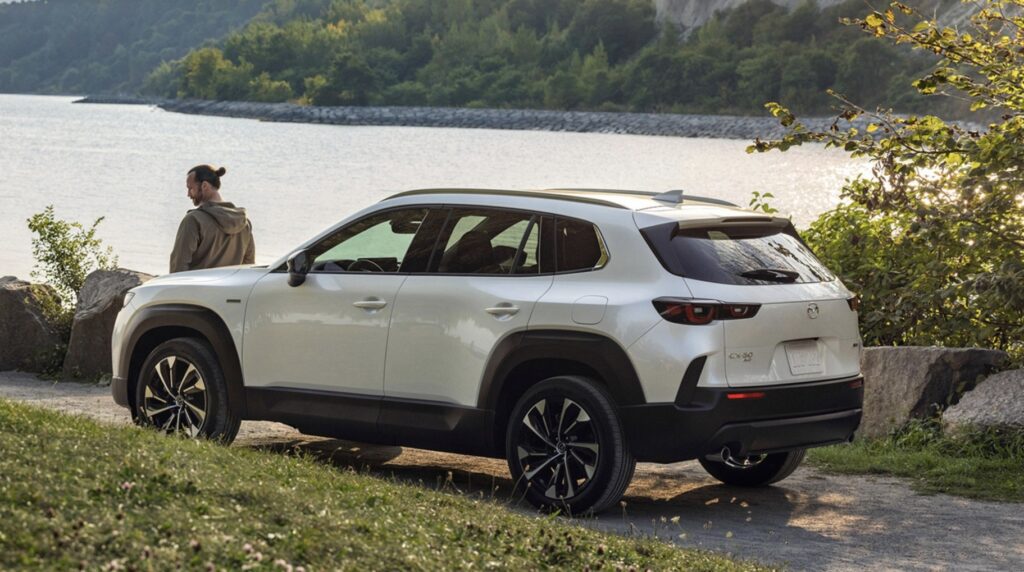
The compact 2026 Mazda CX-50 Hybrid SUV is available at 1.9% APR for up to 36 months through March 31. Like the 2026 Subaru Forester Hybrid, you’ll receive standard AWD in the new CX-50 Hybrid, but fuel economy is better at 38 combined mpg.
While the 2026 CX-50 Hybrid isn’t as capable off-road as its 2025 Forester hybrid counterpart, it holds its own with standard Power and Trail modes, along with sportier on-road handling.
See Mazda CX-50 Hybrid listings with local market data

Toyota’s Prius, the first mass-produced hybrid, is in its fifth generation, featuring a sportier design. Through March 31, you can finance the 2026 Prius at 4.99% APR for 72 months. Many offers have restrictions on which trims qualify, but Toyota appears to have made any 2026 Prius eligible, with 8 trims permitted. There are technically four 2026 Prius trims, but each has an available AWD variant if you don’t want FWD.
The 2026 Prius has the highest mileage on our list of March deals, ranging from 52-57 MPG.
See Prius listings with local market data
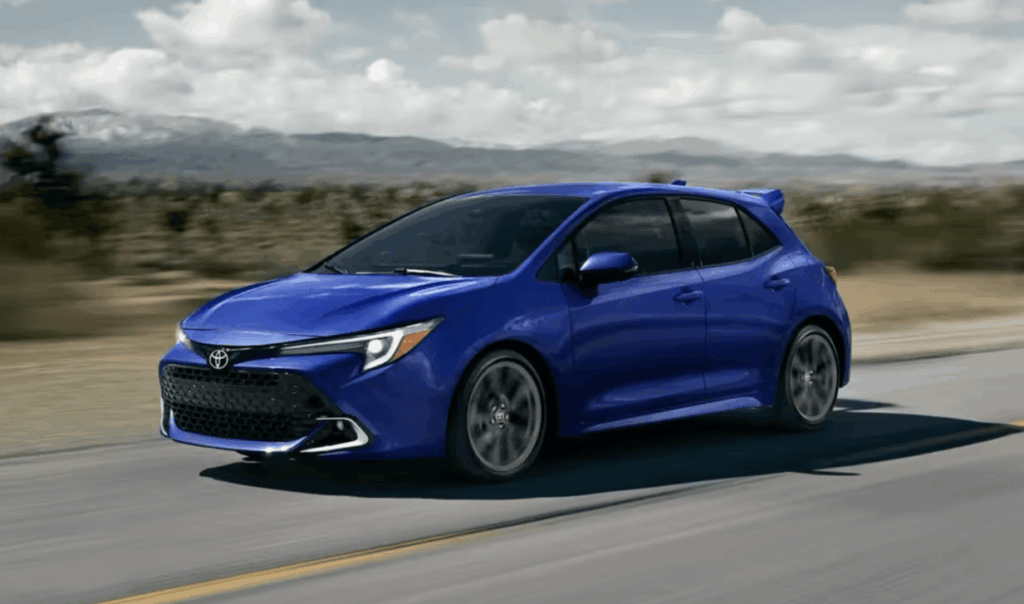
The 2026 Toyota Corolla Hybrid LE’s latest lease offer, valid through March 31, has an attractive monthly payment of $179 for 36 months, but note the upfront cost of $3,999. Alternatively, some regions are offering a reduced upfront cost of $2,999 for a higher monthly payment of $269.
If you prefer leasing and are leaning toward a compact sedan, the Corolla Hybrid LE is worth considering with its 53/46 city/highway MPG. Check Toyota’s website to see what deals your area has on the 2026 Corolla Hybrid LE.
See Corolla Hybrid listings with local market data
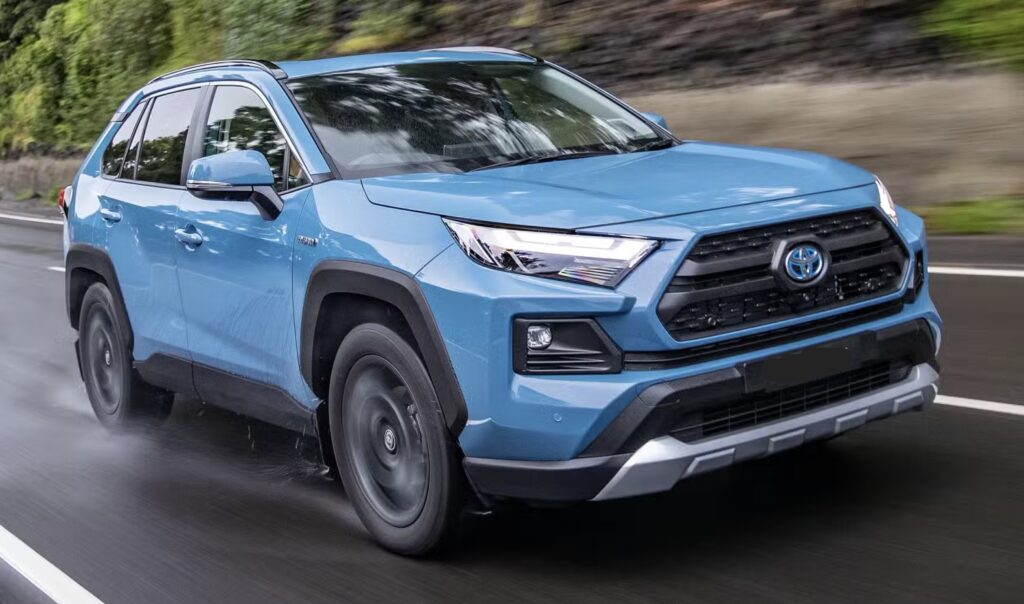
Our list of hybrid deal recommendations for March wouldn’t be complete without a plug-in hybrid electric vehicle (PHEV). You can finance a 2025 RAV4 PHEV at 4.75% for 72 months. This Toyota boasts an MPGe of 94 and an all-electric range of 42 miles. You also won’t need to install Level 2 home charging equipment, as most drivers get by just fine with Level 1 (120V).
See RAV4 PHEV and Hybrid listings with local market data
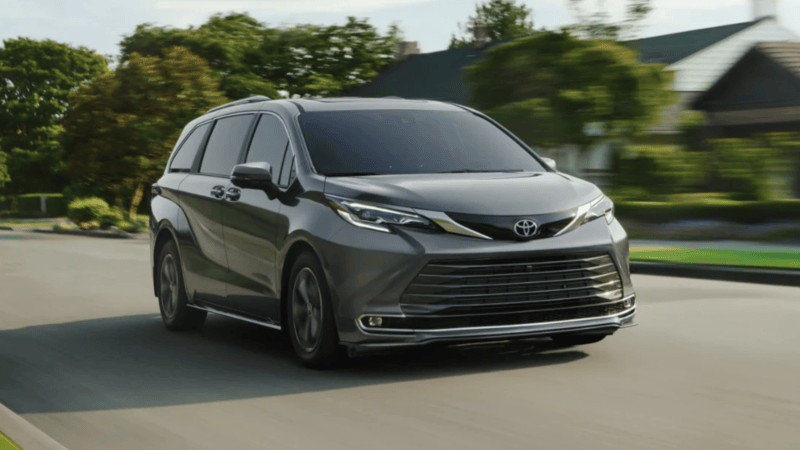
While compact crossovers are taking up most of our list’s top offers, drivers seeking a minivan can look toward the 2026 Toyota Sienna Hybrid. Through March 31, the 2026 Sienna is available at 4.99% APR for 72 Months. This deal states that 11 Sienna configurations are eligible, giving shoppers plenty of customization.
All trims offer optional AWD, except the Woodland Edition, which features standard AWD. Fuel economy for this minivan ranges from 35-36 city/highway MPG. It’s amazing that this minivan gets better fuel economy than many sedans.
See Sienna Hybrid listings with local market data
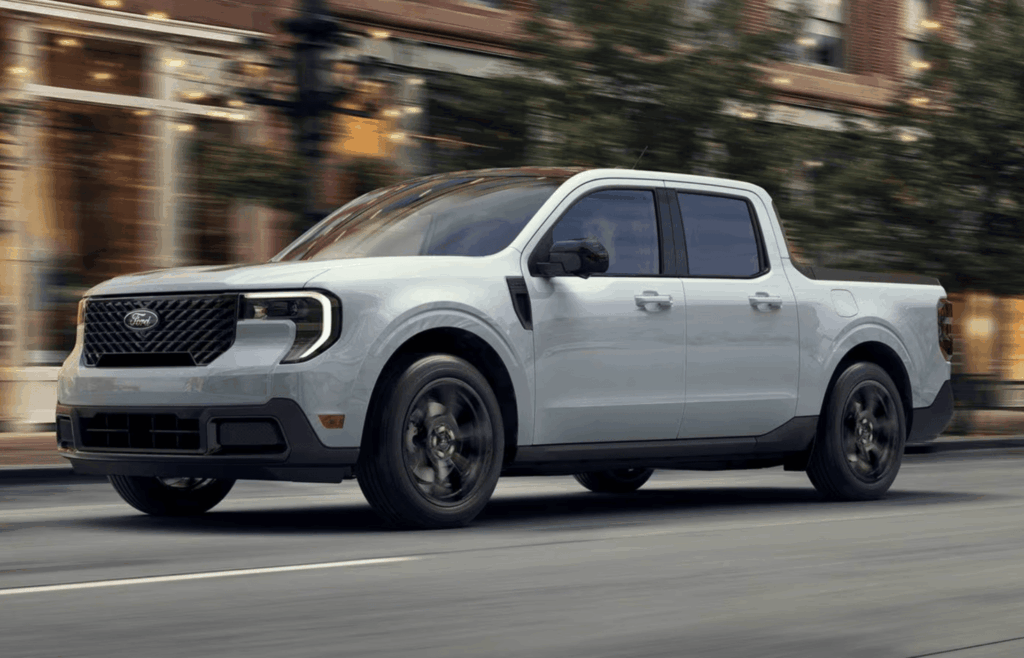
Don’t worry, pickup fans; Ford has a March hybrid deal for you. Qualified shoppers can lease the 2026 Ford Maverick Hybrid XL FWD at $359 per month for 36 months, with $3,189 due at signing. The compact 2026 Maverick Hybrid XL FWD’s combined fuel economy is impressive at 38 MPG, but towing maxes out at 2,000 lbs, so this trim is best for those who need light utility support.
See Maverick Hybrid listings with local market data
Finance and lease deals can vary by region, so check a manufacturer’s offers page using your to confirm your area’s eligibility. If a hybrid you’re considering isn’t on our list, CarEdge’s Car Buying Concierge Service links you with an expert who locates deals — handles dealership outreach, paperwork, and negotiations — and coordinates delivery logistics so you don’t miss out on the best offers.See all of the best deals this month at our March Car Deal Hub.
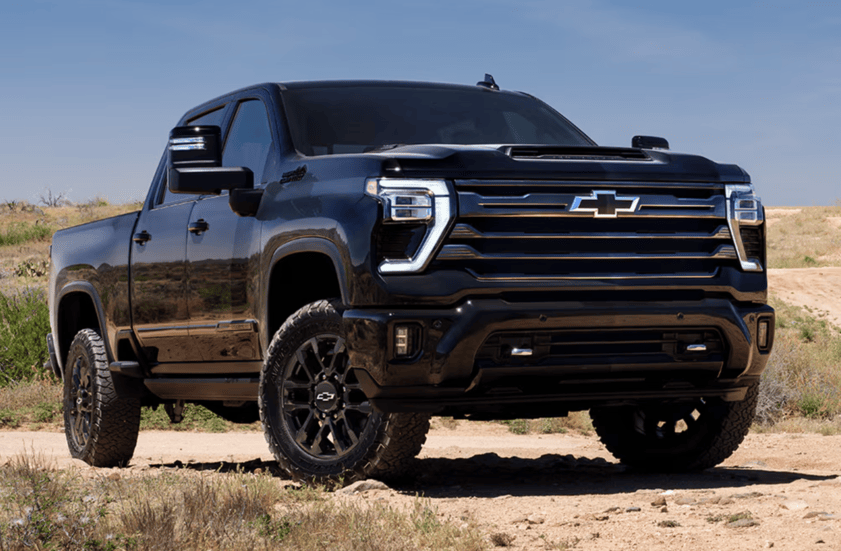
From trucks to SUVs to performance cars, Chevrolet’s passenger lineup is broad. While this versatility gives shoppers options, five models stand out with higher average resale values.
After highlighting which new Chevrolets lose the least value after five years, we’ll take a closer look at buyer reassurances that enhance each model’s appeal, including, but not limited to, insurance, maintenance, and interest.
Discover the Chevrolets with the strongest resale retention below.
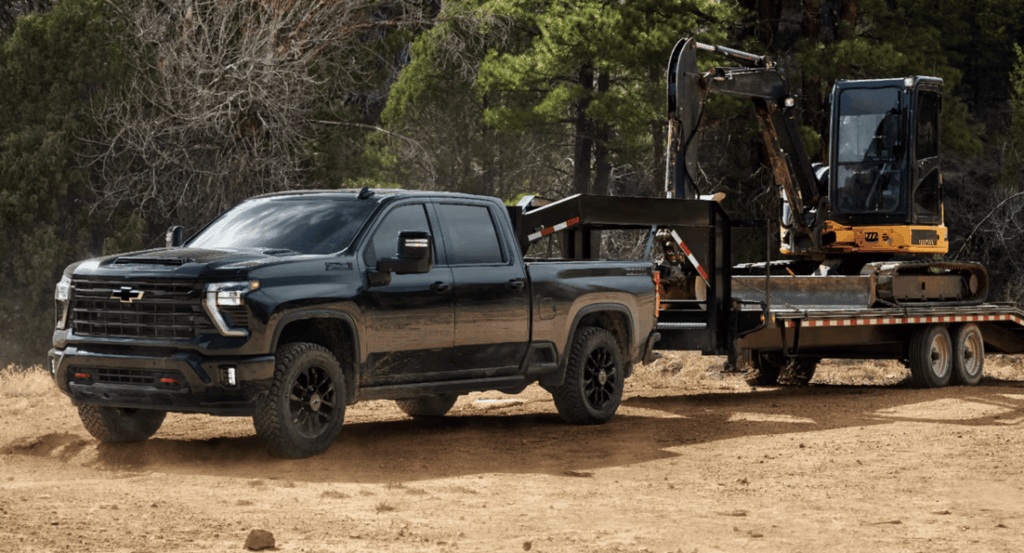
The 2026 Chevrolet Silverado 3500HD has the lowest 5-year depreciation rate of any Chevrolet model at 22% of value lost over five years. This assumes an average of 13,500 miles annually. With a selling price of $59,504, this one-ton, heavy-duty pickup maintains 94.17% residual value after a year, which is strong considering that new cars typically lose 10% to 11% of their value immediately upon driving off the dealership lot.
Key factors influencing the Silverado 3500HD’s high market demand include its exceptional towing (up to 36,000 lbs for 2026), complemented by robust Duramax diesel performance with 470 horsepower and 975 lb-ft of torque.
Since drivers often choose the 3500HD for its work and personal capability, durability is of the utmost importance. The Chevrolet Silverado 3500HD delivers this durability through design choices like high-strength steel construction, along with a fully boxed ladder frame that resists twisting forces and optimizes towing strength. Silverado 3500HD durability further protects your investment by lowering maintenance costs to 8% ($4,803) after five years.
Given the 2026 Chevrolet Silverado 3500HD’s depreciation rate, it’s no surprise that the 2026 Silverado 2500HD ranks second on our list by losing 29% of its value on average after five years, assuming a selling price of $58,013.
The Silverado 2500HD shares the 3500HD’s fully boxed ladder frame and reinforced steel, which solidify durability, and its three-quarter-ton size is better for those who can skip the 3500HD’s extreme max capacity and bulk. However, the 2500HD still delivers plenty of capability in work and personal use with 22,420-lb max towing, and you can select the 3500HD’s 6.6L Duramax turbo-diesel V8 to match its 470 horsepower and 975 lb-ft of torque.
While the 2026 Silverado 2500HD has higher five-year depreciation, it offers slightly lower average insurance, fuel, and interest costs.

If you’re interested in the fast-growing subcompact SUV segment, the 2026 Chevrolet Trax is worth considering, thanks to its competitive 34% depreciation rate after five years.
Since its 2015 model-year debut, the Trax has built a following thanks to its strong value proposition. For 2026, the Trax starts at $21,700. Competing entry models within its segment, such as the Kia Seltos and Nissan Kicks, have higher base prices at $23,790 and $22,430, respectively.
Drivers looking for a subcompact SUV still want to make the most of their vehicle’s class size, and the 2026 Trax delivers in this area following the 2024 model’s redesign, adding 11 inches in length and 2 inches in width. Chevrolet markets the Trax as compact, but most sources still list it as subcompact due to its dimensions.
A true Chevrolet compact like the 2026 Equinox has a higher five-year average depreciation rate of 40%, but you’ll want to consider that, unlike the Equinox, the 2026 Trax doesn’t offer all-wheel drive (AWD) as an option.

The subcompact 2026 Chevrolet TrailBlazer similarly benefits from its segment’s high demand with a 37% average five-year depreciation rate. Like the Trax, the 2026 Trailblazer’s starting price remains accessible at $23,300.
However, the Trailblazer distinguishes itself with available AWD, a more powerful available engine, and improved light off-road capability. The Trailblazer and Trax both contain a standard 1.2L turbo engine producing 137 horsepower and 162 lb-ft of torque, but the Trailblazer offers an optional 1.3L turbo with 155 horsepower and 174 lb-ft of torque. This added power, complemented by available AWD, is a valuable asset in the subcompact economy class where performance is often lacking.
The Trailblazer is also better equipped for off-roading beyond optional AWD with the ACTIV trim’s functional skid plates and all-terrain tires. In contrast, the Trax offers all-terrain tires, but its optional skid plates are purely decorative.
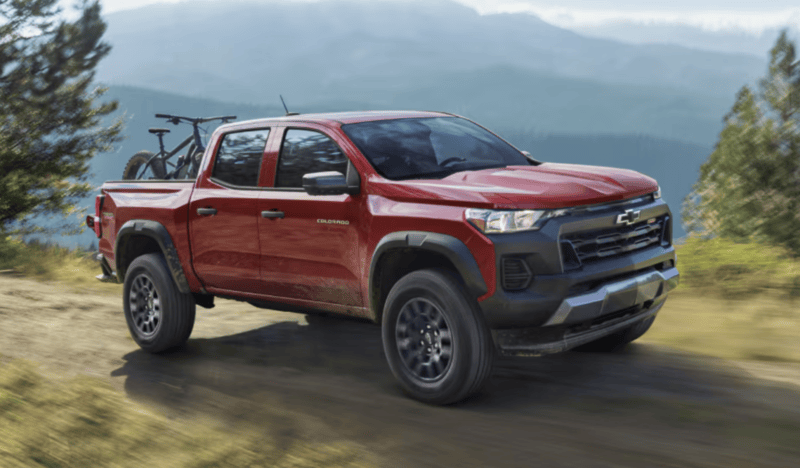
If a midsize pickup’s right for your driving needs, the 2026 Chevrolet Colorado’s 5-year depreciation rate of 39% makes this truck worthy of your consideration, especially if you’re an urban contractor or outdoor enthusiast.
While our list’s leader, the 2026 Silverado 3500HD, has a starting price of $45,900, which is $13,500 more than the 2026 Colorado, it’s worth noting that the Colorado competes with this full-size pickup in more ways than one. Fuel costs are naturally much lower ($10,500 over five years compared to $19,250), and its interest/maintenance costs are 3% and 2% lower than average.
You’ll want to prioritize the Colorado over the Silverado 2500HD or 3500HD if your driving values place greater emphasis on fuel efficiency, city and parking maneuverability, and moderate towing needs, along with a lower starting cost.
Knowing which Chevrolets offer the best resale values is only the start of how CarEdge helps you maximize your automotive investment. Our free tools help you learn what you should pay for a given model in your area, receive essential research and ratings, and gain access to shopping cheat sheets covering topics like negotiation tactics, price verification steps, and more.
If you’d prefer to have one of our expert car buyers handle your transaction from start to finish, you can get started using our Concierge Service with a free consultation.

Drivers are increasingly getting pushed into the used market. In January, the average transaction price (ATP) for a new vehicle was $49,191, a 1.9% year-over-year increase and an all-time high for January. Adding to the pain, automakers lowered sales incentives last month, with the average package equal to 6.5% of ATP, down from 7.5% in December 2025.
While buying used can mitigate costs, a smooth purchase isn’t guaranteed. There are some risks and traps to watch out for when buying any used car.
Below are a few recent accounts of used car buyers who weren’t so lucky in their shopping experience, along with steps you can take to avoid avoid making their mistakes.

The first used-car buying horror story we’ll highlight is a driver who was quoted for over $7,000 in repairs less than 24 hours after purchasing their vehicle.
According to this driver’s Reddit post, they purchased a 2014 BMW 3 Series with 45,000 miles under assurance that the car was in good condition, with a solid CarFax to boot.
The Reddit user and BMW purchaser wrote: “The following morning on Tuesday, lights come on for brakes and chassis stabilization. I bring it to a reputable shop near me (Virginia) and they say the brakes are completely shot, ABS is leaking fluid everywhere and screws are threaded horribly with damage. The quote was over $7,000 less than 24 hours after purchasing the vehicle. Shop ensured me that the car would not pass inspection in its current state.”
They added: “Note to self, always perform a pre-purchase inspection.”
It only took this driver 30 miles to realize their mistake: they skipped an independent pre-purchase inspection (PPI). A test drive and dealer assurances don’t negate a buyer’s need for a PPI, which can catch issues that a test drive won’t.
Once a PPI reveals issues, a driver can walk or use the information as leverage during negotiations. If a dealer refuses a PPI, you should always walk away, and including a contingency in your contract stating that the vehicle must pass a state inspection within a certain number of days (ex: 3 to 7) adds protection.
A PPI will cost $150 to $250 on average, which is a pittance in comparison to $7,000+ in repairs. This BMW buyer noted that even if they had purchased an extended warranty, which they didn’t, the warranty wouldn’t cover the repairs since they were pre-existing rather than unexpected, which is accurate.
Regarding the buyer noting that the CarFax looked good, a CarFax report covers data such as reported accidents, title issues, and some service records. However, it won’t detail the driver’s mentioned problems, such as fluid leaks, brake condition, or ability to pass a state inspection, underscoring the importance of a PPI. Learn more about the importance of a PPI.

Next, we’ll be looking at a used car shopper who heard a concerning noise when turning a vehicle’s steering wheel during a test drive.
The dealer told this shopper they’d fix the issue under the manufacturer’s warranty, but only after the driver signed the paperwork. This shopper moved forward since the dealer said they’d include a right to rescission in the agreement’s documentation. However, when the dealer’s finance department reviewed the documentation to verify a right to rescission clause upon the buyer’s request, none was found.
On Reddit, this shopper, who ultimately walked, said the dealer created a “We Owe You” document, but the language was a bit loose and could be interpreted in their favor.
Ideally, you shouldn’t sign until an issue is fixed.
Still, this type of agreement isn’t guaranteed, as one Genesis manager replied to this Reddit post: “I will not fix it and have you come back, because by then you bought elsewhere.”
If a dealer insists on you signing first with a repair scheduled later, you’ll need to request a binding, enforceable agreement outlining what will be repaired, who is paying, when it will be completed, and what occurs if the repair isn’t done. Clearly documenting these terms means retaining leverage and avoiding situations where a dealer can delay, minimize, or interpret vague promises to their advantage.
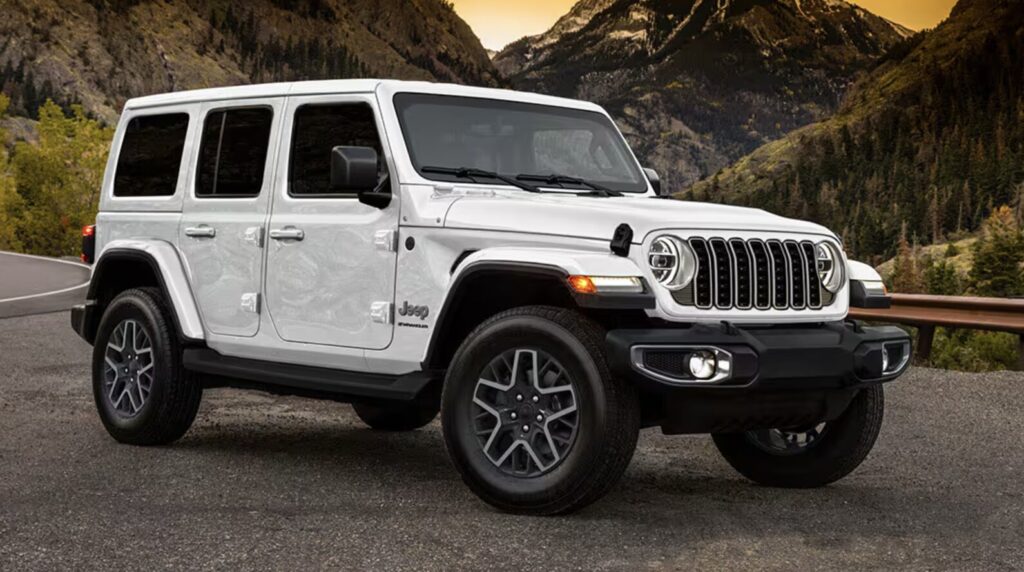
Some used car buyers assume that an extended warranty equals comprehensive protection, but assumptions and lack of verification can leave even those with an extended warranty in the lurch, as was the case with this Reddit user.
The used-car buyer reported purchasing a used Jeep Wrangler from a GM dealer, obtaining an extended powertrain warranty, and having the vehicle’s engine blow from overheating five days later. After getting their Jeep towed to the dealer and claiming the warranty for repairs, an inspector denied the claims due to aftermarket tires, wheels, and lift parts, which the buyer said were pre-existing.
This is another example of a driver that would’ve benefited from a PPI by an independent mechanic. A PPI would’ve typically highlighted the presence of aftermarket parts, which often void warranties, while revealing problems that pre-empted the engine blowout. Any discovered problems could’ve caused this buyer to walk or given them more negotiation leverage.
There’s also the issue of carefully reading a warranty.
Additionally, carefully reviewing the warranty would’ve helped them understand:
Confirming coverage in writing from the dealer or warranty provider solidifies protection.

Avoiding the used-car-buying horror stories above is doable with a bit of knowledge and preparation. However, there’s an easier way to buy in 2026. CarEdge’s Concierge streamlines the process by matching you with a shopping expert who understands your needs, launches your search, completes dealer outreach, and handles negotiations from start-to-finish. How much is your time worth? Say goodbye to the dealership games, and have an expert handle it for you!
President’s Day promotions, savings on leftover 2025 models, and lower foot traffic motivating sales staff are a few reasons why you might consider February car shopping. However, this month’s savings opportunities make it easier to overlook certain value traps, especially with popular models.
Spend more time finding quality offers by avoiding the five worst car deals of February 2026 below. Afterward, don’t miss our guide to the BEST offers in February. As always, some manufacturer incentives are regional in nature.
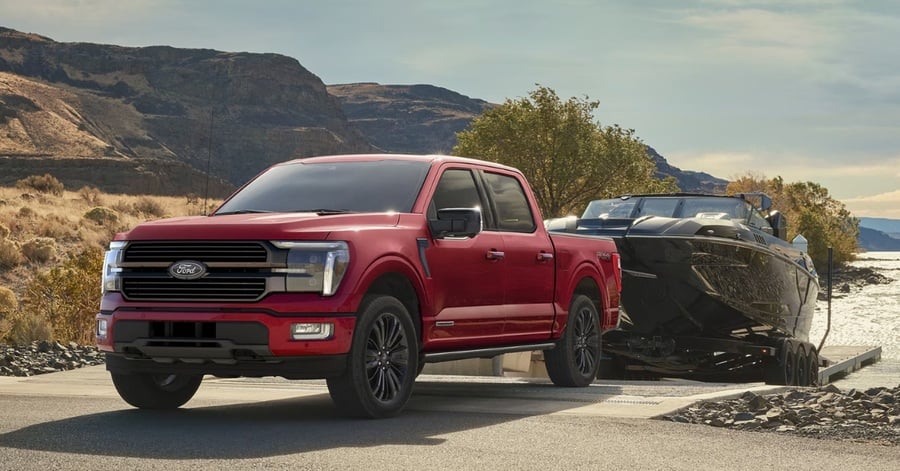
Could a truck be on both the best AND worst deals of the month? Somehow, Ford made it happen. Ford’s F-Series maintained its position as the U.S.’s most popular truck in 2025 for the 49th year. The F-150, the F-Series’ best-selling model, moved nearly 830,000 units.
Still, buyers shouldn’t expect finance deals on leftover 2025 F-150 XLT inventory in February, as Ford’s offer for this trim through March 2 is 2.9% APR for 60 months, plus $3,250 cash. Ford doesn’t seem to recognize that this is last year’s F-150, but primary competitors have gotten the memo.
In comparison, primary F-150 rivals like the 2025 Ram 1500 (Big Horn Crew Cab 4×4) offer 0% APR for 72 months through March 2. See Ram offer details.
However, if you remain keen on the F-150, you’re better off leasing the 2025 F-150 STX 4×4 at $479 per month for 36 months with $0 down. This is in fact one of the best deals for February truck shoppers. But if you’re financing, definitely look elsewhere!
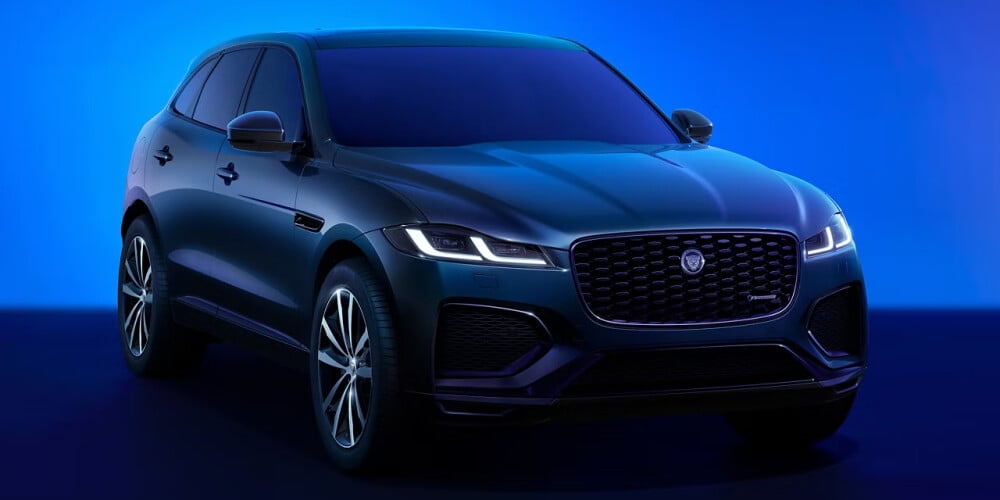
You’d think that Jaguar would offer better February incentives for its 2026 F-Pace, with the model spending months on America’s list of slowest-selling vehicles. In January,the plug-in hybrid SUV had 292 days of supply, the market’s third-highest behind Maserati’s Grecale and Volkswagen’s ID.4 at 302 and 527 days, respectively.
Through March 2, you can finance the mid-size 2026 F-Pace at 3.9% APR for 12 to 48 months. The ideal APR range for luxury models with overstock in February is 0% to 0.9%. While not a plug-in hybrid like the F-Pace, several compact-to-mid-size electric Lexus RZ trims are available at 0% APR for up to 72 months through March 2. See Lexus offer details.
Still, those preferring British luxury can get a better (albeit only slightly) deal leasing the 2026 F-Pace at $679 per month for 36 months, with $6,995 due at signing. See Jaguar offer details.
With the 2026 RAV4 redesigned with an all-hybrid lineup, Toyota is offering a great retail deal on leftover 2025 RAV4 inventory, right?
Nope. Toyota’s February promotion for the 2025 RAV4 plug-in hybrid, valid through March 2, offers 4.75% APR for 72 months. The 2025 RAV4 is a great compact SUV with solid fuel economy and an extensive suite of safety features, but competitors offer better deals.
For example, through March 2, Mazda is offering 0.9% APR for 60 months on multiple CX-5 trims. While the 2025 CX-5 had primarily been unchanged since its 2019 facelift, the same goes for the 2025 RAV4, which was redesigned in 2019.
Through March 2, qualified buyers can finance several 2-door or 4-door 2025 Jeep Wrangler trims at 6.9% APR for 72 months.
You might be quick to press “schedule test drive” on your local Jeep dealership’s website, since 6.9% is what many would consider a solid offer for those with a “good” credit score (700-749).
However, before you do, you’ll want to consider that:
Returning Stellantis owners and lessees can receive a $5,000 total cash bonus toward a 4-door 2025 Jeep Wrangler Sport through March 2. Alternatively, returning Stellantis owners and lessees can qualify for a $3,000 cash bonus toward multiple 2-door 2025 Wranglers, such as the Sport or Sport S. See Jeep’s offer details.
Honda’s offering 5.49% APR for 61-72 months on the 2026 CR-V Hybrid isn’t downright terrible, but it’s a value trap compared to other options. Competing models like the 2025 Subaru Forester Premium Hybrid are available at 0% APR for 75 months.
While this is a 2025 Forester compared to a 2026 CR-V, the 2025 Forester is a complete redesign, and the 2026 CR-V Hybrid is a mid-cycle refresh. Some buyers may be more likely to miss this opportunity, since the CR-V hybrid sold significantly more units than the Forester hybrid in 2025. See Subaru’s offer details.
When shopping for the above deals, remember that offers can vary by region, so check a manufacturer’s site before test drives.
If you’re looking for the easiest way to get the best car buying deal in February, use CarEdge’s Concierge Car Buying Service, handling your entire transaction from start to finish.You can also find tips on how to negotiate deals on CarEdge’s Community forum, or reference our 700,000-strong YouTube family for pro tips and market news.
Recent market trends show that truck popularity isn’t slowing, which doesn’t always mean good news for those seeking deals. In December, Americans purchased 233,000 full-size pickups, the segment’s best month in five years and its sixth-best in the past decade. However, the average price for a full-size pickup was $66,386, just below the record set in October 2025.
However, there are manufacturer incentives worth thousands of dollars, if you shop the deals. Why pay MSRP or high interest rates when truck offers like these abound in February?
Whether you’re looking for a mid-size or full-size truck, we’ve streamlined your search for a perfect offer below with a list of February’s best deals.
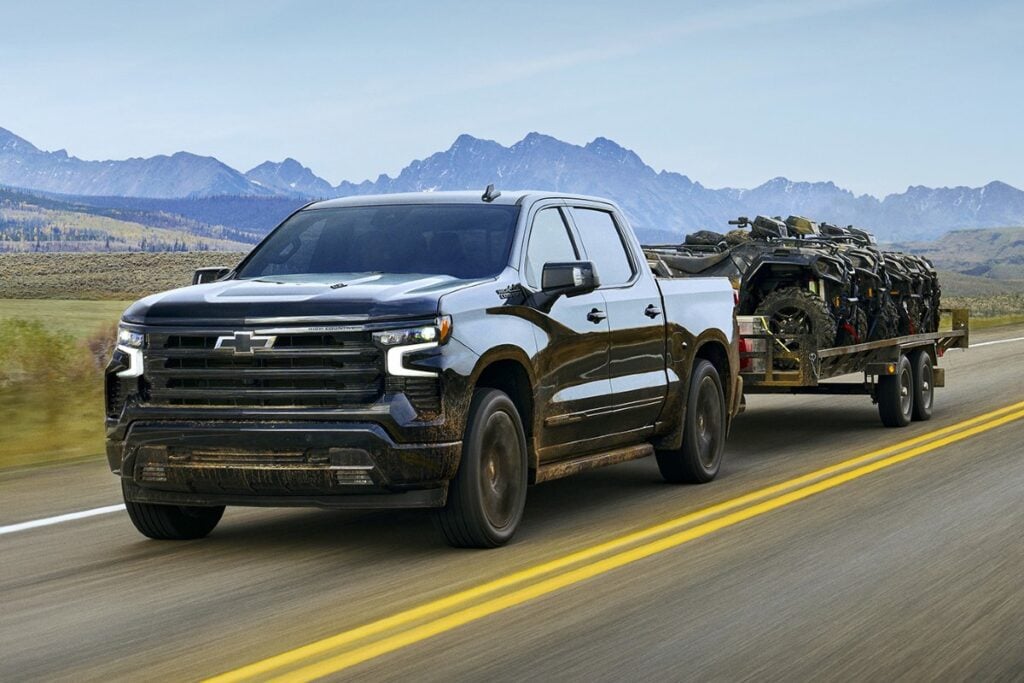
Through March 2, 2026, current lessees of 2021 or newer Chevrolet vehicles can lease the 2026 Silverado 1500’s Crew Cab 4WD LT trim with a TurboMax engine at $379/month for 36 months, with $1,709 due at signing.
If you’re interested in financing, you can get a 2025 or 2026 Silverado 1500 with a TurboMax engine at 1.9% APR for 36 months through March 2.
The 2026 Chevrolet Silverado 1500’s TurboMax engine offers 310 horsepower, best-in-class standard torque of 430 lb-ft, and strong towing of up to 9,300 lbs.
Standard interior luxuries include, but aren’t limited to:
The Crew Cab 4WD LT isn’t the only Silverado 1500 that’s compatible with a TurboMax. For those preferring this model’s finance deal, the TurboMax is standard on WT, Custom, Custom Trail Boss, RST, and LT Trail Boss trims.
See Chevrolet Silverado 1500 listings near you.
Is a mid-size Chevrolet pickup more your speed? Current lessees of any 2021 or newer Chevrolet can lease the Colorado Custom Crew Cab 2WD at $279/month for 36 months, with $1,929 due at signing through March 2.
Alternatively, you can finance a 2026 Colorado at 3.9% APR for 60 months, complemented by a $2,000 Chevrolet mid-pickup competitive cash allowance. See Chevrolet offer details.
Some key advantages you’ll get with the Colorado over the full-size Silverado 1500 are:
See Chevrolet Colorado listings near you.

Half of the 83,000 F-150s for sale in February are 2025 models, and you can lease the 2025 F-150 STX 4×4 2.7L at $479/month for 36 months, with just $479 due at signing.
If you’d like to own an F-150, you can finance the F-150 STX 4×4 2.7L at 2.9% APR for 60 months. These Ford deals are good through March 2. See Ford offer details.
The STX isn’t a bare-bones pickup truck. Choosing the F-150 STX means receiving:
See 2026 Ford F-150 listings near you.
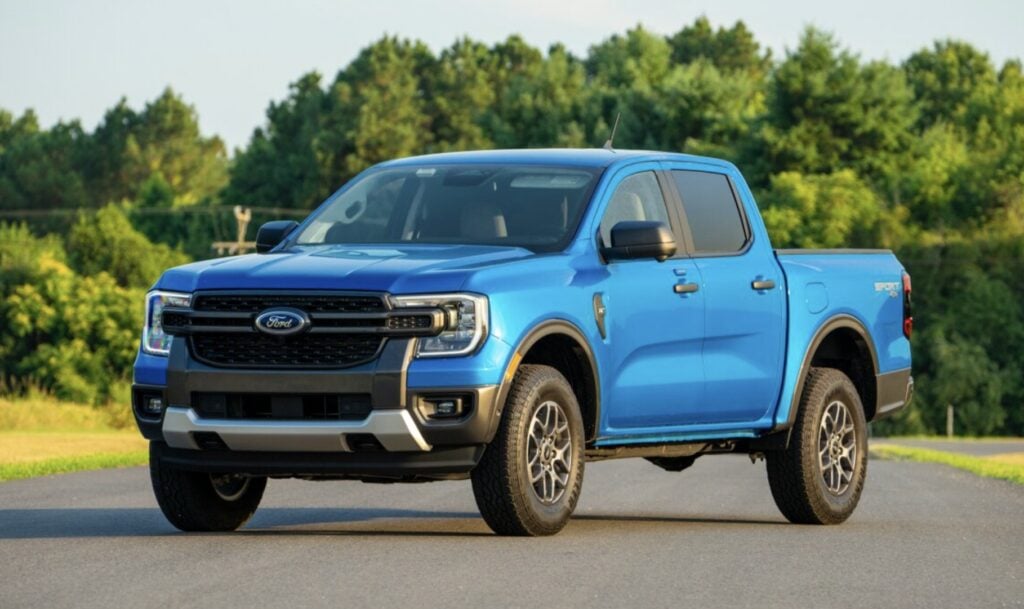
Similar to Chevrolet, Ford is offering an attractive mid-size truck lease. Through March 2, 2026, you can lease the 2025 Ford Ranger XLT 4×4 from $471/month for 36 months, with $471 due at signing. See Ford offer details.
Besides standard 4WD, this trim boasts a 9.3-inch ground clearance, a 43.5 cu ft bed that’s 1.6 cu ft larger than the Chevrolet Colorado, and 7,500-lb maximum towing that’s on par with rivals.
See 2026 Ford Ranger listings near you.
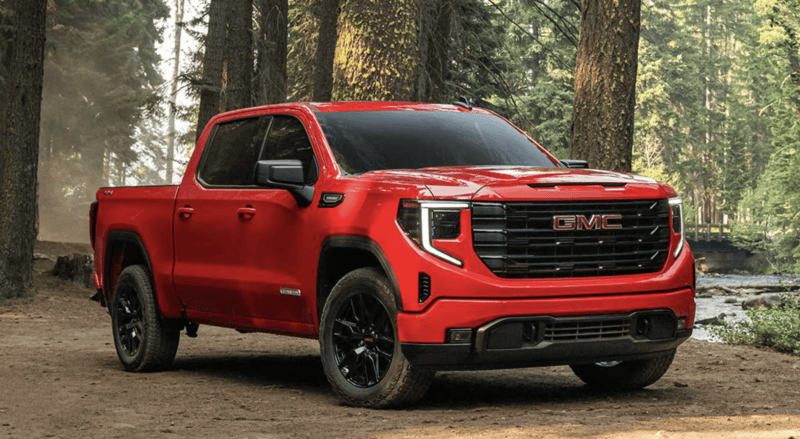
GMC is offering some big Presidents Day truck sales in February. With a trade-in, you can receive a maximum $8,350 cash discount on 2026 GMC Sierra 1500 models with a TurboMax engine. However, don’t let your guard down with this trade incentive. Always negotiate your trade-in value as a separate transaction to get the most for your vehicle.
Use CarEdge’s Trade-In Negotiation Guide to play it smart and get the most when you trade-in.
Alternatively, current lessees of 2021 or newer GM models can lease the 2026 Sierra 1500 Short Box Crew Cab 4WD Elevation w/TurboMax trim for $299/month for 24 months, with $3,709 due at signing. See GMC offer details.
Like the 2026 Chevrolet Silverado 1500 TurboMax, the full-size 2026 GMC Sierra 1500 TurboMax produces 310 horsepower and best-in-class standard torque of 430 lb-ft, with 9,400-lb max towing.
See 2026 GMC Sierra 1500 listings near you.
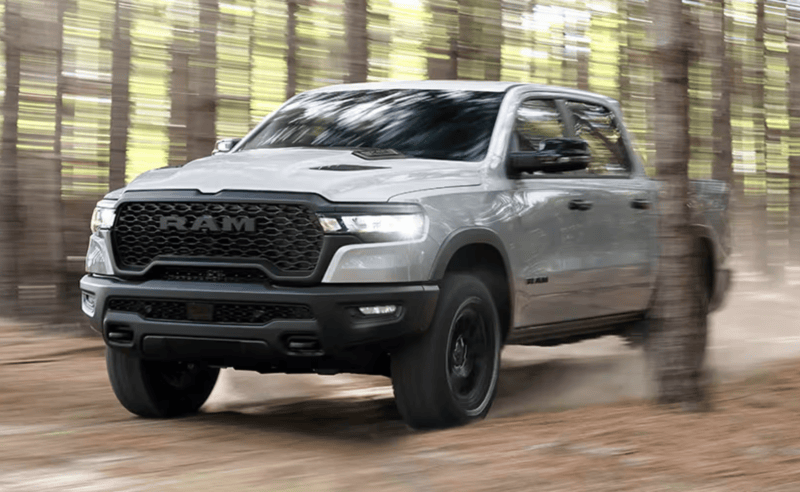
If you’re considering financing a full-size Ram 1500, February is an ideal time to shop, as Ram is offering 0% APR for 60 months on the 2026 Ram 1500 through March 2. Remaining 2025 inventory is eligible for an even more impressive 0% APR for 72 months. See Ram offer details.
Ram 1500 trims compatible with this offer include:
If you’re cross-shopping the top-selling trucks, test drive the Ram 1500 if you’re seeking a smoother, quieter ride and class-leading passenger room/storage.
See 2026 Ram 1500 listings near you.
The best electric truck deal in February is 0% APR for 60 months on its Chevrolet’s 2025 Silverado EV, which features faster charging and more range than competitors like the Ford F-150 Lightning or Tesla Cybertruck.
Unlike the F-150 Lightning, the Silverado EV hasn’t been discontinued. With specs that firmly place it in the top of its segment, it would be a shock to the industry if it ever is.
See 2025 Chevrolet Silverado EV listings near you.
When shopping for the above deals, remember that offers can vary by region, so check a manufacturer’s site before test drives.
If you’re interested in an easier way to get the best truck deal in February, use CarEdge’s Concierge Car Buying Service, handling your entire transaction from dealership to driveway.
👉 Looking for tips on how to negotiate the best truck deal? Check out the CarEdge Community forum, and our 700,000-strong YouTube family for free tips and market updates.