
CarEdge saved me over 4,500 dollars on a brand new Honda Pilot. I can't say thank you enough.
Price intelligence
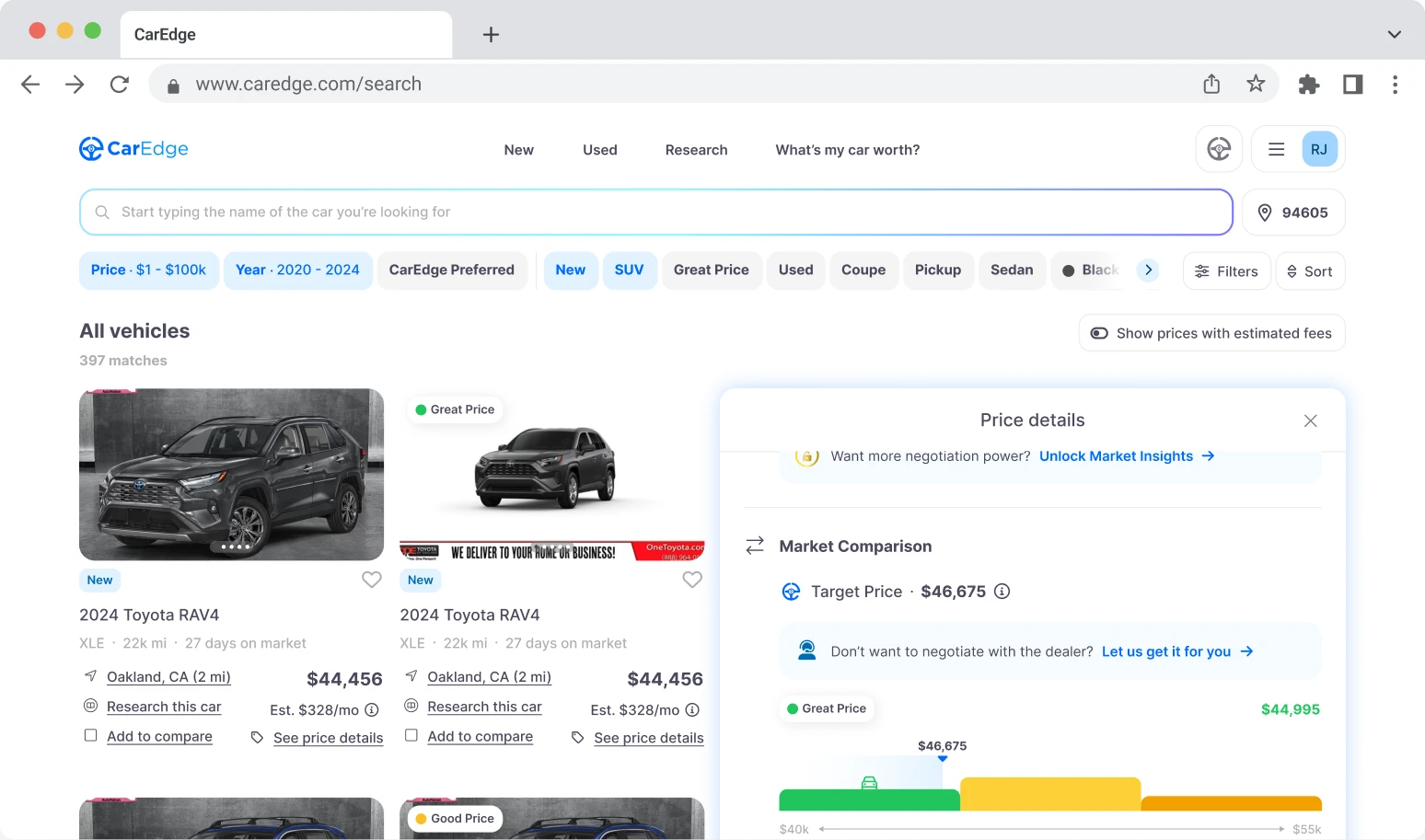
Find a wide range of vehicle listings with market insights on new and used listings near you.

What can I do with CarEdge?
 CarEdge Insights
What can I do with CarEdge?
Get access to exclusive information so you can make an informed car buying decision — all in one place.

Find a wide range of vehicle listings with market insights on new and used listings near you.
Track your vehicle’s value and cash in when the time is right to sell.

Access to our proprietary data to help you find the right car, at the right price. Find these unlocked on every listing after subscribing.

With our expert-led, tech-enabled car buying service, we will locate, negotiate, and deliver your vehicle so you can get a new car hassle free.


Help us personalize your CarEdge experience — it only takes a second.
Your answers help us personalize your CarEdge journey — we’ll follow up with tips and next steps that match your buying timeline.

In 2026, getting top dollar for your trade-in requires more preparation and strategy than in previous years.
Here’s why: 7-year-old vehicles traded in during 2025 had an average value of $14,400, a 72% increase from 2019, when they were valued at $8,400, according to a recent report. That’s usually great news for sellers, but there’s a catch.
Despite rising used-car values, many drivers still get less than expected when trading in. The gap between projected and actual resale values is widening as new and used car prices converge. Without knowledge and preparation, you’re likely to leave money on the table.
We consulted CarEdge’s consumer advocates to find out how to get the best trade-in value in 2026. The common theme? Prepared, informed buyers get the best deals. Let’s take a look at how you can top-dollar for your trade-in this year.
Many drivers aren’t aware that some parts of a car trade-in contract are negotiable, primarily because dealers present the agreement as a package.
The number one rule for getting the most for your trade-in is to always treat it as a separate transaction. The car salesperson WILL do their best to tie your trade-in to your purchase. That’s a recipe for a low-ball offer. Negotiating your car purchase and trade-in together gives the dealer more opportunities to profit at your expense. Handle them separately to maximize your trade-in value.
In most cases, the appraisal of your trade-in value isn’t the final offer. Before you arrive at the dealership, get several online offers and values for your car, so you know what it should be worth. Be honest with yourself about the condition of your car when getting these values.
Having several online offers from CarEdge’s free tool, CarFax, Carvana, and others (as well as the KBB Value) not only gives you an up-to-date assessment of your vehicle’s trade-in value, it is your source of leverage against dealer offers.
Go one step further and get trade-in offers in writing from at least two dealerships, ideally three or more. They’ll need to see your vehicle in person to do this, but it’s worth the hassle. You’re likely to get hundreds of dollars more (or thousands, in some cases) by not skipping this step. It’s work on your end, but work that pays.
Having service records on hand can help your trade-in value, too. However, with the widespread use of CarFax and online service records, this is less crucial in 2026. It merely helps to show that the car has been taken care of.
Getting your car detailed can also help you achieve a higher trade-in value, but don’t spend hundreds of dollars on this. A good interior and exterior cleaning at home is usually best for your wallet, and for getting a fair offer for your trade-in.
This is an important one. You’d be shocked to see how effective the following questions are at getting more for your trade-in: “Is that your best offer? Do you mind checking the numbers again? I believe it’s worth more than that.”
In many cases, they’ll ‘check with their manager’ and come back with at least $100 more in value, often more. And that’s all just from showing that you’re not going to just accept the bare minimum for your vehicle.
Knowing what your vehicle offers is crucial when negotiating trade-in offers, as its specific trim level may raise its value. The original window sticker can help you identify these features. It’s likely sitting in your glove compartment.
For example, mid-to-upper level trims of a specific model tend to offer features that include but aren’t limited to:
Anything that’s not standard equipment on your model’s base trim is fair game. Did you get work done recently? Noting new parts and repairs can increase offers for any trim level.
While 2026 is set to offer higher average trade-in offers, some periods are more ideal for maximizing value. Edmunds data shows that Q1 and Q2 are the best times for trade-ins, as used car values tend to trend higher.
Additionally, since a car loses more value the longer you have it in your driveway, it’s more appealing during Q1 and Q2 compared to the end of the year when it’s about to become another model year older.

What kind of vehicle are you trading-in? If you’re trading-in an all-wheel drive SUV, winter can be an opportune time to get top dollar. Softer-selling segments like a convertible may benefit from a trade-in during the warmer months.
Is the air conditioning out on your trade-in? You won’t get top dollar for it during the heat of summer!
Are your tire tread getting low? If so, the icy winter months aren’t the best time to sell. It all matters if you’re aiming to get top dollar for your car!
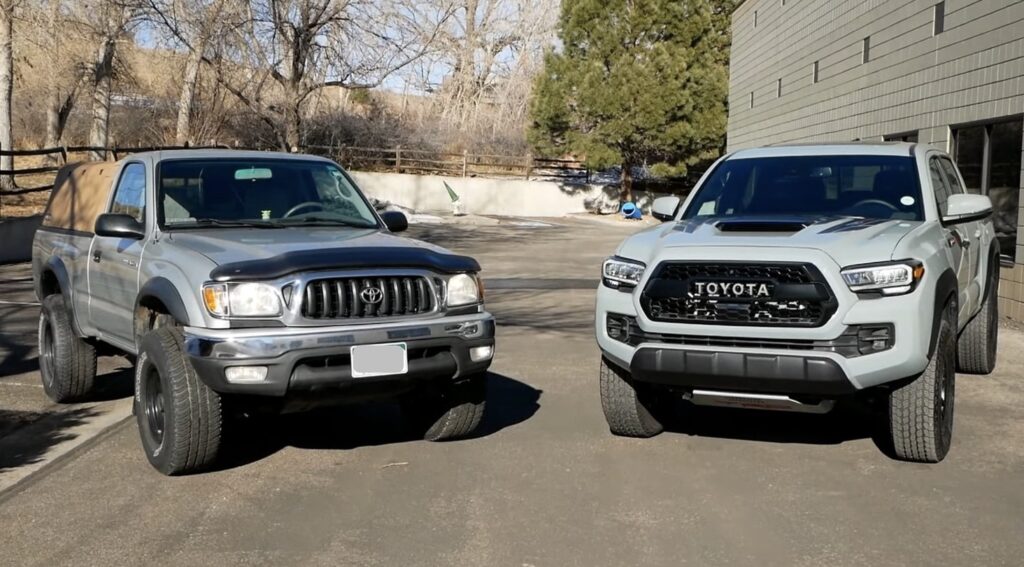
When considering trade-in timing, mileage often comes to mind. Luckily, there’s no major drop-off after certain milestones, as long as your vehicle has been well-kept, which you can help prove with documents like timely service records.
In comparison, model years matter more. It may be obvious to some, but many sellers are surprised to learn that like-for-like, a five year-old car with just 30,000 miles on the odometer is still going to be worth significantly less than a two-year old car with 50,000 miles. Model year matters to buyers, especially if there’s a chance your trade-in will go to auction.
Where a vehicle was built used to be a non-factor; however, a car’s manufacturing location can now play a significant role in resale value due to tariffs.
Depending on the country, automakers exporting vehicles to the U.S. face tariff rates roughly ranging from 10% to 27.5% on a car’s declared value, increasing dealer replacement costs for impacted new models. When these replacement prices increase, dealers have more incentive to lean on already-imported used models, giving you added leverage if you have an imported brand with limited U.S. production.
Examples of these brands can include:
If you follow the news in 2026, you know that the tariff situation seems to change weekly. Even so, sharing this bit of information can still give you more negotiation power, as it shows you’re an informed buyer (and seller).
What if you didn’t have to go back and forth to dealerships, negotiating with pushy salespeople all along the way? Wouldn’t it be nice to have an experiences automotive professional do it all for you? That’s what we offer with CarEdge’s car buying service. From finding the perfect trim and paint color to negotiating every aspect of your deal (including your trade-in), we make car-buying easy.
Learn more about CarEdge Concierge, and take the stress out of your big purchase!
Finding a new, quality SUV for under $40,000 is getting increasingly difficult. The average transaction price of a new vehicle is now $50,000 as car prices continue to outpace wage growth. In other words, it’s getting harder to afford a new car in America. Still, great value can be found if you know where to look.
We’re here to save you time and money with five of the best SUVs under $40,000. These top picks offer the best overall value, features, and reliability. Our list includes compact crossover favorites, an affordable three-row SUV, and one leftover 2025 model worth considering.
Here are the best-value SUVs and crossovers for new car buyers in 2026.
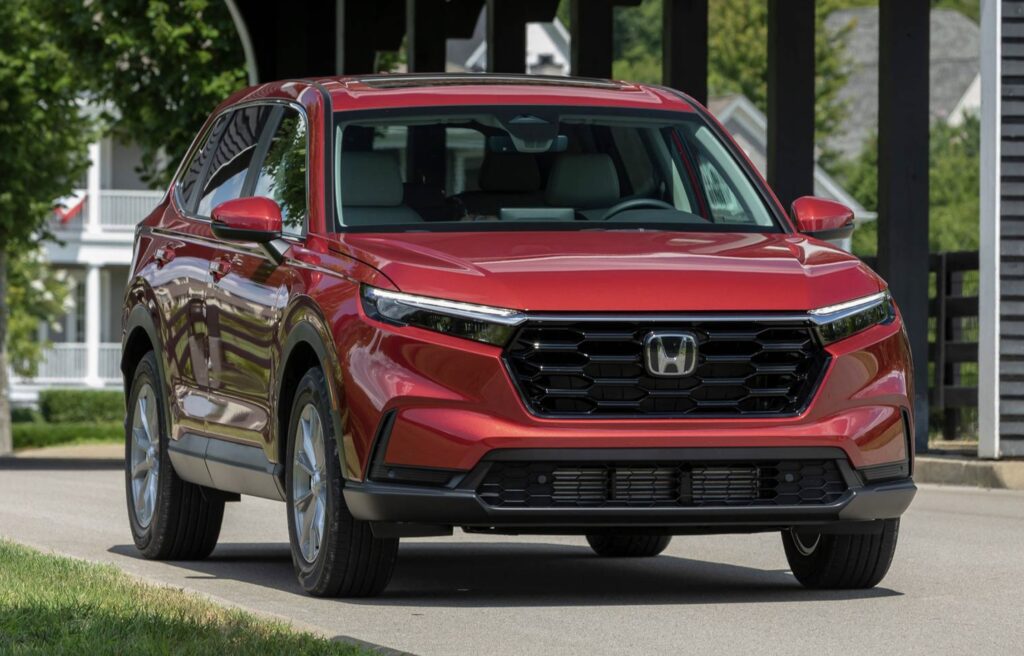
The 2026 Honda CR-V TrailSport Hybrid starts at $38,800, but the destination fee alone can put you over $40,000. In comparison, the 2026 CR-V Sport Hybrid offers stylish compact efficiency at a $35,630 base price. This hybrid electric vehicle’s (HEV) mileage is rated at a competitive 43/36 city/highway mpg in front-wheel drive (FWD) and 40/34 city/highway mpg in AWD.
Many economy compact hybrid SUVs force you to sacrifice too much power, but this model’s 2.0-liter 4-cylinder engine, paired with two electric motors, meets daily driving needs with 204 net horsepower. Sporty styling elements include dual exhaust finishers and 18-inch gloss-black alloy wheels, while features like roof rails optimize utility.
Cloth seats with orange contrast stitching help the interior avoid a boring feel, and necessities like a power moonroof and wireless Apple CarPlay/Android Auto are standard. On the safety front, advanced driver-assist systems are plentiful, delivering peace of mind via features like blind-spot and cross-traffic monitors.
CR-V hybrids have a track record of reliability since their 2020 production year debut, but extra-cautious buyers can rest assured knowing that this model comes with an excellent 8-year or 100,000-mile battery warranty, whichever comes first.
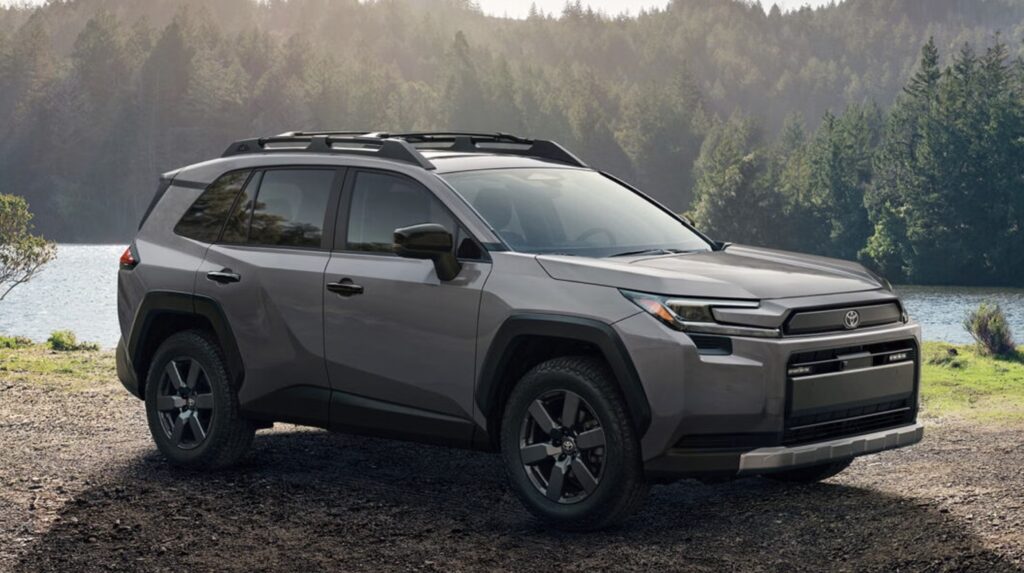
The RAV4 remained the US’s most popular SUV in 2025, and Toyota reported that the model also experienced its best-ever sales year.
So, what makes this vehicle stand out?
To start, 2026 is the first model year where the RAV4 is exclusively hybrid, so its $31,900 starting price represents value in more ways than one. Besides hybrid efficiency, the base LE’s accessible price gives you room to graduate to the XLE Premium trim, which starts at $36,100. Toyota does a solid job distinguishing the XLE Premium from the entry-level LE with synthetic leather seats, a height-adjustable power liftgate, and heated front seats.
If you’re wondering whether you should choose the 2026 RAV4 XLE Premium or the 2026 CR-V Sport Hybrid, it’s worth considering that the RAV4 has better mileage at 47/40 city/highway mpg and higher net horsepower at 236. However, keep in mind that the CR-V Sport Hybrid offers 3.2 additional inches of rear legroom. Regarding battery coverage, the 2026 RAV4 XLE Premium matches the CR-V Sport Hybrid’s warranty, and J.D. Power rated its quality and reliability at 77/100, according to US News & World Report.
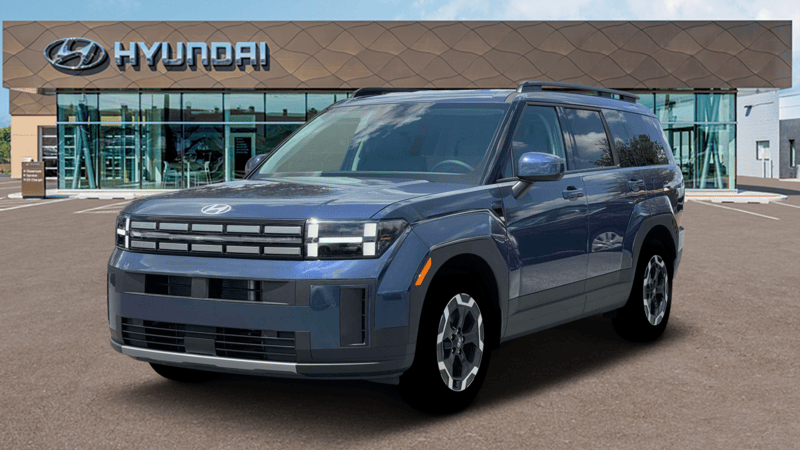
Drivers shopping for a three-row midsize SUV should consider the 2026 Hyundai Santa Fe SEL for its sharp exterior, robust powertrain, and spacious interior. The entry-level Santa Fe SE starts at $34,800, but, like the RAV4 XLE Premium, you can step up to the SEL without getting too close to $40,000.
The 2026 Hyundai Santa FE SEL, starting at $37,340, offers a premium look and feel without the luxury price tag. Synthetic leather seats, digital key compatibility, and wireless charging are among this trim’s standard features, enhancing daily drives. A 2.5-liter 4-cylinder engine delivers 277 horsepower, and front/rear legroom dimensions are competitive at 44.4 inches and 42.3 inches, respectively.
The third row is best reserved for kids and teens, but cargo capacity with the third row folded is good to excellent at 40.5 cu ft. Drivers looking to balance on-road performance with off-road capability can equip the Santa Fe SEL with optional HTRAC AWD, and J.D. Power awarded the model with a solid 81/100 quality and reliability rating.
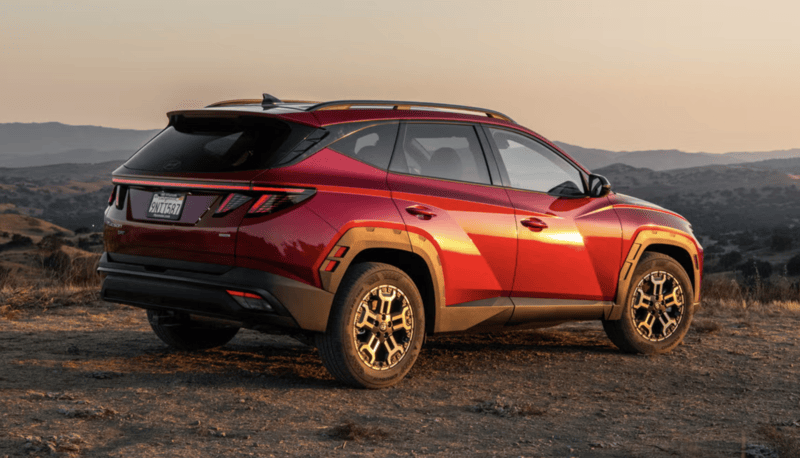
The 2026 Hyundai Tucson is our list’s most budget-friendly recommendation, as its top-tier Limited trim is still under $40,000 with a $38,645 starting price. However, the Tucson’s second-highest trim, the XRT, stands out as this model’s value pick, starting at $33,225.
Hyundai’s Tucson XRT is ideal for drivers seeking rugged looks, but not serious off-road performance. The Tucson XRT decision to emphasize adventurous form over function isn’t necessarily a downside, given that many off-road-performance SUVs contain features drivers pay for, but make little use of in the long run. These features can include an electronic locking rear differential, optimizing traction on terrain like sand or rocks by locking the rear wheels so they spin at the same time, but moderate trails don’t require this capability.
The 2026 Tucson XRT isn’t a hybrid, but its fuel economy is solid at 25/33 city/highway mpg. Blacked-out exterior styling enhances curb appeal, and its 12.3-inch infotainment touchscreen is 3.3 inches larger than the CR-V Sport Hybrid’s. J.D. Power gave the 2026 Tucson an 83/100 reliability rating, and its 10-year/100,000-mile powertrain limited warranty is industry-leading.
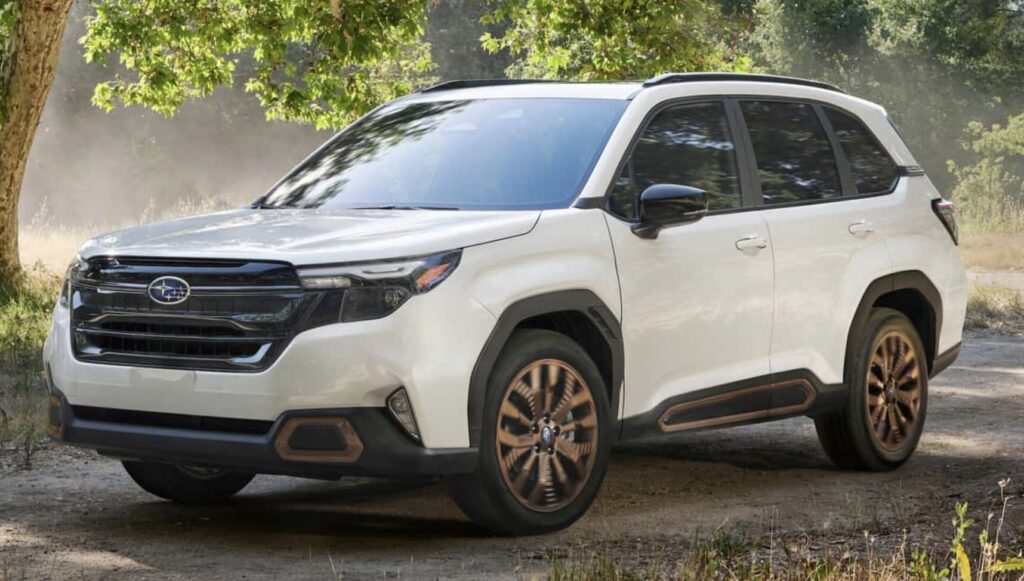
We’d be remiss not to include at least one off-road-focused SUV. The 2025 Subaru Forester Wilderness, starting at $36,285, is prepared for rugged travels with standard AWD, an elevated 9.2-inch ground clearance — which surpasses competitors like the RAV4 TRD by 0.6 inches — and dual-function X-MODE with specialized Snow/Dirt and Deep Snow/Mud settings. Copper-finish interior and exterior accents give this trim a unique look, and the 180-degree front view monitor is great for elevating environmental awareness on or off the beaten path. With an 81/100 J.D. Power quality and reliability score, the 2025 Forester Wilderness is on par with the rest of our list’s 2026 picks.
Most off-road capable SUVs start at over $40,000 (think Ford Bronco Big Bend, Toyota 4Runner SR5), so the Forester Wilderness stands out as an exception. Potential real-world discounts and incentives for remaining 2025 Forester Wilderness models solidify its value, especially given the public’s focus on 2026’s redesign. The 2026 Forester Wilderness still starts at under $40,000, but expect to pay over $40,000 with transaction fees, as its sticker price is $38,385.
Are you ready to shop for these SUVs? Perhaps you have some more budget flexibility and would like to opt for a larger three-row SUV, or a top-tier trim from our recommendations. Either way, CarEdge has you covered. Before you visit dealerships, check out our free car-buying cheat sheets to help you negotiate confidently.
If you’d rather let a car buying pro find the SUV you’re looking for and negotiate on your behalf, check out CarEdge Concierge today. It’s the easiest, least stressful path to a great deal on a new or used SUV. Whether you plan to buy or lease, our experts negotiate the best deal so you can skip the hassle.

California lawyers have pushed back against Uber’s ballot initiative to cap personal injury attorney fees for car crash cases. Uber claims that if California voters pass the ballot measure, victims will receive a larger percentage of settlement money. However, lawyers fighting the initiative argue that the change would financially undermine their specialty, making it more challenging for plaintiffs to find an attorney.
Since California personal injury lawyers handling car crashes work on a contingency basis, fewer attorneys might be motivated to take on riskier cases, potentially leaving rideshare giants like Uber with lower accountability for crashes. As Uber gathers signatures for the November ballot initiative, dozens of attorneys have raised over $46 million to fight Uber’s initiative, according to the Los Angeles Times.
If approved, the California Constitution would be amended to require car accident victims to receive at least 75% of the total damages recovered. Currently, there is no constitutional minimum, as victims negotiate on a personal basis with lawyers. The American Bar Association reports that personal injury attorneys typically take 33% to 40% of a client’s payout today.
Personal injury firm Cohen & Marzban in Los Angeles states that in 2026, minor injuries, such as sprains, mild whiplash, and soft-tissue damage requiring limited treatment, result in settlements averaging $5,000 to $25,000. Moderate injuries, which can include broken bones, concussions, and extensive tissue damage needing surgery or months of recovery, can generate settlements ranging from $30,000 to $85,000. Severe or catastrophic injuries like spinal cord/traumatic brain injuries, severe burns, and permanent disabilities can result in settlements of $250,000 to over $3 million.
While a California initiative statute requires 546,651 signatures to appear on November’s ballot, an initiative constitutional amendment, such as the one Uber’s pushing for, needs 874,641 signatures. Uber has until June 8, 2026 to submit the signatures. Despite some initiatives showing a percentage of signatures reached, California’s Secretary of State website doesn’t yet display Uber’s progress.
The initiative’s filing states that it wouldn’t restrict fee arrangements for defendants’ attorneys, so lawyers representing companies like Uber don’t face fee limits, while capping victim lawyer payments. This dynamic could result in plaintiffs receiving weaker representation and smaller settlements.
Nicholas Rowley, a lawyer involved in the Consumer Attorneys of California effort to protect consumer legal rights, said: “Uber knows darn well what they’ve done. This law is designed to wipe out ordinary working people’s ability to get representation,” the Los Angeles Times reports.
For certain medical expenses such as future care, Uber’s initiative would increase victims’ burden of proof while limiting the amounts they may recover. Lien-based medical care, common among car crash victims, allows those harmed to receive medical care at no upfront cost, as medical providers agree to a lien on future settlements from auto insurers.
If Uber limits settlements from one of its at-fault drivers’ insurance, doctors could be more hesitant to provide victims with crucial lien-based treatment. Doctor-led political action committee Providers for Patient Care has raised over $4 million to fight Uber’s initiative, claiming it would prevent treatment.
Uber has also filed federal racketeering lawsuits against the Downtown LA Law Group and the law offices of Jacob Emrani in Southern California, claiming attorneys struck side agreements with doctors to increase medical bills through unnecessary procedures, resulting in lawyers receiving higher payouts.
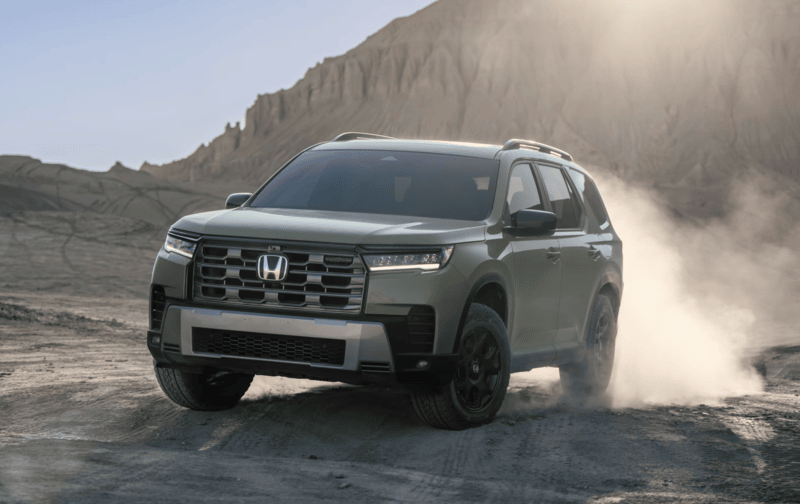
Knowing which five popular SUVs to avoid in 2026 starts with understanding why you should stay away from certain models. Rather than hinging on quality or reliability, our list of SUVs to avoid in 2026 highlights models with downsides like steeper depreciation, higher ownership costs, lower incentives, and price increases despite few changes.
Understanding which SUV value traps to avoid in 2026 is especially important this year, given stubbornly high MSRPs, mixed incentives, and the disruption that comes with electrification.
Here’s a look at five SUVs to avoid in 2026 in order to protect your wallet.
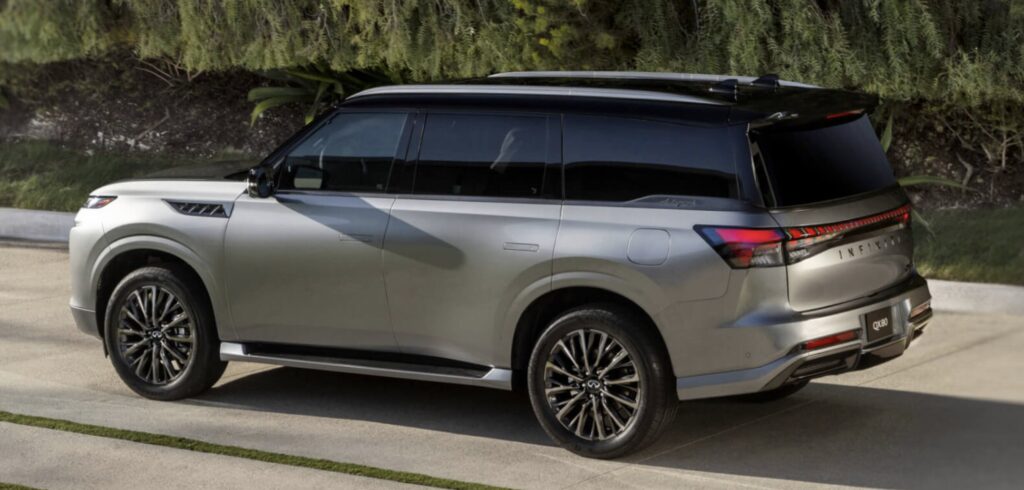
The Infiniti QX80 achieved record-breaking sales in 2025, moving 13,590 units. Following a 2014 model-year rebrand from the QX56, the QX80 has garnered a following for its robust powertrain, luxurious looks, and well-appointed tech.
However, the QX80 is forecast to experience significant depreciation. Infiniti increased the QX80’s starting price from $74,150 in 2024 to $82,450 for 2025. In 2026, the price was bumped even higher to $83,750. Using CarEdge’s depreciation calculator, a new, $83,750 Infiniti QX80 is likely to depreciate by 69% over five years when driven 13,500 miles annually, resulting in a $25,576 resale value.
Luxury cars generally also depreciate faster, and the 2026 QX80 faces tough competition from rivals like BMW’s X7 while sharing a platform with cheaper alternatives, such as Nissan’s Armada. The 2025 QX80 was a complete redesign, so this year’s model means you’re paying more for a carryover. While Infiniti is replacing the QX80 Sensory trim with the Sport grade for 2026, the Sport doesn’t offer enhanced performance; just athletic looks.
In fairness, luxury buyers are less concerned with depreciation. Still, plenty of shoppers in between price points consider splurging on something more premium, and these are the ones that are best off looking elsewhere.
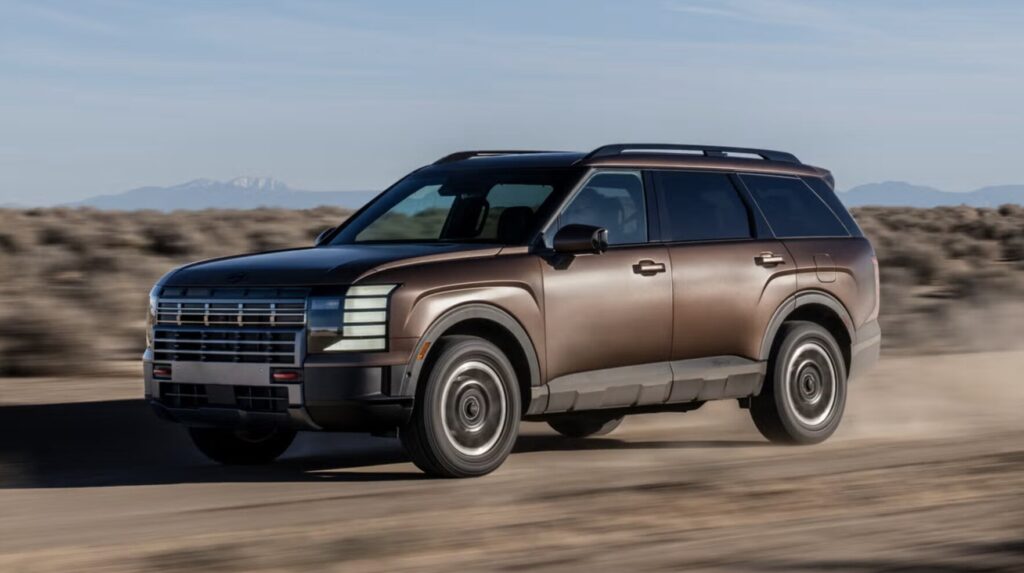
Like the Infiniti QX80, the 2025 Hyundai Palisade set a sales record in 2025. The mid-size Palisade has maintained popularity thanks to its spacious three-row configuration and near-luxury design, especially in the top-tier Calligraphy trim. However, the Palisade Calligraphy received a 7% price hike for 2026. That means justifying the already high price tag will be a lot harder for shoppers moving forward.
Starting at $54,560, the 2026 Palisade Calligraphy is far more affordable than three-row luxury models like the 2026 QX80 (class discrepancy noted), but that doesn’t necessarily mean it’s a smart buy. As the Palisade’s peak grade, the Calligraphy is full of luxury features that would be expensive to repair, such as massaging seats, a center console sterilization bin, and comprehensive advanced driver-assistance systems (ADAS). You should also avoid the Palisade Calligraphy if you’re seeking a sportier luxury SUV with a more immediate throttle response.
As we saw with the QX80, buyers have less incentive to shoulder price increases if the model is a carryover, but this isn’t the only time you should avoid price hikes. There’s also the problem of trim stacking, which is when manufacturers offer extensive trims to inflate prices for minor feature additions.
The 2026 Pilot isn’t a bad mid-size SUV in terms of quality or reliability, but shoppers could benefit from Honda streamlining its seven-trim lineup.
Other popular Honda SUVs, such as the CR-V, have seven trims, but the CR-V includes distinct hybrid and pure gas grades. In contrast, the 2026 Pilot remains exclusively a pure gas model, so drivers end up paying more as they move up its trims, without significant perks like a hybrid option.
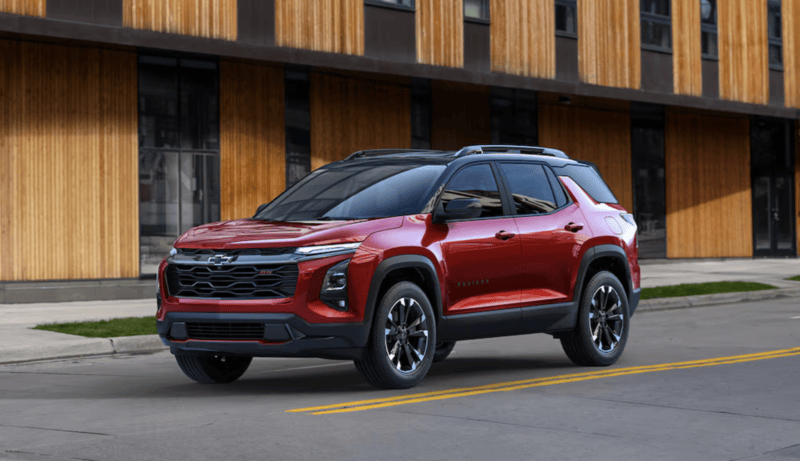
The Equinox consistently stands as Chevrolet’s top-selling compact SUV. Reasons for its popularity include a sub-$30,000 starting price, sharp design language, and ample connectivity. However, its base trim’s cost has crept up $200 despite carrying over from 2025’s redesign, and its value retention relative to comparable rivals is modest.
For example, CarEdge’s depreciation calculator shows that an entry-level 2026 Equinox purchased for $28,800 and driven 13,500 miles annually is forecasted to depreciate by 52% over five years, resulting in a $13,792 resale value. If you buy a rival’s base trim, such as the 2026 CR-V’s starting at $30,920, it’ll depreciate 29% after five years under the same mileage, resulting in a resale value of $21,950.
For crossover buyers willing to pay a little more for a better equipped vehicle with higher reliability, the all-new 2026 Toyota RAV4 is a great option for just $3,000 more.

Starting at $53,225, the fully-loaded Highlander Platinum is one of the most expensive Toyota SUVs on the market. This is despite the fact that the similarly-equipped Highlander XLE is $8,000 less. After dropping 2025’s base LE trim and making all-wheel drive (AWD) standard, the Highlander’s entry-level price has increased by $5,000 in 2026.
Jumps like these place the Highlander in a more premium market, but budget-conscious shoppers are more likely to overlook this, given the model’s popularity. Additionally, the Highlander’s popularity leaves fewer incentives available and motivates buyers to overpay for the fully loaded experience, which carries a higher depreciation risk.
Our vehicle depreciation calculator isn’t the only free resource you can use to find your ibest value SUV in 2026. CarEdge’s free car-buying cheat sheets streamline shopping by teaching confident negotiation skills, supplying first-time buyers with key tips, highlighting must-know dealership language, and more.
Prefer to have a seasoned professional negotiate your SUV deal from start to finish? We make it happen every day! Learn how it works.
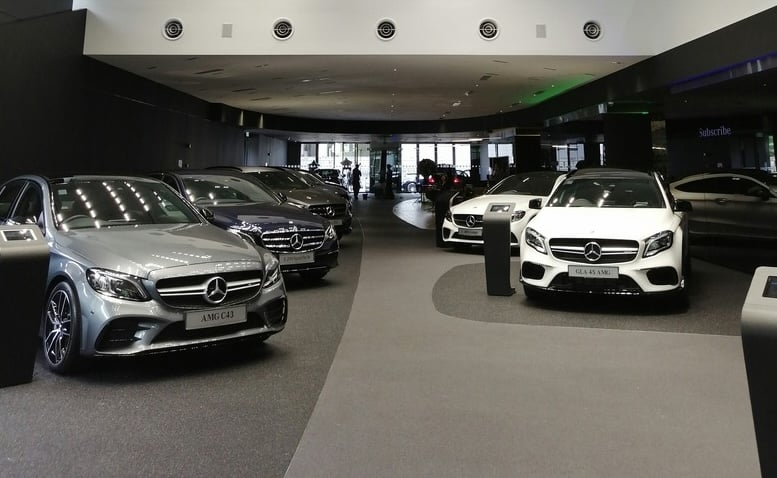
January is the most underrated month of the year for car buying. Cold weather, holiday spending strain, and a perception that December is the end-all for car buying all tend to keep shoppers at home. However, a strategic approach can help you score limited-time deals in January, as market conditions now heavily favor informed buyers. For example, an iSeeCars study shows that the industry-wide average for leftover 2025 model-year inventory is a whopping 21%, making these cars among the most negotiable today.
Excess vehicle inventory places pressure on dealerships to make room for 2026 models and manage floor planning, which allows for inventory financing. Dealerships ultimately pay off the vehicles they acquire on credit following sales. With cash flow and sales projections requiring a delicate balance, many dealerships need floorplanning. Automaker dealer bonuses for volume targets compound this January sales motivation.
To clear stock, dealerships commonly offer incentives like low-interest financing, steep cash rebates, and lease deals.
High-inventory segments are especially prime for January incentives. These segments commonly include compact and subcompact cars/SUVs, luxury SUVs, electric vehicles, and full-size trucks. Among these segments, unsold 2025 models will remain the most negotiable. As we’ve seen in January, these cars will also be subject to the steepest discounts and financing incentives.
Where exactly can we expect to find the most negotiable cars right now? Here’s a look at the brands with the most remaining 2025 inventory today:
| Brand | Total inventory | Leftover 2025s | % 2025 Inventory |
|---|---|---|---|
| Alfa Romeo | 1,990 | 1,321 | 66% |
| Audi | 36,797 | 22,228 | 60% |
| Maserati | 1,015 | 546 | 54% |
| Mitsubishi | 15,501 | 8,186 | 53% |
| Ford | 489,105 | 231,917 | 47% |
| Jeep | 174,035 | 71,226 | 41% |
| Mazda | 88,902 | 34,146 | 38% |
| Cadillac | 29,277 | 9,254 | 32% |
| Kia | 162,815 | 46,297 | 28% |
| Nissan | 183,849 | 51,538 | 28% |
Data source: CarEdge.com
See unsold 2025 cars and trucks near you
Since dealerships need a reason to offer savings, such as leftover inventory, deals for higher-selling brands tend to be less prevalent. However, big-name automakers such as Ford, Mazda, and Nissan still have plenty of leftover 2025 inventory to move.
In late January, nearly half of all Ford inventory is leftover 2025 models. Jeep is close at 41%, followed by Mazda at 38% of inventory. Despite making headlines last year over financial woes, Nissan is doing slightly better with ‘just’ 28% of inventory being leftover 2025 models.
Despite January representing a prime opportunity for car-buying deals, the best incentives won’t come to you. To attain negotiation leverage, you’ll need to prepare beyond checking a single automaker’s website for incentives. Key steps include researching fair market values with CarEdge, comparing prices and incentives across nearby dealerships, and using CarEdge’s out-the-door pricing calculator before setting foot on a car lot.
Understanding data like out-the-door pricing helps you prioritize the total cost over monthly payments, helping you avoid value traps like hidden fees and longer loan terms.
Similarly, arranging financing before car shopping puts the ball in the dealership’s court to beat your rate or match the car’s price. You’ll need a credit check across multiple lenders for pre-approved financing, but completing this within a 14-day window minimizes credit score impact.
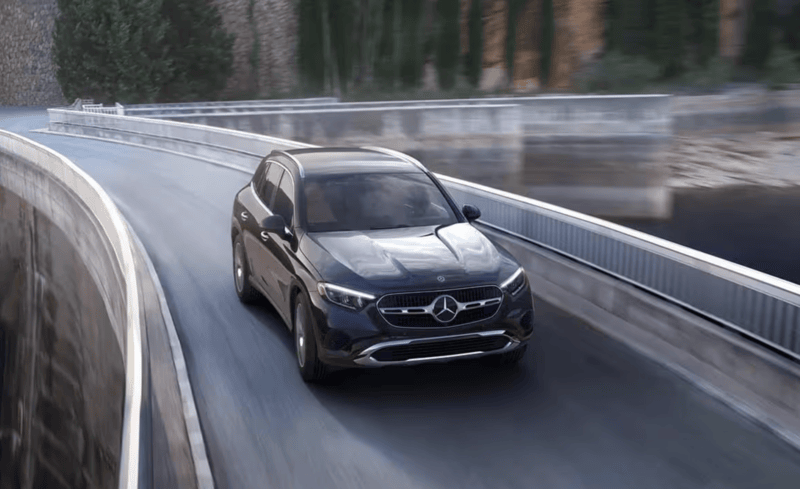
January is an especially significant buying window for drivers considering European luxury brands, primarily luxury ones, such as:
With ongoing tariff uncertainty under President Trump surrounding Greenland, European luxury brands may raise prices to offset potentially higher U.S. export costs. However, President Trump stated that he had formed the “framework of a future deal” on Greenland, with new tariffs no longer needed on opposing European nations, according to CNN.
While the January buying window for attractive limited-time incentives is narrowing, you should avoid rushing into a purchase without preparation. Focusing on 2025 models gives you the best odds of attaining maximum savings, and brands with consistently tight inventories, such as Honda, remain an option.
Simplify your ability to score January deals with CarEdge’s free car buying cheat sheets, which teach negotiation strategies when dealerships won’t budge, dealership industry terms to keep you ahead of the curve, and much more.