


 CarEdge Insights

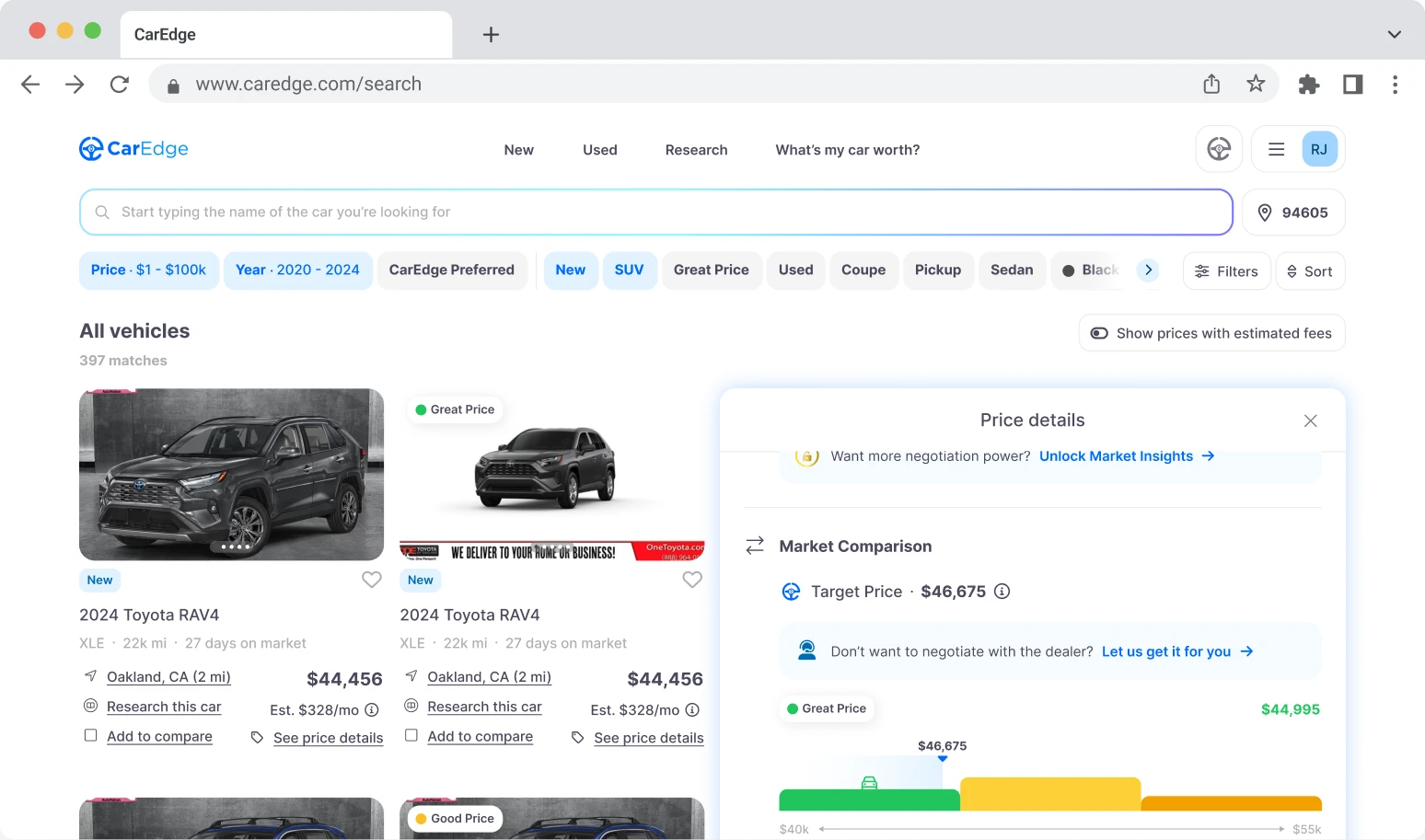



Every month, analysts and journalists report on the “average new car price in America.” It sounds useful, but to the average American car buyer, it rarely is.
That number includes every new vehicle sold, from a heavily discounted Mitsubishi Mirage to a $200,000 Porsche 911. Low-volume luxury models and niche vehicles skew that average in ways that have nothing to do with the cars most Americans are actually buying. When the average new car price goes up, is it because your next car costs more, or because a handful of wealthy buyers picked up more exotics last month? You can’t tell.
At CarEdge, we think car buyers deserve a more accurate measure of car price trends. So we built one.
Introducing the CarEdge Popular 20
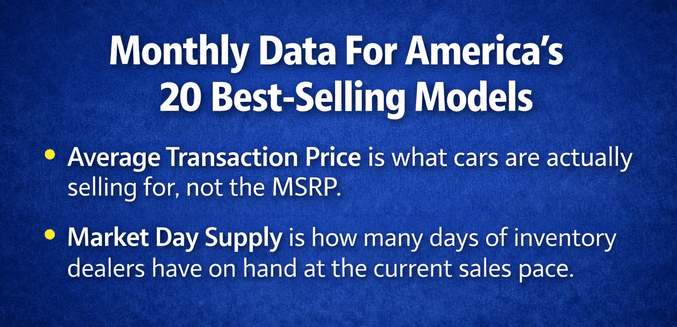
Each month, we track the average transaction prices and inventory levels of the 20 best-selling vehicles in America. These are the trucks, SUVs, and cars that mainstream car buyers are actually shopping for: the Ford F-150, the Toyota RAV4, the Honda CR-V, and the like. These are vehicles that move in massive volumes and reflect the market the way most Americans experience it.
By focusing on the Popular 20, we filter out the noise and outliers. What remains is a clear, honest signal of where new car prices and inventory are actually heading for mainstream buyers.
We track two things for each model every month.
Average Transaction Price is what cars are actually selling for, not the MSRP.
Market Day Supply (MDS) is how many days of inventory dealers have on hand at the current sales pace. This is the single best indicator of where prices are heading. Low supply means dealer leverage. High supply means shopper leverage. Learn more about this market metric here.
We’ll update this data every month. Over time, we hope this becomes a useful tool, providing a ground-level view of the market that journalists, analysts, and car shoppers can actually rely on.
February 2026 Data: The Popular 20
Average Transaction Prices
| January 2026 | February 2026 | Percent Change | |
|---|---|---|---|
| Ford F-150 | $61,109 | $61,217 | 0.18% |
| Chevrolet Silverado 1500 | $53,286 | $52,911 | -0.70% |
| Toyota RAV4 | $37,379 | $37,432 | 0.14% |
| Honda CR-V | $38,667 | $38,709 | 0.11% |
| Ram 1500 | $59,331 | $60,056 | 1.22% |
| GMC Sierra 1500 | $62,583 | $62,347 | -0.38% |
| Toyota Camry | $35,209 | $35,202 | -0.02% |
| Toyota Tacoma | $46,103 | $46,088 | -0.03% |
| Toyota Corolla | $25,666 | $25,710 | 0.17% |
| Honda Civic | $29,210 | $29,277 | 0.23% |
| Hyundai Tucson | $35,321 | $35,444 | 0.35% |
| Ford Explorer | $50,078 | $49,953 | -0.25% |
| Nissan Rogue | $33,191 | $32,764 | -1.29% |
| Jeep Grand Cherokee | $45,370 | $45,348 | -0.05% |
| Chevrolet Trax | $25,565 | $25,652 | 0.34% |
| Subaru Crosstrek | $32,690 | $32,896 | 0.63% |
| Kia Sportage | $35,508 | $35,492 | -0.05% |
| Subaru Forester | $39,344 | $39,466 | 0.31% |
| Jeep Wrangler | $53,454 | $53,477 | 0.04% |
| Subaru Outback | $40,225 | $40,876 | 1.62% |
| Top 20 Average Selling Price | $41,964 | $42,016 | 0.12% |
Inventory: Market Day Supply
| January 2026 | February 2026 | Percent Change | |
|---|---|---|---|
| Ford F-150 | 81 | 129 | 59% |
| Chevrolet Silverado 1500 | 65 | 92 | 42% |
| Toyota RAV4 | 22 | 37 | 68% |
| Honda CR-V | 53 | 67 | 26% |
| Ram 1500 | 149 | 163 | 9% |
| GMC Sierra 1500 | 78 | 115 | 47% |
| Toyota Camry | 33 | 45 | 36% |
| Toyota Tacoma | 58 | 58 | 0% |
| Toyota Corolla | 37 | 44 | 19% |
| Honda Civic | 57 | 67 | 18% |
| Hyundai Tucson | 95 | 132 | 39% |
| Ford Explorer | 117 | 141 | 21% |
| Nissan Rogue | 101 | 93 | -8% |
| Jeep Grand Cherokee | 133 | 156 | 17% |
| Chevrolet Trax | 88 | 109 | 24% |
| Subaru Crosstrek | 73 | 90 | 23% |
| Kia Sportage | 100 | 121 | 21% |
| Subaru Forester | 103 | 77 | -25% |
| Jeep Wrangler 4-Door | 151 | 180 | 19% |
| Subaru Outback | 74 | 117 | 58% |
| Top 20 Average MDS | 83 | 102 | 22% |
The big story: Inventory surged in February, almost across the board
Of the 20 models we track, 18 saw market day supply increase from January to February. Inventory is building across the mainstream market, and that matters enormously for buyers. More supply means more negotiating leverage, less pressure to pay over sticker, and more time to make a smart decision.
The biggest jumps came from some of the market’s highest-volume trucks and SUVs. The Ford F-150 saw its MDS leap from 81 to 129 days, a 59% increase in a single month. The Subaru Outback surged from 74 to 117 days, and both the GMC Sierra 1500 and Hyundai Tucson climbed 37 days each. These are significant moves.
Sometimes, a sudden jump in supply reflects a recent delivery of vehicles from the factory. That is likely the case with the Outback and F-150. To find vehicles sitting on dealership lots the longest, use tools like CarEdge Pro to gain market insights. These are always the most-negotiable new cars.
On the other end of the spectrum, the Toyota RAV4 remains the tightest vehicle in our index at just 37 days supply, up from 22 in January but still firmly in seller’s-market territory. The Toyota Tacoma held perfectly flat at 58 days. The Subaru Forester was the only model to see a meaningful inventory decline, dropping from 103 to 77 days. Subaru is likely selling down 2025 Forester inventory as new 2026 shipments are imminent.
Prices were remarkably stable, with a few notable exceptions
Despite the inventory surge, transaction prices barely moved for most models. The Popular 20 average transaction price in January was $41,979. In February it was $41,994, essentially flat.
That stability is worth noting. Rising inventory doesn’t immediately push prices down — the market doesn’t move that fast. Prices tend to lag inventory by weeks or months. If the supply trend continues into March and beyond, downward pressure should follow, particularly in the truck segment where inventory is growing fastest.
The Ram 1500 was the most notable outlier on the upside, rising $725 to $60,056 despite already carrying 163 days of supply, the second-highest in the index. That’s a disconnect worth watching. The Subaru Outback also climbed $651, coinciding with its inventory nearly doubling. Moving in the opposite direction, the Nissan Rogue fell $427 as its inventory slightly contracted.
The truck market deserves a closer look
The full-size truck segment — F-150, Silverado, Ram, and Sierra — dominates our index both by volume and by price. Their average transaction prices sit well above $60,000, a level that would have seemed extraordinary just a few years ago. At the same time, three of the four now sit at 90-plus days of supply, with the Ram above 160. These are buyers’ market conditions by any historical standard. Shoppers cross-shopping full-size trucks have real leverage right now and should use it.
How to Use This Data
Pay close attention to the MDS figure for the vehicle you’re considering. Anything above 90 days is a buyer’s market in 2026. With these models, you have room to negotiate. Trucks and large SUVs have higher inventory in general, and are the most negotiable. Thousands of 2025 models remain unsold, and these present the greatest opportunities for saving.
Anything below 45 days means the dealer has the upper hand. Negotiating discounts will be tough for these cars. Right now, the RAV4, Camry, and Corolla are all in high demand and short supply.
If you’re watching the broader market, the February inventory surge is the leading indicator to follow. If inventory (as measured by MDS) continues climbing into the spring, expect transaction prices to soften, especially for slower-selling trucks and three-row SUVs.
Methodology: Average transaction prices reflect what buyers paid at the dealership, aggregated across all trim levels and configurations for each model. Market Day Supply is calculated by dividing current dealer inventory by the average daily sales rate. Data covers the United States. The 20 models included reflect the best-selling vehicles in America by volume as reported in Car and Driver, with direct-to-consumer models from Tesla omitted.
Next update: March 27, 2026
About CarEdge
Founded in 2019 by father-and-son team Ray and Zach Shefska, CarEdge is a leading platform dedicated to empowering car shoppers with free expert advice, in-depth market insights, and AI-powered tools to navigate every step of the car-buying journey. From researching vehicles to negotiating deals, CarEdge helps consumers save money, time, and hassle. With trusted resources like the CarEdge Research Center, Vehicle Rankings and Reviews, and hundreds of guides on YouTube, CarEdge is redefining transparency and fairness in the automotive industry.
Follow us on YouTube, TikTok, X, Facebook, and Instagram for actionable car-buying tips and market insights.





0 Comments