
Ford Recalls 4.4 Million Trucks and SUVs Just Weeks After Quality Bonuses

Key Takeaways
- A software bug in the Integrated Trailer Module can disable your trailer's brakes and lights while towing. If you see a "Trailer Brake Module Fault" warning on your dashboard, stop towing immediately.
- The fix is free. Ford begins notifying owners by mail March 17, 2026, with an over-the-air software patch rolling out in May.
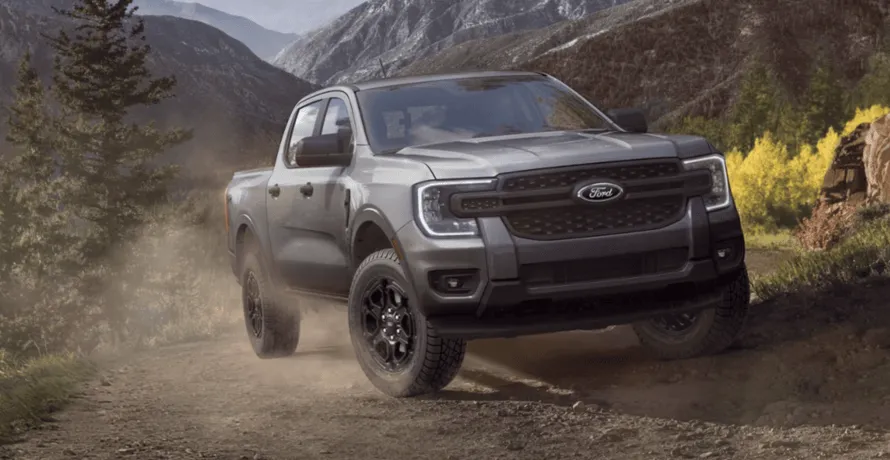
- Check your VIN now at nhtsa.gov/recalls. Affected models include the 2021–2026 F-150, 2022–2026 Super Duty, Maverick, Expedition, and Navigator, and the 2024–2026 Ranger.
If you own a Ford or Lincoln truck or SUV from the last few years, there’s a decent chance you’re caught up in one of the largest vehicle recalls in recent memory. In February 2026, Ford filed paperwork with the National Highway Traffic Safety Administration (NHTSA) covering 4,380,609 vehicles over a software flaw that can kill your trailer’s brakes and lights while you’re towing.
Here’s what the recall is about, which Ford models are impacted, and how the latest Ford recall is a sign of a much larger problem for the automaker.
What’s the Problem?
The defect lives inside the Integrated Trailer Module (ITRM), a software-driven component that manages communication between your truck and whatever you’re towing. When the vehicle wakes up from sleep mode — essentially every time you start it — there’s a chance the ITRM loses its connection to the rest of the truck’s computer system.
Ford and NHTSA describe it as a “race condition” bug, meaning the software is sensitive to the timing and sequence of events during startup. Most of the time it works fine. But when it doesn’t, the consequences can be serious: your trailer’s stop lamps go out, its turn signals stop working, and on trucks equipped with the high-series ITRM, the trailer’s electric brakes can fail entirely.
Think about what that means in practice. You’re on the highway pulling a 10,000-pound boat or a loaded work trailer. The driver behind you has no warning you’re slowing down. You apply the brakes, but only your truck is stopping — the trailer isn’t. That’s a crash waiting to happen.
Ford says it’s aware of 405 warranty claims potentially connected to the defect, along with two formal complaints filed directly with the NHTSA. The company has not identified any crashes or injuries tied to the issue.
Your dashboard will usually tip you off before things get dangerous. If you see a “Trailer Brake Module Fault” message pop up on your instrument cluster — possibly accompanied by a fast-flashing turn signal indicator or a “Blind Spot Assist System fault” warning — that’s the ITRM telling you it lost communication. Stop towing if you see either of these messages and get the software update as soon as possible.
Which Vehicles Are Affected?
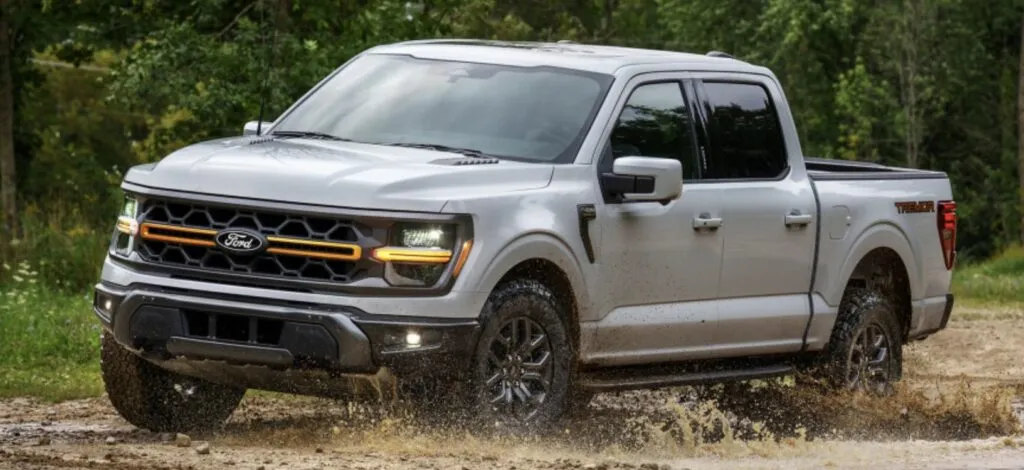
The recall (NHTSA ID: 26V104000; Ford’s internal number: 26C10) covers the following vehicles:
- Ford F-150 — 2021–2026 model years (~2.3 million vehicles)
- Ford F-250 Super Duty — 2022–2026 model years (~1.13 million vehicles)
- Ford Maverick — 2022–2026 model years (~412,000 vehicles)
- Ford Expedition — 2022–2026 model years
- Ford Ranger — 2024–2026 model years
- Lincoln Navigator — 2022–2026 model years
- Ford E-Transit — 2026 model year (13,115 vehicles)
The F-150 and Super Duty alone account for more than 3.4 million of the 4.38 million affected vehicles. These are America’s most popular trucks, which is part of why this recall is so significant.
Ford estimates that only about 1% of the affected vehicles actually have the defect — roughly 44,000 trucks and SUVs. But with numbers this large, even 1% is a lot of vehicles on the road.
What’s the Fix, and When Can You Get It?
The good news is that this is a software problem, and software problems tend to have clean fixes. Ford plans to push an updated ITRM software patch that eliminates the race condition bug entirely. Better still, most owners won’t need to make a dealer appointment.
Here’s the timeline:
Starting March 17, 2026: Ford will begin mailing recall notices to affected owners. On that same date, you’ll be able to search your VIN on the NHTSA website (nhtsa.gov/recalls) or Ford’s recall page to confirm whether your vehicle is included.
March 17–23, 2026: Owners can also take their vehicle to any Ford or Lincoln dealer at no charge to have the software update applied. No appointment necessary — walk-ins are welcome for recall repairs.
May 2026: Ford plans to begin rolling out the fix as an over-the-air (OTA) update for vehicles that support it. If your truck can receive OTA updates, you may not have to do anything at all beyond accepting the update when it arrives.
Either way — dealer visit or OTA — the repair is completely free.
How to Check Your VIN Right Now
If you don’t want to wait for a letter in the mail, you can check today. Go to nhtsa.gov/recalls and enter your 17-digit VIN to see if your vehicle is impacted by any open recalls. Your VIN is printed on a sticker inside the driver’s door jamb, on your registration, or on the lower left corner of your windshield.
Ford’s own recall lookup is available at ford.com/support/recalls.
Note that Ford expects all affected VINs to be searchable in the NHTSA system starting March 17. If you check today and your VIN doesn’t surface any results for this specific recall, give it until mid-March before concluding you’re in the clear.
The Bigger Picture on Ford Quality
It would be easy to treat this as an isolated incident, but it’s hard to ignore the context. In 2025, Ford issued 153 recalls covering more than 12.9 million vehicles — the most recalls any automaker has issued in a single calendar year, by a wide margin. The previous record was 77, set by General Motors in 2014. Second place in 2025 wasn’t even close: Chrysler finished with 53.
2026 hasn’t started much better. Before this trailer module recall even dropped, Ford had already issued eight recalls in the first 50 days of the year. That’s enough to put Ford ahead of every other automaker before February is out.
What makes all of this particularly hard to square is that Ford handed out company-wide bonuses just weeks ago — tied specifically to quality improvements. According to Reuters, CEO Jim Farley told employees in a February town hall that bonuses would be set at 130%, citing meaningful gains in “initial quality,” a metric that measures how often owners bring vehicles in for repairs within the first 90 days of ownership. Farley reportedly described current initial quality as the best it’s been in a decade.
A growing list of quality concerns
Ford and Farley aren’t wrong that initial quality and recall counts measure different things. A recall can be triggered by a defect that only appears years into ownership, or — as Ford has argued — by a more aggressive internal strategy to find and fix issues before regulators force the issue.
Ford also paid a $165 million NHTSA fine in 2024 for being too slow to recall vehicles with defective rearview cameras, which likely explains some of the heightened urgency to act quickly now.
But from where a car buyer sits, the optics are tough. A record-breaking recall year followed by bonuses for quality, followed by one of the largest single recalls in recent memory — all before March — is a lot to process. Both things can be true simultaneously: initial quality may genuinely be improving while older software and hardware issues continue to surface in the field. The question for buyers is which metric they weight more heavily when deciding whether to pull the trigger on a new F-150 or pick up a used Super Duty.
What Should You Do in the Meantime?
If you regularly tow with your truck, the most practical step is to pay attention to those dashboard warnings. A “Trailer Brake Module Fault” message is your signal to stop towing and get the update applied. If your truck is sitting in the driveway and not connected to a trailer, the defect poses no safety risk — the problem only becomes dangerous when you’re actually towing something.
If you’re shopping for a used F-150, Maverick, Super Duty, Ranger, Expedition, or Navigator right now, don’t let this recall alone steer you away from an otherwise solid truck. An open recall is a known, fixable problem. What you want to confirm is that the recall has already been repaired before you purchase. Ask the dealer to confirm recall status before you sign, or check the VIN yourself.
Have a Ford or Lincoln truck caught in this recall? Check your VIN at nhtsa.gov/recalls, and reach out to CarEdge if you have questions about how open recalls affect your negotiating position.
Sponsored by Insurify
Are you overpaying for car insurance?
Compare rates from top carriers in under 5 minutes. CarEdge users save an average of $996/year on auto insurance.
*Disclosure: CarEdge may earn a commission when you compare insurance quotes through our partner, Insurify. This does not influence our editorial content.*