


 CarEdge Insights




When gas prices rise, it’s only natural that interest in hybrid vehicles rises as well. Buying a hybrid should mean getting the best of both worlds: better fuel economy and a smart long-term investment. But not all hybrids deliver on that promise. Some combine below-average reliability with steep depreciation, which means you’re paying a premium up front and taking a loss on the back end.
Using Consumer Reports reliability scores and CarEdge’s Value Ratings, we identified six hybrids to avoid in 2026. These aren’t necessarily bad cars across the board, but for buyers who care about ownership costs and long-term value, these numbers should give you pause.
1. Mazda CX-90 Plug-In Hybrid

Consumer Reports Reliability: 20/100| Overall Score: 56/100| CarEdge Value Rating: C
The CX-90 PHEV is Mazda’s most expensive vehicle, with the plug-in hybrid version starting around $50,500. It drives beautifully and looks sharp, but Consumer Reports gives it a reliability score of just 20 out of 100 — the lowest on this list. Owners have reported recurring transmission roughness at low speeds, radar sensor errors, and technology glitches that required multiple dealer visits to diagnose. Mazda has issued recalls to address some of the transmission problems, but the issues persist across model years.
On resale, the CX-90 PHEV takes a significant hit early. Some owners have reported losing $10,000 to $13,000 in value within the first year. That kind of depreciation, combined with a reliability track record that’s still unproven for a relatively new platform, makes the plug-in hybrid variant a risky buy compared to the more proven gas-powered CX-90 trims. If you love the CX-90, the 3.3 Turbo models carry better reliability scores and similar driving dynamics.
2. Dodge Hornet Plug-In Hybrid

Consumer Reports Reliability: 37/100| Overall Score: 58/100| CarEdge Value Rating: F
The Hornet R/T PHEV had a compelling pitch: 288 horsepower, 32 miles of electric range, and Dodge styling at a price closer to $40,000. But the real-world ownership experience for many buyers has been far less exciting. Consumer Reports gives it a 37 out of 100 for reliability, and owner forums are filled with reports of electrical failures, warning lights appearing at under 1,000 miles, chronic 12V battery drain, and software issues that dealers struggled to resolve.
The resale story is equally grim. A 2024 Dodge Hornet has depreciated 44% in just two years. CarEdge projects the PHEV variant to lose roughly 62% of its value over five years — one of the steepest depreciation curves in the compact SUV segment. It’s worth noting that Stellantis halted U.S. production of the Hornet for the 2026 model year due to tariffs on foreign-made vehicles, so new inventory is limited. Remaining units on dealer lots may come with incentives, but that doesn’t fix the underlying reliability concerns.
3. Ford Escape Plug-In Hybrid

Consumer Reports Reliability: 39/100| Overall Score: 67/100| CarEdge Value Rating: D-
The Escape PHEV offers 37 miles of electric range and up to 105 MPGe, which are above average in the segment. But a Consumer Reports reliability score of 39 and a CarEdge Value Rating of D- reflect a pattern of ownership concerns that are hard to overlook. Common complaints from owners include infotainment failures, AWD system issues, and recurring recalls — with some owners reporting that their vehicles spent weeks at the dealer awaiting parts.
On depreciation, the Escape PHEV has been especially punishing. A 2024 Ford Escape Plug-in Hybrid depreciated 54% in just two years, leaving owners with a resale value of around $18,900. KBB notes the Escape’s resale value falls below segment leaders like the Honda CR-V, Toyota RAV4, and Subaru Forester. The 2026 model is also the last Escape before Ford transitions the nameplate, which adds uncertainty for long-term buyers. The all-new 2026 Toyota RAV4 Plug-In Hybrid, with an estimated 50 miles of electric range, makes for a compelling alternative.
4. Lincoln Nautilus Hybrid
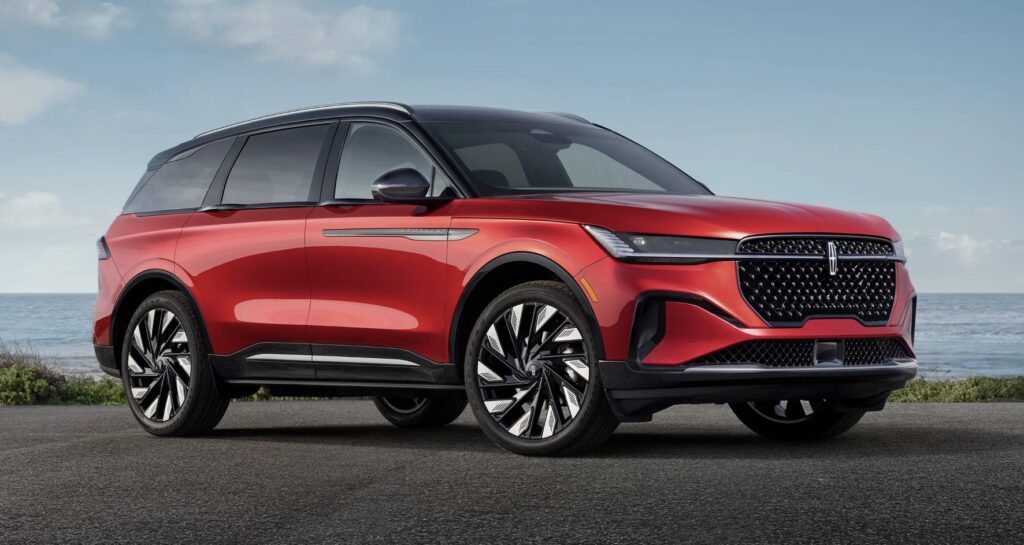
Consumer Reports Reliability: 37/100| Overall Score: 73/100| CarEdge Value Rating: D+
The Lincoln Nautilus Hybrid is one of the better-scoring vehicles on this list in terms of overall quality — a 73 from Consumer Reports reflects a genuinely capable luxury SUV with a well-appointed interior and solid road manners. But reliability comes in at 37, and depreciation is a known weakness for Lincoln hybrids across the board.
Luxury vehicles depreciate faster as a rule, and the Nautilus Hybrid is no exception. At a starting price north of $55,000, a D+ Value Rating from CarEdge signals that buyers aren’t getting much return on that investment. Shoppers cross-shopping in the luxury hybrid SUV space should check CarEdge’s depreciation calculator before committing, particularly if they plan to sell or trade within five years.
5. Kia Sorento Hybrid

Consumer Reports Reliability: 42/100| Overall Score: 73/100| CarEdge Value Rating: D+
The Sorento Hybrid offers three rows, and Kia’s appealing warranty coverage. On paper, it’s easy to see why it attracts shoppers. But a reliability score of 42 and a D+ Value Rating put it in uncomfortable territory for a vehicle that starts around $40,000.
Depreciation has been a consistent issue for the Sorento Hybrid. Data shows the Sorento Hybrid losing value faster than the segment average, making it a less efficient long-term investment than its price point would suggest. Buyers interested in a three-row hybrid SUV with stronger reliability and resale value might find better options in the Toyota Venza or Kia’s own Telluride — though the Telluride doesn’t offer a hybrid powertrain, its reliability and resale are significantly stronger.
6. Hyundai Sonata Hybrid

Consumer Reports Reliability: 39/100| Overall Score: 67/100| CarEdge Value Rating: C+
The Sonata Hybrid earns the strongest CarEdge Value Rating on this list at C+, and its overall Consumer Reports score of 67 reflects a genuinely capable mid-size hybrid sedan. It’s fuel-efficient, comfortable, and loaded with features for the price. So why is it here?
Because a reliability score of 39 and a five-year depreciation trajectory that leaves owners with roughly $14,300 in residual value on a $30,000+ purchase deserve attention. Consumer Reports flagged the 2026 Sonata Hybrid’s electronics and build quality as specific reliability concerns, and the model was recalled for the risk of the fuel tank melting. Yes, you read that right.
Final Thoughts
Hybrid shoppers have more options than ever, and plenty of them are excellent. But the seven vehicles above combine reliability concerns with poor long-term value in ways that matter to your wallet. Before buying any hybrid, use CarEdge’s free depreciation calculator to see what a vehicle is projected to be worth in three to five years — it’s one of the most important numbers most buyers never check. It’s also smart to see the latest Consumer Reports reliability rankings for any hybrid you’re shopping for.If you want expert help identifying which hybrid is actually worth buying for your budget and situation,CarEdge Concierge can do the research and price negotiation for you.






0 Comments