New
Used

One question
to tailor your experience

Help us personalize your CarEdge experience — it only takes a second.

When do you plan to buy a car?

Your answers help us personalize your CarEdge journey — we’ll follow up with tips and next steps that match your buying timeline.

Skip
Over-the-Air (OTA) Updates: How Automakers Are Betting on Software to Keep Up With the Pace of Innovation

Over-the-Air (OTA) Updates: How Automakers Are Betting on Software to Keep Up With the Pace of Innovation

2024 Silverado EV
2024 Silverado EV RST

At what point does a car become more of a computer on wheels? Computer integration in the automotive industry is nothing new, however it’s accelerating at breakneck speed. Both software and hardware become outdated in no time at all. Is there a way for car buying habits to steer clear of the two-year replacement cycle that smartphones have fallen into? 

As soon as computers grew wheels (in the form of electric vehicles), forward-thinking automakers launched over-the-air (OTA) update capabilities. Tesla was the first to do it, and now the likes of Ford, GM and Volkswagen are among the legacy OEMs marketing their vehicles as OTA-ready. Although, not all who’ve tried it have succeeded without hiccups. Here’s how OTA updates are changing car ownership, and what’s to come in the years ahead. 

What Is an Over-the-Air (OTA) Update?

EV charging costs

You know when your phone gives you a push notification about scheduling a time to install the latest software updates and bug fixes? Well, cars can do that too now. OTA updates are not just for software fixes. With OTA capability, vehicles can receive enhanced performance and safety improvements via a simple wireless internet connection. 

Get the most when you sell your car.

Compare and choose multiple offers in minutes:

OTA updates eliminate the need for making a service center visit for many simple fixes and updates. The updates are sent and downloaded via access to a cloud-based server with a wireless internet connection. Many updates are free of charge, and all safety enhancements are at no cost. However, we are entering a new era where OTA presents a new revenue stream for car makers.

Everyone’s getting in on the subscription business, and the auto industry is no different. There are two kinds of OTA updates: those for infotainment, and those for vehicle performance and control. They may target either software or firmware, the latter of which required more advanced security protocols to implement.

Infotainment OTA Updates

Head up display Kia EV6
2022 Kia EV6

Infotainment updates improve the user experience. A classic example is how Volkswagen ID.4 owners are pleading for an improved infotainment performance after the original equipment was delivered with a laggy touchscreen and haptic buttons. Fortunately for ID.4 owners, the car is among VW’s first generation of OTA-capable models, and a fix is on the way. 

Sometimes, OTA revisions cause frustration and even anger from customers. Tesla recently pushed the Version 11 user interface to all of it’s vehicles via over-the-air download. The result was strong critical feedback from customers, most of whom were complaining about the automaker trying to fix something that wasn’t broken.

Vehicle Performance and Control OTA Updates

GM Ultium battery
GM Ultium Battery and Powertrain

How is it that the 2023 Tesla Model 3 has a quicker 0-60 time now than it had when it was first purchased? Or how Tesla vehicles can gain or lose access to the controversially-named ‘full self-driving’ based on driver safety scores? With OTA capability, automakers can send everything from a power boost to a pedestrian avoidance feature to cars already in driver’s hands. 

Vehicle performance and control updates can include updates to the vehicle’s powertrain, chassis systems, and advanced driver assistance systems (ADAS). Of course, updates to these critical components of a vehicle are only possible when the components are electronically controlled and operated. For this reason, an older car model can’t be retrofitted to become OTA capable. 

Examples of fixes and improvements automakers have installed via OTA

  • Tesla offers an ‘acceleration boost’ for the popular Model Y that lowers the 0-60 time from 4.8 to 4.2 seconds
  • Tesla regularly updates the ‘full self-driving’ upgrade, which is currently in beta testing
  • The Cadillac Escalade has received GM’s first big OTA update to improve the SuperCruise hands-free driver assistance (ADAS) technology
  • Ford delayed the release of a major OTA update for the BlueCruise hands-free driver assistance (ADAS) technology 
  • Volkswagen released the first of a series of promised software updates targeted at improving the infotainment experience

Which Automakers Offer OTA Updates?

Tesla was the first automaker to roll out over-the-air capabilities with the launch of the Model S in 2012. After years of skepticism from the competition, here are the other OEMs that have announced or commenced OTA updates in their vehicles:

AutomakerOTA-Upgraded Components
AudiNavigation
BMWInfotainment, optional features
FordADAS, several other components
General MotorsNearly every vehicle component on EVs, major components on combustion vehicles
HondaInfotainment
HyundaiInfotainment, voice assistance
Jaguar/Land RoverInfotainment, charging capabilities
LucidNearly every vehicle component and system
Mercedes-BenzInfotainment, navigation
NissanInfotainment
PolestarNearly every vehicle component and system
PorscheLimited functions
RivianNearly every vehicle component and system
Stellantis (FCA)Infotainment
TeslaNearly every vehicle component and system
ToyotaInfotainment
VolkswagenSeveral vehicle components and systems on EVs
VolvoNearly every vehicle component and system

Are OTA Updates Safe?

2023 Cadillac Lyriq
2023 Cadillac Lyriq

We’re used to having virus protection on our computers. If we don’t, bad guys will find a way to compromise the computer and access personal information. Are the same security and privacy concerns applicable to automotive OTA updates? 

Since OTA updates require a wireless internet connection to install, there are risks for malware and the unintended release of personal information. The best way to protect yourself from these risks is to only accept OTA updates while connected to a secure network, such as the wifi network at your home. Don’t try updating your car at the fast food or coffee shop drive thru!

What’s Next?

EV charging costs
2022 Volkswagen ID.4

Over-the-air updates are about to take the auto industry by storm. Now that major OEMs are proudly marketing their ability to improve the user experience (which itself sounds like they’re selling more of a tech product than a car), a paradigm shift is at hand. Volkswagen Group CEO Herbert Diess recently told The Verge about VW’s plan for a reimagined future where the relationship between the automaker and customers is more intimate and dynamic with the power of OTA updates and new ways of customizing the ownership experience.

Imagine: for a long time, we did not have access to a customer as a company. The customer access was exclusively with our retail network. What we experienced over time was that people walk away from our retail outlets and go to third parties to substitute some of the spare parts or buy new tires. Now, we have a new opportunity to be in direct contact with the customer, which is totally new for us.

New Revenue Streams for Automakers

Not only is the largest automaker in the world committing to OTA capability, the likes of Ford, GM and even tech-cautious Toyota are joining the bandwagon too. Will OTA updates remain a free upgrade for millions of car owners? Unfortunately, that’s already slipping away. Tesla offers acceleration boost upgrades for its popular Model Y for $2,000, and Toyota recently tried making customers pay for remote start, a feature that is OTA-controlled. 

Even the CEO over at Volkswagen Group acknowledges the new money-making avenues made possible by software updates, telling The Verge that eventually, customers will have to pay for what they want.

We have that revenue in mind for sure as well. Customers will be prepared for some features they didn’t buy at the start, probably after a few years or after a few months — even if they consider taking another option or another software feature, the customers would be prepared to pay a monthly fee or a one-time expenditure.”

CarEdge’s Take

There are advantages and disadvantages of OTA update capabilities, but it seems that the advantages far outweigh any negatives that may come with this game-changing technology. As Tesla has shown the industry, there’s a future not too far away when most recalls may be fixed via a quick overnight update, and vehicles get better over time, helping them to retain resale value.

Are you ready to treat your vehicle more like a smartphone than a means of transportation? What do you think the outcome of this major industry shift will be for consumers, dealers and automakers? Will dealerships falter without the steady stream of vehicle service that they’re used to? Only time will tell. 

CES 2022: The 5 Biggest Automotive News Stories

CES 2022: The 5 Biggest Automotive News Stories

Chrysler Airflow EV

CES 2022 was marked by innovations in the metaverse, NFTs, crypto, and sustainability. But many of the greatest headlines from CES 2022 were in the arena of automotive news. Here are five stories that stood out from automakers that brought their best and brightest. 

Sony’s VISION-S Initiative Becomes Sony Mobility

Sony EV Concept

At CES 2020, Sony announced “VISION-S,” an initiative to bring Sony’s tech know-how into the world of mobility. There was a prototype sedan on display, and it was all the rage among automotive and PlayStation enthusiasts. Sony secretly started public road testing in Europe in December of the same year, and has now shared that they were conducting a number of driver experience tests featuring their cutting-edge vehicle technology platform under development. 

Get the most when you sell your car.

Compare and choose multiple offers in minutes:

Two years after kindling their own automotive rumors, Sony CEO Kenichiro Yoshida confirmed the establishment of Sony Mobility at CES 2022. During the announcement, Sony unveiled Vision-S 02, an electric crossover prototype, but offered no specific details about pricing or release dates. With the electric vehicle space getting more and more crowded as legacy OEMs and startups alike unveil their EV plans, Sony must be quite confident that they have something special to bring to the table as they launch Sony Mobility. We’ll be following this one closely.

Chevrolet and Cadillac Introduce Electric Concepts, an electric Silverado and More

Chevrolet Equinox EV

Arguably the biggest headline out of CES 2022 was the full unveiling of the 2024 Chevrolet Silverado EV. With up to 400 miles of range, powerful performance and both luxury and work-oriented trims, the 2024 Silverado EV is positioned to fiercely compete with the F-150 Lightning and Rivian R1T. Who knows, maybe the Tesla CyberTruck will be trickling out of Tesla’s Gigafactory by the time the Silverado EV arrives in customer hands starting in 2023. 

Electric vehicles are still expensive. Until prices come down, most consumers won’t be considering going electric for their next purchase. That’s why Chevrolet’s announcement of a $30,000 electric Equinox is a big deal for the whole industry. Coming in 2023, the Equinox EV will be based on GM’s highly-efficient and affordable Ultium platform.

Cadillac is slated to become the first GM brand to go all electric by 2030. The 2023 Cadillac Lyriq will be the first electric Cadillac to arrive at dealerships later this year, and it’s one beautiful luxury crossover. However, it turns out the Cadillac has even more ambitious plans on the table. 

At CES, Cadillac introduced the funky and far-out InnerSpace concept. The InnerSpace ‘design experience,’ as Cadillac puts it, is the latest addition to their Halo Concept Portfolio. The InnerSpace is a two-passenger autonomous electric luxury concept vehicle that features nearly 360-degree panoramic views, massive LED displays with integrated augmented reality, and ‘wellness recovery’ features. It sure is something to think about.

Batteries Not Included: EV Startup VinFast Is Entering the US Market

VinFast EV VF8

VinFast has been taking the EV scene by storm. Part of their sudden popularity is probably due to the EV stock craze, but some of the attention is because of the different and controversial approach the Vietnamese startup is taking for power supply. VinFast says it will lease batteries to customers rather than including them as standard equipment. They likely took inspiration from Chinese electric automaker Nio’s success with battery swapping, but at least batteries come with their vehicles. 

Also at CES 2022, VinFast shared prototypes of their upcoming electric SUVs, the VF-8 and VF-9. VinFast already began deliveries of its first electric SUV in Vietnam last year. It intends to deliver six EVs to international markets by mid-2023. 

At CES, the company shared pricing for two models that are nearing production. The midsized VF 8 SUV will start at $41,000. The three-row VF 9 will start at $56,000. However, there’s a big catch. Those prices are without the battery! We’ll see how North American consumers feel about buying an EV without its most essential component. 

Stellantis’ Chrysler Airflow Envisions an All-Electric Future for the Automaker

Talk about ambition! In 2022, Chrysler has zero electric vehicles for sale. In fact, it doesn’t intend to sell any EVs until 2025. No big deal, right? What if I told you that by 2028, Chrysler plans to be 100% electric? As crazy as that sounds, that’s exactly the plan that Stellantis shared with us at CES 2022. From the looks of it, they do have a promising EV in the works.

The 2025 Chrysler Airflow is a sleek electric sedan concept that may be closer to production than it seems. The automaker calls it a technology-forward design optimized for efficiency and driver experience. The Airflow integrates leading-edge drive-system technology with intuitive AI and connected vehicle technology that delivers 350- to 400-mile range. They also say it includes the new “STLA SmartCockpit, powered by STLA Brain, that enables an extension of digital, work and home environments, all in sync to create a personalized experience for every passenger.”

Chrysler also says that the Airflow will include STLA AutoDrive, a Level 3 autonomous driving system. That’s a bold claim considering that even the best driver assistance systems today are Level 2, requiring active monitoring at all times. The upcoming Chrysler EVs will also be upgradable via over-the-air (OTA) software updates.

The Mercedes Vision EQXX Is Engineered for Extreme Efficiency

Mercedes EQXX

As of 2022, the best long-range EVs on the market offer 400-500 miles of range on a single charge. Notably, the Lucid Air, Tesla Model S and brand-new Mercedes EQS are capable of going the distance. Now, Mercedes-Benz says it is aiming to bring an electric vehicle with more than 620 miles of range to the market by 2024.

The Vision EQXX concept is “more than just a car, it’s a technology program,” according to  Mercedes-Benz Chief Technology Officer Markus Schäfer. The next-generation of Mercedes EVs will feature redesigned battery architecture that includes more silicon to increase energy density without making the battery any larger. If you’re in the market for a long-range luxury Mercedes, the German automaker has big plans for taking electric luxury to new heights.

CarEdge’s Take

You may have noticed something about the automotive headlines out of CES 2022: the golden era of EVs appears to be upon us. The roaring ‘20s are turning out to be the whirring ‘20s as electric motors make their way into seemingly every new auto. Whether consumers and infrastructure are ready or not, OEM investments in electrification seem unstoppable at this point. What do you think? Are you excited for what’s to come? Or do you see trouble on the horizon? We’ll keep you up to date as the industry transforms like never before. 

The 2024 Chevrolet Silverado EV Brings Power, Range and a Suite of New Features to GM’s Best-Selling Truck

The 2024 Chevrolet Silverado EV Brings Power, Range and a Suite of New Features to GM’s Best-Selling Truck

2024 Silverado EV

This year’s CES is full of EV headlines, from a Sony EV to Chrysler’s Airflow concept and much more. GM’s accelerated push into electric vehicles made news with multiple head-turning announcements at CES. Arguably, the unveiling of the 2024 Chevrolet Silverado EV is the biggest deal of all in an expo full of automotive gamechangers. 

Although Tesla’s Cybertruck started the electric pickup conversation with the swing of a sledgehammer into a windshield in 2019, other automakers are much closer to bringing electric trucks (or dare I say e-trucks?) to market. The outdoorsy Rivian R1T has begun deliveries, and the GMC Hummer EV is crab-walking its way into customers’ hands.  But these two premium offerings are a price point or two above what the majority of drivers can afford. Enter the Ford F-150 Lightning and its chief competition, the all-new Chevrolet Silverado EV.

The 2024 Silverado Is Positioned to Win Over Traditional Truck Buyers and First-Timers

2024 Silverado EV

During the CES unveiling last week, General Motors CEO Mary Barra made it clear that the upcoming electric Silverado “can be what you need and want it to be”, as they put it. Those in need of a long-range electric work truck with 10 power outlets for tools and equipment will find what they need in the Silverado ‘Work Truck’ or WT. All trims will be Crew Cab designed with a 40/60 split on the second row.

Get the most when you sell your car.

Compare and choose multiple offers in minutes:

For the truck-aspiring commuter or casual heavy-hauler, the boundary-breaking Silverado RST ups the ante and launches the MSRP to six figures. You could argue that the RST is closer to what the new Hummer offers than the WT version of the Silverado. Surveys of EV-curious consumers show that Americans are feeling uneasy about the switch from gas stations to charging infrastructure. The 2024 Silverado EV is out to change that, with up to 400 miles of range and true rapid charging capabilities. 

2024 Silverado EV

For now, Chevrolet only mentions a future with a “full lineup of Silverado EVs” that will include mid-level trims. The press release announcing the launch outlines plans to “unleash the full Silverado EV portfolio, including WT (with a starting MSRP of $39,900 + destination charges), RST, Trail Boss and more. Customers will have the ability to content the truck across various price ranges, with MSRPs around $50,000, $60,000, $70,000, $80,000 and more.” We’ll update this page as we learn more. 

GM’s Cutting-Edge Ultium Platform Sees Action

When GM first ventured into the world of electrification with the Chevrolet Volt in 2010, battery costs were about $1,000 per kWh. That meant that the Volt’s 16 kWh battery was the most expensive component of the car. Now, Mary Barra says that their all-new Ultium platform will be produced at less than $100 per kWh. To be frank, that’s a gamechanger for any legacy automaker, let alone one that has been plagued with battery recalls and outdated electric powertrains. The press release announcing Ultium didn’t beat around the bush, stating that “the first generation of GM’s future EV program will be profitable.”

GM Ultium battery

What does the Ultium platform mean for the 2024 Silverado EV? Outstanding range figures, efficient electric motors and exceptional charging speeds will come standard. Chevrolet claims up to 400 miles of range, and 100 miles of added driving range in just 10 minutes at DC fast chargers. All OEMs partner with suppliers for battery (and combustion engine) components to some extent. GM’s engineers designed the Ultium platform, but LG will be in charge of making the battery packs for the time being. Despite the kerfuffle between the two corporations over LG’s Chevy Bolt battery debacle, it looks like the partnership is continuing. Besides, LG Chem is a respected battery supplier for Stellantis, Lucid and even some Tesla models.

Specs: Power, Range and Flexible Dimensions Inside and Out

In summary, the upcoming electric Silverado is charging full steam ahead in the race to dominate the electric pickup truck segment. Here’s what GM has shared with us so far:

Trim (EV)HPTorque
(lb-ft)
0-60 mphOffboard PowerRange
(miles)
Charging SpeedStarting MSRP
Silverado WT510615TBD10.2 kWUp to 400 Up to 350 kW$39,900
Silverado Mid-Trims TBDTBDTBDTBD10.2 kWTBDUp to 350 kW$50,000
Silverado RSTUp to 664Up to 7804.5 s10.2 kWUp to 400 Up to 350 kW$105,000

When it comes to towing and payload, the Silverado EV is no slouch. GM says a future WT Max version will be capable of towing 20,000 pounds.

TrimTowingPayloadBed SizeMax Available Load Floor
Silverado WT EV8,000-20,000 lbs1,200 lbs5′ 11″TBD
Silverado Mid-Trims TBDTBDTBD5′ 11″TBD
Silverado RST EV10,000 lbs1,300 lbs5′ 11″10′ 10″

Technology: OTA Updates, Big Screens and Hands-Free Driving

2024 Silverado EV

The Silverado EV is packed with the latest technology, including an advanced software system that enables over-the-air updates, a feature popularized by Tesla that is quickly spreading among automakers. As a driver approaches the luxurious RST, a distinctive lighting animation greets them. Infotainment and driver information is presented on the RST’s large 17-inch screen, which is paired with a neighboring 11-inch driver instrument display. There’s also a driver head-up display with a field of view over 14 inches. 

The RST includes trailer-capable Super Cruise, GM’s hands-free driver-assistance technology. Super Cruise works on more than 200,000 miles of compatible roads across the U.S. and Canada.

The 2024 Silverado EV’s Most Anticipated Features

2024 Silverado EV

The 2024 Silverado will enter a crowding field of full-size electric trucks. What makes the Silverado stand out from the F-150 Lightning, Rivian R1T, GMC Hummer EV and the eventual Tesla Cybertruck?

Up to 400 miles of range

This is outstanding, and it might even be too good. With the DC fast charging capabilities that come with the Silverado (see below), there’s hardly a need for more than 300 miles of real-world range. On the other hand, 400 miles of range makes the Silverado EV a great overlanding option for those who venture far off the beaten path. In all likelihood, Chevrolet will have quite the upcharge for the maximum range. Most trim options will most likely feature ranges in the 250-320 mile range. The Silverado’s main competitor, the Ford F-150 Lightning, is only capable of up to 300 miles of range on select trims. With the Ford, a minimum price tag of about $70,000 unlocks the max range. 

Up to 350 kW charge speeds

All trims of the Silverado EV will be capable of super-fast DC fast charging at 350 kW speeds. In 2022, only the Porsche Taycan and Lucid Air are capable of such rapid charging. Soon, the Hyundai IONIQ 5 and Kia EV6 will join their ranks. Why then, is it ‘up to’ 350 kW charging? Not all public fast chargers are capable of such high outputs. The good news is that all new Electrify America charging stations are equipped for 350 kW. GM says that the Silverado will add 100 miles of range in just 10 minutes at such a powerful charging station. Of particular note, the F-150 Lightning will only accept 150 kW charging speeds. The Silverado has a clear advantage here. 

Vehicle-to-load capability makes the Silverado a mobile generator

2024 Silverado EV

GM says that the new Silverado is basically a rolling generator, if you buy the required accessories. “When combined with the available accessory power bar, the Silverado EV’s PowerBase charging system offers up to 10 outlets, to provide a total of 10.2kW of all-electric power for countless worksite or recreational needs, including powering your home, with the required equipment.” It can even charge other electric vehicles!

Flexible interior and bed dimensions

2024 Silverado EV

On the RST, the storage capacity of the 5-foot-11-inch bed is maximized thanks to the Multi-Flex Midgate, which provides just over 9 feet of storage between the cab and the tailgate when the Midgate is open. The Silverado RST EV has a noticeably larger bed than the F-150 Lightning’s 5.5 foot offering. But wait, there’s more! The Multi-Flex Tailgate enables up to 10 feet, 10 inches of load floor and storage capability. An available tonneau cover allows for fully lockable, weatherproof storage. Furthermore, there’s a sizable frunk (front trunk) that Chevy is calling the eTrunk. 

Pricing and Availability

GM has a plan for the rollout of the 2024 Silverado EV, so we’ll give it to you straight from the horse’s mouth. 

The Silverado EV will be assembled with domestically and globally-sourced parts at GM’s Factory ZERO, Detroit-Hamtramck Assembly Center — a facility repurposed and retooled with a $2.2-billion investment devoted to EV production.

In spring 2023, the Silverado EV will debut a WT model offering GM’s longest range battery with an expected GM-estimated range of over 400 miles on a full charge. In fall 2023, a fully loaded RST First Edition model, also delivering a 400-mile range, will debut with an MSRP of $105,000 + DFC. After production ramps up, Chevrolet will unleash the full Silverado EV portfolio, including WT (with a starting MSRP of $39,900 + DFC), RST, Trail Boss and more. Customers will have the ability to content the truck across various price ranges, with MSRPs around $50,000, $60,000, $70,000, $80,000 and more, allowing them to choose the truck that meets their capability and pricing needs.

So there you have it. Availability is limited through 2023 or perhaps well into 2024. In fact, most EVs have limited availability through 2022, as we outlined for you in our recent article. The F-150 Lightning does have the advantage here, as it will be available starting late this year. 

CarEdge’s Take On the 2024 Chevrolet Silverado EV

2024 Silverado EV

The upcoming electric Silverado looks to be a transformational truck with amazing range, power and flexibility. Plus, there’s a whole lot of luxury on the RST. Here’s what we’re keeping an eye on as your consumer advocates: Several of the neat features that Chevrolet touts are only available with the purchase of ‘accessories’. The following features require some sort of accessory or upgrade:

  • The Silverado EV’s PowerBase charging system offers up to 10 outlets, to provide a total of 10.2kW of all-electric power ‘with the required equipment’
  • The Silverado is capable of charging another EV using the ‘available’ accessory charge cord
  • The storage capacity of the 5-foot-11-inch bed can be extended to 9 feet with the ’available’ Multi-Flex Midgate
  • The ‘available’ Multi-Flex Tailgate enables up to 10 feet, 10 inches of load floor and storage capability.
  • An ‘available’ tonneau cover protects belongings in the bed
  • Up to 664 horsepower with more than 780 lb-ft of torque in ‘available’ Wide Open Watts mode
  • This next one is less of a shock: 400 miles of range will be available with select trims. It’s not clear what the base range will be.

As you can see, the pricing structure may become a numbers game once Chevrolet starts shipping the Silverado EV to dealerships in 2023. Hopefully the available accessories are offered at a reasonable price. 

The 2024 Chevrolet Silverado EV shows just how far legacy OEMs have come in their push towards electrification. GM has already committed $35 billion to electrification over the next decade, and their prized Ultium platform is looking like a real gamechanger. It’s exciting that we’ll soon see the result of their investments. What do you think? Is the electric truck segment about to get serious? Or were you hoping for lower prices and better specs? Let us know in the comments below, or better yet, join our CarEdge Community forum to connect with auto experts, consumers and fellow car enthusiasts.

CarEdge Just Launched a New Search Engine to Make Buying Your Next Car Easier!

We have thousands of EVs (and other vehicles) listed today. Each listing includes industry insights, empowering data and the true TotalPrice that will make buying a car the transparent process it should’ve always been. Check it out here!

How Much Does It Cost to Charge an Electric Car? Here’s How You Can Save Money Charging an EV

How Much Does It Cost to Charge an Electric Car? Here’s How You Can Save Money Charging an EV

EV charging costs

Update: Every day that we wake up to higher gas prices, the case gets stronger for EV adoption. If only EV prices weren’t sky-high. With gas at $4.50, the average American driver commuting 15,000 miles per year can easily save $150 per month or more by going electric. Check out the details below.

Charging an electric vehicle is a whole new experience, one that brings advantages and disadvantages for drivers. If you’ve been stopping at gas stations for decades, the thought of plugging in and waiting for your car to charge may be a bit too much to swallow. But over 80% of EV charging is done at home, where the cost savings are greatest. Two out of three American drivers are considering going electric for their next vehicle, and billions of dollars are being funneled into EV development and infrastructure. 

EVs have a higher upfront cost than combustion vehicles, so it’s important to find ways of making up for the expense with fuel savings. Unfortunately, not all charging options are affordable. Here’s how you can save money when charging your EV in 2022. 

The Cost of Charging an Electric Car at Home

EV charging costs

When do you usually charge your phone? While you sleep at home? Oddly enough, for most drivers, that’s exactly how their EVs are charged! Data from the US Department of Energy shows that the vast majority of electric vehicle charging is done at home. Whether you plug in to a simple 120 volt outlet in your driveway or have a more powerful 240 volt outlet in your garage, charging at home is usually the most affordable way to power up. 

In the US, the average residential electricity rate is $0.14 per kilowatt-hour, however rates vary widely from one state to another. In Hawaii, the average rate is a whopping $0.34 per kWh, while it’s between $0.10 and $0.14 per kWh in more affordable energy states like Washington and Texas.

What does that all mean? Say you have a level 2 charger capable of filling up your battery from empty in about 7 hours. Plug in every evening, and wake up with a full battery every morning. What did that full ‘tank’ of electrons cost? Let’s consider a real-world example. The 2022 Tesla Model 3 has a 82 kWh battery, so at average American residential rates, at home charging a Tesla Model 3 at home costs just $11.48 for a full charge. That’s enough electrons for 358 miles of driving. 

What about if the same Model 3 owner lived in California instead? At typical California residential electricity rates, the same charge would cost $18.04. Considering that a tank of gas costs over $75 today, the savings add up. But clearly, it depends on the rates you pay for power and miles driven per year to maximize savings. If you’d like to know more about average residential electricity rates in each state, you can find that information here

Here’s How Much a Typical EV Driver Spends on Charging at Home in Every State

Note: this includes business and commercial rates. The average residential rate is $0.14 per kilowatt-hour.

Here’s how much EV drivers from each state can expect to pay for a full charge. The examples below specifically reflect an EV with an 82 kWh battery, such as a Tesla Model 3 or Model Y. My own Hyundai IONIQ 5 has a 72.5 kWh battery.

The stark difference between home charging and public fast charging highlights the fact that going electric likely only brings savings when most charging is done at home. 

StateResidential Electricity Rate ($ per kWh)Cost of Charging to 100% at Home (82 kWh battery)EV Fuel Savings Compared to Filling an 18 Gallon Tank at $4.50/GalAnnual Savings: 15,000 miles/year, 25 MPG versus 300 miles on a charge
Alabama$0.14$11.48$69.52$2,126
Alaska$0.23$18.86$62.14$1,757
Arizona$0.13$10.66$70.34$2,167
Arkansas$0.11$9.02$71.98$2,249
California$0.22$18.04$62.96$1,798
Colorado$0.14$11.48$69.52$2,126
Connecticut$0.23$18.86$62.14$1,757
Delaware$0.14$11.48$69.52$2,126
DC$0.14$11.48$69.52$2,126
Florida$0.12$9.84$71.16$2,208
Georgia$0.13$10.66$70.34$2,167
Hawaii$0.34$27.88$53.12$1,306
Idaho$0.11$9.02$71.98$2,249
Illinois$0.14$11.48$69.52$2,126
Indiana$0.14$11.48$69.52$2,126
Iowa$0.13$10.66$70.34$2,167
Kansas$0.13$10.66$70.34$2,167
Kentucky$0.12$9.84$71.16$2,208
Louisiana$0.12$9.84$71.16$2,208
Maine$0.18$14.76$66.24$1,962
Maryland$0.14$11.48$69.52$2,126
Massachusetts$0.23$18.86$62.14$1,757
Michigan$0.18$14.76$66.24$1,962
Minnesota$0.14$11.48$69.52$2,126
Mississippi$0.12$9.84$71.16$2,208
Missouri $0.11$9.02$71.98$2,249
Montana$0.12$9.84$71.16$2,208
Nebraska$0.11$9.02$71.98$2,249
Nevada$0.13$10.66$70.34$2,167
New Hampshire$0.21$17.22$63.78$1,839
New Jersey$0.16$13.12$67.88$2,044
New Mexico$0.14$11.48$69.52$2,126
New York$0.21$17.22$63.78$1,839
North Carolina$0.12$9.84$71.16$2,208
North Dakota$0.12$9.84$71.16$2,208
Ohio$0.13$10.66$70.34$2,167
Oklahoma$0.13$10.66$70.34$2,167
Oregon$0.12$9.84$71.16$2,208
Pennsylvania$0.15$12.30$68.70$2,085
Rhode Island$0.22$18.04$62.96$1,798
South Carolina$0.14$11.48$69.52$2,126
South Dakota$0.13$10.66$70.34$2,167
Tennessee$0.12$9.84$71.16$2,208
Texas$0.13$10.66$70.34$2,167
Utah$0.11$9.02$71.98$2,249
Vermont$0.21$17.22$63.78$1,839
Virginia$0.13$10.66$70.34$2,167
Washington$0.11$9.02$71.98$2,249
West Virginia$0.14$11.48$69.52$2,126
Wisconsin$0.15$12.30$68.70$2,085
Wyoming$0.12$9.84$71.16$2,208

The Hidden Costs of Charging an Electric Car

EV charging costs

If you already have a 240 volt dryer outlet within reach, you’re all set for just about any scenario. If you don’t, you’re left with two options. If you drive less than 40 miles on most days and live within a reasonable distance of a public charger (in case you need it), you will save the most money by using the so-called ‘trickle charge’ supplied by the charger included with the car. You simply plug into a standard three-prong 120 volt wall outlet. This is called level 1 charging.

Depending on the vehicle, trickle charging typically adds 3-4 miles of charge per hour to the battery, or about 40 miles per night if you leave your car plugged in. So, how much does it cost to charge an electric car? If the above scenario describes your driving habits, you’ll just pay the same residential electricity rates that your pay to power your home.

If that’s not quite enough recharge for your daily needs, you’ll either need to make weekly visits to public fast chargers, or spend anywhere from $800 – $2000 on installation of a level 2 charger. Level 2 chargers supply more power in less time. They plug into a 240 volt outlet, the exact same kind that is used for dryers, ovens and other large appliances at home. 

If you already have a conveniently located dryer outlet within reach of where you park the car, you can purchase a power splitter for as little as $300. Splitters send charge to the home appliance (such as a dryer) when needed, and then divert power to charging the car when the appliance is not in use. This saves A LOT of money versus getting electrical work done!

Do I need to install a charger?

In summary, if you drive less than 40 miles a day, it usually makes the most sense to avoid the costly level 2 charger and stick with a regular wall outlet. If you drive significantly more, consider installing a level 2 charger or simply topping off your battery once or twice a week at a local public fast charger to avoid the expense of electrical work. 

How Much Does Public Fast Charging Cost?

Tesla supercharger

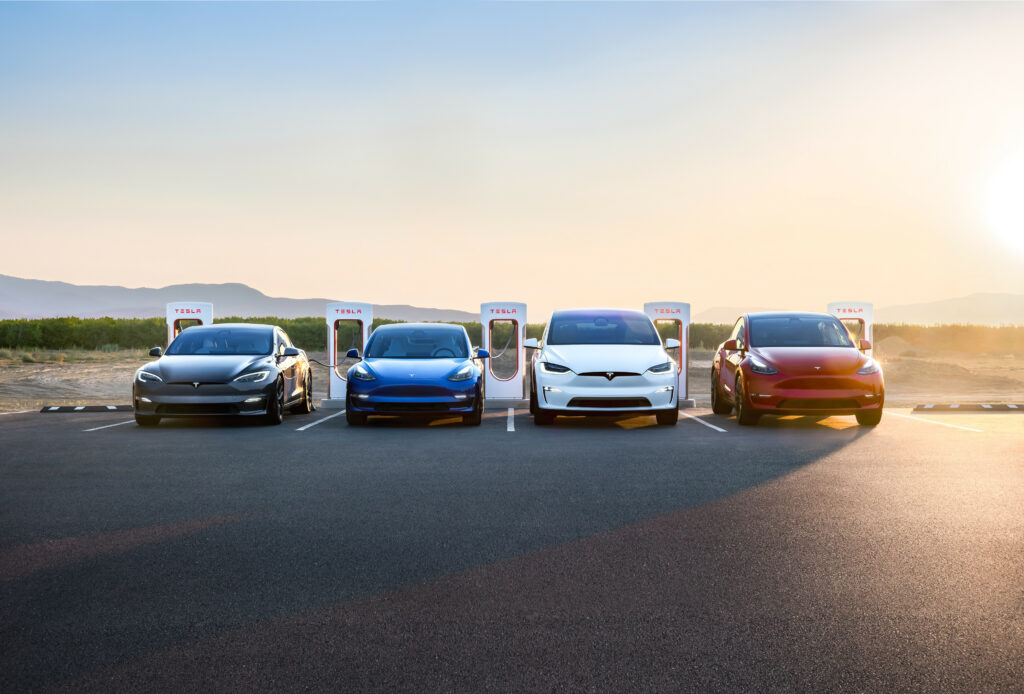
First, there’s one thing we need to make clear. Electric vehicles are not meant to be charged at public DC (direct current) fast chargers every time a charge is needed. It stresses the battery, and it costs a lot more than charging at home. For instance, fast chargers can charge a Model 3 from 10-80% in less than 20 minutes. That much energy transfer puts wear on the vehicle’s battery management system. Fast charging is great for road trips or when you’re in a pinch, but that’s all they’re meant for. 

Get the most when you sell your car.

Compare and choose multiple offers in minutes:

Tesla Superchargers

How much can you expect to pay for charging at a public DC fast charging station? Let’s consider the two largest charging networks in the nation: Tesla Superchargers and Electrify America.

As of early 2022, most Tesla Superchargers charge $0.28 per kWh of electricity. For a 2022 Tesla Model Y with a 82 kWh battery pack, that adds up to a cost of $22.96 to go 330 miles on a charge. Some Superchargers have variable pricing dependent on demand charges, as noted on Tesla’s Supercharging support page. “Certain Supercharger stations offer on-peak and off-peak rates. The rates and peak times are both displayed in the navigation application on the touchscreen.”

Depending on state and local regulations, some Tesla Superchargers charge per minute, rather than per kilowatt-hour of electricity. Tesla recently updated the rate structure for their per-minute Superchargers. With Tesla’s plug-and-charge, customers simply plug in the vehicle and the charger communicates with the car, begins charging and bills the customer’s Tesla account. 

Here’s how the updated rate structure is tiered in 2022:

Tesla Supercharger

Source: Tesla 

Electrify America

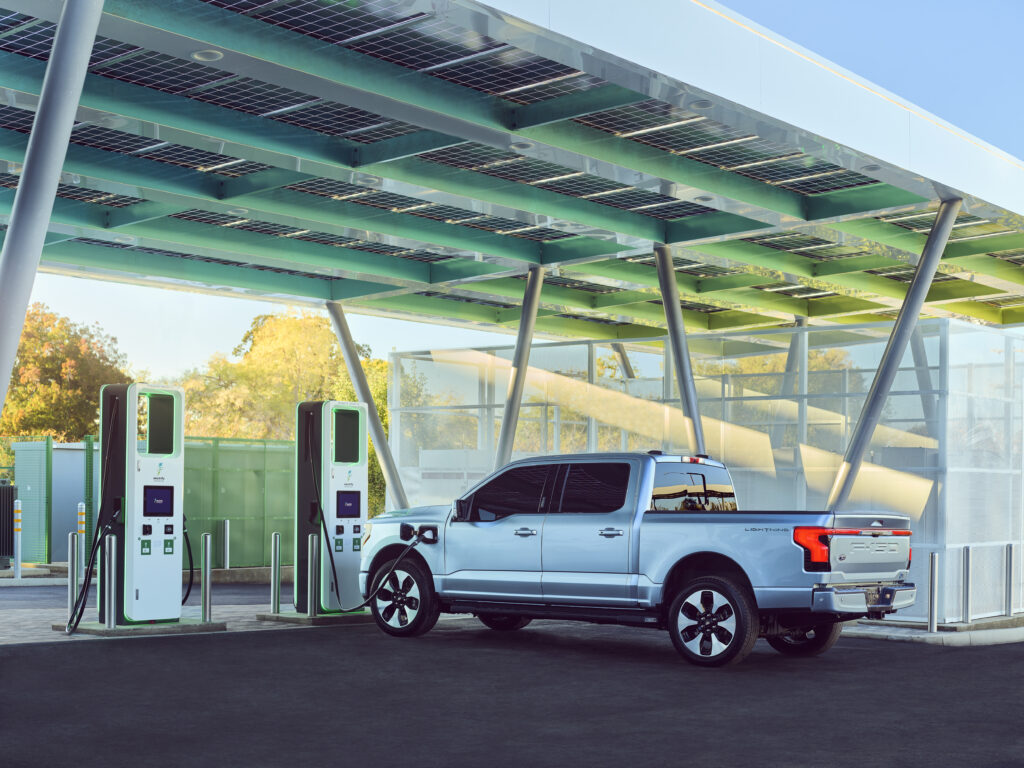
ev charging station

Over at Electrify America, customers can either pay $0.43 per kWh of electricity, or become a Pass+ member for just $4/month and charge at $0.31 per kWh. Having such an affordable membership plan is an interesting approach. That is to say, it almost seems like Electrify America is aiming to become a subscription that everyone with an EV will buy into for a sense of range security, even if they rarely use the network. Down the road, I’m sure prices will go up.

For a Ford Mustang Mach-E, filling up the 98 kWh battery from empty will cost $30.38 with the Pass+ membership. However, the cost jumps to $42.14 without it. Clearly, the fuel savings we often associate with going electric evaporate if charging costs are too high.

Cost of Charging to 100% at a Tesla SuperchargerCost of Charging to 100% at Electrify America as a MemberCost of Charging to 100% at Electrify America as a GuestCost of Filling up an 18 Gallon Tank of Gas at $3.25/Gallon
$22.96$25.42$35.26$58.50

Some Drivers Don’t Spend a Dime on Charging

EV charging costs

If you know someone who pulls up to Tesla Superchargers in their 2014 Model S and leaves without paying a dime, don’t expect the same perks when shopping for a 2022 Tesla. Early adopters received free supercharging ‘for life’, and there are plenty of Tesla owners out there who keep driving their high-mileage, slow-charging old Model S just for the free charging incentive. 

If you’re hoping to score free charging with any of the 2022 EV models, I’ve got good news for you. Many 2022 models come with free charging at Electrify America charging stations. These new EVs all come with a free charging incentive for a limited time:

  • Audi e-tron (250kWh at Electrify America, or about 1,000 miles of driving)
  • Audi Q4 e-tron (250kWh at Electrify America, or about 1,000 miles of driving)
  • Ford Mustang Mach-E (250kWh at Electrify America, or about 1,000 miles of driving)
  • Hyundai IONIQ EV (250kWh at Electrify America, or about 1,000 miles of driving)
  • Hyundai IONIQ 5 (2 years of free charging at Electrify America, 30 minutes per session)
  • Hyundai Kona EV (250kWh at Electrify America, or about 1,000 miles of driving)
  • Lucid Air (3 years of free charging at Electrify America)
  • Mercedes EQS (2 years of free charging at Electrify America, 30 minutes per session)
  • Polestar 2 (2 years of free charging at Electrify America, 30 minutes per session)
  • Porsche Taycan (3 years of free charging at Electrify America, 30 minutes per session)
  • Rivian R1T and R1S (12 months of free charging at Rivian’s Adventure Network and Waypoint chargers; continued free charging with Rivian membership subscription)
  • Volkswagen ID.4 (3 years of free charging at Electrify America, 30 minutes per session)

Some employers, especially large corporations and tech companies, offer free charging for EVs at dedicated parking spots. However, if your employer doesn’t offer charging, maybe you can be the one to spark the idea and help make it happen. 

Ever thought of installing solar panels on your roof? 

Prices have plummeted in recent years, and having an EV is yet another incentive to go solar. Most utility customers can participate in a net metering program that compensates homeowners for unused solar electricity contributed to the grid. If the sun is shining bright while you’re away at work, you still receive bill credits for the unused power your panels generated. The utility bill credits you’ll receive may cover the entire cost of charging your car. That’s 100% clean, free power for both your home and transportation!

CarEdge’s Take on the Future of EV Charging 

How much does it cost to charge an electric car? As you can see, it depends on utility rates, incentives and if you charge at home or at public fast chargers. Fuel savings is one of the greatest benefits of switching from a combustion vehicle to an electric vehicle. As your consumer advocate, we want to make it clear that EVs don’t always save money. However, for the vast majority of American drivers, affordable electricity rates mean that at least $1,000 could be saved each year by going electric. And that doesn’t include the lower maintenance costs that most EVs have. For those who are fortunate to have a place to plug in at home or work, switching to an electric vehicle is a no-brainer. 

Have any questions or comments? How are you feeling about the electrification of the auto industry? Let us know in the comments below, or check out the CarEdge Community forum at caredge.kinsta.cloud. You can also reach out to me at [email protected].

The 2022 Kia EV6: Kia’s Second EV Is Nothing Like It’s First (Updated)

The 2022 Kia EV6: Kia’s Second EV Is Nothing Like It’s First (Updated)

2022 Kia EV6

Update 1/25/22: At last, Kia has announced pricing for the 2022 EV6. The base EV6 ‘Light’ starts at $40,900, plus a destination fee of $1,215 for a total entry price of $42,115 for 2022. The EV6 does qualify for up to $7,500 in federal tax credits. Will dealer markups plague the EV6 as much as they have with the Hyundai IONIQ 5? We’ll have to wait and see. Deliveries start in the coming weeks, with the EV6 being available in all 50 states.

Here’s the full price breakdown for the 2022 Kia EV6:

2022 Kia EV6 price

If you’re a fan of the impressive range and charging figures of Hyundai’s new IONIQ 5 but don’t quite get the styling, maybe it’s sibling, the 2022 Kia EV6, is the electric auto for you. After making it’s official American debut at the 2021 LA Auto Show, this sleek electric crossover is slated to hit American roads within months. The new year brings so many more EVs to the market. Here’s what makes the Kia EV6 so distinctive among its peers in the crowded electric crossover segment.

Korean Partners: Kia and Hyundai’s EV Investment Comes to Life

2022 Kia EV6

The 2022 Kia EV6 is built on the new e-GMP electric platform engineered by Kia and Hyundai to power their vehicles for the next several years. Previously, Kia EVs like the 2021 Kia eNiro were merely EVs adapted to a chassis engineered for a combustion vehicle. This all-new platform offers decent efficiency and range, and exceptional fast-charging speeds. We’re talking even better than Tesla! In early 2022, only the Porsche Taycan, Lucid Air and Hyundai’s IONIQ 5 are capable of charging at 800 volts. Soon, the EV6 will join them.

Considering that nearly all variants of the Porsche and Lucid cost over $100,000, it’s amazing how far Kia has come to be a leading innovator in the industry. For the 2022 Kia EV6, charging from 10% to 80% (adding about 200 miles of range) takes just 18 minutes. Early tests at InsideEVs show a peak charging rate of 239 kW at public level 3 DC fast chargers. Those are worthy bragging rights for Kia!

Over 80% of EV charging is done at home with level 1 or 2 chargers. Some drivers rarely ever use level 3 fast chargers. With a 240 volt dryer outlet, the EV6 can charge from empty to full in 7 hours. Without giving it much thought, that may sound like a long wait. How many hours each night does your car sit in your garage or driveway? With EVs, most drivers wake up with a full ‘tank’ of electricity every single morning. It’s just like plugging in your phone when you hit the hay. Plus, electricity is much cheaper than gasoline. With myth-busting charging speeds both at home and on the road, the Kia EV6 will help turn the tide in the battle between gasoline and electricity.

Specs: The Kia EV6 Is a Spacious and Sporty Crossover

2022 Kia EV6

The 2022 Kia EV6 has a premium feel to it, and that’s something we’re still learning to expect from Kia. If someone told me back in 2006 that in 2022, Kia would be making one of the most sought-after electric vehicles on the market, I’d be skeptical. But stepping inside the EV6 welcomes drivers and passengers alike to a sense of spaciousness. The cabin is open and airy, yet the driver’s seat and surrounding controls remain driver-focused. 

Cargo room is generous at 27.7 cubic feet, or 53.5 cu. Ft. with the rear seats down. Rear passengers have ample room, and it’s slightly more than you’d expect in a traditional crossover. However, the 61” height of the vehicle is two inches shorter than its Hyundai sibling. The Hyundai IONIQ 5 has a bit more room for rear passengers.

2022 Kia EV6

The EV6’s front dash consists of dual high-definition 12.3” screens, one for infotainment and another for the instrument cluster. Higher trims also include an augmented reality heads-up display that projects driving directions and basic info onto the windshield within the driver’s line of sight. 

Get the most when you sell your car.

Compare and choose multiple offers in minutes:

Kia is proud of the ambiance they’ve created in the EV6, and they highlight the intuitive user experience. “Convenience features such as keyless entry with touch-sensitive entry buttons, programmable driver profiles, relaxation seats and ergonomic design create an experience that puts the driver first. From the automatic flush handles that emerge from the car body, through to the intuitive touch-sensitive interfaces and the Augmented Reality head-up display, every journey in EV6 is designed to improve the human-machine interaction and promote a sense of well-being.”

The EV6’s 77.4 kWh lithium-ion battery is produced by SK Innovation, a leading manufacturer of batteries that also supplies Ford. With a curb weight of 4255 pounds, the 310-mile EPA rated range of the 2022 Kia EV6 is very good. That works out to 117 mpg-equivalent on a per unit of energy basis. That’s what you can expect from the rear-wheel drive version, which produces 225 horsepower (168 kW) and 258 lb-ft of torque, or 0-60 mph in 7.3 seconds. Adding an additional motor to the front increases power to 313 hp and a 0-60 time of 5.1 seconds, but range drops to 274 miles on a charge. Unlike combustion-powered vehicles, EVs get better range in city driving. The EV6 will likely get well over 300 miles of range cruising around town. 

Pricing for the EV6

2022 Kia EV6

Kia has announced US pricing, and it’s just a hair above the Hyundai IONIQ 5’s MSRPs. Here’s what we know:

Kia EV6 price

The Kia EV6 qualifies for the federal EV tax credit for up to $7,500, depending on tax liability. If you owe at least $7,500 in federal taxes each year, you can subtract that amount from these prices. For many buyers, the EV6 is effectively starting at just under $35,000.

Once again, as we’ve seen with the top-trim Hyundai IONIQ 5, Ford Mustang Mach-E and Volkswagen ID.4, automakers seem to be cornering buyers into a familiar shopping comparison with Tesla. Do buyers want a base-trim Tesla Model Y for about $60,000, or a fully-loaded alternative from a legacy OEM?

As of January 2022, we know that the ‘EX+’ trim options include rear-wheel drive, 310 miles of range, premium sound, heated and ventilated seats, and an onboard power generator that can power laptops, cooking devices, party lights or whatever else you need to plug in. The more premium GT line tacks on a large power sunroof, surround-view and blind-spot monitoring, heads-up display, park assist and highway drive assist, all while riding around on 20-inch wheels.

Crossover Competition: How Does the Kia EV6 Compare?

Tesla supercharger

With a starting MSRP around $42,000 with destination, the 2022 EV6 will be a real contender for crossover market share. Early access owners in the UK love their cars, and many point out the advantages over the elephant in the room (Tesla). While Tesla’s Model 3 and Model Y both have an ultra-minimalist dash and plain interior, the EV6 is full of gadgets and customization. Looking at the top GT-Line trims, buyers could be cross-shopping the Model Y and EV6 for roughly the same price. One big difference: Kia EVs still qualify for the current $7,500 federal EV tax credit. Which would you prefer, the Tesla or the new Kia?

2022 Ford Mustang Mach-E

Another likely challenger is the Ford Mustang Mach-E, which sold 24,791 units in America through November 2021. The Mach-E has a few more feet of cargo capacity, but many reviewers note that the ride is quite firm. Shoppers looking for a softer ride and more leisurely handling will probably prefer the EV6. Those looking for a sporty Model Y alternative may find what they desire in the Mach-E. Range figures appear to be similar between the two, but the Kia has a clear advantage when it comes to charging time.

Hyundai IONIQ 5

We do know a lot about the EV6’s e-GMP platform sibling, the 2022 Hyundai IONIQ 5. With a starting price of just $40,925 and roughly the same charging and range specs as what the EV6 has to offer, buyers will find that both interior and exterior styling language is the big differentiator. Those who love a retro look with a hatchback flare will instantly fall in love with the IONIQ 5. If you prefer a sleek, aggressive-looking EV that is a family-mover in disguise, the Kia may suit your needs. And then, there’s the supply factor. In the end, whichever OEM can ship more vehicles to America may win out in terms of sales.  

When Will the Kia EV6 Be Available for Purchase?

Like a few other EVs, ‘early 2022’ is about all we know for now. Select dealerships have a pre-ordering process set up, so it might be worth a stop by your local dealership. If you’re hoping to drive an EV6 home in 2022, bear in mind the threat of additional dealer markups. If you are able to place an order, have in writing the out-the-door price your dealer will commit to. Our team of consumer advocates at CarEdge is ready to help you through this very important process. Don’t let surprise add-ons and ‘market adjustments’ keep you from getting into the driver’s seat.

CarEdge’s Take

With some automakers chasing Tesla and others stuck with heartless compliance EVs and struggling to get with the game, it’s refreshing to see EVs blossoming into compelling, fun-to-drive vehicles. The one big problem we see is the prohibitive price. EVs remain out of reach for many, and it doesn’t appear that the EV6 will help on that front. But then again, it doesn’t look like a ‘cheap’ car, so buyers will have to decide if it’s worth the price.

The Kia EV6 brings a new perspective to the crossover EV segment, and it’s one that consumers should definitely check out. The level of detail that the EV6 presents in both the driver-focused interior and eye-catching exterior serves as a reminder that not everything needs to aspire to Tesla. Kia is showing that our electric future is not set in stone. There’s still plenty of room for innovation as we charge ahead. 

What do you prefer, the Hyundai IONIQ 5 or the Kia EV6? Let us know in the comments, or hop on over to the CarEdge Community Forum at caredge.kinsta.cloud