
CarEdge saved me over 4,500 dollars on a brand new Honda Pilot. I can't say thank you enough.
Price intelligence
Find a wide range of vehicle listings with market insights on new and used listings near you.
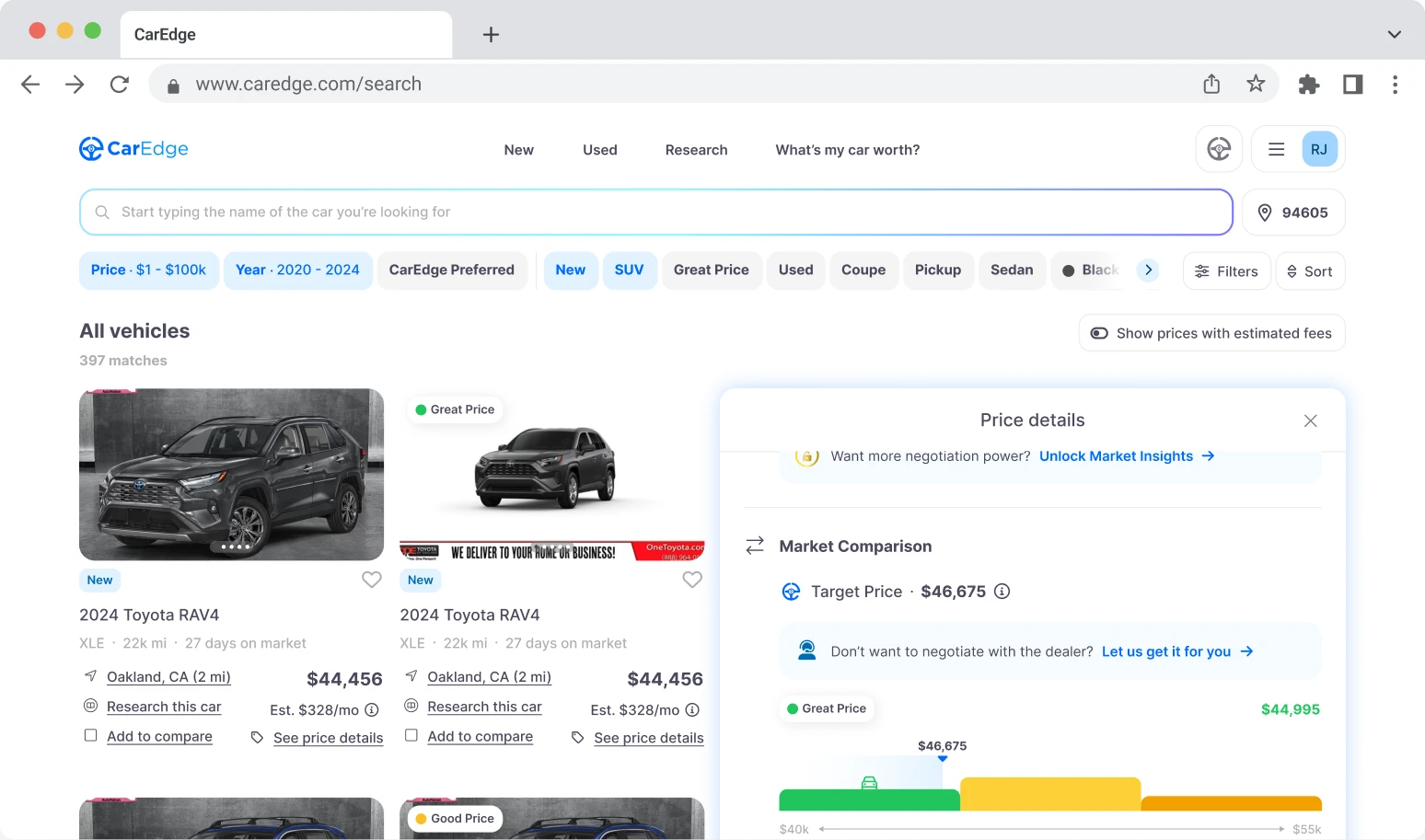

What can I do with CarEdge?
 CarEdge Insights
What can I do with CarEdge?
Get access to exclusive information so you can make an informed car buying decision — all in one place.

Find a wide range of vehicle listings with market insights on new and used listings near you.
Track your vehicle’s value and cash in when the time is right to sell.

Access to our proprietary data to help you find the right car, at the right price. Find these unlocked on every listing after subscribing.

With our expert-led, tech-enabled car buying service, we will locate, negotiate, and deliver your vehicle so you can get a new car hassle free.


Help us personalize your CarEdge experience — it only takes a second.
Your answers help us personalize your CarEdge journey — we’ll follow up with tips and next steps that match your buying timeline.
There are a multitude of factors that affect the value of a used car. The vehicle’s condition, any remaining manufacturer warranties, etc, etc. One way you can take the guesswork out of the used car buying process is by choosing a used vehicle that’s been certified pre-owned by the manufacturer. We put together this Subaru certified pre-owned review to help simplify the buying process so you can choose your next used Subaru with confidence.
Choosing a certified pre-owned vehicle offers the assurance that the car or truck you’re considering meets the specifications set by the manufacturer. With Subaru, used cars that meet these company specifications have passed a 152-point inspection and are covered by the Subaru Certified Pre-Owned Warranty.
Subaru vehicles have a reputation for quality, with 97% of the models sold over the past 10 years still on the road today. In addition to a solid reputation for quality, Subaru Certified Pre-Owned Vehicles offer you a number of assurances about what you can expect when you buy one of these pre-inspected vehicles.
Technicians who have been trained by Subaru inspect and recondition these used vehicles to like-new condition. If the technicians find anything that doesn’t meet safety specifications during the inspection, it either gets repaired or replaced before hitting the showroom floor.
For a full list of items checked in the 152-point inspection, you can click here.
The CPO warranty extends the original 36,000 mile/3-year warranty. When you choose a Subaru that’s backed by the company’s certified pre-owned warranty, you’re provided with a CARFAX vehicle history report, full documentation for the vehicle, and two sets of keys and remotes.
This coverage includes:
Powertrain Components That Are Covered
Transaxle, Transmission and Differential Parts That Are Covered
Hybrid System Subaru Warranty
For hybrid Subaru vehicles, hybrid system parts that are covered include:
The certified pre-owned warranty from Subaru protects your investment in your vehicle with coverage for up to seven years and 100,000 miles on the powertrain, beginning at the date the vehicle was purchased new. It additionally comes with a $0 deductible on all-wheel-drive components, the engine, and the transmission when repairs are performed by a covered Subaru dealership.
We hope this Subaru Certified Pre-Owned information helps simplify your car-buying experience. We know there’s a lot of information to process when you’re buying a car, and we’re here to help with plenty of details!
Choosing a vehicle from the Subaru CPO inventory offers buyers some extra perks. Special finance rates as low as 0.99% for well-qualified buyers and no down payment is the first of these perks. The company also offers additional coverage for buyers who choose a vehicle from the Subaru certified pre-owned selection.
The additional coverage is available in two package plans, the CPO Classic Plan and the CPO Gold Plus plan, both of which include roadside assistance.
The CPO Classic plan covers towing and rental reimbursement plus approximately 1,000 parts in the major component areas of a vehicle, including:
The CPO Gold Plus plan covers towing and rental reimbursement plus hundreds of parts that aren’t covered by the CPO Classic plan. This plan reimburses for meals and lodging if your Subaru breaks down when you’re traveling out of town. Travel assistance, such as trip routing and a retailer location service are also included with this plan.
Under these warranty plans, you aren’t charged for covered repairs, including parts and labor. That protects you from the cost of repairing or replacing defective parts. Your Subaru dealer will choose between remanufactured and new Subaru parts when performing repairs under the CPO warranty.
If you need to file a claim under your Subaru CPO warranty, it’s important to file it as soon as you discover a defect, and before the warranty period ends. Subaru of America recommends that you take your car to the dealer who sold it to you for repairs, but if that isn’t an option, you can take it to any authorized Subaru dealer.
If you are unable to drive your vehicle to the dealership for repairs, Subaru of America pays the towing cost under the terms of the CPO warranty. In some cases, Subaru will cover the cost of emergency repairs at non-dealer facilities, and the terms regarding this are found in the warranty information that’s linked above.
Buying a Ram certified pre-owned vehicle is an excellent option for anyone who wants to get into a quality vehicle without paying new car prices. They offer a thorough 125-point inspection to ensure that any car they certify won’t break down on you any time soon.
We’re about to cover everything you need to know about the Ram certified pre-owned program, including the warranty, what’s inspected, and other add-ons. Of course, make sure you research your ideal car well before you visit the dealership.
TLDR; The Ram certified pre-owned program is average, which is a good thing. The 125-point inspection has a few points less than other manufacturers, but it’s still comprehensive. We don’t like the $100 deductible for covered repairs, as that could add up over a vehicle’s life. The short bumper-to-bumper warranty is also unfavorable.
Ram has a decent warranty for their certified pre-owned vehicles. It’s nothing spectacular, but it’s not terrible. We consider this warranty average for the industry.
The most common questions people ask regarding a certified pre-owned program are about the warranty. Any Ram certified pre-owned vehicle comes with two warranties covering different parts of the car.
Maximum Care Warranty:
Powertrain Limited Warranty:
One of the significant downsides of the Ram certified pre-owned warranty is the deductible. This deductible is unusual for CPO warranties, and we hope someday Ram reconsiders this fee.
These warranties are transferable if you sell your car while it’s still covered. However, there is a $150 fee to transfer the warranties. This fee seems unnecessary and makes the Ram CPO warranty worse in our eyes.
The Powertrain Limited Warranty lasts for seven years or 100,000 miles, whichever comes first. It’s worth noting that both numbers began when the vehicle was sold as new, not from when you buy it.
The Maximum Care Warranty is good for three months or 3,000 miles, whichever comes first. We think this is absurdly low, considering 3,000 miles is an average oil change interval. This coverage interval is also short by industry standards.
Ram certified pre-owned warranties also come with three different Certified Upgrade Plans. Each of these plans begins on the date of purchase. They also require a deductible. The official Ram website does not provide additional details on these upgraded plans and directs you to visit a dealer.
Ram is quite proud of their inspection checklist. Every vehicle that earns the title of certified pre-owned will undergo this inspection.
Before being inspected, every vehicle must meet the following criteria:
Once a car meets those criteria, it moves on to the inspection. You can view the complete checklist on the Ram official website:
Any Ram certified pre-owned has gone through intensely thorough testing. The rigorous testing is why we also suggest going for a CPO vehicle over a ‘side of the road’ used car. A CPO has been tested and is proven to be a safe buy.
While the inspection and the warranty are the main selling points of buying a CPO vehicle, automakers like to add some bonuses. Purchasing a Ram certified pre-owned car comes with some of these perks:
We like the perks, we like the powertrain warranty, and we appreciate the thorough inspection. Ultimately, the Ram certified pre-owned program is par for the course. They compete with other car manufacturers but fall short in some areas, such as the Maximum Care Warranty (3,000 miles is too low!). However, buying a pre-owned vehicle is always better than buying a standard used car and making some mistakes. Depending on the numbers, we always suggest going for a CPO vehicle.
You’ll feel confident with your purchase when buying a Mazda certified pre-owned vehicle. Their 160-point inspection carefully scrutinizes and tests every major and minor component in each car before it earns the ‘certified pre-owned’ designation.
We’re about to go over the warranty that comes along with buying a Mazda CPO, along with talking about what that warranty covers, and then looking at the inspection process itself. We’ll also take a look at what else comes with a Mazda certified pre-owned vehicle. If this is your first time buying a car, we also suggest learning a few car buying tips to help you out.
TLDR; Mazda’s certified pre-owned program is pretty standard, which is a good thing. There are no surprises. Each car receives a thorough inspection and is then covered by a good warranty. The only part we don’t like is that the powertrain warranty begins when the vehicle is first sold, not when you buy it. Other than that, we like the Mazda certified pre-owned program.
After a vehicle has completed the inspection process and passed with flying colors, it is then sold with a Mazda certified pre-owned warranty. That warranty will cover any manufacturer defects that arise, with no deductible on repairs (provided you go to a Mazda dealership).
Mazda has a somewhat average, yet still useful, certified pre-owned warranty. Their CPO warranty comes in two parts and covers:
CPO Vehicle Limited Warranty
Limited Powertrain Warranty
Please be aware that these warranties don’t mean that every issue you encounter will be covered. For one, they won’t cover accidents. For two, there are numerous caveats in the fine print:
That might seem like a ton of fine print. Essentially, do all your maintenance and services at Mazda dealerships, be a responsible owner when it comes to usage and modifications, and your warranty will remain intact. While we’re on the topic of fine print, it pays to learn some auto industry jargon before you visit the dealership.
The limited vehicle warranty, which you could also call a bumper-to-bumper warranty, lasts for 12 months or 12,000 miles. The powertrain warranty lasts for seven years or 100,000 miles; however, those numbers start when the car was initially sold.
One nice aspect of the Mazda warranty is that if the CPO vehicle is still covered by the New Vehicle Limited Warranty (3-years, 36,000 miles), that warranty remains in effect. Once that warranty expires, then the CPO Limited Vehicle Warranty kicks in. Keep this in mind when shopping for a Mazda certified pre-owned vehicle; the newer, the better.
Both of the warranties they offer on CPO cars are transferable to the new party if you decide to sell your car, too. The warranties increase your resale value should you decide to sell within the warranty’s timeframe.
Mazda certified pre-owned vehicles undergo a 160-point inspection before being certified and receiving the warranties discussed above. You can view more about their assessment in the official CPO brochure, but we’ll go over some of the main points:
They’ll also perform any required maintenance, such as giving it an oil change before leaving the inspection facility.
Please note that this is different from a pre-purchase inspection, which you should definitely also have done.
Mazda has included quite a few perks to tempt people into buying a Mazda certified pre-owned car.
One great perk that Mazda provides is 24/7 emergency roadside assistance for the duration of the seven-year / 100,000 powertrain warranty. Their roadside assistance covers:
Every Mazda certified pre-owned car also comes with a complete AutoCheck vehicle history report and three-year buyback protection provided by Experian.
Mazda provides all CPO customers with a 3-month subscription to SiriusXM, too. Not necessary, but something you might appreciate.
It’s worth noting that Mazda does not provide any allowance for a rental car if your vehicle is in for warrantied repairs, unlike some other manufacturers. This is where a third party vehicle service contract could provide additional value to you.
We believe that Mazda certified pre-owned vehicles are thoroughly inspected, fairly warrantied, and the right car can be a great buy (depending on the financial numbers). Buying a certified pre-owned has many advantages over buying a standard used car and should always be a priority.
Buying a certified pre-owned vehicle is a great way to have the sticker price of a used car but with all of the same confidence you have when purchasing a new car. You’re guaranteed to receive a car that has undergone a comprehensive inspection to ensure that everything is as it should be and the vehicle is ready to sell.
Compared to buying a used car off of the street, it instills a lot of confidence in the vehicle that you’re buying. We’re about to go into the Dodge certified pre-owned warranty, their inspection process, and other perks you get when you buy a Dodge CPO.
TLDR; We love the length of the powertrain warranty. It’s one of the best in the industry. They also provide some useful perks that every automobile owner will appreciate. We dislike the short bumper-to-bumper warranty, though. The $100 deductible for repairs under warranty is also unreasonable, as many manufacturers do not charge a deductible.
To qualify for the inspection process and become a Dodge certified pre-owned vehicle, the automobile must be less than 5 model years old. It also must have less than 75,000 miles.
If a vehicle meets the criteria, then it can be part of the program. After inspection, they are sold with the Dodge certified pre-owned warranty. This warranty covers a variety of issues that stem from manufacturer defects (accidents are not covered).
Dodge has an interesting philosophy when it comes to their CPO warranty. They want to cover the powertrain for quite some time, but the bumper-to-bumper coverage is extremely short. Let’s take a look:
Bumper-To-Bumper Warranty:
Powertrain Warranty
One major downside to both warranties is that there is a $100 deductible for covered repairs. Such a deductible is unusual in the industry; most manufacturer warranties have no deductible. Over the life of a vehicle, those $100 deductibles can undoubtedly add up. There’s a lot to know about why warranties are so often sold, and the fees are part of it.
The Dodge certified pre-owned bumper-to-bumper warranty lasts either 3,000 miles or three years, while the powertrain warranty lasts 100,000 miles or seven years.
Our most significant critique of the Dodge certified pre-owned warranty is easily the short length of the bumper-to-bumper warranty. We think 3,000 miles is absurdly low, and someone who drives a relatively average amount could rack that up in just a few months. Think about how often you get an oil change – that’s how long the warranty lasts.
The powertrain warranty even beats the new Dodge vehicles’ warranty by two years (they include a 5-year warranty).
It’s interesting how there’s such a stark contrast between the two Dodge warranties offered in the CPO program. While we’re uncertain about their motivations or philosophy, we do appreciate the extended powertrain warranty. Purchasing a third-party vehicle service contract to “extend” the bumper-to-bumper warranty is not a bad idea when it comes to Dodge CPO vehicles.
Dodge has a 125-point inspection that certifies that the vehicle is in roadworthy condition. They’ll lose money if they approve a car that breaks down a few miles down the road since every CPO vehicle comes with a warranty.
What’s on the inspection list? You can read the full list on their official website, but we’ll go over a few highlights:
As you can see, it’s quite a thorough list. However, it’s on par with the inspections performed by other vehicle manufacturers in their certified pre-owned programs. All of the manufacturers try to one-up each other with their inspection list, and over the years, this practice has resulted in most of them being quite similar.
Before you visit the car dealership, make sure you know our tips for first-time car buyers.
Many car manufacturers like to throw in extra bonuses with their CPO vehicles, and Dodge isn’t any different. Buying a Dodge with a CPO warranty provides the following perks:
We don’t think the Dodge certified pre-owned warranty is industry-leading by any stretch of the imagination, but the transferability and extended powertrain warranty are certainly highlights. As long as you’re getting a good out-the-door price on it, a pre-owned Dodge is a decent way to go. The inspection alone is why we always suggest going for a certified pre-owned vehicle over a random used car, when at all possible.
Knowing when dealers are highly motivated to sell can help you plan your car purchase around the best deals. Our team of Car Coaches has decades of combined experience, and always keeps a pulse on the auto market. There was no debating the best times to buy a car. Let’s dive in.
There are plenty of myths and claims about when you can get the best prices on cars. Many of these include specific holidays as well as certain days of the month, specific days of the year, and even exact times of the day. Some of these myths are based on observable trends in the auto industry, so let’s dig into those that hold the most merit.
For starters, it’s commonly understood that Mondays are the slowest day of the week at dealerships. So, if you’re in the market for a car and want to gain the rapt attention of a salesperson looking to make a deal or to meet a quota, consider visiting a dealership at midday on a Monday.
Another quirky fact is that shopping during poor weather can be an excellent way to get a better deal. This is because poor weather conditions generally deter customers from walking around car lots, and employees are anxious to make a sale for the day or to meet their quotas.
The key word in all of this, though…is quotas.
Dealers are assigned sales goals for each month. That means both management and sales staff at dealerships are inclined to offer better deals as their deadline approaches. So, if you visit the dealership on the last business day of the month, it gives you a bit more leverage in the negotiations.
Traditionally, January and February are difficult months for dealers, depending, of course, on other aspects of the economy. This makes it even more likely that a dealer may offer better deals for buyers during this time span. It seems too simple to be true but imagine shopping on Monday at midday during a snowstorm at the end of February. Now, you could be hitting the sweet spot!
Dealers aren’t the only individuals setting targets. Automotive manufacturers establish end of quarter goals for dealers which means the end of each quarter presents buyers with an opportunity to save some money. As you might expect, these quarters typically end in March, June, September, and December.
The last few days of December represent the absolute best time to buy a car because automotive manufacturers, dealers, and sales staff are highly motivated to achieve year-end sales goals. This motivation to negotiate comes from the fact that dealers get year-end bonuses from manufacturers when annual sales quotas are met.
Factory-to-dealer incentives can add up to a significant amount of income for dealers, so it’s common practice to offer enticements such as discounted prices, significant rebates, and special financing terms to customers as a financial benefit to both the buyer and the dealership.
Using a savings of at least 5% as a worthwhile objective for a customer (which can amount to a savings of over $1,100), research shows that the following holidays have been identified as some of the best days to buy a car.
It’s worth noting that the whole week from Christmas to New Year’s is the peak week for deals. In addition to being the holiday season, these days fall during the end-of-month, end-of-quarter, and end-of-year sales quota period for dealers, all of which can add up to great deals for car buyers.
Obviously, the best time to purchase a vehicle is when you don’t need one, but remember that your finest negotiating strategy, other than choosing the right day and best time to buy a car, is your willingness to walk away without one.
Print this 100% free car buying cheat sheet and strategy card!
Furthermore, it’s ok to mention that you know about sales quotas set by manufacturers. It’s alright to ask how much closer the dealership wants to get to its monthly, quarterly, or annual sales goals. Tell the manager that for the right price you’re willing to help the dealership get closer to hitting those targets.
Looking for car buying help? The CarEdge Team is ready to help you save thousands, and also to avoid the stress of car buying hassles.
CarEdge Coach is your path to 1:1, personalized help with your car deal.
Prefer a DIY route? Learn more about CarEdge Data‘s unparalleled insights.
Simply want to chat with an expert? Try a CarEdge Consult anytime.
We’re here to help. Remember, learning how to negotiate will save big time!