
CarEdge saved me over 4,500 dollars on a brand new Honda Pilot. I can't say thank you enough.
Price intelligence
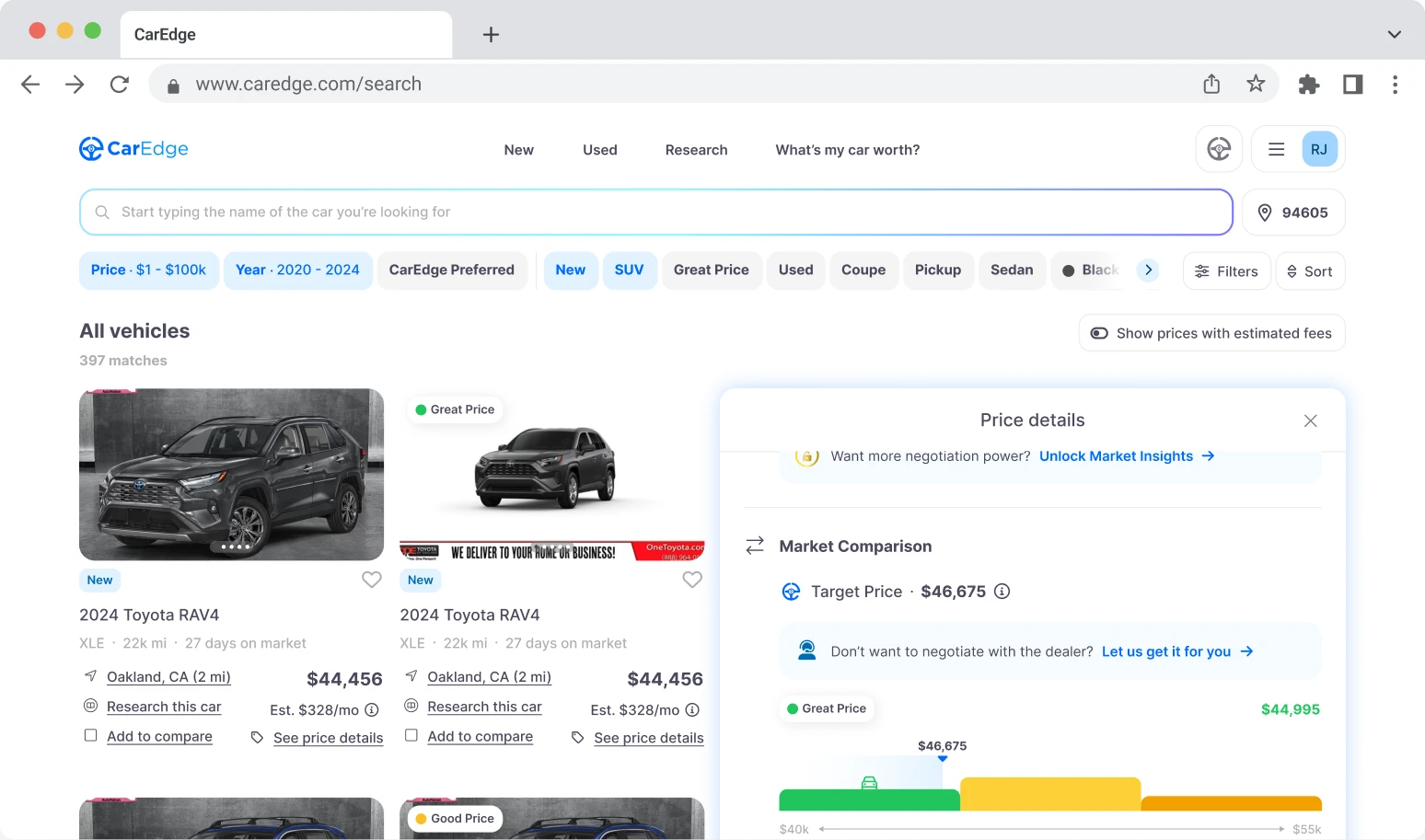
Find a wide range of vehicle listings with market insights on new and used listings near you.

What can I do with CarEdge?
 CarEdge Insights
What can I do with CarEdge?
Get access to exclusive information so you can make an informed car buying decision — all in one place.

Find a wide range of vehicle listings with market insights on new and used listings near you.
Track your vehicle’s value and cash in when the time is right to sell.

Access to our proprietary data to help you find the right car, at the right price. Find these unlocked on every listing after subscribing.

With our expert-led, tech-enabled car buying service, we will locate, negotiate, and deliver your vehicle so you can get a new car hassle free.


Help us personalize your CarEdge experience — it only takes a second.
Your answers help us personalize your CarEdge journey — we’ll follow up with tips and next steps that match your buying timeline.

Following continued appreciation in December, used car prices were nearly flat in January 2022. The latest data from Cox Automotive’s Manheim Used Vehicle Value Index shows a seasonally-adjusted increase of just 0.04% since December 2021. Does this mean that used car prices have peaked?
Industry data analysts at Cox Automotive noted that used vehicle sales were down 0.8% in January year-over-year. Older models saw prices remain stable, while more recent model years had modest price declines. Average wholesale prices for 3-year-old vehicles dropped by 2.9% last month.
Black Book’s Used Vehicle Retention Index grew just 0.6% in January, its lowest monthly rate of increase since last summer. Wholesale prices dropped slightly last month, but it was a smaller decline than is typical for the annual January slowdown. Seasonally adjusted wholesale prices increased slightly according to Black Book.
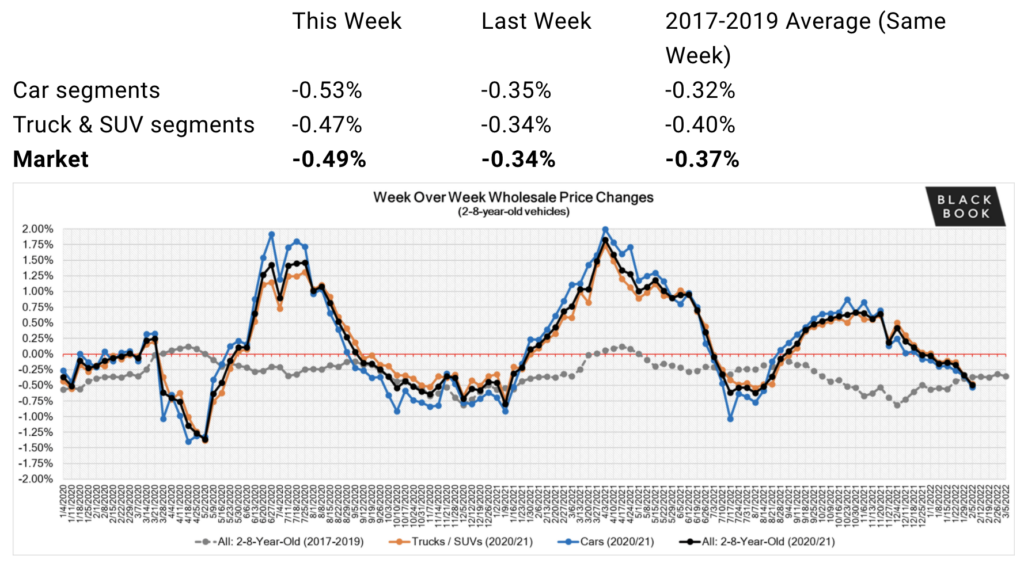
So far in February, wholesale used car price have fallen even more rapidly. The latest data from Black Book from 2/8 shows a .5% week-over-week decline in used car prices.
Car-buying app CoPilot noted that for their business, used car prices peaked around the beginning of the new year, and have since fallen 1.4%. Similarly, Automotive News reports that TrueCar data shows a 2% drop in used car prices from December to January.
CoPilot notes that prices for models that are one to three years old saw the greatest declines. Autos in this age category have seen wholesale prices decline by about 2% since the early January peak. Older models dropped 1% on average.
Although the data from Cox, CoPilot and TrueCar suggest that peak prices may have occurred in early January, used car prices remain near all-time highs. Year-over-year, Cox’s data shows that prices in January were 41% higher than a year earlier. Since January 2021, van prices are up by nearly 60%! Compact cars like the Mitsubishi Mirage have seen prices climb by 52% over the same period. Trucks and luxury cars lagged the overall market, but they’re still 30-50% more expensive than a year ago.
It’s important to remember that industry analysts are much better at interpreting past results than they are at predicting the future. Last summer, a ‘false peak’ was followed by slight declines in used car prices. However, prices climbed higher yet again in the fall.
January and February are a historical low point in auto sales. The spring buying season is just around the corner. Tax refunds are on the way, but many households will be receiving less than they normally do because of the advanced Child Tax Credit payments. Still, there remains a real possibility that prices will climb further as we head into spring.
CarEdge consumer advocate and industry veteran Ray Shefska sees the rationale for higher prices sticking around. First off, the semiconductor ‘chip’ shortage is sticking with us longer than anticipated. That alone will reduce new car inventory through at least the first half of 2022. General Motors CEO Mary Barra anticipates chip shortage improvements by the second half of 2022, however some chip makers are tempering expectations.
And then there’s inflation. Just as car inventory climbs back to the new normal, automakers are likely to pass on the higher costs of raw materials and manufacturing components to consumers through higher MSRPs. As expected, dealers will follow suit with higher sticker prices. We’ve been watching incentives slip away, and that’s likely to continue. In other words, used car prices may remain in high demand as new car prices rise to levels that are unattainable for many consumers. Not everyone is okay with a $700 monthly payment!
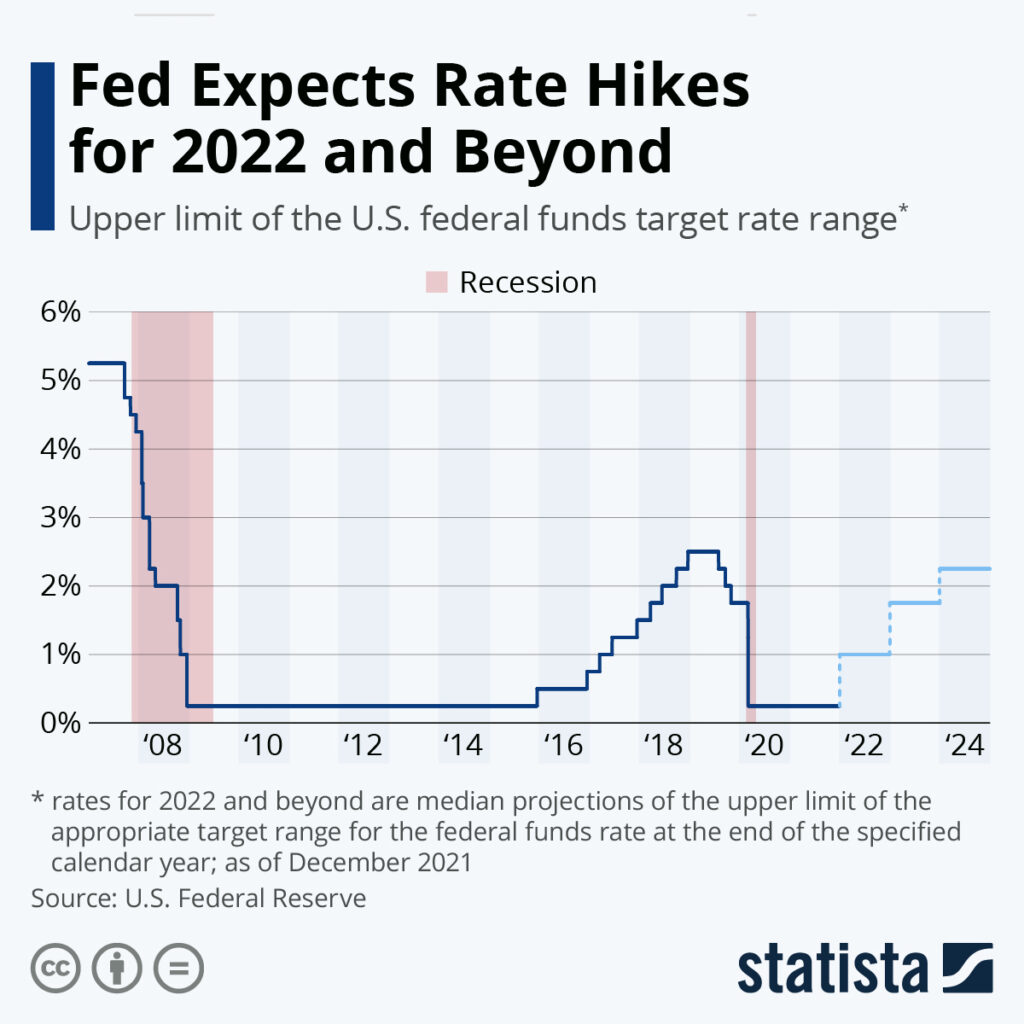
Furthermore, the era of cheap money is likely nearing its end. The US Federal Reserve has indicated that it will soon raise historically low interest rates to combat inflation. Low interest rates have shielded consumers from the out-of-this-world rise in car prices over the past year or so. Car buyers have also been committing to longer-term car loans, and it didn’t matter as much with interest rates so low. As rates climb, that 72 month loan won’t look so pretty on paper.
CarEdge Just Launched a New Search Engine to Make Buying Your Next Car Easier!
We have thousands of EVs (and other vehicles) listed today. Each listing includes industry insights and empowering data. The true TotalPrice that will make buying a car the transparent process it should’ve always been. Check it out here!
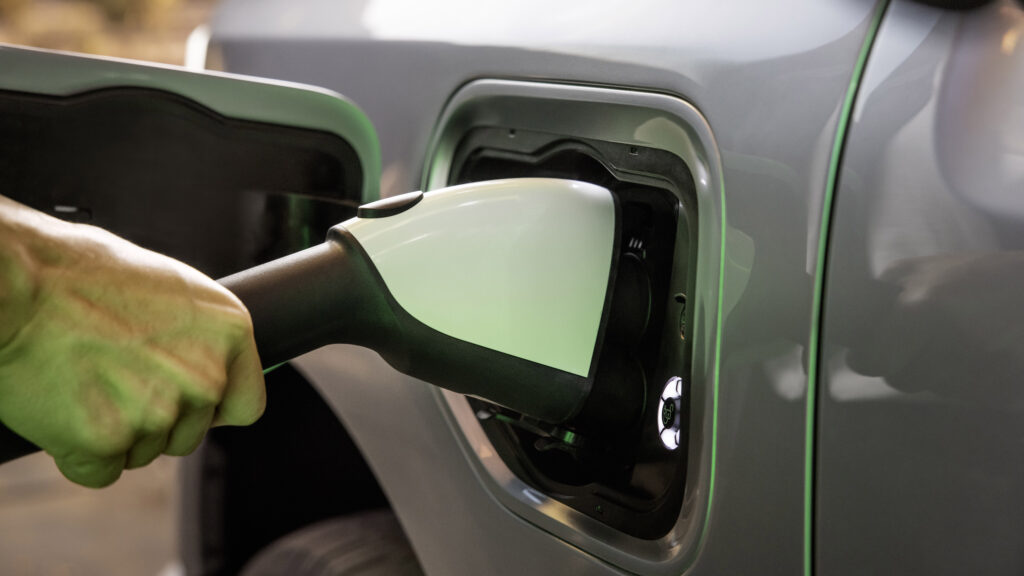
Electric vehicles now make up 9% of the global market, and 4.5% of American auto sales. Estimates vary, but many analysts expect electric vehicle sales to reach 40% market share in 2030. Will their crystal ball prove correct? It’s now looking possible. New data from the International Energy Agency beat previous forecasts by 26%. In 2020, Loren McDonald of EVAdoption predicted that electric vehicle sales would make up 3.55% of the US market in 2021. With the official tally now coming in a full percentage point higher, the electric momentum is accelerating. When the chip shortage finally ends, the production of EVs will likely be prioritized by automakers. Considering the massive half-trillion dollar investments OEMs have committed to electrifying their lineups, I’m sure they’re happy to see that there’s a growing market for their future products.
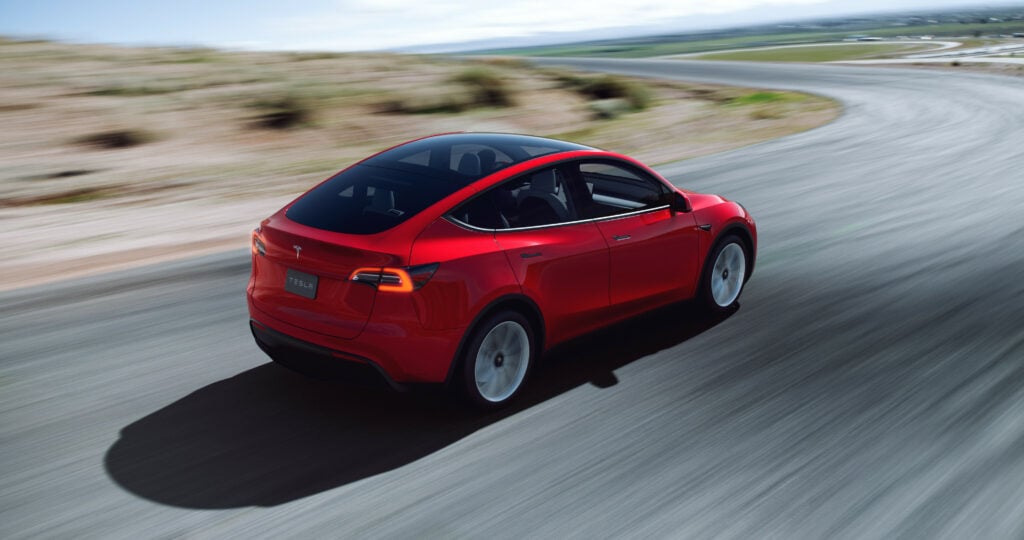
Tesla’s pioneering Supercharger network of DC fast chargers remains the industry standard for electric vehicle charging. With 3,476 locations, hassle-free plug-and-charge and consistent reliability, only Electrify America has come remotely close to what Tesla offers. For the past decade, Superchargers have been known for convenience and accessibility, but a few pending developments could change that. Here’s what we’re watching:
Tesla continues to dominate electric vehicle sales in America and abroad. In 2021, Tesla year-over-year sales grew 87% to 936,172 vehicles globally. In the United States, Cox Automotive estimates that Tesla delivered 352,472 vehicles to customers. Tesla’s 2021 sales were enough to (probably) unseat BMW as luxury sales leader in the US.
In 2021, Tesla installed 8,221 new Superchargers at 912 stations around the world. This represents 35% growth in just one year, a huge accomplishment for the EV leader. However, will it be enough? Sales have been outpacing Supercharger growth for years now. The vast majority of charging stations never see a crowd, but that could change soon as Tesla’s zero-hassle sales model and superior technology have drawn more buyers to the brand.
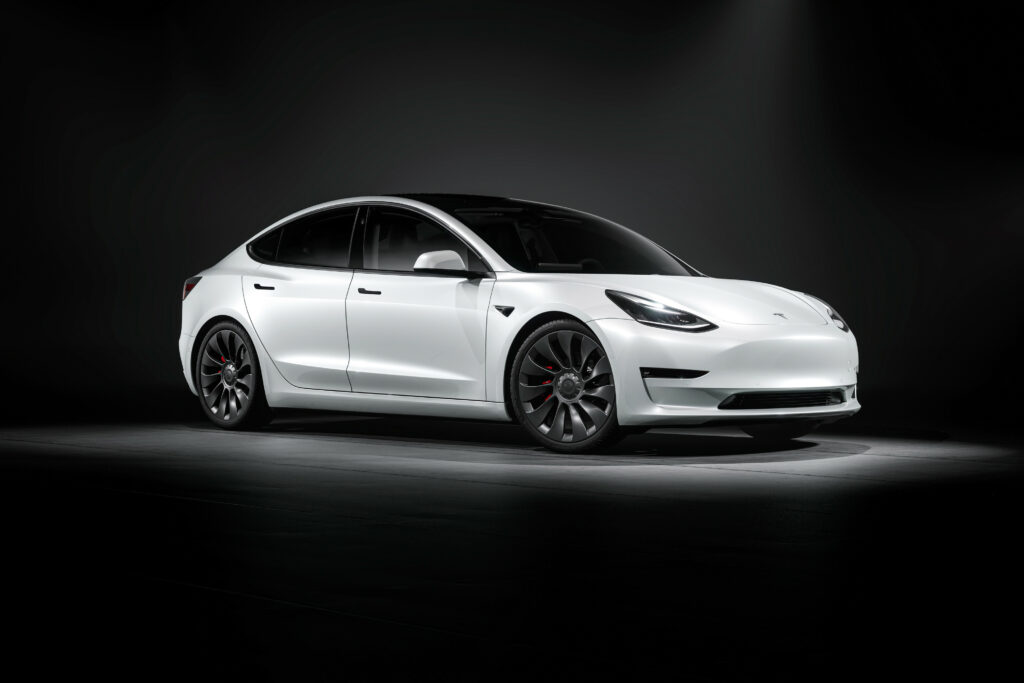
Tesla CEO Elon Musk confused Tesla owners and thrilled non-Tesla owners when he shared the company’s intentions to open up some Superchargers to non-Tesla cars. In early 2022, several Supercharger locations in France, Norway and the Netherlands are open to all. If open access spreads to North America, Superchargers will see a flood of traffic as Ford Mustang Mach-E’s, Volkswagen ID.4’s, Hyundai IONIQ 5’s and dozens of other models gain access to America’s largest fast charging network.
Something positive came out of Volkswagen’s dieselgate debacle. As part of a 2016 settlement with the United States Environmental protection Agency and the California Air Resources Board, VW was ordered to spend $2 billion on something that would clean up the air. The result was the birth of Electrify America.
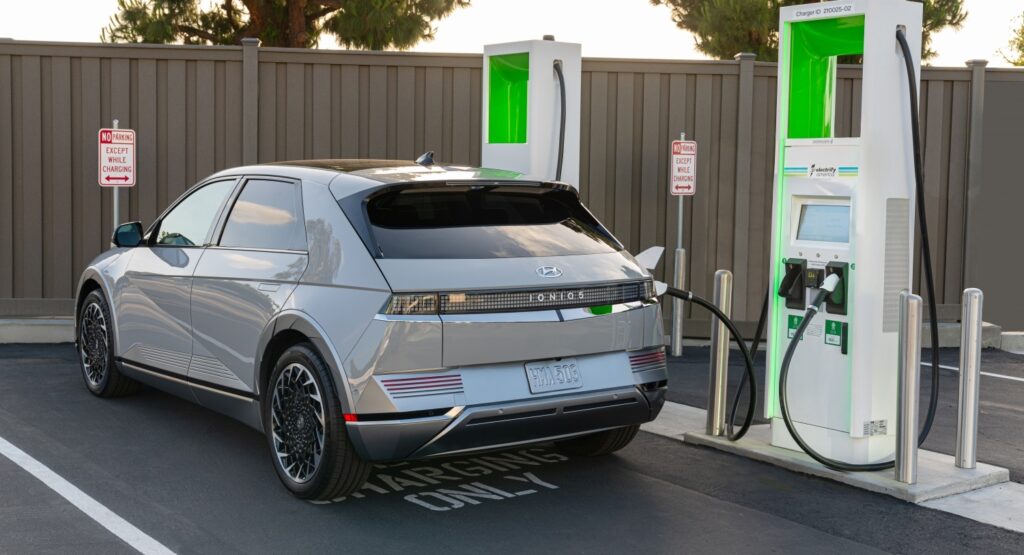
After installing their first chargers in 2018, Electrify America now has 3,500 charging stations at 800 locations around the US. The big difference between Electrify America and Tesla Superchargers is accessibility. Any electric vehicle can pull up to an EA station to charge. Only Tesla models are allowed to charge at Superchargers, except for select Superchargers in Europe that are open to all.
Electrify America has its faults though. Drivers often encounter out-of-order chargers, and most vehicles are not yet compatible with the convenient plug-and-charge capability that you’ll find at Tesla Superchargers. Reports indicate that reliability is improving at Electrify America, and several automakers say their new EVs will have seamless plug-and-charge capability.
Tesla’s record growth is great news for the automaker, but the picture is more complicated for Tesla owners. Tesla Superchargers in California and East Coast hotspots already fill up during peak travel. You could argue that gas stations do too, but waiting in line to plug in and then wait another 20 minutes to charge is not the same thing.
Fortunately, charging is about to get a lot easier in America. Public and private partnerships are currently designing a National Charging Network that will bring charging to remote locations and more American highways. The Supercharger network will continue to grow, as evidenced by the hundreds of ‘coming soon’ locations just added to the Tesla Supercharger map.
Some gas stations are getting into the charging game. Why don’t more add DC fast chargers to their parking lots? DC fast charger installation is expensive. We’re talking over $100,000 in most cases. Public-private partnerships appear set on helping businesses overcome the prohibitive costs of installing chargers. That would certainly benefit a rapidly electrifying nation of drivers.
Let us know what you think in the comments below. Better yet, connect with auto experts and fellow car enthusiasts at caredge.kinsta.cloud/community, where we work for YOU.
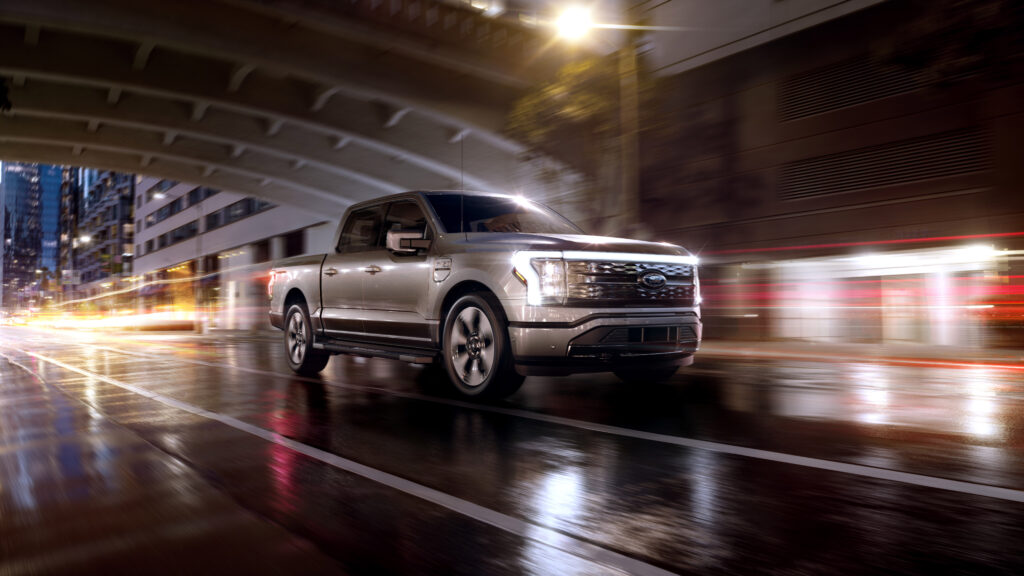
Over the past year, electric trucks have gone from nothing to the most-watched vehicle segment on the planet. Back in the pre-pandemic good ol’ days of 2019, electric trucks were relegated to the concepts of startup fantasies like Rivian, Nikola and Bollinger. Tesla’s Cybertruck was the first to be unveiled in November of 2019, however it’s still at least a year away from production. In 2022, buyers have two to choose from: The $100,000+ GMC Hummer EV, and the mid-size luxury-oriented Rivian R1T, which starts over $70,000. Electric trucks have remained out of reach for the average consumer.
This is where Ford has a chance to really make a splash in the market. With the best-selling F-150 being the unofficial symbol of working America, it’s only natural that the F-150 gets the honor of being the first electric truck for the masses. Even better, it’s going to offer features and utility that no truck has ever seen before. The anticipation is building.
The 2022 Ford F-150 Lightning may not turn heads like the Cybertruck, but the Lightning’s capabilities are astounding. What exactly makes the F-150 Lightning so innovative, and will it overtake Tesla as the face of electric trucks?
Here’s What Stands Out With the F-150 Lightning
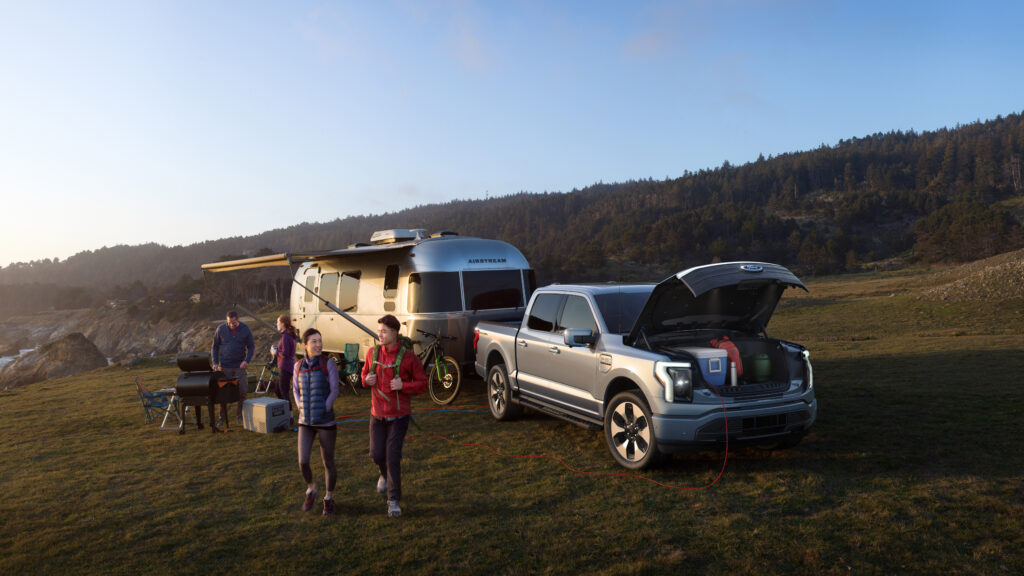
Look, I get it. Most traditional truck buyers don’t follow the latest and greatest in the EV space. What does matter, however, is the utility of the truck they drive. Can it get the job done reliably?
Ford’s most anticipated electric vehicle is not the Mustang Mach-E. It’s not an electric Explorer. It’s without a doubt the 2022 F-150 Lightning electric truck. For well over 30 years, the F-150 has been the best-selling vehicle in America. Now that Ford expects 40% to 50% of its global sales to be fully electric by 2030, how does the F-150 fit into the picture?
Ford has made it clear that they intend to entice traditional truck buyers into an electric F-150, while also attracting new consumers to the brand. So far, it seems to be working like a charm. As of January 2022, Ford has 200,000 reservations for the F-150 Lightning in the books. This truck hasn’t even entered series production yet and it’s already sold out until 2024.
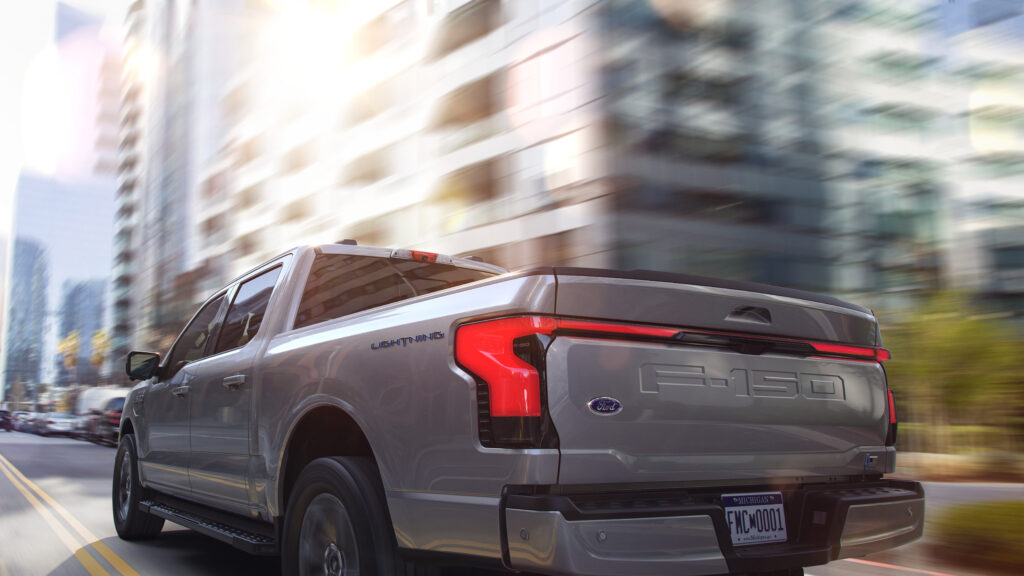
On the exterior, the Lightning looks a lot like a combustion-powered F-150. The distinguishing features are daytime-running light bars across the top of the front grille and across the tailgate in the back. The Lightning also has aero wheel options to improve efficiency for maximum range. They don’t look silly like some aero wheels do. Other than that, you really have to stare at it to notice the Lightning is any different. Three new faux grille options are there for looks. With an EV, the grille merely protects the spacious front trunk.
The charge port right in front of the driver’s door doubles as a name plate. Ford intentionally designed the exterior to appeal to traditional truck buyers. Not everyone wants a spaceship.
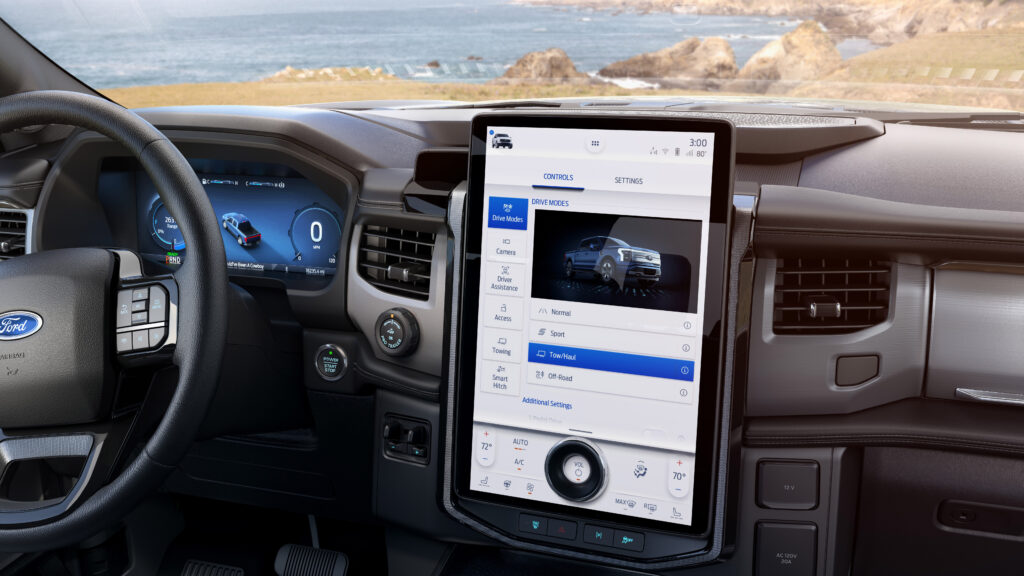
The F-150 Lightning is only offered in crew cab configurations. The interior dimensions are the same as the gas-powered F-150, but that’s a compliment. Plenty of space up front, and lots in the back. Up front, the biggest difference is the 15.5” infotainment screen. It’s only in the higher trims of the Lightning for now, but it’s probably a sign of what’s to come for the whole lineup. Everything from drive modes to towing configurations and entertainment is all accessed through the huge vertical screen. Climate controls are always fixed at the bottom of the display, although it’s still a touch-screen feature. Sorry physical button enthusiasts!
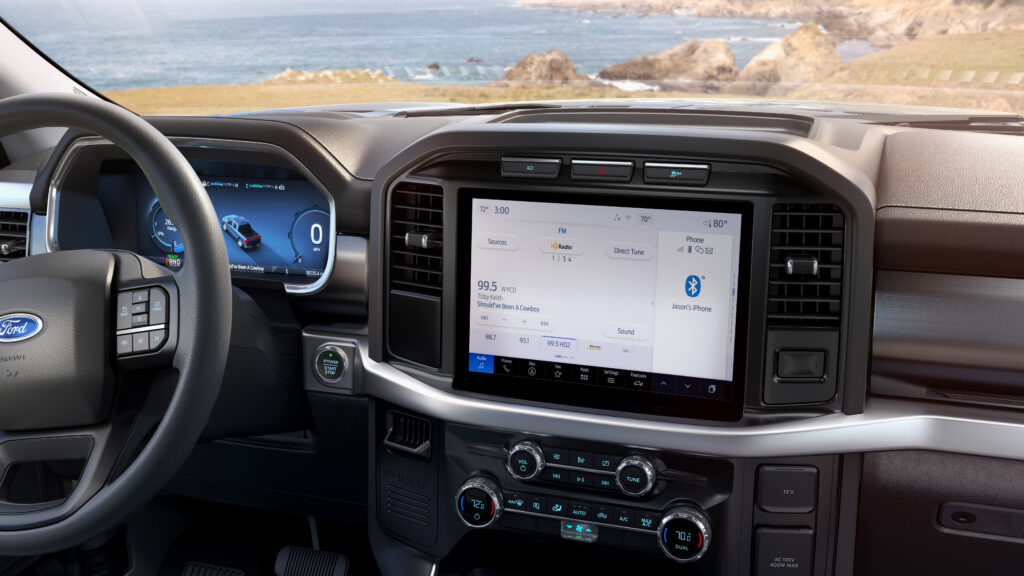
Utility reigns supreme in the F-150 Lightning electric truck. The center console folds down into a work desk, but that’s a feature that combustion-powered versions also have. The rear seats offer the same generous space that you’ll find in the gas equivalent, including under-seat storage. Available Max Recline Seats offer nearly 180 degrees of recline. Perhaps a charging nap is in your future?
The 2022 F-150 Lightning is powered by dual electric motors, each of which could fit inside a duffel bag. The electric motors are powered by large lithium-ion batteries produced through a joint venture with SK Innovation in Georgia. American-made batteries for American-made EVs! That’s not as common as you’d think.
The F-150 Lightning’s battery lives under the floor of the truck, where it’s out of the way and secured in a waterproof casing surrounded by crash-absorption protection. Ford says the battery was designed with extreme weather and abuse in mind. It can handle off-road adventure like a champ. Innovative thermal management keeps the battery at optimum temperatures.
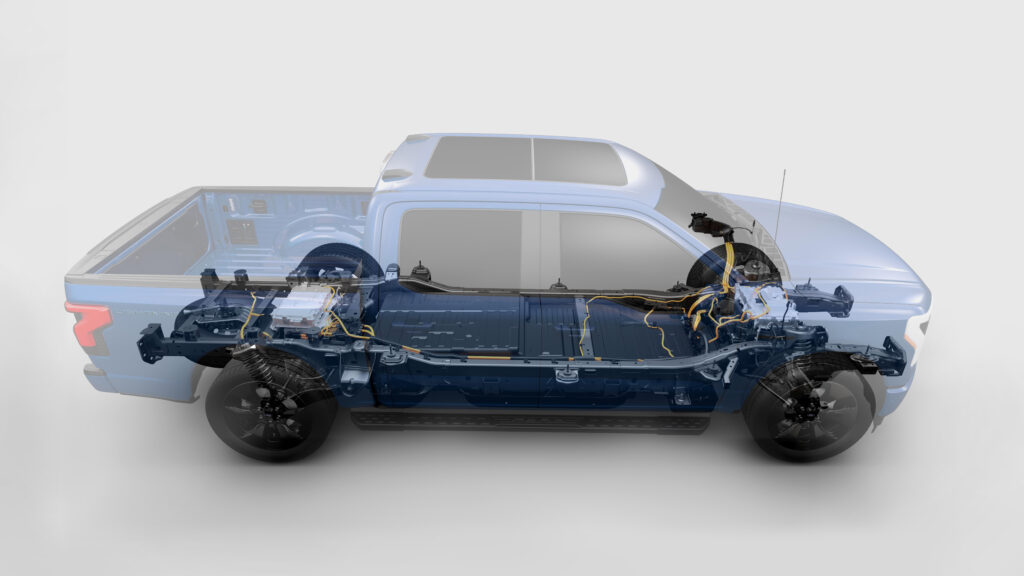
The base ‘standard range’ battery is a 98 kilowatt-hour (kWh) usable lithium-ion battery. Stepping up to the extended range configuration gets you a 131 kWh battery pack built from the same chemistry. This extended-range battery offers more towing, a lot more performance, but less payload. Why less payload? The bigger battery is much heavier. The F-150 Lightning weighs 6,500 pounds!
The base standard range battery supplies the two motors with 425 HP and 775 lb-ft of torque. The extended range battery opens up to 565 HP and the same 775 lb-ft of torque. Notably, four-wheel drive is standard across all trims. One motor is located at the front axle, and another is in the rear. Both the battery and motors get metal skid plates that shield the underbody from impacts, water and the elements for durability.
The official EPA numbers are out! The standard range battery is rated for 230 miles on a charge, and the available extended range battery is good for 320 miles. The final EPA numbers exceed what Ford had previously estimated. Ford engineers have fueled rumors that the Lightning’s range estimates are calculated with 1,000 pounds of payload included. With an empty bed, the F-150 Lightning may go even further on a single charge.
Ford offers four drive modes: normal, sport, off-road, and haul. Additional settings include one-pedal driving (a Tesla favorite) and the option to lock the differential with the touch of a button. Why would you want a sport mode on your F-150? The Lightning launches to 60 mph in just 4.4 seconds!
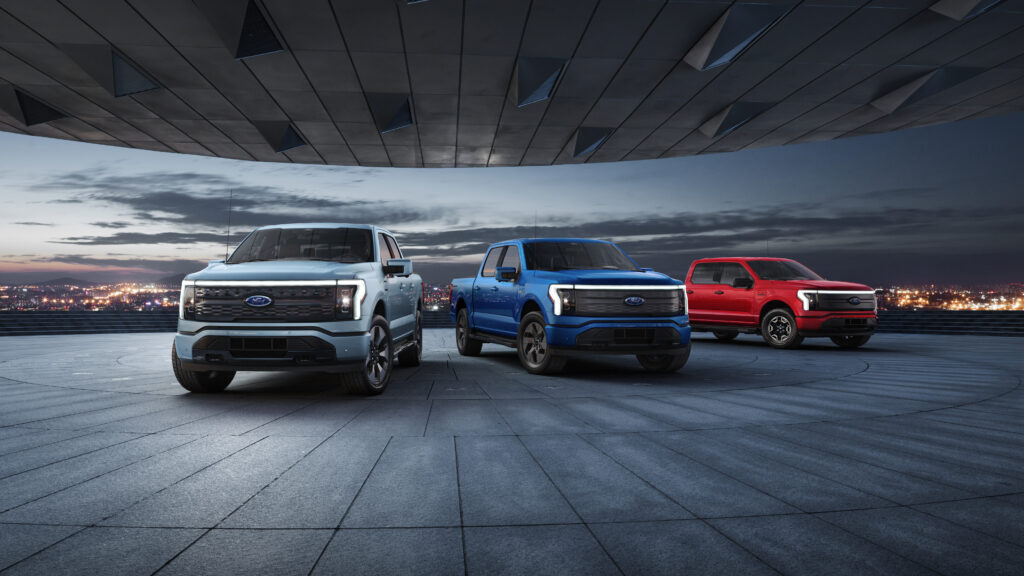
More than 80% of electric vehicle charging is done at home. Ford is the only automaker to offer an 80-amp charge station as standard equipment. At home, the F-150 Lightning adds an average range of 30 miles per charging hour, fully charging an extended-range truck from 15% to 100% percent in about eight hours. Keep in mind that the truck charges overnight while you’re sound asleep. EV owners typically wake up each morning with a full battery to start the day.
At a public DC fast charger like you’ll find at Electrify America, The 2022 F-150 Lightning can accept 150 kilowatt charging speeds. This is below what the upcoming Silverado EV offers, but it’s still decent. If the charging curve is above average, 150 kW won’t be a problem at all. At a DC fast charger, the extended-range F-150 Lightning is targeted to gain up to 54 miles of range in 10 minutes. In 41 minutes, Ford says it can charge from 15% to 80%.
Charging an electric truck is A LOT more affordable than fueling up at the gas station. Fuel savings just might justify the time it takes to charge. At Electrify America, a typical charge from 5% to 90% (adding 255 miles of range) will only cost about $35. The real savings are in your garage. At home, where most charging is done, the same charge to 90% would only cost $15 at average residential electric rates. Learn more about how much it costs to charge an electric vehicle here.
On the surface, the bed of the F-150 Lightning is pretty standard. It’s the usual 5’5” bed with a power tailgate. Sadly, it lacks the magical pass-through feature of the upcoming 2023 Chevrolet Silverado EV. Upon closer inspection, there are some very useful gadgets. The side of the bed includes several household 120-volt outlets and a more powerful 240-volt outlet. Ford says the Lightning can power worksite tools for days without having a big impact on the state of charge. This really highlights the immense energy capacity of the 98 to 131 kWh battery, and how comparatively little energy small appliances and tools consume.
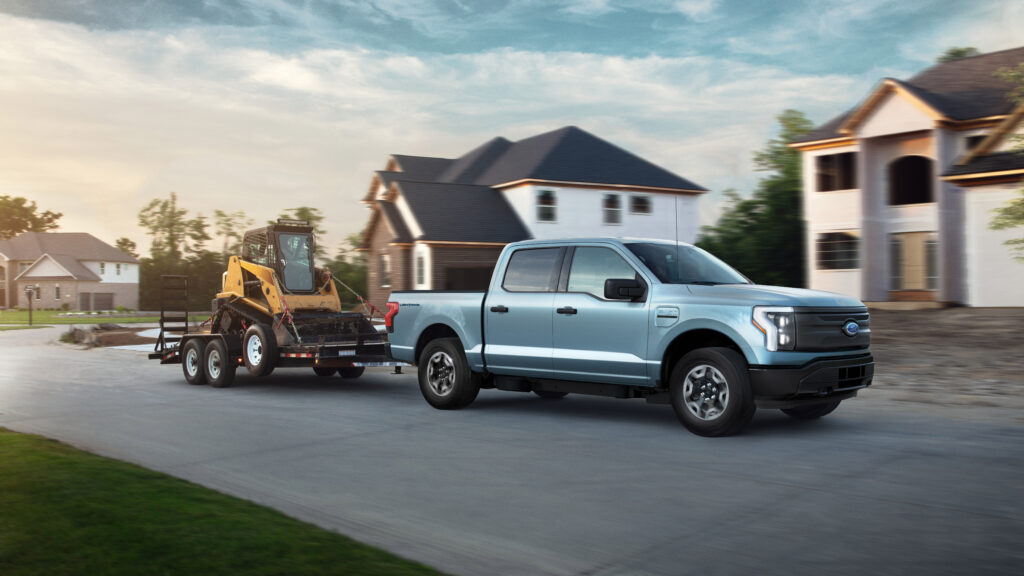
How does towing or hauling around a bed full of materials impact range? Just like with any gas or diesel-powered truck, fuel efficiency decreases with towing and higher payloads. Ford’s engineers thought of this, and they’ve used the Lightning’s electrical infrastructure to offer an impressive remedy. Using the scales built into the truck and a fancy computer, real-time range estimates are constantly calculated based on payload and towing demands. The gauge cluster displays an accurate estimate of how much range you have in any given scenario. No need to do calculations in your head.
With the 230-mile standard battery, payload capacity is 2,000, and towing is up to 7,700 pounds. The extended range battery opens up towing to 10,000 pounds, but the added weight of the battery lowers payload to 1,800 pounds. The Lightning weighs about 1,000 pounds more than regular F-150s.
The F-150 Lightning has a massive 14 cubic-foot front trunk. Finally, a truck with a trunk! There are four power outlets providing 2.4 kW of power and two USB ports, all within the front trunk. The floor has a drain too. You can even charge tools in the front trunk while driving the vehicle.
Pro Power Onboard is Ford’s vehicle-to-load system that produces . Power reserve functions allow the driver to automatically cut off power supply once the battery state of charge drops to a predetermined level.
An even bigger deal is Ford Intelligent Backup Power. With the proper setup and accessories, the F-150 Lightning automatically kicks in to power your house when the power goes out. Once power is restored, the truck automatically reverts to charging its battery. Ford says that based on 30kWh of electricity usage in the average American home, F-150 Lightning with extended-range battery can power an entire home for up to three days, or as long as 10 days with power rationing. THIS could be the feature that wins over the masses.
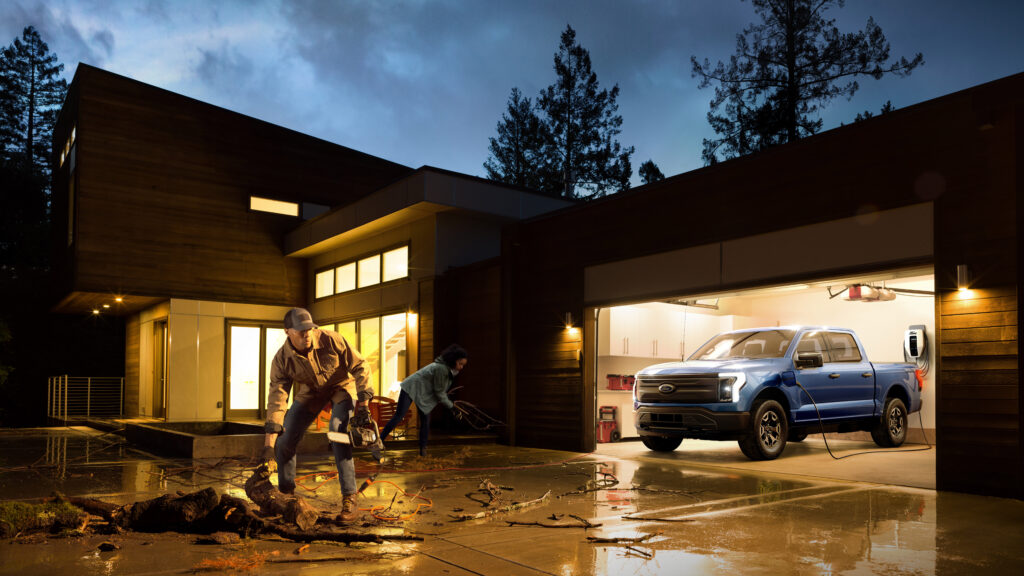
Wait, that’s not all. Ford has more tricks up its sleeve than a dealership F&I manager:
“In the future, Ford will introduce Ford Intelligent Power, which can use the truck to power homes during high-cost, peak-energy hours while taking advantage of low-cost overnight rates to charge the vehicle in time for your morning drive. This can help save money on electricity that powers your vehicle and home while also taking pressure off the grid in peak usage times.”
You heard here first, folks. You’ll soon have the ability to buy a truck that can lower your entire utility bill. Considering that this feature alone would save a ton on monthly bills, charging the F-150 Lightning will basically pay for itself! That could be HUGE savings for those accustomed to paying $60-$80 for every tank of gas.
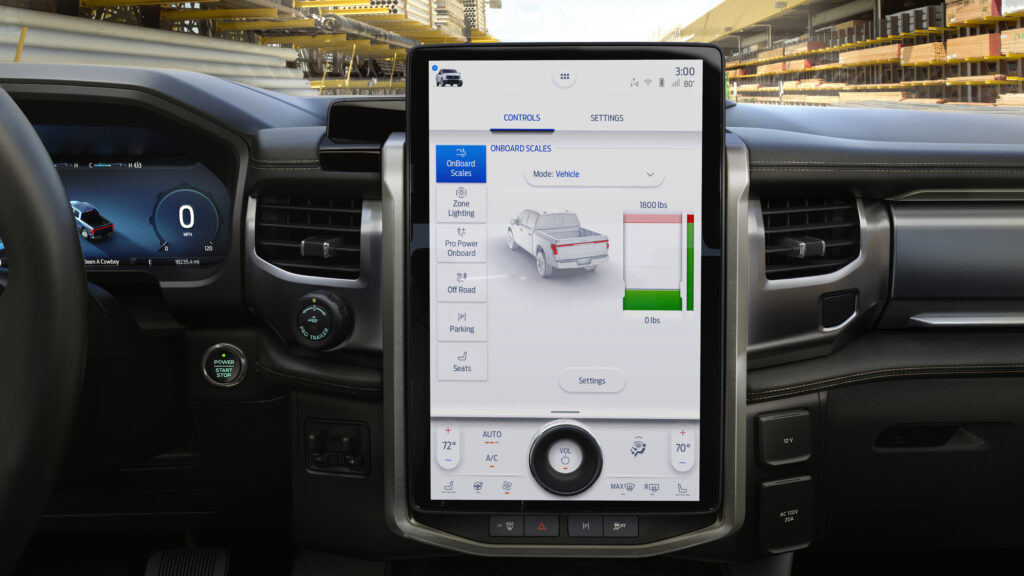
The Lightning can learn all about your hauling habits. The truck recognizes which trailer you’re hauling, combines that with info from the onboard scale, and provides immediate updates to driving range and power.
The F-150 Lightning has games! Tesla popularized in-cabin gaming, and now Ford has seen the appeal of a lighthearted, fun-yet-functional vehicle experience. Automakers are all about ‘experience’ these days.
The gauge cluster is conveniently located within the line of sight for the driver. It displays useful information about real-time battery conditions, motor performance and power distribution. In the Lightning, everything is customizable.
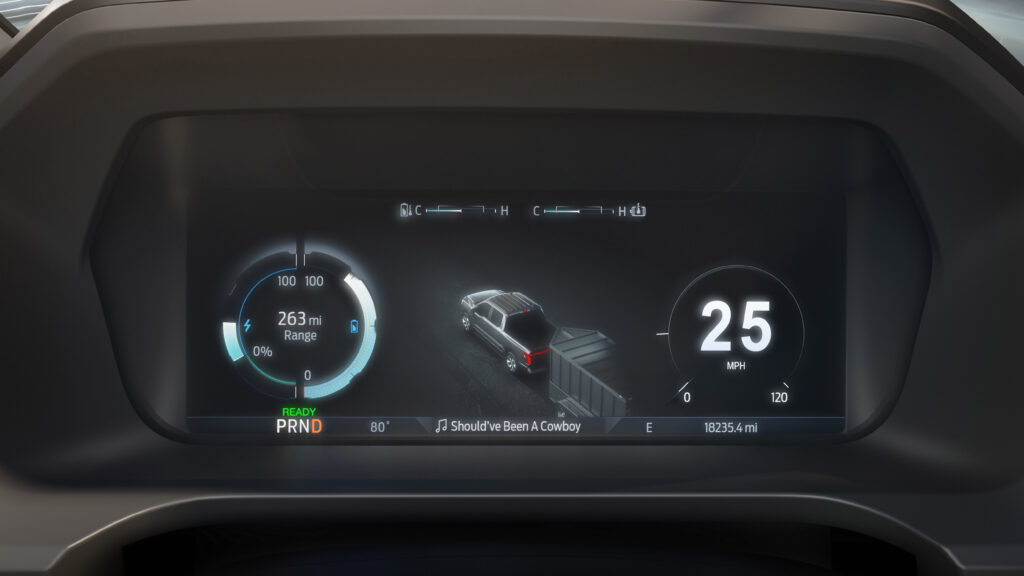
Does Ford want to spy on you? probably not. However, two driver-facing cameras are built into the dash. These are actually safety monitors for Blue Cruise, Ford’s advanced driver assistance technology. Blue Cruise enables hands-free driving on divided highways, as long as your eyes are on the road. This is wading into level 2 autonomy, but Ford has more ambitious driver assistance plans in the works.
There’s also a 360-degree camera for parking assistance. Exterior zone lighting lets you illuminate precisely what you need to see in the dark.
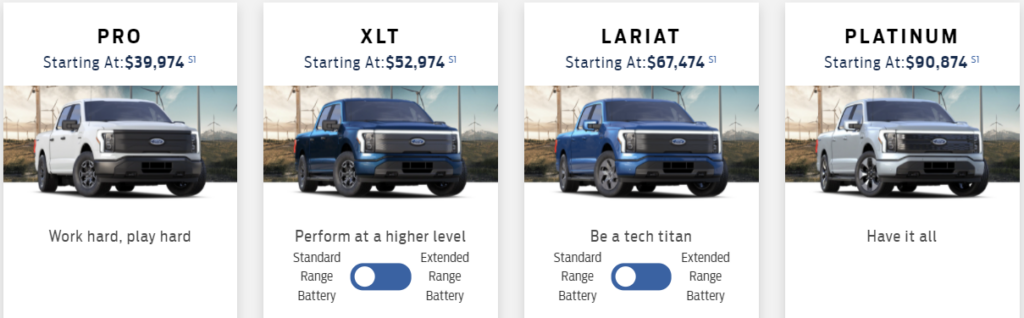
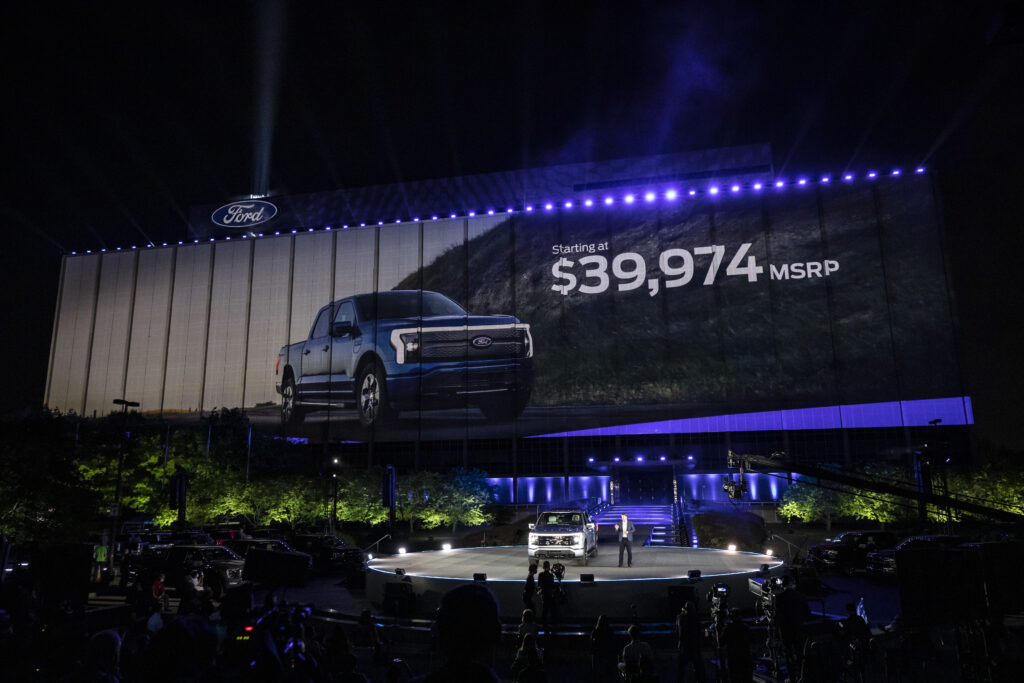
The work and fleet-oriented Pro edition starts at $39,974. The Pro includes bare-bones manual vinyl seats and no frills. Most consumers will start their shopping at the $52,974 XLT trim. This is where most of the desired features and comforts enter the scene. A step up will land you at the $67,474 Lariat. Both the XLT and Lariat come with the 230-mile standard range battery unless you opt for the extended range battery. On top of the spec sheet is the Platinum. For $90,874, you can get an extended range battery, 22-inch bright machined aluminum grille, the larger (15.5-inch) touchscreen, upgraded sound, and both heated and ventilated seats. Check out the major differences below:
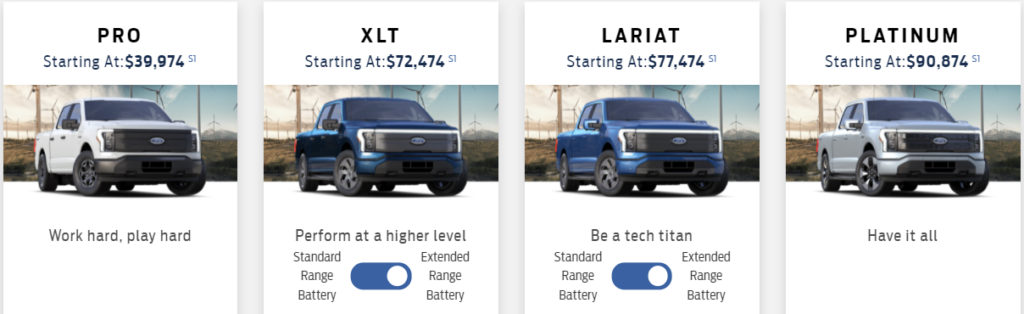
Notice that the soon-to-be-popular XLT trim listed at a starting MSRP of $52,974 is actually a $72,474 truck in disguise. If you want to step up from the 230 mile standard range battery to the bigger battery, going for the XLT just doesn’t make sense for most buyers. Ford clearly wants buyers to take the dive for the Lariat or Platinum trims. Kind of sneaky if you ask me.
Ford recently sent a memo regarding F-150 Lightning pricing to their dealers, and it was swiftly leaked online. It reveals that the automaker intends to preserve what little is left of positive dealership experiences. The memo cuts right to the chase. “It has come to our attention that a limited number of dealerships are interacting with customers in a manner that is negatively impacting customer satisfaction and damaging to the Ford Motor Company brand and Dealer Body reputation.” Wow, Ford actually wants their customers to have a pleasant dealership experience.
This memo brings up a key concern about F-150 Lightning pricing. Will dealers use unprecedented demand to try and justify outrageous additional dealer markups? Clearly, Ford corporate is intent on getting ahead of the problem before it snowballs out of control and tarnishes the brand for hundreds of thousands of new Ford customers. Find out more about this secret memo and what CarEdge advocates think about it here.
Does the Ford F-150 Lightning electric truck qualify for the EV tax credit? Yes! The federal EV tax credit slashes up to $7,500 off of the Ford F-150 Lightning pricing. Lawmakers are considering revisions to the EV tax credit that could possibly add to the discount. Right now, buyers receive the incentive when they file taxes. proposed changes to the law would make the discount effective at the point of sale.
Sadly, there’s no easy answer. If you were among the hundreds of thousands to place a pre-order back in early 2021, you just might receive your F-150 Lightning by the end of 2022. Most current reservation holders will receive theirs in 2023. Ford is doubling down on production capacity due to high demand, so if you get in line soon, maybe you’ll also get your truck before 2024. For the time being, reservations are closed so that existing deposit-holders can place their official orders. Soon, Ford says they will open reservations back up to the masses. Ford currently has about 200,000 reservations in the books. With the doubled production capacity, Ford will be making about 150,000 per year. Do the math, and that means most F-150 Lightning buyers will have to wait until 2024.
If you’re ready to buy an electric truck now, there are only two options with immediate availability. The popular Rivian R1T is an outdoorsy luxury mid-size truck. The R1T starts around $70,000 before incentives. The GMC Hummer EV is crab-walking its way into dealerships, but only at a hefty price tag. For $100,000, the reimagined electric hummer truck can be all yours. The Tesla Cybertruck was just delayed to 2023 at the earliest, so there’s not much to say about that concept for the time being.
Is it worth the wait for the Ford? F-150 Lightning pricing is attractive, and it’s sure to get truck buyers the most value for their money out of the few options we have today. Plus, who wouldn’t want to have a truck that also serves as a generator for backup power? Tesla has been stubbornly against adding vehicle-to-grid functionality to their models, probably because Tesla also sells home battery products.
The 2022 Ford F-150 Lightning electric truck is the pinnacle of utility. You can power a dozen tools, save hundreds to thousands on fuel, and even power your entire home with this truck. Unfortunately, Ford didn’t anticipate so much love for the Lightning. If this truck was at dealerships today, they’d be flying off the lot. F-150 Lightning pricing is what you’d expect from a truck in today’s market. It’s likely to set buyers back by at least $60,000 with options included. If only there was an electric Ford Maverick for those of us who prefer to spend less.
Do you think the F-150 Lightning will sell to traditional truck buyers? Or will Ford appeal to a different demographic altogether? We’d especially love to hear from you if you’re a reservation holder. The Lightning will have a lot to live up to after the long wait we’re in for.

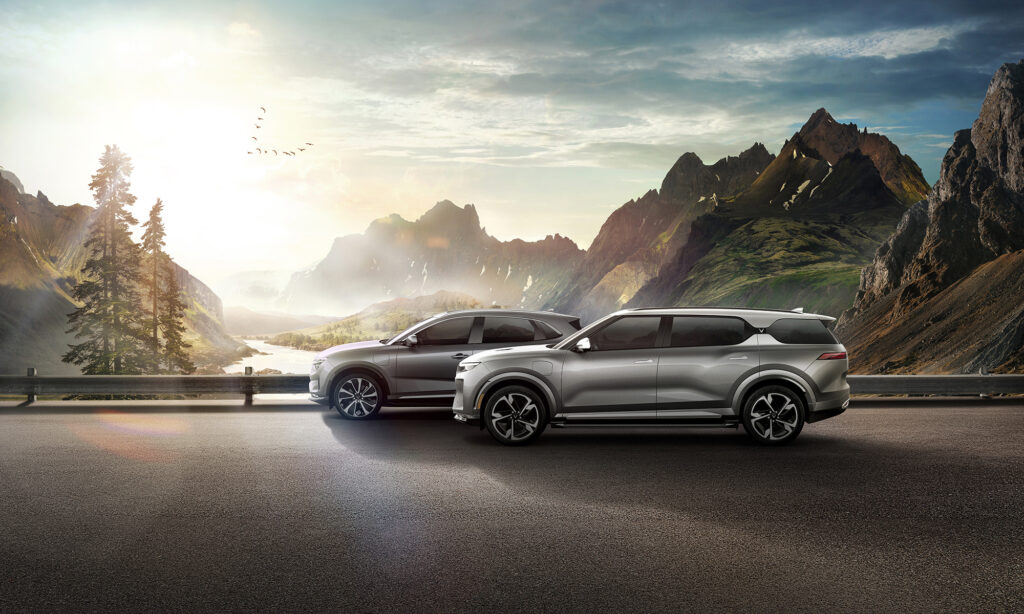
December 2022 Update: To the dismay of many on social media (particularly Reddit), VinFast made an unwelcome announcement recently. The good news: The first VinFast EVs will arrive in California by January 2023. In fact, there are 999 VF8 electric SUVs on the way to America. The bad news: VinFast says that these will be “City variants” with just 180 miles of estimated range, according to the company.
Previously, VinFast had advertised to everyone, including reservation holders, that the VF8 had either 249 miles of range for the Eco variant, or 261 miles of range for the Plus variant.
Okay, say you’re fine with 180 miles on a charge, as long as it comes with a significant price discount. You’d be disappointed. VinFast is offering these City variants of the VinFast VF8 at a $3,000 discount. That means that this 2023 electric SUV will still cost either $55,500 or $62,500, with 180 miles of range. Note, that’s the same range as the Nissan LEAF, and is much less than the Chevy Bolt. With this range and at this price point, we can’t recommend the VinFast VF8 City version. Competitors offer more range for the same (or less) money.
Now, on to the original first-look of VinFast EVs:
Just as legacy OEMs are jumping into the EV race, newcomers and startups are set to enter the North American market within the next year or so. Today, a glance at electric vehicle sales numbers finds Tesla dominating with 67% market share, but that figure is slowly falling as the competition heats up. Volkswagen Group, Ford and Korean automakers trail behind, eager to bite into Tesla’s success. Here to spice things up are newcomers like Rivian, Fisker, Lucid and a half-dozen other boutique automakers.
Overseas, two established EV players are poised to join the fun as well. While Chinese EV success story NIO hasn’t made any commitments, aspiring Vietnamese automaker VinFast is ready to break ground in America. How will this emerging vehicle segment evolve over the next 2-3 years? Whatever happens, it’s looking increasingly likely that VinFast will be a part of the story.
The 2021 LA Auto Show was all about EVs. No one lingered around the occasional displays of cross-cut engines or propped-open hoods. Yet every electric vehicle booth was packed. One of the many oddities and spectacles at the auto show was VinFast, who (almost) nobody had heard of. It almost sounds like the name of a rebranding online car seller who gets your title to you in less than a month. Founded in 2017, VinFast is the automotive wing of Vingroup, a private Vietnamese conglomerate active in tech, retail, industrial development and service industries. Now worth over $35 billion, Vingroup had humble beginnings as a food processing company working out of Ukraine in the early 1990s.
VinFast first set foot in America in the summer of 2020. That was a pretty horrible time to be launching any kind of business venture, but VinFast stuck with it. With an extensive history and enough capital to get the ball rolling, automotive industry analysts are marveling at the pace of VinFast. At the LA Auto Show, VinFast US CEO Van Anh Nguyen told TechCrunch about their expansion plans. Here’s what the ambitious automaker has in store in just the first half of this decade:
With this roadmap in mind, it’s no surprise that VinFast is eyeing an IPO into the US stock market. Rumor has it that they’re shooting for a $60 billion valuation.
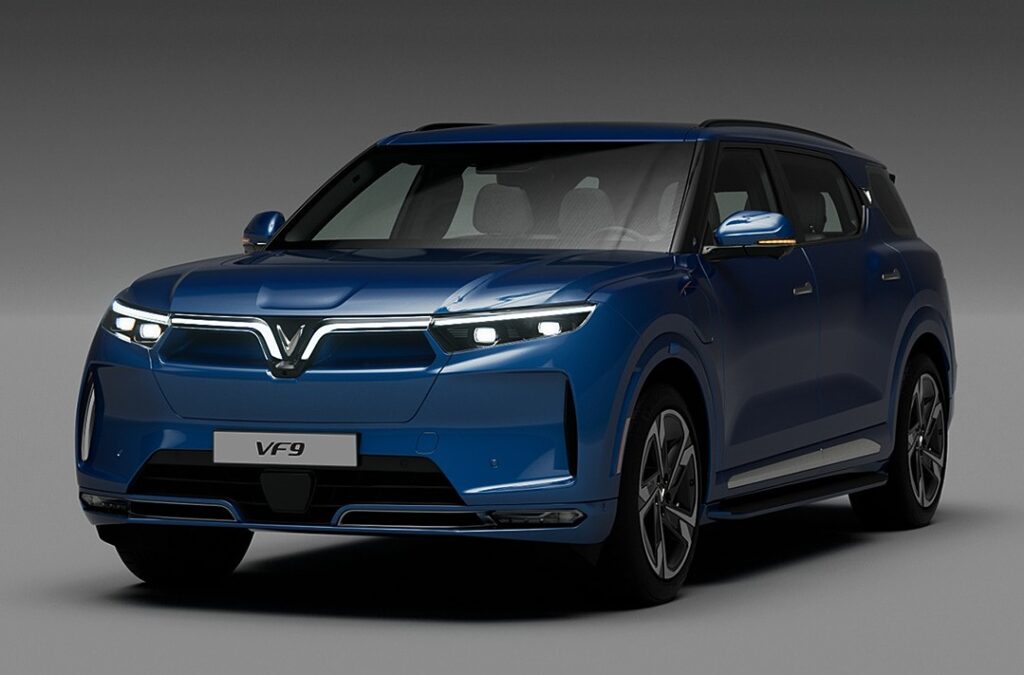
When VinFast announced their new 15,000 square-foot headquarters, they also shared some details about future product launches. VinFast followed through on their pledge to officially debut two of its first electric SUVs, the VF 8 and VF 9, at the 2021 LA Auto Show. There’s one aspect in particular that lends so much confidence to VinFast’s growth strategy. Much of their research and development has been focused on streamlining and automating vehicle manufacturing processes. Sound familiar? That’s how a certain American company (starts with a T, ends with an A) overcame the many burdens of production ramp-up. In fact, Tesla was the first American car manufacturer to successfully ramp up automotive production in nearly 100 years. If VinFast has scalable growth in mind, their likelihood of success is far greater than the average EV startup.
VinFast’s approach to EV production isn’t all good news for the consumer. Automotive News recently reported on VinFast’s plan to NOT include a battery pack as part of the standard equipment when the vehicle is purchased. Instead, car buyers will lease a battery pack from VinFast. I guess that’s one way to guarantee a revenue stream!
Renting a battery pack from VinFast won’t be cheap. Unless, of course, you intend to purchase an EV that comes without the usual fuel savings associated with going electric. VinFast Global CEO Le Thi Thu Thuy said the two battery pack options will cost between $100 and $150 PER MONTH. They say the battery leasing model would buffer EV buyers from the risk of degraded battery performance over time. They’ll replace the battery if it falls below 70 percent of its initial charging capacity. The thing is, today’s EVs still retain over 80% of their initial charging capacity with well over 100,000 miles on the odometer. This would have been a reasonable strategy a decade ago, when early battery tech was on shaky, experimental ground. Now, it’s a solution in search of a problem.
Below is the official announcement from VinFast, showing the pricing tiers for the VinFast VF 8 and VF 9. VinFast battery subscription plans range from $110 to $160 per month on the VinFast Fixed Plan, and $35 to $44 per month on the VinFast Flexible plan, which includes just 310 miles of driving per month.
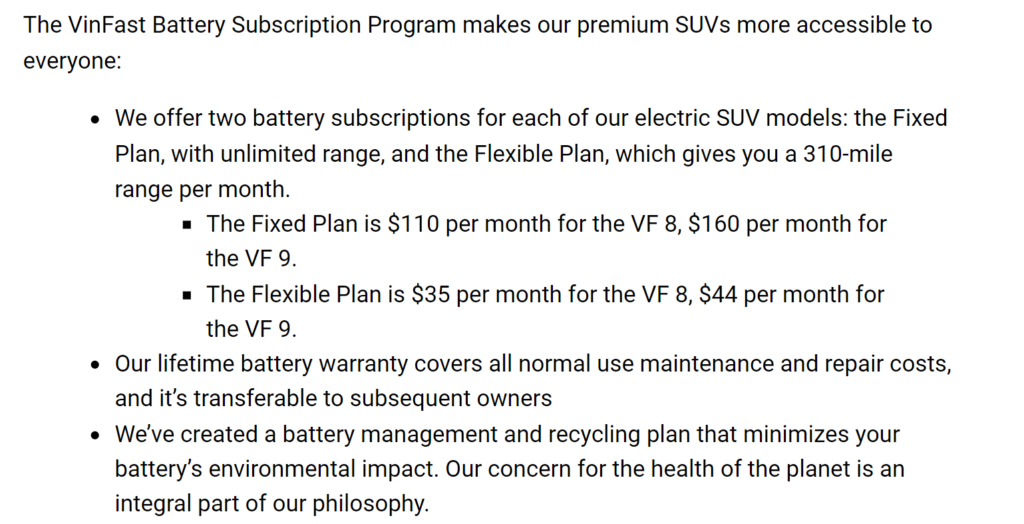
Why would anyone buy a new car knowing they will have to pay an extra $150 every month for the required battery? That would only work if the car itself sells for ridiculously cheap. We’ll see, but I’m skeptical.
Imagine if Apple required you to purchase a battery for the IPhone separately. The behemoth wouldn’t be where they are today with such a critical product miscalculation. Will VinFast SUVs overcome this looming and unnecessary product feature? Or will they reverse course before launching US sales?
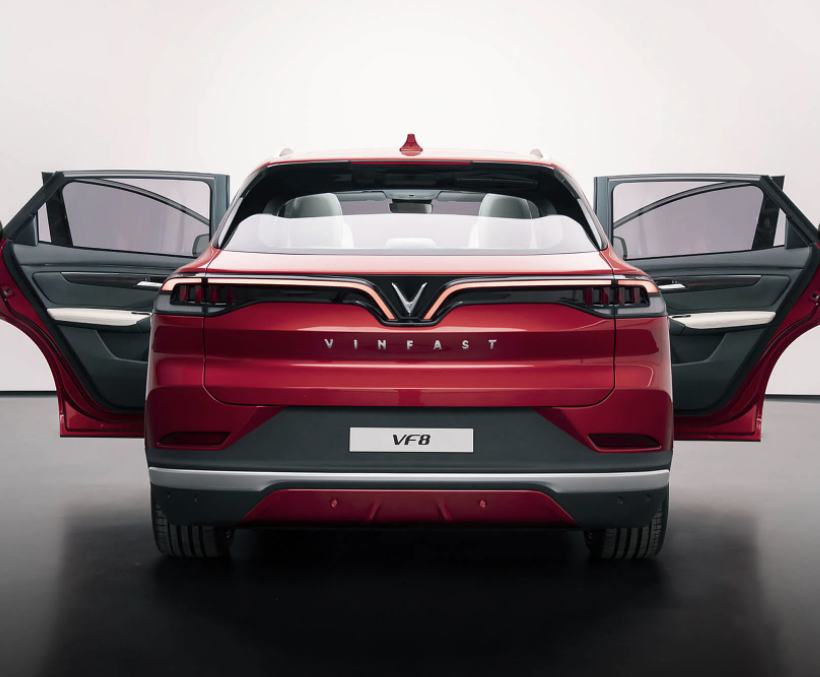
Enough with the negativity. At the 2021 LA Auto Show, VinFast shared two impressive electric concepts. They intend to bring both to production very soon, and both will be sold in the US market. The VF 8 (formerly dubbed the e35) and VF 9 (formerly e36) are two fully-electric SUVs that feature advanced driver-assistance systems and a suite of smart features. Both VinFast SUVs are designed by Italian design firm Pininfarina, and the result is pleasant to look at.
The smaller VF 8 is advertised for up to 310 miles of range on a charge. Stepping up to the larger VF 9 will get you 301 miles of range with the (rented) standard battery, or buyers can opt for the bigger battery that’s good for 422 miles.
Aside from the range figures and pretty images, not a whole lot is known about these two SUVs. The VinFast website shows an interior with a 15” Tesla-style touchscreen front and center. What they do make clear on the website is that interested buyers are welcome to place a reservation for $200. Reservations placed before April qualify for a $3,000 to $5,000 voucher for their VinFast SUV of choice.
VinFast pricing starts at $41,000 for the crossover-styled VF 8, and $56,000 for the larger VF 9 SUV. Power is impressive, yet nothing to write home about. Check out the full VinFast pricing and spec details below. The automaker does make it abundantly clear that this information is subject to change.
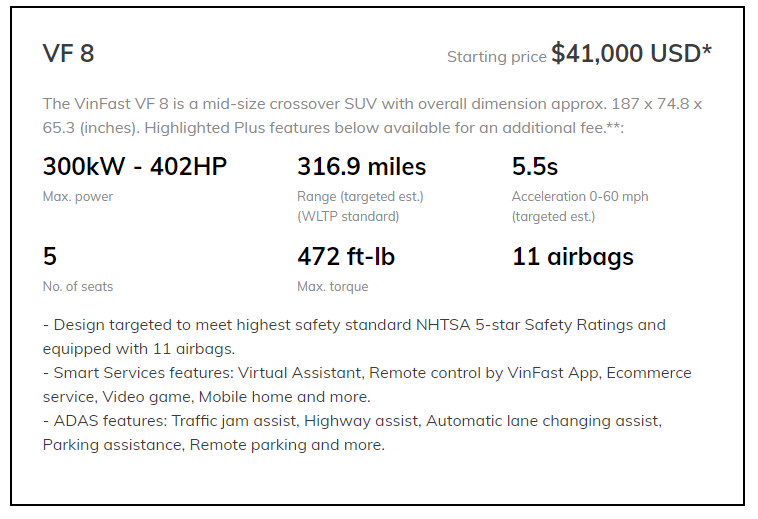
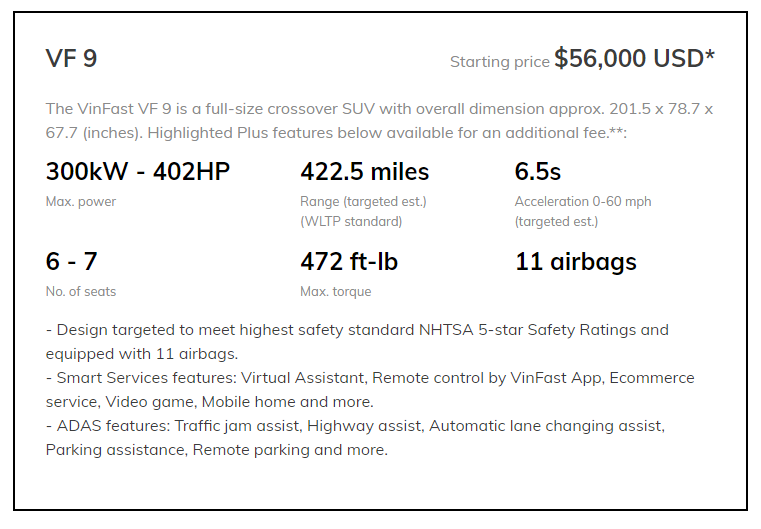
I want VinFast to succeed in their North American expansion. Greater competition among automakers almost always results in savings for the consumer. But batteries not included? $150 every month for something that literally comes with every single other electric vehicle in the world? Come on. I hope VinFast sees the reality of the situation and the expectations of the American buyer.
What do you think? Are you willing to give VinFast a chance, or are they wasting their time with this battery nonsense? How affordable would the car have to be for this sales model to work? Let us know what you think. I’d love to hear your thoughts, especially if you might be willing to give the VinFast ownership experience a try.
CarEdge Just Launched a New Search Engine to Make Buying Your Next Car Easier!
We have thousands of EVs (and other vehicles) listed today. Each listing includes industry insights and empowering data. The true TotalPrice that will make buying a car the transparent process it should’ve always been. Check it out!


A U.S. lawmaker introduced a new ‘right to repair’ bill on Thursday. The legislation proposed by Illinois Representative Bobby Rush (D) takes aim at the auto industry eight years after Massachusetts enacted its own legislation that sent shockwaves through the industry. Rep. Rush announced the bill with comments highlighting the struggle over who has access to data as autos inch closer to becoming driving computers.
“Americans should not be forced to bring their cars to more costly and inconvenient dealerships for repairs when independent auto repair shops are often cheaper and far more accessible. As cars become more advanced, manufacturers are getting sole access to important vehicle data while independent repair shops are increasingly locked out.”
The new administration has already brought this issue back into the spotlight. In 2021, President Biden issued an executive order directing the Federal Trade Commission to take action on right to repair. The current administration is looking for ways to reach across the aisle. Representative Rush’s new bill might become a rare glimpse of bipartisanship. A spokeswoman for Rep. Rush told Automotive News that Republican support for the bill is expected soon.
It’s important to remember that this proposed legislation is just now entering the revolving circus that is government in 2022. It remains to be seen if the 2022 ‘right to repair’ bill will ever end up on President Biden’s desk. If it does get enacted into federal law, how does the consumer stand to benefit?
In the vast majority of markets and scenarios, dealer service centers will charge more than independent repair shops for automotive maintenance. Often, dealership service managers make money off of the services they recommend to you. That’s simply the work-for-commission model.
While dealership service centers have their benefits, the savings of going elsewhere are hard to overlook. If cars become so complex that repair shops can’t keep up with the tech, consumers will have no choice but to go to the dealership. That’s probably what most dealers want to happen, and it could become reality sooner than later. That’s the motivation behind the perennial ‘right to repair’ movement. Ultimately, consumers will save on repairs if pricing competition continues to exist between dealers and small repair shops, as it has for decades.
Automaker and dealership alliances thought they were done with the ‘right to repair’ stuff. Back in 2014, associations representing both automakers and independent repair shops agreed to a ‘memorandum of understanding’. This MOU that was seen as a compromise that could settle their differences. The MOU was inspired by a 2013 Massachusetts ‘right to repair’ law. No other state has passed its own ‘right to repair’ bill since then, which was seen as a success of this landmark agreement. The 2014 MOU gave shops in all states the same access to diagnostic and repair information.
Still, the automaker lobby group Alliance for Automotive Innovation touted the success of the 2014 agreement following the announcement of the new legislation. Robert O’Koniewski, Executive Vice President of the Massachusetts State Automobile Dealers Association, didn’t mince words with the perspectives he shared with Automotive News.
“If this has been such a problem nationwide under the 2014 MOU between the vehicle manufacturers and the independent repair community, why has not one other state passed a RTR law to protect repairers and car owners in their own states?”
Representative Rush’s new legislation and Biden’s executive order would give independent repair shops the upper hand. At a time when cars are getting more loaded with tech every model year, repair shops are struggling to adapt. It costs money to acquire the necessary equipment to run high-level diagnostics and make repairs to electronics in newer models.
Associations representing key players in the automotive aftermarket and repair industries have come out in support of the latest legislation. Both the Auto Care Association and the Automotive Aftermarket Suppliers Association have publicly shared their support.
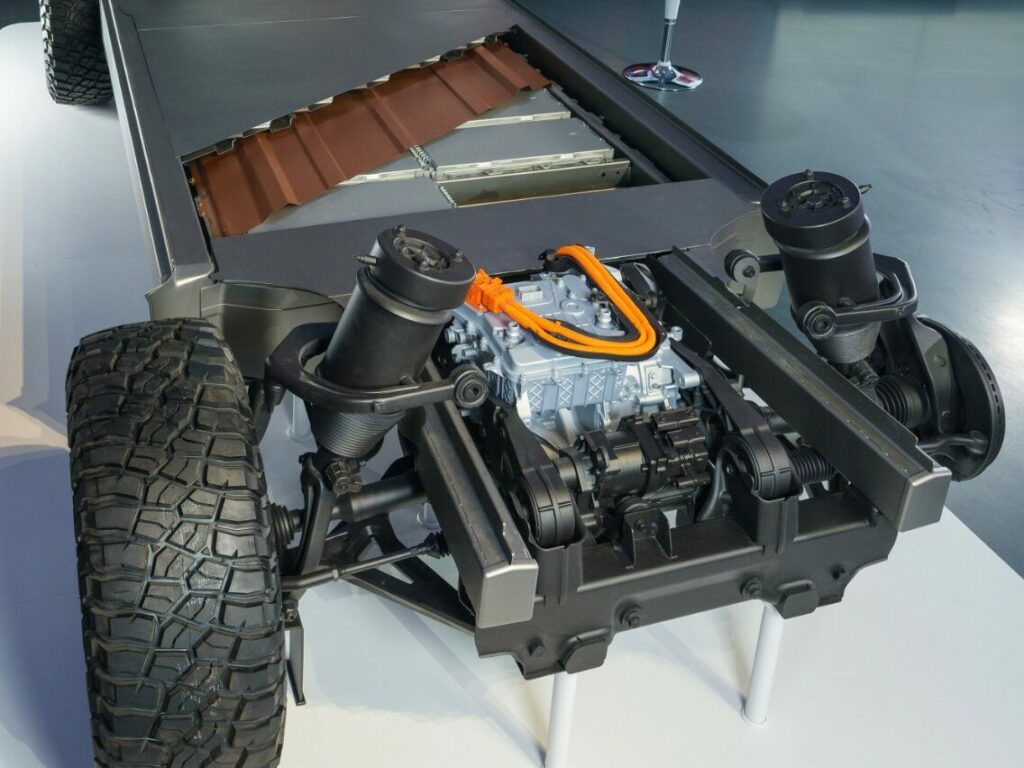
Does your local repair shop service electric vehicles? As of 2022, chances are they don’t. Opinions vary, but the general consensus is that 40% of American auto sales will be fully electric in 2030. Will consumers be cornered into returning to the dealer service center for EV maintenance and repairs? Or will the latest push for ‘right to repair’ laws extend to the coming onslaught of electric vehicles? Behind the scenes, repair shops and dealers are in a tug of war over the future of maintenance.
Current data shows that electric vehicle maintenance costs are less than their gas equivalents. Still, millions of EVs will eventually need some work done. At CarEdge, we hope that lawmakers and industry leaders prioritize the consumer as the pace of change accelerates through this decade. We’ll update this page as the new ‘right to repair’ legislation crawls through congress.