
CarEdge saved me over 4,500 dollars on a brand new Honda Pilot. I can't say thank you enough.
Price intelligence
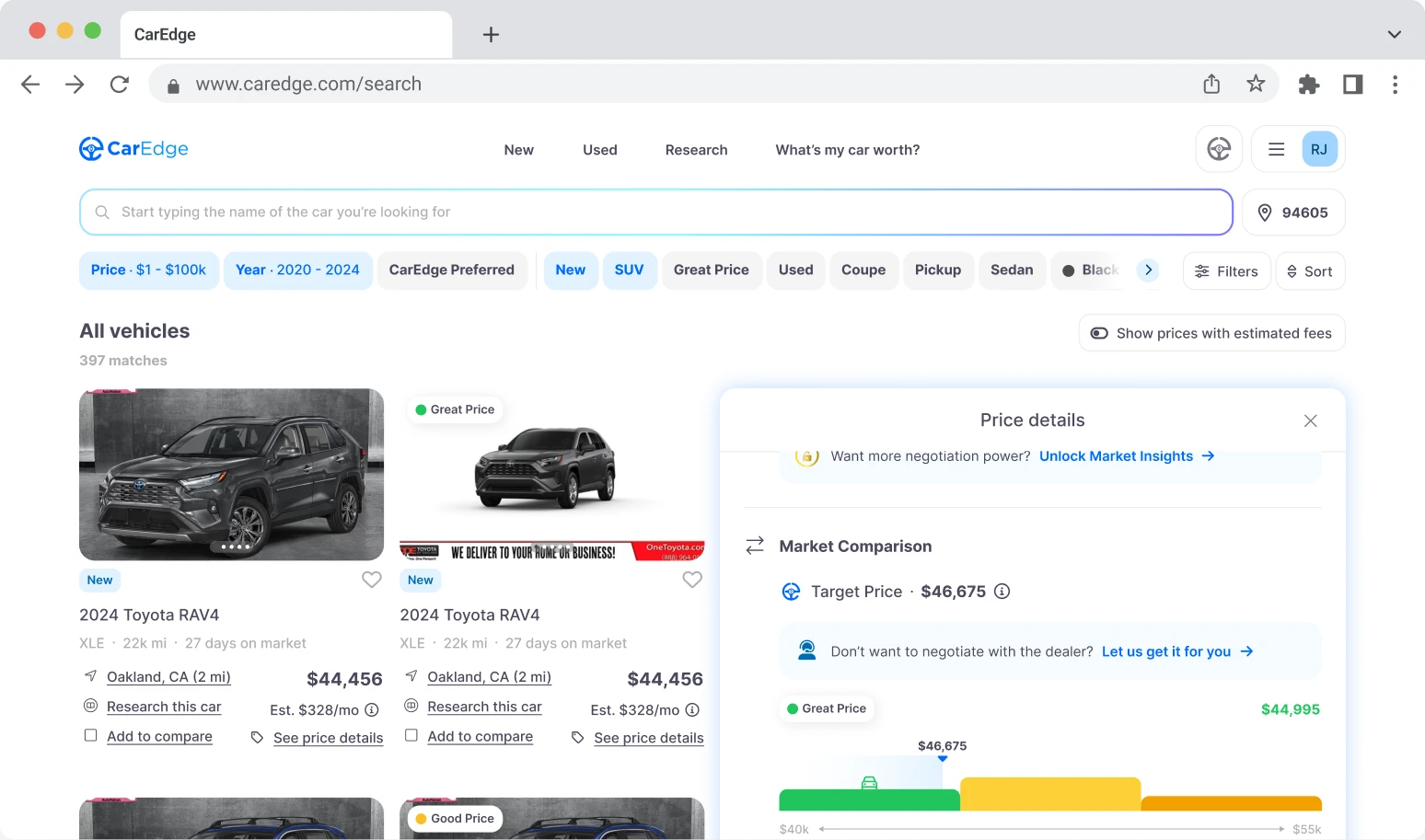
Find a wide range of vehicle listings with market insights on new and used listings near you.

What can I do with CarEdge?
 CarEdge Insights
What can I do with CarEdge?
Get access to exclusive information so you can make an informed car buying decision — all in one place.

Find a wide range of vehicle listings with market insights on new and used listings near you.
Track your vehicle’s value and cash in when the time is right to sell.

Access to our proprietary data to help you find the right car, at the right price. Find these unlocked on every listing after subscribing.

With our expert-led, tech-enabled car buying service, we will locate, negotiate, and deliver your vehicle so you can get a new car hassle free.


Help us personalize your CarEdge experience — it only takes a second.
Your answers help us personalize your CarEdge journey — we’ll follow up with tips and next steps that match your buying timeline.

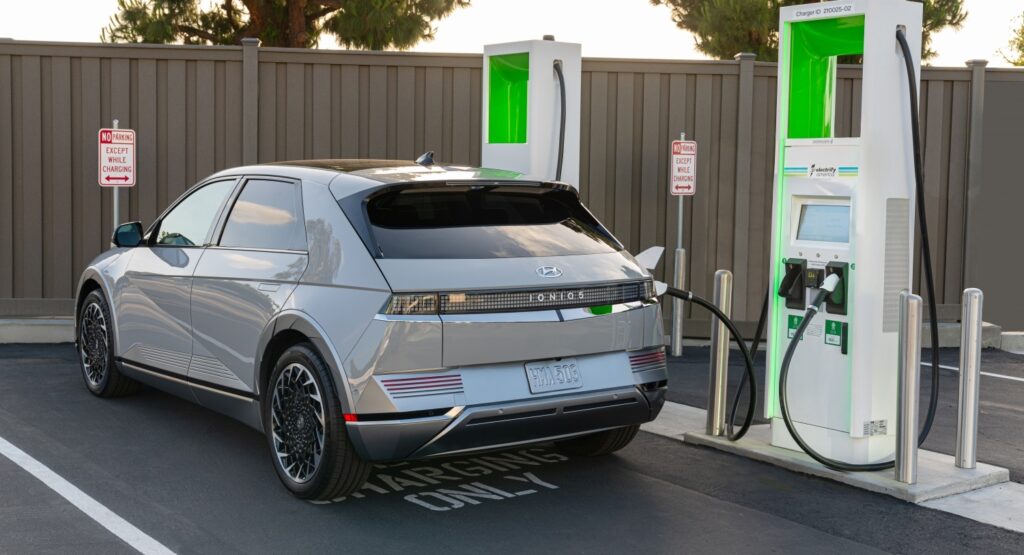
Some may think of electric vehicles as a concept of the future, but over 2 million EVs are already on American roads. By 2030, that figure may exceed 5 million. Where will all of these EVs juice up on road trips? Say hello to the gas station of the future. Charging stations are growing as more automakers commit to electrification.
Among the key players in EV charging is Electrify America. With roots in the 2015 dieselgate debacle, Electrify America is out to show the masses that electric cars are accessible and convenient. Maybe you’ve even seen their glowing green stations in your local Walmart parking lot. Who knows, you might find yourself at an Electrify America station sooner than you think.
Let’s cover the basics of Electrify America:
Let’s dive in.
Electrify America is the rebranded name for the initiative that Volkswagen created and funded as part of its 2016 settlement with the United States Environmental protection Agency and the California Air Resources Board. VW was caught red-handed cheating on emissions tests for millions of diesel cars sold in the US. Remember when everyone had to sell back their cool Golf TDI? VW hit rock bottom in 2015. As part of the $2 billion punishment, Volkswagen is prohibited from branding the charging network as a VW enterprise.
So here we have it, Electrify America! Storied past aside, EA is now a large and rapidly growing player in the world of electric vehicles. Despite initial skepticism, EA showed it was serious by following through on their initial goal of adding 2,000 DC fast chargers within a few years. An average of four EA stations were opened every week since the official debut of Electrify America in May of 2018. Now, EA is embarking on the next stage of growth.
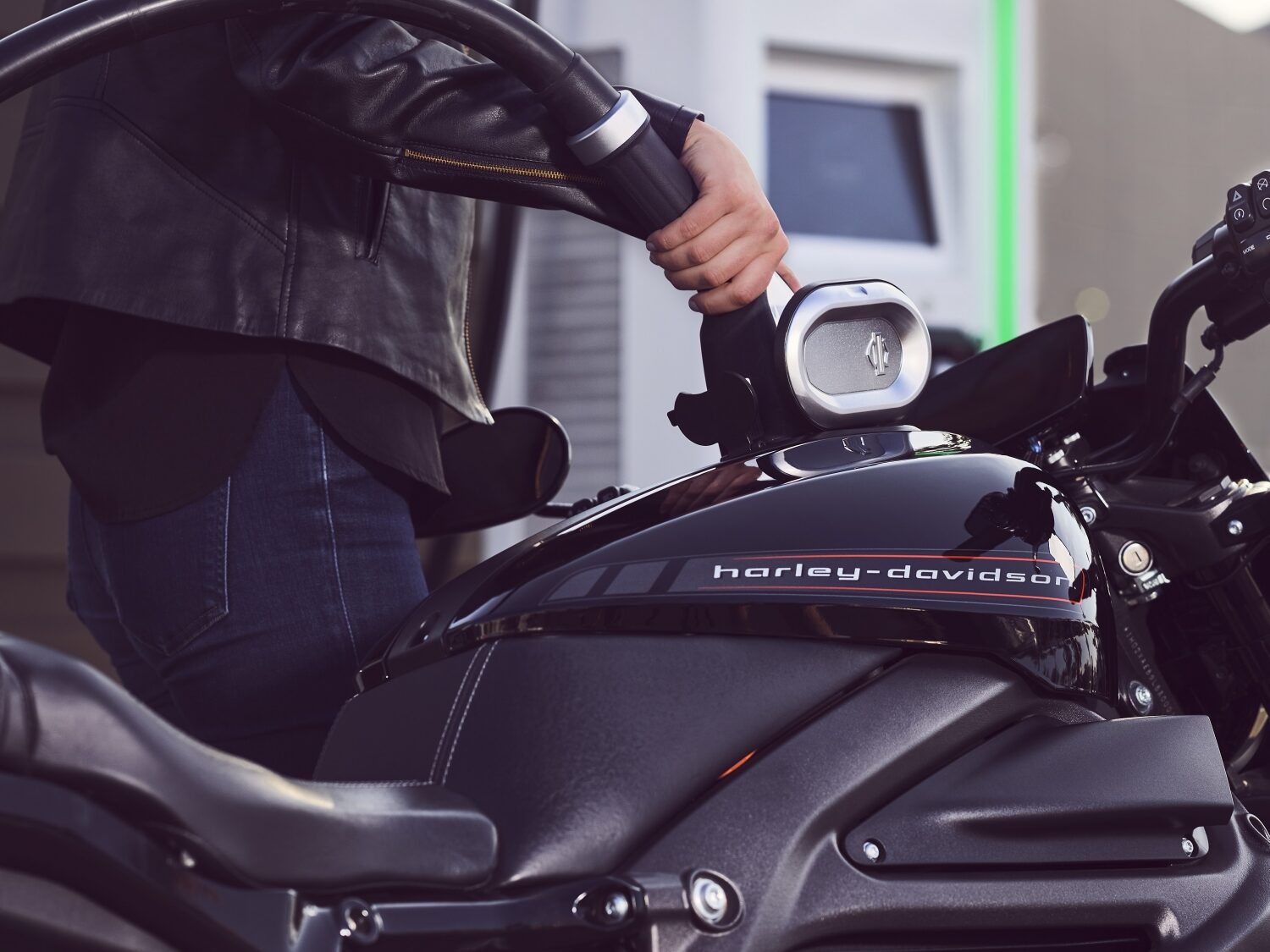
Good news! Any electric vehicle model can plug in at Electrify America charging stations. Even Teslas can charge here, despite having their own exclusive Supercharger network. Tesla may have a walled garden for its customers, but EA is open to all. EA stations include several CCS plug types, which work with nearly all EV models. The stations also have a CHAdeMO plug, which only the Nissan Leaf uses as of 2022.
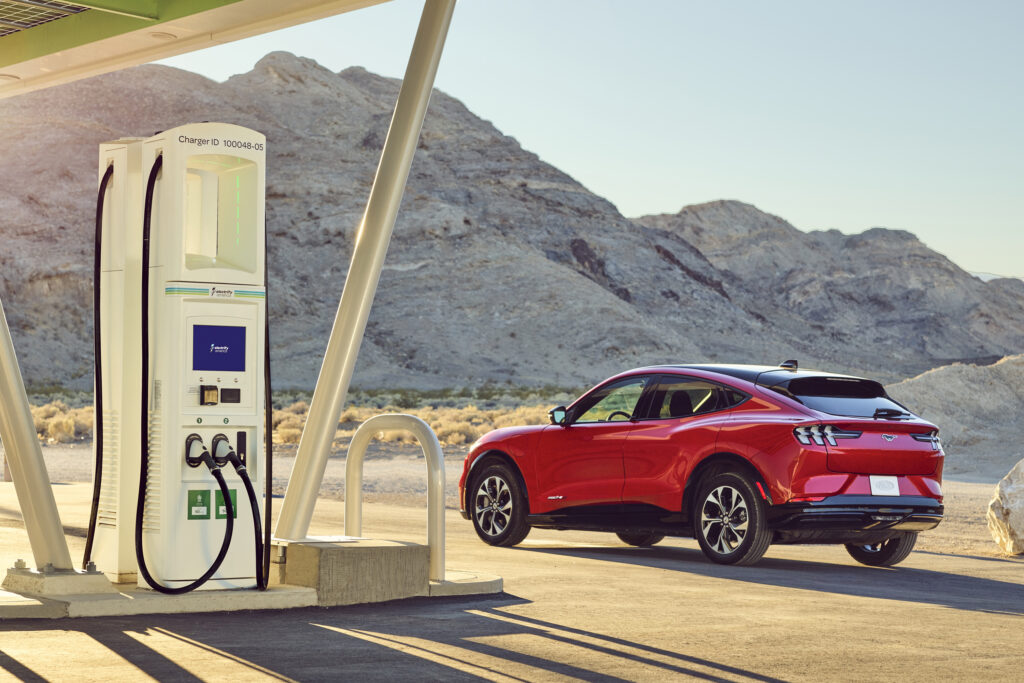
Plug-and-charge is a convenience feature popularized by Tesla, but now spreading among automakers. Considering Electrify America’s Volkswagen roots, you’d think plug-and-charge would be a given for VW electric cars. Not so, at least not yet. However, it looks like automakers are at fault here, not EA. The 2022 Ford Mustang Mach-E already offers plug-and-charge, saving time and hassles for owners. GM says it will soon, but not by the time Cadillac Lyriq deliveries begin this year.
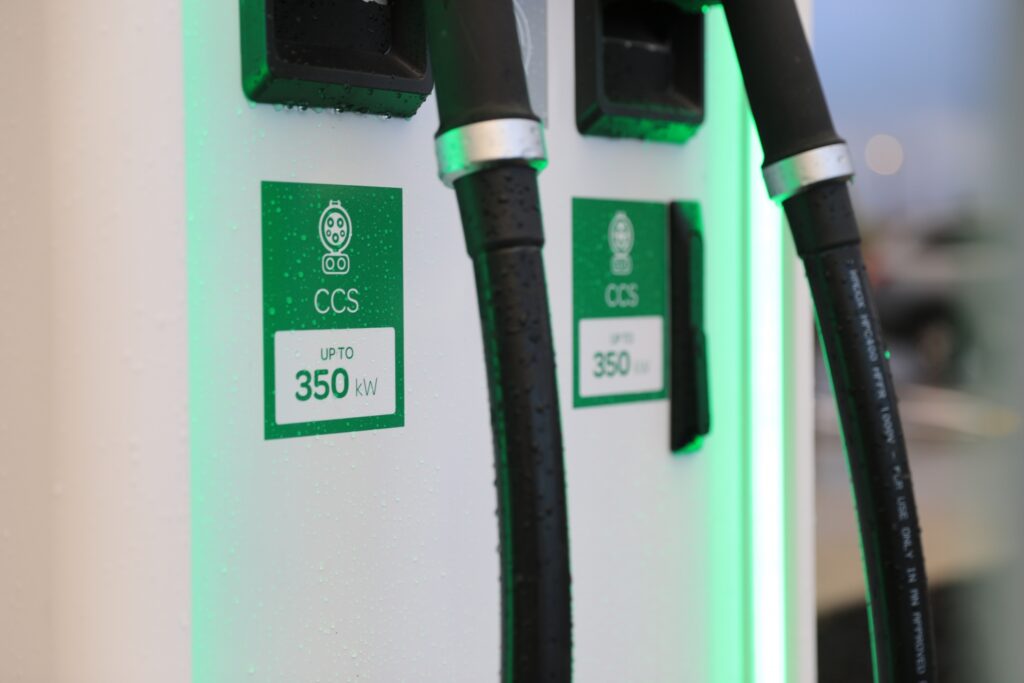
Electrify America charging stations are installed with future-proofing in mind. The vast majority of stations are capable of supplying the latest EVs with up to 350 kW charge speeds. In 2022, only a few EVs are capable of such rapid charging. The Hyundai IONIQ 5, Lucid Air and Porsche Taycan are a few examples. If your EV only accepts slower charging speeds, Electrify America certainly has the power you need to juice up.
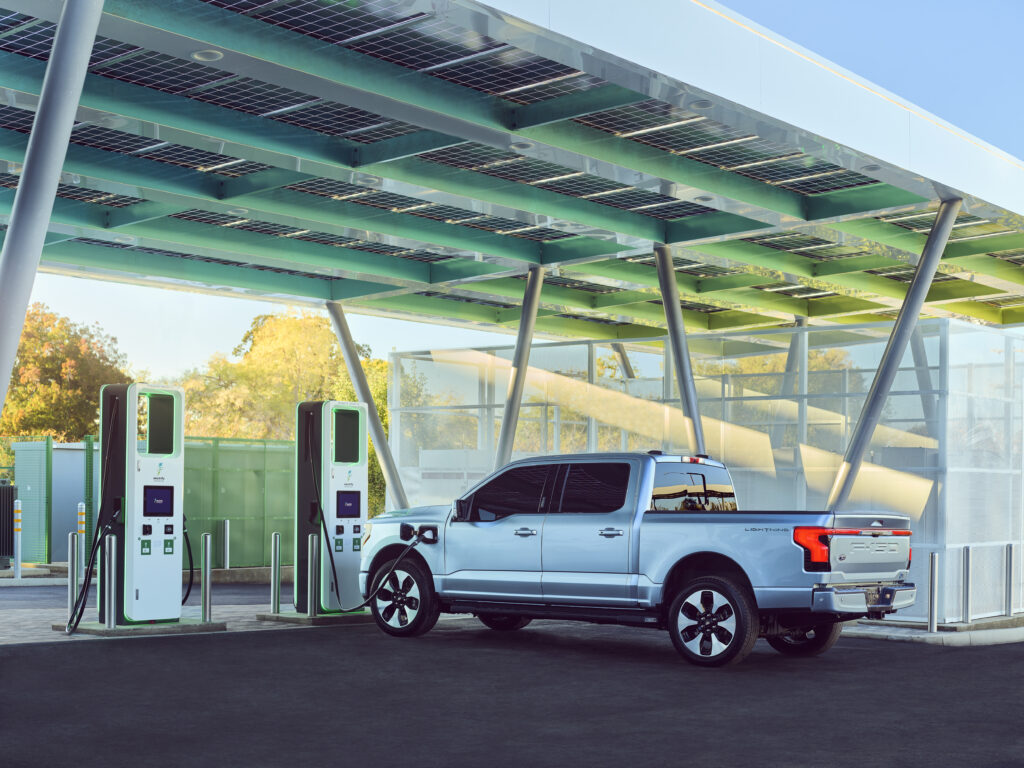
Some lucky EV drivers will have some amount of free charging at Electrify America. The Volkswagen ID.4, Hyundai IONIQ 5, Polestar 2 and even the Lucid Air all come with two or three years of complimentary charging at EA.
Electrify America pricing is determined by the following price tiers. Customers can either pay $0.43 per kilowatt-hour of electricity, or become a Pass+ member for just $4/month and charge up at $0.31 per kWh. For the Ford Mustang Mach-E with the standard battery, a full charge will cost about $21.00 as a Pass+ member, but $30.00 as a guest.
Having such an affordable membership plan is an interesting approach. It almost seems like Electrify America is aiming to become a subscription that everyone with an EV will buy into for a sense of range security, even if they rarely use the network. Learn more about Electrify America pricing and how much it costs to charge an electric vehicle at home or on the road here.
After an extremely fast build-out, EA now has chargers in 47 states. Only North Dakota, Wyoming and West Virginia have yet to receive EA chargers. Some states have many chargers. Metro areas like Washington DC, Atlanta, New York City, and of course all of California have a high density of EA charging stations.
A large number of EA stations are located in Walmart parking lots. Others are at Target stores, shopping malls, gas stations, and other frequented stops. With the new federal push for a national EV charging network, highway rest areas may soon get their own charging stations.
As of early 2022, Electrify America has 710 charging stations active in the US. Over 100 more are on the way soon. Three-quarters of existing charging ports are of the CCS type. The remainder are CHAdeMO-type plugs, almost exclusively for the Nissan Leaf. The rest of the EV world has moved on from CHAdeMO.
Here are all of the Electrify America charging locations as of early 2022. Future stations are in gray.
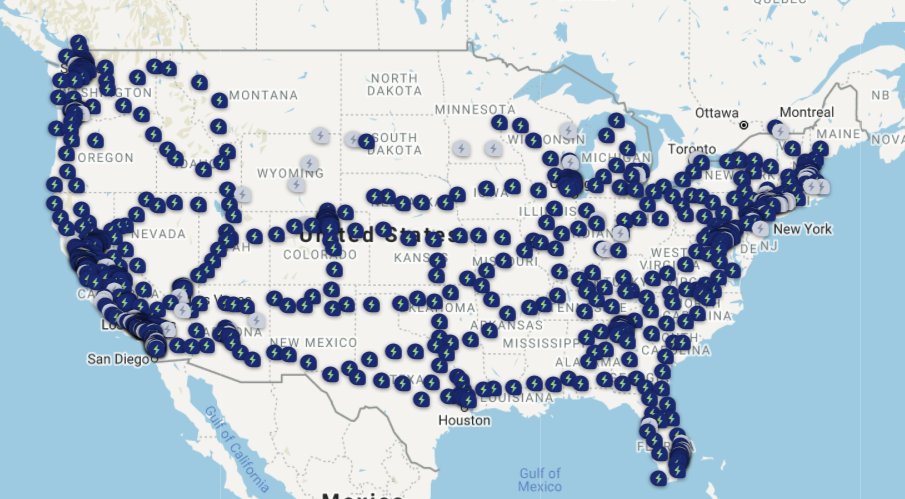
Source: Electrify America

Electrify America’s original goal was to have about 800 charging stations and approximately 3,500 individual chargers in the U.S. by the end of 2021. As you can see above, they clearly exceeded that ambitious goal. Now, EA is looking ahead to their 2025 Boost Plan. The new plan calls for increasing the total number of charging stations to more than 1,700 and 9,500 individual chargers by the end of 2025. Soon, all 50 states will be home to EA charging stations. For me in West Virginia, that can’t come soon enough. It’s a charging desert out here in the hills.

With so much competition arriving in the electric vehicle segment, buyers have far more options than they did just a few years prior. Back in 2018, it was Tesla, the Chevy Bolt and the Nissan Leaf that were selling in big numbers. Now look at the list of every EV on sale in 2022. Consumers have options! And by the time Electrify America’s 2025 Boost Plan is carried out, EV sales are expected to make up at least 12% of total vehicle sales.
Still, Tesla continues to lead electric sales by a large margin. Tesla drivers can charge at Electrify America stations if they bring their own plug adapter. Unfortunately, only Tesla cars can plug in at the sprawling Tesla Supercharger network. Tesla’s proprietary network of exclusive chargers just reached a major milestone. As of late 2021, there are 30,000 charging stalls at over 5,000 locations worldwide. One-sixth of those charging stations were built in the latter half of 2021 alone. In the US, there are nearly 1,000 Supercharger locations, a figure that is rapidly growing.
Tesla also has a level 2 Destination Network at tourist destinations, hotels, restaurants and other destinations. Soon, there will even be a Megacharger Network to support the coming Tesla Semi. Rumors abound that Tesla will open up the Supercharger network to non-Tesla cars, as they have already tried in select European countries. Until that officially happens in the US, Superchargers remain off limits to Ford, GM, Hyundai and every other automaker’s EVs.
Tesla Superchargers are not free. In fact, charging will cost $0.28 per kilowatt-hour of electricity in most markets. Learn more about how much it costs to charge an electric vehicle in our recent report.
Clearly, electricity is cheaper than gasoline, no matter where you plug in:
| Cost of Charging to 100% at a Tesla Supercharger | Cost of Charging to 100% at Electrify America as a Member | Cost of Charging to 100% at Electrify America as a Guest | Cost of Filling up an 18 Gallon Tank of Gas at $3.25/Gallon |
| $22.96 | $25.42 | $35.26 | $58.50 |
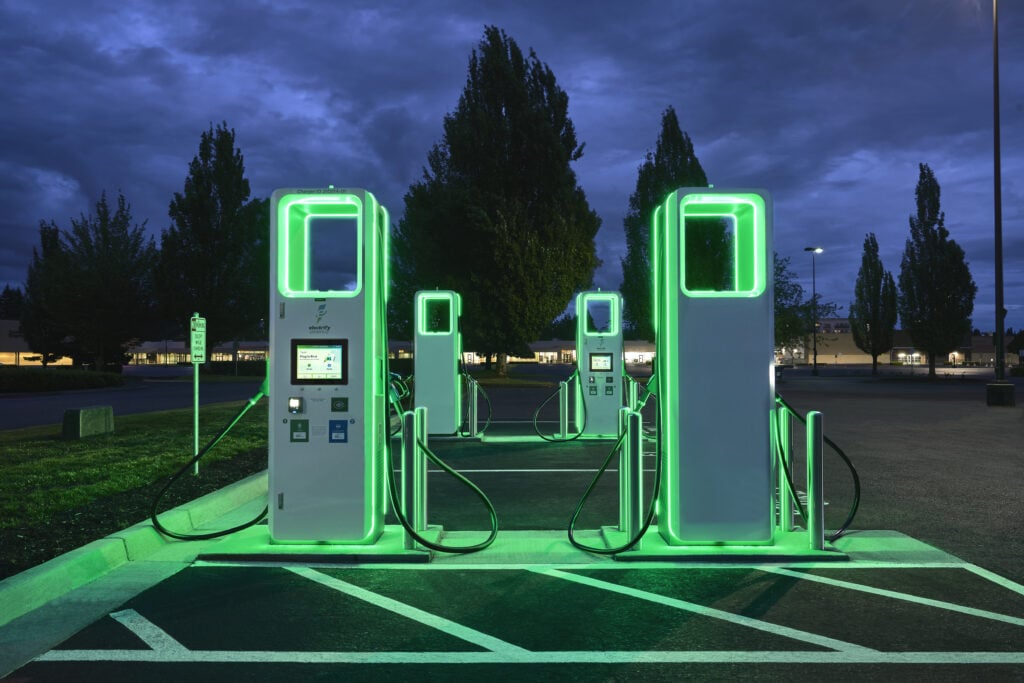
The automotive industry is commiting to EVs. With nearly half a trillion dollars committed to EV development this decade, is this a ‘too big to fail’ moment? However, what good are EVs if there’s nowhere to charge them? Actually, over 80% of electric vehicle charging happens at home. Still, road trips would be dead if automakers electrify without having public fast chargers as widespread as today’s gas stations.
Aside from the Tesla Supercharger network, Electrify America is the best shot we have at rapidly building out a DC fast charging network across America. Automakers, utilities and even the federal government are currently figuring out how to grow charging infrastructure in America. The recent National EV Charging Summit highlighted those efforts, and also the immense challenges ahead. Electrify America’s 2025 Boost Plan offers a glimpse of the electric future to come along American highways.
What do you think? Will Electrify America and the growing Tesla Supercharger network be enough for EVs to comfortably reach the forecasted 30-40% market share in 2030?
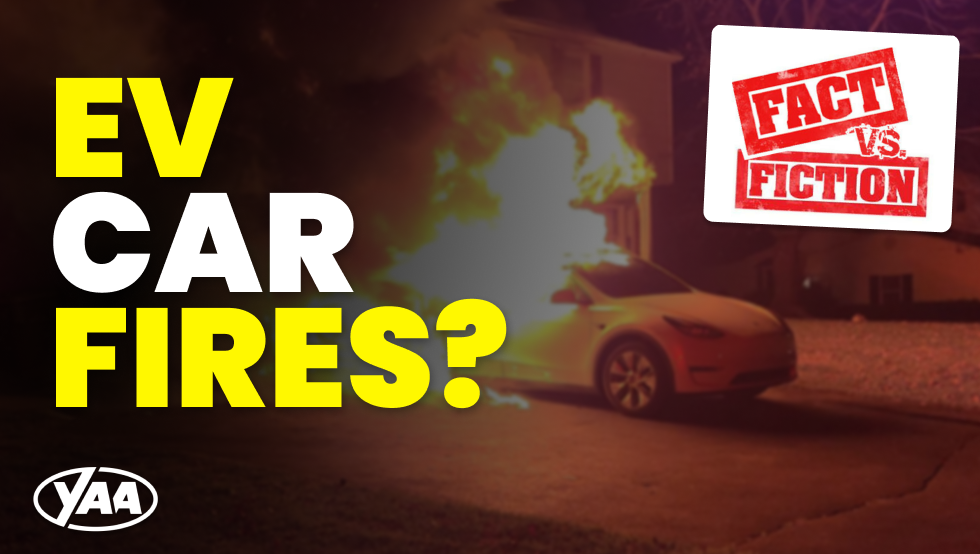
Which vehicles are the safest? Crash test ratings and real-world accident statistics are common metrics for safety, but fire data is another big one. Over $1 billion in property damages are incurred annually due to car fires. Although some assume electric vehicles with their energy dense battery packs are most fire-prone, a new study finds that is not the case. Hybrid car fires are an overlooked hazard.
Jalopnik reported on a new industry study released by AutoinsuranceEZ.com that sheds light on some surprising findings. Let’s cut to the chase.
Authors Rachel Bodine and Rachael Brennan summarized their findings:
“Hybrid vehicles have the most vehicle fires per 100K vehicle sales, followed by gas vehicles. Despite the recent concern about electric vehicle fires, they have the fewest fires per 100K vehicle sales and had only two model recalls for fire risks in the past year.”
The team of researchers analyzed data from the National Transportation Safety Board (NTSB), Bureau of Transportation Statistics (BTS), and government recall data. They found that the facts tell a different story than much of the headline-grabbers.
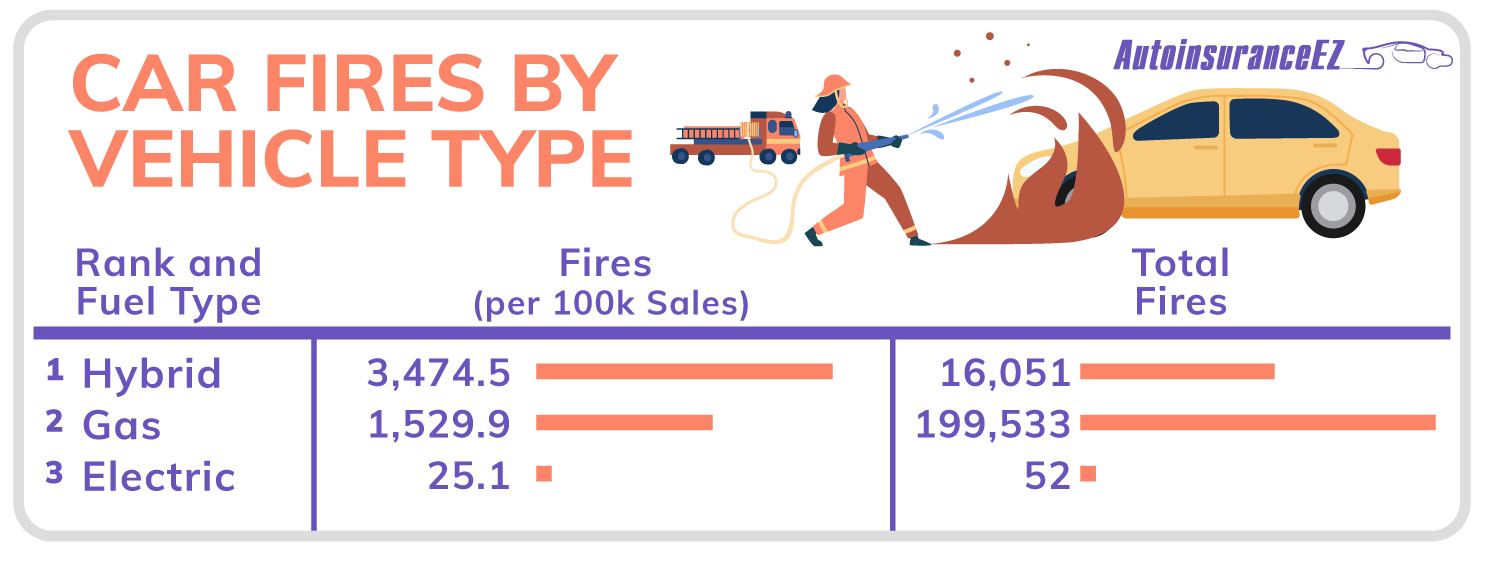
Source: AutoinsuranceEZ
CarEdge recently covered the ongoing EV fire concerns with the Chevrolet Bolt and a few other models. With EVs under heavy scrutiny, there’s a lot to be gleaned from this report. Hybrid vehicles are the most likely to be involved in car fire incidents, and seemingly by a long shot. Gas vehicles are second per 100,000 sales, but the clear leader in total fires due to there being far more gas-powered vehicles on the road.
Why are hybrid car fires more common than others? Mechanics and EV enthusiasts alike have long pointed out that hybrid vehicles are far more complex than gas or pure electric vehicles. Think about it: they have combustion AND battery components. The study’s authors pointed out the differing sources of fire-related recalls.
“Both hybrid and electric vehicle recalls were all related to battery issues. This is a stark difference from the gas recalls, which were recalled for issues with fuel leaks, electrical shorts, and anti-lock braking systems (ABS).”
One fact that we can’t overlook is just how insanely difficult it is to extinguish EV fires. Fire departments around the world are in dire need of support, updated training and adequate resources to prepare for the onslaught of electric vehicles to come. We recently reported on the challenges that firefighters face with EV fires. Even tow yards are in a difficult situation. EVs need to ‘social distance’ until there’s no chance of flare ups. Will we one day run out of room in the junk yard? Or will safety be a trade off for practicality?
With the industry undergoing so much change, it’s imperative that automakers and all OEMs prioritize safety over profits. The transition to EVs is certainly NOT the time to cut corners. At CarEdge, we’ll continue to stay on top of what this all means for you, the consumer. What do you think? Do you know anyone impacted by any type of car fire? Let us know in the comments below. Join the CarEdge Community to interact with car buying experts and fellow car enthusiasts.
CarEdge Just Launched a New Search Engine to Make Buying Your Next Car Easier!
We have thousands of EVs (and other vehicles) listed today. Each listing includes industry insights, empowering data and the true TotalPrice that will make buying a car the transparent process it should’ve always been. Check it out here!

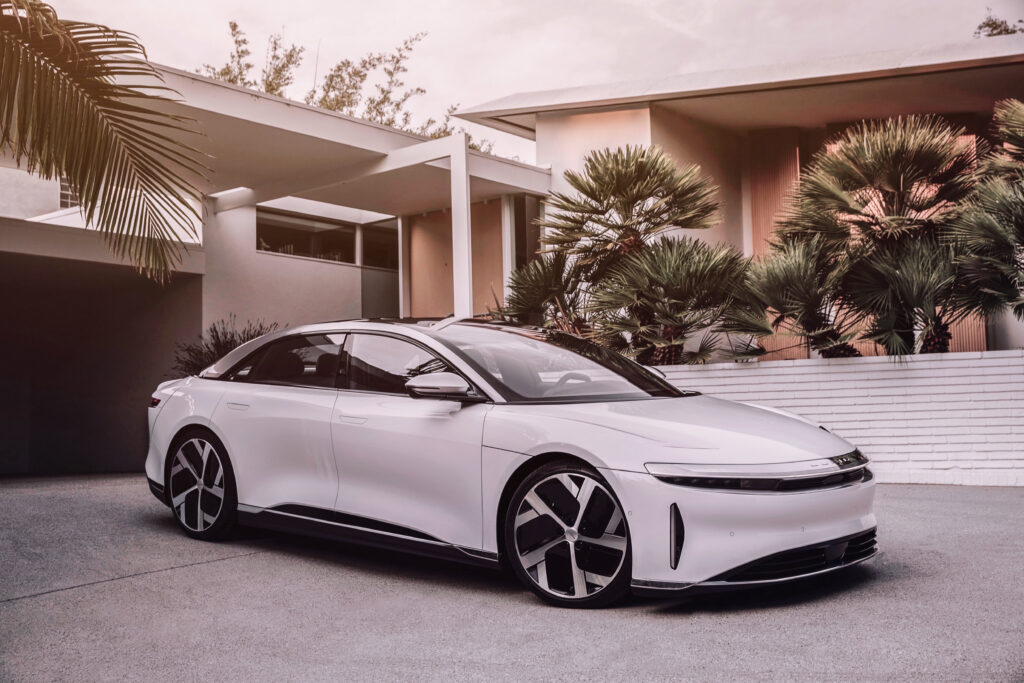
For years, electric vehicle skeptics have had three big demands that would be needed to win them over: range like a traditional vehicle, faster charging, and affordability. With the arrival of the ultra-luxury Lucid Air, the emerging EV-only automaker has achieved two of these three goals. One could argue that luxury vehicle consumers fall into one of two categories: those who prefer classic, traditional luxury, and those who like to experience the latest and greatest in technology and powertrain integration. The 2022 Lucid Air without a doubt falls into the latter category. Here’s our CarEdge first look at the electric newcomer moving the goal posts in the battery-powered range wars.
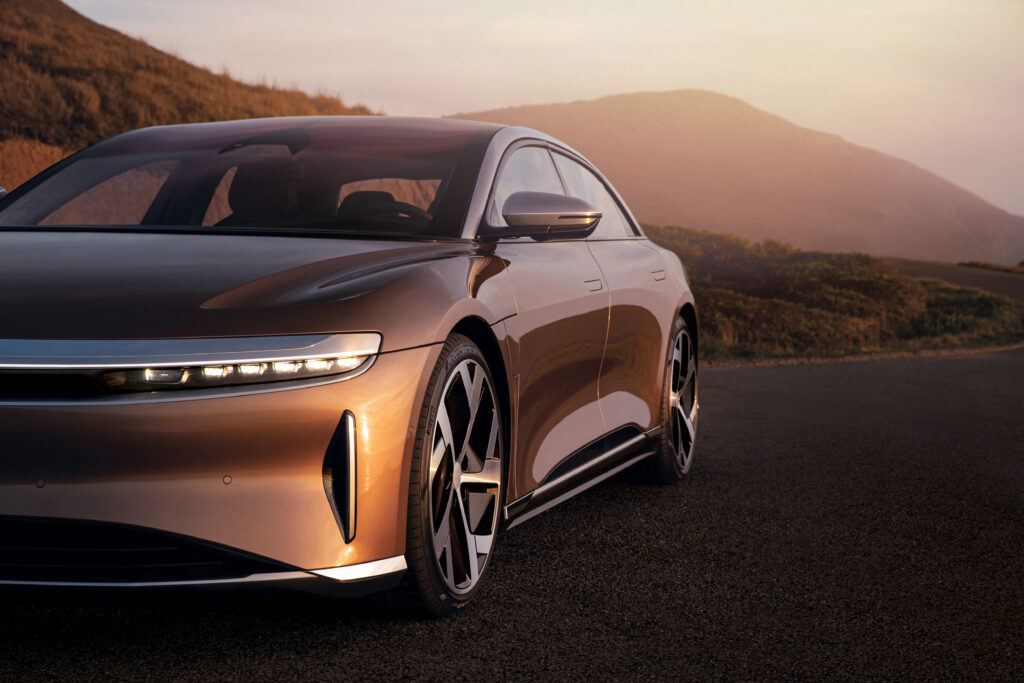
When engineer Peter Rawlinson left Tesla in 2012, the automaker now synonymous with EVs was just getting started. The early success of Tesla was in part due to the efforts of Rawlinson, who served as Vehicle Engineer for the development of the Model S, the first Tesla model to make it mainstream. Citing the need to care for his ailing mother, and a boss that wasn’t treating him too well (as he puts it), Rawlinson left the company just as Model S sales were ramping up.
But he would soon return to the automotive startup scene, this time as Chief Technical Officer of Lucid Motors in 2013. By 2019, he was CEO. His tenure at Lucid has seen the flagship model, dubbed the Air, make it from sketches and prototypes to the first customer deliveries in late 2021. Now that the 2022 Lucid Air is in production at the new AMP-1 site in Casa Grande, Arizona, drivers and engineers are marveling at the innovation and specs.
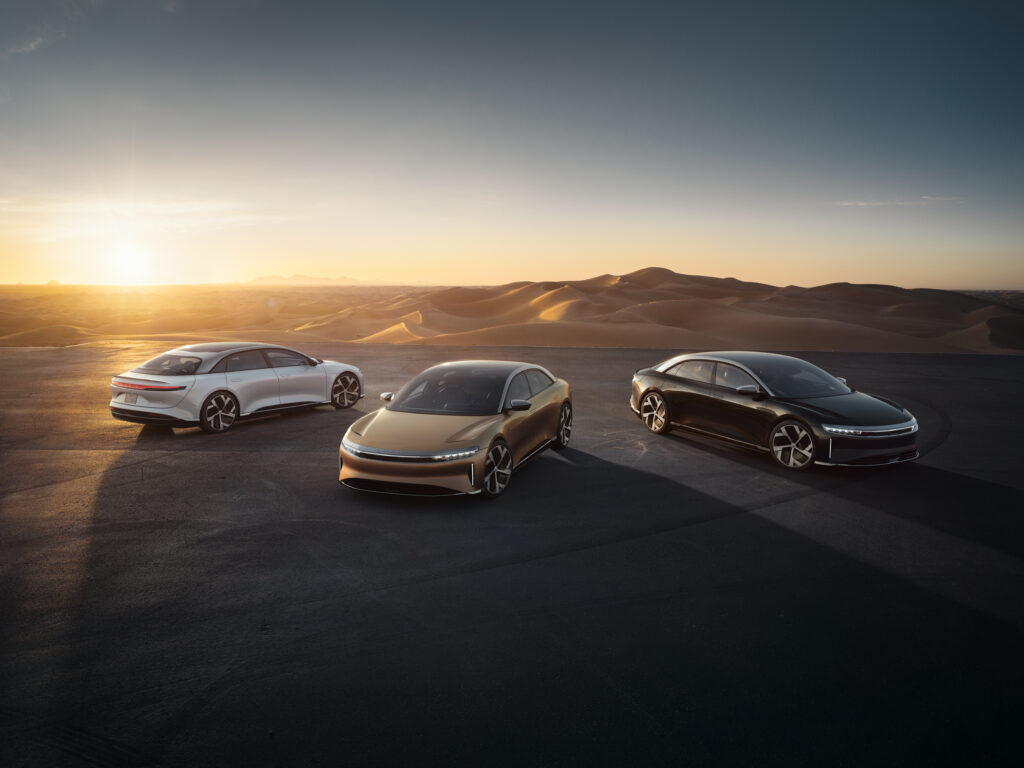
When Lucid announced the 2022 Lucid Air would have a range of up to 520 miles on a single charge, not everyone believed it was possible. Now that at least one independent range test squeezed 500.1 miles out of a single charge going 70 mph on the highway, the range wars are heating up.
No other automaker can claim a 500-mile EPA rating as of early 2022. Tesla’s Model S comes closest at 405 miles of rated range. The all-new Mercedes EQS luxury EV is rated for 350 miles of range, however Edmunds drove the EQS a full 422 miles in their test loop. For now, the Lucid Air reigns supreme.
The Air’s exceptional range is made possible by a drag coefficient of 0.21 (lower than even Tesla models) and a very large 118 kWh battery pack. That massive battery is responsible for a large portion of the 5,200 pound weight of the Air. That’s heavier than a Ford F-150!
Not all trims of the Air are rated over 500 miles. The ‘base’ trim (if you could really call it that) is estimated to be rated for 406 miles. That’s just one mile over the Tesla Model S long-range. If that’s not a shot at Tesla, I don’t know what is.
The debut Lucid Air Dream Edition is rated for 471 – 520 miles of range. With enough power for a 2.5 second 0-60 time, bested only by the Tesla Model S Plaid in the EV segment. Actually, very few cars period can claim such reality-warping acceleration. Unfortunately, the Air Dream Edition is no longer officially open for reservations. If you’re in the market for a state-of-the-art $169,000 luxury EV with supreme performance, Lucid says you can join the waitlist.
The next best thing is the Air Grand Touring, which now lists for $139,000. Clearly, Lucid Air pricing is unabashedly premium. The Air doesn’t flirt with the more economical price points that even Tesla wades into in the sub-$50,000 range. At least with the Lucid Air’s pricing, the target market segment is as clear as its panoramic roof. Here’s the full breakdown of trim levels for the 2022 Lucid Air.
Not only is the 2022 Lucid Air the longest-range EV on the market, it’s also one of the most powerful in the world with up to 1,111 horsepower and 1,390 lb-ft of torque in the Air Dream Edition. The less extravagant (and a bit less expensive) Air Pure still cranks out 480 horsepower from a single rear-wheel drive motor.
Behind the Air’s snappy performance is a compact yet innovative electric motor. Lucid’s team thought outside of the box, the electric motor box that is. They engineered the motor for better thermal management (essential in EVs) and triple the power density of competitors.
The Air’s electric powertrain was designed and developed in-house. The Air’s 900-volt electrical system is bidirectional. That means the Air can power household electronics and can even lend a “jump charge” to other EVs. The Air is capable of 19.2 kW of level-2 home charging, far higher than the competition. Most EV charging is done at home, so this is an overlooked feat of the Lucid Air’s engineering. At DC fast chargers, the Air can accept 300kW (or more) with the Air’s 800 volt architecture. More on that below.
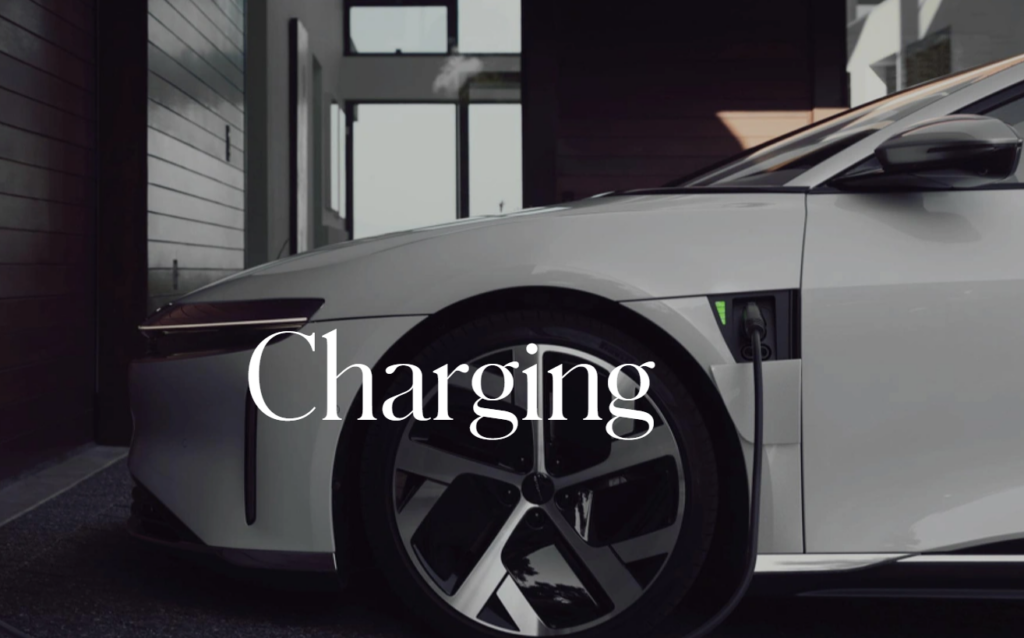
Gone are the days of EVs taking an hour of charging to make it the next 200 miles. Unless you buy a Chevrolet Bolt (please don’t buy a Chevy Bolt). Most 2022 model year electric vehicles can gain over 200 miles of range in about 30-40 minutes at a fast-charger.
The Lucid Air goes above and beyond. In just 20 minutes, the Air can add 300 miles of range at a DC fast charger like those at Electrify America stations. Plus, the Air comes with three years of free charging at Electrify America. The Air can accept up to 300 kW speeds at 800 volts. That’s the best in the market for now, and is surely a feat of battery thermal-management engineering. Tom Moloughney of InsideEVs confirmed these spectacular charging specs.
The 2022 Lucid Air starts at $77,400, but most buyers will likely opt for the Touring and Grand Touring trims, which easily exceed well beyond $100,000.
| Trim | Price | Range | Horsepower | Drivetrain |
| Air Pure | $77,400 | 406 mi | 480 HP | RWD |
| Air Touring | $95,000 | 406 mi | 620 HP | AWD |
| Grand Touring | $139,000 | 516 mi | 800 HP | AWD |
| Dream Edition* | $169,000 | 520 mi | 1,111 HP | AWD |
*The Dream Edition is not currently available for ordering.
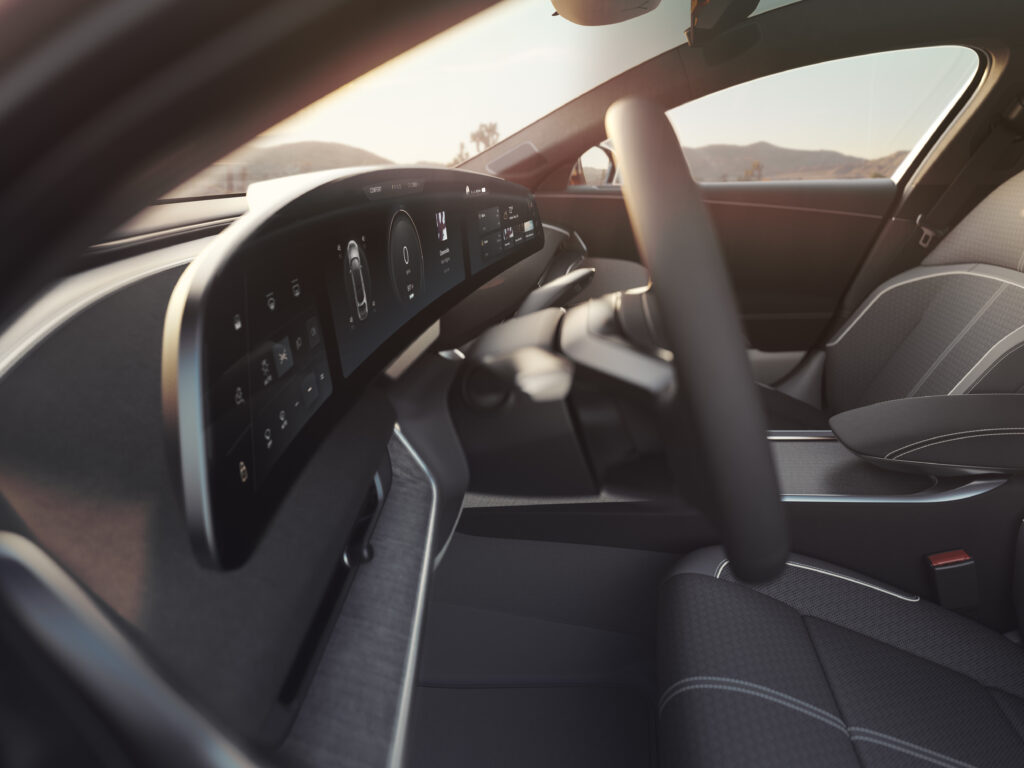
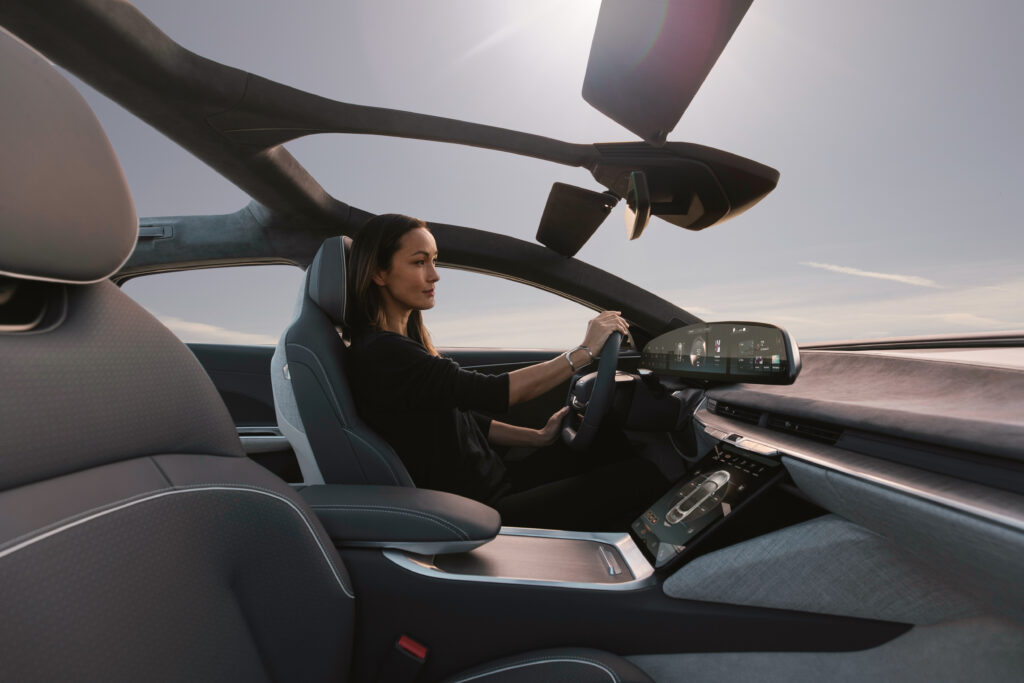
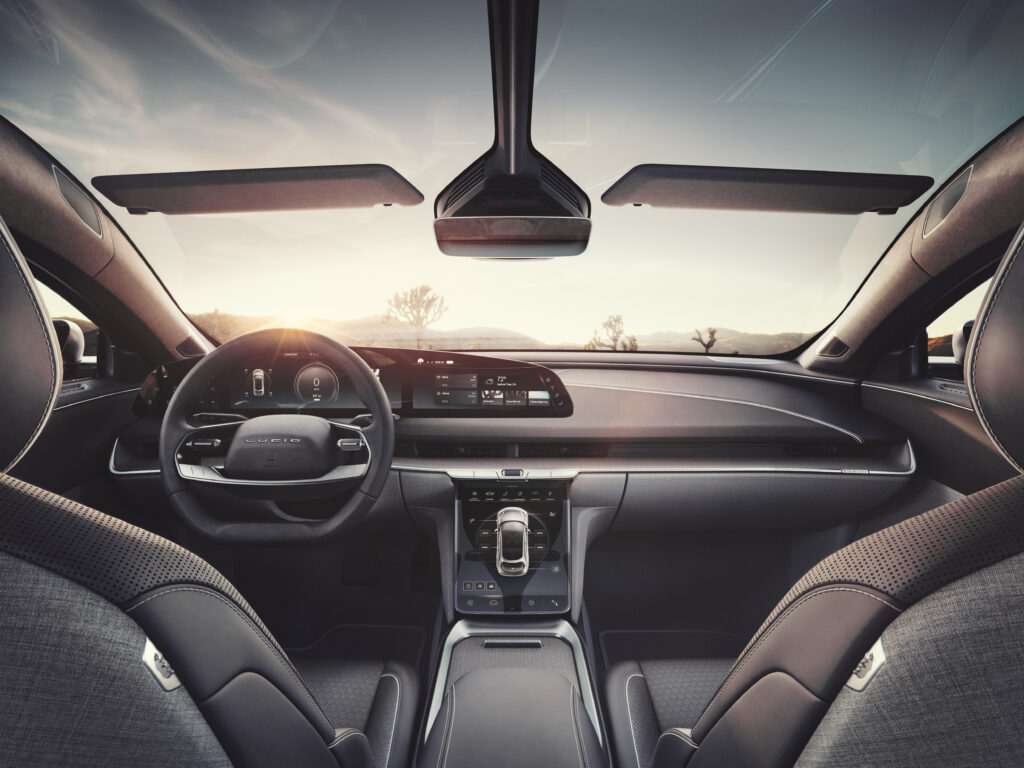
Stepping into the Lucid Air is perhaps the most science fiction-turned-reality experience you can buy. The unreal clarity of the ‘glass cockpit’ display is made possible by a 34-inch, 5K floating screen that sweeps around the driver, curving like the cockpit of a jet. It puts essential information into the driver’s sightline, with vehicle controls to the left, driving details in the center, and navigation and media to the right. An optional solid glass roof spans the entire cabin almost without interruption. It’s a more surreal view than even the Tesla glass roofs, except for maybe the Model X.
Lucid Motors has equipped all Air trims with Lucid DreamDrive, an advanced driver-assistance system. Lucid Motors claims that DreamDrive is the only driver assistance technology with the combination of an advanced sensor suite, high-resolution LIDAR, a driver monitoring system, and a fully redundant platform. Surreal Sound, Lucid Air’s immersive audio system, is powered by 21 speakers with Dolby Atmos technology, a first for autos.
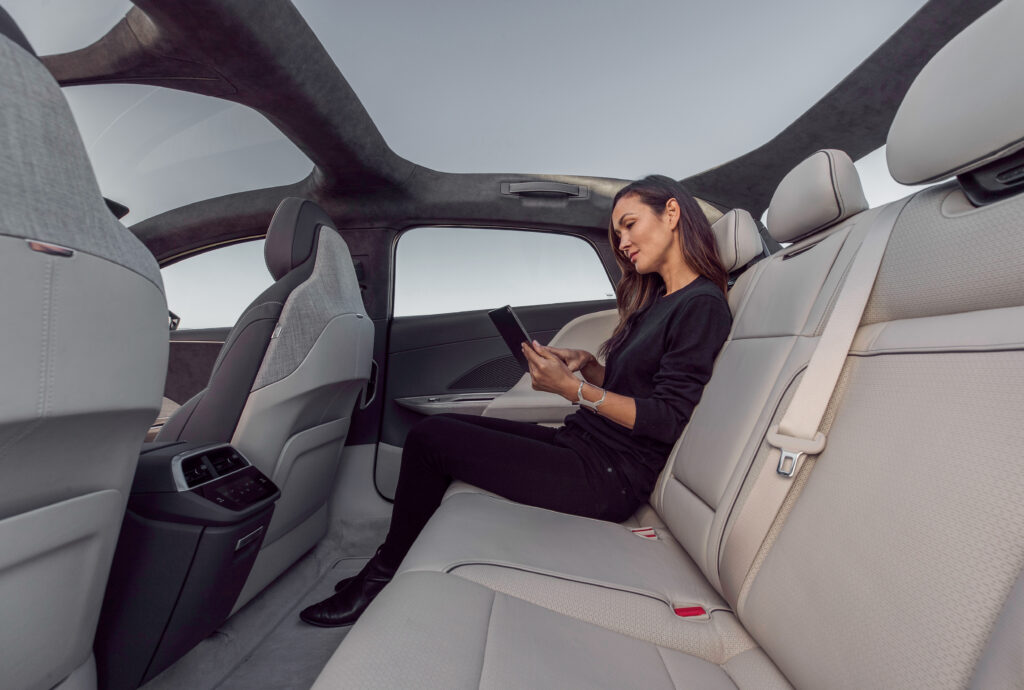
On Lucid’s website, they boldly state “Cabin? More like mansion.” While that may be a bit of an exaggeration, an abundance of space welcomes drivers and passengers alike. About 98 cubic feet of passenger space is plenty big for a sedan. Seats, dash trims, and most other materials are sustainably sourced yet undeniably premium, as they should be for the price. Massaging seats are an option, but it’s kind of ridiculous that they’re not included with the $80,000+ car. The rear cabin fits three adults with segment-leading amounts of legroom. An optional Executive Rear Seating Package offers reclining rear seats. You know, private jet style. An optional Executive Rear Seating Package (with later availability) will offer a jet-style experience for two that lets you recline way back.
First of all, the Lucid Air’s frunk, or front trunk, is the largest of any electric car at 10 cubic feet. The actual trunk is decently-sized at 16.2 cubic feet. However, it has some tricks up its sleeve. The trunk opens up to the rear cabin, making it possible to fit large items that normally a luxury sedan can’t handle.
The 2022 Lucid Air receives over-the-air updates through its secure and high-speed Ethernet-Ring data network. Lucid plans to have full OTA functionality, meaning that updates to vehicle performance will be possible. So far, only Tesla has repeatedly and successfully upgraded vehicle range and performance for existing customers. Many legacy OEMs can update infotainment via OTA updates, but some still require a service center visit.
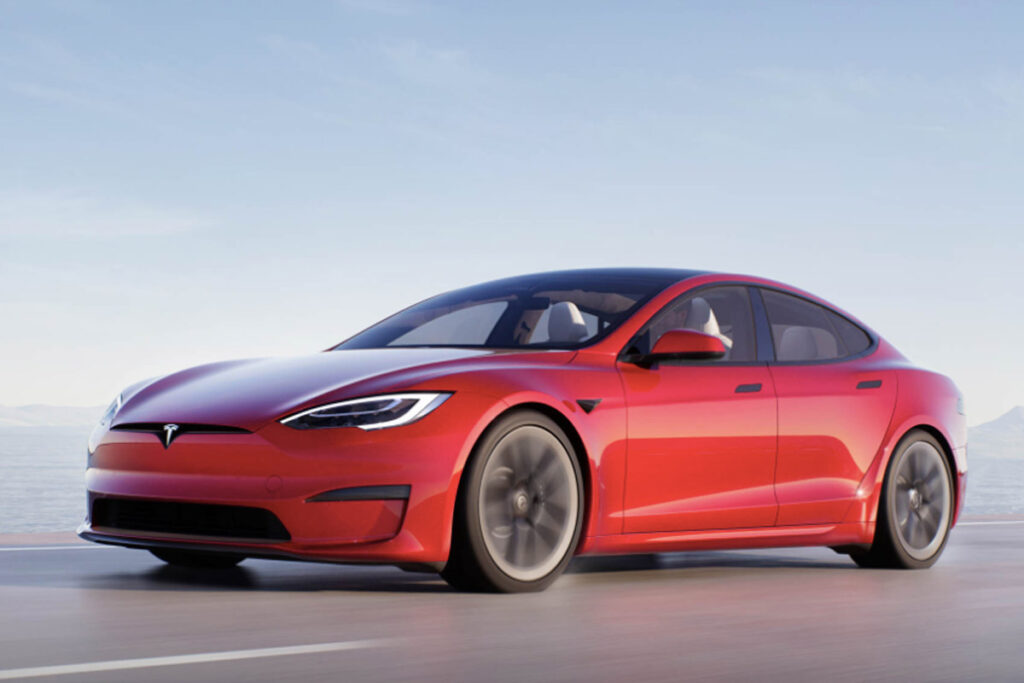
We’ve already established that the Air is the ultimate highway warrior with EPA rated range of up to 520 miles. But how does the Lucid Air stack up to the competition? Is the Lucid Air better than a Tesla? We’ll let the specs speak for themselves. This vehicle is still so new to the market that it’s too early to draw conclusions with regards to reliability, but here’s how performance and price measure up to Tesla, Mercedes, and other luxury electric vehicles.
| Price | Range | Horsepower | Charging* | Cargo Volume | |
| Air Pure | $77,400 | 406 mi | 480 HP | 300 mi/20 mins | 26 cubic feet |
| Air Touring | $95,000 | 406 mi | 620 HP | 300 mi/20 mins | 26 cubic feet |
| Air Grand Touring | $139,000 | 516 mi | 800 HP | 300 mi/20 mins | 26 cubic feet |
| Air Dream Edition | $169,000 | 520 mi | 1,111 HP | 300 mi/20 mins | 26 cubic feet |
| Tesla Model S | $94,990 | 405 mi | 670 HP | 200 mi/15 mins | 25 cubic feet |
| Tesla Model S Plaid | $129,990 | 396 mi | 1,020 HP | 200 mi/15 mins | 25 cubic feet |
| Mercedes EQS 580 | $119,110 | 340 mi | 516 HP | 300 mi/31 mins | 25 cubic feet |
| Porsche Taycan | $187,600 | 260 mi | 751 HP | 195 mi/23 mins | 14 cubic feet |
With the Lucid Air pricing exceeding that of the popular and proven Tesla Model S, it’s a relief that so much range, luxury and performance is included. The only fault we see here is reliability. It’s simply too early to know how the Air will fare over time. The fact that Lucid has Tesla roots provides some comfort for the wary car buyer. Despite frequent fit and finish blunders and the occasional abysmal rating, Tesla actually has a solid reliability record when it comes to battery and powertrain performance over time and mileage.
If you’re sold on the 2022 Lucid Air, you can make a refundable deposit at Lucid’s website. The reservation deposit is $300 for the base Air Pure, and $1,000 for higher trims. As of early 2022, all except the debut Dream Edition are available for order.
The 2022 Lucid Air is the premier luxury electric vehicle for the time being. It may not have Tesla’s Supercharger network, but it has superior range, infotainment and luxury qualities. This is Lucid’s first powertrain, so time will tell if reliability and longevity are just as impressive.
Despite its strengths, this EV is still a niche product. The price alone will likely limit the popularity of this magnificent luxury EV. With Lucid Air pricing starting at $77,400, at least you know you’ll get your money’s worth. Is it the best luxury EV on the market today? It’s too soon to tell. Hopefully, CarEdge will get behind the wheel of the Air soon.
CarEdge Just Launched a New Search Engine to Make Buying Your Next Car Easier!
We have thousands of EVs (and other vehicles) listed today. Each listing includes industry insights, empowering data and the true TotalPrice that will make buying a car the transparent process it should’ve always been. Check it out here!
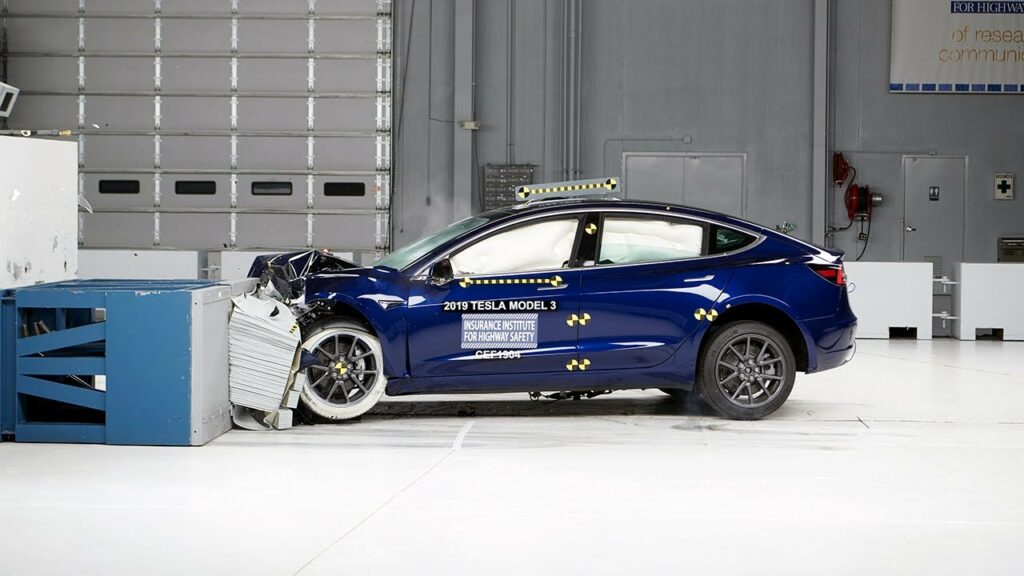
Your opinion of electric vehicles likely depends on which side of the news you’ve seen. If you know anything about the Chevy Bolt hazard, you might even scurry to the other side of the street when you encounter one. But does the data support EV skepticism, or is the big picture something different altogether? Do we even have enough data to draw firm conclusions? It’s important to get down to the facts, and that’s our goal today. Here’s what crash test ratings, vehicle fire statistics and real-world data can tell us about electric car safety in 2022.
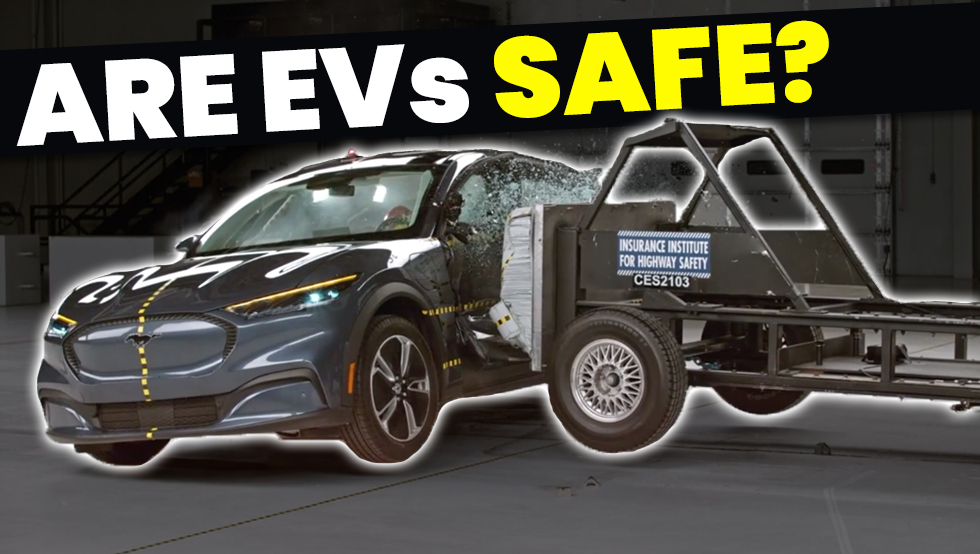
The National Highway Traffic Safety Administration (NHTSA) and the Insurance Institute for Highway Safety (IIHS) conduct standardized crash testing for vehicles that possess the potential to become popular and sell in big numbers. If it’s popular, they’re going to crash it and collect data. These two crash testing programs don’t treat electric vehicles any differently than they would a traditional combustion-powered vehicle.
As a refresher, here are the crash tests conducted by the NHTSA and IIHS:
The following additional tests are conducted by the IIHS:
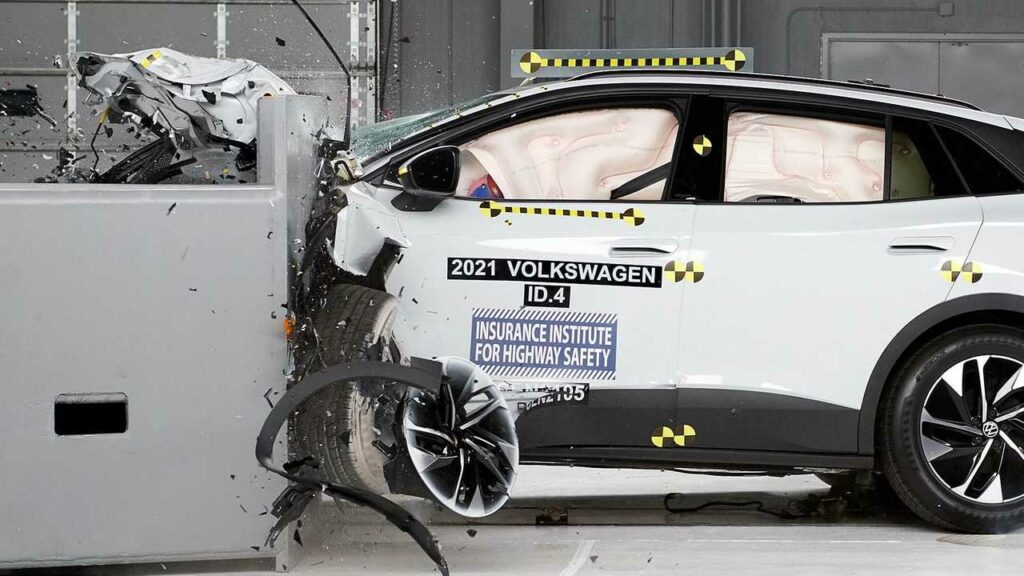
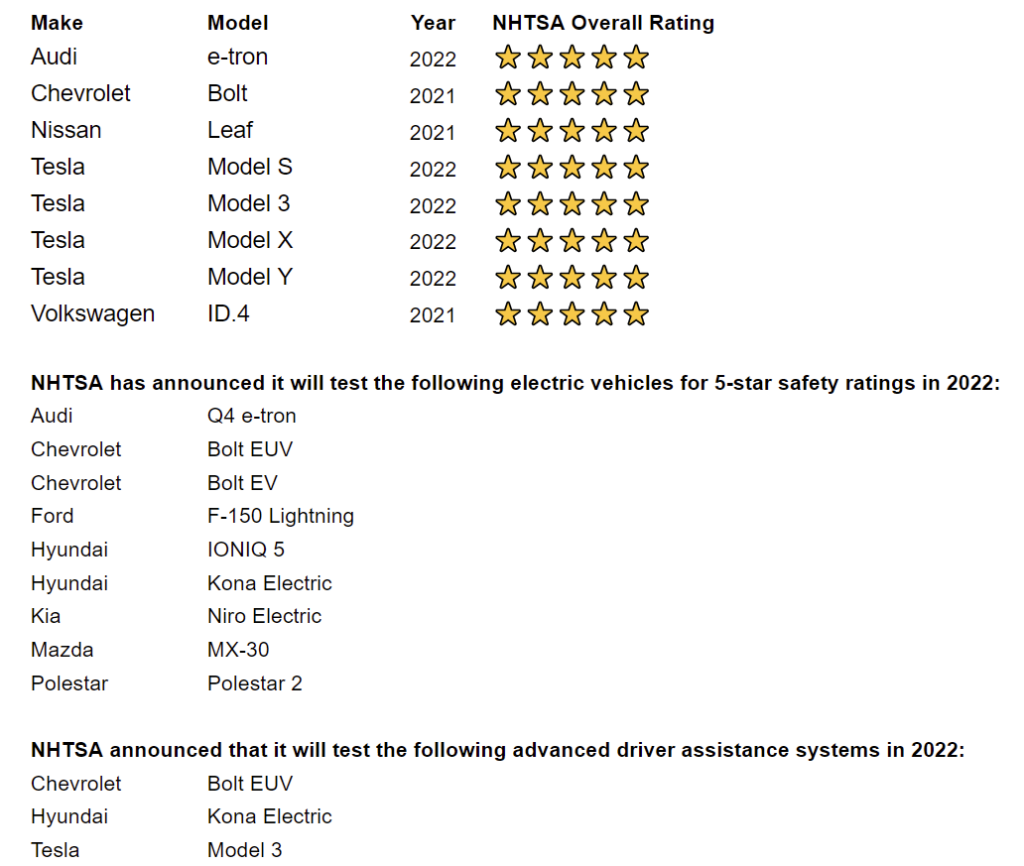
How do electric vehicles perform in these crash tests? Take a look at the limited data we have.
The Insurance Institute for Highway Safety (IIHS) does not provide overall ratings. They instead provide dozens of ratings for many different safety metrics. You can check out their ratings here.
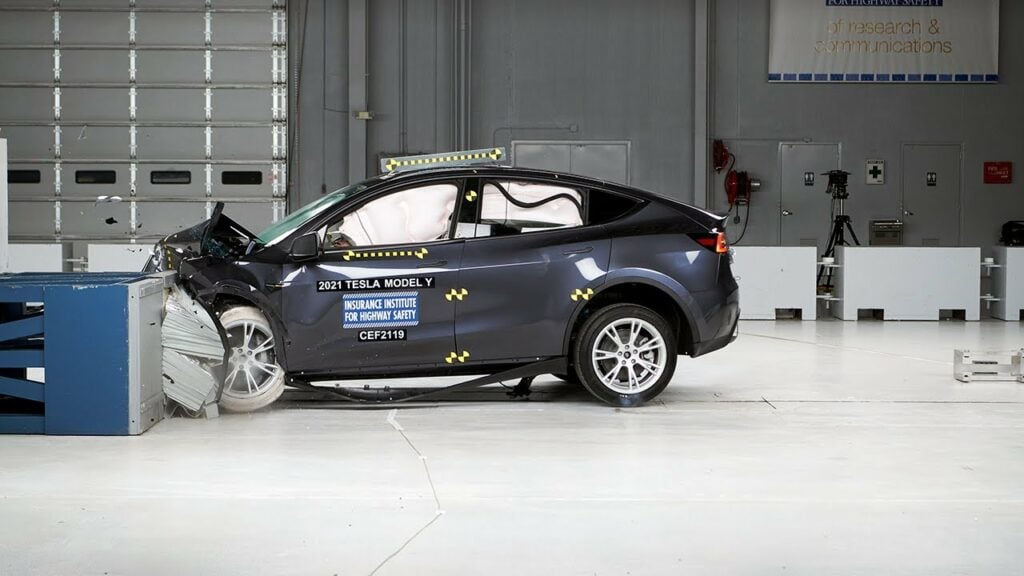
This data from the NHTSA and IIHS shows that while data is limited (but growing), all EVs tested so far have received excellent solid ratings. In fact, all eight electric models tested by the NHTSA in 2021-2022 earned five-star ratings. Considering that over 70% of EVs sold in the US are Tesla models, these ratings do represent the vast majority of EVs on American roads today. Still, far more testing is needed with so many electric models coming in 2022.
The IIHS sees the trends in their own data: EVs are actually making passenger vehicles safer than ever before. In a 2021 IIHS report on electric vehicle safety, they shared what they’ve learned so far.
“Evidence is growing that electric vehicles are at least as safe as conventional ones, with two more vehicles that run exclusively on battery power earning safety awards from the Insurance Institute for Highway Safety. In addition, an updated analysis of insurance data shows injury claims are substantially less frequent for such vehicles.”
Those are powerful words from an insurance-minded crash-tester. We definitely need more electric car safety testing. EV sales made up 6.5% of American auto sales in 2021, and that figure is expected to reach or exceed 40% by 2030. One useful safety test would be comparing how long it takes to extinguish a fire for each EV model. I’d love to see that testing implemented for the safety and preparedness of our first responders.
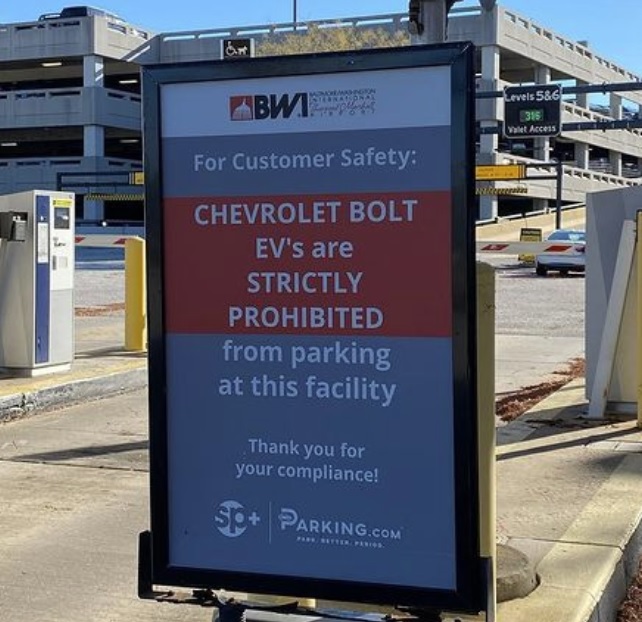
Whether you prefer a vehicle that requires gasoline, diesel or battery packs, all vehicles are built to haul around what are essentially concentrated energy sources. That’s how the vehicle converts potential energy in the form of combustible carbon or electrons into kinetic energy to get you from A to B. The latest and greatest battery chemistries pack more power than ever before into battery cells, but they also claim to be safer. However, any concentrated energy source is volatile under certain conditions. That’s why we don’t light matches at the gas pump. What about EV batteries? Are they a fire hazard worthy of extraordinary caution?
The CarEdge team recently dug deep into the latest EV battery fires that have made the news, and our findings certainly shed light on the facts. Here’s a summary of what the data and engineering investigations featured in our EV battery fire report reveal.
Data compiled by the National Fire protection Association (NFPA) and the US Department of Transportation shows that among all vehicle types, there’s an average of one vehicle fire per 19 million miles driven. Both the NFPA and the Center for Auto Safety say there is not yet a centralized database for electric vehicle fire statistics. In an effort to address the lack of information surrounding EV battery fires, Tesla decided to begin releasing statistics in their annual impact reports.
Tesla’s 2020 Impact Report says that from 2012-2020, there’s been one Tesla fire per 205 million miles traveled. The fact that Tesla models made up 79% of American EV sales in 2020 highlights the relevance of their data. Unfortunately, other automakers haven’t released comparable data (we’re looking at you GM!). We’re hopeful that will change soon.
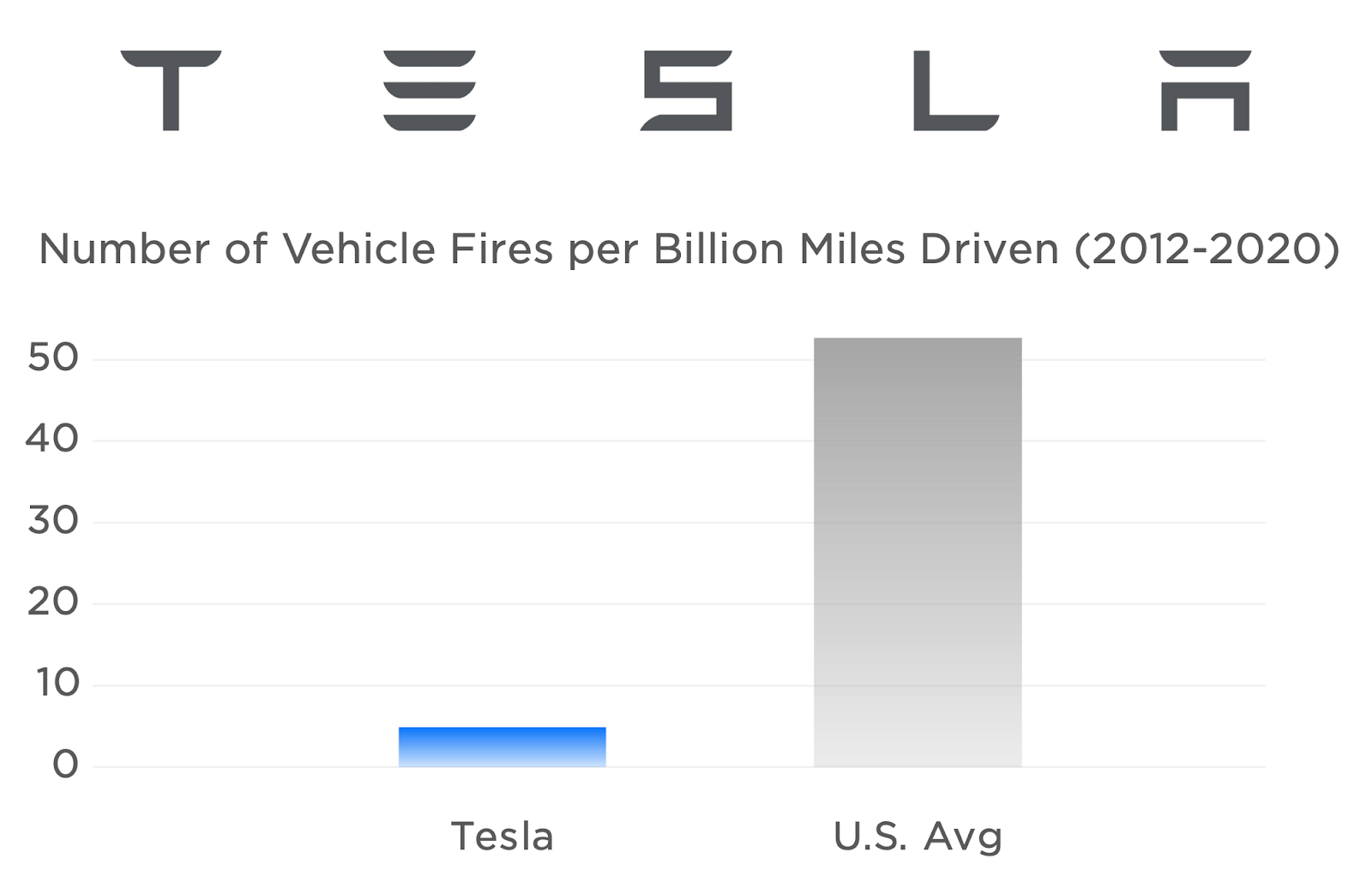
Source: Tesla
This comparison doesn’t hide the fact that one other EV model has had major problems. The ongoing Chevrolet Bolt recall is costing GM and battery supplier LG a few billion dollars to resolve. There have also been sporadic incidents with other EVs. The Hyundai Kona briefly made headlines with multiple fires, but a fix was quickly implemented. It seems like every Tesla fire makes it into the news, even though there are not many.
Despite the statistics showing just how rare and isolated the events are, EV fires are real, and every one is worthy of proper investigation. The same goes for any vehicle fire.
Although Tesla’s data suggests that EVs are less prone to car fires than combustion vehicles, there are major safety concerns for the firefighters who extinguish the flames when an EV fire does occur. Firefighters need special training to learn how to safely approach EV-related incidents, but only two-thirds of departments have had the opportunity due to funding constraints. Automakers need to come forward and support our first responders with training and resources to prepare for the electrification of the auto industry.
EV fires require A LOT more water to extinguish. Tesla’s First Responders Guide recommends 3,000 to 8,000 gallons of water on hand to put out a Tesla fire. Some fires have needed 30,000 gallons of water to extinguish. Basically, firefighters have to do whatever it takes to cool down the battery, and that’s really hard to do with so much energy densely packed into the pack. Once the fire appears fully extinguished, there’s a chance it could still flare up, even days later. Towing services and junkyards are advised to park damaged electric vehicles at least 50 feet from other vehicles in the yard. As EVs become more popular, that might not be feasible in just a few years.
When cars launch full-speed ahead without warning, we have a major problem. Fortunately, that has not been proven to have occurred following dozens of investigations over the years. A number of serious accidents involving EVs have resulted in drivers claiming that the car accelerated on its own. Tesla vehicles have faced these accusations for years, but investigations have never found evidence of unintended acceleration. Plus, Tesla EVs are computers on wheels, and they maintain very detailed logs of all driver inputs. These logs are thoroughly inspected in every investigation.
The Department of Transportation’s National Highway Traffic Safety Administration (NHTSA) determined that reports of sudden unintended acceleration involving four different Tesla models were due to user error. In other words, the driver mistakenly smashed the accelerator pedal. With so much torque and instant feedback, that’s enough to launch a Tesla like a rocket. Depending on where that rocket is aimed, it could go launching right into harm’s way. The lesson here? Powerful EVs demand more attention than some drivers are used to. Electric car safety features can only go so far if drivers are careless or over confident.
Hyundai recently recalled 2,700 2017-2019 Ioniq electric vehicles (the generation prior to the all-new Hyundai IONIQ 5) to correct a rare but scary defect that may cause the Ioniq to accelerate after the driver releases the accelerator pedal when in ‘limp mode.’ With no accidents reported, it appears as though Hyundai got ahead of this issue before anything tragic happened. As far as we (and the US government) know, no EVs have accelerated on their own without driver input.
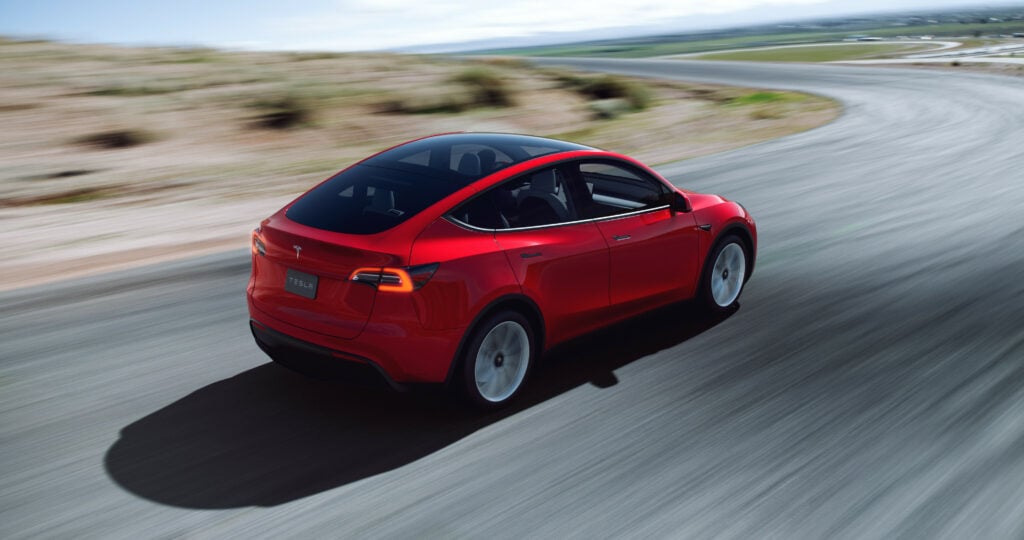
This is another headline grabber for Tesla. Anytime there’s a crash involving a Tesla on autopilot, it’s sure to make the news. Tesla Autopilot certainly has its faults, notably ‘phantom braking’ and difficulties with poor visibility. However, Tesla keeps track of their accident data from all Tesla vehicles worldwide, and this is what they’ve found as of December 2021:
“In the 4th quarter, we recorded one crash for every 4.31 million miles driven in which drivers were using Autopilot technology (Autosteer and active safety features). For drivers who were not using Autopilot technology (no Autosteer and active safety features), we recorded one crash for every 1.59 million miles driven. By comparison, NHTSA’s most recent data shows that in the United States there is an automobile crash every 484,000 miles.”
Although this is not independently verified, it’s intriguing data to say the least. Could Tesla Autopilot really be safer than human drivers? Considering that 15% of motor vehicle accidents in the US are attributed to driver distraction, it may not be all that surprising. More automakers are offering level 2 autonomous driving features. As Autopilot-like technology increases, electric car safety will be under the microscope. Learn more about Tesla’s annual safety report here.
Our goal at CarEdge is to provide you with factual information that’s useful for your decision-making process as you consider your next vehicle purchase. Why do we cover EVs so intently? Because industry insights show that major automakers are dead set on electrifying their entire lineups by 2035 at the latest. From Ford to GM and everyone in between, the story is the same. With hundreds of billions of dollars going towards EV development, it’s important to hold automakers accountable with such a nascent technology.
Over 2 million EVs are already on American roads and global EV sales totaled 4.5 million in 2021 alone. This is just the beginning. Sales of electric vehicles are expected to rise 75% to more than 8 million in 2022. Electric car safety is more important than ever. Are EVs safe? So far, it looks like electric vehicles are at least as safe as combustion vehicles. But when things go awry, EV fires are far more difficult to extinguish than what we’ve seen in the past, and that’s a concern worth addressing promptly at all costs. If you’re thinking about going electric for your next vehicle purchase, rest assured that EVs from Tesla, Ford, Volkswagen, Hyundai-Kia and others are ranked up there with the very best in the entire industry.
We have thousands of EVs (and other vehicles) listed today. Each listing includes industry insights, empowering data and the true TotalPrice that will make buying a car the transparent process it should’ve always been. Check it out here!
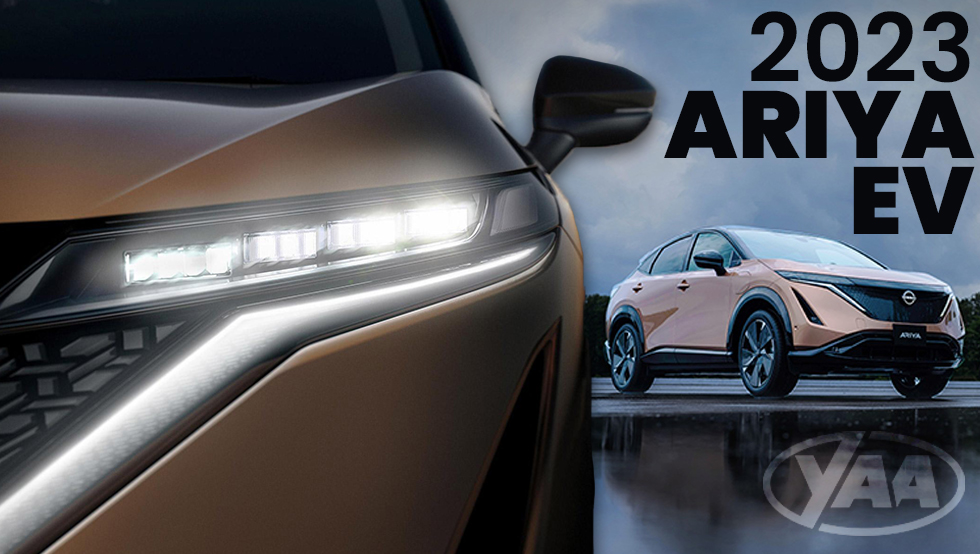
The all-new 2023 Nissan Ariya is arriving to high expectations. Following a decade of delayed development, controversy, and Nissan’s former leadership in EVs long gone, the Ariya has a lot to live up to. For years, Nissan led the pack. Over half a million Leaf’s were sold globally by 2021. However, EVs from Tesla, Korean automakers and even General Motors eventually surpassed the Leaf’s market share in America as the 2010s came to a close.
Today, competition in the electric crossover segment is even more fierce. Will the 2023 Nissan Ariya’s pricing act as a deterrent, or will the progressive design language and decent range drive sales? Let’s dive into what this much-anticipated electric crossover will have to offer.
What do you picture when you think of Nissan’s brand? The affordable Altima, Frontier, maybe the bug-eyed electric Leaf? Soon, the Ariya will up the ante for the Japanese automaker’s brand image.
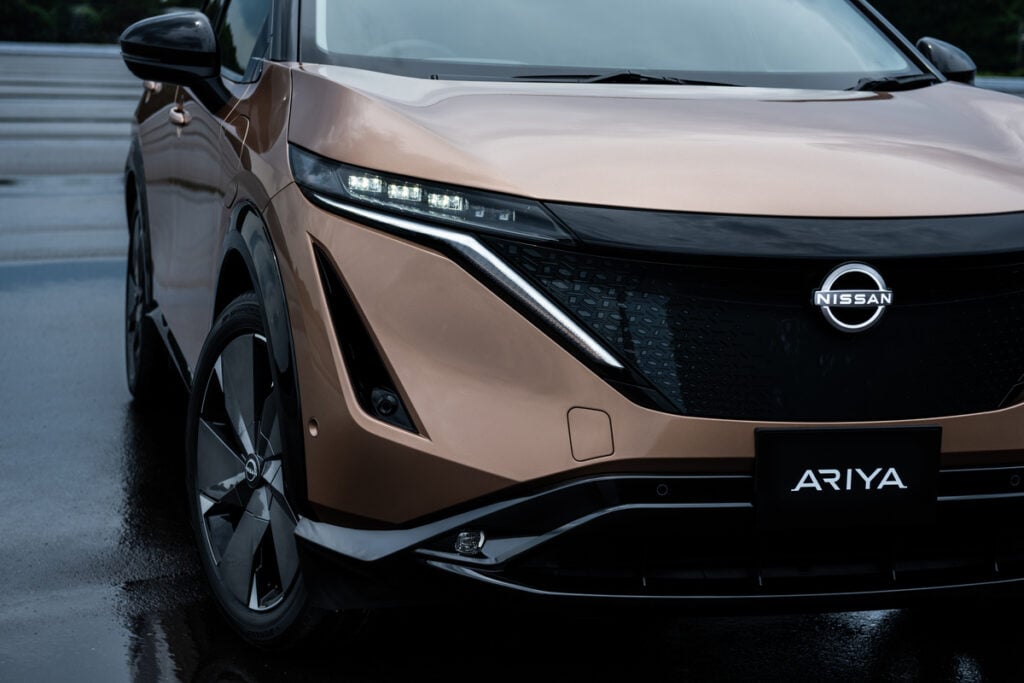
The 2023 Nissan Ariya features futuristic design language and a suite of next-gen tech. The exterior conjures up ideas of what a Murano might look like a decade into the future. The front fascia stands out with a large black faux grill topped off with slender LED headlights. A large, redesigned Nissan logo sits prominently front and center, illuminated by 20 LEDs.
Nissan says the Ariya is proudly inspired by Japanese culture, culminating in a delicate balance between futurism and tradition.
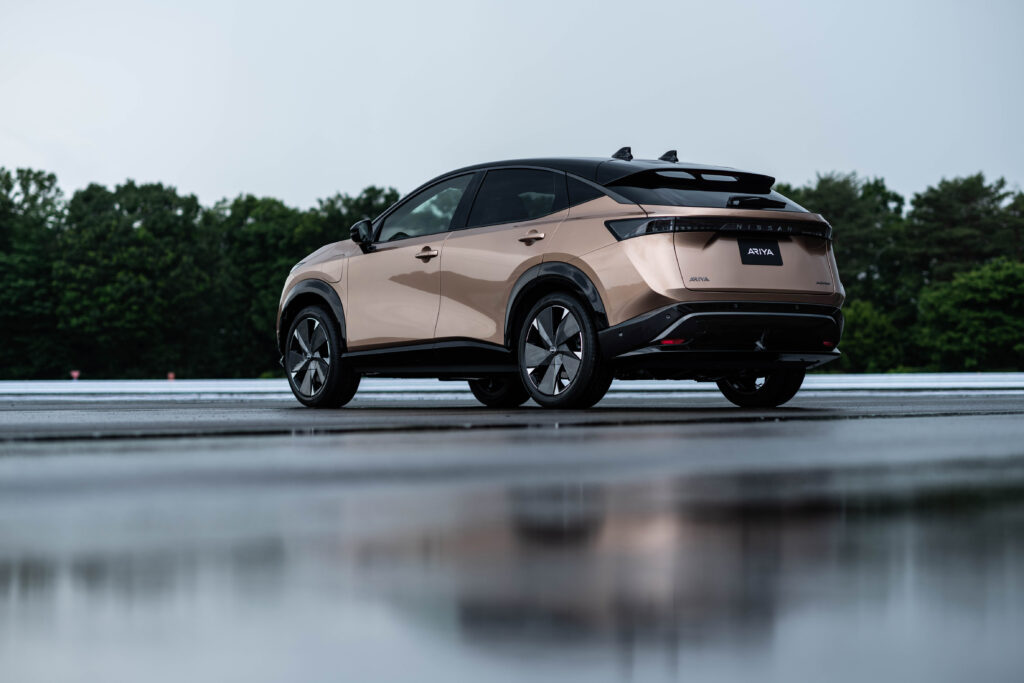
The general body styling fits a lot of usable space into a relatively compact footprint, all thanks to the flexibility of the new electric platform underlying the cabin. The Ariya’s crossover stance is supported by 7 inches of ground clearance, width of 75”, and a length of 183”. At a height of 65 inches, the Ariya is 2 inches higher than the popular Hyundai IONIQ 5.
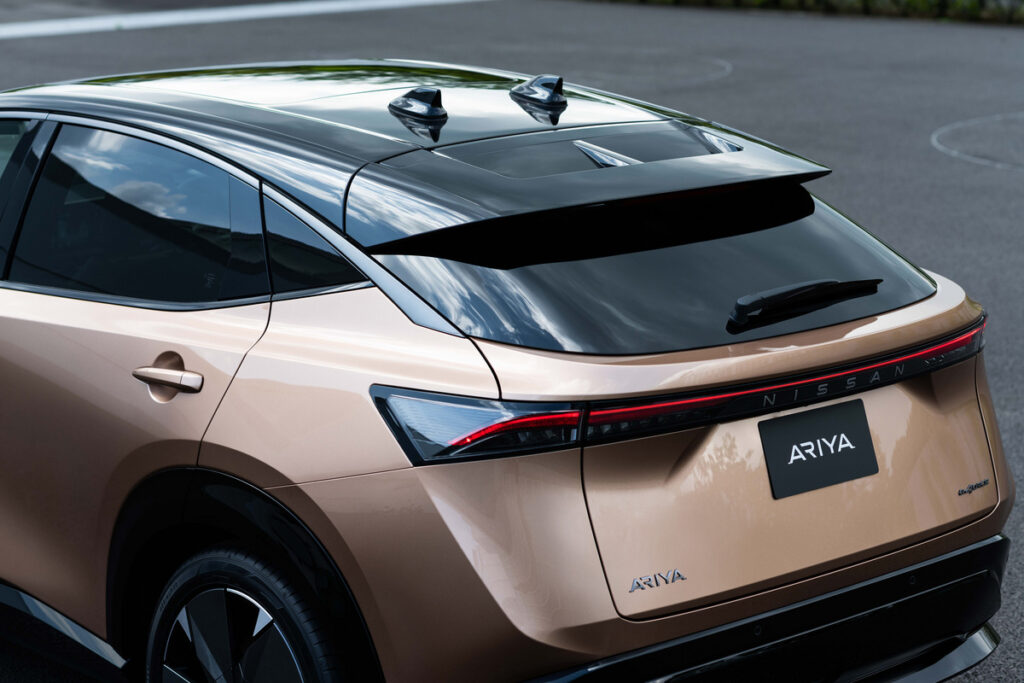
The 2023 Nissan Ariya is available with six two-tone paint combinations and three full-body colors. Most of what we’ve seen so far is the Akatsuki copper and black package, which draws inspiration from the moment just before dawn.
The open and driver-focused front dash features two 12.3” screens, haptic controls and interior lighting (as is the trend these days). Nissan says the Ariya’s interior draws inspiration from the Japanese concept of ‘ma’, which refers to qualities belonging to both space and time. They liken the interior to a ‘sleek cafe lounge on a starship’, and that’s a reasonable comparison given the looks and feel of it all.
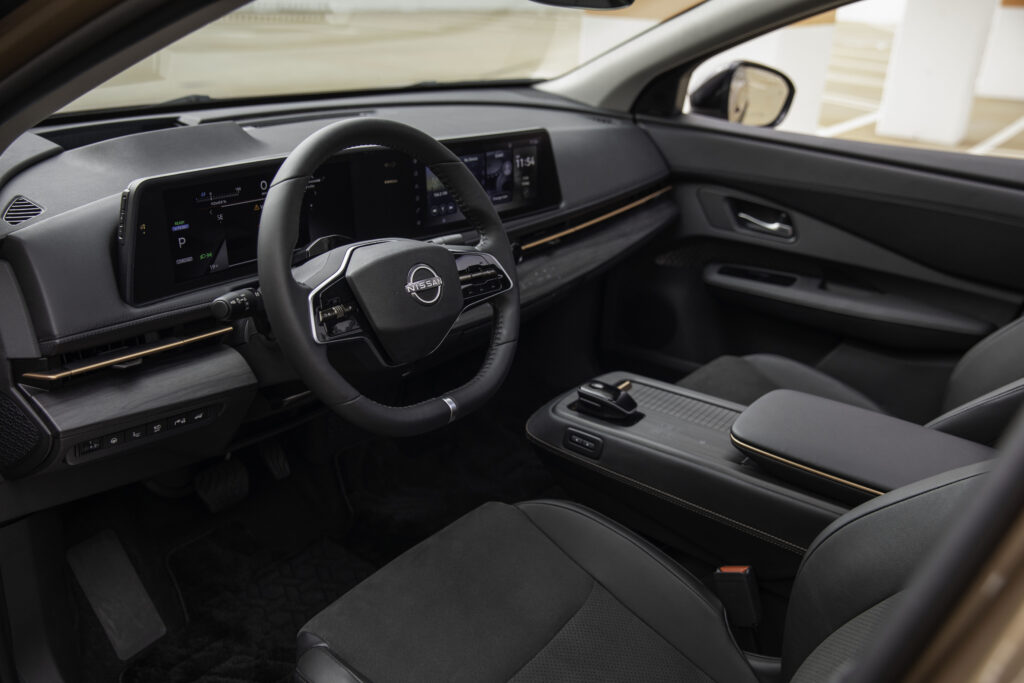
It’s clear that Nissan cares deeply about the design language of the 2023 Ariya. While the result is an eye-catching crossover, it seems that interior dimensions have taken a back seat. The front and back rows do provide ample room for four to maybe five passengers, but the sloping roof design makes for just 17 cubic feet of rear cargo space with front-wheel drive. Add a second motor in the back and rear cargo capacity drops further to just under 15 cubic feet.

Inside the cabin, the few who’ve had access to the pre-production prototypes say that passenger volume is similar to what you’ll find in the Tesla Model Y. The lack of a central transmission tunnel creates an abundance of leg room throughout, which is most notable in the backseat. If you’re wanting a panoramic glass roof, you can have that on the higher trims. Nissan has not yet released official interior volume specifications.

ProPILOT Assist comes standard as a driver assistance feature, an admirable decision possibly taken out of the Volkswagen ID.4’s playbook. ProPILOT Assist is a hands-on assistance system that helps drivers stay centered in their lane, navigate highway traffic and maintain a set speed and distance to the vehicle ahead. The higher trims (Premiere and Platinum+) upgrade to ProPILOT 2.0, which enables hands-off driving on the highway with the help of 360-degree sensing using 7 cameras, 5 radar sensors and 12 sonar sensors.
Dual 12” screens provide the driver with Nissan’s latest infotainment and digital gauge cluster. The Ariya is capable of receiving remote over-the-air updates to improve performance and tech, a feature popularized by Tesla but rarely matched in terms of usefulness.
The Ariya is the first model to be powered by the Renault-Nissan-Mitsubishi Alliance’s new Common Module Family (CMF)-EV platform. At the core of the CMF-EV platform is a 4-inch tall battery pack along the floor. The narrow battery pack opens up the cabin above to more passenger volume and design flexibility. There are two battery sizes to choose from for the Nissan Ariya: 65 kWh and 90 kWh.
What kind of battery does the Ariya have? Nissan decided to source NMC (Lithium-Nickel-Manganese-Cobalt-Oxide) batteries from Chinese battery leader CATL, who also supplies to Tesla, Volkswagen and several other global automakers.
If you’ve ever heard horror stories about the older Nissan Leaf’s battery woes, fear not. The new CATL battery is completely different and state-of-the-art. The old Leaf was a driving experiment in the earliest days of electric vehicles.
Front-wheel drive trims produce 238 horsepower (178 kW), reaching 60 mph in 7.4 seconds. Nissan clearly thinks highly of the Ariya, as the price point sits above several competitors. The Ariya Venture+ base trim’s price starts at $44,485 before incentives (and before dealer markups), and the premium Platinum+ offers AWD and 389 HP (442 lb-ft of torque) for a price of $60,190. The price for the mid-grade Evolve+ package starts at $50,190. With a 0-60 time of around five seconds, the AWD Ariya can hold its own against the other electric crossovers.


Sadly, the Nissan Ariya does not qualify for the new federal tax credit. Where is the Ariya built? For at least the 2023 model year, Nissan will build the Ariya in Japan. The new tax credit requires North American assembly.
See the FULL list of EV tax credit winners and losers.
The 300 mile target range is on par with class leaders like the Model Y and Mustang Mach-E, IONIQ 5 and EV6. However, there’s a catch. The maxed-out 300 mile range is only for the entry-level Ariya Venture+ front-wheel drive trim. This is great for budget-minded shoppers, but the opposite of what we see in the Model Y and Mustang Mach-E. Typically, higher trims equal more range in EVs. Check out the full spec sheet of range, battery capacity and power output below.
The Ariya’s max charging speed is 130 kW at a DC fast charger like those at Electrify America. There’s the chance that, like the Volkswagen ID.4, the Ariya could have a great charging curve that maintains high charging speeds longer than some competitors. In fact, Nissan told Tom Moloughney of InsideEVs that the Ariya can add 175 miles of range in 30 minutes of DC fast charging.
The total cost of charging depends on how and where you charge. We covered all the charging cost details in our recent feature.
Charging isn’t always a deal breaker, especially if you don’t travel long distances very often. Keep in mind that most EV charging happens at home overnight. Charging at home, the Nissan Ariya can receive 7.2 kW with a level 2 charger plugged into a 240 volt outlet. That’s nearly 20% less than home charging speeds in the Ford Mustang Mach-E and Volkswagen ID.4. Will it matter? If you’re likely to charge overnight, it probably won’t.
As the Nissan looks beyond the Leaf EV, they’re reaching for a different set of electric car buyers. The Nissan Ariya’s price ranges from $44,485 to $61,485, and that’s about $20,000 more than the Leaf.
The Ariya is many years in the making, but there’s a lot more to come from Nissan’s EV development team. Nissan recently shared their goal of producing 15 electric models by 2030. Hopefully early adopters of the Ariya will find that Nissan’s $17.5 billion investment is paying off.

For a 2023 model, the Ariya’s max charging speed of 130 kW is behind the curve. Three of the direct competitors in the segment offer over 250 kW charging for about the same price. That isn’t to say there aren’t some real positive things to say about this EV. If you’re ready to get in line for the 2023 Nissan Ariya, patience will come in handy. Nissan says that limited numbers of Ariyas will arrive at select dealers starting in late 2022.
CarEdge Just Launched a New Search Engine to Make Buying Your Next Car Easier!
We have thousands of EVs (and other vehicles) listed today. Each listing includes industry insights, empowering data and the true TotalPrice that will make buying a car the transparent process it should’ve always been. Check it out here!