
CarEdge saved me over 4,500 dollars on a brand new Honda Pilot. I can't say thank you enough.
Price intelligence
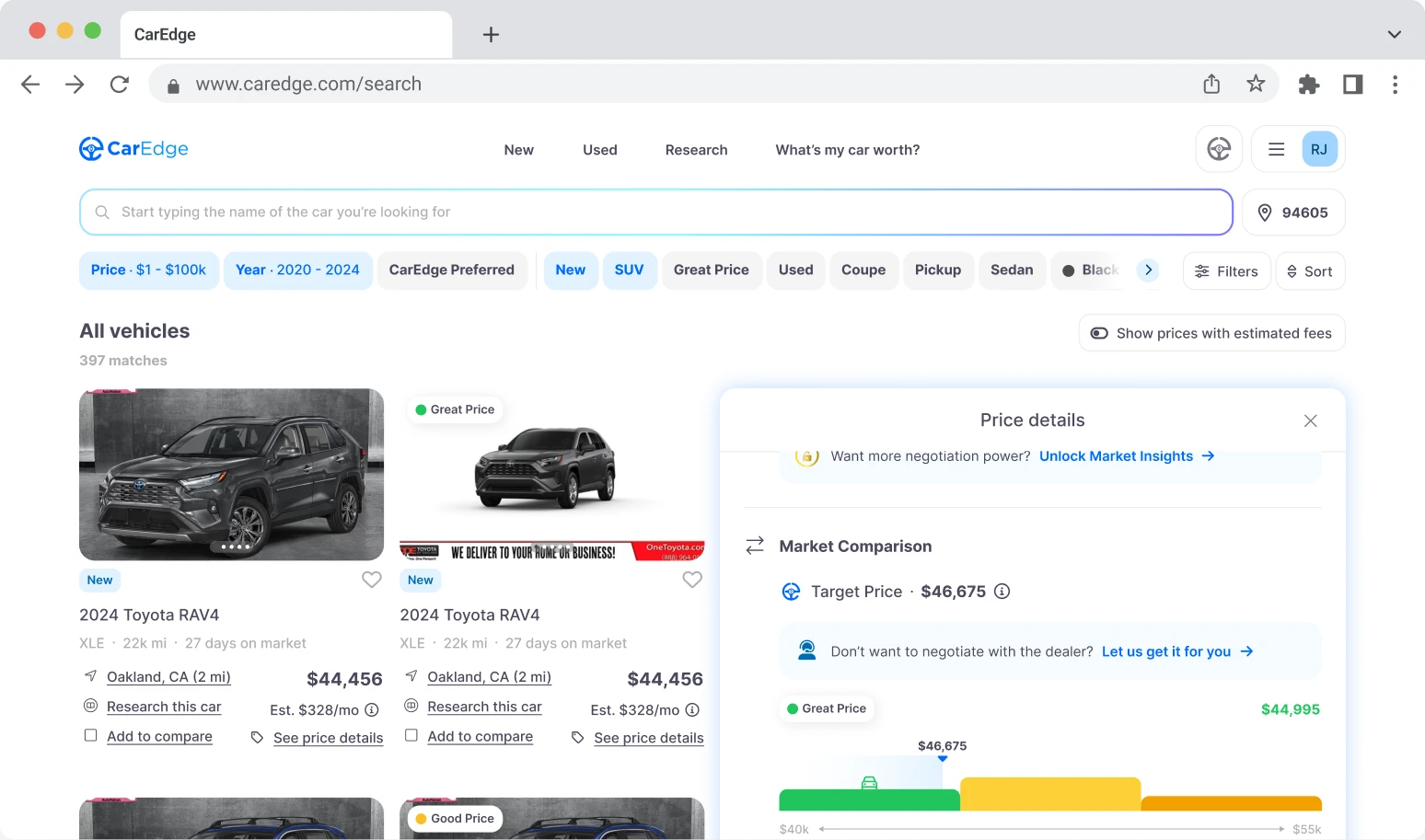
Find a wide range of vehicle listings with market insights on new and used listings near you.

What can I do with CarEdge?
 CarEdge Insights
What can I do with CarEdge?
Get access to exclusive information so you can make an informed car buying decision — all in one place.

Find a wide range of vehicle listings with market insights on new and used listings near you.
Track your vehicle’s value and cash in when the time is right to sell.

Access to our proprietary data to help you find the right car, at the right price. Find these unlocked on every listing after subscribing.

With our expert-led, tech-enabled car buying service, we will locate, negotiate, and deliver your vehicle so you can get a new car hassle free.


Help us personalize your CarEdge experience — it only takes a second.
Your answers help us personalize your CarEdge journey — we’ll follow up with tips and next steps that match your buying timeline.
![The 5 Best Affordable Cars Right Now [2024-2025 Models]](https://caredge.com/wp-content/uploads/2024/07/2024-07-02_The-5-Best-Affordable-Cars-Right-Now_Blog-Header-Image_1920x1080_v1-1080x675.jpg)
When shopping for a new car in 2024, affordability and value are at the top of most buyers’ lists. However, this is sadly becoming harder to find. When searching for the all-around best affordable cars of 2024, there are several standout options to consider. Let’s dive into what makes each of these vehicles special and why they might be the perfect fit for your next ride.

Starting Price: $30,025
CarEdge Pick: XLE, starting at $31,535
Today’s Average Selling Price: $37,721 (29 days of supply, 37,565 for sale)
Crash Test Safety Rating: 5-Star Safety Rating
Fuel Economy: 27 MPG city, 35 MPG highway (30 MPG combined)
Why We Love It: Toyota sold 435,000 copies of the RAV4 last year, making it the best-selling crossover in America. Reliability, affordable prices, crossover cargo space make this a top choice among families and commuters alike.
See local Toyota RAV4 listings with the power of market data

Starting Price: $30,850 (increasing to $31,450 for 2025)
CarEdge Pick: LX, starting at $30,850. The CR-V LX includes a decent suite of features as the base model, notably 7 Honda safety features, including lane-keep assist
Today’s Average Selling Price: $37,286 (42 days of supply, 49,955 for sale)
Crash Test Safety Rating: 5-Star Safety Rating
Fuel Economy: 28 MPG city, 34 MPG highway (30 MPG combined)
Why We Love It: Not a fan of the popular RAV4 or Nissan Rogue? You’ve got yet another option – the Honda CR-V. Proven reliability, pleasant driving dynamics, and a modern infotainment system make the CR-V an excellent all-arounder.
See local CR-V listings with the power of market data

Starting Price: $30,240
CarEdge Pick: SV, starting at $31,930. The Rogue SV adds an eight-way power-adjustable driver’s seat, a 360-degree exterior camera system, and Nissan’s ProPilot Assist driver assistance.
Today’s Average Selling Price: $33,057 (134 days of supply, 51,601 for sale)
Crash Test Safety Rating: 5-Star Safety Rating
Fuel Economy: 30 MPG city, 37 MPG highway (33 MPG combined)
Why We Love It: The 2024 Nissan Rogue is loved for its comfortable ride and luxurious interior, featuring some of the comfiest seats and modern tech at this price point. Additionally, extensive driver assistance features make it an appealing choice for those seeking a safer driving experience. To top it off, the Nissan Rogue is the most negotiable popular crossover today with four months of market supply.
See local Nissan Rogue listings with the power of market data

Starting Price: $27,515 (increasing to $29,494 for 2025)
CarEdge Pick: LE, starting at $27,515. The base Camry is well-equipped to get the job done in comfort, plus gets the best fuel economy due to the smaller wheel size.
Today’s Average Selling Price: $32,249 (25 days of supply, 22,009 for sale)
Crash Test Safety Rating: 5-Star Safety Rating
Fuel Economy: For 2025, the Camry is only available as a hybrid. With this change, fuel economy increases by about 30%. The following are the 2025 Camry MPG numbers: 53 MPG city, 50 MPG highway (51 MPG combined)
Why We Love It: Buyers have choices right now: negotiate a good deal on the outgoing 2024 Camry, or upgrade to a 2025 Camry Hybrid for just a few thousand dollars more, in exchange for tremendous gas savings. For about $30,000, the Camry is a sweet deal for those looking for the best affordable cars in 2024 and even into the new model year.
See local Camry listings with the power of market data

Starting Price: $25,045 (increasing to $25,345 for 2025)
CarEdge Pick: EX Sedan, starting at $28,045. The EX Sedan adds dual-zone automatic climate control, a sunroof, heated seats and mirrors, and blind-spot monitoring.To top it off, the EX comes with a noticeably more powerful engine packed with 180 hp.
Today’s Average Selling Price: $27,568 (35 days of supply, 15,432 for sale)
Crash Test Safety Rating: 5-Star Safety Rating
Fuel Economy: 33 MPG city, 42 MPG highway (36 MPG combined)
Why We Love It: What does the Civic have that the aforementioned Camry doesn’t? In this comparison, one thing is clear: the Civic is a lot more fun to drive. Plus, it’s about as fuel efficient as you can get without a hybrid powertrain.
See local Honda Civic listings with the power of market data
Finding the right car that balances affordability, reliability, and modern features can feel like a daunting task, but the best affordable cars in 2024 are worth the test drive. Whether you’re focused on the best affordable cars in the $30,000 range, or stretching your budget to explore others, these five options from Toyota, Honda, and Nissan stand out.
To make your car buying experience even easier, consider using CarEdge Concierge. Our expert team can help you find the perfect vehicle, negotiate the best price, and handle all the details, so you can drive away with confidence. Start CarEdge Concierge today and let us take the hassle out of your next car purchase.

Independence Day EV deals are here, but are they any good? These 5 electric car deals offer serious savings.
If you’re in the market for an affordable electric car this July, we’ve got good news: Independence Day EV deals are here in a big way. With high inventory, stagnant sales, and 2025 models incoming, EV shoppers have negotiation leverage like never before. Or, you can let us do the haggling for you.
This Fourth of July, an abundance of low APR specials and lease offers bring the cost of getting into an EV down by thousands of dollars. As we approach Independence Day 2024, these are the 5 best EV deals on the market.

With new paint options to choose from (Quicksilver and Ultra Red), refreshed aero wheels, and eligibility for the federal EV tax credit, there’s a lot to love about the Tesla Model Y this summer. If you can get used to the minimalist interior, the Tesla Supercharger network simplifies EV ownership in a huge way.
The Best Deal
Model Y prices have fallen to their lowest ever, now starting at $44,990 before destination for the Rear-Wheel Drive version. With destination fees, you’re looking at $46,630 before taxes.
Although Tesla is no longer offering an APR special, the Model Y has many features that the competitors on this list lack. Considering there was a time when the Model Y’s price started north of $65,000, the price cuts alone are worthy of recognition this July 4th.
Lease Offer: Lease the Tesla Model Y for $449/month for 36 months with $2,999 due
Negotiability Score: Tesla prices are non-negotiable
Starting Price: $46,630 (Rear-Wheel Drive), $49,630 (Long Range All-Wheel Drive)
See Tesla ordering wait times at Tesla.com
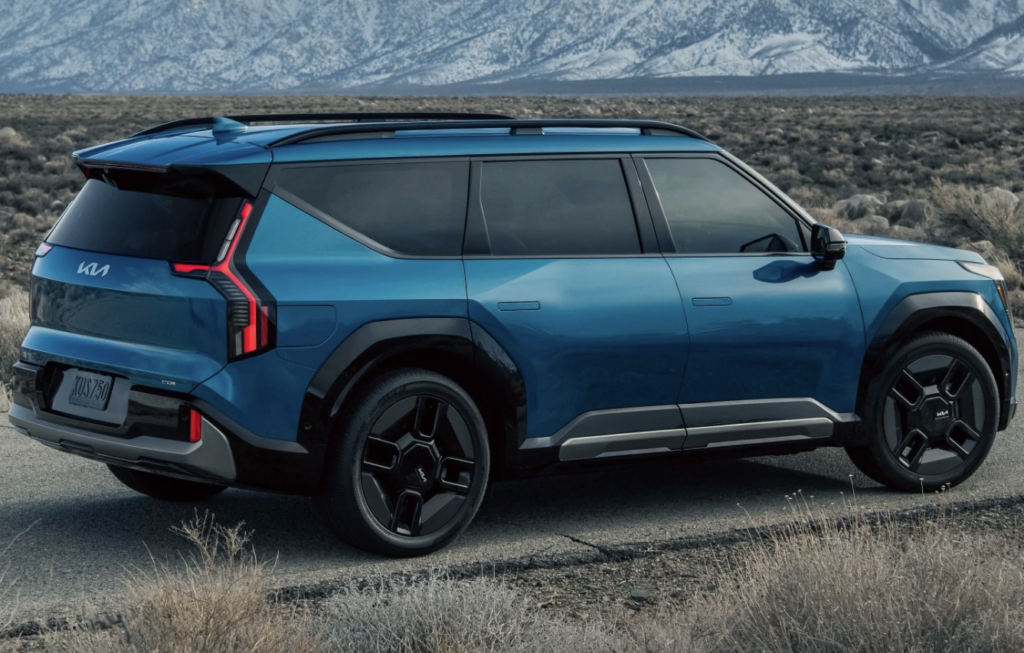
The Kia EV9 is winning awards, but this 3-row EV remains a slow-seller. Fans of the EV9 can use today’s oversupply to negotiate a great deal. Note that although Kia recently announced the start of US production for the EV9, it’s likely that these VINs haven’t made it to dealerships yet. Once American-made EV9s are on the lot, it’s likely that the generous cash offer below will dry up, since the EV9 is expected to qualify for the federal EV tax credit.
The Best Deal
Lease Offer: Lease the 2024 EV9 Light Long Range RWD for $399/month for 24 months with $3,959 due
Current Inventory (Market-Day Supply): 67 days – Trending down as dealers await US-built EV9s
Negotiability Score: Average
Total For Sale (US nationwide): 4,050
Average Selling Price: $68,661
See Kia EV9 listings with the power of local market data

There are still 650 new 2023 Ariya EVs on the market heading into July of 2024. Generally, most reviewers and owners are fans of Nissan’s follow-up to the LEAF, with the main complaints being about the high price for ‘what you get’. It’s not the fastest charging EV on the market, but for those who stick around town most of the time, this could be the Fourth of July EV deal for you.
The Best Deal
Lease Offer: Lease the 2023 Nissan Ariya for as low as $99/month for 18 months with $4,089 due. See offer details.
Current Inventory (Market-Day Supply): 80 days – Falling
Negotiability Score: Very High for remaining 2023 models
Total For Sale (US nationwide): 4,362
Average Selling Price: $52,012
See Nissan Ariya listings with the power of local market data

By percentage of total sales, BMW is the leader in electric sales among legacy automakers. At times, nearly 30% of BMW’s US sales have been EVs like the popular i4 electric sedan. This lease deal is out of this world for a luxury car like this.
The Best Deal
Current Inventory (Market-Day Supply): 115 days – Trending higher
Negotiability Score: Above Average
Total For Sale (US nationwide): 8,129
Average Selling Price: $64,640
See BMW i4 listings with the power of local market data

The IONIQ 5 is widely seen as the top competitor to the best-selling electric crossover, the Tesla Model Y. With fast charging times, long range, and unique looks, it’s currently the best-selling EV outside of Tesla. This month, Hyundai is offering an unbeatable lease deal.
The Best Deal
Current Inventory (Market-Day Supply): 119 days – Holding steady
Negotiability Score: Average
Total For Sale (US nationwide): 14,251
Average Selling Price: $48,904
See Hyundai IONIQ 5 listings with the power of local market data

Subaru’s first EV was born in a partnership with Toyota. The brand recognition has not been enough to kickstart sales. With sluggish sales and even slower charging speeds, Subaru is offering zero percent financing for up to 72 months. With EV depreciation insanely high, this lease offer is a decent option.
The Best Deal
Lease offers: Lease the 2023 or 2024 Solterra for $329/month with just $329 due at signing. See offer details.
Current Inventory (Market-Day Supply): 95 days – Holding steady
Negotiability Score: Average
Total For Sale (US nationwide): 3,503
Average Selling Price: $47,560
See Subaru Solterra listings with the power of local market data
If you’re in the market for a new electric vehicle, Fourth of July weekend is an excellent opportunity to lock in big discounts and amazing financing terms.
However, while these deals provide a strong incentive to purchase, patient EV shoppers can look towards the overall BEST time of the year to buy a car: year-end sales. While Fourth of July deals are attractive, similar EV offers will likely return come November and December.
Ready to master the art of car buying? Unlock CarEdge Pro today. For a white-glove concierge service to handle the entire process for you, learn more about CarEdge Concierge, the #1 car buying service in America.

Independence Day car deals are here, but are they worth your time? These 10 manufacturer incentives are worth the fireworks.
Independence Day car deals are what summer car shoppers have been waiting for, and at last, we’ve got bargains to share. With high inventory, stagnant sales, and 2025 models incoming, car buyers have the upper hand in negotiating. Or, you can let us do the haggling for you.
Low APR specials, cash discounts, and phenomenal lease offers mean that 2024 is officially a buyer’s market. As we approach the holiday, knowing where the deals are can save you thousands. Let’s take a look at 10 Fourth of July car deals worth the test drive.
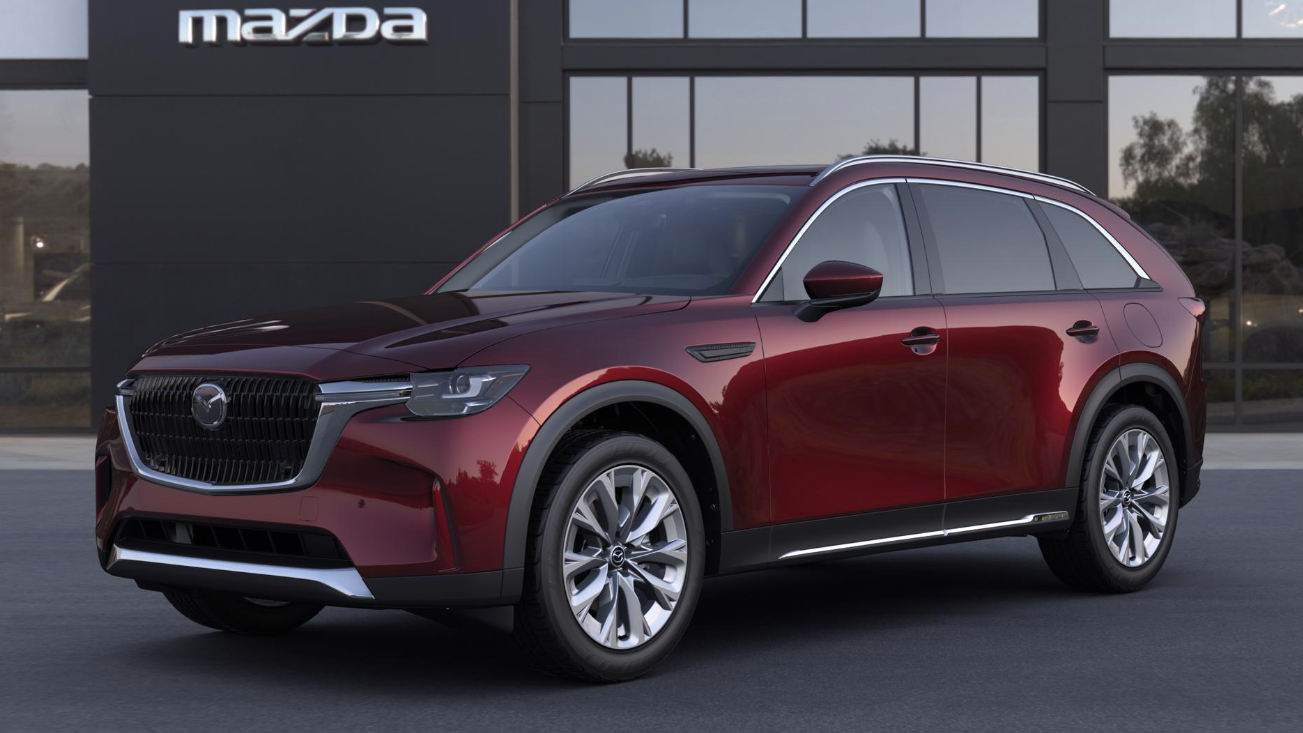
With 2025 CX-90s on the way, Mazda is eager to clear out 2024 inventory. This month, they’re offering an even better APR special. Very rarely can car buyers lock in 0.9% APR for 60 months in 2024. The average new car interest rate is hovering around 10% APR.
Best Deals Available:
0.9% APR for 60 months + $1,500 customer bonus cash + $500 Mazda loyalty reward. See offer details.
Lease offers:
$2,000 Mazda lease to lease incentive, or $1,250 conquest lease incentive
Lease the CX-90 Turbo Select for $339/month for 36 months with $4,649 due
Current Inventory (Market-Day Supply): 196 days – Trending higher
Negotiability Score: Very High
Total For Sale (US nationwide): 20,371
Average Selling Price: $52,406
See Mazda CX-90 listings with the power of local market data

The Kia EV9 is winning awards, but as charging infrastructure struggles to meet demand, sales have been slow to pick up. Fans of the EV9 can use this oversupply to their advantage. Note that although Kia recently announced the start of US production for the EV9, it’s likely that these VINs haven’t made it to dealerships yet. Once American-made EV9s are on the lot, it’s likely that the generous cash offer below will dry up, since the EV9 is expected to qualify for the federal EV tax credit.
Best Deals Available:
0% APR for 48 months + up to $9,000 cash discount. See offer details.
Lease offers:
Lease the 2024 EV9 Light Long Range RWD for $399/month for 24 months with $3,959 due
Current Inventory (Market-Day Supply): 67 days – Trending down as dealers await US-built EV9s
Negotiability Score: Average
Total For Sale (US nationwide): 4,050
Average Selling Price: $68,661
See Kia EV9 listings with the power of local market data

The Volkswagen Atlas is much-loved as an affordable family hauler with VW’s classic looks. At 0.9% APR for five years, this is a steal. Plus, Volkswagen even included an incentive for cash buyers. That’s a rarity these days.
Best Deals Available:
0.9% APR for 60 months OR a $3,500 cash bonus. See offer details.
Lease offers:
Lease the 2024 VW Atlas SE Tech for just $449/month for 36 months with $4,999 due.
Current Inventory (Market-Day Supply): 110 days – Holding steady
Negotiability Score: Above average
Total For Sale (US nationwide): 16,293
Average Selling Price: $47,273
See Volkswagen Atlas listings with the power of local market data

This is the best truck deal out there right now. Both the 2024 Nissan Titan and the Titan XD qualify for an unbeatable 0% APR offer for an astounding 60 months. Considering that the average selling price for this truck remains around $57,000, this adds up to thousands of dollars in interest savings over five years.
Best Deals Available:
0% APR for 60 months + $1,500 Nissan loyalty cash + $3,590 total package savings. See offer details.
Lease offers:
Lease offers are less stellar, starting at $589/month for 36 months with $7,489 down.
Current Inventory (Market-Day Supply): 173 days – Holding steady
Negotiability Score: Very High
Total For Sale (US nationwide): 5,023
Average Selling Price: $56,967
See Nissan Titan listings with the power of local market data
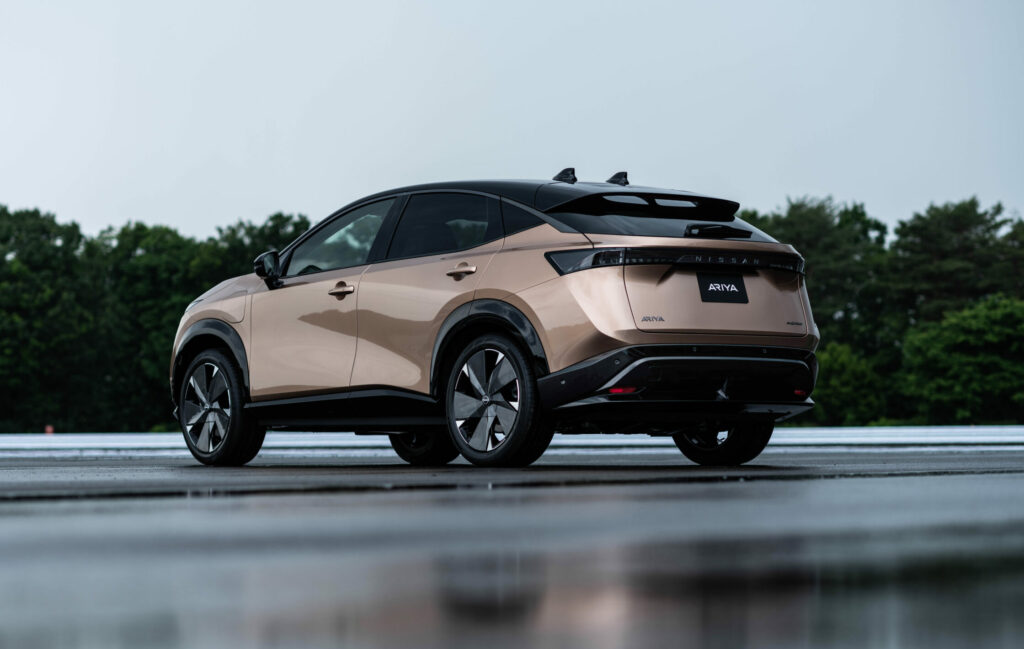
There are still 650 new 2023 Ariya EVs on the market heading into July of 2024. Generally, most reviewers and owners are fans of Nissan’s follow-up to the LEAF, with the main complaints being about the high price for ‘what you get’. It’s not the fastest charging EV on the market, but for those who stick around town most of the time, this could be the Fourth of July EV deal for you.
Best Deals Available:
0% APR for 72 months + $3,000 cash savings. See offer details.
Lease offers:
Lease the 2023 Nissan Ariya for as low as $99/month for 18 months with $4,089 due.
Current Inventory (Market-Day Supply): 80 days – Falling
Negotiability Score: Very High for remaining 2023 models
Total For Sale (US nationwide): 4,362
Average Selling Price: $52,012
See Nissan Ariya listings with the power of local market data

Without a doubt, Chevrolet has the best truck lease deals this Fourth of July. With nearly 100,000 new Silverado 1500s on sale today, it’s officially a buyer’s market. If you’re looking to buy, a trade-in gets you up to 10% off MSRP.
Best Deals Available:
$5,750 cash savings (10% below MSRP) for the 2024 Silverado 1500 Crew Cab LT 5.3L. Note: $1,000 of these cash incentives is trade-in assistance. See offer details.
Lease offers:
Lease the 2024 Silverado 1500 Crew Cab 4WD LT w/ TurboMax for $389/month for 36 months with $4,159 due at signing.
Current Inventory (Market-Day Supply): 101 days – Trending higher
Negotiability Score: Very High
Total For Sale (US nationwide): 95,528
Average Selling Price: $56,343
See Chevrolet Silverado listings with the power of local market data

The Outback is the best-selling Subaru model in America as of 2024, beating out the Crosstrek just last year. Despite the popularity, Subaru is offering a very competitive financing offer for up to 72 months.
Best Deals Available:
2.9% APR for up to 72 months. See offer details.
Lease offers:
Lease the Subaru Outback for just $305/month for 36 months with $3,055 due at signing.
Current Inventory (Market-Day Supply): 80 days – Trending higher
Negotiability Score: Average
Total For Sale (US nationwide): 33,759
Average Selling Price: $39,573
See Subaru Outback listings with the power of local market data
By percentage of total sales, BMW is the leader in electric sales among legacy automakers. At times, nearly 30% of BMW’s US sales have been EVs like the popular i4 electric sedan. This lease deal is out of this world for a luxury car like this.
Best Deals Available:
Lease the 2024 BMW i4 eDRIVE35 for just $449/month for 36 months with $4,869 due at signing. See offer details.
Current Inventory (Market-Day Supply): 115 days – Trending higher
Negotiability Score: Above Average
Total For Sale (US nationwide): 8,129
Average Selling Price: $64,640
See BMW i4 listings with the power of local market data
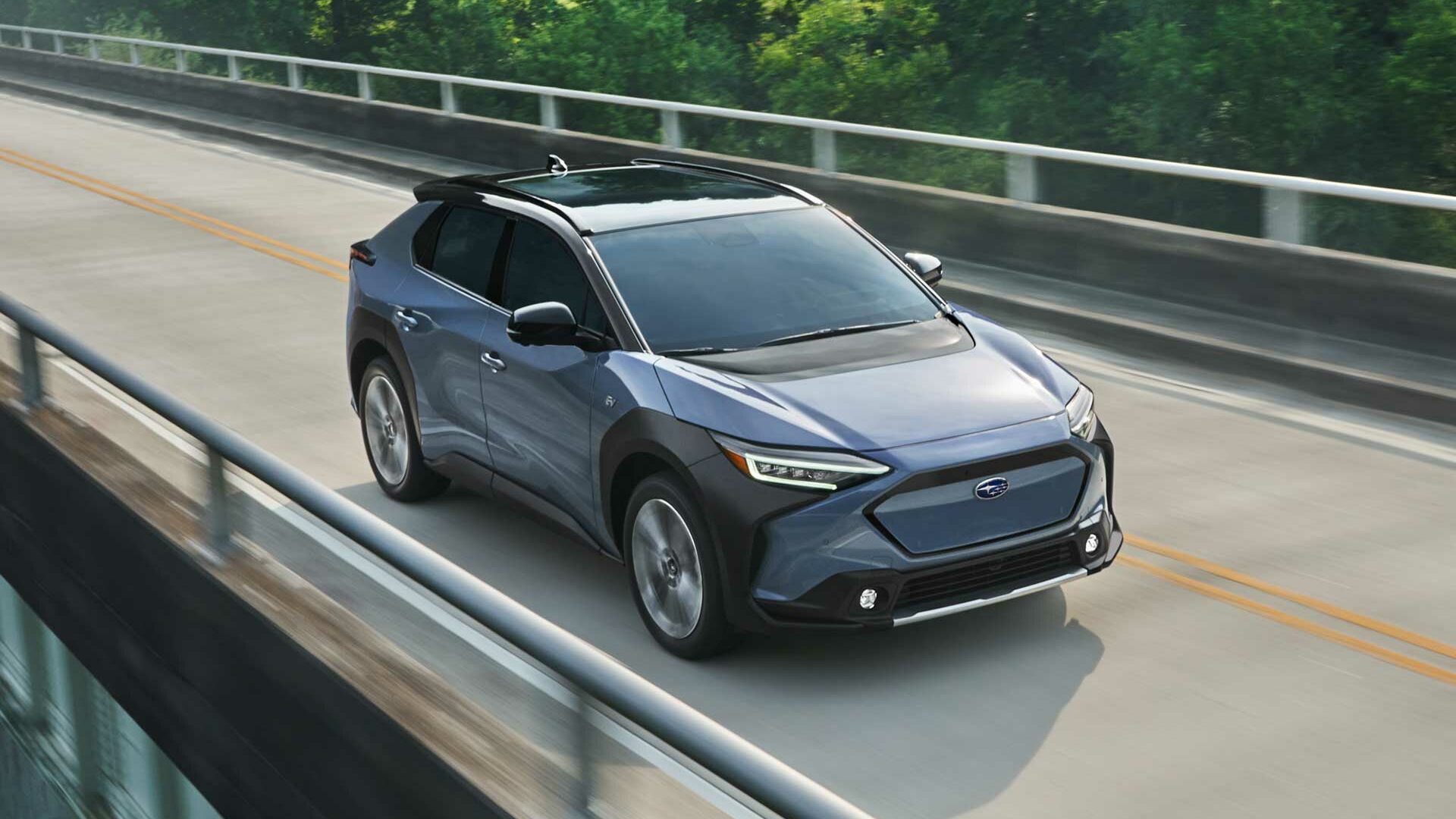
Subaru’s first EV was born in a partnership with Toyota. The brand recognition has not been enough to kickstart sales. With sluggish sales and even slower charging speeds, Subaru is offering zero percent financing for up to 72 months. With EV depreciation insanely high, this lease offer is the best deal for July 4th.
Best Deals Available:
0% APR for up to 72 months. See offer details.
Lease offers:
Lease the 2023 or 2024 Solterra for $329/month with just $329 due at signing.
Current Inventory (Market-Day Supply): 95 days – Holding steady
Negotiability Score: Average
Total For Sale (US nationwide): 3,901
Average Selling Price: $49,545
See Subaru Solterra listings with the power of local market data

This compact crossover is one of the best lease deals out there, especially for returning Ford lessees. Buyers get 0.9% APR for 60 months. Compared to 2024’s average new car APR of 9.95%, this equals big savings over five years.
Best Deals Available:
0.9% APR for 60 months. See offer details.
Lease offers:
Returning Ford lessees can now lease the 2024 Ford Edge for $269/month for 24 months with $2,289 due at signing.
Current Inventory (Market-Day Supply): 181 days – Trending higher
Negotiability Score: Very High
Total For Sale (US nationwide): 28,863
Average Selling Price: $43,527
See Ford Edge listings with the power of local market data
The Fourth of July weekend is an excellent opportunity to secure low APR offers, competitive lease deals, and even big cash discounts. Persistent high inventory means that car buyers have the upper hand in 2024’s market.
However, while these deals provide a strong incentive to purchase, patient shoppers can look towards the overall BEST time of the year to buy a car: year-end sales. While Fourth of July deals are attractive, similar offers will likely return come November and December.
Stay informed, shop smart, and follow the deals we’ve outlined here. Happy Independence Day and happy car shopping!
Ready to master the art of car buying? Unlock CarEdge Pro today. For a white-glove concierge service to handle the entire process for you, learn more about CarEdge Concierge, the #1 car buying service in America.
If you’re planning to buy a car this weekend, you might want to reconsider. A major cyberattack has crippled the dealership management systems of CDK Global, affecting thousands of dealerships across the United States and Canada. This disruption is creating chaos at dealerships, with impacts likely lasting through the weekend and potentially into next week. Should you buy a car right now? Here’s why this weekend could be the worst time in recent memory to be stuck at a dealership.

CDK Global, a major provider of dealership management systems, experienced a cyberattack on June 19, forcing the company to shut down its car dealership software in the U.S. and Canada. This escalation comes just a day after CDK had mostly resolved issues from the attack.
In a statement, CDK alerted its customers: “We continue to act out of caution, and to protect our customers, we have taken down most of our systems. Do not attempt to access the DMS until we can confirm the system is secure. At this time, we do not have an estimated time frame for resolution and therefore our dealers’ systems will not be available for several days.”
CDK’s systems are used by nearly 15,000 auto dealership locations. This shutdown threatens to disrupt thousands of new-vehicle transactions right in the heart of stellar Fourth of July sales. Dealers rely on CDK’s systems for critical functions such as customer relationship management, sales processing, and inventory management. Without these systems, many dealerships are reverting to manual processes, causing long waits for customers, and even the potential for errors.
Todd Szott of Szott Auto Group in Detroit talked to Automotive News about the situation. “We’re kind of going back to old-school pen and paper and finding other systems to do some of the things that we do with the CDK products, as well as just manual processes to continue to serve our customers.”

Given the widespread impact of the cyberattack, car shoppers should expect a chaotic situation at dealerships. Many dealers are unable to finalize sales, register plates, or complete title work. Some are even struggling to perform basic service tasks due to the inability to locate parts in their systems.
When will the situation be resolved? Car dealerships should be back to normal by the end of the coming week at the latest. Hopefully, much sooner.
Stay informed, stay patient, and consider ‘walking the lot’ instead of heading out with the intent to buy. Unless you’re especially patient, this weekend is the worst time to buy a car.
Check back for the latest updates on the CDK car dealership cyberattack.
Ready to hand over the keys to a personal car buying Concierge? Let us do it all for you with CarEdge Concierge, the #1 car buying service in America. Learn more about our limited-time offer.

In 2022, USAA discontinued their renowned car buying service, leaving many members searching for alternative solutions. First announced in 2020, the changes brought an end to the popular service and TrueCar partnership. So, what are the best alternatives to USAA’s car buying service? We’ll explore three top car concierge services available in 2025.

CarEdge is known for pro-consumer car buying services that take the hassle out of getting a new ride. Many past customers say that CarEdge Concierge is the easiest way to buy a car in 2025.
Pro
Cons
Learn more about CarEdge Concierge’s car buying service

Members of Navy Federal Credit Union have access to a TrueCar–powered online car search that features upfront pricing. This is a good option for veterans, service members, and their families. However, Navy Federal’s car buying service lacks personalized service and negotiability.
Pro
Cons
Learn more about this program, and see how Navy Federal compares to CarEdge
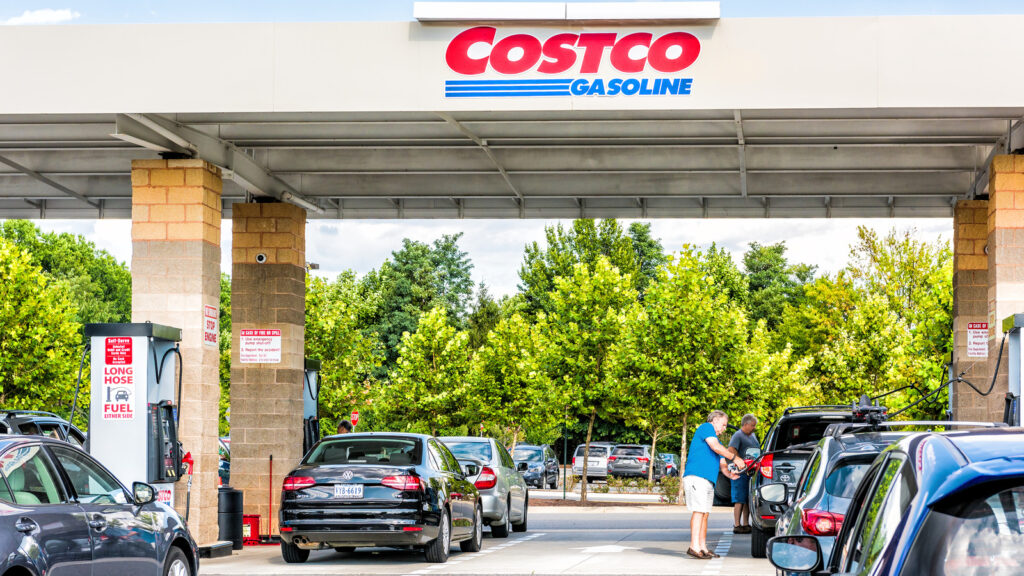
Although Costco is paid by participating dealers, members get access to a trusted dealer network. However, some complain of the usual dealership hassles.
Pro
Cons
Learn more about the Costco Auto Pro, and see how Costco compares to CarEdge
By comparing these alternatives to the USAA car buying service, you can find the best car buying service that fits your needs. Car buyers looking for personalized, pro-consumer service from an experienced Concierge should look no further than CarEdge. Veterans and service members have access to Navy Federal’s car buying service. Costco members might want to consider the wholesaler’s Auto Pro but should understand its limitations. No matter which route you choose, the great news is that it’s easier than ever before to come out on top with a car buying service.