
CarEdge saved me over 4,500 dollars on a brand new Honda Pilot. I can't say thank you enough.
Price intelligence
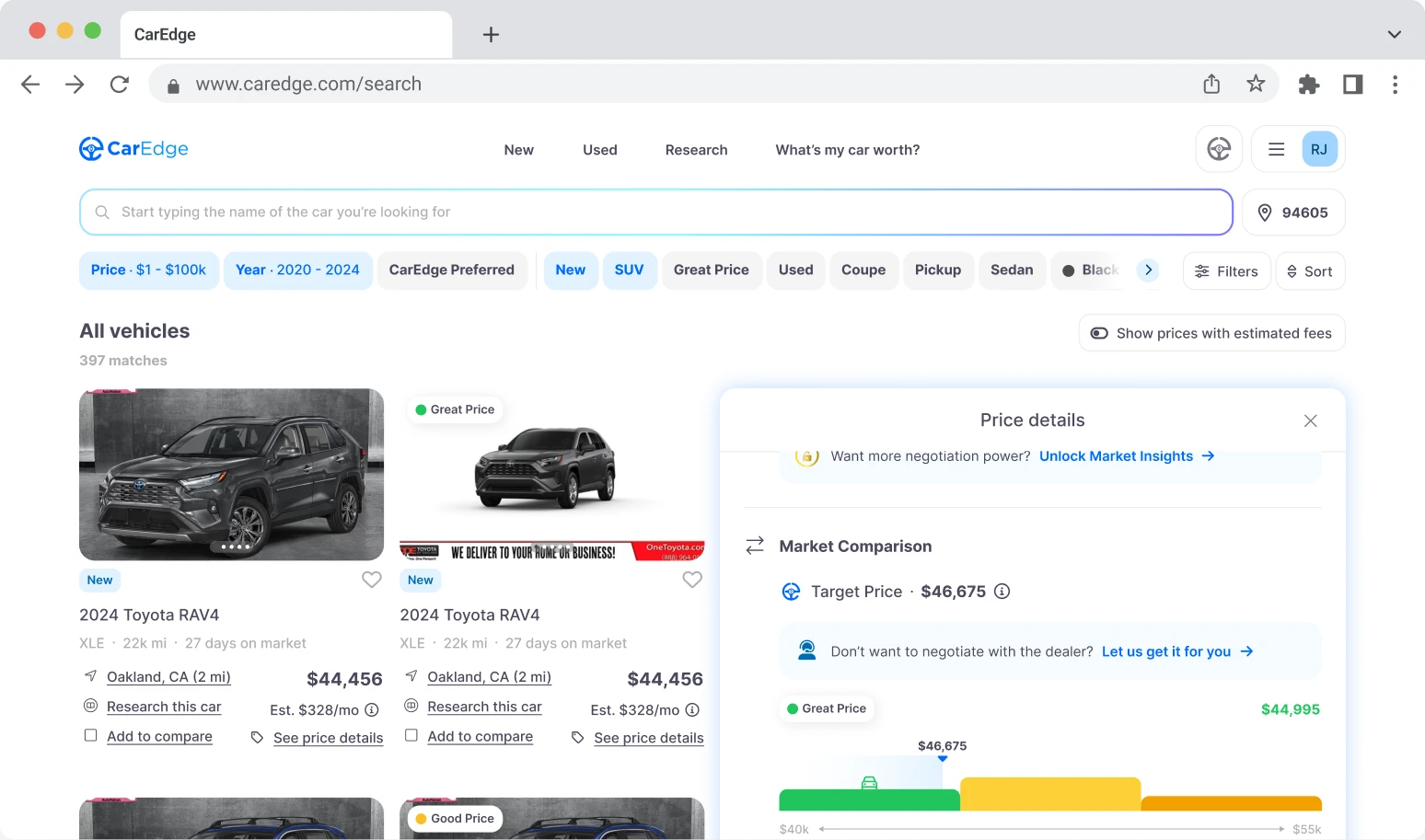
Find a wide range of vehicle listings with market insights on new and used listings near you.

What can I do with CarEdge?
 CarEdge Insights
What can I do with CarEdge?
Get access to exclusive information so you can make an informed car buying decision — all in one place.

Find a wide range of vehicle listings with market insights on new and used listings near you.
Track your vehicle’s value and cash in when the time is right to sell.

Access to our proprietary data to help you find the right car, at the right price. Find these unlocked on every listing after subscribing.

With our expert-led, tech-enabled car buying service, we will locate, negotiate, and deliver your vehicle so you can get a new car hassle free.


Help us personalize your CarEdge experience — it only takes a second.
Your answers help us personalize your CarEdge journey — we’ll follow up with tips and next steps that match your buying timeline.

Negotiating tips, money-saving tricks, and car buying advice from CarEdge team of experts: https://caredge.com/guides/
Learn more about CarEdge here: http://caredge.kinsta.cloud/



Negotiating tips, money-saving tricks, and car buying advice from CarEdge team of experts: https://caredge.com/guides/
Learn more about CarEdge here: http://caredge.kinsta.cloud/
Today Ray and Zach discuss negotiation free dealerships (also known as one-price dealerships). Ray explains how they work and also what impact they have on the automotive industry at large. If you’re thinking of buying a car from Carvana, CarMax, or another one price dealership, you’ll be sure to want to listen to this podcast episode first.
Google search “car research websites” and you’ll be greeted with about a half dozen advertisements and nearly 1 trillion search results. If you thought it would be easy to find a website to help you research your next ride, you’re in store for some analysis paralysis!
Today our team at CarEdge decided to list out our top five car research websites that we recommend. Please keep in mind that none of these websites sponsor us or have paid us for placement on this list. Each of the websites listed below has a specific niche that they cater to, and we think it’s worth highlighting them here.
Without further ado, let’s jump right into it.

If there is one question we get asked most frequently at CarEdge, it’s some variant of “Well, how much should I offer for this vehicle?” Answering that question is now much easier with the CarEdge Fair Price. Your Fair Price is calculated with local market data and price trends taken into consideration.
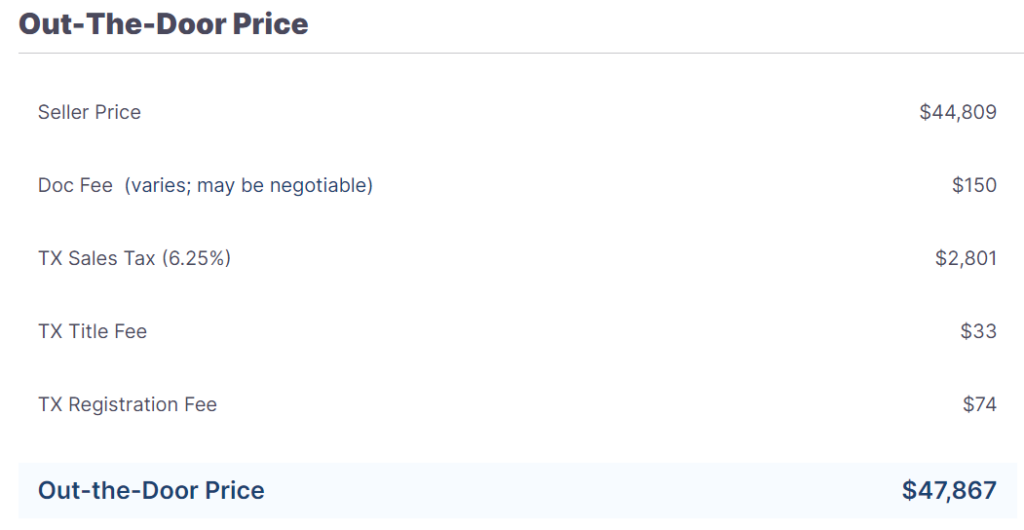
Many car shoppers out there are getting lured into dealership showrooms with unattainably low advertised prices. What did we do about that? We built CarEdge Car Search, a car search engine that shows you the Out-the-Door Price, not just the advertised price!
By simply taking into account your tax rate and the typical fees in your area, CarEdge gives you a clear view into how much it will really cost to purchase a vehicle.
Having the confidence to offer a fair value for a vehicle is not easy, and as we all know, if we lowball the salesperson, there’s a good chance we won’t hear back from them anytime soon.
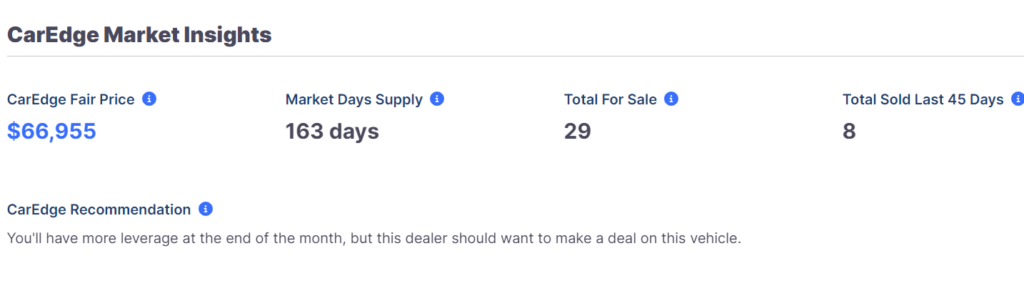
That’s why we like that CarEdge added market insights to their vehicle results. You can see how many days a car has been on the dealer’s lot, what the local supply of that vehicle is, and how many similar cars have sold in the past 45 days.
Plus, there are no ads or lead generation form for dealers. Instead, CarEdge has a 4 step buying guide that you can download (which includes handy email templates) to contact the dealer and get a fair price. Even better, CarEdge offers the option of working with a Car Coach who will help you negotiate your deal from start to finish.
Check out the unique market insights included with CarEdge Car Search.

Finding the right vehicle can be tough. If you’re buying new it can be a bit easier (you can always customer order one directly from the factory), but when you try and find the exact right used car, it can take days, weeks, and sometimes even months, before you’re able to stumble across the car, truck, or SUV you’ve been searching for.
AutoTempest is one of the most helpful and useful car research websites available, especially if you’re looking for a hard to find used car. Their search functionality aggregates used car listings from across a variety of sources, and their standardization of data allows you to filter search results for highly specific criteria, such as fuel type, drive type, and more.
Rather than spend an hour on eBay, an hour on Craigslist, and an hour on Cars.com, one search on AutoTempest will pull in results from all of those websites (and more) at once. Save time, reduce the number of browser tabs you have open at once, and rejoice when you find your new to you used car quicker than before!

If you’re trying to stay organized, having all of your information in one place can be very helpful. Rather than trying to remember a bunch of logins and passwords, using one tool can help you keep things organized. CapitalOne’s Auto Navigator is attempting to provide you with exactly that experience.
After ending their mortgage business, Capital One has invested heavily into being a dominant auto lender. To that end, they built a very robust online car research website that anyone (not just Capital One clients) can use.
Auto Navigator offers the same type of search functionality as other traditional car research websites, but what makes them special is that they offer a simple and seamless pre-qualification to their process. If you go ahead and pre-qualify on their website you’ll be able to see potential offers for monthly payments on the vehicle listings. This can be helpful to reference during the vehicle research process.
Although it isn’t our recommendation to negotiate your car deal based off of the monthly payment, it is entirely advisable to research which vehicles may meet your monthly payment goal. CarsDirect offers one of the best user experiences for doing this.
We hope to see it improve in the future, but for now, your best bet is to “shop by payment” on the CarsDirect “find deals by payment” page.

CarDirect lists out dozens of options at a variety of price points, and even has a separate page for lease deals by payment as well. Unfortunately this is only for new cars, trucks, and SUVs, and not used, but maybe someday in the not too distant future we’ll have a similar breakdown for used vehicles. In the meantime, if you’re looking for a car research website that helps you identify options within your monthly payment goal, this is your best bet.
Bear with me for a moment here, but CarGurus is like the Zillow of the automotive industry. They seemingly have ALL the data. And with all the data, they have an opportunity to create a lot of really interesting and compelling insights.
CarGurus has a simple and intuitive search engine, but candidly it feels exactly the same as all the other “brand name” car research websites out there. Where CarGurus stands out, is with its lesser known Price Trends feature.
The Price Trends feature allows you to view price trends over a set period of time for any particular make, model, and year of vehicle. You can also view trends based on body style. This is super helpful during the research process, as you may be able to identify a specific vehicle, or type of vehicle that has decreased in price in the past few weeks and is now in your budget. Identifying trends across a vehicle, or vehicle type, can be incredibly helpful at the beginning of the car research process.
For example, you can see that minivan prices have been increasing at a much slower rate than convertible prices.

With this information you may be more interested in researching minivans instead of convertibles — yes, I am aware this is a poor comparison, who cross shops a Honda Odyssey with a Mazda Miata — but the thought is still true! In terms of research, CarGurus has you covered in ways that other websites don’t.
So there you have it, those are the top five car research websites we recommend. If you’d prefer to search through the 1 trillion search results to find a different website, more power to you. Our recommendation is that you focus on one of these five websites, and you’ll have a better car buying experience.
The Federal Trade Commission recently released a report highlighting the struggles consumers encounter when trying to buy a car. The report, titled, “Buckle Up: Navigating Auto Sales and Financing,” is a 13 page Staff Report produced by the Bureau of Consumer protection.
There is an accompanying 48 page report entitled, “The Auto Buyer Study: Lessons from In-Depth Consumer Interviews and Related Research,” which goes even more in depth into the consumer interviews the FTC conducted for their research.
Both reports are dense, and take a long time to read. Here at CarEdge, we feel responsible to distill reports like these for you. So, that’s exactly what we did. Click on the table of contents below to jump to a section, or enjoy the accompanying YouTube video that goes in depth on why you shouldn’t negotiate based off of a monthly payment.
If you find this content helpful, please consider sharing it with a friend or colleague.
Let’s dive in.
It should come as no surprise that the FTC found that automotive advertisements are generally full of misleading information. The report reads, “Advertisements with misleading financing terms (as well as those with deceptive price and discount offers) remain a concern.”
The report goes on to suggest that dealers should, “make only accurate and non-misleading advertising claims to consumers, advertise terms that are actually available, and clearly and conspicuously disclose material qualifications or limitations on any advertised deal.” This is a novel concept. Let’s hope it catches on.
As we’ve discussed before, there are many ways to find which car dealership you should go to, and our recommendation is to follow these steps:
Another key finding from the FTC’s research is that consumers are generally confused about what the price of a vehicle is, and what is and isn’t negotiable. You would have hoped that with the advent of websites like TrueCar, AutoTrader, and more, that consumers would have an advantage in understanding what the true cost to purchase a vehicle would be, but that couldn’t be further from the truth. Unfortunately websites like the ones we listed above simply perpetuate the “smoke and mirrors” that comes with automotive pricing.
The study repeatedly discusses the importance of negotiating the “out-the-door” price. As far as we know, our Out-the-Door Price Estimator is the only such tool on the internet that is designed to help you estimate what your total OTD price will be when purchasing a vehicle. Please use the tool! It is FREE!
The study goes on to report that consumers that do negotiate on the out-the-door price still run into trouble, “As some study participants explained, after negotiating what they thought was an agreed price for a vehicle with sales personnel, they faced negotiating again during the dealer’s financing process, which they found frustrating and time-consuming. The introduction of add-ons during financing discussions caused several participants’ total sale price to balloon from the cash price, and for two participants, negative equity for trade-ins caused the amount financed to increase.”
Be sure to watch this video to better understand how you can be prepared for this situation, should you encounter it:
I spent at least 20 minutes trying to think of a more appropriate title for this section of the article, and candidly, I couldn’t think of anything else that accurately sums up what the FTC uncovered in their report.
As a car buyer, it is important that you know that you can negotiate nearly everything at the dealership, and that includes finance options, insurance products, and more.
The FTC report reads like a horror novel, “Several participants did not recall learning the length of the financing or the APR before agreeing to financing. Several participants were surprised to learn about these terms when they reviewed their paperwork during the FTC’s qualitative study.”
If you do not feel comfortable with something that is going on in the F&I office, ask the F&I Manager to slow down, and ask questions. More on how to handle being in the F&I office here:
The FTC report brings to light how confusing and frustrating the dealership practice of adding ancillary products and services to vehicles really is. If you’re unfamiliar with this concept, it is when a dealership sells you a car with additional products installed that you did not request. For example window etch, or LoJack, among many others.
The FTC report highlights the many challenges consumers face when confronted with dealer add-ons, including but not limited to:
Here at CarEdge we are determined to change the way car buying and ownership works in the United States. Buckle Up: Navigating Auto Sales and Financing from the FTC is a great reminder as to why it is so necessary to evolve the way we buy and own vehicles.
If you’re interested in being a part of that change, please consider being an early tester of the CarEdge platform.
Negotiating tips, money-saving tricks, and car buying advice from CarEdge team of experts: https://caredge.com/guides/
Learn more about CarEdge here: http://caredge.kinsta.cloud/
Today Ray and Zach share new insights about the used car market. Between the Hertz Rental Car liquidation, new car supply being incredibly low, and government stimulus about to end, used car prices appear to have peaked. Ray and Zach report on what they’ve heard from people working directly in the dealership, and what that means for you if you are considering buying a used car any time soon.
Negotiating tips, money-saving tricks, and car buying advice from CarEdge team of experts: https://caredge.com/guides/
Learn more about CarEdge here: http://caredge.kinsta.cloud/
Today on Auto Insider, Ray and Zach discuss what you need to know about buying a car during the Covid-19 pandemic. Ray explains what manufacturer incentives are in place to help dealerships sell more cars, and why prices are so high right now (supply is low).
If you’re looking to buy a car right now you may want to think twice. There are a lot of car buyers in the market right now, and with a shortage of new cars, prices have gone up considerably.
Ray also discusses his take on private party purchase versus going to the dealership.
Trust is at the crux of any human interaction. Whether you’re navigating the aisles at the grocery store, having a conversation with your significant other, or interacting with your boss at work, trust plays a critical role in how we approach each and every aspect of our life. Seemingly, there is no trust in a car dealership (not between the customer and the salesperson, and not even between the salesperson and the sales manager). For decades now, car salespeople have constantly gone to “talk my manager” for permission to negotiate during the sales process.
This tactic, paired with countless other dealer antics is very frustrating for customers. If you’re unfamiliar with your salesperson saying “let me go check with my manager,” you’re lucky! If you’re not, it means you’ve certainly spent countless hours at a dealership before being frustrated and disappointed that the process is so drawn out.
Today I wanted to provide some insight into why salespeople have to go talk to their managers to ask them questions when negotiating with a customer, and what really happens behind the scenes. If you prefer to watch instead, consider clicking on the video above.
It’s important to recognize that car dealerships have been operating in a similar manner for nearly one hundred years. The manufacturer to dealership model has been in place since before you were born, and the tactics and strategies dealers deploy to maximize profits are ingrained in dealership culture.
Traditional dealership culture is anti-consumer — that is to say most dealerships operate in a way that isn’t transparent, friendly, or buyer oriented. Dealers are tasked with one primary goal: maximize profits, and in that quest, a lot of antiquated practices have become the reality of the car buying process.
The way dealerships are structured from a staff perspective is worth noting. There is an owner (either a mom and pop owner, or a big corporation), and then below them are the staff. There is a General Manager, a New Car Sales Manager, and a Used Car Sales Manager, and below them are the salespeople.
The structure may be different depending on each organization, but generally speaking, this is the typical formation of a dealership’s sales staff.
If you’re thinking about buying a car, you might enjoy this article: Buy or Lease: How to Decide For Your Next Automobile
The New Car Sales Manager is responsible for (and their pay is tied to) how much gross profit the dealership makes in any given month off of new car sales. That means that the managers goal is to work with their salespeople to get the most profit out of every new car deal.
Now that you know that, it should be clear how the “let me go talk to my manager” tactic came to be. Managers don’t trust their salespeople to maximize profits. Instead, they fear that salespeople will jump right to the bottom line number right after shaking hands (or I guess elbow bumping) their prospective customer.
Most sales managers operate out of fear. Their compensation is directly tied to how much gross profit the dealership generates on any given month, and the idea of giving up “control” to salespeople to be able to make their own independent decisions during the negotiation process is a foreign concept to them. Instead, sales managers typically try to retain as much control over the process as possible, and that’s why you see salespeople frequently doting to the sales managers office.
This control dynamic is ironic, however. Car buyers don’t want to be dragged into some strange power struggle between a salesperson and a sales manager. Instead, they simply want to deal with the actual decision maker from the start.
This makes sense considering most buyers research their purchase for 14 hours or more. To then be stuck at a dealership negotiating with a salesperson who really can’t make a final decision, only to drag on the process even more … It’s no wonder that buying a car can be a tiring event.
The construct of “let me go ask my manager” also allows sales managers to mitigate their fear of becoming irrelevant. As many car dealerships pivot towards one price selling, sales managers fear that they won’t be able to retain their roles within the dealership.
Everything in life starts with trust, but in the car dealership it also starts with control. Antiquated training has led to salespeople and sales management staff being reliant on the concept of “whoever has control wins.” This “us” versus “them” mentality is not pleasant for anyone involved, but as a car buyer it is important you understand just how deeply it is rooted within the dealership.
For example:
As you can see, trust is lacking across the board, and when that’s the case, getting anything done at a dealership comes to a standstill.
So what really happens when the salesperson goes to talk to the sales manager? The sales manager quizzes the salesperson to better understand how likely the customer is to make their purchase today.
If it’s likely they can close the deal today, the sales manager will work the salesperson to retain as much margin in the deal as possible. If the deal feels shaky, the sales manager might coach the salesperson to negotiate a slightly lower price to see if they can move the needle.
At the end of the day in the sales manager’s office the word they are most concerned about is “now”. “How likely are they to make the deal now?” Everything is about getting the deal done today, and it’s not only the sales managers responsibility to coach the salesperson to get the deal done now, but also with the most gross profit possible.
So there you have it, that’s what really happens when the salesperson goes to “talk to the manager.” Is it frustrating and annoying when it happens? Absolutely. Do you now understand why it happens? I hope so. Patterns of behavior that have been in place for decades will take time to erode. Let’s hope that this one goes away in the not too distant future.
Try the free out-the-door price calculator here: https://caredge.com/out-the-door-price/
More notes on out-the-door price here: https://caredge.com/guides/out-the-door-price/
What I’m about to say may sound foolish, but it’s true. When it comes to buying a car, knowing how much you are going to spend is more difficult than it might seem. Getting access to the out-the-door price (an industry term for the total cost to purchase a vehicle), is absolutely necessary, but many car shoppers don’t know to ask for it.
Today on Auto Insider, Zach and Ray discuss what the out-the-door price is, and why you need to be aware of it before you buy a car, truck, or SUV.
For many, buying a car is the second most expensive purchase they’ll ever make. Buying a depreciating asset (a vehicle) for tens of thousands of dollars is a major financial commitment. If you’ve ever asked yourself, “How much should I spend on a car?” You’re not alone. Knowing how much you should spend on a car is an age old question, and one that we’re going to address today with the 10% rule.
If you search online, you’ll find many different opinions on how much you should spend on a car. There is no “right” answer, and there is no “wrong” answer. At the end of the day, you have to make a decision that you feel comfortable with.
That being said, we do have some advice we’d recommend you follow. We’re here to help you learn about the 10% rule, and how it helps you determine how much you should spend on your next car.
First things first, to determine how much you should spend on a car, you need to assess your financial situation. This means auditing your monthly gross income. How much gross (before taxes) income do you make each month?
I say monthly income on purpose, because most car buyers are shopping for a monthly payment that meets their budget. This is as good a time as ever to mention that if you can afford to buy a car in cash, and you intend to keep it for decades, please do that. That is the most financially responsible car buying decision you can make (i.e. no interest payments).
Having said that, most of us aren’t in a position to pay for a car in cash upfront, and most of us want a little variety when it comes to what vehicle we’re driving in (we’ll get a different car in two or three years). If that’s you, then start this exercise by analyzing your monthly gross income.
Write that number down, we’re going to come back to it.
Are you buying a car because you need transport from point “a” to point “b,” or are you getting a car to make a statement?

I remember when I worked at an Acura dealership in the early 2000’s and a customer came in and purchased an Acura RL in the top trim. This was an expensive and luxurious car. The same day this customer took home his new car he came back. Why? Because his wife wanted him to buy a Lexus instead. To her, the Acura didn’t portray the image she wanted to her neighbors (it wasn’t “showy” enough).
In this case, the “why” behind purchasing a car was to make a material statement, not to simply get from point “a” to point “b.”
If you’re trying to make a statement, it’s my strong recommendation you figure out a cheaper, more fiscally responsible way to make that statement. Consider buying a watch, a house, a painting … literally anything other than a car — they simply lose value too quickly.

Buying a car entails a lot more than making a monthly car payment. Insurance, gas, maintenance, depreciation, the list goes on and on. If you’ve ever owned a car before, you know just how expensive it is. Plus, insurance costs are rising quickly.
That being said, it’s critically important to consider the total cost of ownership when thinking, “How much should I spend on a car?” Your monthly car payment should include:
When you factor each of these items into your monthly car payment you see that a $500/mo car payment is actually $1,000/mo. And this is where the 10% comes in. I counseled all of my clients over 43 years to consider spending 10% of their gross income on their car.
That means that if you make $60,000 per year ($5,000 per month), you can aim for up to $500 per month to go towards your car payment. That doesn’t mean you can afford any car that has a monthly payment of $500, it means the combined cost of the payment, the insurance, and the maintenance (I purposefully leave out depreciation from the 10% rule because if I included it you wouldn’t be able to afford a car) all needs to be $500 or less.
Some personal finance gurus suggest that you can afford to spend much more than 10% of your gross income on a car, and banks will even loan you the money you need to purchase a car so long as your debt to income ratio is below 40%. The 10% rule isn’t a commandment, it’s simply a suggestion. Spending more than 10% of your monthly gross income on a depreciating asset is a tough pill to swallow, but for some it’s worth it.
I highly recommend you consider leasing a car instead of buying it. Leasing has some distinct advantages compared to purchasing; mainly you know exactly what you are signing up for. The cost of depreciation and maintenance are built into the lease, whereas when you buy a car outright neither of those factors are known.
The 10% rule applies to leasing. For example, I am retired (sort of), and my monthly income is a bit more than $4,000. My Mini Cooper lease is $380/mo, and when you factor in insurance and gas costs, I am just a bit over the 10% rule. Just like you, I’m human, and I want things that I can’t necessarily afford. In this case, I made the conscious decision to bump the 10% rule to 12%, and I am happy.
👉 Our (free) Consumer Guide to Leasing
Leasing allows for a certain level of cost certainty since most lease terms are in the 36 to 48 month range and most cars are under warranty for most, or all of that time. Some brands even include free scheduled maintenance during your lease term, essentially making the monthly payment and the cost of fuel and your insurance premium your total car expenses. Trust me, cost certainty is a beautiful thing, once you experience it you will wonder how you ever lived without it.
Ultimately how much you spend on a car comes down to how much money you are willing to set aside on a monthly basis. Additionally, always remember that when you buy a car, it will lose value. These are not investments.
How do you play it smart then? My recommendation is that you follow the 10% rule. It’s fair, it’s reasonable, and it’s not overly constrictive. Plus, when you drive somewhere in your new car, if you follow the 10% rule, you’ll still have some money in your pocket to pay for things when you get there!
You can drive a really nice car, and you might not be able to afford to enjoy the other aspects of your life. Or, you could drive an inexpensive car and you can afford all kinds of things, but you hate what you drive. My suggestion is to find a balance that allows you to do both, and for many people who ask themselves “How much should I spend on a car?” The 10% rule does the trick.
Read the buy vs. lease guide here: https://caredge.com/guides/buy-or-lease/
Access the Out-the-Door Price Estimator here: https://caredge.com/out-the-door-price/
Visit our sponsor here: https://findthebestcarprice.com/insider
Ah, the age-old question: Should you lease your next automobile or buy it instead? Conventional wisdom once told us leasing wasn’t a great idea because at the end of the lease term, you’d have nothing to show for all the money you’d spent. But as cars have gotten more expensive, leasing has become a popular way to get relatively low monthly payments on a new vehicle without putting down a lot of cash.
So what’s the right solution for you? Let’s take a look at some of the pros and cons of leasing and buying, then we’ll talk about what type of owner you might be to help guide your decision. And last but not least, we’ll go through a couple of key concepts—what money factor is, and why down payments are two totally different things in leasing versus buying.
Should you buy or lease? Let’s find out!