
CarEdge saved me over 4,500 dollars on a brand new Honda Pilot. I can't say thank you enough.
Price intelligence
Find a wide range of vehicle listings with market insights on new and used listings near you.
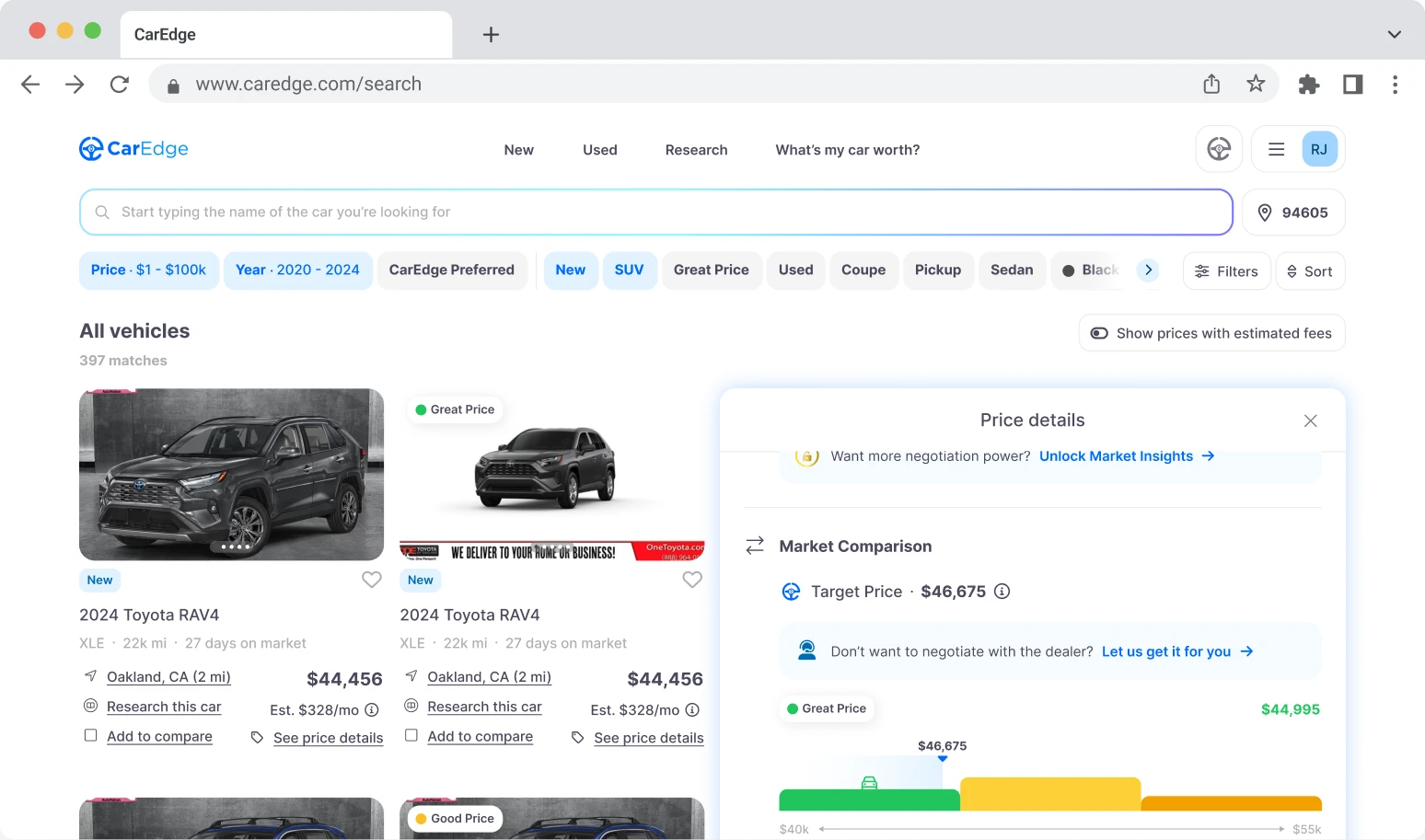

What can I do with CarEdge?
 CarEdge Insights
What can I do with CarEdge?
Get access to exclusive information so you can make an informed car buying decision — all in one place.

Find a wide range of vehicle listings with market insights on new and used listings near you.
Track your vehicle’s value and cash in when the time is right to sell.

Access to our proprietary data to help you find the right car, at the right price. Find these unlocked on every listing after subscribing.

With our expert-led, tech-enabled car buying service, we will locate, negotiate, and deliver your vehicle so you can get a new car hassle free.


Help us personalize your CarEdge experience — it only takes a second.
Your answers help us personalize your CarEdge journey — we’ll follow up with tips and next steps that match your buying timeline.

If you’ve ever been anxious about car buying, you’re not alone. Vehicle ownership is a major financial commitment. With this in mind, how much of your monthly budget should you spend on a car? Today, we’re going to answer that question with the 10% rule.
You’re likely to find many different opinions on how much you should spend on a car. Truthfully, there is no perfect answer. At the end of the day, you have to make a decision that you feel comfortable with.
That being said, we do have some advice we’d recommend you follow. We’re here to help you learn about the 10% rule, and how it helps you determine how much you should spend on your next car.
First things first, to determine how much you should spend on a car, you need to assess your financial situation. This means auditing your monthly gross income. How much gross (before taxes) income do you make each month?
I say monthly income on purpose, because most car buyers are shopping for a monthly payment that meets their budget. This is as good a time as ever to mention that if you can afford to buy a car in cash, and you intend to keep it for decades, please do that. However, make sure to do it the right way (we go over the details here). Paying cash is the most financially responsible car buying decision you can make.
Having said that, most of us aren’t in a position to pay for a car in cash upfront. If that’s you, then start this exercise by analyzing your monthly gross income.
Write that number down, we’re going to come back to it.
Are you buying a car because you need transport from point “a” to point “b,” or are you getting a car to make a statement?
When I worked at an Acura dealership in the early 2000’s, a customer came in and purchased an Acura RL in the top trim. This was an expensive and luxurious car. The same day this customer took home his new car he came back. Why? Because his wife wanted him to buy a Lexus instead. To her, the Acura didn’t portray the image she wanted to her neighbors.
In this case, the “why” behind purchasing a car was to make a material statement, not to simply get from point “a” to point “b.”
If you’re trying to make a statement, it’s my strong recommendation you figure out a cheaper, more fiscally responsible way to make that statement. Consider buying a watch, a house, a painting … literally anything other than a car. Cars simply lose value too quickly.
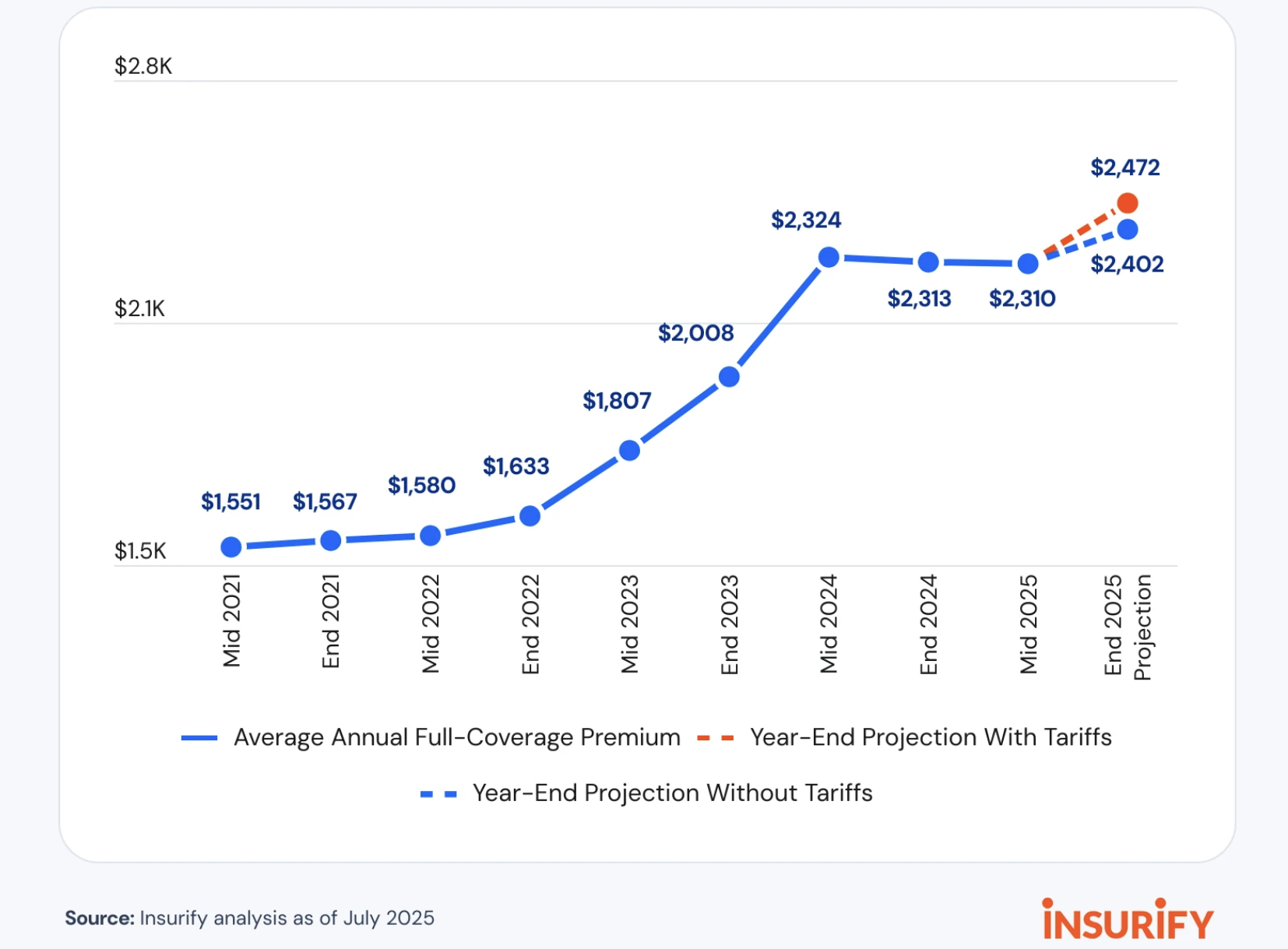
Buying a car entails a lot more than making a monthly car payment. Insurance, gas, maintenance, depreciation, the list goes on and on. If you’ve ever owned a car before, you know just how expensive it is. Plus, insurance costs are rising quickly.
That being said, it’s critically important to consider the total cost of ownership when thinking, “How much should I spend on a car?” Your monthly car payment should include:
When you factor each of these items into your monthly car payment you see that a $500/mo car payment is actually $1,000/mo. And this is where the 10% comes in. I’ve always advised all of my customers to spend no more than 10% of their gross income on their car.
That means that if you make $60,000 per year ($5,000 per month), you can aim for up to $500 per month to go towards your car payment. That doesn’t mean you can afford any car that has a monthly payment of $500, it means the combined cost of the payment, the insurance, and maintenance all needs to be under 10% of your gross income, or in this example, under $500.
Some personal finance gurus suggest that you can afford to spend much more than 10% of your gross income on a car, and banks will even loan you the money you need to purchase a car so long as your debt to income ratio is below 40%.
The 10% rule isn’t a commandment, it’s simply a suggestion. Spending more than 10% of your monthly gross income on a depreciating asset is a tough pill to swallow, but for some it’s worth it.
If you drive less than the average driver each year, I highly recommend you consider leasing a car instead of buying. This is especially advised for those who prefer to upgrade to a new car every few years or so.
Leasing has some distinct advantages compared to purchasing; mainly, you know exactly what you are signing up for. The cost of depreciation and maintenance are built into the lease, whereas when you buy a car outright neither of those factors are known.
The 10% rule also applies to leasing. For example, if my monthly income is $4,000, then my next Mini Cooper lease should be under $400/month since I’ll have to factor in insurance and gas costs.
Leasing allows for a certain level of cost certainty since most lease terms are in the 24 to 36 month range, and cars are under warranty for most (or all) of that time. Some brands even include free scheduled maintenance during your lease term, essentially making the monthly payment and the cost of fuel and your insurance premium your total car expenses.
Trust me, cost certainty is a huge advantage for drivers. Once you experience it, you’ll wonder how you ever lived without it.
Ultimately, how much you spend on a car comes down to how much money you are willing to set aside on a monthly basis. Additionally, always remember that when you buy a car, it will lose value. Vehicles are not investments.
How do you play it smart then? My recommendation is that you follow the 10% rule. It’s fair, it’s reasonable, and it’s not overly constrictive. Plus, when you drive somewhere in your new car, if you follow the 10% rule, you’ll still have some money in your pocket to pay for things when you get there!
Ready for a car-buying expert to get YOU the best deal?
Buying a used car can be a smart financial decision — if you ask the right questions. Pre-owned vehicles come with unique risks, from hidden damage to unclear pricing. That’s why it’s crucial to go into the process prepared and confident.
Use this guide to make sure the dealership (or private seller) is giving you the full picture. If they dodge any of these questions, consider it a red flag.
Used car prices often vary by dealership, but the OTD price reveals the real cost, including taxes, fees, and dealer-installed accessories.
👉 Use our free Out-the-Door Price Calculator to compare offers.
The longer a used car sits, the more room there is to negotiate. A vehicle that’s been on the lot for 45–60+ days may come with bigger discounts.
📊 Use CarEdge Pro to check days on lot, supply, and local market pricing.
A Carfax or AutoCheck report should be free and readily available. It reveals accidents, maintenance, and ownership history.
🚨 No history report = red flag. Walk away if they won’t provide one.
It’s important to note that if you’re buying a used car from a private seller, you may need to purchase your own vehicle history report. All you’ll need is the car’s VIN.
A Pre-Purchase Inspection (PPI) can uncover hidden mechanical issues that a dealer won’t mention. This step alone can save you thousands.
Pro tip: Always choose an independent mechanic who’s not affiliated with the seller.
Used cars can vary greatly, even within the same make, model, and year. A test drive helps you catch mechanical concerns and ensure comfort. Drive on a variety of road surfaces at low and high speeds.
Take note: A test drive doesn’t replace the need for a pre-purchase inspection by an independent mechanic.
Used cars may still have factory warranty remaining or include a dealer-backed warranty. Ask for details, and if they’re selling you an extended warranty:
Compare to CarEdge Extended Warranty plans for full transparency. No markups, just clear coverage.
Buying from a private seller can sometimes get you a better deal. However, it comes with more risk and fewer protections than buying from a dealership. That’s why it’s critical to ask the right questions up front.
Here are some additional questions you should ask a private party seller before agreeing to buy a car:
💡 Pro Tip: Bring a printed bill of sale template and ensure both parties sign it. Also, double-check your local DMV requirements for title transfers and taxes before finalizing anything. See some examples here, but always ensure that all required fields are on your form.

Buying used doesn’t mean buying blind. Let CarEdge’s car buying service do the legwork:
✅ We find the best pre-owned vehicles
✅ We negotiate pricing and review contracts
✅ We coordinate inspections, delivery, and paperwork
Learn more about how CarEdge can help.
CarEdge is your trusted partner for smarter used car shopping. We provide expert tools, unbiased insights, and negotiation support — so you never overpay. Start your car search at CarEdge.com and take control of your next purchase.

Understanding what’s on a new car’s window can save you from overpaying or falling for dealer tricks. If you’ve ever heard the terms Monroney sticker or window sticker and felt confused — you’re not alone. These labels are crucial for transparency when buying a car, and every buyer should know what to look for.
In this guide, we’ll break down what a Monroney sticker is, why it exists, and how to read it. You’ll leave feeling more confident and equipped to understand what a car really includes — no matter what a salesperson might tell you.
Before car buyers had access to standardized pricing, buying a car was like walking into the Wild West. Salespeople could pick and choose what to tell you — and what to charge.
That all changed with the creation of the Monroney sticker, a federally mandated label that must be displayed on every new car for sale in the U.S. You’ll also hear it referred to as the window sticker — they’re the same thing.
This label lists everything a shopper needs to know about the car’s equipment, price, and origin. It was designed to protect buyers and level the playing field.
Only 9% of Americans say car salespeople have high ethical standards — the lowest of any profession according to Gallup. That’s why federal law stepped in.
Here’s what’s included on every Monroney sticker:
Check out an example of where you’ll find this important information:
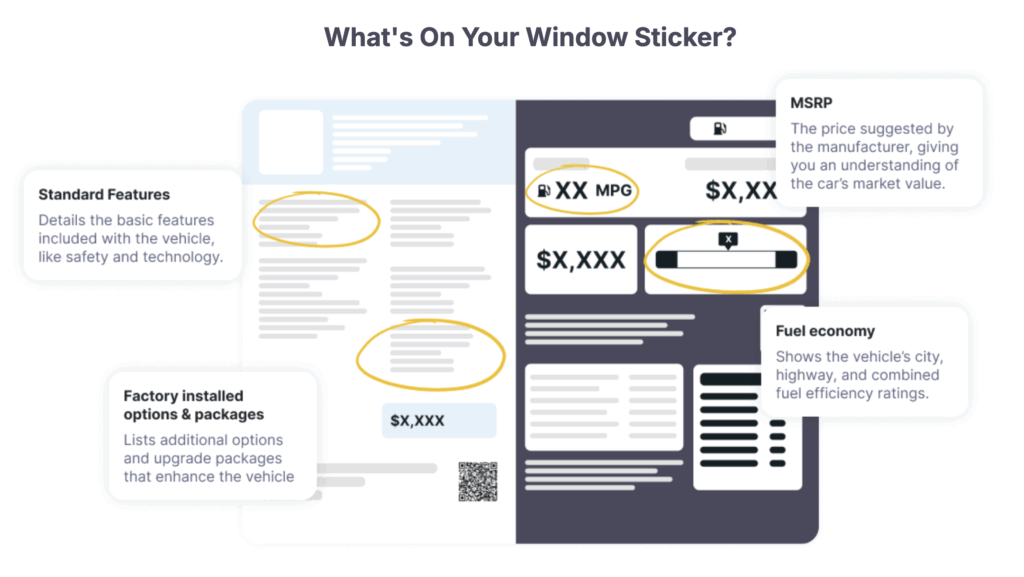
📌 Important: Dealer-installed accessories (like pinstripes, floor mats, or nitrogen tires) are not listed on the Monroney sticker. They appear on a separate dealer addendum sticker, which is not federally regulated.
The name comes from Senator Almer “Mike” Monroney, who sponsored the Automobile Information Disclosure Act of 1958. Signed into law by President Dwight Eisenhower, the act required automakers to include standardized labels on all new cars.
Before this law, car buyers had no way to verify what was included in a vehicle or whether the price was fair.
Monroney was a leader in consumer protection and also played a role in creating the Federal Aviation Administration (FAA). His legacy lives on every time you look at a new car’s window sticker.
Want to learn more about the law? Visit the Consumer protection Branch at the U.S. Department of Justice.
Let’s recap what you’ll find on a new car’s Monroney (window) sticker. This information is required by law and cannot be altered or removed by dealers:
💡 Tip: If you don’t see this sticker on a new car, ask why — and consider walking away.
So you’re standing on a dealership lot — where should your eyes go first?
The Edmunds guide to reading a window sticker is an excellent visual breakdown. You can view it here, but here’s a quick summary:
In today’s car market, dealer markups and confusing add-ons are everywhere. But the Monroney sticker keeps it real — it’s the one label they can’t legally change.
When you’re comparing similar vehicles across different dealerships, the window sticker helps you:
Whether you’re shopping used or just want to do your research from home, you no longer have to visit the lot to see the original window sticker. CarEdge now offers access to digital Monroney stickers on most vehicles — giving you instant insight into the car’s features, options, and MSRP breakdown.
✅ Great for used cars that originally included premium options
✅ Helps compare trim levels and original pricing
✅ Saves time and reveals red flags before you visit the dealership
View the original window sticker — and shop smarter from the start.
Q: Is a Monroney sticker required by law?
A: Yes. Every new car for sale in the U.S. must display a Monroney sticker — it’s federal law.
Q: Are Monroney and window stickers the same thing?
A: Yes. These two terms refer to the same federally required label.
Q: Can dealers alter or remove the Monroney sticker?
A: No. It’s illegal for dealers to modify or remove the sticker prior to sale.
Q: Does the window sticker include dealer add-ons?
A: No. Only manufacturer-installed options are listed. Dealer-installed accessories appear on a separate sticker.
Q: Do used cars have a Monroney sticker?
A: No. The law only applies to brand-new vehicles. However, used vehicles may have copies of the original sticker or digital replicas provided by the dealer.
Founded by industry veterans, CarEdge is your trusted resource for transparent car buying. From understanding pricing to negotiating deals and avoiding scams, we provide data-backed insights, expert tools, and concierge services to help you buy with confidence.Want help with your next car purchase? Let us find and negotiate the best deal for you! Explore CarEdge’s car buying help today.

Buying a new car is rarely a wise financial decision. Truthfully, cars are depreciating assets. That means from the moment you drive off the lot with your shiny new wheels, you’re actually losing money.
For some car buyers, leasing is a great way around depreciation. However, leasing isn’t for everyone. For many consumers, it’s worth asking the question “what does it mean to lease a car?”. In this guide to leasing a car, we’ll explain all there is to know about leasing, and how to shop smart in 2026.
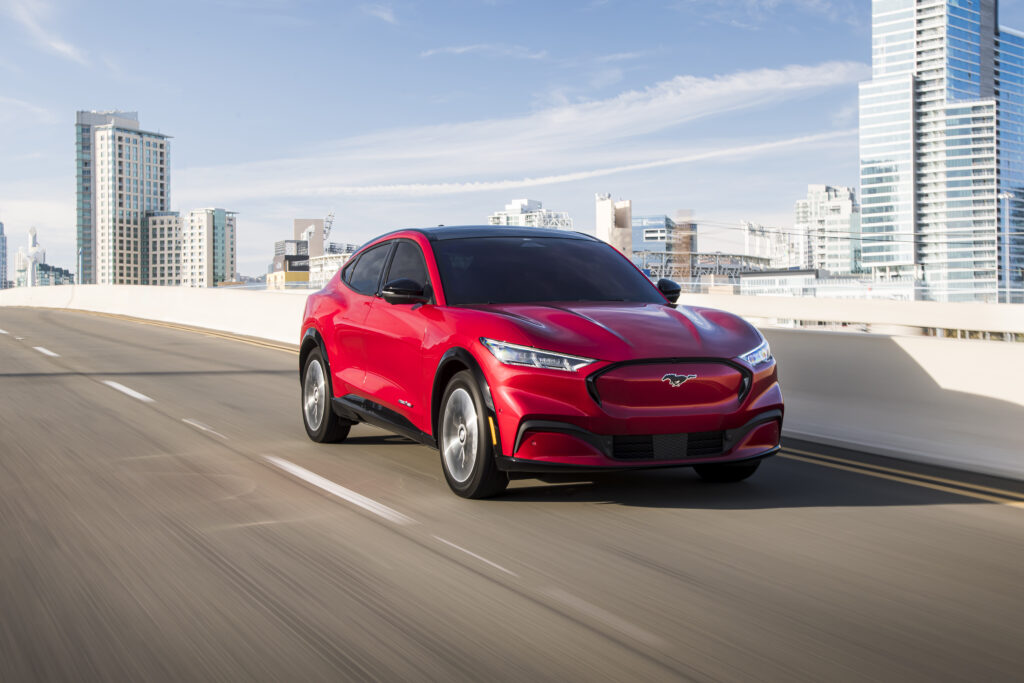
The last time a car commercial grabbed your attention with an attractive lease deal, it probably included a whirlwind of rates, payments and terms crammed into thirty seconds. What exactly is a car lease? An auto lease is a long term rental agreement for a vehicle that is subject to specific terms and conditions. The lease terms are agreed upon by the customer and dealership (or automaker in the case of Tesla, Rivian and Lucid), and a third-party leasing company who actually takes ownership of the vehicle (and then leases it to you).
There are four parts to a lease:
1) The capitalized cost (which is the out-the-door price on a lease)
2) The residual value of the vehicle
3) The money factor
4) The state sales tax
These four factors determine the total cost of the lease, and in turn the monthly payment. Let’s talk about the details.
Instead of negotiating an out-the-door price (which is the price of the vehicle plus all taxes and fees), you negotiate the capitalized cost (also referred to as the “cap cost”) of the lease. The cap cost is the amount that the leasing company is paying for the vehicle. This will include:
Some of these charges are negotiable. For example, you don’t need nitrogen-inflated tires or security etching that you didn’t ask for billed on your lease agreement. For every $1,000 in additional cap cost, that will roughly translate to $27 a month in payment on a 36 month lease. Take a long, hard look at the itemized invoice before signing anything!
👉 Here’s a guide to which dealer fees are legit, and which you can negotiate.
Residuals are a percentage of the MSRP as set by the leasing company, and they are not negotiable. The residual value is the vehicle’s projected value at the end of the lease term. When you lease, you pay for the amount of depreciation that will occur over the course of the lease term.
For example, if the residual on a 36 month lease is .75 (or 75%), your lease will include payment that covers the 25% expected loss in value over the course of 36 months.
Residual values are not negotiable and they are set by the leasing company based on allotted annual miles to be driven. Specifically, 7,500, 10,000, 12,000 or 15,000 are the standard mileage amounts that are normally offered.
Dealers cannot modify or adjust the residual percentages other than for additional annual miles allowed to be driven. Check out an example of how residual values fit into leasing here. The residual value is disclosed on the lease as the amount that you can purchase the vehicle for at lease end.
The money factor is set by the lender and can be marked up to the consumer, much like on a car loan. When a buyer finances a car, the dealer works with a number of lenders behind the scenes to get an attractive rate. However, that’s not the rate that the salesperson closing the deal will quote. Dealers markup loans, and pocket the difference. Fascinating and distressing, right? Here are all the ways that dealers make money when selling you a car.
With a car lease, dealers make money by marking up the money factor on a lease. The lender charges the dealer a money factor of say, .00125, and the dealer marks it up 50, 75 or even 100 basis points. The difference between the buy rate (what the lender charges the dealer) and the marked up rate (what you’re quoted) is additional backend profit on the lease for the dealer.
You should always try to negotiate the money factor to the buy rate or as close to the buy rate as you can get!
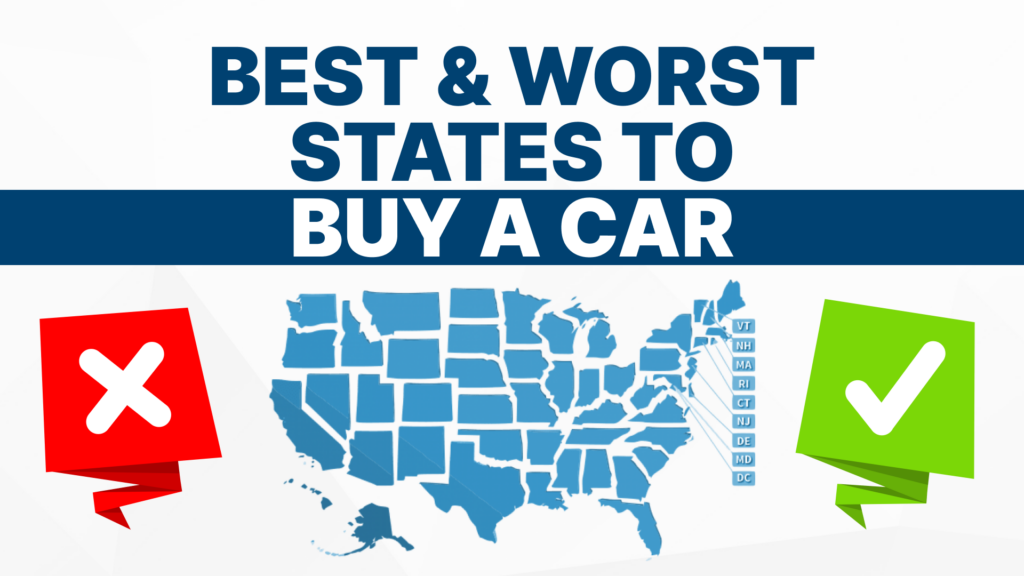
Taxes in most states are added to the total price of the lease. NY, NJ, MN, OH, and GA charge sales tax upfront on the total amount of the lease payments. VA, MD, and TX charge sales tax on the total selling price of the vehicle (the cap cost). In all other states, sales tax is simply factored into your monthly payment.
Sales tax is not negotiable, but it does vary from state to state.
Simply put, the leasing company owns the vehicle that you are leasing from them. In most cases that will either be that brand’s captive lender or an outside bank. The vehicle will be registered in both the leasing company’s name and your name as the lessee. You will be responsible for registration renewals, maintenance and all insurance.
It’s also possible that the leasing company financed the vehicle that they bought from the dealer. In that case, the financial institution would possess the title until the leasing company pays it off.
At CarEdge, we’re always working on something new to help demystify car buying, car selling, and ownership. If you’re considering a new car lease, estimate your monthly payment in seconds with our latest free tool: our car lease calculator.
No, but If you want to lower your monthly payment, consider making a down payment on your lease. In a car lease, the down payment is called a capitalized cost reduction, or cap cost reduction. These up front payments are optional, but they can help make leasing more affordable by lowering the monthly payments. The payment is lower because the cap cost reduction has lowered the cost of the vehicle to the lender.
Any advertised lease payment typically requires a specified amount of cash down. For example, an advertised lease monthly payment may include $3000 cash down plus the first payment, acquisition fee, tax, title, registration and dealer fees.
Remember as a rule of thumb, for every $1000 in cap cost reduction on a 36 month lease your monthly payment will be reduced about $27.
Shoppers with bad credit may be required to make a security deposit, which is returned once the car is returned at the end of the lease.
I put zero down on my leases and when I say zero, I mean not even a penny. Cash down on a lease just reduces the cost of the vehicle to the lease company and if the vehicle were ever declared a total loss, that money that you had put down is lost forever. A lease down payment is not covered by your auto insurance. They only cover the value of the vehicle, not the value of the cash that you put down.
Whatever money you are thinking about putting down, deposit it into a separate investment account and draw from it monthly when you are making your lease payments. This way your money is still making money each month until you need to draw from it.
Yes, your lease’s monthly payment includes interest, this is the money factor.
You can’t shop around for a better interest rate when it comes to a lease without shopping for a different car altogether. You won’t see an interest rate on your contract when leasing a car, but you can request this information from the dealer or leasing company. The total amount of interest paid on a car lease depends on the length of the lease term and even the type of vehicle. If you lease a model that is likely to depreciate faster, the leasing company is more likely to charge higher interest to ensure that loss in value (the residual) is accounted for.
One way to lower your interest rate (Money Factor) on a lease is by placing Multiple Security Deposits if the lender provides the option. Each MSDS equals one monthly payment and will reduce your MF by a percentage point determined by the lender. There is a limit on how many MSDS you can apply, but the savings can be significant in some cases.
Yes, in most cases customers can pay for a lease up front. Paying for an entire lease at the time of signing is called a one-pay, or single-pay lease. Some lenders will discount interest costs if you pay for the whole lease up front. Make sure to find out if there is any benefit to you before you commit to paying for a car lease up front.
Risk Mitigation
Convenience:
Flexibility:
Financial:
The car isn’t yours.
Few vehicles will lease well.
Fees and costs.
Negotiate what you can
The cap cost and money factor are negotiable. You should always try to negotiate the money factor as close to the buy rate as you can get!
Shop around for deals, be flexible
Deciding what to do at the end of a car lease depends mostly on how you feel about the car. Of course, your financial situation and inclinations also come into play.
These are your options at the end of a car lease:
Which option is a good fit for you? If you love the vehicle and can afford to finance or buy it outright, you can keep a vehicle with a good service history at a set price (from the residual on your lease contract).
If you no longer need a vehicle, leasing allows you to simply return the car and keys at the end of the lease term. Remember, leasing is just like a long-term rental.
Stuck on what to do when your lease ends? Check out our guide, “What to Do At the End of a Car Lease.”
Join the CarEdge Community for expert advice and a place to connect
Join the CarEdge Community to connect with auto industry experts and fellow consumers and car enthusiasts. See the best deals, latest news, and car buying shenanigans to steer clear of. Best of all, a sense of community awaits. We’d love to connect with you!
A few years ago, a typical car deal would include thousands of dollars of “incentives” to help a dealership seal the deal with a customer. Nowadays, new car incentives are few and far between. As the ongoing chip shortage (and new magnesium shortage) have hampered automakers, we’ve seen a drastic decline in new car incentives.
Incentives traditionally take the form of either cash rebates or special financing programs. Cash rebates are going by the wayside as vehicle supply cannot keep up with consumer demand. Because of this imbalance automakers do not need to subsidize the purchase of their vehicles. Many consumers are perfectly content buying at MSRP (or above).
Special finance programs still exist, however most industry analysts expect them to fad away as well as interest rates inevitably increase due to inflationary pressures.
TrueCar tracks incentives for most major OEMs. We’ve compiled that data here for you.
The table below makes it very clear; new car incentives are being cut left and right.
| Manufacturer | Q3 2021 | Q3 2020 | Q2 2021 | YoY % Change | QoQ % Change |
| BMW | $3,929 | $5,340 | $4,713 | -26.4% | -16.6% |
| Daimler | $3,135 | $5,621 | $3,574 | -44.2% | -12.3% |
| Ford | $2,569 | $4,241 | $2,564 | -39.4% | 0.2% |
| GM | $3,062 | $5,515 | $4,399 | -44.5% | -30.4% |
| Honda | $2,013 | $2,580 | $2,167 | -22.0% | -7.1% |
| Hyundai | $1,560 | $2,547 | $2,102 | -38.7% | -25.8% |
| Kia | $2,336 | $3,428 | $2,549 | -31.9% | -8.4% |
| Nissan | $2,661 | $4,519 | $3,502 | -41.1% | -24.0% |
| Stellantis | $2,892 | $4,903 | $3,522 | -41.0% | -17.9% |
| Subaru | $1,382 | $1,851 | $1,339 | -25.3% | 3.2% |
| Toyota | $1,992 | $2,726 | $2,219 | -26.9% | -10.3% |
| Volkswagen Group | $2,939 | $4,421 | $3,730 | -33.5% | -21.2% |
| Industry | $2,478 | $3,997 | $3,003 | -38.0% | -17.5% |
GM, who lost their US sales crown to Toyota is cutting back most heavily when it comes to incentives. This makes sense, because GM inventory levels are down 80%+ in most states right now. With no new vehicles to sell, it makes sense why GM would cut back on incentives.
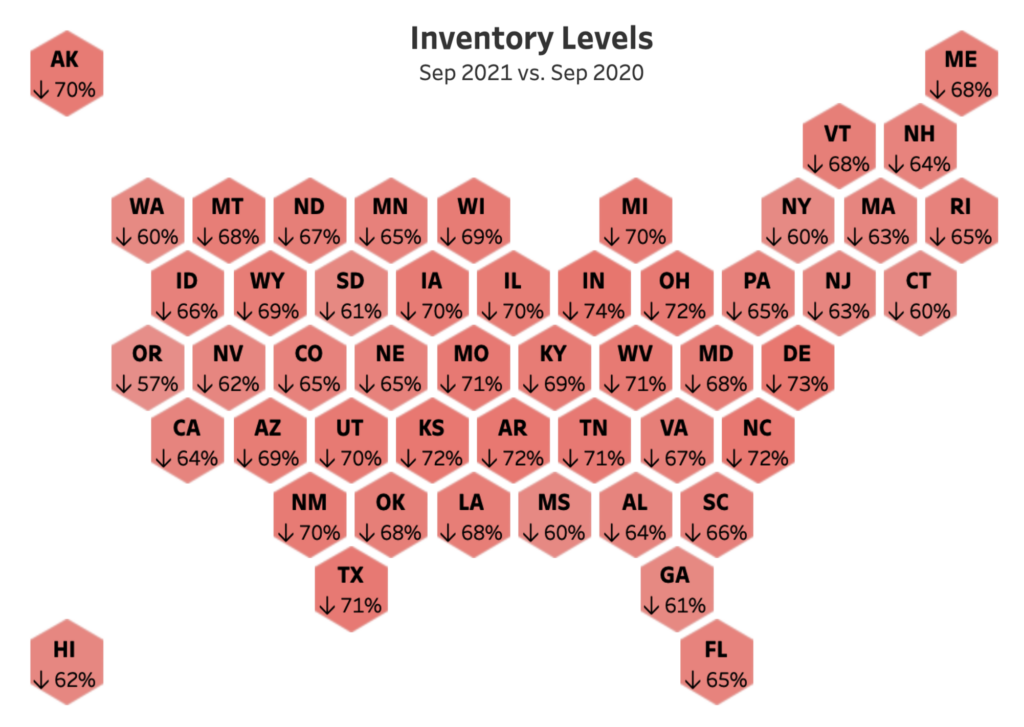
Hyundai and Nissan have also cut their incentives aggressively quarter-over-quarter. This indicates that they may be struggling more than their peers when it comes to production of vehicles.
As a whole, the industry has experienced a 38% reduction in new car incentives year-over-year for the third quarter.
Digging into the data on a month-to-month level is fascinating. We can actually see that the month-over-month changes are more drastic, indicating that the reduction in new car incentives is more aggressive today than it was at the beginning of Q3.
| Manufacturer | Sep 2021 Forecast | Sep 2020 Actual | Aug 2021 Actual | YOY | MOM |
| BMW | $3,246 | $5,120 | $4,142 | -36.6% | -21.6% |
| Daimler | $3,039 | $5,715 | $3,086 | -46.8% | -1.5% |
| Ford | $2,850 | $4,539 | $2,381 | -37.2% | 19.7% |
| GM | $2,314 | $5,438 | $2,894 | -57.4% | -20.0% |
| Honda | $1,940 | $2,468 | $1,987 | -21.4% | -2.4% |
| Hyundai | $1,310 | $2,708 | $1,481 | -51.6% | -11.5% |
| Kia | $2,169 | $2,991 | $2,236 | -27.5% | -3.0% |
| Nissan | $2,500 | $4,491 | $2,474 | -44.3% | 1.1% |
| Stellantis | $2,987 | $5,079 | $2,970 | -41.2% | 0.6% |
| Subaru | $1,420 | $1,844 | $1,329 | -23.0% | 6.8% |
| Toyota | $1,883 | $2,705 | $2,145 | -30.4% | -12.2% |
| Volkswagen Group | $2,690 | $4,311 | $2,763 | -37.6% | -2.6% |
| Industry | $2,326 | $4,028 | $2,422 | -42.3% | -4.0% |

BMW and GM have decreased their new car incentives the most, followed by Toyota. Ford and Subaru have both increased their new car incentives. This is surprising, because Subaru has a very limited supply of inventory, and Ford isn’t fairing too much better.
The industry as a whole has slashed new car incentives 42% year-over-year for the month of September. There is no indication that this will get “better” before the end of the year, and many automakers are excited to get rid of incentives because it allows them to save money.
We can also see a decline in incentives as a percentage of the average transaction price (ATP) of a new vehicle.
| Manufacturer | Sep 2021 Forecast | Sep 2020 Actual | Aug 2021 Actual | YOY | MOM |
| BMW | 5.3% | 8.5% | 6.9% | -38.1% | -23.8% |
| Daimler | 4.7% | 9.8% | 4.7% | -52.1% | 0.7% |
| Ford | 6.0% | 10.5% | 5.0% | -43.0% | 19.1% |
| GM | 5.0% | 13.0% | 6.5% | -61.9% | -23.6% |
| Honda | 6.0% | 8.2% | 6.3% | -26.2% | -4.3% |
| Hyundai | 3.9% | 9.1% | 4.6% | -57.2% | -14.4% |
| Kia | 7.6% | 11.1% | 8.0% | -31.9% | -6.0% |
| Nissan | 7.9% | 15.8% | 7.9% | -50.0% | 0.2% |
| Stellantis | 6.2% | 11.7% | 6.3% | -47.1% | -1.3% |
| Subaru | 4.7% | 6.2% | 4.3% | -24.1% | 9.8% |
| Toyota | 5.1% | 8.0% | 6.0% | -35.6% | -15.3% |
| Volkswagen Group | 6.8% | 10.7% | 6.8% | -37.0% | -0.3% |
| Industry | 5.9% | 11.0% | 6.3% | -46.4% | -6.3% |
To understand this table, simply look at BMW. In September of 2020 incentives accounted for 8.5% of the average transaction price of a BMW. That means that if you were buying a $100,000 BMW you would expect $8,500 in incentives. Today the expectation should be $5,300 in incentives. As new car incentives decline, and average transaction prices increase, incentives as a percent of average transaction price is also falling.
“Deal” is relative in this market. The short answer is “yes,” the long answer is, “it depends.” We have seen many CarEdge members secure new cars at MSRP with no additional dealer markup. In this market, that’s a GOOD deal. A lot of your dealmaking ability will have to do with the amount of inventory the dealership has available for sale. Some automakers are also still offering incentives on factory orders, so if you are okay with waiting for your new car, placing an order might make sense for you.