
CarEdge saved me over 4,500 dollars on a brand new Honda Pilot. I can't say thank you enough.
Price intelligence
Find a wide range of vehicle listings with market insights on new and used listings near you.
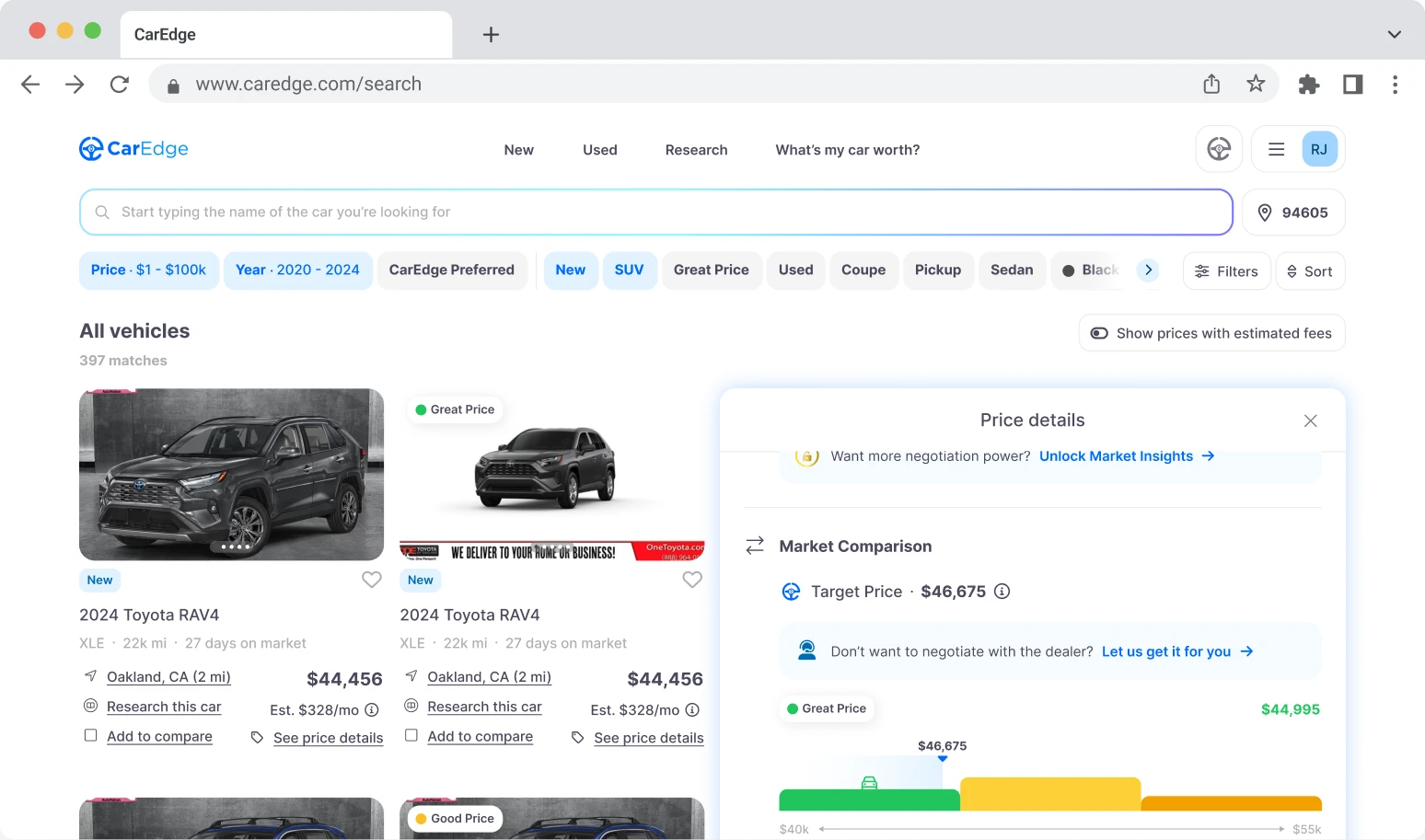

What can I do with CarEdge?
 CarEdge Insights
What can I do with CarEdge?
Get access to exclusive information so you can make an informed car buying decision — all in one place.

Find a wide range of vehicle listings with market insights on new and used listings near you.
Track your vehicle’s value and cash in when the time is right to sell.

Access to our proprietary data to help you find the right car, at the right price. Find these unlocked on every listing after subscribing.

With our expert-led, tech-enabled car buying service, we will locate, negotiate, and deliver your vehicle so you can get a new car hassle free.


Help us personalize your CarEdge experience — it only takes a second.
Your answers help us personalize your CarEdge journey — we’ll follow up with tips and next steps that match your buying timeline.
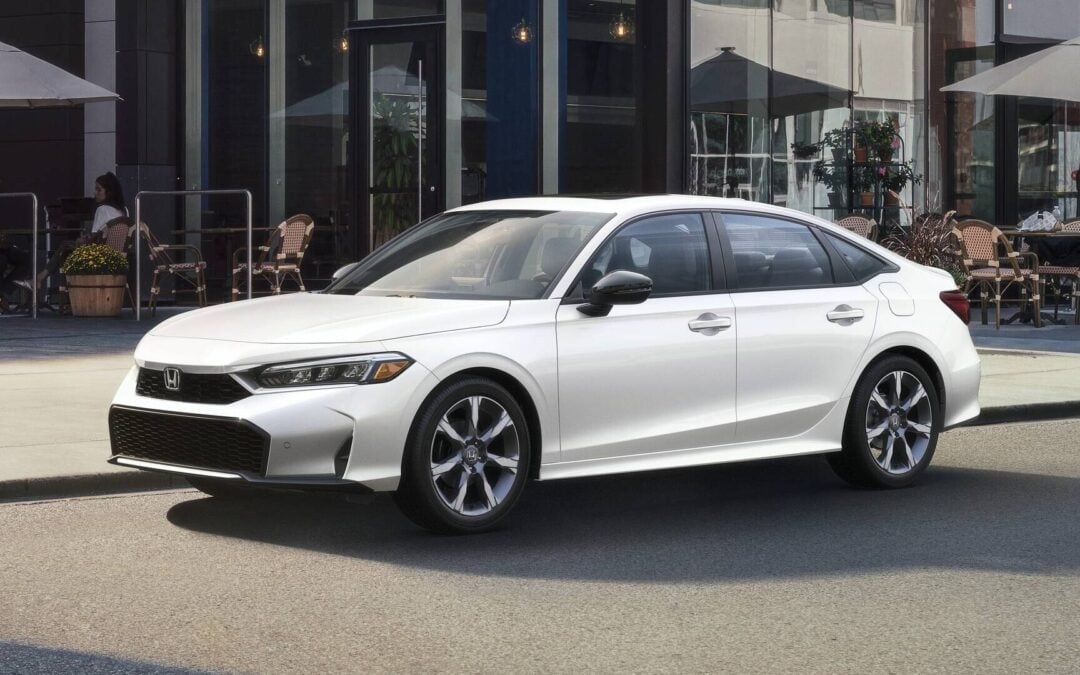
December is always the best month to buy a car, but not every year-end deal is worth your time. Some automakers are throwing free money at buyers to close out 2025, while others are phoning it in with offers that barely qualify as deals. We’ve sifted through hundreds of year-end sales to find what’s actually worth your attention—and what you should skip. Here are the five best and five worst car deals to end the year.
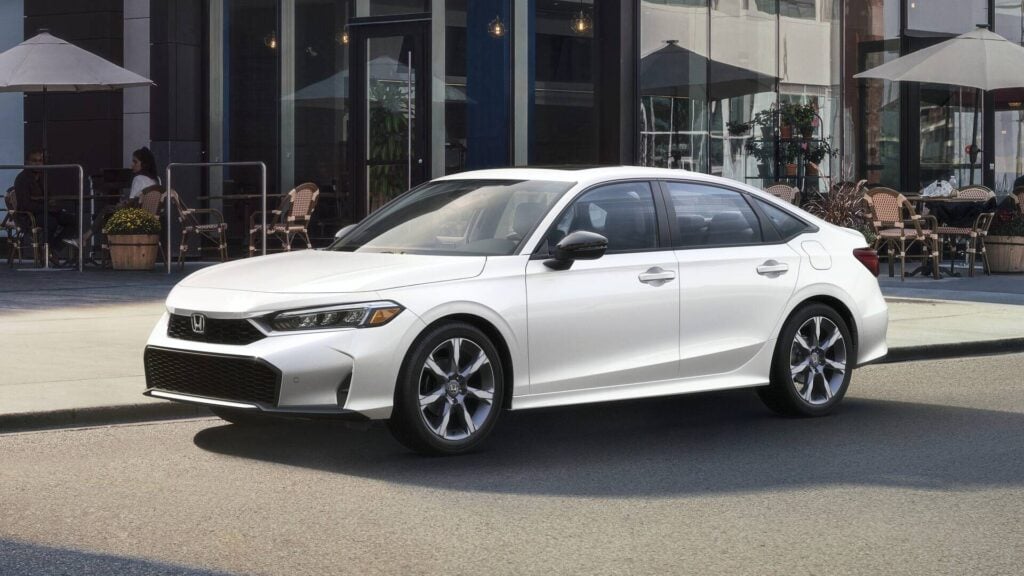
The deal: $0-down lease, $350/month for 36 months
The Civic sets the standard for compact cars, and this zero-down lease makes it even more affordable. With no money down and a low lease payment, it’s a great time to get into this reliable and practical sedan. See Honda offer details.
See the best Honda Civic deals with CarEdge
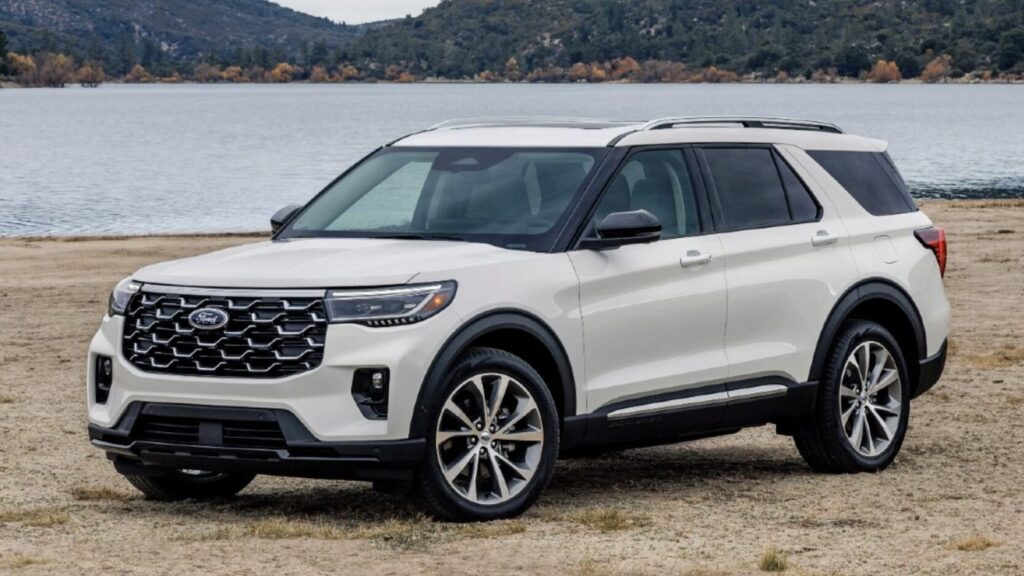
The deal: $0-down lease, $499/month for 36 months
One of Ford’s most popular SUVs is available with no money down for the end of the year. The Active is a well-equipped trim level, with standard all-wheel drive and a 300-horsepower engine. See Ford offer details.
See the best Ford Explorer deals with CarEdge
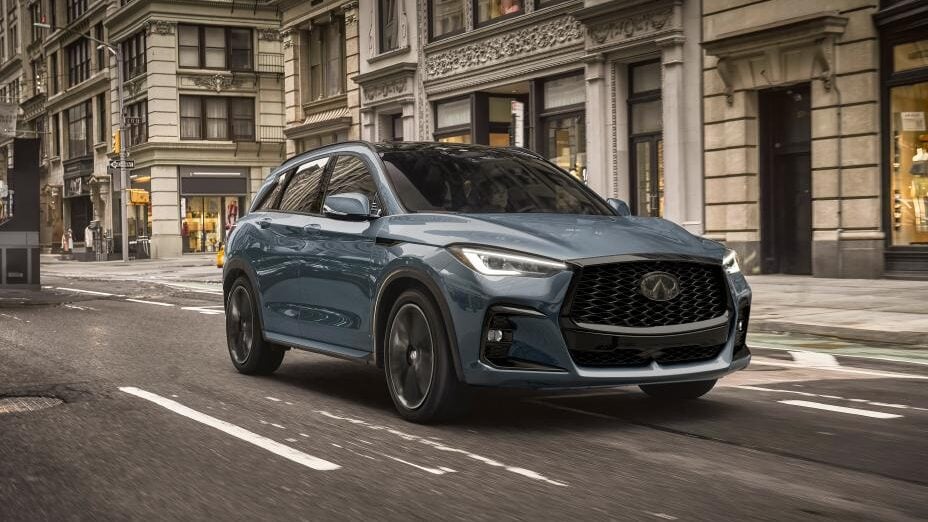
The deal: $6,500 cash
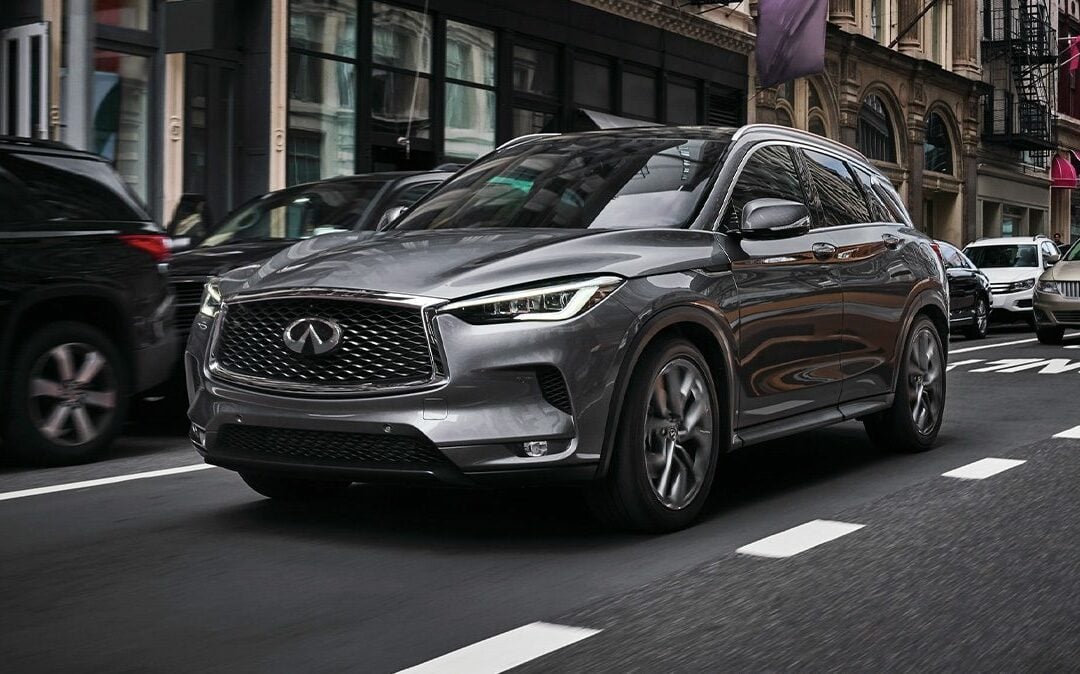
This discount is equivalent to roughly 15% off the MSRP of the QX50, which is being discontinued. That presents a rare opportunity to get behind the wheel of a compact luxury SUV at a more attainable price. See Infiniti offer details.
See the best Infiniti QX50 deals with CarEdge

The deal: Lease from $179/month for 39 months with $3,999 due at signing
One of Toyota’s most affordable models gets even more accessible with this low lease payment, which is one of the lowest available on any new car right now. The down payment is higher than some competitors’, but the monthly savings still add up. See Toyota offer details.
See the best Toyota Corolla deals with CarEdge

The deal: 0% APR financing for 60 months, or lease from $279/month for 36 months with $4,489 due at signing
Nissan is one of the few brands to offer zero-percent financing on a small crossover SUV for the end of the year. The $279 per month lease on the Rogue SV AWD is also very competitive, even with a fairly high down payment. See Nissan offer details.
See the best Nissan Rogue deals with CarEdge
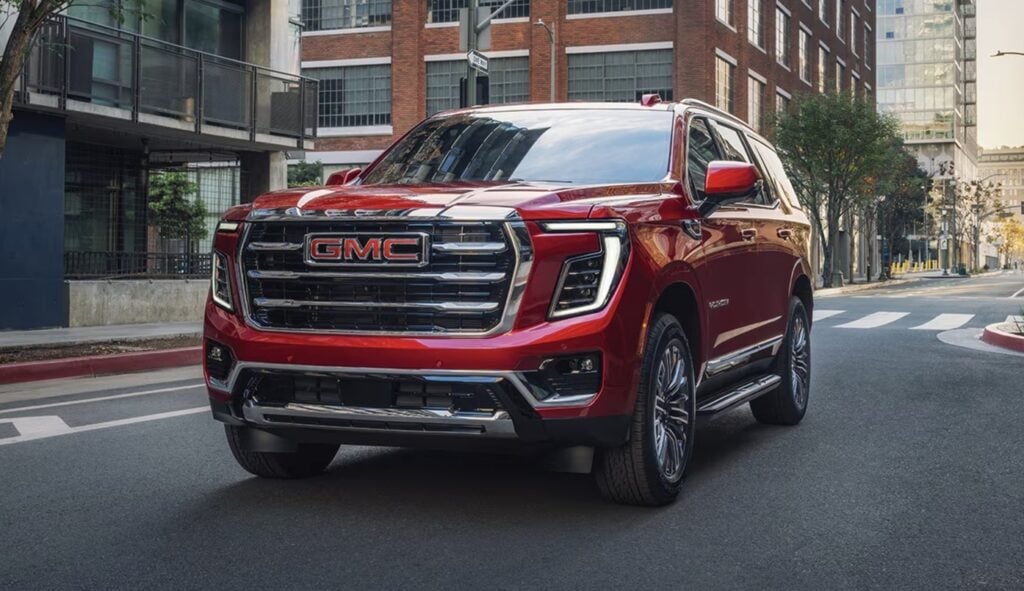
The deal: Lease from $719/month for 36 months with $14,549 due at signing
GMC is asking for a down payment that could buy a decent used car, and the monthly payment remains high. The only thing that makes this offer even somewhat attractive is that deals on the Yukon’s Chevy Tahoe sibling are equally scarce. See GMC offer details.
See the best GMC Yukon deals with CarEdge
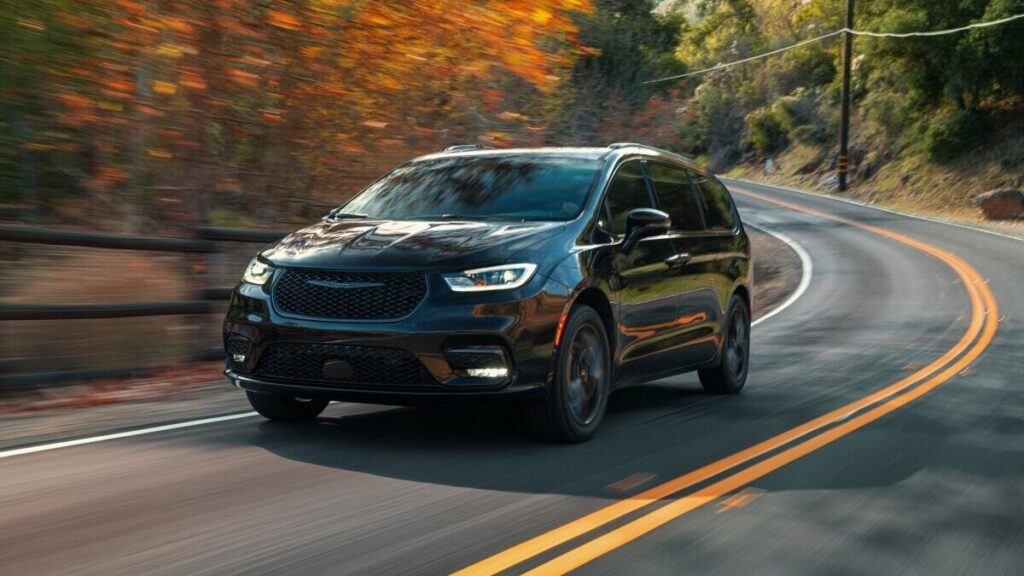
The deal: Lease from $399/month for 42 months with $4,139 due at signing
Chrysler’s best-seller has hit a sales wall, but the brand isn’t offering any true deals this December. The Pacifica is spacious and great to drive, but now isn’t a great time to buy one. See Chrysler offer details.
See the best Chrysler Pacifica deals with CarEdge

The deal: 6.9% APR financing for 72 months
This interest rate doesn’t constitute a deal, not when competitors are offering 0% APR year-end financing deals. The Durango is one of the last midsize SUVs available with a V8, but it’s also showing its age. See Dodge offer details.
See the best Dodge Durango deals with CarEdge
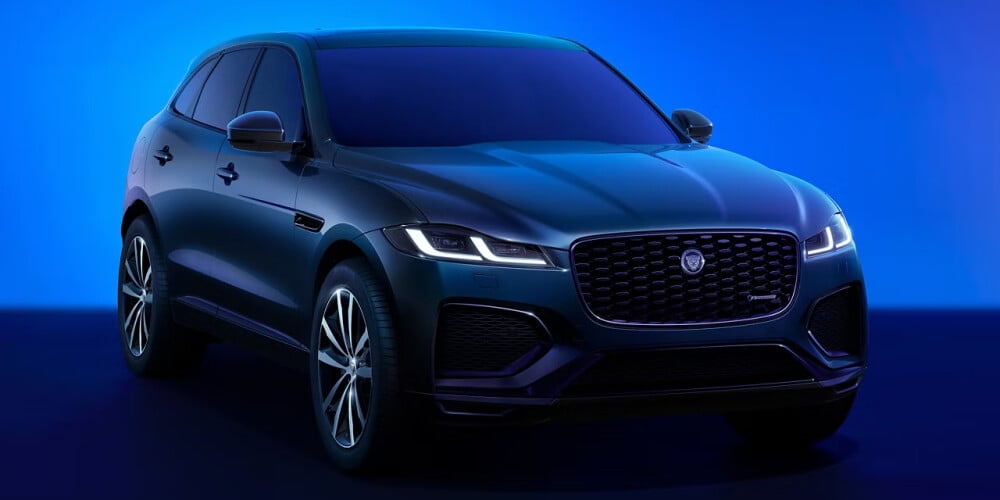
The deal: 3.9% APR financing for 48 months
Despite its name, the F-Pace is among the slowest-selling cars in the nation. Yet Jaguar’s incentives lag behind luxury competitors, most of which also have more models for customers to choose from. See Jaguar offer details.
See the best Jaguar F-Pace deals with CarEdge
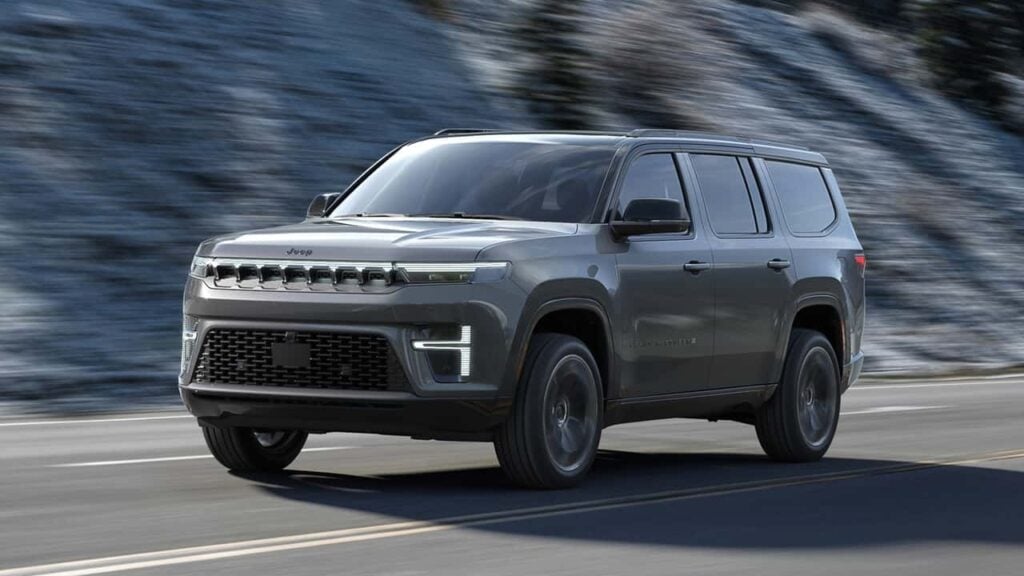
The deal: $1,500 bonus cash allowance for returning owners and lessees
The 2026 Grand Wagoneer is nearly $20,000 cheaper than last year’s model but it’s still not affordable by any means. This bonus cash offer won’t make a dent in the roughly $65,000 base MSRP of the 2026 Jeep Grand Wagoneer. That’s especially disappointing because these big SUVs have been selling slowly. See Jeep offer details.
See the best Jeep Grand Wagoneer deals with CarEdge
Even with a few duds in the mix, December remains the best time of the year to buy a car. Automakers are under pressure to hit year-end sales targets, and that pressure works in your favor, but only if you know where to look.
If you’re tired of the car buying hassle, CarEdge Concierge handles the entire process for you, from finding the right vehicle to negotiating the best price. Prefer to do it yourself? CarEdge Pro gives you insider data and an AI agent to negotiate on your behalf. Either way, you’ll get a year-end deal you can be proud of.
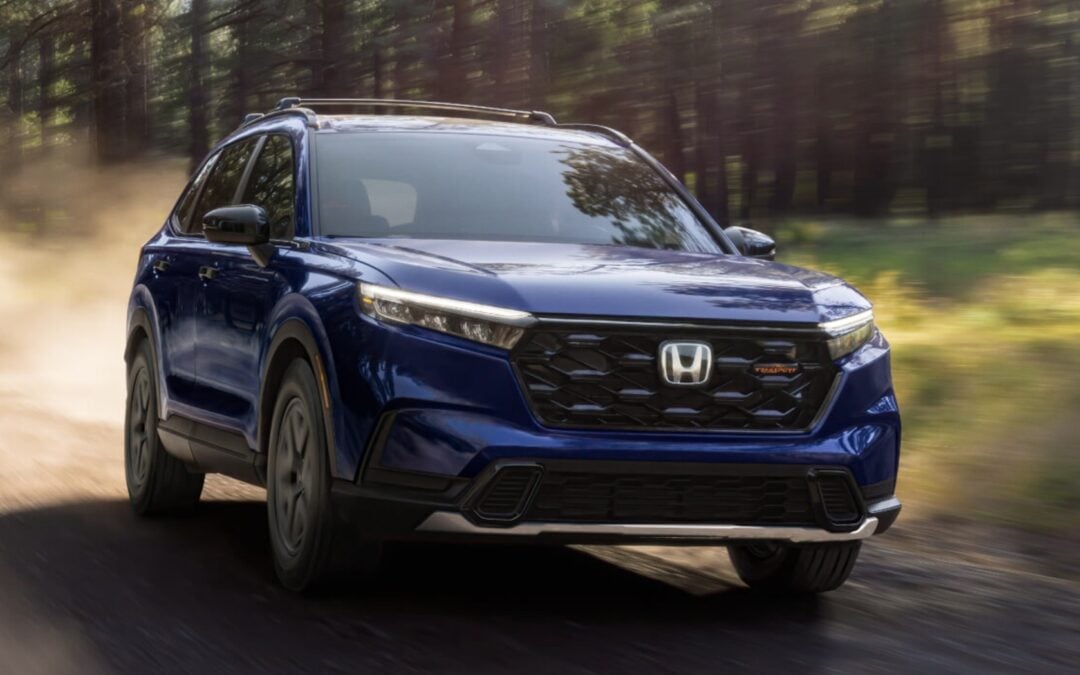
As the year comes to a close, there’s no better time to tap into savings, whether at checkout, the pump, or at your local dealership. If you’ve been on the fence about leasing or financing a hybrid but want to minimize your fuel spending while dashing through the snow, check out our list of the best deals on hybrid SUVs and sedans in December 2025.
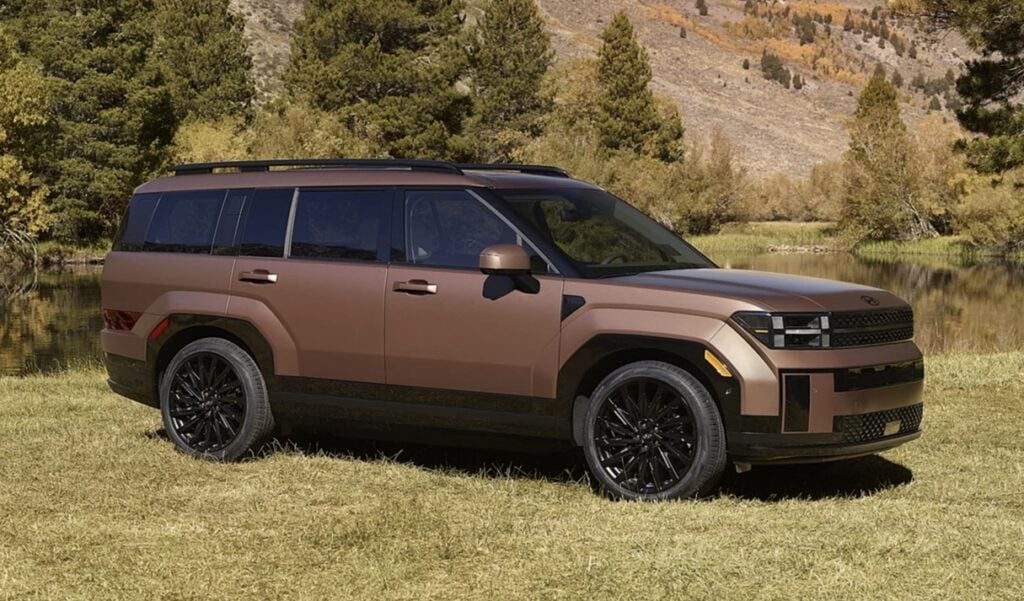
Best Deal: 0% APR for 60 months and no payments for 90 days
Make no payments on the 2026 Santa Fe Hybrid until springtime next year and enjoy interest-free financing for five years with Hyundai’s best December hybrid deals—on top of integrated fuel savings. Official estimates put the 2026 Hyundai Santa Fe Hybrid’s fuel economy at 37 city/36 highway/36 combined miles per gallon (MPG).
This offer ends January 2, 2026. See Hyundai offer details.
Explore Hyundai Santa Fe deals using CarEdge
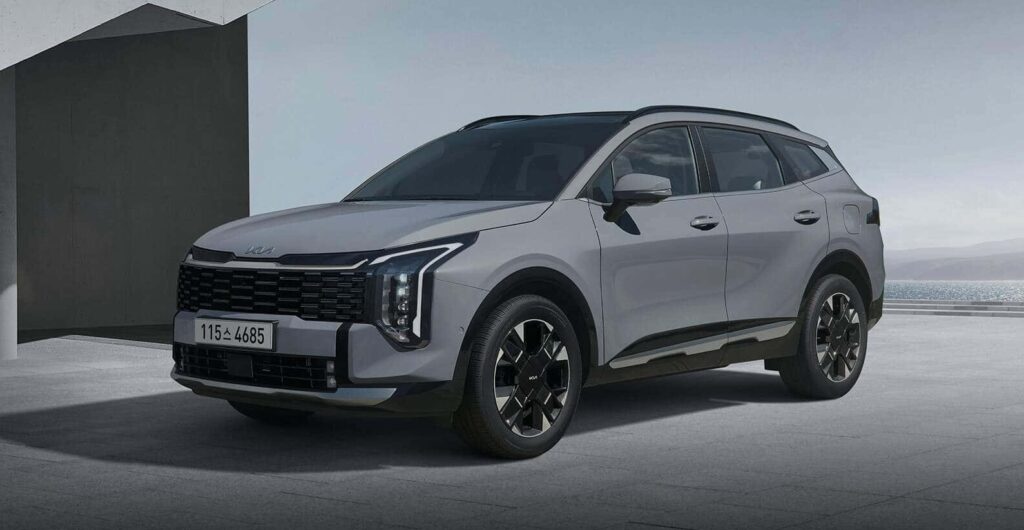
Best Deal: 0.9% APR for 60 months plus $1,000 cash offer or lease for $299/month for 36 months with $3,999 down
Combine Kia’s $1,000 cash offer with low-APR financing to get behind the wheel of a 2025 Sportage Hybrid. If you want to experience the 42 city/44/highway/43 combined MPG first before signing on the dotted line, lease the Sportage instead for less than $300 a month.
This offer is valid through January 2, 2026. See Kia offer details.
Explore Kia Sportage deals using CarEdge
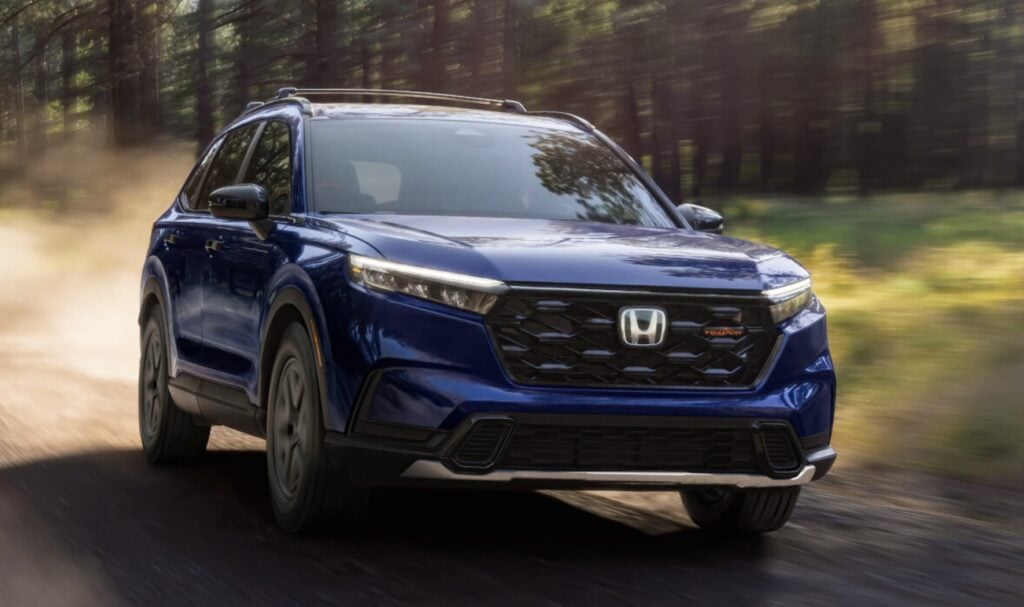
Best Deal: Lease for $319/month for 36 months with $4,099 down
Backed by a strong legacy of reliability and the fuel savings of a 43 city/36 highway/40 combined MPG rating (2WD models), the newest CR-V Hybrid checks several boxes. While the CR-V platform may not be as luxurious as the last model on our list, it’s no pushover when it comes to resale value.
This offer expires soon. See Honda offer details.
Explore Honda CR-V deals using CarEdge

Best Deal: $4,500 cash bonus
Live in California, Massachusetts, New York, Oregon, Vermont, or Washington? Then this is your last year to get in the driver’s seat of a brand-new 2025 Ford Escape, which boasts an official 42 city/36 highway/39 combined MPG rating. Ford makes it worth your while with a $4,500 cash bonus, equal to 12% off MSRP on the base trim.
This offer expires January 5, 2026. See Ford offer details.
Explore Ford Escape deals using CarEdge
Best Deal: Lease for $219/month for 39 months with $3,999 down
If you’re interested in lowering your monthly payment and tapping into fuel savings, Toyota offers a sub-$250-per-month lease on the eco-friendly 2026 Corolla Hybrid, which is also available for financing at 4.99% APR for 72 months. With an official fuel economy rating of 53 city/46 highway/50 combined MPG, it’s one of the most fuel-efficient models on this list.
Offers like this won’t last long. See Toyota offer details.
Explore Toyota Corolla deals with CarEdge

Best Deal: 2.49% APR for 48 months or lease for $449/month for 36 months with $3,999 down
Does your Christmas wishlist include a hybrid luxury crossover that gets 45 MPG in town, 41 MPG on the highway, and 43 MPG combined? Unwrap Lexus’ best hybrid deals in December on the 2025 UX 300h, with 2.49% APR for a four-year loan or $449 per month on a three-year lease.
This offer expires soon. See Lexus offer details.
Explore Lexus UX 300h deals with CarEdge
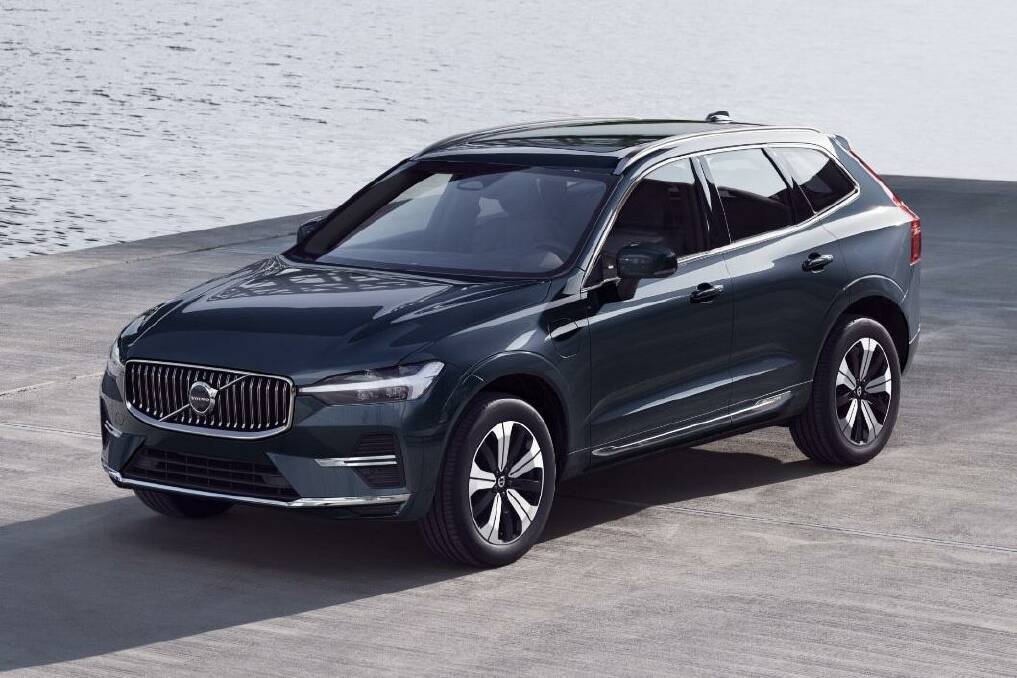
Best Deal: Lease for $672/month for 36 months with $0 down
They say the best things come to those who wait, and Volvo delivers on that with a zero-down luxury lease on the 2026 XC60 Core B5 AWD Hybrid. This rare offer on a premium mild-hybrid SUV with an official fuel economy rating of 23 city/30 highway/26 combined MPG won’t last long, and it likely won’t happen again for quite some time.
This exceptional offer ends January 2, 2026. See Volvo offer details.
Explore Volvo XC60 deals with CarEdge
Extend your savings well into 2026 with these December offers on fuel-efficient hybrids that reduce your fuel bill and your carbon footprint. Compare these popular models to see how total cost of ownership, depreciation, and maintenance costs stack up.
Tired of the hassle of haggling car prices, coordinating test drives, and arranging delivery? Let a CarEdge Concierge handle the critical details to give you peace of mind and get you behind the wheel sooner. Get a free consultation today.
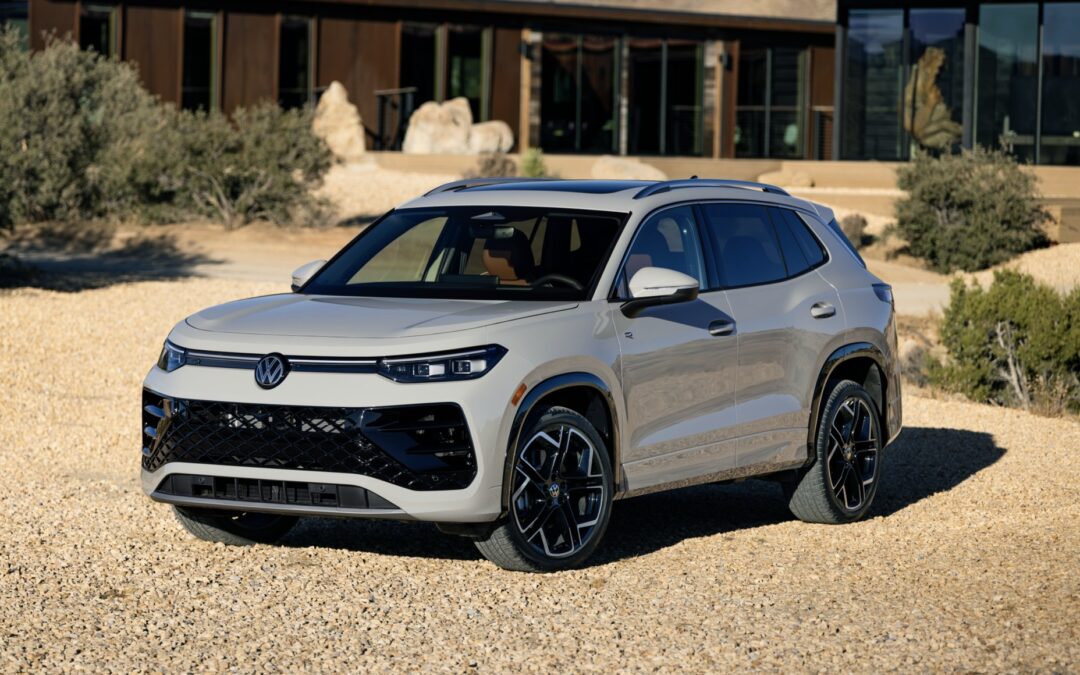
The end of the year is a great time to buy or lease a new SUV. This December, automakers are offering big discounts across their lineups to clear out as many 2025 models as possible before the new year. That includes both traditional SUVs and their crossover siblings. Whether it’s leasing, financing, or cash offers, we’re seeing great deals on several popular SUV models. These are the best year-end SUV sales in December 2025.
The best year-end deal: $4,000 cash back
This cash-back offer is equivalent to up to 13% off the MSRP of a 2025 Escape. That’s a massive discount compared to other small crossovers. But Ford is phasing out the Escape, so availability may be limited. See Ford offer details.
See the best Ford Escape deals with CarEdge
The best year-end deal: $0-down lease, monthly payment of $499 for 36 months
Ford is offering lease deals on both the Active and ST-Line trim levels this month, but only the Active can be had with no money down. While it is a lower trim level, the Active is well-equipped. See Ford offer details.
See the best Ford Explorer deals with CarEdge
The best year-end deal: $6,500 cash
This cash offer shaves up to 15% off the MSRP of a QX50, but you’ll have to pick from any remaining dealer inventory. Like the Escape, which also sees a big cash rebate this month, the QX50 is being phased out. See Infiniti offer details.
See the best Infiniti QX50 deals with CarEdge
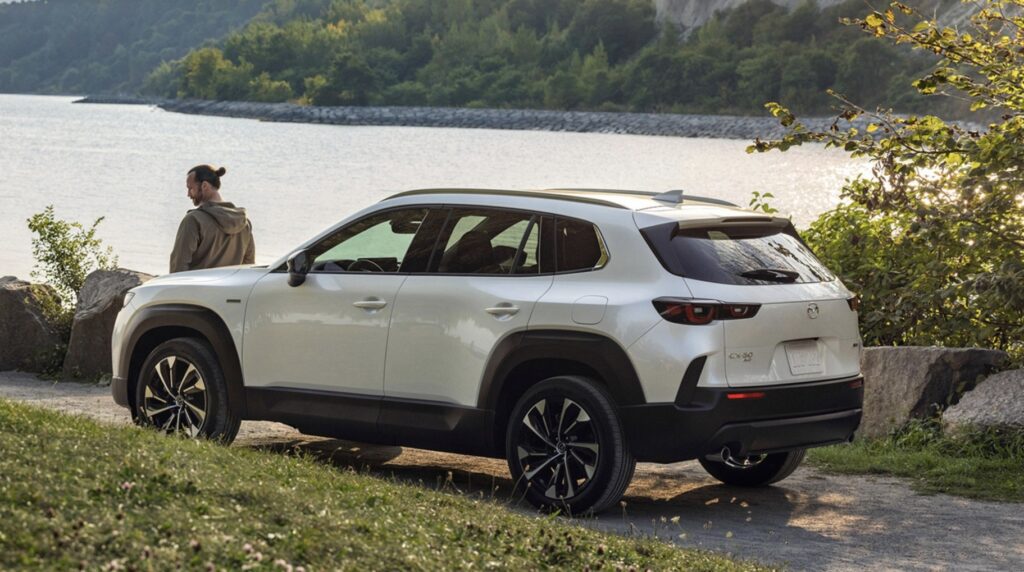
The best year-end deal: 0.9% APR financing for 72 months
It’s not zero-interest, but it’s pretty close. Mazda is offering the same financing on the CX-5, but the CX-50 is a bit newer and looks more like a traditional SUV. The low financing available for the CX-50 also beats Mazda’s best offer for the smaller CX-30. See Mazda offer details.
See the best Mazda CX-50 deals with CarEdge
The best year-end deal: 0% APR financing for 60 months
The Rogue is one of the few small crossovers available with 0% financing, although this offer only applies to the top Platinum trim level. Other models get 1.9% APR financing. The Platinum is more expensive than other Rogue trim levels, so this offer makes the most sense for customers already eyeing it. See Nissan offer details.
See the best Nissan Rogue deals with CarEdge
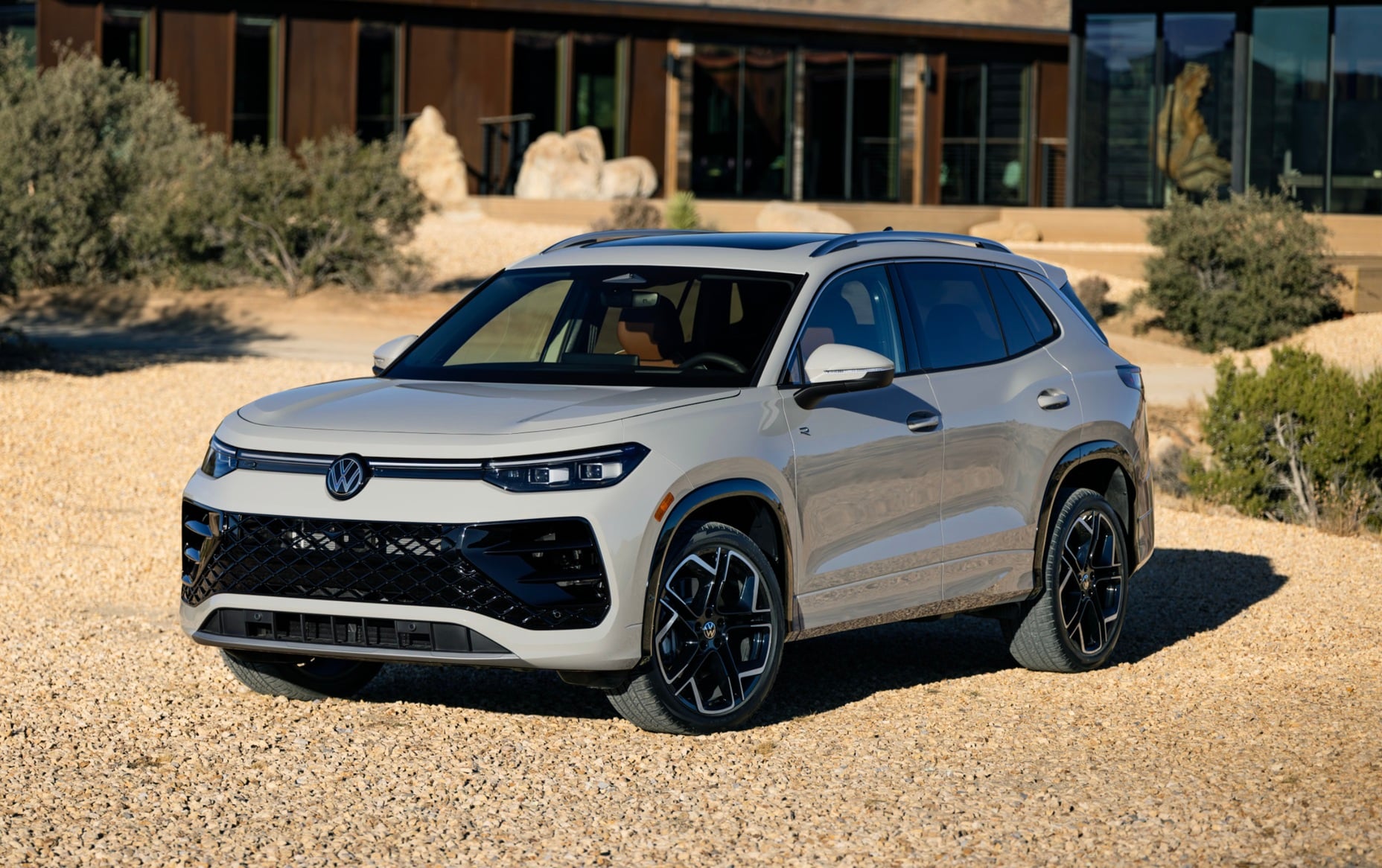
The best year-end deal: $0-down lease, monthly payment of $419 for 36 months
In addition to waiving the down payment, Volkswagen is offering a low monthly payment compared to rivals. This is one of the best deals yet on the redesigned Tiguan. See Volkswagen offer details.
See the best Volkswagen Tiguan deals with CarEdge
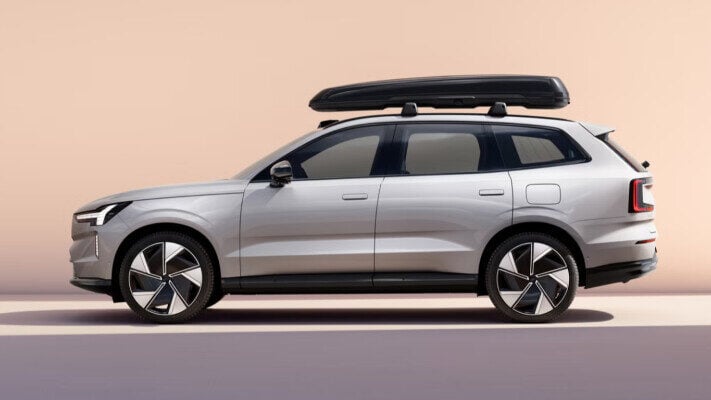
The best year-end deal: 0% APR financing for 72 months
Interest-free financing is always a plus, but especially on a luxury SUV like the EX90. With a starting price near $80,000, this financing offer could save you a lot over the course of a loan. See Volvo offer details.
See the best Volvo EX90 deals with CarEdge
Now that you know the best year-end SUV sales, you can use CarEdge to find the exact vehicle you want and negotiate with a dealer for the best price. Like 2025, these deals won’t last much longer. Learn how CarEdge makes car buying easy, from our all-inclusive car buying service to the ultimate toolkit for DIY negotiators.
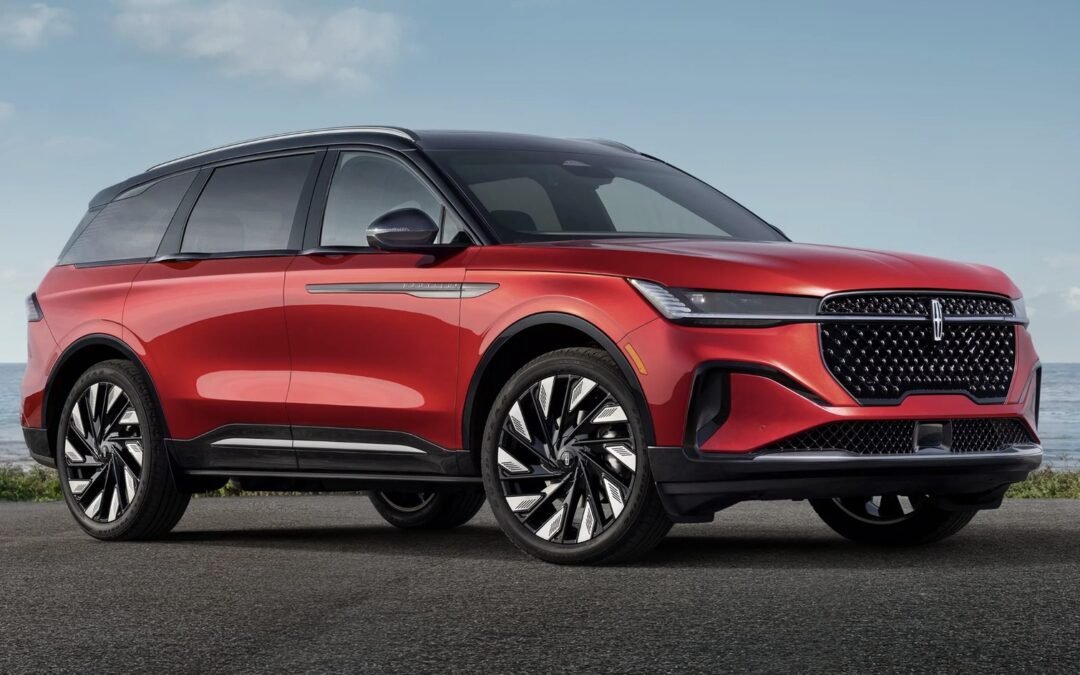
As dealerships rush to offload their 2025 inventory to make room for new arrivals, the compelling offers available on select luxury models may have you rethinking how you’ll arrive in style in 2026. Many automakers even entice consumers with substantial savings on upcoming 2026 models, upping the ante before closing out their books. If you’ve held out this long for a luxury vehicle, now’s the time to act on some of the best luxury year-end car sales.
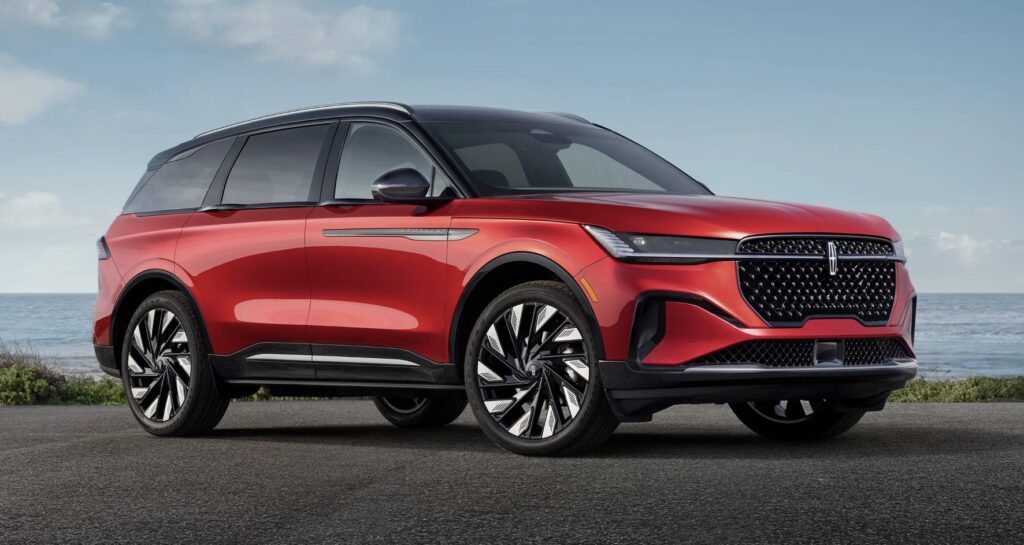
Best Deal: 0% APR for 48 months, or lease for $649/month for 36 months with $2,074 down
Lincoln luxury SUVs occupy two spots on our list of the best luxury car sales in December, including the larger 2025 Nautilus and the smaller 2025 Corsair. Both benefit from interest-free financing on four-year loans, but you can also lease the Nautilus Premiere AWD for $649 a month for three years, with only $2,074 due at signing.
These offers are good through January 5, 2026. See Lincoln offer details.
See the best Lincoln Nautilus deals with CarEdge
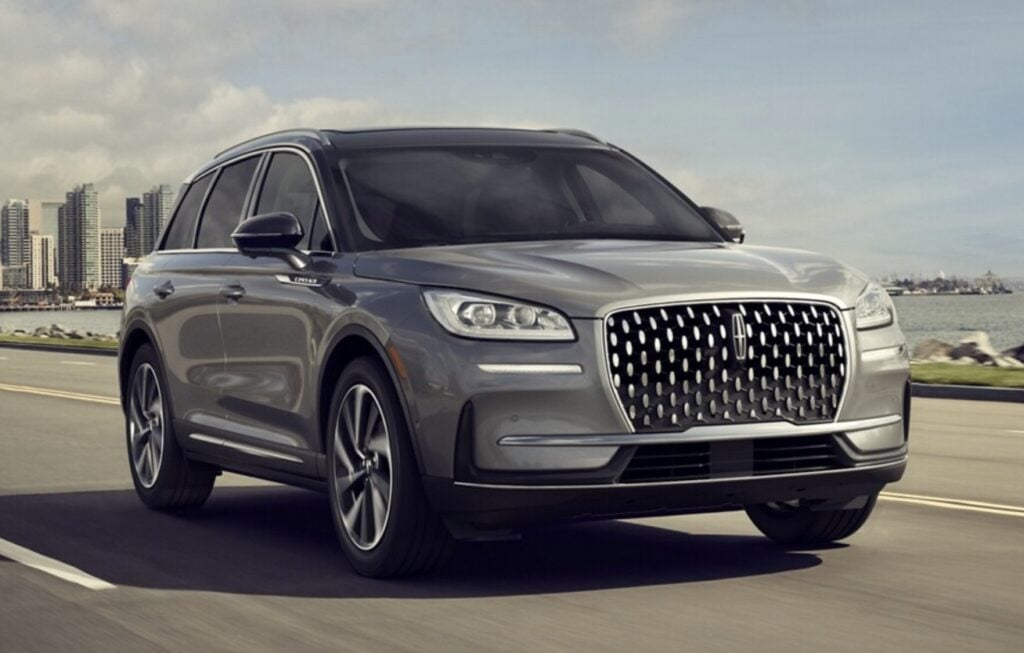
Best Deal: 0% APR for 48 months, or lease for $499/month for 36 months with $499 down
Albeit a smaller luxury SUV, the Corsair is hardly lacking in refinement. Pay no interest on the 2025 model with a four-year loan to bank significant savings, or lease for only $499 a month with only one month’s payment due at signing to keep more of your holiday bonus in reserve.
These offers expire January 5, 2026. See Lincoln offer details.
See the best Lincoln Corsair deals with CarEdge
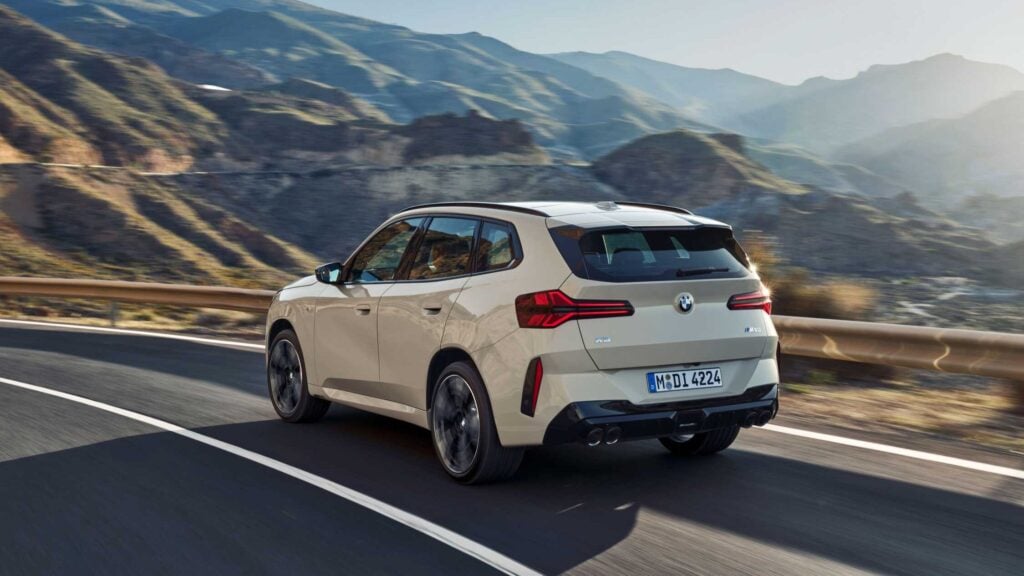
Best Deal: 0.9% APR for 60 months
The 2026 BMW X3 strikes a sophisticated balance between a capable city car and a powerful yet smooth highway cruiser. Five-year loans on the 2026 model carry a sub-1% interest rate, resulting in more savings than the same APR for a 48-month loan available on X1, X5, 3-Series, and i4 models.
Offers on select BMW models expire January 2, 2026. See BMW offer details.
See the best BMW X3 deals with CarEdge
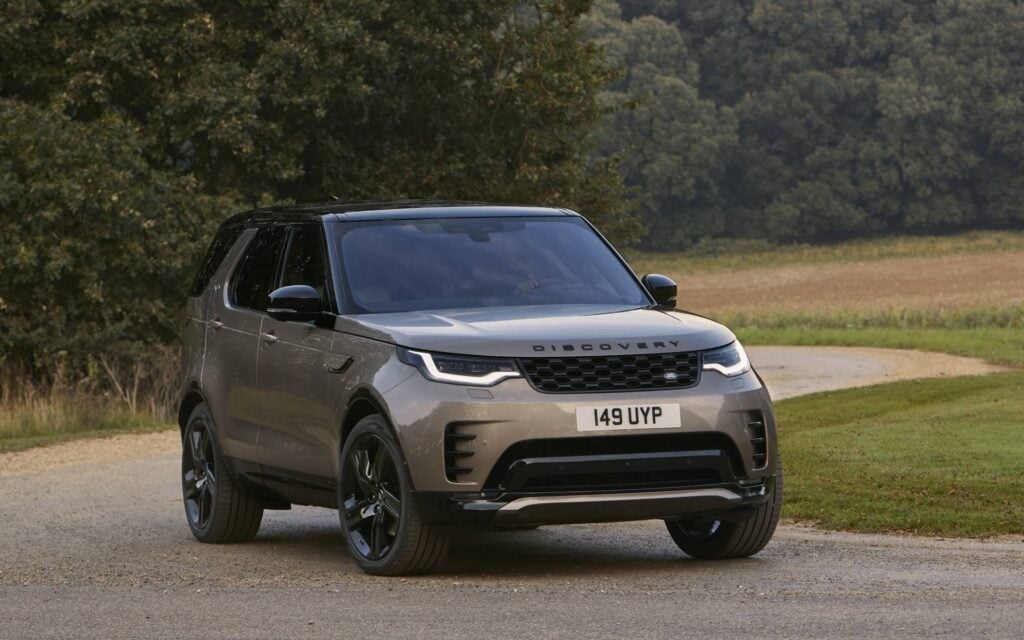
Best Deal: 1.9% APR for 60 months
If you’re on the hunt for one of the best luxury year-end car sales you won’t see any other time of the year, head over to your nearest Jaguar Land Rover dealership. A 1.9% interest rate across a 60-month loan term is practically unheard of for this iconic luxury brand, especially on one of its flagship models.
This rare deal expires January 2, 2026. See Land Rover offer details.
See the best Land Rover Discovery deals with CarEdge
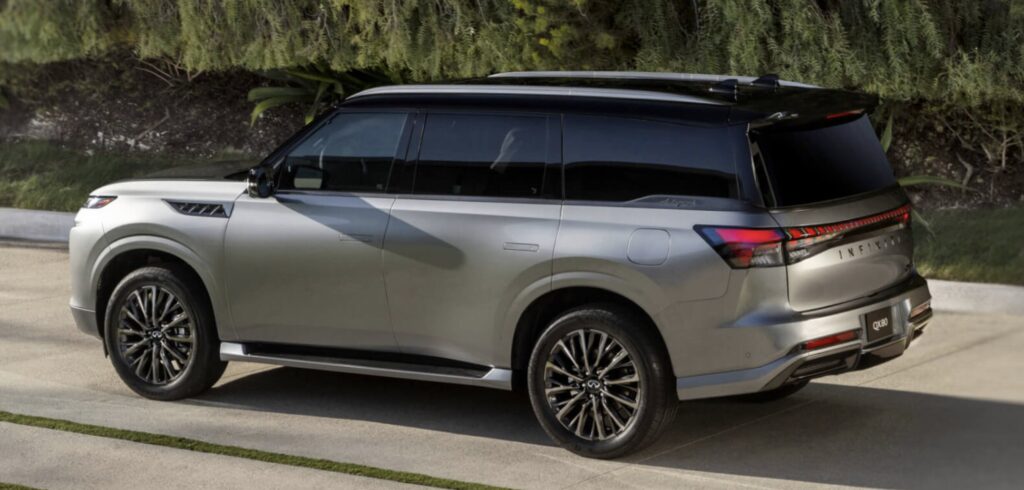
Best Deal: $9,000 cash bonus
The full-size, fully equipped 2026 Infiniti QX80 delivers a doorbusting deal worth considering as you mark the remaining days off your 2025 calendar. Infiniti currently offers a $9,000 cash bonus—the equivalent of about 10% off MSRP—on the newest QX80 models, but keep in mind that it’s not combinable with financing offers.
This offer expires January 5, 2026. See Infiniti offer details.
See the best Infiniti QX80 deals with CarEdge
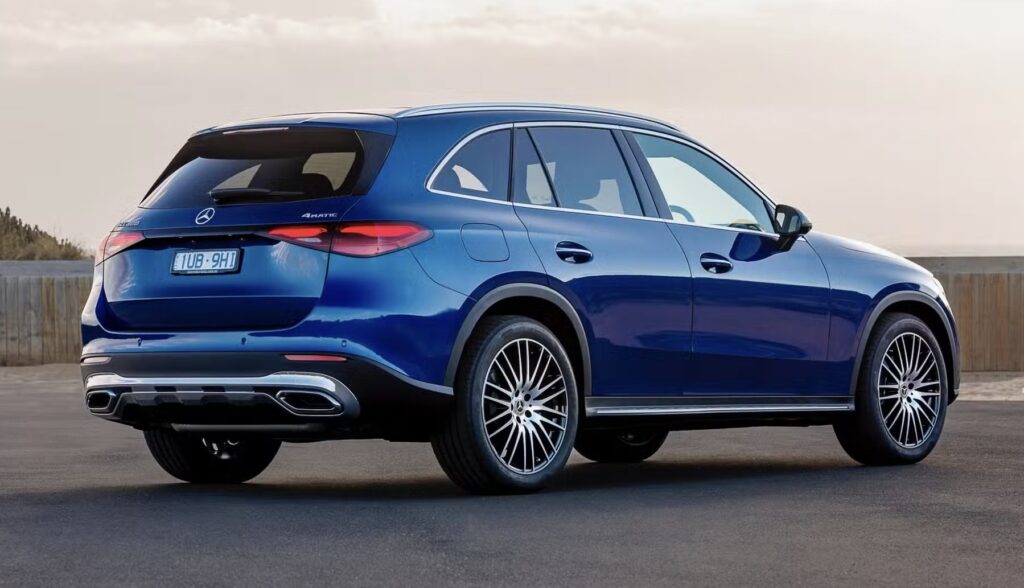
Best Deal: 1.9% APR for 36 months, or lease for $579/month for 39 months with $4,993 down
The weather outside might be frightfully cold, but inside the 2025 Mercedes-Benz GLC 300 4MATIC, you can conquer practically any terrain with ease. Take advantage of low-APR financing for 36 months, or lease for an additional three months with less than $5,000 due at signing.
These deals are only available for a limited time. See Mercedes-Benz offer details.
See the best Mercedes-Benz GLC deals with CarEdge
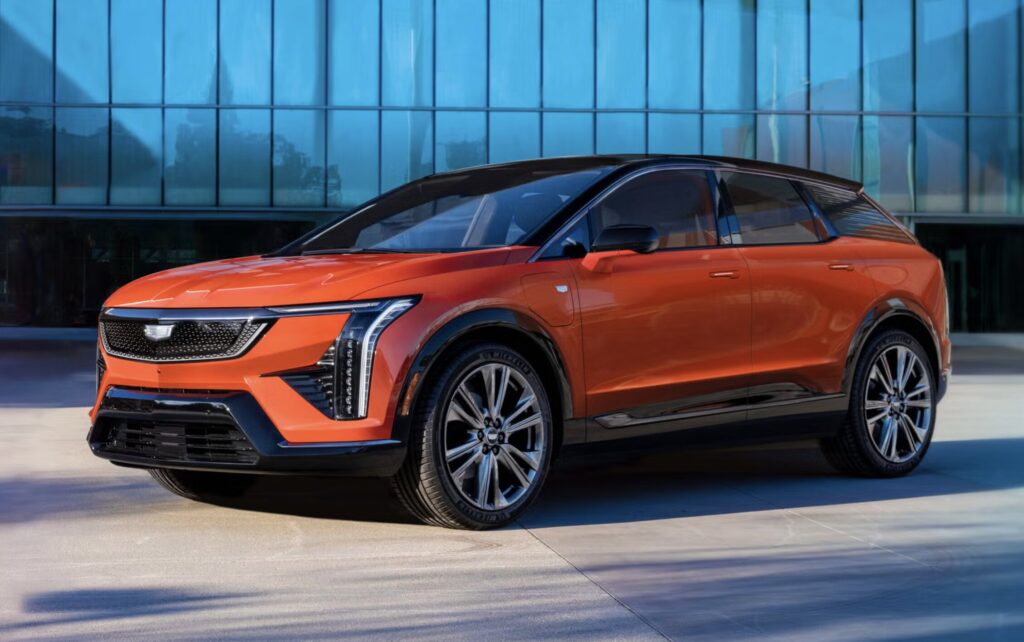
Best Deal: 2.9% APR for 60 months with $2,000 cash bonus, or lease for $319/month for 24 months with $4,969 down
Year’s end can be a bittersweet time for some, but for those who can’t resist the beauty of the 2026 Cadillac Optiq Luxury, the domestic luxury brand sweetens the pot with a $2,000 cash bonus and 2.9% APR for 60 months. If you’re not sold on the luxury EV SUV just yet, a two-year lease and around $5,000 down give you first-hand experience.
These deals won’t stick around long. See Cadillac offer details.
See the best Cadillac Optiq deals with CarEdge
With only a few days left in 2025, your window of opportunity for treating yourself to a luxury vehicle is quickly closing. Close out the year with substantial savings by visiting your local dealership to take advantage of the best luxury car sales in December.
Rather not add the hassle of negotiations to your to-do list? CarEdge Pro negotiates on your behalf, providing you with insider data so you can be sure you’re getting the best deal.
In 2025, some SUVs and crossovers are being scooped up as soon as they hit the lot, while others are sitting unsold for more than six months. Whether you’re a buyer looking for a deal or a seller trying to time the market, understanding which SUVs are moving (or not) is essential.
We analyzed December car market data to find the SUVs with the lowest and highest market day supply (MDS). MDS is a measure of how many days it would take to sell through current inventory at the current sales pace. Here are the winners and losers in 2025’s SUV market.
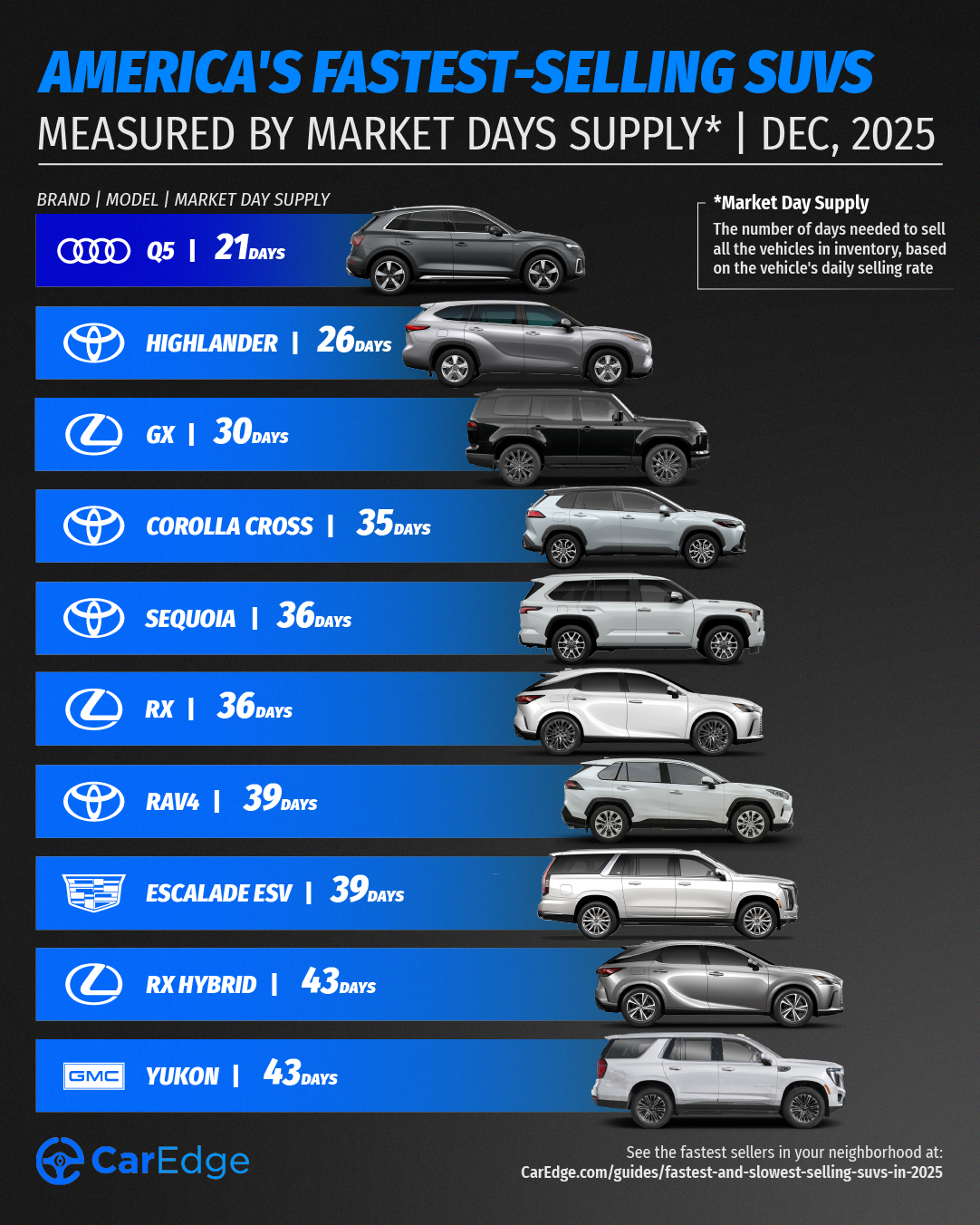
These are the SUVs and crossovers with the lowest market day supply as of December 2025. That means they’re in high demand right now, and are likely harder to negotiate on due to limited availability.
| Make | Model | Market Day Supply | Total For Sale | 45-Day Sales | Average Selling Price |
|---|---|---|---|---|---|
| Audi | Q5 | 21 | 546 | 1,198 | $59,913 |
| Toyota | Highlander | 26 | 5,408 | 9,238 | $52,294 |
| Lexus | GX | 30 | 2,505 | 3,708 | $80,358 |
| Toyota | Corolla Cross | 35 | 15,932 | 20,331 | $31,303 |
| Toyota | Sequoia | 36 | 4,269 | 5,375 | $83,585 |
| Lexus | RX | 36 | 7,307 | 9,189 | $59,257 |
| Toyota | RAV4 | 39 | 69,716 | 80,310 | $37,424 |
| Cadillac | Escalade ESV | 39 | 1,713 | 1,987 | $126,778 |
| Lexus | RX Hybrid | 43 | 6,381 | 6,725 | $63,418 |
| GMC | Yukon | 43 | 5,393 | 6,118 | $88,398 |
Source: CarEdge Pro
In an unusual hiccup, the Audi Q5 is the fastest-selling SUV this month. Audi is selling down the 2025 Q5 with compelling incentives as dealers prepare for incoming 2026 models. We don’t expect the Q5 to be on this list much longer.
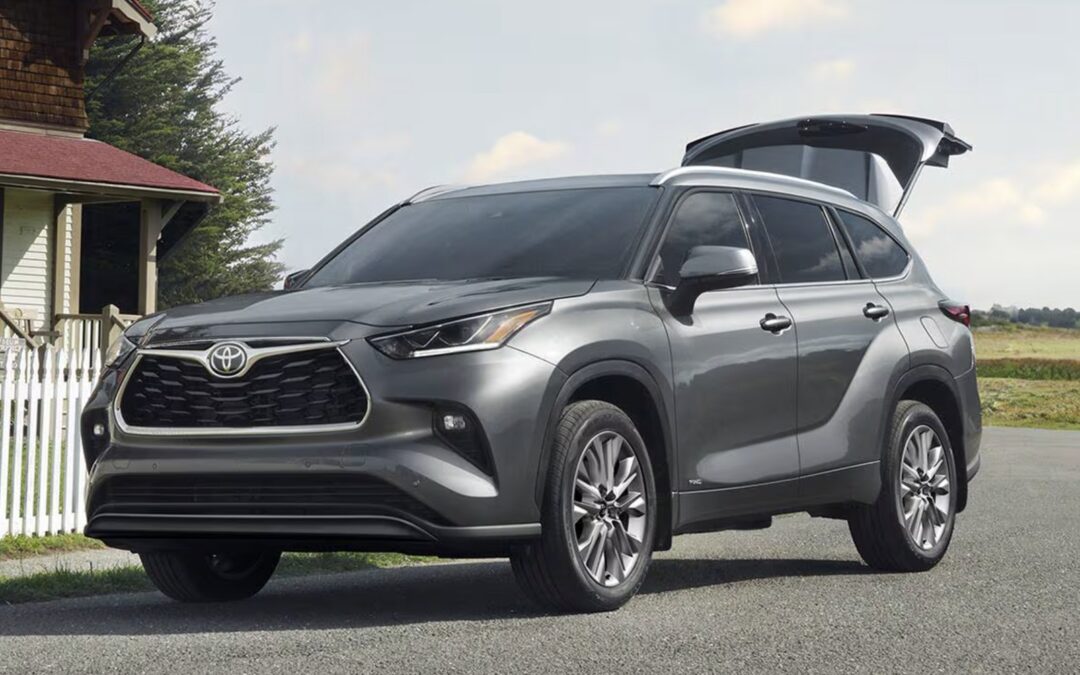
Seven of the top 10 fastest-selling SUVs in 2025 are Toyota or Lexus models. With Consumer Reports naming Toyota as the most-reliable brand (again), more shoppers are flocking to their lineup. No one wants a $50,000 car that lacks in reliability. Car buyers are valuing reliability and affordability above all else right now, and the latest data reflects that.
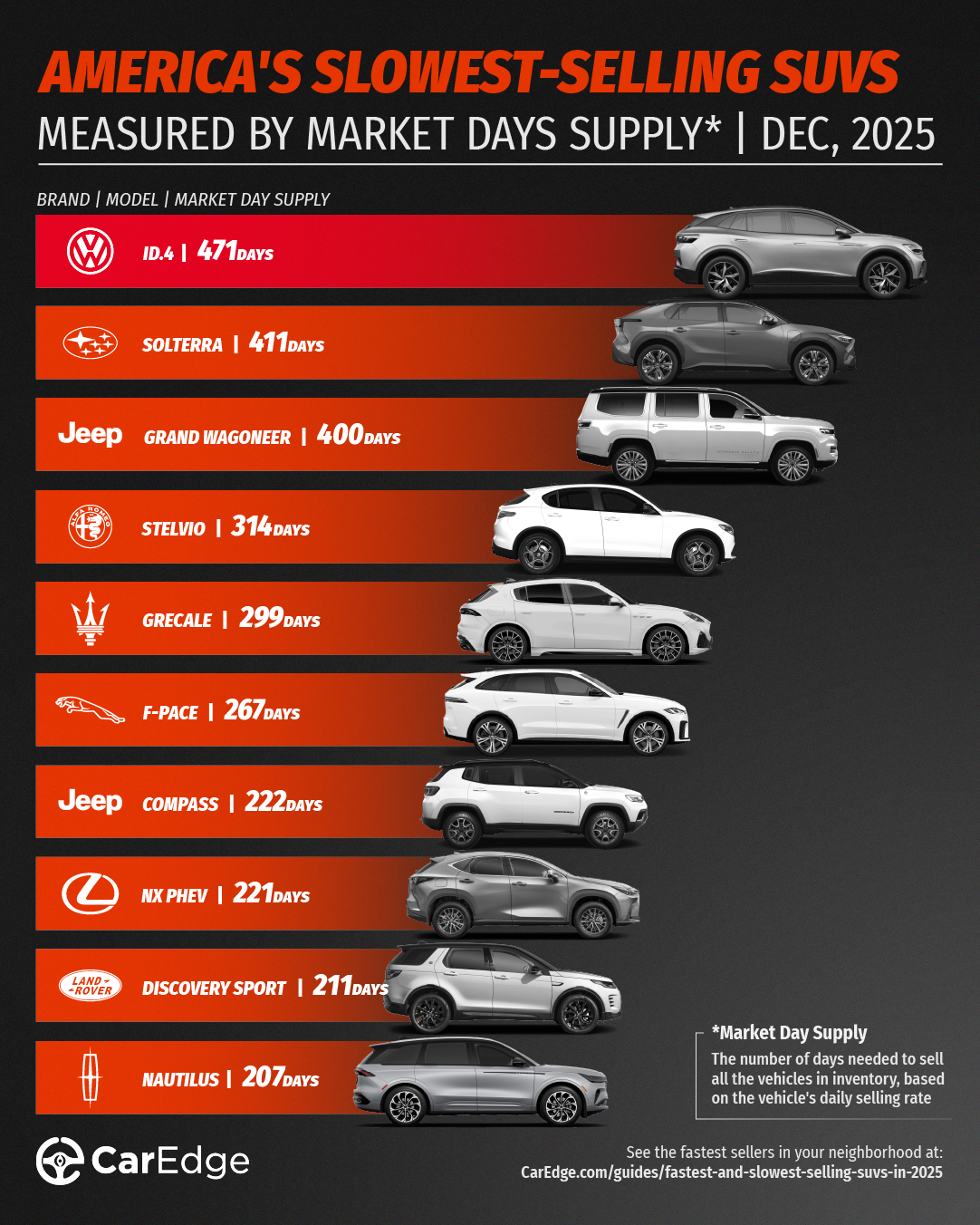
These SUVs have the highest market day supply, which means they’re sitting unsold for longer. Buyers may be able to score better deals on these slowest-selling SUVs in December, especially with this new AI negotiator doing the work for you.
| Make | Model | Market Day Supply | Total For Sale | 45-Day Sales | Average Selling Price |
|---|---|---|---|---|---|
| Volkswagen | ID.4 | 471 | 1,371 | 131 | $48,036 |
| Subaru | Solterra | 411 | 868 | 95 | $41,463 |
| Jeep | Grand Wagoneer | 400 | 1,254 | 141 | $96,557 |
| Alfa Romeo | Stelvio | 314 | 886 | 127 | $57,297 |
| Maserati | Grecale | 299 | 672 | 101 | $82,381 |
| Jaguar | F-PACE | 267 | 2,136 | 360 | $70,204 |
| Jeep | Compass | 222 | 26,303 | 5,320 | $31,805 |
| Lexus | NX PHEV | 221 | 2,112 | 430 | $67,380 |
| Land Rover | Discovery Sport | 211 | 641 | 137 | $53,008 |
| Lincoln | Nautilus | 207 | 13,629 | 2,963 | $62,969 |
Source: CarEdge Pro
With the federal EV tax credit now over, the Volkswagen ID.4 and Subaru Solterra have jumped to the top of the list, with well over one year of supply. Several of the others fall into the luxury segment. With recent inflation and persistently high interest rates, buyers are thinking twice about buying luxury vehicles in 2025.
Four Stellantis models are in the bottom 10 this month. Jaguar’s F-PACE has been a slow-selling model for all of 2025, despite being the top model by volume for the British automaker.
For any of these slow-selling SUVs, prices will be more flexible if you come equipped with negotiation know-how.
If you’re looking for a deal, start with the slowest sellers this month. High inventory levels mean dealers are likely motivated to talk pricing if you negotiate with confidence. It’s always best to take a look at the best incentives of the month, too.
“If you’re shopping for a slow-selling SUV, the ball is in your court,” says auto industry veteran Ray Shefska. “Dealers know those vehicles aren’t moving, and that gives you the upper hand in price negotiations.”
Shopping Toyota, Honda, or Lexus? Expect tighter inventory and less room for negotiation. You may need to move quickly if you find the right trim. However, this is no reason to pay for unwanted add-ons or dealer markups!
With CarEdge Concierge, our experts do the legwork for you, from researching inventory to negotiating with dealers. Already know what you want? Use our AI Negotiation Expert service and have CarEdge AI negotiate with car dealers anonymously!
Explore more free tools and resources with car buying guides, cost of ownership comparisons, and downloadable cheat sheets. There’s no reason to shop unprepared in 2025.
CarEdge is a trusted resource for car buyers, offering data-backed insights, negotiation tools, and expert guidance to help consumers save time and money. Since 2019, CarEdge has helped hundreds of thousands of drivers navigate the car-buying process with confidence. Learn how to buy a car the easy way at CarEdge.com.
Year-end sales are officially here, and automakers are throwing everything they have at 2025 sales numbers. With inventory levels running higher than expected and 2026 models arriving on lots, manufacturers are rolling out their most aggressive incentives of the year. These are the top 10 year-end car deals in the first week of 2026. If you’ve been waiting for the right moment to buy, this is it.
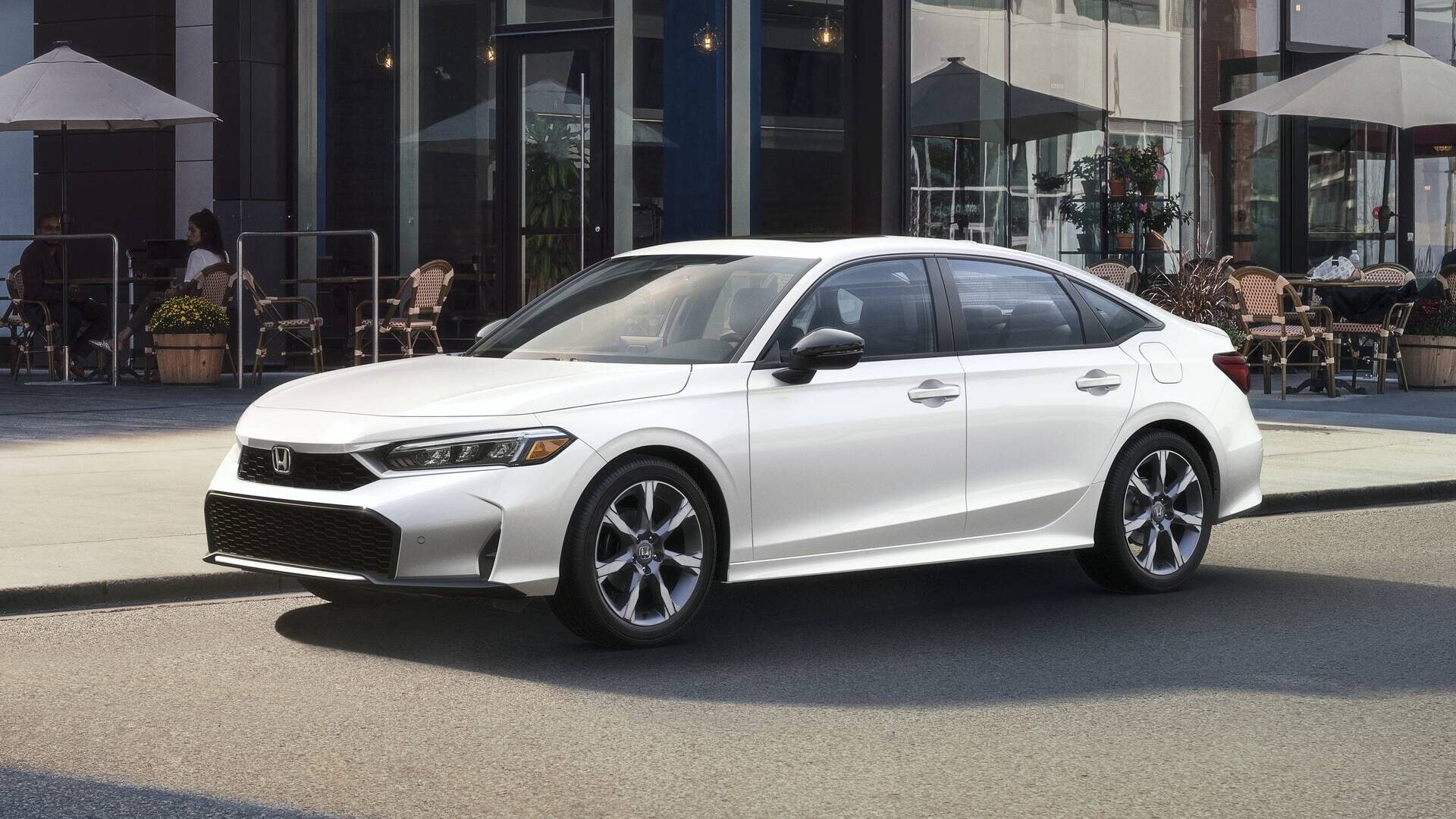
Best Deal: $0-down lease, $350/month for 36 months
The Civic remains one of the best values in the compact car segment, and this zero-down lease makes it even more accessible. No upfront cash means you can drive home in a reliable, fuel-efficient sedan without draining your savings account.
This offer expires on January 5, 2026. See offer details.
Browse Honda Civic listings with the power of local market data
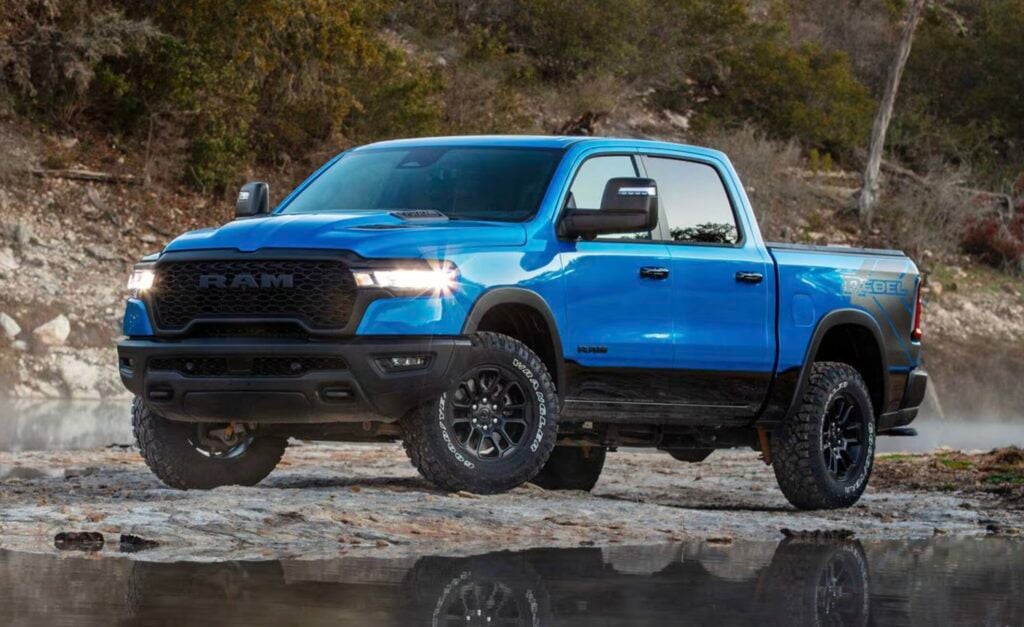
Best Deal: 0% APR for 72 months on 2025 models, or 0% APR for 60 months on 2026 models
Ram is offering interest-free financing on both outgoing 2025s and brand-new 2026 models. That’s six full years without paying a dime in interest if you go with the 2025. For buyers who prefer the latest model year, the 2026 still gives you five years at zero percent. Either way, you’re saving thousands compared to typical loan rates.
This offer expires on January 5, 2026. See offer details.
Browse Ram 1500 listings with the power of local market data

Best Deal: $0-down lease, $419/month for 36 months
Volkswagen is making it easy to get into a well-equipped compact SUV with no money down. The Tiguan SE comes with a solid feature set, including all-wheel drive in most configurations, making this one of the better no-commitment deals of the season.
This offer expires on January 2, 2026. See offer details.
Browse Volkswagen Tiguan listings with the power of local market data
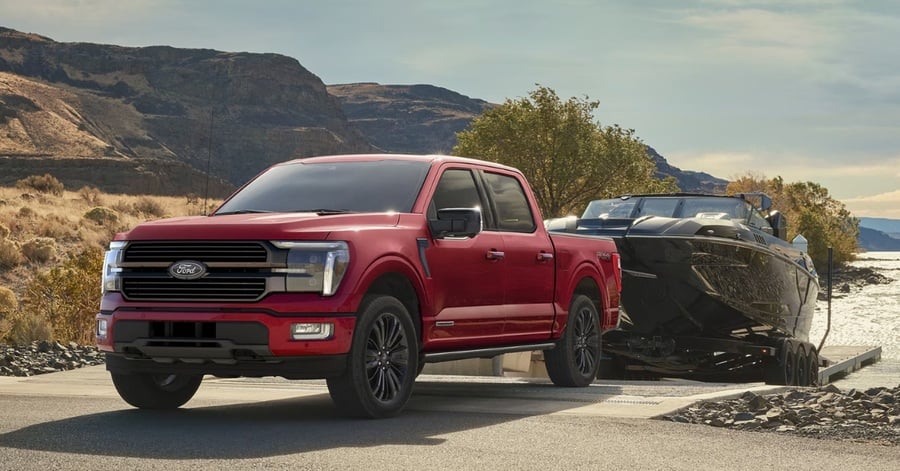
Best Deal: $0-down lease, $479/month for 36 months
The best-selling vehicle in America is now available with no money down. Ford’s zero-down lease on the F-150 STX is one of the most competitive truck offers this December, especially considering the STX trim comes well-equipped with features like the 2.7-liter turbocharged V6 engine.
This offer expires on January 5, 2026. See offer details.
Browse Ford F-150 listings with the power of local market data
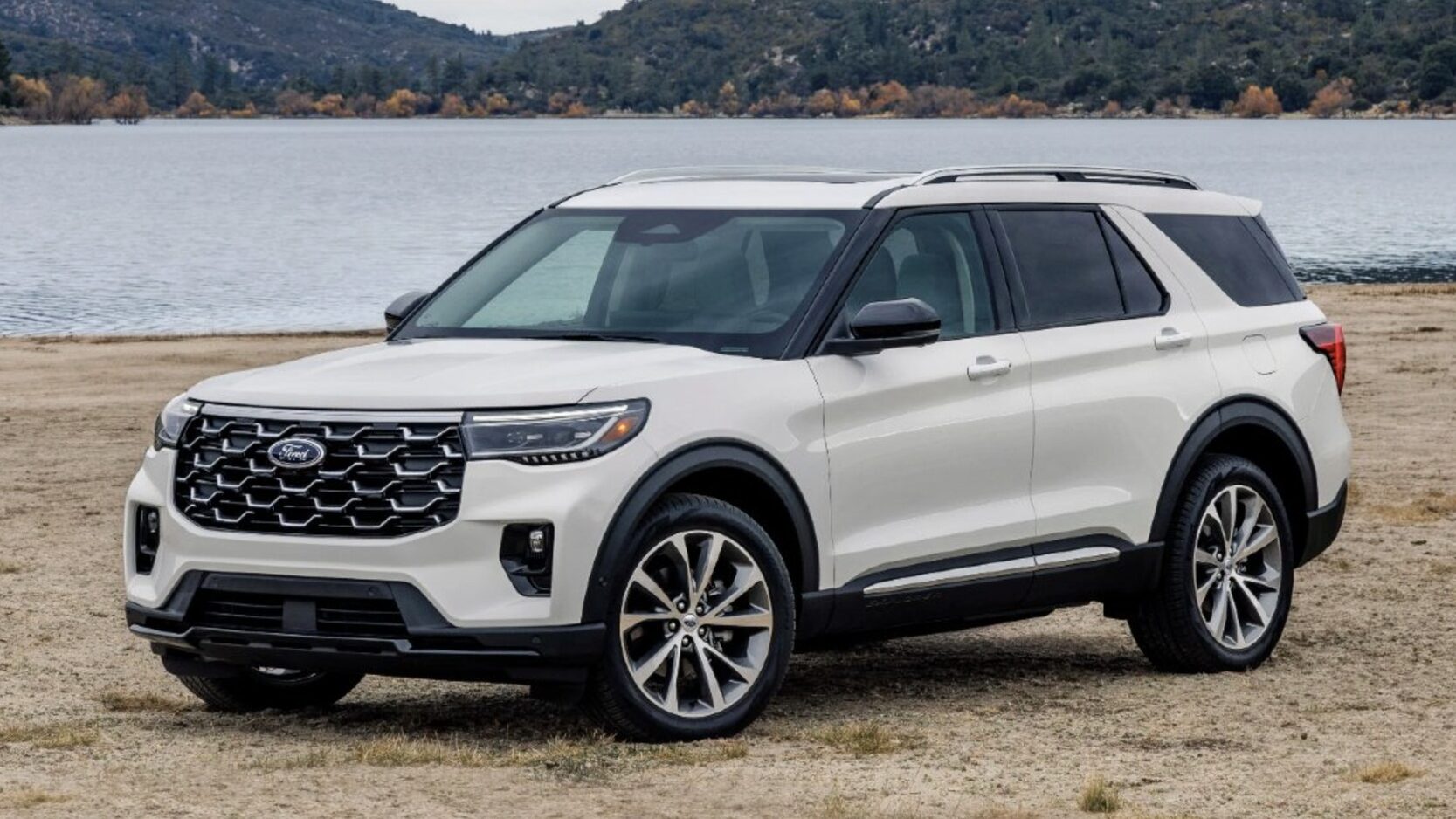
Best Deal: $0-down lease, $499/month for 36 months
Ford’s three-row SUV is getting the zero-down treatment for year-end. The Explorer Active comes with rugged styling and standard all-wheel drive, making it a solid choice for families who need space without the commitment of a large down payment.
This offer expires on January 5, 2026. See offer details.
Browse Ford Explorer listings with the power of local market data
Best Deal: $4,000 cash back (up to 13% off MSRP)
If you prefer to buy rather than lease, the Escape is delivering serious cash savings. With $4,000 in rebates available, you’re looking at up to 13% off the sticker price on select trims. That’s one of the deepest discounts we’ve seen on a compact SUV this year.
This offer expires on January 5, 2026. See offer details.
Browse Ford Escape listings with the power of local market data

Best Deal: $6,500 cash offer (equal to 15% off MSRP)
Infiniti is offering the single largest cash incentive on our list. A $6,500 discount equals roughly 15% off the MSRP, putting this luxury compact SUV within reach of buyers who might otherwise shop mainstream brands. If you’ve been considering a step up to a premium vehicle, this is your opportunity. But it’s also your last chance to own this model. The QX50 will be discontinued in 2026.
This offer expires on January 2, 2026. See offer details.
Browse Infiniti QX50 listings with the power of local market data
Best Deal: 0% APR for 48 months, or lease from $499/month for 36 months with just $499 due at signing
Lincoln is giving buyers flexibility with two strong offers. Take the zero-percent financing for four years if you’re buying, or go with the ultra-low $499 down lease if you prefer lower commitment. Either way, you’re getting into a luxury SUV with minimal financial strain.
This offer expires on January 5, 2026. See offer details.
Browse Lincoln Corsair listings with the power of local market data
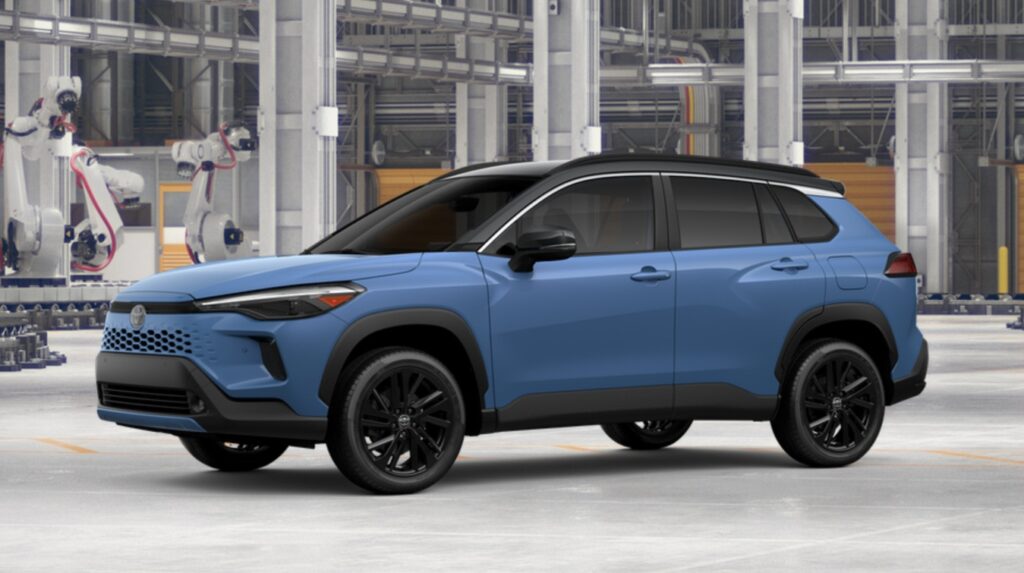
Best Deal: Lease from $179/month for 39 months with $3,999 due at signing
Toyota’s most affordable lease of the season lands on the redesigned 2026 Corolla SE. At just $179 per month, this is one of the lowest payments you’ll find on any new car right now. The upfront cost is higher than some competitors, but the monthly savings add up quickly.
This offer expires on January 5, 2026. See offer details.
Browse Toyota Corolla listings with the power of local market data
Best Deal: 0% APR for 60 months, or lease from $279/month for 36 months with $4,489 due at signing
Nissan is bringing back zero-percent financing on the Rogue for year-end. Five years interest-free is hard to beat, especially on a redesigned model with fresh styling and updated tech. If you prefer to lease, the $279 monthly payment on the all-wheel drive SV trim is competitive for a well-equipped compact SUV.
This offer expires on January 5, 2026. See offer details.
Browse Nissan Rogue listings with the power of local market data
December is always the best time to buy a car, and 2025 was no exception. But if you’re a little late to the game, most of these sales are good through January 5, 2026. Automakers are under pressure to sell remaining 2025 models, and in early 2026, that pressure translates into savings for you.
Tired of the car buying hassle? CarEdge Concierge handles the entire process for you, from finding the right vehicle to negotiating the best price. Or, if you prefer a DIY approach with professional tools, CarEdge Pro gives you insider data and an AI agent to negotiate on your behalf.
We’re here to help!

If there’s one thing many Americans look forward to after their Thanksgiving gatherings, it’s a meal made from a smorgasbord of leftovers from their plentiful feasts. Often these leftovers tend to taste better the second day (and third and fourth, etc.). What if I told you the same sentiment could be applied to year-end deals on leftover 2024 models?
Heading into the year-end deal season, 53,411 new 2024 models sit unsold on dealership lots. For December car shoppers, these previously passed over yet brand-new models represent significant savings—we’re talking up to 20% off MSRP. Even dealerships know that the best leftovers end up as waste if you don’t make something of them.
Tariff uncertainty earlier this year delayed automakers from fully transitioning to the next model year, pushing back 2026 model arrivals a few months. With the tariff situation fluctuating almost daily, automakers held off on imports. As we move into December, 53,227 brand-new 2024 models remain unsold—over 4,000 more (2023) models than were leftover this time last year.
Total new car inventory totaled 3.4 million units as of early December. With over 1.9 million models available, 2026 variants top the list, followed by more than 1.3 million 2025 models. In the face of so many new cars to offload, many take it as a sign of a buyer’s market.
One of the biggest drawbacks of buying a new car is the immediate depreciation hit, lowering your car’s value before the odometer registers a single mile. However, with insider market data and an AI negotiator agent at your side through CarEdge Pro, you can take advantage of year-end car-buying bargains and get the best price without the awkward dealership experience. Set your sights on 15-20% off MSRP, and you could arrive in the new year with one more reason to be thankful.
Ford, Chevrolet, RAM, Hyundai, GMC, and Kia top the list of brands with the highest remaining 2024 inventory. Before you get too far into the list below, it’s important to recognize that a higher 2024 inventory level doesn’t necessarily translate to less desirable models. Instead, it can indicate a larger brand that potentially offers a wider range of models to choose from.

Ford is quietly sitting on thousands of unsold 2024 models. In fact, the Ford Expedition made our list of the worst Black Friday deals, so a heavily-discounted 2024 model might be your best bet. Here’s a look at some Ford models with plenty of leftover 2024 inventory:

With just over 10,000 leftover 2024 models to offload, Chevy looks to close out 2025 with some of its best sales on EVs, including the Chevrolet Blazer EV and Equinox EV. However, there are plenty of 2024 ICE models left to sell, too. Here’s where you’ll find the most Chevy 2024 inventory:

The RAM lineup includes its workhorse pickup and ProMaster cargo van series. With fewer than 5,000 leftover 2024 models available, it’s time to crunch some numbers and compare costs to see if adding one to your garage makes financial sense.
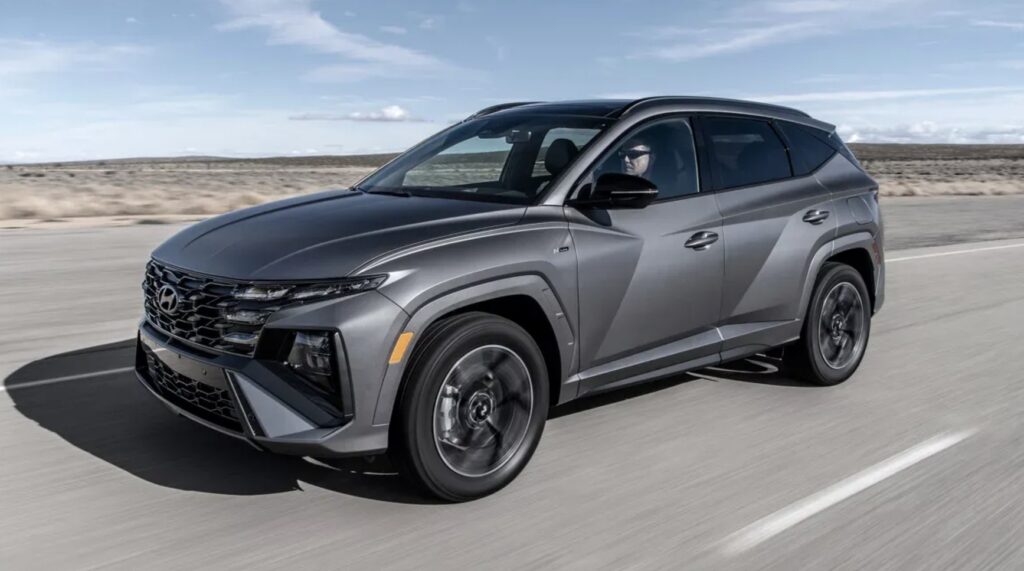
We ranked the Hyundai IONIQ 6 among the top five cars with the lowest 10-year maintenance costs. If you’re on the fence about going electric, Hyundai offers an industry-leading 10-year/100,000-mile battery warranty. With the federal tax credit over, these top-rated EVs are slow to sell.

Although GMC’s SUVs sell quickly, high-dollar trucks are sitting on dealer lots. The GMC Sierra 3500HD ranks first on our list of models with the best resale value (rankings: lowest depreciation) after five years.
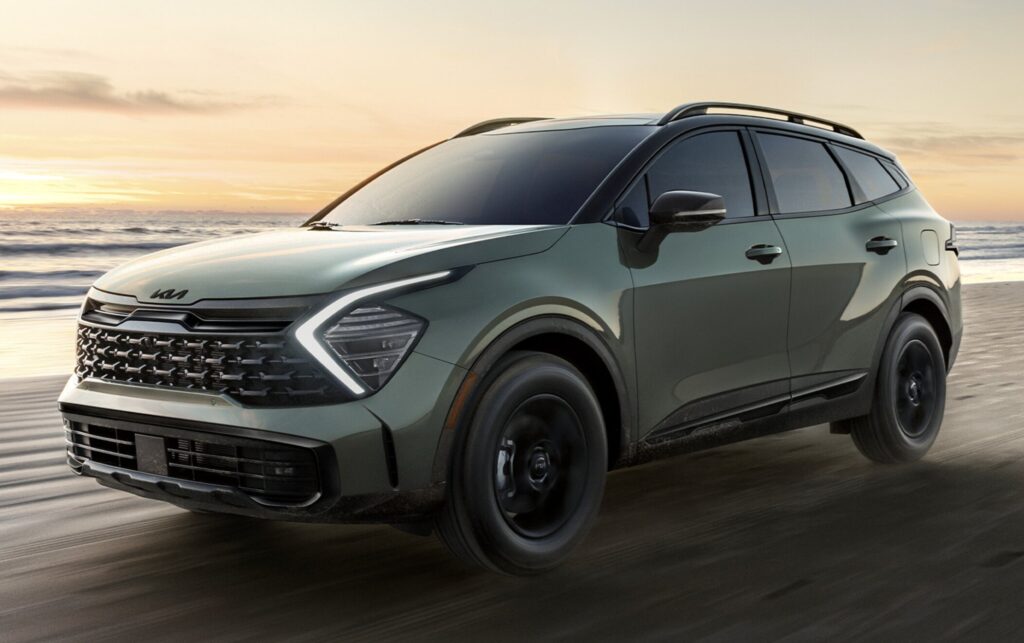
Buying a new car doesn’t always translate to paying top dollar to own it. Kia made our list of the top 10 cheapest cars based on five-year ownership costs, with both the Kia Niro and Kia K5 models costing less than $40,000 to own across five years.
Like the most coveted Thanksgiving leftovers, there’s a limited stock of brand-new 2024 models available. If you want to take advantage of these savings but have little time in your busy holiday schedule, let a CarEdge Concierge perform the research and dealer outreach for you. We’ll even coordinate the test drive, negotiate your final price, and oversee the paperwork and delivery so you can feel confident in your purchase, regardless of which vehicle you ultimately choose.
You CarEdge consumer advocates are here to help. We ALWAYS work for the consumer, never for dealerships or automakers. Our free car buying help on YouTube is a great place to start.
![Every Cyber Monday 0% APR Offer [2025]](https://caredge.com/wp-content/uploads/2025/06/2025-Subaru-Outback-deals-1080x675.jpg)
Cyber Monday marks a turning point in year-end car sales. Most November deals last through December 1, meaning that Cyber Monday is your last chance to take advantage of today’s best incentives. But on the other hand, fresh sales will arrive this week. If you see the deal you’ve been hunting for, there’s no reason to wait. It’s officially the best time of the year to buy a car, so manufacturers are bringing their best incentives. Knowledgeable shoppers can take advantage of this buyer’s market.
The CarEdge Team dug through every automaker’s Cyber Monday new car sales to find the best deals. Here’s the complete rundown of every zero-percent offer live for well-qualified buyers right now.
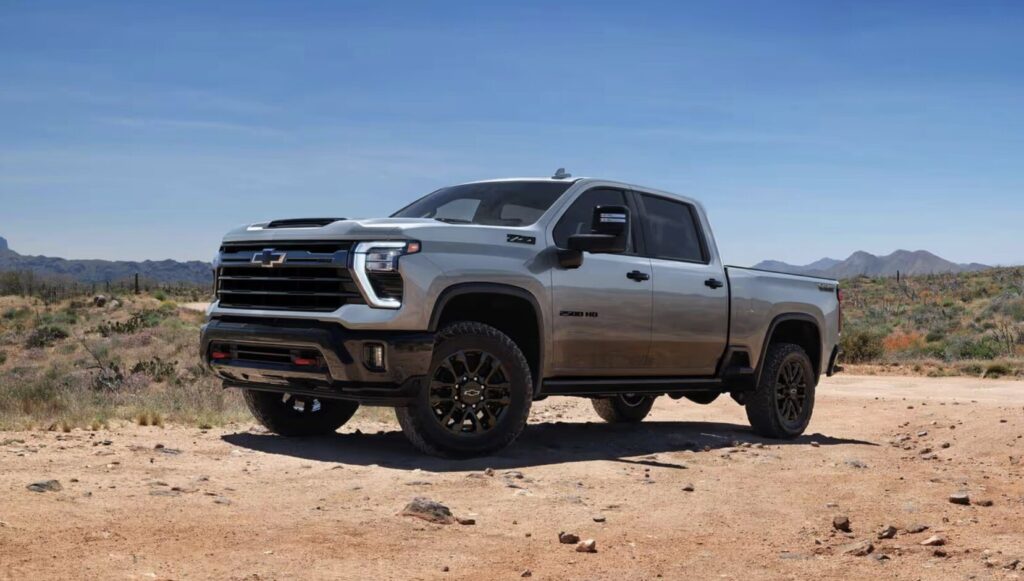
The Silverado 1500 and two popular crossovers are eligible for three years of interest-free financing for Cyber Monday 2025. Chevy’s electric models continue to feature zero percent financing. See Chevrolet offer details.

It’s late 2025, yet Dodge is still advertising sales for a 2024 model. The Hornet is consistently one of the slowest-selling cars in America. Of course, the 2025 Charger Daytona is also eligible. See Dodge offer details.

The F-150 Lightning qualifies for the soon-to-expire $7,500 federal tax credit for EVs. Zero percent financing is also a huge incentive. See Ford offer details.
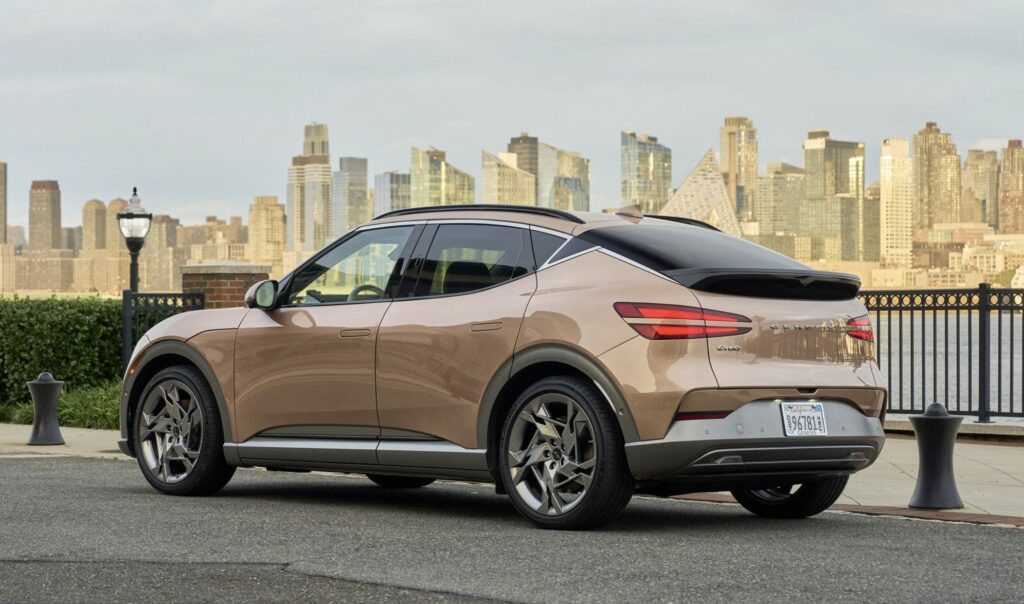
The GV60 is the luxury sibling to the top-selling Hyundai IONIQ 5. It’s now available with interest-free financing for five years. See Genesis offer details.
GMC is offering 0% APR financing for the popular Sierra 1500 this month, although this incentive is limited to 36 months. See GMC offer details.

Honda’s only zero percent financing offer is for the 2025 Honda Prologue. As a top-selling brand with rapid inventory turnover, don’t expect Honda to offer 0% financing often. See Honda offer details.
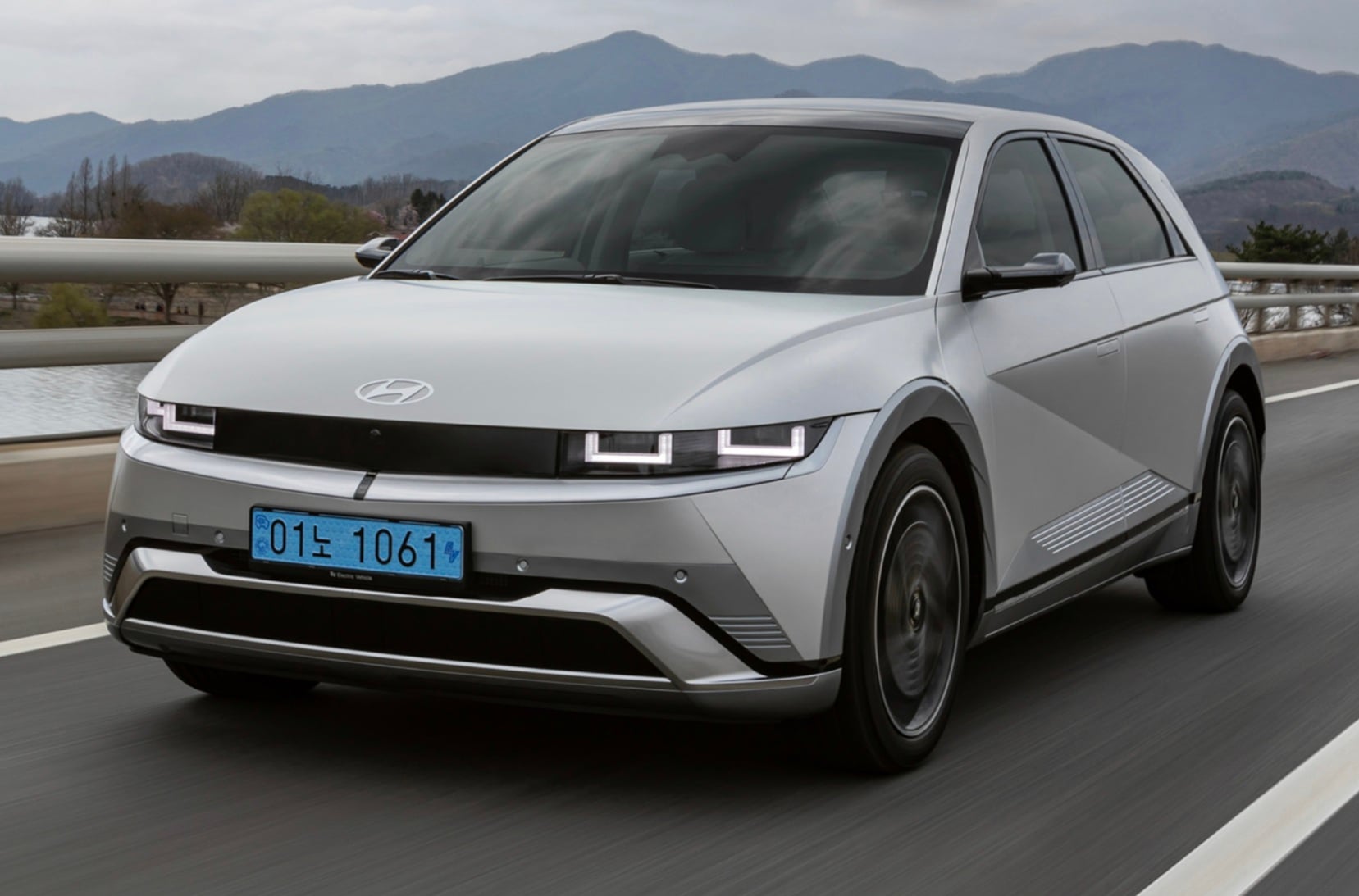
Hyundai is aggressively heading into Cyber Monday with zero percent financing. It’s not just EVs this time—the Santa Fe and Tucson also qualify. See Hyundai offer details.
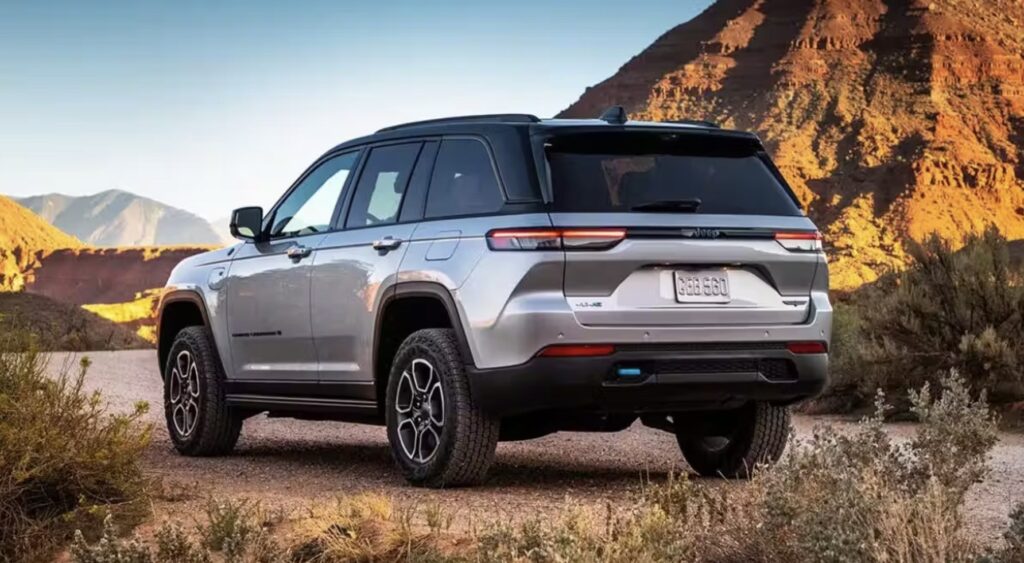
Jeep’s Cyber Monday sale brings zero percent financing for the 2025 Jeep Grand Cherokee, the brand’s top-selling model. See Jeep offer details.

Kia is offering several zero percent financing deals right now, including some of the best offers of the month. See Kia offer details.
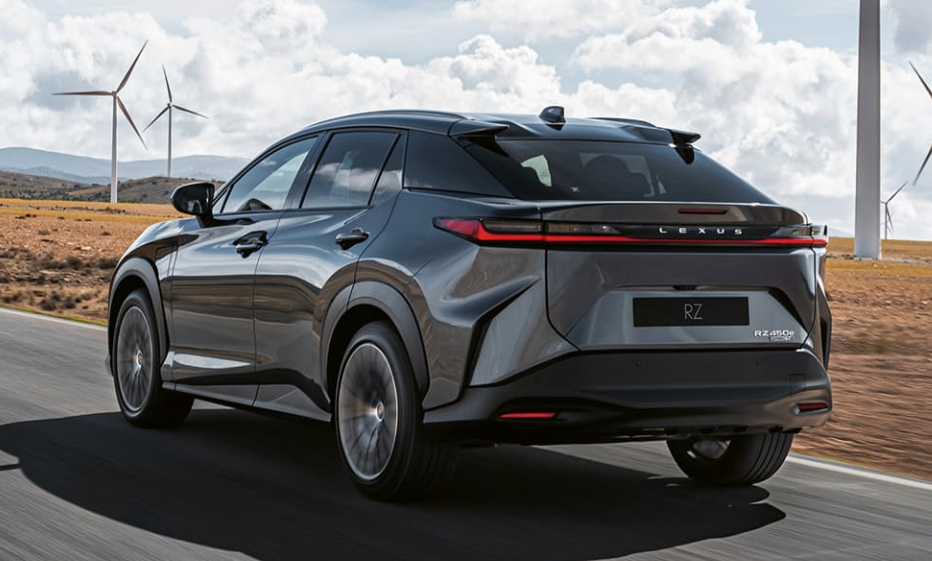
You know it’s a buyer’s market when Lexus is offering zero percent financing. That’s virtually unheard of. The all-electric Lexus RZ can be financed free of interest for six years. On a cautionary note, be wary of steep depreciation! See Lexus offer details.
Lincoln doesn’t offer 0% financing often, and nor do any other luxury brands. But as luxury sales slow, automakers are bringing out the ‘big guns’ to sell cars. See details from Lincoln.

Mitsubishi is offering zero percent financing for ALL 2025 inventory. This deal isn’t just for Cyber Monday, it’s valid through the end of the year. See offer details from Mitsubishi.
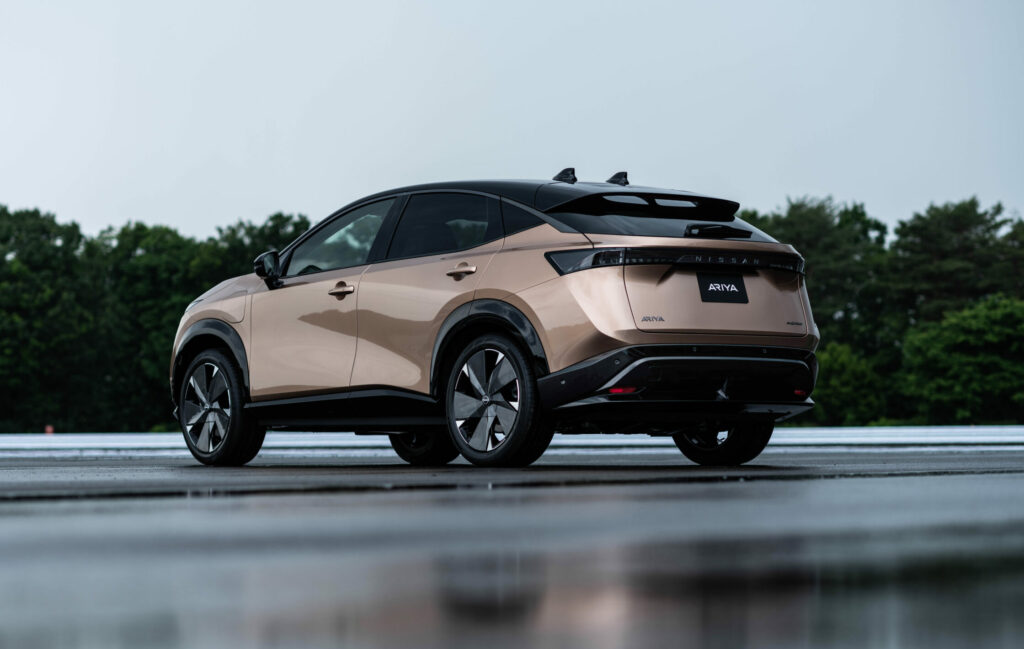
Nissan continues to offer competitive financing deals, especially on their electric and crossover models. See Nissan offer details.
The best Cyber Monday truck offer is this exceptional zero percent financing deal for 72 months for the 2025 Ram 1500. The 2026 model is also eligible for five years of interest-free financing. It’s free money! Ford and Chevy can’t match that, although the F-150 is available to lease for under $1,000 down. See the best truck deals of the month here.
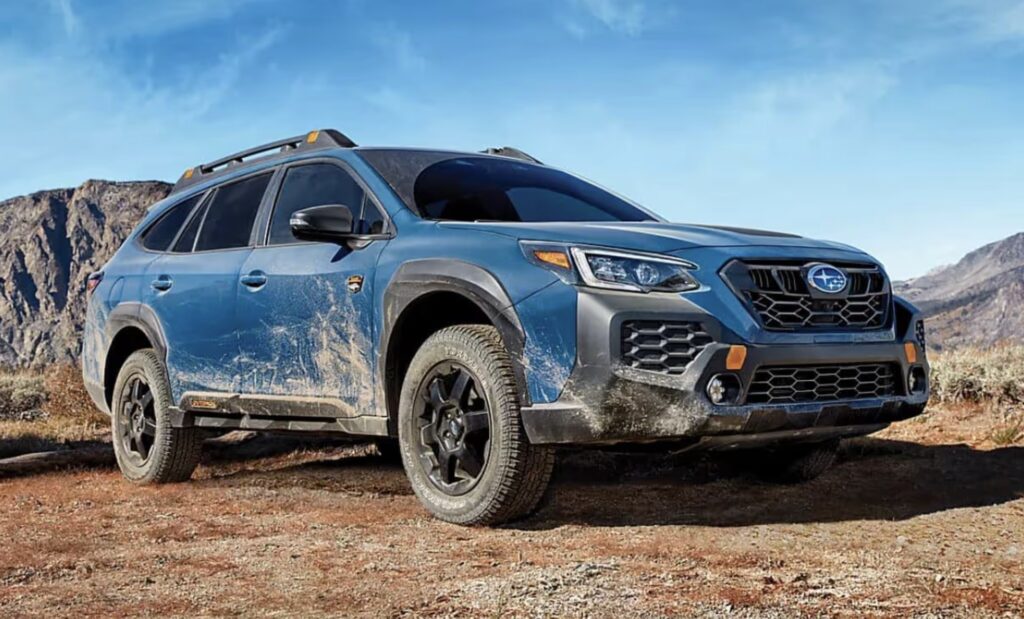
The 2025 Outback is now advertised with three years of interest-free financing. The 2025 Solterra’s 72-month offer continues as most buyers await the refreshed 2026 model. See offer details.

Volkswagen is offering zero percent financing for the Taos, and the all-electric ID.4. See other VW sales, including zero-down leases.
Cyber Monday marks the beginning of 2025’s year-end sales. Smart shoppers have been waiting all year for this, so expect the best deals to sell out quickly (especially for in-demand Toyota, Honda, and specialty models). This is a fleeting opportunity to save. Cars won’t be getting any cheaper once 2026 rolls around. We can already see that reflected in 2026 model pricing.
Tired of car buying hassles? Let AI negotiate for you! Learn more about CarEdge’s NEW AI Negotiator, recently featured in Fortune!
Automakers and dealers roll out their biggest sales of the year between Black Friday and New Year’s Day. It’s a great time to get a deal on a new car—but not every Black Friday deal is worth your attention. In fact, some can hardly be considered deals at all. We sifted through every Black Friday sale to find what’s hot, and what’s not. These are the new cars with the worst Black Friday car deals of 2025.
Don’t forget to check out the best deals, which we’ve gathered at our Black Friday car deal hub.

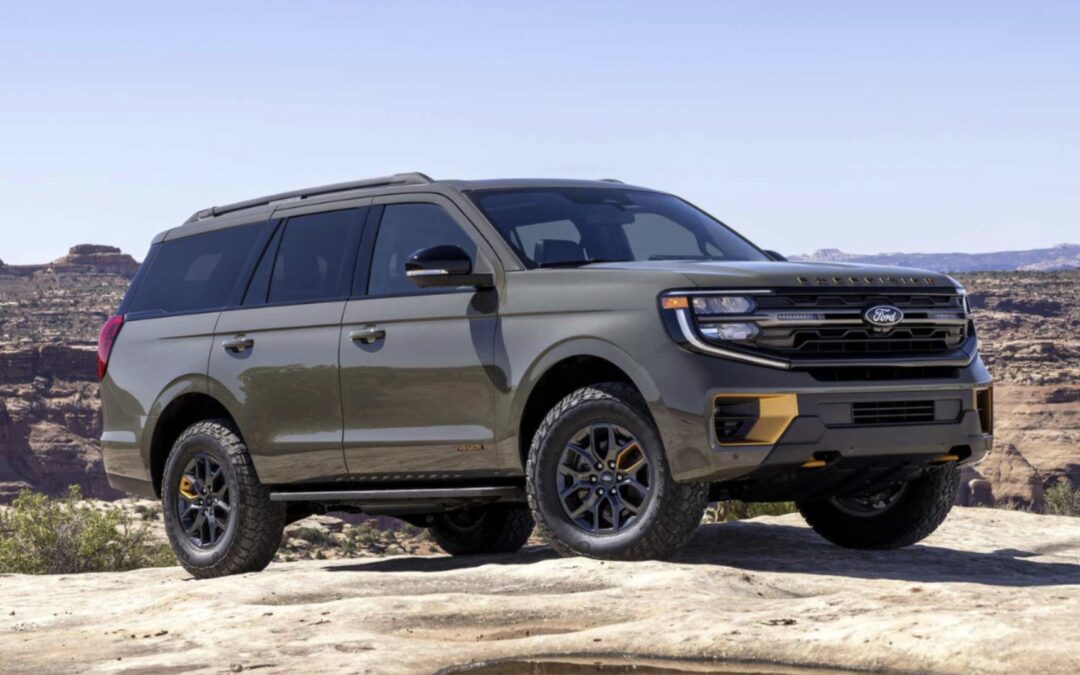
There aren’t any nationally-advertised financing or lease deals for Jeep’s flagship SUV, just an offer to delay payments up to 90 days. That’s odd, as sales have been slow. Dealers currently have a 160-day supply, meaning unsold Grand Wagoneers are piling up. An updated version is coming for 2026 as well. With no deals to be had on the 2025 model, the 2026 model is definitely worth waiting for.
The Jeep Grand Cherokee is a much better deal for Black Friday, featuring zero-percent financing. See the deals.
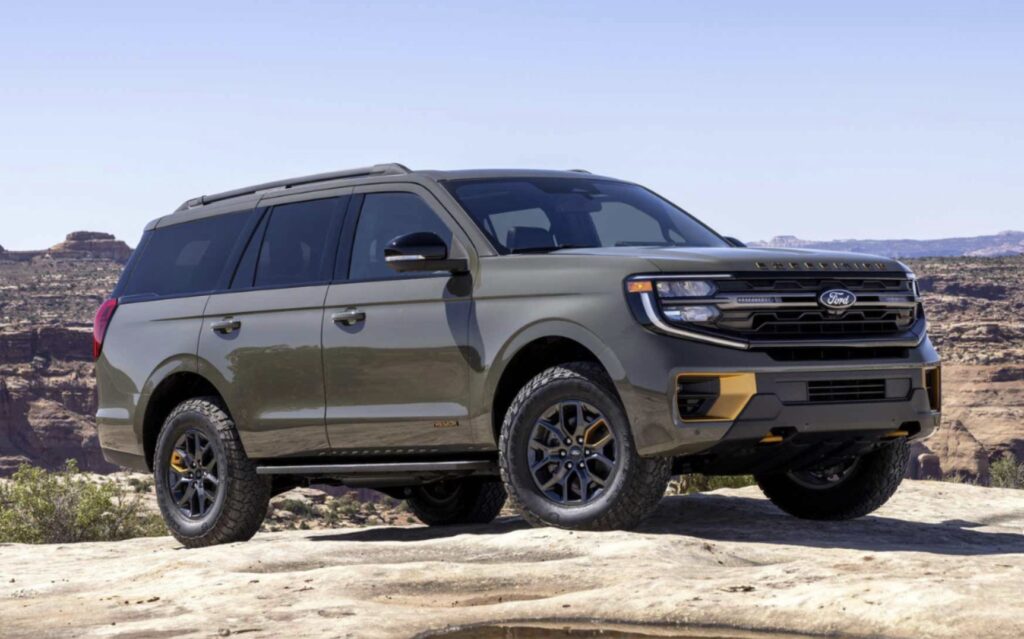
Ford isn’t offering any serious discounts on the Expedition despite having financing and lease deals, as well as cash incentives, for the rest of its lineup. The “best” option is a whopping $799 per month lease for 36 months on the Expedition Active model. That’s with $7,749 due at signing before taxes and fees. Granted, the Expedition was redesigned for 2025, so discounts were always going to be unlikely.
See Ford’s best Black Friday sales, handpicked by our experts.
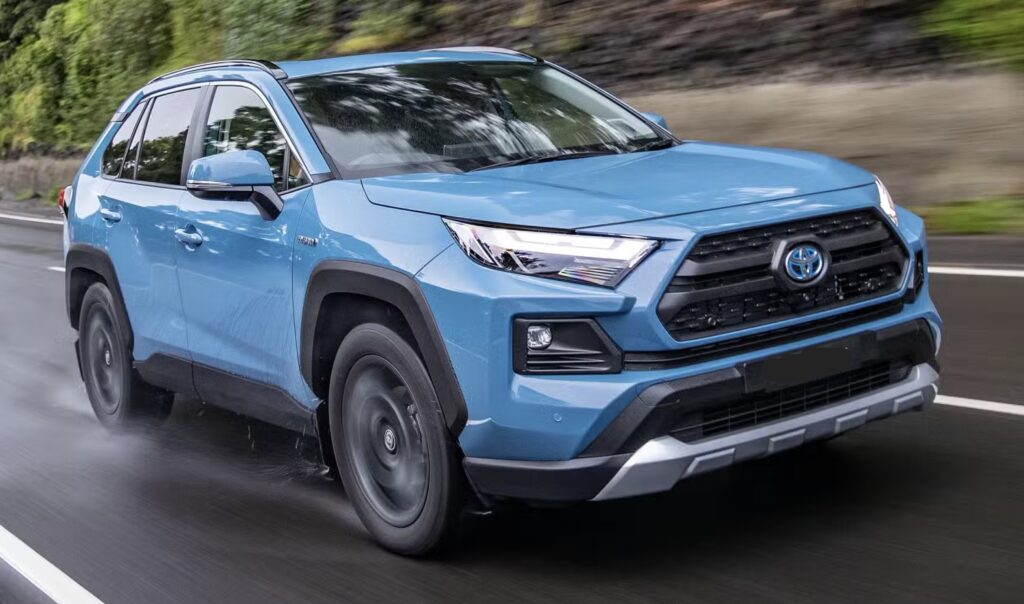
The redesigned 2026 Toyota RAV4 is due to arrive at dealers in December, but Toyota isn’t rushing to discount leftover 2025 models. Its best offer of 4.75% APR financing is undercut by rivals like the Honda CR-V, Mazda CX-5, and Nissan Rogue. Without deep discounts, it’s hard to justify going for this aged design over those competitors.
Toyota vs. Honda: Who will have better year-end deals?
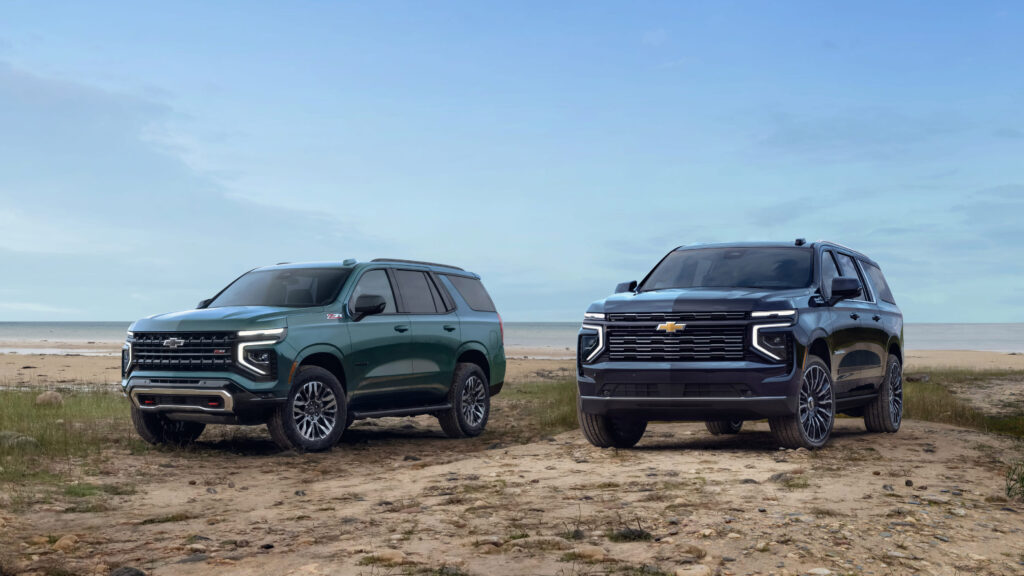
There are year-end deals to be had throughout Chevy’s lineup, just not on this full-size SUV. Chevy’s best Tahoe offer for Black Friday is an $879 per month lease on the four-wheel drive LT model, with a 36-month term and $8,879 due at signing before taxes and fees. The Tahoe isn’t new, and no big changes are in the pipeline, but Chevy apparently doesn’t think dealers need help moving them off their lots.
However, Chevrolet is offering 0% APR financing for six popular models. See the best offers.

Mazda is offering low-APR financing on the CX-5 and CX-50, but not the smaller CX-30. The Black Friday sales for this popular crossover are 4.9% APR financing for 60 months on 2025 models and 5.9% APR financing for 60 months on 2026 models. And while Mazda is offering a low lease rate of $199 a month for 36 months, that’s with $5,719 down. The CX-30 is good looking and fun to drive, but now is not the best time to buy one.
See local Mazda deals with CarEdge Car Search
Although these five automakers chose not to take advantage of the Black Friday frenzy to sell cars in November, there ARE dozens of phenomenal new car offers out there. Check out our Black Friday Deal Hub to see the best handpicked sales for this week.
Rather have a seasoned pro negotiate savings for you? Learn how CarEdge makes it easy.

Year-end car deals aren’t just for new cars and trucks – smart shoppers in the used car market can leverage new car specials for big savings. Used car prices have been steadily declining, and the timing couldn’t be better to secure a great deal. Here’s how to use market trends and negotiation tools to your advantage this December.
Year-end car buying season is well-known for flashy new car promotions, but the holidays also create opportunities for used car buyers. With dozens of 0% APR financing offers and competitive lease deals pulling buyers to new car lots, demand for used vehicles has softened.
For used car buyers, that means one thing: leverage.
However, new car offers are so great that it’s totally reasonable for many would-be used car buyers to check them out first:
👉 42 offers of 0% APR financing. These deals won’t last!
👉 Up to $11,500 off MSRP on full-size trucks
Check out ALL of the best year-end deals at the CarEdge Deal Hub
1. A Pre-Approval Letter for Competitive Financing
Arrive at the dealership armed with a pre-approval letter from a credit union, bank, or online lender. Not only does this save you time at the dealership, but it also provides leverage if the dealership’s financing offers can’t match or beat your pre-approved rate. Credit unions often have the best rates for used car buyers.
👉 How to finance a car like a pro (free guide)
2. Black Book Value for the VIN You’re Interested In
Knowledge is power in any negotiation, and knowing the true value of the car you’re eyeing is key. It’s best to check the value using multiple online tools, particularly KBB, Edmunds, and CarEdge. Before heading to the lot, check the value for the specific VIN to ensure the asking price is fair—or to use as leverage if it’s not.
3. Days on the Lot, and Other Market Data
Dealerships want to move older inventory, and vehicles that have been sitting on the lot for a long time are prime for negotiation. Use CarEdge Pro to find out how long the car has been on the lot. If it’s been sitting for 60 days or more, you have a better chance of negotiating a lower price.
Some used cars have been on the lot for 6 months or longer, and are HIGHLY negotiable. However, don’t expect the car salesperson to volunteer this information!
4. Free Car Buying Cheat Sheets
A car buying cheat sheet is your go-to guide for navigating the deal. Know what’s fair, identify unnecessary add-ons to avoid, and recognize when it’s time to walk away from a deal. The more informed you are, the less likely you are to overpay. Download your negotiation cheat sheets, and take them with you to the dealership!
Tired of car buying hassles? You’re in the right place. CarEdge was founded in 2019 to level the playing field and make buying a vehicle more fair, more transparent, and less stressful. 👉 Learn how we can make car buying EASY.
👉 Ask these questions when buying a car!
As the year comes to a close, the combination of falling used car prices and lower demand creates the perfect storm for savings. By coming prepared with the tools and insights you need, you’ll have everything you need to negotiate the best possible deal.
For more real-time market insights and negotiation tools, learn more about CarEdge Pro. With CarEdge by your side, you’re sure to drive home the car you want—at the price you deserve.