
CarEdge saved me over 4,500 dollars on a brand new Honda Pilot. I can't say thank you enough.
Price intelligence
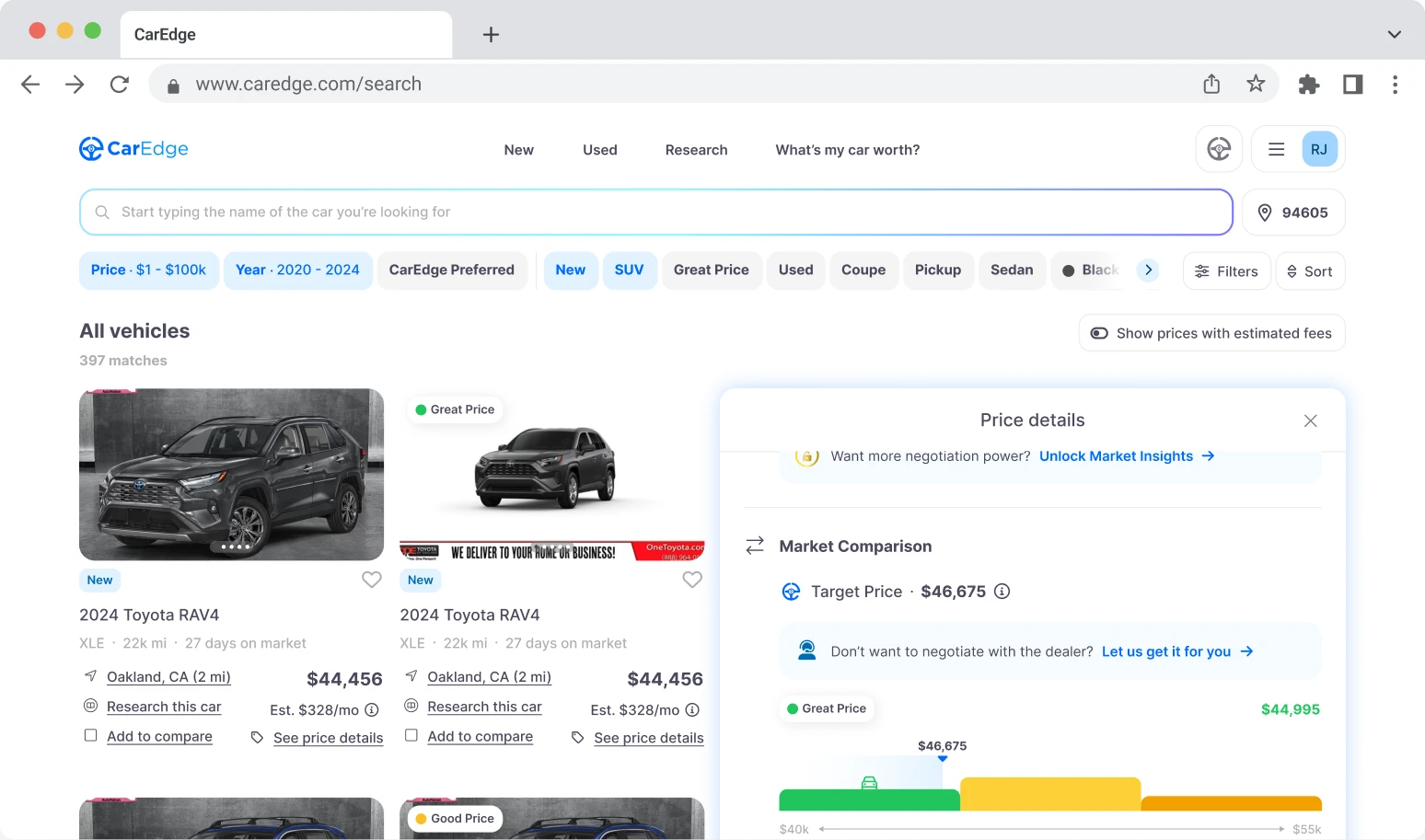
Find a wide range of vehicle listings with market insights on new and used listings near you.

What can I do with CarEdge?
 CarEdge Insights
What can I do with CarEdge?
Get access to exclusive information so you can make an informed car buying decision — all in one place.

Find a wide range of vehicle listings with market insights on new and used listings near you.
Track your vehicle’s value and cash in when the time is right to sell.

Access to our proprietary data to help you find the right car, at the right price. Find these unlocked on every listing after subscribing.

With our expert-led, tech-enabled car buying service, we will locate, negotiate, and deliver your vehicle so you can get a new car hassle free.


Help us personalize your CarEdge experience — it only takes a second.
Your answers help us personalize your CarEdge journey — we’ll follow up with tips and next steps that match your buying timeline.
![The Most Reliable Trucks According to Consumer Reports [2025]](https://caredge.com/wp-content/uploads/2025/06/2025-Ford-Ranger-1080x675.jpg)
Truck owners rely on their pickups to go the distance, but not all trucks are built to last. With repair costs and new truck prices on the rise, reliability is more important than ever. In this guide, we highlight the most dependable pickup trucks for 2025, based on data from Consumer Reports.
Consumer Reports rates reliability on a scale of 0 to 100. Sadly, few trucks earn top scores in 2025. Without further ado, here are the most reliable pickup trucks right now.
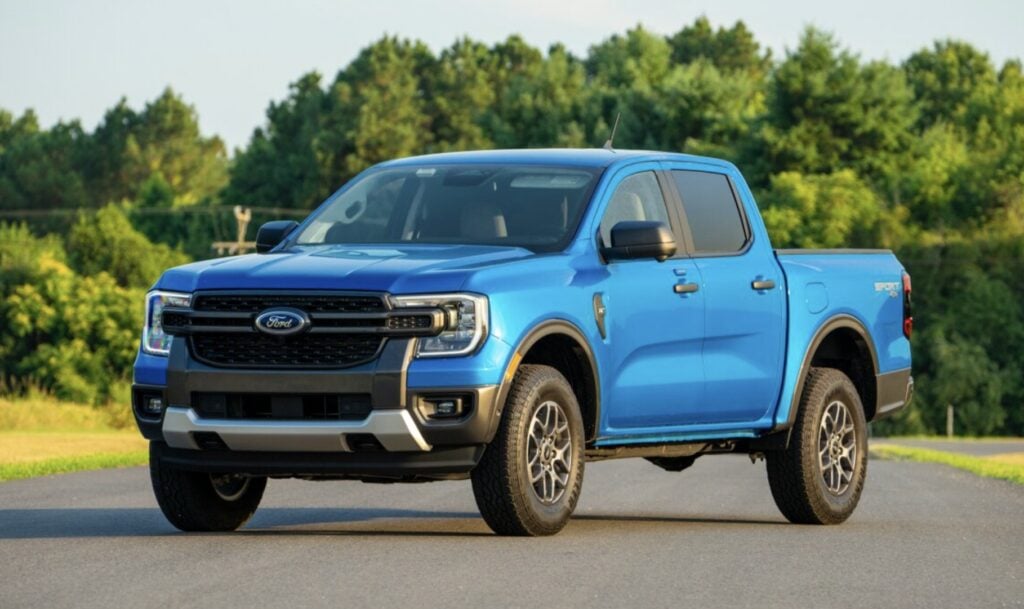
In 2025, the brands with the most reliable cars don’t necessarily produce reliable trucks. For those looking for a dependable full-size pickup truck, it’s easier said than done. Three of the top five most reliable pickups are small or midsize trucks. Ford trucks perform especially well this year, with the Ford Ranger earning the title of most reliable truck in 2025. America’s best-selling truck, the Ford F-150, is also in the top 5.
These are the most reliable pickup trucks in 2025:
| Make | Model | Year | Reliability Score | Base MSRP |
|---|---|---|---|---|
| Ford | Ranger | 2025 | 65 / 100 | $35,025 - $49,310 |
| Ford | Maverick | 2025 | 59 / 100 | $29,840 - $43,120 |
| Honda | Ridgeline | 2025 | 59 / 100 | $41,600 - $48,200 |
| Jeep | Gladiator | 2025 | 50 / 100 | $40,095 - $63,095 |
| Ford | F-150 | 2025 | 40 / 100 | $39,645 - $77,495 |
The Honda Ridgeline remains a top choice for reliability, despite years of sluggish sales. Honda sold just 45,000 copies of the Ridgeline in all of 2024. It’s also surprising to see the Jeep Gladiator earn a higher reliability score than several full-size rivals. Jeep is offering thousands of dollars in cash discounts as the Gladiator is also a slow seller.
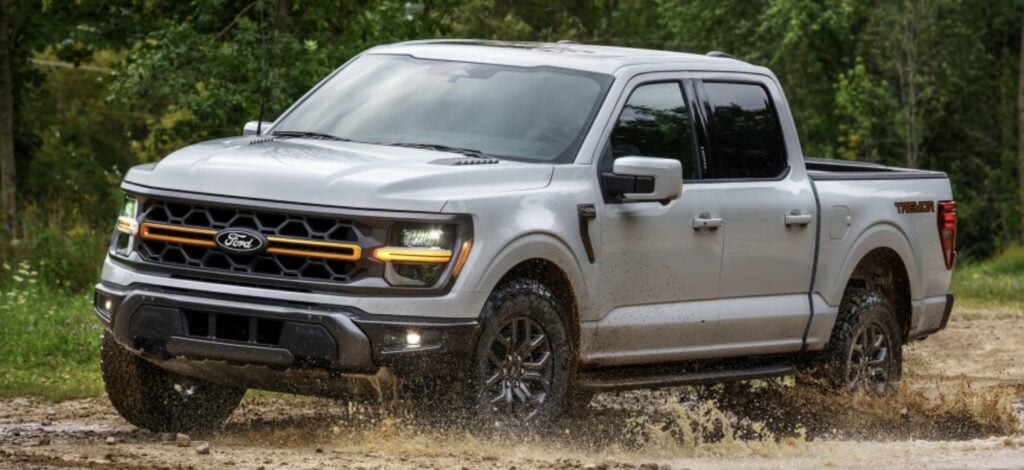
Full-size trucks are built for toughness, but reliability varies more than you might expect. Ford claims the top spot this year, but it’s a tight race among America’s most popular pickups. Toyota’s Tundra edges into the top five despite a lower score, showing promise as a newer generation model matures.
| Make | Model | Year | Reliability Score | Base MSRP |
|---|---|---|---|---|
| Ford | F-150 | 2025 | 40 / 100 | $39,645 - $77,495 |
| Chevrolet | Silverado 1500 | 2025 | 39 / 100 | $37,845 - $68,695 |
| GMC | Sierra 1500 | 2025 | 39 / 100 | $39,145 - $86,890 |
| Ram | Ram 1500 | 2025 | 37 / 100 | $42,370 - $89,170 |
| Toyota | Tundra | 2025 | 32 / 100 | $42,035 - $66,035 |
According to Consumer Reports, no full-size trucks score high on reliability. Ford manages to lead the pack barely with the F-150. Toyota, Ram and GM trucks all make the top five, but that’s not saying much considering that all score well below 50.
Reliability is just one piece of the equation when it comes to shopping for the best truck. Depreciation, fuel economy, and total cost of ownership are all important too. See the best-value trucks today with CarEdge Research.
Want to compare every 2025 pickup model side-by-side? Here’s the full list, ranked by Consumer Reports’ predicted reliability score.
| Make | Model | Year | Reliability Score | Base MSRP |
|---|---|---|---|---|
| Chevrolet | Silverado 1500 | 2025 | 39 / 100 | $37,845 - $68,695 |
| Chevrolet | Silverado EV | 2025 | 30 / 100 | $57,095 - $97,895 |
| Chevrolet | Colorado | 2025 | 15 / 100 | $33,595 - $62,895 |
| Ford | F-150 | 2025 | 40 / 100 | $39,645 - $77,495 |
| Ford | Ranger | 2025 | 65 / 100 | $35,025 - $49,310 |
| Ford | Maverick | 2025 | 59 / 100 | $29,840 - $43,120 |
| Ford | F-150 Hybrid | 2025 | 7 / 100 | $47,395 - $80,160 |
| Ford | F-150 Lightning | 2025 | 28 / 100 | $51,975 - $87,190 |
| GMC | Canyon | 2025 | 15 / 100 | $40,095 - $67,030 |
| GMC | Sierra 1500 | 2025 | 39 / 100 | $39,145 - $86,890 |
| Honda | Ridgeline | 2025 | 59 / 100 | $41,600 - $48,200 |
| Hyundai | Santa Cruz | 2025 | 34 / 100 | $30,200 - $44,200 |
| Jeep | Gladiator | 2025 | 50 / 100 | $40,095 - $63,095 |
| Nissan | Frontier | 2025 | 27 / 100 | $33,560 - $47,120 |
| Ram | Ram 1500 | 2025 | 37 / 100 | $42,370 - $89,170 |
| Rivian | R1T | 2025 | 20 / 100 | $71,700 - $101,700 |
| Tesla | Cybertruck | 2025 | 27 / 100 | $72,235 - $102,235 |
| Toyota | Tacoma | 2025 | 29 / 100 | $33,085 - $54,050 |
| Toyota | Tundra | 2025 | 32 / 100 | $42,035 - $66,035 |
The F-150 Hybrid is the least reliable truck in 2025, with a Consumer Reports reliability rating of just 7 out of 100. The Chevrolet Colorado and GMC Canyon also perform poorly. Among the electric trucks, the Silverado EV is the most reliable, and the Rivian R1T is the least reliable.
A reliable truck saves you thousands in repairs, but it’s just one part of the equation. Factors like towing capacity, fuel economy, safety, and comfort also matter, and that’s where CarEdge can help.
Check out best value ratings for new and used trucks. It’s free data!
Need help choosing your next truck? CarEdge’s expert Concierges are here to guide you every step of the way, from comparing options to negotiating the best price. Looking for a DIY route to negotiation? CarEdge Pro is your toolkit to savings. With our help, you’ll find a truck that works as hard as you do, at the best price.

If you’re shopping for a new car, don’t overlook one of the most underrated ways to save money long-term: the manufacturer warranty. A strong new car warranty doesn’t just give you peace of mind, it can protect your wallet from major repair costs for years to come.
So, who’s offering the best new car warranties in 2025? After comparing warranty coverage across all major automakers, five brands clearly stand out.
But first, here’s what actually matters in a new car warranty.
A good warranty offers peace of mind. A great one can save you thousands. Here’s what to look for when comparing new car warranties in 2025:
The gold standard for bumper-to-bumper (or “limited”) warranties is five years or 60,000 miles. Most brands only offer three years or 36,000 miles, so anything longer is a major plus. Powertrain warranties are even more important since they cover the engine, transmission, and drivetrain. The best warranties offer at least 8 years or 100,000 miles of powertrain protection.
Electric and hybrid vehicles need specialized protection. That’s why the best EV warranties also include dedicated coverage for battery packs, electric drive components, and onboard charging systems. Look for at least eight years and 100,000 miles of EV battery coverage.
A corrosion warranty protects you if the body of your car starts to rust. While this is less common than mechanical failures, it’s especially important in regions with snowy winters and salted roads. Most brands offer 5 to 7 years of corrosion protection, but a few offer up to 12 years of unlimited-mileage rust coverage.
Free maintenance can save you hundreds of dollars during the first few years of ownership. It typically includes oil changes, tire rotations, fluid top-offs, and inspections. Brands like Hyundai and Kia offer 3 years or 36,000 miles.
Some brands bundle in extras like 24/7 roadside assistance, rental car reimbursement, and trip interruption coverage. These added perks can offer peace of mind if something goes wrong far from home.
With the fine print covered, now it’s time to look at the five best new car warranties in 2025.
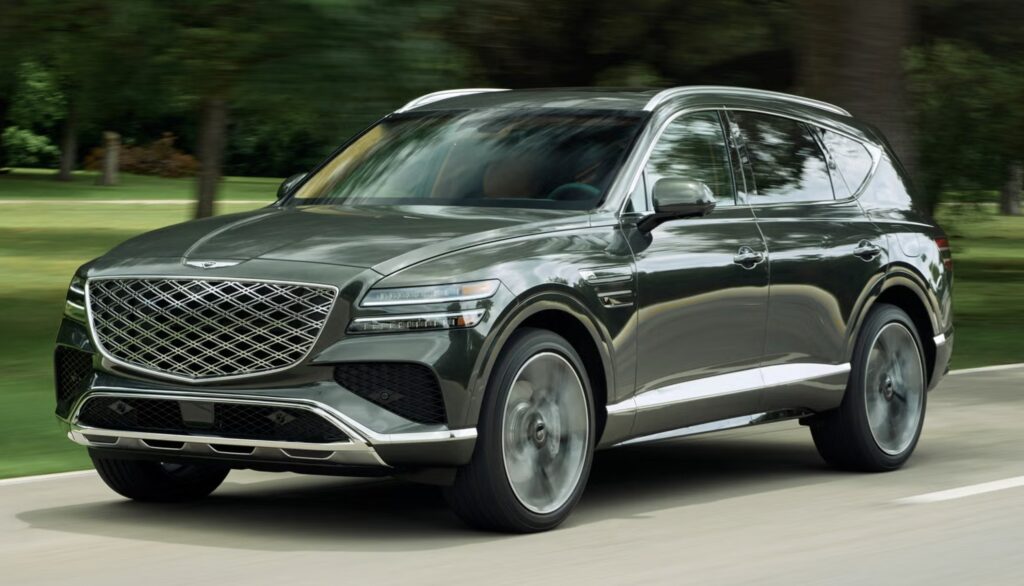
Why it’s great: Unbeatable all-around coverage with luxury perks
Genesis nails every category: long-lasting coverage, excellent powertrain protection, and free maintenance for the first three years. It’s everything you’d expect from a luxury brand and then some.
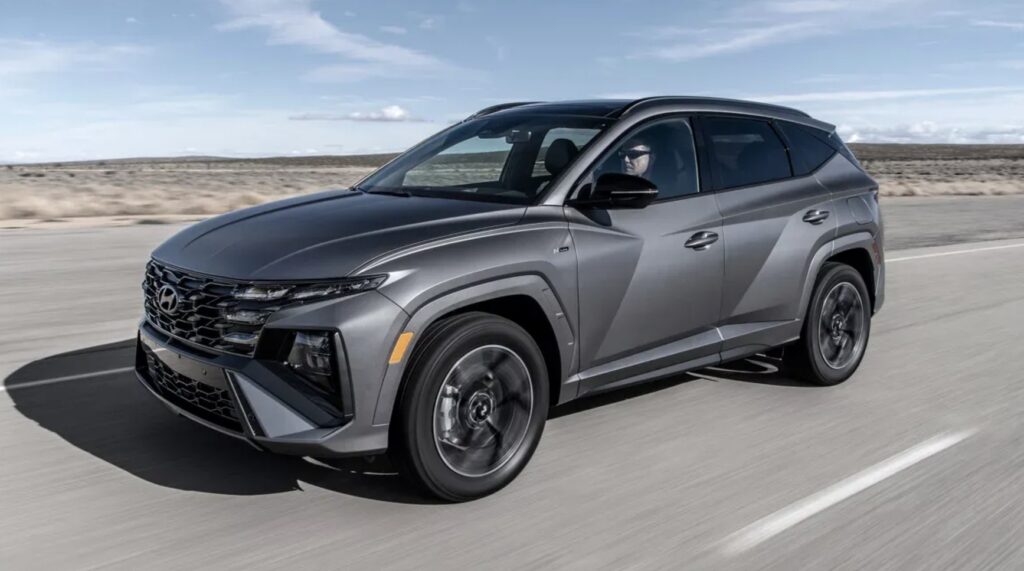
Why it’s great: Affordable vehicles with extensive warranty protection
Hyundai continues to lead the industry in value. From the Palisade and Elantra to the all-new IONIQ 9, Hyundai backs its vehicles with generous coverage and cost-saving maintenance, regardless of powertrain.
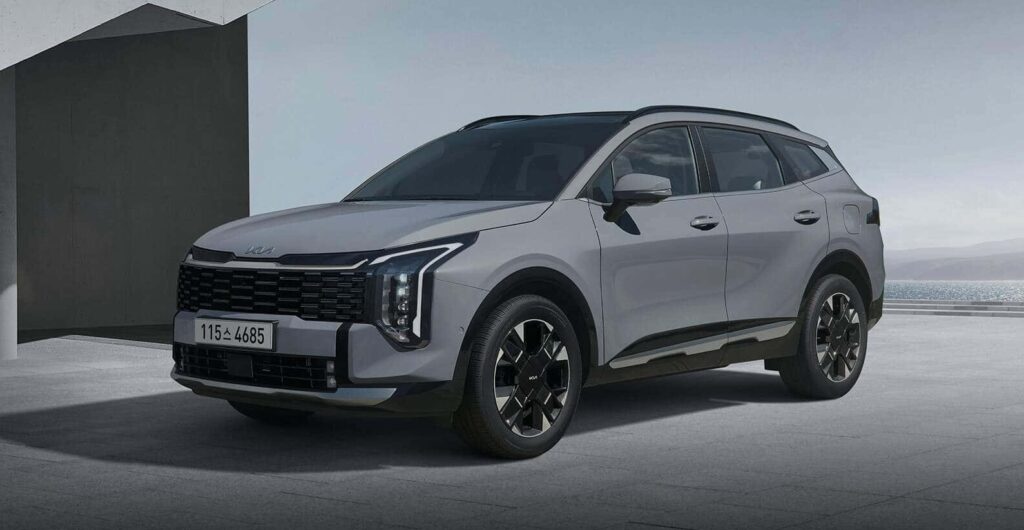
Why it’s great: Excellent coverage from bumper to battery
Like its corporate siblings Hyundai and Genesis, Kia offers outstanding protection on every front. And with more hybrid and electric models in its lineup, that battery warranty is a big deal.
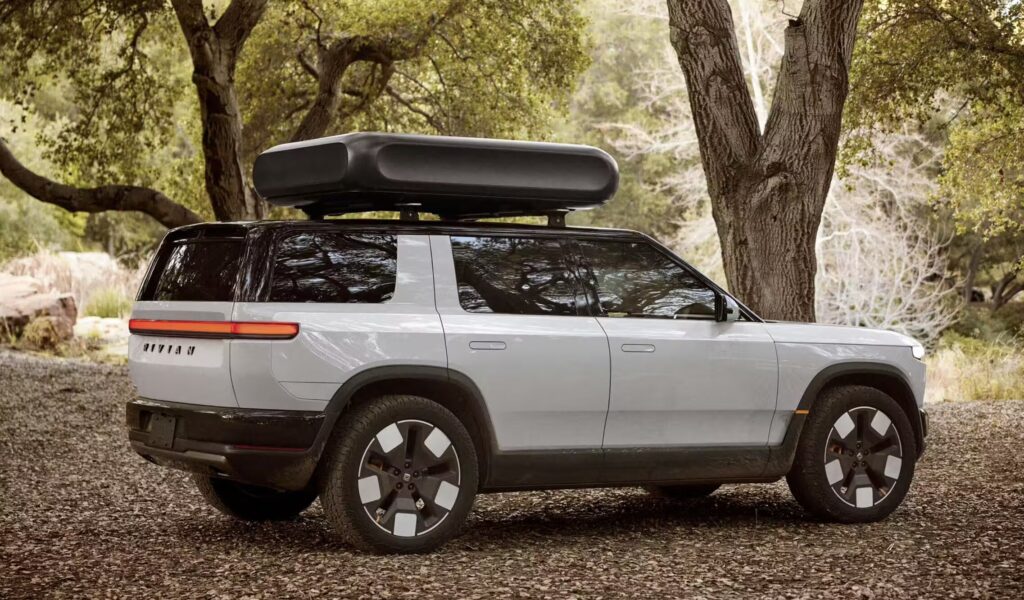
Why it’s great: Stellar EV battery coverage and corrosion protection
Rivian’s warranty is tailor-made for EV buyers. While its bumper-to-bumper coverage is typical for a premium brand, the battery and corrosion warranties go above and beyond.
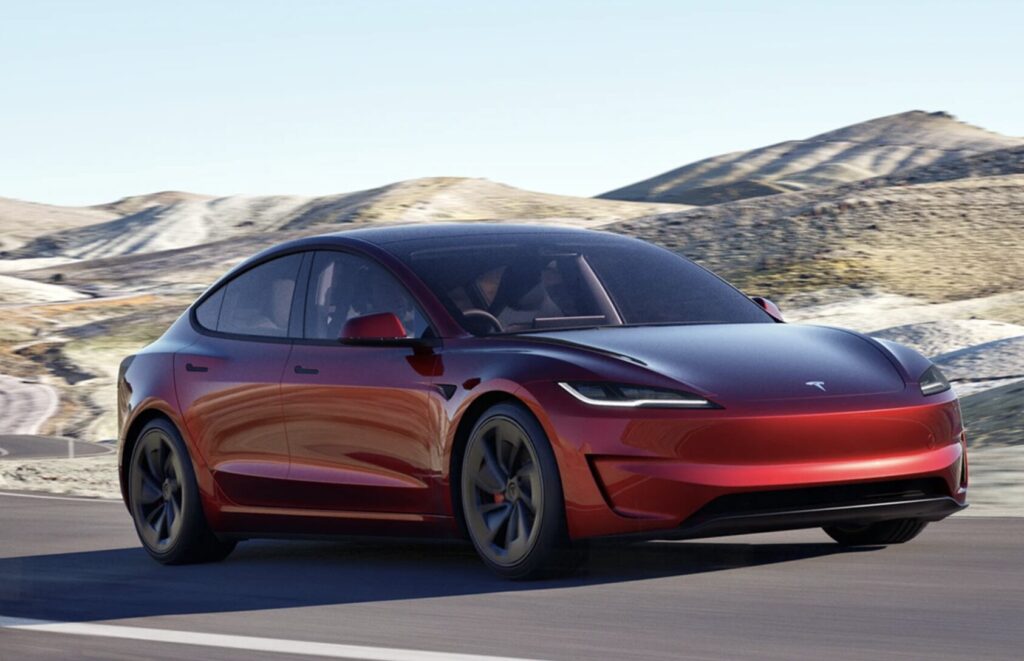
Why it’s great: Long battery and corrosion coverage, especially on premium models
Tesla’s warranties vary by model, but the battery coverage is strong where it matters. The standout is its 12-year corrosion warranty with unlimited miles.

Why it’s great: Hyundai-level warranty with fewer perks
Mitsubishi’s coverage mirrors the Korean giants but falls just short due to shorter free maintenance.
These automakers are leading the pack when it comes to new car warranty protection in 2025. While most brands offer similar baseline coverage, these five go the extra mile to protect your wallet. Understandably, EV brands offer additional coverage to encourage buyers to make the switch.
Why don’t American brands like Ford, Chevrolet, and Ram offer the best warranties? Perhaps they don’t feel that extended coverage is necessary to maintain customer loyalty. Or, they’re relying on brand recognition to move vehicles off the lot. But in an era of rising repair costs and shrinking consumer trust, better warranty coverage is one of the clearest ways an automaker can stand behind its vehicles.
It’s always smart to compare maintenance costs before you buy. See maintenance expenses, depreciation forecasts, and so much more with CarEdge Research. It’s 100% free data!
What’s better than the best new car warranty? Coverage that goes even further. protect your vehicle BEYOND the limited warranty with a Vehicle Service Contract from CarEdge. It’s the same coverage others offer at a lower price. Get your quote today →
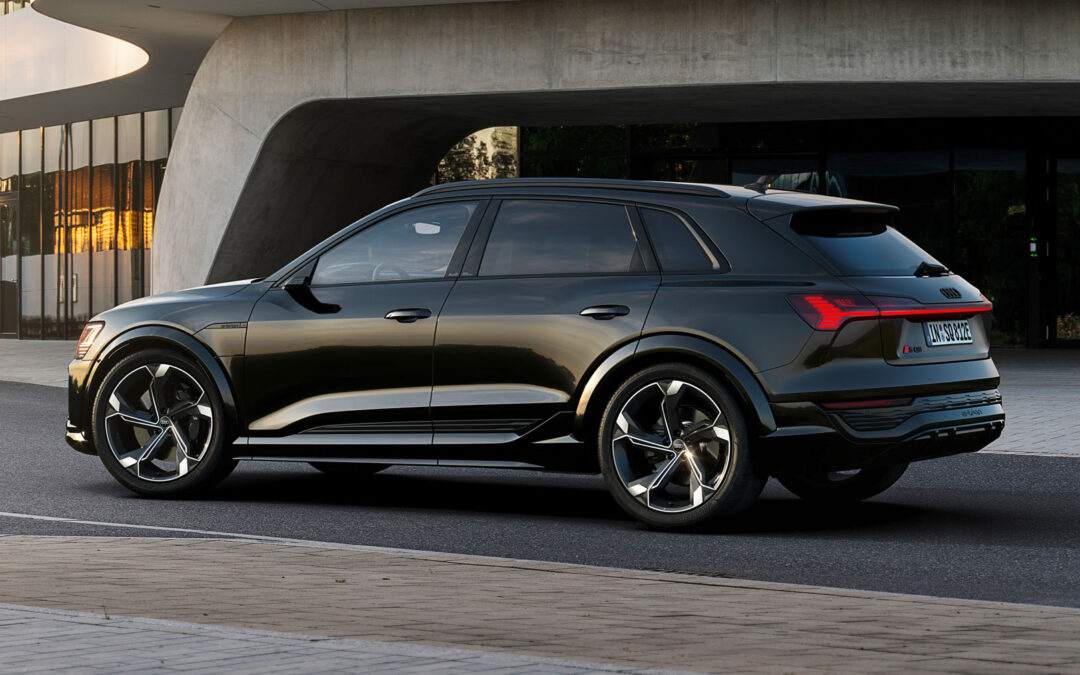
For the first time in over a year, new electric vehicle registrations in the U.S. fell year-over-year in April, and Tesla was at the center of the slide.
According to fresh data from S&P Global Mobility via Automotive News, new EV registrations dropped 4.4% in April 2025 compared to the same month last year. In total, 97,833 new EVs hit the road, down from over 102,000 in April 2024. That’s the first annual decline in 14 months, and it pushed EV market share down to 6.6%, compared to 7.4% a year ago.
The EV market has been anything but predictable. While more models and affordable options are available than ever before, many American car buyers remain hesitant. Political uncertainty isn’t helping either. Federal tax credits have faced renewed scrutiny, and Tesla, the EV market leader, has become a lightning rod in national debates. In April, Tesla’s 16% drop in registrations was a major factor behind the segment’s overall decline.
“Many consumers are still on the fence about going electric,” said Ray Shefska, auto industry veteran and CarEdge Co-Founder. “Charging infrastructure, resale value, and battery concerns continue to hold buyers back, even with some very compelling offers in the market.”

Tesla remains the top-selling EV brand, but its April numbers were rough: registrations fell 16% year-over-year to 39,913. The Cybertruck stumbled with just 1,680 new registrations, and the bestselling Model Y dropped 42% compared to last April. Only the Model 3 sedan managed to grow in April.
Meanwhile, Chevrolet surged in the No. 2 spot. Chevy more than tripled its EV registrations to 9,160, driven by strong sales of the Equinox EV and Blazer EV. The Equinox EV had 5,424 new registrations — making it the third-best-selling EV in April.
Ford claimed the third spot among EV brands, but its April numbers weren’t pretty. EV registrations fell 33% year-over-year to 5,534, with both the Mustang Mach-E and F-150 Lightning seeing double-digit drops. Only the E-Transit van saw growth.
Using CarEdge Pro, we can see which electric vehicles are selling quickly, and which are stagnating on dealership lots this summer. Market day supply is a measure of how many days it would take to sell all existing inventory at current average daily sales rates. Here’s a look at how 10 of the most popular EVs (Tesla aside) are doing in terms of inventory in June 2025:
| Make | Model | Market Day Supply | Total Sold (45 days) | Total For Sale |
|---|---|---|---|---|
| Acura | ZDX | 42 | 2,394 | 2,595 |
| Nissan | Ariya | 49 | 3,630 | 3,975 |
| BMW | i4 | 55 | 3,300 | 2,715 |
| Chevrolet | Equinox EV | 87 | 6,469 | 12,511 |
| Chevrolet | Blazer EV | 110 | 3,018 | 7,399 |
| Ford | Mustang Mach-E | 139 | 5,445 | 16,816 |
| Hyundai | IONIQ 5 | 157 | 16,470 | 4,708 |
| Cadillac | Lyriq | 160 | 2,346 | 8,346 |
| Ford | F-150 Lightning | 160 | 2,632 | 9,353 |
| Honda | Prologue | 201 | 2,781 | 12,408 |
Be sure to check out the overall fastest and slowest-selling cars of the month. Some models are becoming much more negotiable, especially those with 100+ days of inventory on dealer lots.
While full-year numbers are still up — EV registrations rose 11% from January to April — the monthly dip in April signals that momentum is slowing. Many EVs launch with hype and strong promotions, but interest often fades after early adopters purchase.
Only three EVs crossed 5,000 registrations in April: the Tesla Model Y, Model 3, and Chevrolet Equinox EV. Most other EVs struggled to break even 3,000, including the Hyundai Ioniq 5 (3,307), BMW i4 (2,707), Nissan Ariya (2,516), and Acura ZDX (2,315).
“Outside of Tesla and a few affordable newcomers like the Equinox, demand seems to be hitting a ceiling,” Shefska noted. “Buyers who want an EV have mostly already bought one — now automakers have to figure out how to reach everyone else.”
Even as demand levels off, incentives are heating up and inventory is rising. That means opportunities for deals, but only if you know where to look.
Want help negotiating a great price on an EV? The CarEdge Concierge team is saving EV buyers thousands by navigating dealer markups, incentives, and hidden fees.

Independence Day is almost here, and so are July 4th SUV deals. Automakers are kicking off holiday promotions with a mix of low APR offers, lease specials, and cash incentives. With high interest rates, rising depreciation, and 2026 model price hikes on the way, it’s more important than ever to shop smart and take advantage of savings.
These offers are valid through at least July 7, 2025, and we’ll update this guide as more automakers release new incentives.
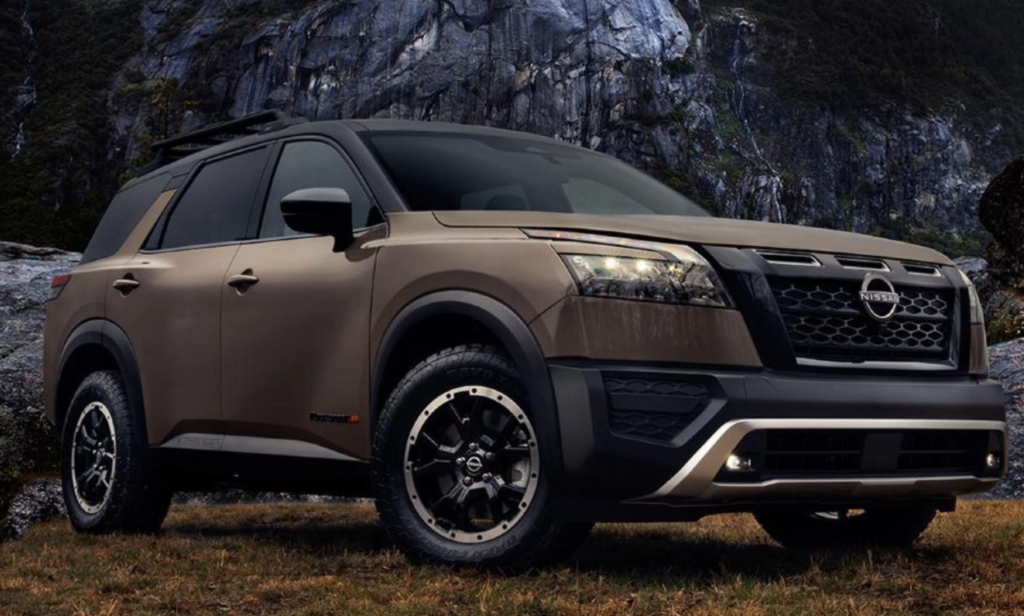
Finance the Pathfinder with 0% APR for 60 months, or 1.9% APR for 72 months
Why it’s a great deal: Zero percent financing, three rows, and some serious towing capacity make the Pathfinder one of the most underrated family SUVs in our opinion. This offer expires on 8/4/2025.
Check out Pathfinder listings in your neck of the woods.

Finance with 0% APR for 60 months, or 1.9% APR for 72 months
Why it’s a great deal: The average new car loan rate remains near 10% APR, and zero percent financing is increasingly rare as most automakers scale back incentives due to rising costs. This is a great deal for anyone who simply needs a little extra space in their ride. This offer expires on 8/4/2025.
See Nissan Rogue listings with local price analysis
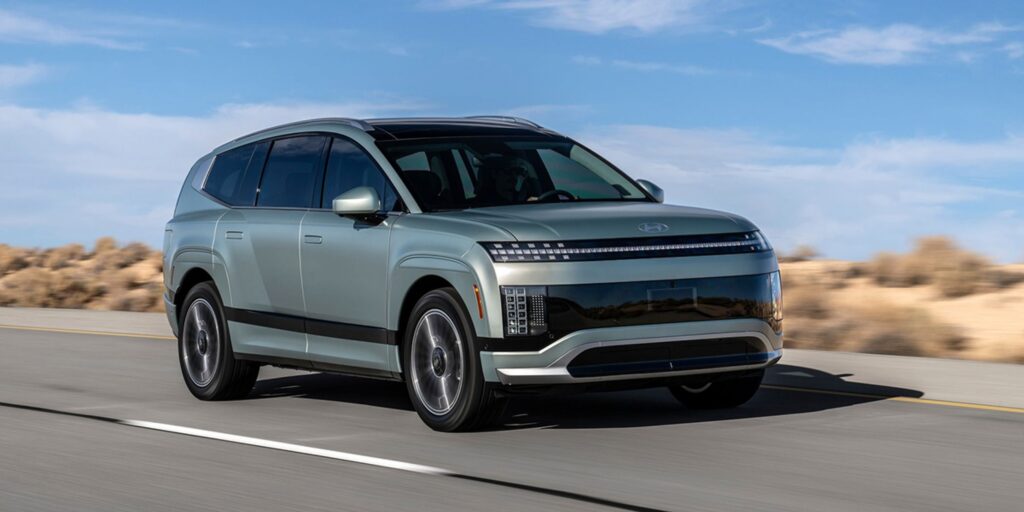
Lease from $419/month for 36 months with $4,999 due
Finance with 1.99% APR for 60 months
Eligible for $5,000 in down payment assistance
Why it’s a great deal: Hyundai’s all-new electric three-row SUV combines generous space with efficiency and ultra-fast charging. Rarely does an all-new model qualify for low-APR financing like this. This offer expires on 7/7/2025.

Finance with 0% APR for 60 months
Lease from $329/month for 36 months with $3,999 due
Up to $2,000 in cash savings
Why it’s a great deal: With a fresh redesign and multiple powertrain options, the Santa Fe is one of the most compelling midsize SUVs under $35K. Interest-free financing is a rarity for the Santa Fe. This offer expires on 7/7/2025.
Compare Santa Fe total cost of ownership

Lease from $369/month for 36 months with $3,999 due
Finance with 2.99% APR for 48 months
Up to $2,750 in cash savings
Why it’s a great deal: A top choice for large families, the Palisade offers one of the roomiest cabins in its class with premium features even at base trim. This offer expires on 7/7/2025.
Compare Hyundai Palisade total cost of ownership
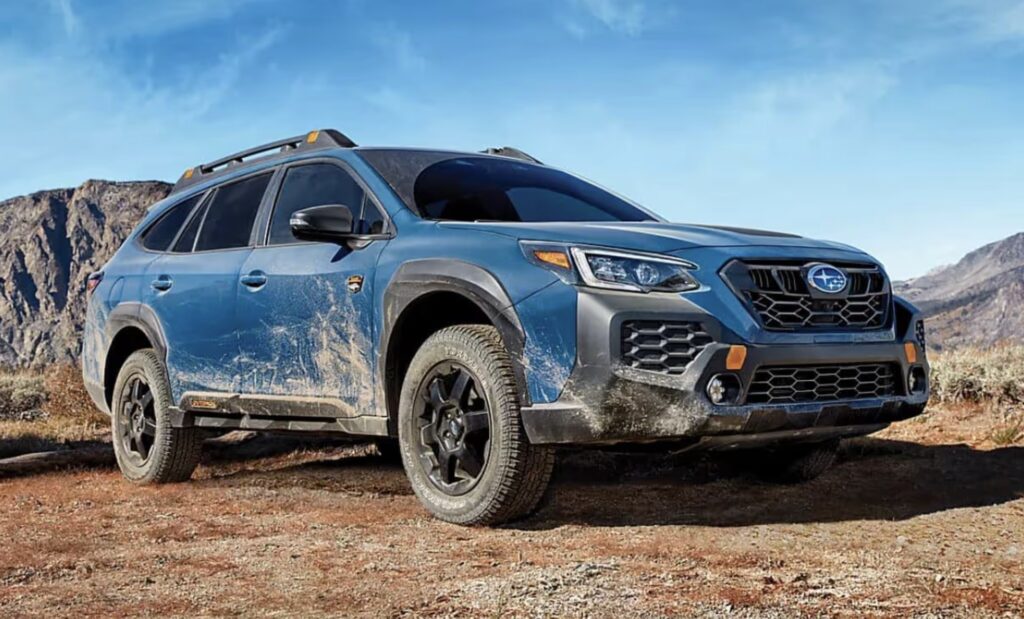
Finance with 1.9% APR for 72 months
Why it’s a great deal: All-terrain capability with low-APR financing is a rarity. This financing incentive won’t last long. This offer expires on 7/31/2025.
Compare Subaru Outback total cost of ownership

Lease from $289/month for 24 months with $3,918 due
Finance with 1.90% APR for 60 months
Why it’s a great deal: Whether you choose hybrid efficiency or gas-powered practicality, this is one of the best SUV lease deals this Fourth of July. This Kia offer expires on 7/7/2025.
Browse Kia Sorento listings with local market insights
Lease from $279/month for 24 months with $3,999 due
Why it’s a great deal: This plug-in SUV qualifies for the $7,500 lease credit, making it one of the most affordable electrified SUVs in 2025. This Kia offer expires on 7/7/2025.
See Kia Sportage listings near you

Lease from $398/month for 48 months with $3,499 due
Why it’s a great deal: While not the cheapest deal on this list, the Escape remains a practical and compact choice with flexible lease terms. This Ford offer expires on 7/7/2025.
Compare Ford Escape total cost of ownership
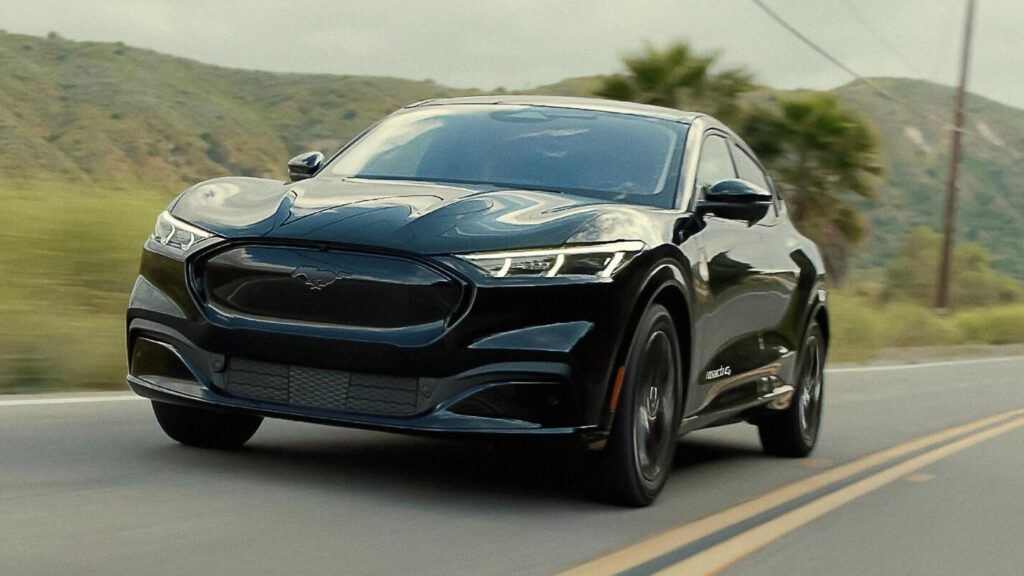
Lease from $313/month for 36 months with $4,029 due
Finance with 3.9% APR for 72 months
Why it’s a great deal: With 2024 inventory finally out of the way, Ford is ramping up deliveries of the 2025 Mustang Mach-E. It’s also one of the best July 4th EV lease deals. The Mustang Mach-E’s top competitors are the Tesla Model Y, Chevrolet Blazer EV, Kia EV6, and Hyundai IONIQ 5. This Ford offer expires on 7/7/2025.
See Mustang Mach-E listings near you

Lease from $339/month for 36 months with $3,999 due
Rare zero-percent financing SUV offer: 0% APR for 72 months
Why it’s a great deal: With no interest for six years and a lease deal under $350/month, this new electric SUV is launching with very competitive terms. This Honda offer expires on 7/7/2025.
See Honda Prologue listings near you
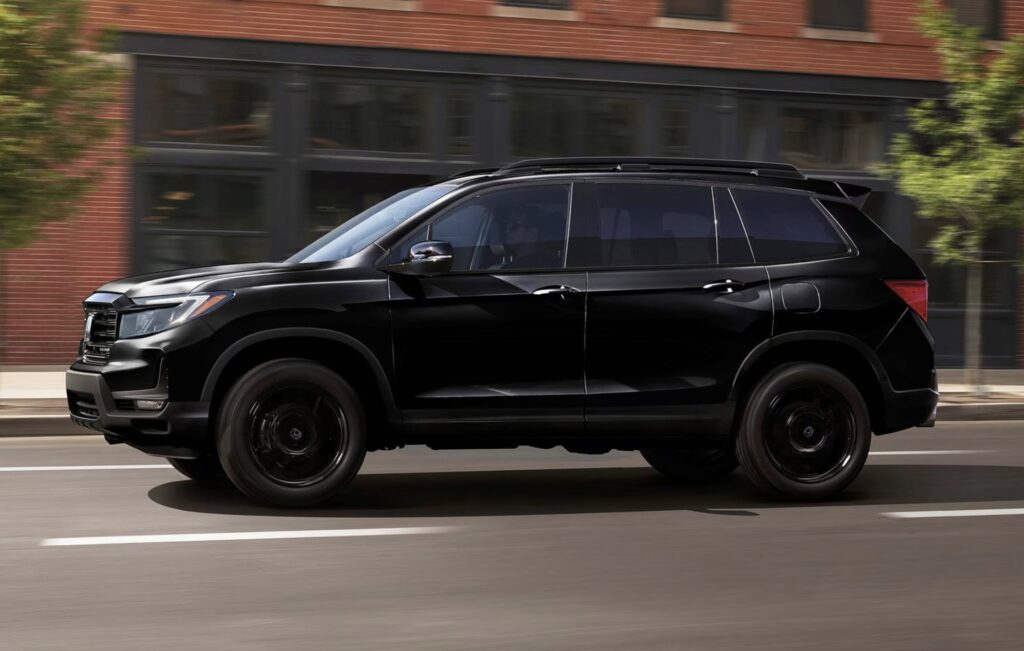
Finance with 1.99% APR for 60 months
Why it’s a great deal: One of the few two-row SUVs with real off-road capability, now available with a low interest rate. This Honda offer expires on 7/7/2025.
Compare Honda Passport total cost of ownership

Lease from $319/month for 36 months with $3,299 due
Why it’s a great deal: A budget-friendly lease on Honda’s smallest SUV, with more cargo space than rivals like the Mazda CX-30 or Toyota Corolla Cross. This Honda offer expires on 7/7/2025.
See Honda CR-V listings near you
So far, only six automakers have announced July 4th SUV specials. The rest are holding off until July 1st to reveal their Independence Day incentives. That means even more deals are on the way, but if you’ve got your eye on a 2025 model, now’s the time to act. Prices for 2026 model year SUVs are already trending higher, and remaining 2025 inventory won’t last forever.
We’ll keep this guide updated as new offers roll in. If you see an SUV you like at a price that fits your budget, lock it in before it’s gone.
💡 Pro Tip: Let your personal CarEdge Concierge negotiate your SUV deal. Whether you plan to buy new or used, lease or purchase, we can negotiate hundreds to even thousands of dollars off your out-the-door price. Shop with CarEdge on your side!