
CarEdge saved me over 4,500 dollars on a brand new Honda Pilot. I can't say thank you enough.
Price intelligence
Find a wide range of vehicle listings with market insights on new and used listings near you.
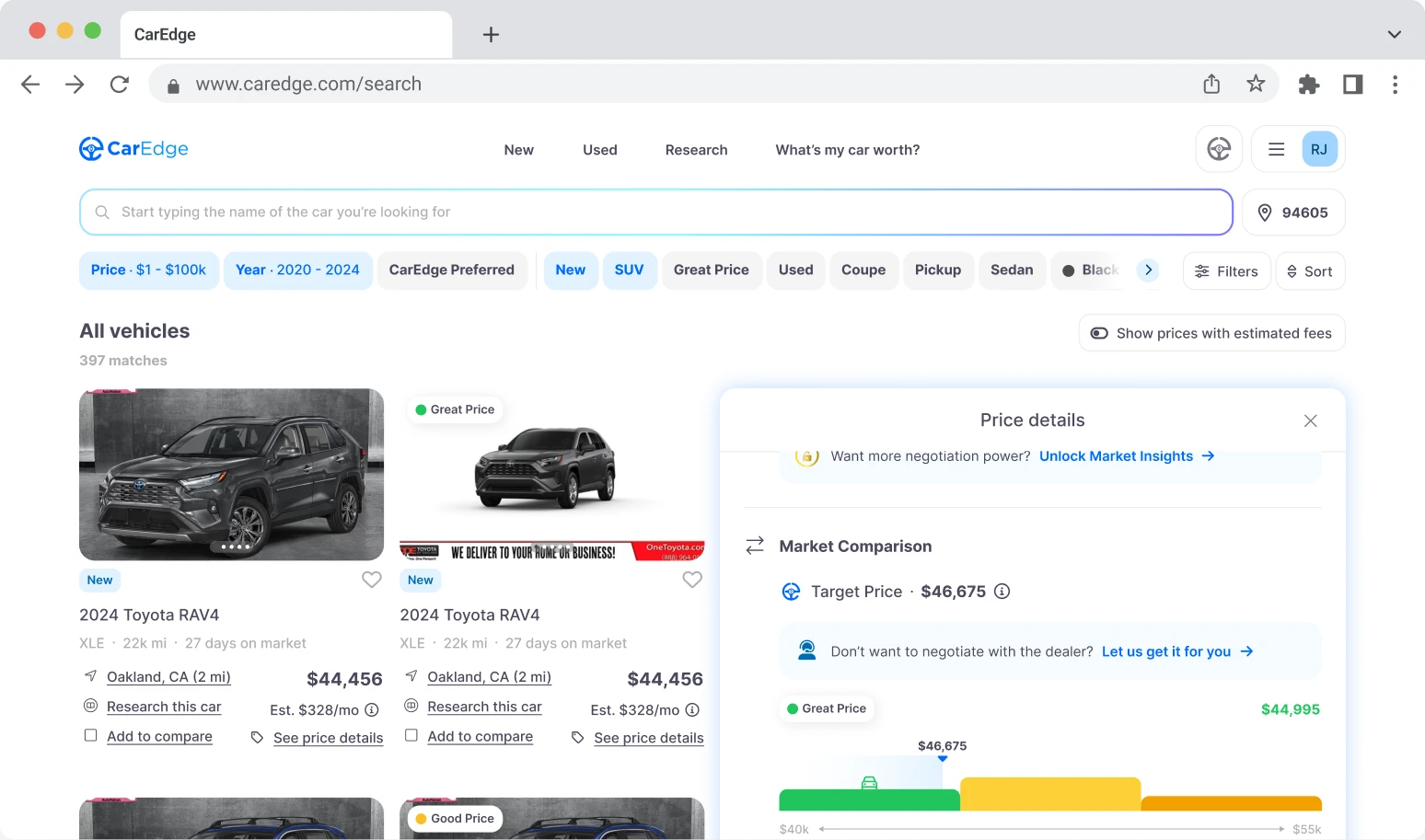

What can I do with CarEdge?
 CarEdge Insights
What can I do with CarEdge?
Get access to exclusive information so you can make an informed car buying decision — all in one place.

Find a wide range of vehicle listings with market insights on new and used listings near you.
Track your vehicle’s value and cash in when the time is right to sell.

Access to our proprietary data to help you find the right car, at the right price. Find these unlocked on every listing after subscribing.

With our expert-led, tech-enabled car buying service, we will locate, negotiate, and deliver your vehicle so you can get a new car hassle free.


Help us personalize your CarEdge experience — it only takes a second.
Your answers help us personalize your CarEdge journey — we’ll follow up with tips and next steps that match your buying timeline.


Buying a car from a private seller can be tempting, especially when the price is right. But private sales come with risks that you need to be aware of before making a deal. Unlike dealerships, private sellers don’t have the same accountability, making it crucial for buyers to do their homework. Here are some important risks to consider when buying a vehicle through a private sale.
While dealerships rely on reputation, private sellers often aren’t as concerned about being 100% truthful. There’s little downside for them to leave out important details about the car’s condition, especially if it means losing money. That’s why it’s essential to approach private sales cautiously and assume the seller might not disclose everything. Always request a vehicle history report to get the facts.
One of the biggest risks when buying from a private seller is the potential for hidden liens on the vehicle. If there’s unpaid work or debts associated with the car, the new owner becomes responsible for them. A vehicle history report should help disclose any liens or outstanding debts, so make sure you check before purchasing. A hidden lien is rare, but a huge pain if it happens.
Private sellers may list their cars for sale after a dealer refuses to accept it as a trade-in, often due to mechanical issues. These problems may not be immediately obvious without professional diagnostic equipment. To protect yourself, always have the car inspected by a trusted mechanic before finalizing the sale. Learn more about Pre-Purchase Inspections.
While vehicle history reports provide valuable insight into a car’s past, they only contain what’s been reported. If an accident wasn’t documented, it won’t show up on the report. To avoid surprises, have a professional pre-purchase inspection check for signs of damage, such as mismatched paint or replaced body panels.
Each state has different safety and emissions standards, and just because a car passes inspection in one state doesn’t mean it will pass in another. Things like window tinting, ground clearance, or other modifications can become costly issues. Make sure the car meets your state’s requirements before making a purchase. If you live in a state with strict inspection criteria, buying a used car, especially an older car, will involve a higher risk of a failed state inspection, and the need for costly repairs.
Unlike dealerships, private sellers aren’t subject to the same regulations and oversight. If something goes wrong after the sale, your options for recourse are limited. Legal action against a private seller can be costly and time-consuming, leaving you with few alternatives if the car turns out to be less than advertised.
If you’re considering buying a car from a private seller, take steps to protect yourself. Obtain a vehicle history report, research expected resale values, and get a mechanic’s inspection. These steps will help ensure that you’re making a smart decision and not getting stuck with a vehicle that could end up costing you more in the long run. But here’s the bottom line: unless you personally know the seller and have a high amount of trust in them, it’s impossible to be 100% certain that you are avoiding the risks mentioned here.
Check out the following video for more information on today’s used car market:
As car prices remain high, many buyers are opting for longer car loans to keep their monthly payments manageable. According to new data from Edmunds, 84-month loans are on the rise. In fact, 84-month car loans have grown from 15.8% of new loans in Q1 2024 to 18.1% in Q3 2024. The average car loan term is now 68.8 months, remaining near all-time highs.
While these extended loan terms might lower monthly payments, they come with serious risks that could impact your finances for years to come. Here’s what you need to know, and how to play it smart when financing your car.

84-month loan terms are becoming popular, but that doesn’t mean they’re a good idea. In fact, far from it. As auto loan rates begin to fall, more car buyers are warming up to the idea of longer loan terms. This is a bad sign of things to come in 2025, unless consumers begin to think-twice about extending auto loans.
Our Q3 2024 CarEdge Negative Equity Report shows that 31% of drivers who financed their vehicle are underwater on their loans. The situation is worse for those with loans longer than 60 months, especially 84-month terms, which lead to slower equity growth and higher chances of negative equity. Among the survey respondents with 84-month loan terms, an astounding 71% are underwater. Clearly, longer loan terms increase the likelihood of negative equity for car owners.
One of the main reasons for this is depreciation. With long loan terms, cars lose value faster than the loan is paid off, leaving borrowers owing more than their vehicle is worth. With a longer loan, the gap between loan balance and vehicle value grows wider, putting drivers in a financially vulnerable position.
Why You Should Avoid 84-Month Loans:
Smart Car Buying Tips:
While the allure of lower monthly payments with an 84-month loan can be tempting, the long-term risks far outweigh the benefits. Negative equity, higher interest costs, and lack of financial flexibility are all too common with extended loan terms. To protect your financial future, it’s smart to opt for shorter loan terms, build equity faster, and avoid stretching your budget just to secure a lower payment.
For more in-depth information on auto depreciation, maintenance costs, and total cost of ownership for hundreds of models, visit the CarEdge Research Hub. It’s 100% free!

Fall is underway, and better truck deals are here. With 2025 models arriving daily and dealers eager to sell remaining 2024 inventory, it’s a great time for negotiating, or letting us do it for you. Here’s our guide to the top truck deals of October 2024, featuring low APR financing, cash offers, and lease deals.
Automakers release their deals between the first and fifth of each month, so check back soon for the latest.

Starting MSRP: $40,350+
Negotiability Score: Very High (141 days of market supply)
0% APR financing for 60 months
Nissan is fighting hard for truck market share in the U.S., with limited success. Today’s zero percent financing offer is the best truck deal today at 60 months. This offer expires on 11/02/2024.
See Nissan Titan listings with local market data

Starting MSRP: $36,820+
Negotiability Score: High (181 days of market supply)
2024 Ram 1500 and 2024 Ram 1500 Classic: 0.9% APR for 72 months
Ram trucks are slow-selling, even though they seem to be everywhere you look on the road. To alleviate Ram’s oversupply of trucks, they’re offering huge financing offers this month. This offer expires on 11/02/2024.
See Ram 1500 listings with local market data
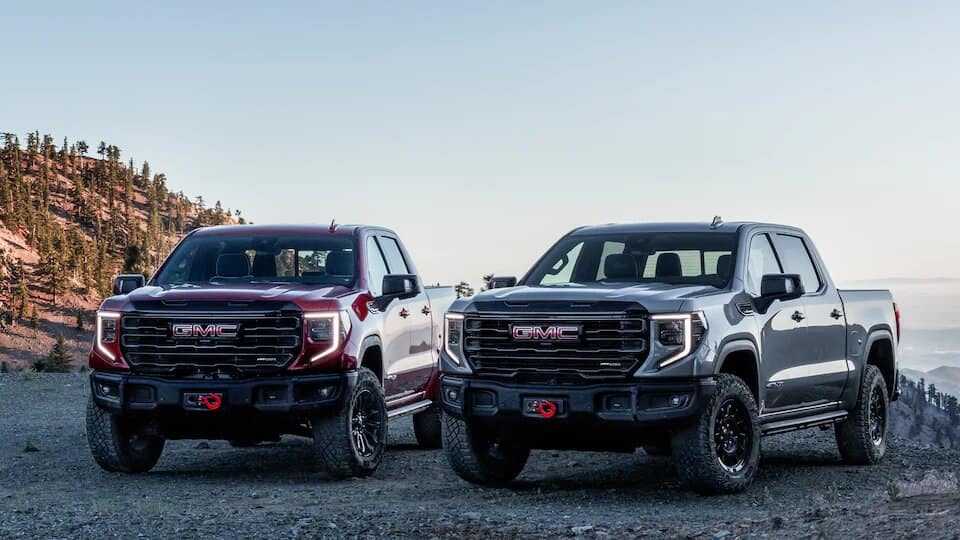
Starting MSRP: $51,900+
Negotiability Score: High (117 days of market supply)
0% APR for 36 months
GM is offering big incentives on both the Sierra 1500 and Silverado 1500 this month. This offer expires on 11/02/2024.
See GMC Sierra 1500 listings with local market data

Starting MSRP: $48,645+
Negotiability Score: High (112 days of market supply)
0% APR for 36 months + NO payments for 90 days, or lease for $409/month for 36 months with $4,949 due
With 112 days of market supply, there’s an abundance of 2024 Silverado 1500s on Chevy dealer lots. These APR and lease offers are great deals for truck fans. This offer expires on 11/02/2024.
See Chevrolet Silverado 1500 listings with local market data

Download your 100% free car buying cheat sheets today. From negotiating a deal to leasing the smart way, it’s all available for instant download. Ready to let a car buying pro take the wheel? CarEdge Concierge is the easiest way to buy a car today. Our team finds the vehicle you want, right down to the finest of details, and negotiates on your behalf. Home delivery is available. Learn more about CarEdge’s car buying service.

Looking to get into a new vehicle for the least amount of money possible? You’re in luck! We’re here to help you sort through hundreds of offers to find the best lease specials in December 2025. There are several new car leases under $200/month this month. Bump your budget up to $300/month, and you have plenty to choose from. From Toyota to Chevy and every brand in between, these are the best lease deals right now.
It’s December, and that means we’re now in the heart of year-end sale season. Most of December’s new car incentives will arrive on the second or third day of the month, so check back for updates. We’ll see more offers roll in later this month.
Important note: The following advertised manufacturer offers exclude taxes, title, and fees. The dealer sets the final price. Automakers announce new monthly sales between the second and fifth of each month.

Buick Envista Lease Deal: $179 per month for 24 months with $4,579 due at signing
Buick Encore GX Lease Deal: $269/month for 24 months with $2,449 due at signing
See offer details at Buick.com

Chevrolet Trailblazer Lease Deal: $289/month for 36 months with $499 due.
Chevrolet Trax Lease Deal: $299/month for 24 months with $1,879 due.
See offer details at Chevrolet.com
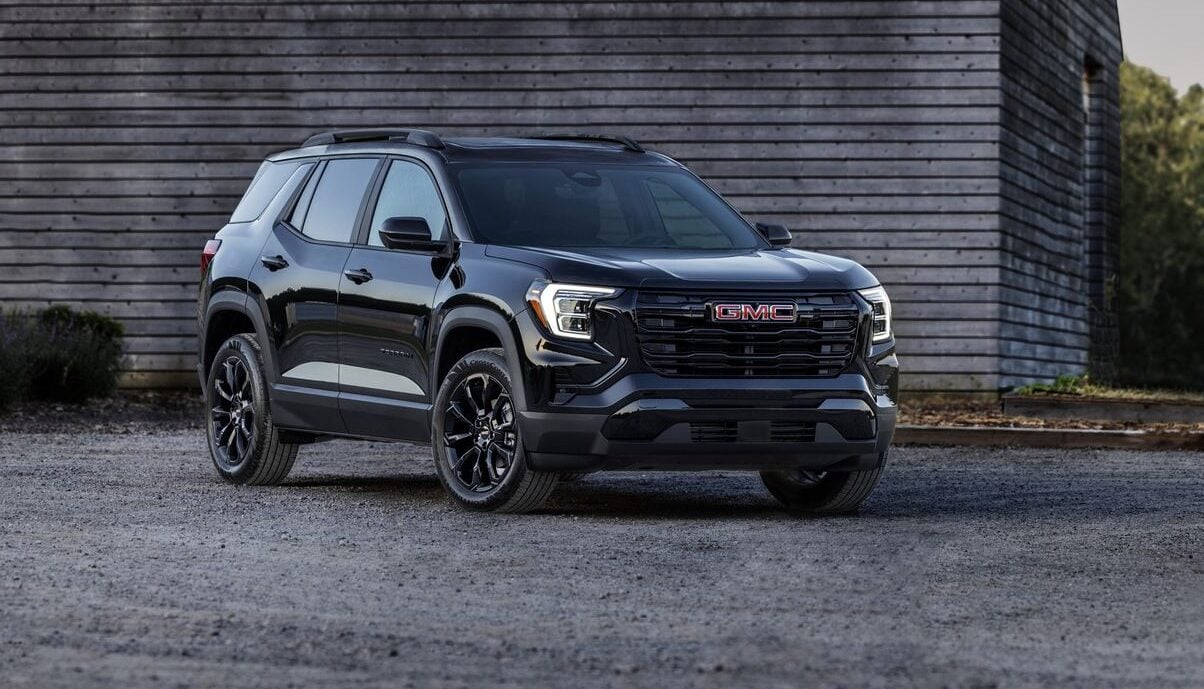
Here is the best GMC SUV lease deal in December 2025:
2025 GMC Terrain: Lease from $279/month for 36 months with $3,989 due at signing
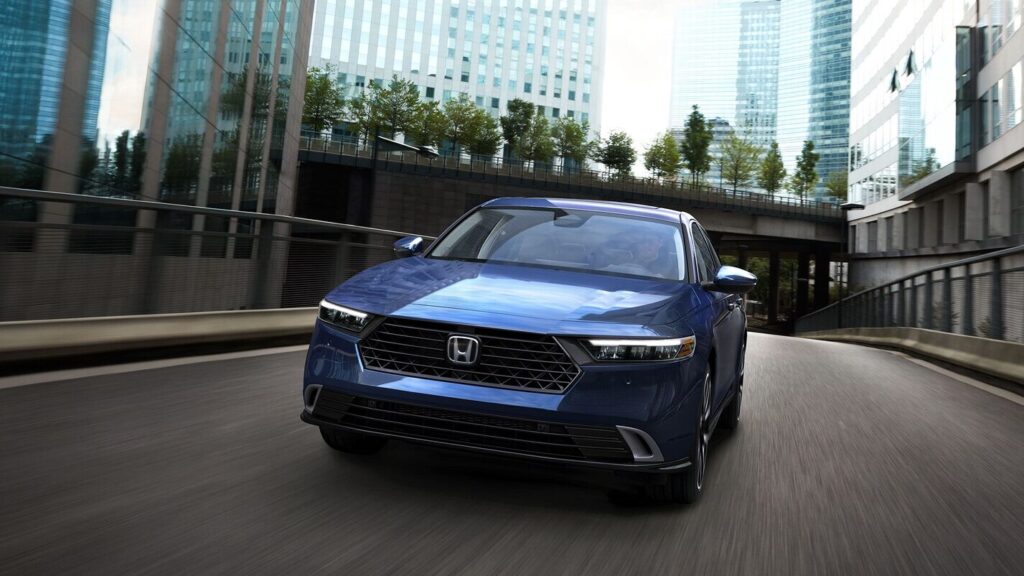
Honda has fewer cheap lease deals in December, with the popular CR-V available from $319/month. Honda’s year-end sales bring better lease offers for those with patience and flexibility.
Honda CR-V Lease Deal: $319/month for 39 months with $4,199 due
Honda Accord Lease Deal: $299 per month for 36 months with $3,699 due
Honda Civic Lease Deal: $259 per month for 36 months with $3,599 due
See offer details at Honda.com

Among all car brands, Hyundai has the most lease specials under $250/month in December 2025.
Hyundai Elantra Lease Deal: $229/month for 36 months with $3,499 due
Hyundai Venue Lease Deal: $239/month for 36 months with $3,499 due
Hyundai IONIQ 5 Lease Deal: $259/month for 24 months with $3,999 due
Hyundai Kona Lease Deal: $229 per month for 36 months with $3,999 due
Hyundai Sonata Lease Deal: $259/month for 36 months with $3,499 due
Skip the dealership and buy or lease your next Hyundai with CarEdge. Learn how it works.

Kia’s Niro EV lease deal is the cheapest lease this month, with offers starting at just $119/month.
Kia Niro EV Lease Deal: $169/month for 24 months with $3,999 due
Kia K4 Lease Deal: $229/month for 24 months with $3,499 due
Kia Soul Lease Deal: $259/month for 36 months with $3,499 due
Kia Sportage Lease Deal: $249/month for 24 months with $3,999 due
See offer details at Kia.com

Lease the 2025 Mazda CX-30 from $169/month for 36 months with $5,699 due at signing.
See offer details at MazdaUSA.com

Nissan Sentra: $229/month for 36 months with $3,329 due
Nissan Kicks: $239/month for 36 months with $3,799 due
Nissan Rogue: $299/month for 36 months with $4,469 due
See offer details at NissanUSA.com

Tesla Model 3: $429/month for 36 months with $4,224 due
Tesla Model Y: $529/month for 36 months with $4,224 due
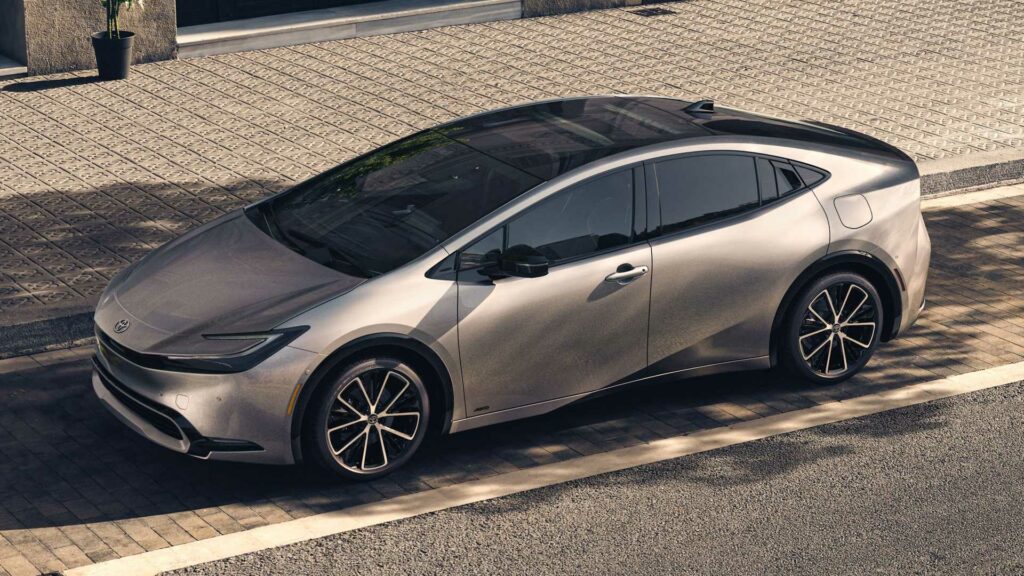
Toyota has some great cheap lease deals for December. However, it’s important to note that Toyota’s offers are always regional in nature. It’s best to check local availability for each incentive at Toyota.com.
Toyota Corolla Lease Deal: $209/month for 36 months with $3,999 due (select markets)
Toyota Tacoma Lease Deal: $249/month for 36 months with $3,999 due (select markets)
Toyota Camry Lease Deal: $249/month for 36 months with $3,999 due (select markets)
2025 Toyota RAV4: $299/month for 36 months with $3,999 due (select markets)

In December 2025, Volkswagen has the best least deals of the month. As year-end sales arrive, VW has announced several zero-down lease offers.
Volkswagen Taos: $379 for 36 months with $0 due at signing
Volkswagen Tiguan: $399 for 36 months with $0 due at signing
Volkswagen Atlas: $599/month for 36 months with $0 due at signing
Whether you prioritize fuel efficiency, space, or the latest technology, the cheapest lease deals prove that you can have it all. Remember to act quickly, as these deals expire at the end of the month.
Ready to skip the BS and lease the easy way? Do it all from the comfort of home with CarEdge. With home delivery available (free in select areas) and our famous pre-negotiated pricing, we’ll simply deliver the car you want to your door.

As manufacturers roll out year-end incentives, buyers are seeing more attractive offers for November 2024. From zero percent financing to cheap lease deals, there’s something for everyone. It’s worth pointing out that automakers update their incentives between the second and fifth business day of each month. Check back for updates this week!
Low APR deals are growing in quantity and quality as we approach year-end sales. With interest rates officially falling, more deals are on the way. If you’re interested in any of these cars and trucks, what’s the use in waiting?

In recent months, we’ve seen an increase zero percent financing. All of the following models are all advertised for 0% APR in November 2024.
CHEVROLET – 2024 Blazer EV, Equinox EV, Silverado EV (36 months)
DODGE – 2024 Dodge Hornet eAWD (72 months)
FORD – 2024 Ford Mustang Mach-E (72 months)
GMC – Sierra 1500, Sierra EV (36 months)
JEEP – All Jeep models, from the Wrangler to the Grand Cherokee, have 0% APR for 36 months right now.
KIA – 2024 Kia EV9, EV6 (0% APR for 72 months). The slower-charging Niro EV is offered with 0% financing for 60 months. Kia is also offering the Sportage and Sorento at 0% APR for 48 months.
MAZDA – 2024 Mazda CX-30, CX-5, CX-50, CX-70, CX-90, and Mazda3 (0% APR for 36 months)
NISSAN – 2024 Nissan Rogue, Pathfinder (0% APR for 36 months); 2024 Nissan Titan (60 months)
SUBARU – 0% financing for 72 months: 2024 Subaru Solterra
VOLKSWAGEN – 2024 Volkswagen Tiguan (0% APR for 60 months)
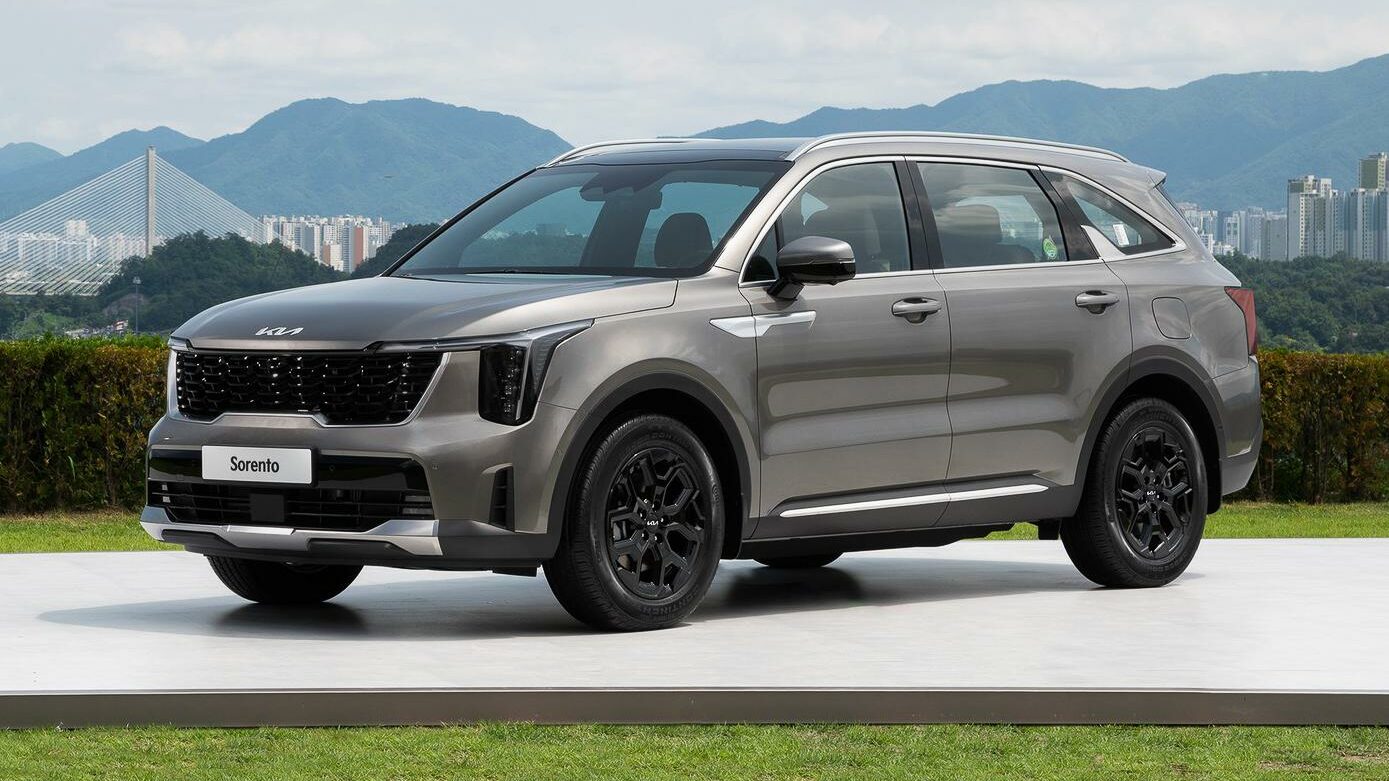
Several more models are available at just 0.9% APR this month. Mazda, Kia, and GM are all bringing low APR offers to lure buyers in.
These are the models advertised with 0.9% APR in November:
2024 Buick Envision, Encore GX
👉 Here’s every automaker’s best financing offers this month.
When it comes to new car incentives, more shoppers are considering a lease as MSRPs soar ever higher. These are the best lease deals in November 2024.

Chevrolet Silverado 1500 Lease Deal: $409/month for 36 months with $4,949 due (for eligible current lessees)
Toyota Tacoma Lease Deal: $449/month for 36 months with $0 due (tax, title, fees, and dealer add-ons are extra)

Buick Envista Lease Deal: $199/month for 24 months with $3,866 due
Chevrolet Equinox Lease Deal: $299/month for 36 months with $2,999 due
Ford Explorer Lease Deal: $467/month for 36 months with $4,939 due
GMC Terrain Lease Deal: $370/month for 39 months with $0 due for returning GM lessees
Tesla Model Y Lease Deal: $349/month for 36 months with $2,999 due at signing

Honda Accord Lease Deal: $239/month for 36 months with $3,799 due
Kia Forte Lease Deal: $199/month for 24 months with $3,499 due
Kia K4 Lease Deal: $219/month for 24 months with $3,499 due
Hyundai Elantra Lease Deal: $179 per month with $3,499 due
Hyundai Sonata Lease Deal: $229 per month with $3,499 due
Tesla Model 3 RWD Lease Deal: $299 per month for 36 months with $2,999 due
👉 See ALL of the best lease deals from every major automaker
Ready to outsmart the dealerships? Download your 100% free car buying cheat sheets today. From negotiating a deal to leasing a car the smart way, it’s all available for instant download. Get your cheat sheets today!