
CarEdge saved me over 4,500 dollars on a brand new Honda Pilot. I can't say thank you enough.
Price intelligence
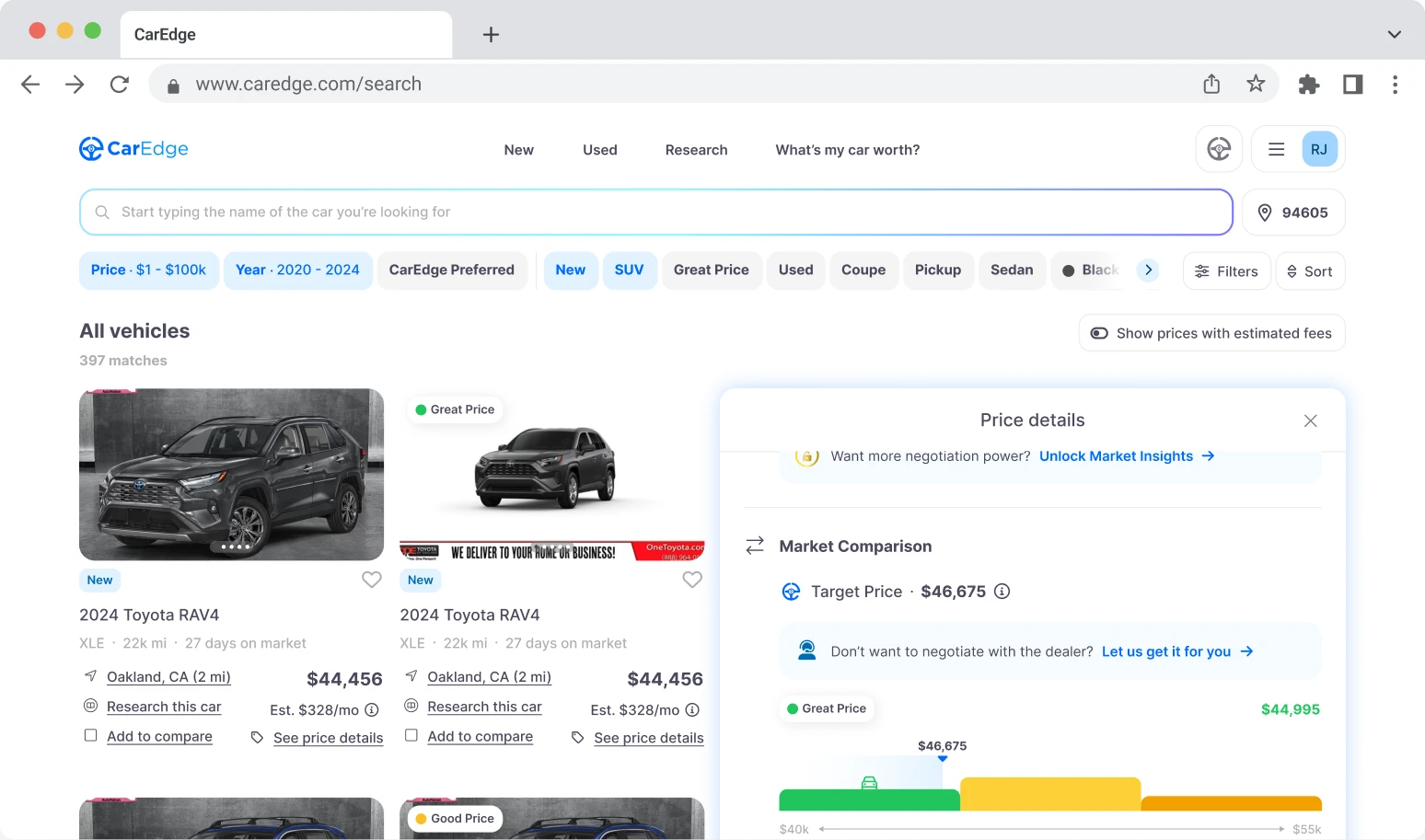
Find a wide range of vehicle listings with market insights on new and used listings near you.

What can I do with CarEdge?
 CarEdge Insights
What can I do with CarEdge?
Get access to exclusive information so you can make an informed car buying decision — all in one place.

Find a wide range of vehicle listings with market insights on new and used listings near you.
Track your vehicle’s value and cash in when the time is right to sell.

Access to our proprietary data to help you find the right car, at the right price. Find these unlocked on every listing after subscribing.

With our expert-led, tech-enabled car buying service, we will locate, negotiate, and deliver your vehicle so you can get a new car hassle free.


Help us personalize your CarEdge experience — it only takes a second.
Your answers help us personalize your CarEdge journey — we’ll follow up with tips and next steps that match your buying timeline.
![The Best Way to Buy a Car in 2025 [5-Steps to Success!]](https://caredge.com/wp-content/uploads/2023/07/Cheat-sheet-OG-1080x630.png)
Purchasing a car, whether it’s your first or your fifth, can be a daunting task. Our team of car buying pros has created this guide to how to buy a car for one simple reason: buying a car shouldn’t be a miserable experience. We’ve laid out a thorough step-by-step guide to simplify the process for you. It’s 2025, and you have tools that yesterday’s car buyers dreamed about. It’s time to put data to work for you!
👉 Ready to let an expert do it for you? Learn more about CarEdge Concierge, the best way to buy a car hands-down!
Imagine if you were paid to do your homework back in school. When it comes to buying a car, it’s a concept that’s not all that far-fetched. When you approach car buying with proper preparation, you’re sure to save more and spend less. Before diving headfirst into the buying process, here’s where you should begin your journey:
This might come across as a no-brainer, but there’s more to setting a budget for car buying than meets the eye. Here’s what you should think about BEFORE shopping for a car.

Have you ever asked yourself, what do I actually need? Do you really need a full-size SUV or a $100,000 truck? Have you budgeted for a car? Now’s the time to ponder these questions and more. Remember: the more economical the car, the lower your cost of ownership is likely to be. Maintenance, insurance and taxes are all lower for more affordable cars. Here are a few other things to consider:

Choosing between new and used can make a big difference in your budget and what you get.
While a brand-new car entices with the allure of cutting-edge technology, pristine interiors, and that new car smell, it also comes with a higher upfront cost. On the other hand, opting for a used car can be easier on the wallet, providing the opportunity to snag a higher-end model at a fraction of its original price. However, used car buyers should tread cautiously, considering factors such as the car’s history, mileage, and any wear and tear. Always get a pre-purchase inspection. You want to know what to expect maintenance-wise! If the seller refuses a pre-purchase inspection, we think you should move on to another deal.
In essence, the choice between new and used boils down to a balance of budgeting and desired features.
Used car prices fluctuate more than new car prices. New car prices generally always rise with each new model year. On the other hand, used car prices undergo serious ups and downs. We track used car prices, and you can see this week’s update here.
Financing is possibly the most daunting part, but with the right preparation and resources, it doesn’t have to be. Here’s what you should know BEFORE heading out to buy a car.
Most importantly, print out this auto financing cheat sheet!
If your debt to income ratio is well above 35%, consider making payments to lower your debts before applying for an auto loan. You’ll qualify for a better rate, and save money on interest.
Today’s average auto loan rates range from 9% APR with new cars to 13% for used cars. That adds up quickly, especially for big borrowers with longer loan terms!
If you’re considering a new car, check out the best auto loan rate offers today.

Whether you’re buying new or used, you now have the tools at your fingertips to browse car listings with market insights on your side. Start with CarEdge Car Search, the internet’s first car listings featuring behind-the-scenes market data.
Ready to negotiate with unmatched market data? CarEdge Pro is your DIY car buying toolkit. Use Pro to see local prices, local supply of similar cars, and negotiability factors for every listing. Check out CarEdge Pro to see how you can save.
Once you’ve found multiple sweet deals, it’s time to take it for a test drive!
NEW from CarEdge 👉 Use Dealer Invoice Pricing to Negotiate with Confidence (100% FREE)
You’re close to the finish line! Now is NOT the time to rush through paperwork.
Buying a car is no small feat, but with thorough research and the right resources, you can navigate the process with confidence. We’ve got 100% FREE resources to help you begin your journey with the empowerment that comes along with car buying know-how.
Here are the car buying essentials our team created just for you:
The Ultimate Car Buying Checklist
Car Buying Cheat Sheet – Know Exactly What to Say!
How to Finance a Car Like a Pro
Here at CarEdge, our mission is to take the misery out of car buying for everyone, and to make the entire car buying process more transparent. What’s our plan for accomplishing these lofty goals? We’ve put a growing team of auto industry veterans to work for the good guys, you the car buyer!
With CarEdge Concierge, our pros listen to your needs, and take it from there. We find the perfect fit, negotiate savings on your behalf, present you with the deal, and ship it to your home (if necessary). Learn more about buying with CarEdge. Save at least the cost of our service, or get your money back!

What goes up, must come down, even in the stubborn auto market. We’ve been tracking new car inventory for months as dealer lots have steadily filled up, at least for some brands. The inevitable is finally happening: new car incentives are returning, and they’re back in a big way. Whether you’re looking to buy or lease, here’s where the best cash and financing incentives are today.
Want to finance your car with an irresistibly low interest rate? It’s not easy to do considering that the average APR for new car loans has climbed to 7.2%. These brands are offering appetizing APRs in August:
Hyundai, Ford, and Nissan: APR as low as 0.0% for most models. This is where you’ll find the best auto loan deals in August!
Chevrolet: As low as 1.9% APR for their sparkling 2023 models.
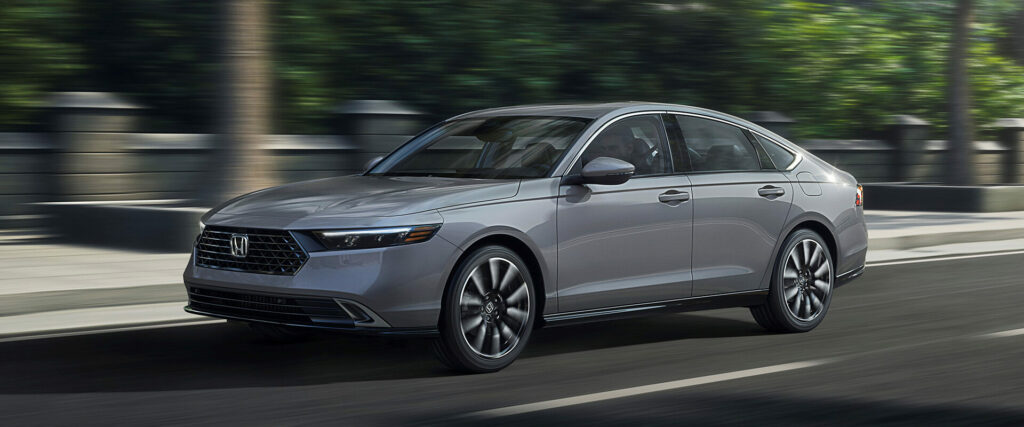
Honda: Save money on interest with APR as low as 0.9% for most models, including the Accord, Odyssey, Passport, Pilot, and others.
Subaru: APR as low as 1.9% for 2023 models, including the Outback, Crosstrek, Ascent and more.
Volkswagen: APR as low as 1.9% for the Taos and Tiguan crossovers.
Here’s every automaker’s best financing offers this month.
How to Finance a Car Like a Pro: The Ultimate Auto Financing Cheat Sheet
When new car inventory climbs, cash incentives come roaring back. For models with high inventory right now, manufacturer incentives are piling up. And when it comes to cash incentives, the deals are lavish:
Ford Mustang Mach-E: $3,000 off MSRP (but be wary of the dealers who continue to mark up their EVs).
Hyundai IONIQ 5 & IONIQ 6: Save a whopping $5,000, with existing Hyundai patrons getting a sweetened deal of up to $7,500 off.
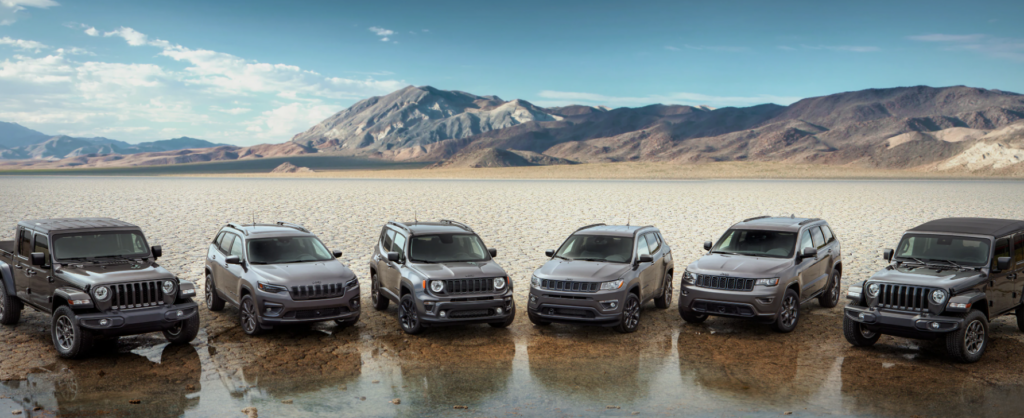
Jeep: Adventure more with $4,750 off the Wrangler and $4,000 off the Grand Cherokee. Jeep inventory is through the roof, and prices WILL come down further.
Nissan Ariya & Kia EV6: Electrify your drive with up to $3,750 off. It’s notable that neither comes with the revised EV tax credit.
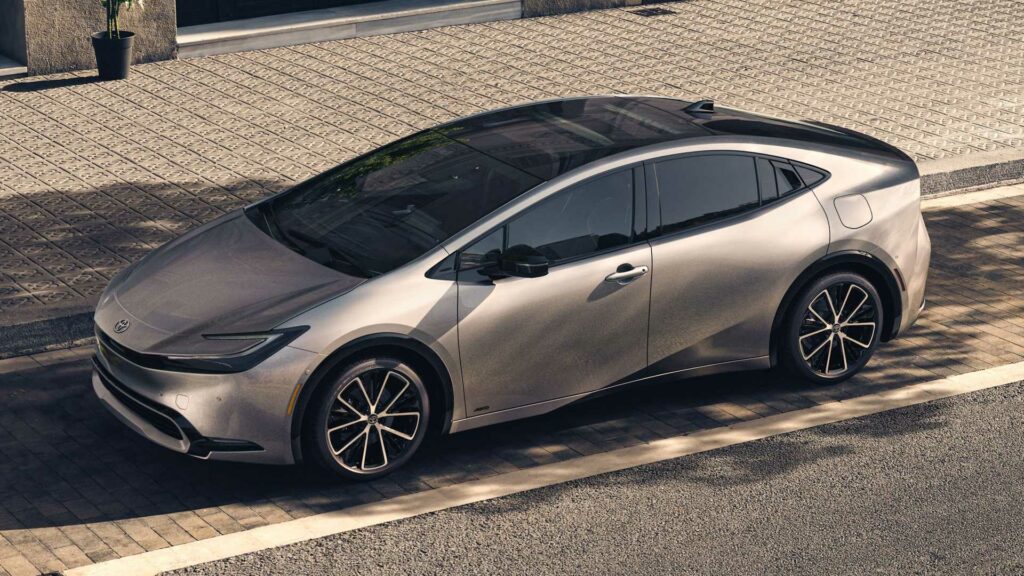
Toyota: Enjoy a lavish $7,500 cash incentive with the all-electric bZ4X, with the RAV4 Prime and Prius Prime following closely behind at up to $6,500 cash back. However, Toyota’s Prime models are still in short supply, so expect to shop around.
We pored over every automaker’s advertised lease deals for August to find the best of the best. In general, lease offers are much better this month than in the recent past. We’ve broken down lease deals by vehicle type:
Hyundai Venue: At just $151/month, the Venue promises affordability with style.
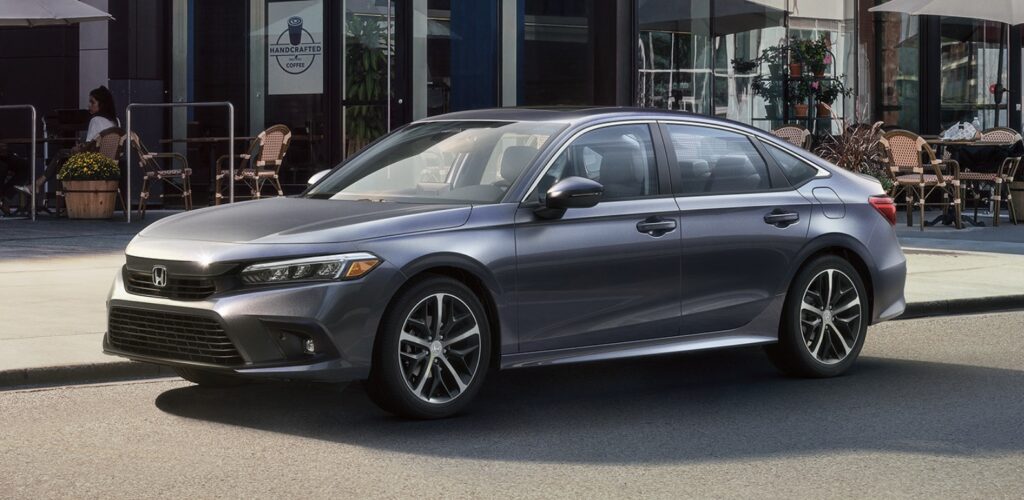
Honda Civic Sedan: This legendary sedan is available at $259/month.
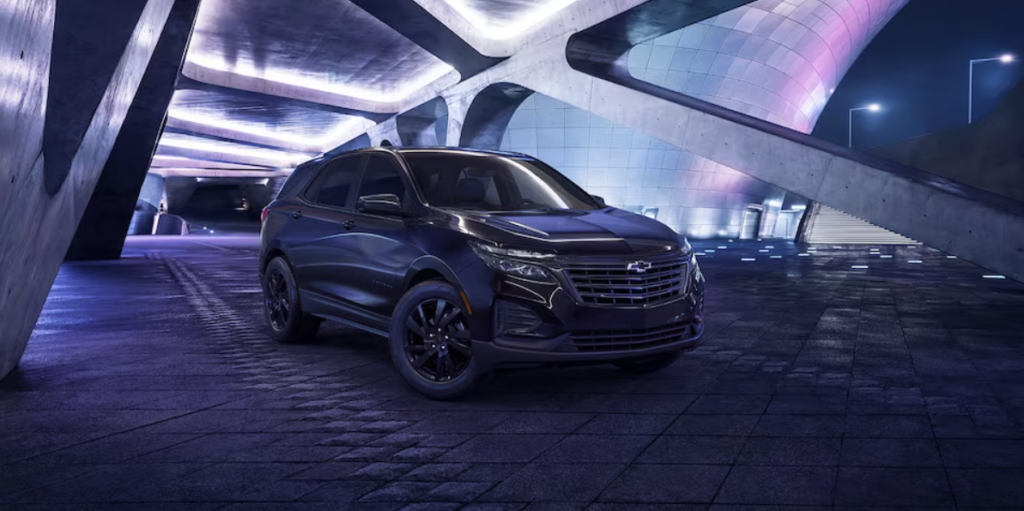
Chevrolet Equinox & GMC Acadia: At $269 and $289/month respectively, these SUVs offer an optimal blend of luxury and power.
Honda CR-V: Embark on your next journey at a breezy $309/month.
Silverado 1500 Crew Cab LT: A robust truck deal at $399/month.
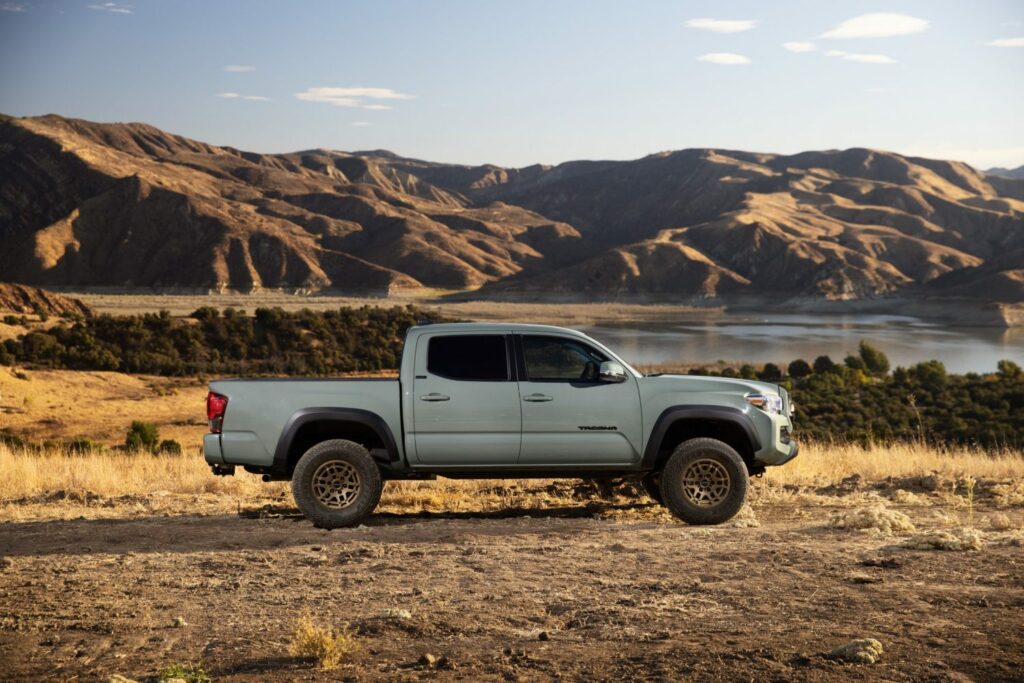
Toyota Tacoma: This iconic truck can be yours at just $362/month.
Chevrolet Bolt EV: $299/month for 36 months with $5,869 due
Mustang Mach-E GT: $398/month for 36 months for 39 months with $6,578 due
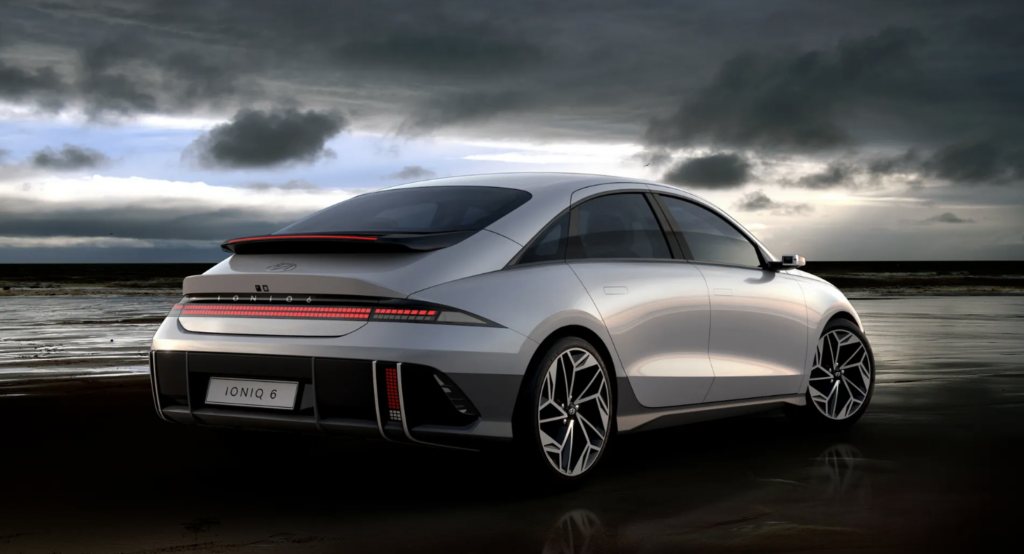
Hyundai IONIQ 6: $7,500 EV lease bonus (SE and SEL); $349 per month with $4,999 due
Hyundai IONIQ 5: $7,500 EV lease bonus (SE and SEL); $399 per month with $4,999 due
Tesla Model 3 RWD: $399 per month for 36 months with $5,594 due
Tesla Model Y: $569 per month for 36 months with $5,804 due
See every automaker’s lease deals in August
The new car market is undergoing an upheaval, and incentives are likely to get better in the weeks ahead. The combination of 7%+ interest rates, MSRP hikes and a softening used car market all point toward less demand for new cars. This is especially true for overpriced trucks and SUVS.
As you head out to shop the dealer lots, remember this: the savings don’t have to end with manufacturer incentives. CarEdge Coaches are seeing increased negotiability, and are helping buyers save thousands of dollars every day.
Take this FREE resource with you: The Ultimate Car Buying Cheat Sheet
Ready to work 1:1 with a car buying pro? Learn more about CarEdge Coach, your path to the most savings and the least stress. Prefer a DIY path to car buying? With CarEdge Data, you have the tools at your disposal to find the best deals and identify opportunities for negotiation.
And of course, we have hundreds of 100% free car buying guides just a click away. Don’t forget to connect with the CarEdge family over on our Community Forum.
We have car buying help to suit everyone’s needs. See how much you could save today!
The numbers are in, and let’s just address this from the get-go: Tesla continues to dominate electric vehicle sales in America. We’ve got the latest data, and there’s a lot to digest. Check back for updates when Q3 2023 numbers are available.
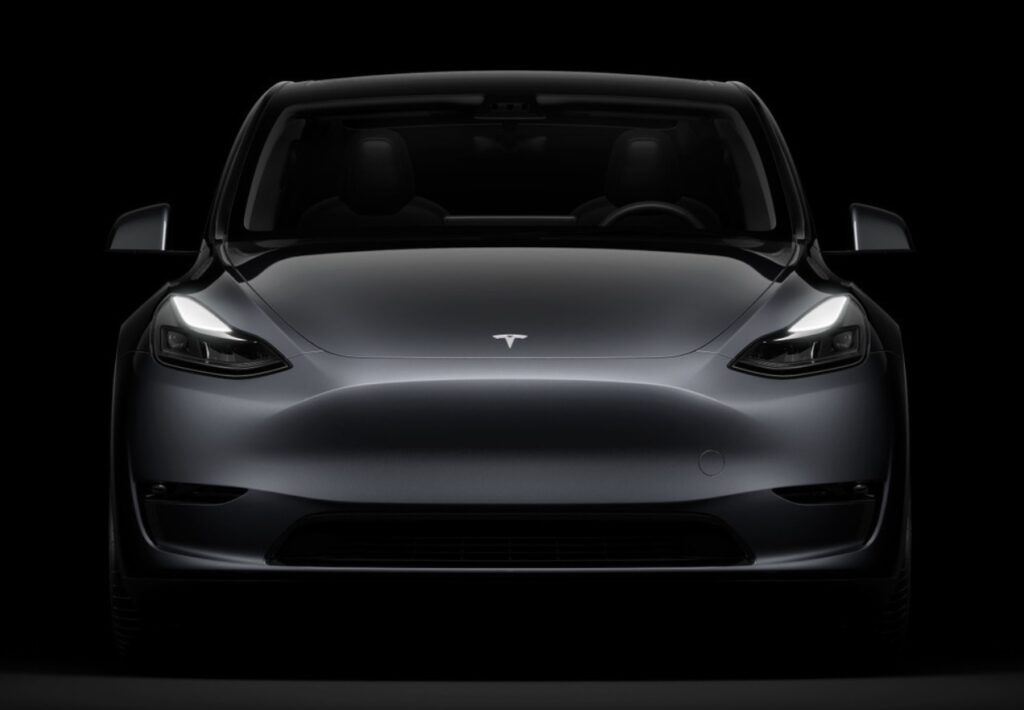
Here’s the latest EV sales totals via Auto News. These are the 2023 totals through the second quarter.
| Make | Model | Total Sales (2023) |
|---|---|---|
| Tesla | Model Y | 190,500 |
| Tesla | Model 3 | 121,500 |
| Chevrolet | Bolt (EV and EUV) | 33,659 |
| Tesla | Model S | 19,100 |
| Volkswagen | ID.4 | 16,448 |
| Ford | Mustang Mach-E | 14,040 |
| Hyundai | IONIQ 5 | 13,641 |
| Tesla | Model X | 11,900 |
| Genesis | GV60 | 11,320 |
| BMW | i4 | 10,724 |
| Ford | F-150 Lightning | 8,700 |
| Kia | EV6 | 8,328 |
| Rivian | R1T | 7,811 |
| BMW | iX | 6,486 |
| Rivian | R1S | 6,336 |
| Polestar | Polestar 2 | 5,783 |
| Mercedes-Benz | EQS SUV | 5,490 |
| Nissan | Ariya | 5,195 |
| Audi | Q4 e-tron | 4,682 |
| Mercedes-Benz | EQS Sedan | 4,539 |
| Volvo | C40 | 4,533 |
| Nissan | Leaf | 4,234 |
| Toyota | bZ4X | 3,659 |
| Mercedes-Benz | EQB SUV | 3,404 |
| Hyundai | IONIQ 6 | 3,245 |
| Porsche | Taycan | 3,162 |
| Mercedes-Benz | EQE Sedan | 2,990 |
| Mercedes-Benz | EQE SUV | 2,845 |
| Audi | e-tron | 2,513 |
| Audi | e-tron GT | 1,786 |
| Lucid | Air | 1,390 |
| Audi | Q8 e-tron | 1,119 |
Tesla continues to lead with 68% market share among US EV sales. In other words, all other EV sales combined still can’t compare to Tesla’s domination.
The next best-selling EVs in America behind Tesla are the Chevy Bolt, the newly American-made Volkswagen ID.4, the Ford Mustang Mach-E, and the Hyundai IONIQ 5.
The Chevrolet Bolt EV has had a record sales year. Bolt EV and EUV sales were up 100% year-over-year in the second quarter. It looks like the Bolt is having success right as GM decided to cancel it. Perhaps that’s a major reason why they recently mentioned a resurrected Bolt in the future, powered by the superior Ultium batteries.
The Ford F-150 Lightning is by far the best-selling electric truck in America, with Rivian quite a ways behind. We don’t expect the Lightning to have serious competition until the Silverado EV comes along. Full production is unlikely before next spring.
Stay tuned for the next update as Q3 2023 numbers come out. Will Tesla continue to dominate, or will legacy automakers FINALLY catch up? What do you think? Leave us a comment below. We’d love to hear from you.
Right now, there’s a 41-day supply of new Toyota vehicles in the U.S. What this means is, at the current sales pace, all 261,604 new Toyotas would find their new homes in just over a month without new inventory. But how does this scenario compare to other auto manufacturers? And more importantly, which Toyotas give you the most room for negotiation, and which ones are holding their ground? Let’s dive into the details.
| Make | Inventory % Increase (3 Months) | Market Day Supply - December 2023 | Market Day Supply - September 2023 |
|---|---|---|---|
| Honda | +68% | 47 | 28 |
| Kia | +89% | 53 | 28 |
| Toyota | +37% | 41 | 30 |
| Hyundai | +50% | 75 | 50 |
| Chevrolet | +63% | 88 | 54 |
| Nissan | +58% | 112 | 71 |
| Volkswagen | +52% | 96 | 63 |
| Ford | +43% | 127 | 89 |
| Jeep | +31% | 191 | 146 |
Market Day Supply (MDS) is a leading industry metric that is used to assess inventory. Market day supply takes the average daily sellin rate and existing inventory into account to determine how long it would take to sell every vehicle in inventory at recent average selling rates. A healthy ‘normal’ MDS is anywhere between 45 and 65 days of supply.
As you can see, Toyota has the lowest new car inventory among mainstream brands in America with just 41 days of supply. Honda, long perceived as Toyota’s most direct competitor, is #2, but is faring better at 47 days of supply. Kia comes in third with 53 days of inventory.
Contrarily, Nissan, whose market share has been dwindling in the U.S., unsurprisingly has an oversupply of new car inventory at the moment with a MDS of 112 days. Nissan was hit hard by the chip shortage, but the brand doesn’t seem to be winning back many of the customers it lost. Nissan’s US market share is now at just 4.9%.
And then we have the American automakers. Chevrolet is above average with a 88-day supply, but Ford and Jeep are drastically exceeding healthy inventory levels. Jeep is in the lead, with 191 days of supply. Although this isn’t the best news for these automakers, it certainly opens up opportunities for car buyers looking to drive a hard bargain.
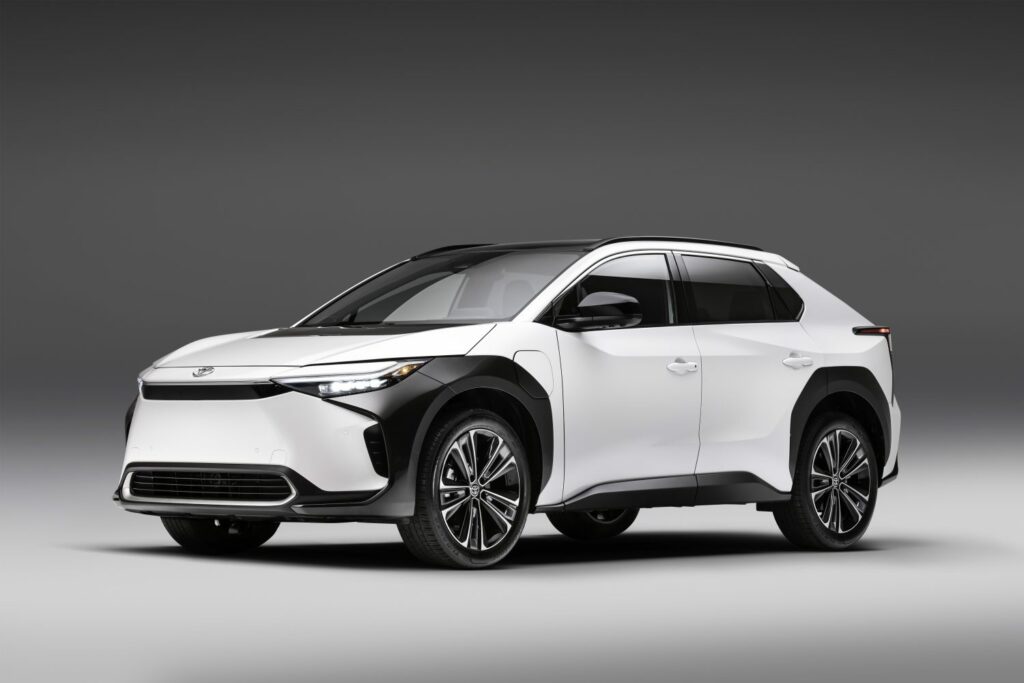
If your goal is to save thousands of dollars on your new Toyota, then it’s time to talk about negotiability at a finer scale. For that, we need to look at today’s inventory numbers across the Toyota model lineup.
Using the tools available through CarEdge Data, we analyzed Toyota inventory for every model on sale in America. These numbers reflect nationwide supply. You can check out local Toyota inventory using CarEdge Data.
| Make | Model | Market Day Supply (October) | Market Day Supply (September) |
|---|---|---|---|
| Toyota | Venza | 46 | 39 |
| Toyota | 4Runner | 61 | 45 |
| Toyota | Tundra | 63 | 34 |
| Toyota | Crown | 88 | 57 |
| Toyota | bZ4X | 110 | 94 |
Remember, a healthy auto market is characterized by about 60 day’s supply of new vehicles. The further inventory gets away from that, the more ‘out-of-whack’ the car market becomes. These models have the most inventory today of all Toyota models.
The redesigned Prius was on this list last month with a 73-day supply, but now the Prius seems to be selling quickly.
The Grand Highlander has been selling a lot quicker, and is going to be a lot tougher to negotiate now. Toyota’s new darling, the resurrected Crown, is selling slowly. Perhaps car buyers don’t have the appetite for $50,000 sedans that Toyota had expected.
The bZ4X electric SUV tops the list, with 110 day’s supply. With no federal tax credit and similarly priced, better equipped competitors, we’re not surprised.
Don’t negotiate without this FREE cheat sheet!
| Make | Model | Market Day Supply (October) | Market Day Supply (September) |
|---|---|---|---|
| Toyota | Camry | 39 | 30 |
| Toyota | Grand Highlander | 20 | 20 |
| Toyota | Highlander | 36 | 32 |
| Toyota | Sienna | 30 | 25 |
| Toyota | Corolla Cross | 28 | 27 |
| Toyota | RAV4 | 32 | 28 |
| Toyota | Sequoia | 44 | 23 |
| Toyota | Tacoma | 42 | 32 |
| Toyota | Corolla | 41 | 18 |
The Camry is the best-selling sedan in America, and Toyota can’t seem to produce enough of them. There’s a 39-day supply of them, and in some local markets, the situation is even worse. Despite slim supply, our Car Coaches say you should NOT pay dealer markups for the Camry, or any model for that matter. The Highlander is not much better, with a three-week supply nationwide.
Our CarEdge Coaches joke that the RAV4 Prime is their nemesis. It’s very tough to negotiate, all because of extremely limited inventory. Across all powertrains, the RAV4 has just a one-month supply right now.
See Toyota listings near you – all with the power of local market data.
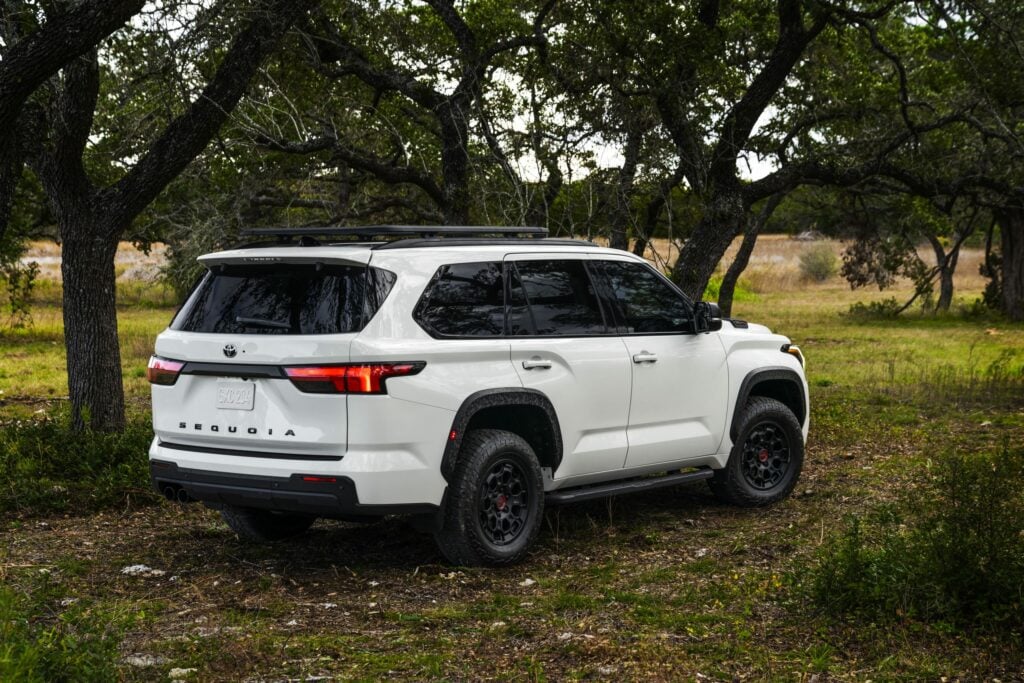
Despite the slim pickings with some Toyota models, it’s still possible to negotiate some great deals. Even for models in highest demand, there’s no reason you should have to pay for dealer markups, forced add-ons, or overpriced warranties.
Ready to negotiate like a pro? Try CarEdge Coach and CarEdge Data today! With these tools at your disposal, you can take control of your car buying experience, understand market dynamics, strategize effectively, and secure the best deal possible. We’re simply here to help!

The average car payment has been on an upward trajectory for some time, and 2023 is no exception. Today, we’re dissecting what the average car payment looks like and why it’s been rising. We’ll explore how average monthly car payments crossed the $1,000 threshold, and how you can navigate this landscape to spend less.
| (New Cars) | 2023 Q3 | 2023 Q2 | 2023 Q1 |
| Average Term | 68.4 | 68.5 | 68.8 |
| Monthly Payment | $736 | $733 | $730 |
| Amount Financed | $40,149 | $40,356 | $40,468 |
| Average APR | 7.4% | 7.1% | 7.0% |
| Down Payment | $6,907 | $6,823 | $6,956 |
According to Edmunds’ latest data, the share of $1,000+ monthly car payments has hit an all-time high. The rise is attributed to various factors: high interest rates, increased automaker prices, and dealer practices.
Reaching a new record, 17.5% of new car loans in Q3 2023 required a monthly payment of $1,000 or more. That’s up from 17.1% in Q2 2023 and a massive increase from the meager 4.3% back in 2019.
The average car payment in Q3 2023 reached a record high of $736 per month for new cars, up 4.5% since Q3 2022, and a 32% increase from 2019. Meanwhile, the average monthly car payment for used cars is $567, marking a 46% rise from 2019, but up less than 1% from Q3 2022.
Take a look a the average new car payment over time:

Data source: Edmunds. Graph by CarEdge.
The average monthly payment for used cars has followed a similar path upward, as we can see here:

Data source: Edmunds. Graph by CarEdge.
In pre-pandemic times, there was a slow but steady rise in car payment amounts. As the auto industry came out of the pandemic recession and the following chip shortage, car prices went through the roof, bringing average monthly payments along with them.
Let’s talk about why car payments are so high right now, and what you can do about it.
So, how much have car prices gone up? The average transaction price for a new car is $48,451 in 2023, a 25% increase since 2019. For used cars, it stands at $28,381, still 37% higher than in 2019, despite a slight decrease from the previous year. To make matters worse, interest rates for used car loans are commonly over 10% these days.
We track used car prices weekly. See the latest data!
Why are average monthly car payments and overall prices rising so fast? The auto industry can’t simply blame it on inflation, as we’ll get into below. But first, let’s talk about financing.
Car buyers are making larger down payments as the cost of borrowing money increases. The average auto loan rate is now 7.4% APR for a new car loan, and 11.2% APR for a used car loan. These are the highest auto loan rates the market has seen since 2007.
When will car loan rates go down? Simply put, it’s up to the Fed. The Federal Reserve sets the ‘Federal Funds Rate’, which largely determines how much it costs for banks to borrow money from each other, ultimately driving consumer loan rates.
Raising interest rates is a tool used to combat inflation. The thinking goes that when borrowing gets too expensive, excessive spending will be discouraged, and in turn demand for goods and services will cool down to the point that inflation slows.
Car loan rates will remain high until The Federal Reserve begins to lower interest rates at their Board meetings. Inflation needs to cool down for that to happen. Things are headed in the right direction, but we’re not there yet.

FREE Resource: How to Finance a Car Like a Pro: The Ultimate Auto Financing Cheat Sheet
Even with auto loan rates at 20-year highs, there ARE ways you can lock in big savings on loan interest. Here are the most effective ways to save on interest, according to our CarEdge team of experts:
Check out our deep dive into the many ways you can spend less on auto loan interest. With today’s interest rates, these tips could save you hundreds of dollars! Don’t forget to print this auto finance cheat sheet and bring it with you!
Our team of Car Coaches is made up of professionals who have decades of experience in the auto industry. Rather than squeeze more money out of every sale at the dealership, these car pros help drivers SAVE money with their auto. We spoke to our team of Coaches to learn how much money today’s car buyers should aim to spend on their monthly car payment.
The consensus was broad: the CarEdge team advises keeping your monthly car payment below 10% of your monthly take-home pay. With gas, insurance, and maintenance, it should ideally be well below 20% of your monthly income. It’s worth noting that negotiation can play a pivotal role in ensuring you spend less on your car.
Here are a few essential FREE resources to help you budget for your car purchase:
Browse cars with expert help just a click away with CarEdge Car search.
Use this Free Out-the-Door Price Calculator to more accurately estimate how much your car will cost once taxes and fees are included.
Here’s a Free Car Payment Calculator that will help you understand what price range you can afford with your down payment. It’s most useful if you have an idea of what loan rates you might qualify for.
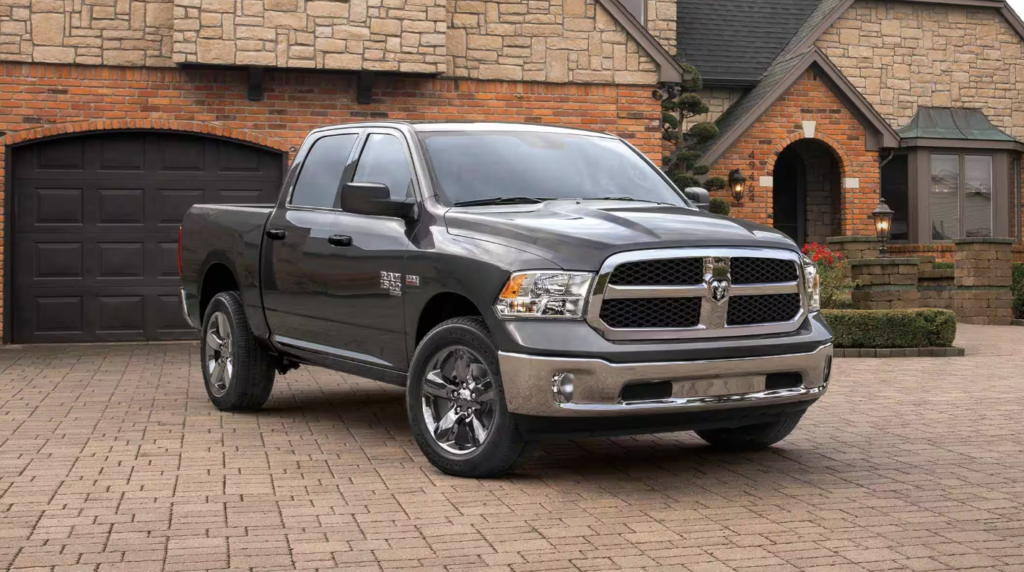
Most automakers have an oversupply of new cars right now. Over the past year, we’ve seen dealer lot inventory climb above and beyond what we typically see in a healthy, stable car market. Automakers and dealers like to have roughly a 60 day supply of new cars on their lots. Today, we see more and more models well above a 100 day supply. For some, like the Ford Mustang Mach-E, Jeep Renegade and Ram 1500 truck, inventory exceeds 200 days.
Something has to give. Floorplanning costs mean that the car dealers themselves pay interest for every day that a car sits on their lot. Plus, no one wants a two-year old ‘new’ car. With each passing day, dealers are incentivized to move their inventory off the lot.
We’re seeing used car prices fall rather quickly, yet new car prices are more complicated. Listing prices remain high (and in some cases outrageous), but our team of CarEdge Coaches is seeing greater negotiability on the new car market.
Dealers are more willing to lower their prices and remove add-ons and markups. However, in most cases, this is only true when the buyer is prepared to put some work into the deal with negotiation know-how. Don’t expect softball deals in today’s new car market. But don’t fret: we’re here to help.
Our team of Car Coaches created this 100% free guide to negotiating a car purchase with one goal: to save you time and money. Print it and bring it with you to the dealership!
Negotiate Car Prices With This Cheat Sheet
Looking for more car buying help? Search our free guides, and join the CarEdge Community today! We’re here to help you negotiate car prices confidently. When it comes to car buying, knowledge certainly is power.
Ready to work 1:1 with your own car buying coach? Learn more about CarEdge Coach, your path to ultimate savings! Looking for more of a DIY route to savings? We created CarEdge Data just for you. For the first time ever, behind-the-scenes market data is at your fingertips, empowering car buyers everywhere to negotiate with confidence.
Remember, the secret to smart car buying isn’t solely about discovering the car that captures your heart. It also involves understanding the market you’re shopping in. Despite escalating prices, opportunities remain for those willing to undertake comprehensive research and exhibit patience.
Stay informed, be patient, and you might find that the perfect deal is just a stone’s throw away. We’re here to help!