
CarEdge saved me over 4,500 dollars on a brand new Honda Pilot. I can't say thank you enough.
Price intelligence
Find a wide range of vehicle listings with market insights on new and used listings near you.

What can I do with CarEdge?
 CarEdge Insights
What can I do with CarEdge?
Get access to exclusive information so you can make an informed car buying decision — all in one place.

Find a wide range of vehicle listings with market insights on new and used listings near you.
Track your vehicle’s value and cash in when the time is right to sell.

Access to our proprietary data to help you find the right car, at the right price. Find these unlocked on every listing after subscribing.

With our expert-led, tech-enabled car buying service, we will locate, negotiate, and deliver your vehicle so you can get a new car hassle free.


Help us personalize your CarEdge experience — it only takes a second.
Your answers help us personalize your CarEdge journey — we’ll follow up with tips and next steps that match your buying timeline.
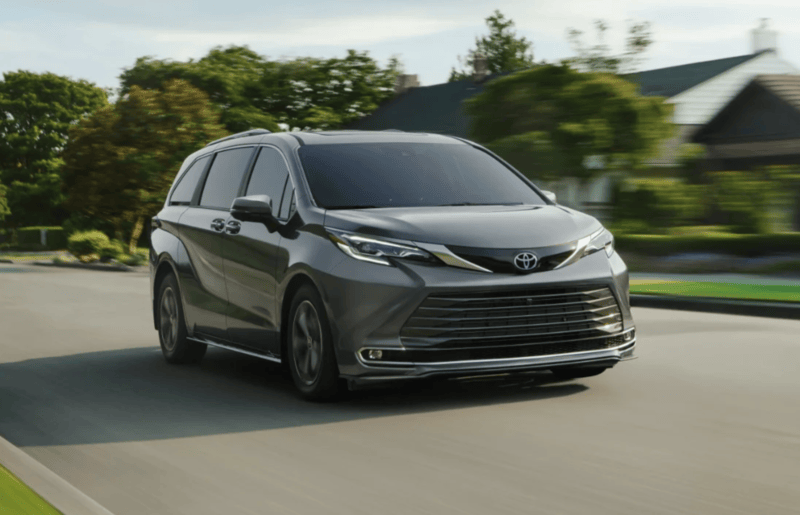
After debuting way back in the 1984 model year, minivans have seen their share of ups and downs. But in 2026, the minivan is enjoying a North American renaissance, finding new uses and attracting different types of buyers.
In the United States, 2025 sales were up 20% to 395,352, more than a quarter of which (110,006) were Chrysler Pacificas. In Canada, the growth was even more impressive. Automakers sold 42,377 minivans in Canada in 2025, up 34% over the previous year, according to Automotive News.
A dominant family vehicle in the 1980s and ’90s, minivans became a niche segment, representing less than two percent of the new-vehicle market in recent years.
Chrysler CEO Chris Feuell told Automotive News that after double-digit surges in the first six months of 2025, minivan sales “settled into a more normal pace in the second half of the year.”
Feuell said Stellantis provided additional marketing and sales support in an effort to boost North American sales. Throughout much of 2025, CarEdge Best Deals featured low-APR financing offers for the Pacifica and recently resurrected Voyager.
Feuell said Stellantis slowed the pace of the assembly line in Windsor for about six weeks “until we got a better understanding of how the tariffs were going to be impacting the business.”
“It allowed us to restore the inventory levels to healthier levels and improve our mix and thus improve our turn rates,” she said.
Automotive News reports that Toyota Sienna sales rose 35% to 101,486 in the U.S. last year, where the Sienna trailed only the Pacifica. The Honda Odyssey finished third in the U.S., up 10% to 88,462 sales.
Toyota Canada Director of Product Planning, Sales and Inventory Planning and Marketing Rebecca Wu said a minivan’s versatility makes it a popular choice among consumers.
“Think about the benefits of a van,” she said. “A lot of our customers are using it for outdoor activities and sometimes it might even be for their families. But sometimes it’s even for home improvement projects.”
SUV prices have steadily climbed since 2021, with three-row options outpacing overall car price inflation. As once-mainstream options like the Suburban and Expedition become more associated with luxury pricing, families looking to pack into a single vehicle have turned to minivans like the Chrysler Pacifica, Toyota Sienna, and Kia Carnival.
The rise of hybrid minivans has also changed the minivan’s reputation from gas guzzler to economical, Earth-friendly choice. Toyota’s hybrid Sienna is also available with all-wheel drive, a combination northern families would have once only dreamed of. For 2026, the hybrid Toyota Sienna gets up to 36 miles per gallon. Ten years ago, the Sienna was good for just 21 miles per gallon. Times are changing!
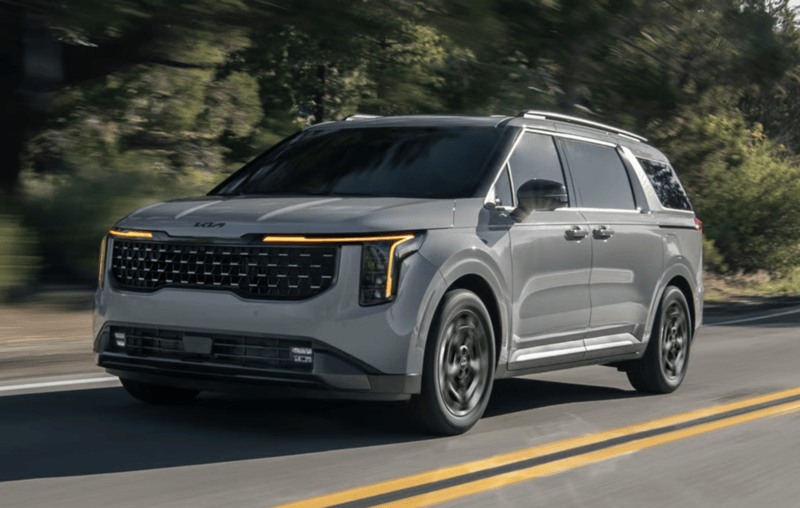
From the spaceship vibes of the Kia Carnival to the heavily modified minivans of YouTube, it’s clear that three rows are no longer just for huge, budget-minded families. Recent industry announcements show there’s more to come.
In August, Stellantis unveiled the Chrysler Pacifica Grizzly Peak Concept, which it called “the Ultimate Adventure Minivan.” Think AWD, a lifted suspension, and off-road tires.
Even luxury brand Genesis is playing with the idea of getting into the minivan game. They recently shared their Jet On Wheels minivan concept, which would be as shocking as the Cybertruck if it ever made it to production. Don’t count on it, though—it’s considered a design experiment. Still, the fact that Genesis is thinking about minivans shows how far we’ve come from the Chryslers of the ’90s.
👉 Stay on top of the best minivan and three-row SUV deals at our Monthly Deal Hub. New offers are announced during the first week of each month!

Just two automakers have announced plans for Super Bowl LX commercials that will air during the game on February 8, 2026. According to NBCUniversal, 30-second spots for the 2026 game are priced between $8 – $10 million. As of now, only Toyota and Cadillac have decided to write the big checks for primetime advertising. Fewer automakers than usual will be featured in the Super Bowl commercial breaks, with some big names already announcing they won’t participate.
Here’s a look at every automaker with Super Bowl commercials in 2026.
As the only true consumer-focused Super Bowl car commercial announced so far, Toyota is front and center for the big game. Toyota has revealed its commercial for Super Bowl LX, and it tells the story of a family and 30 years of RAV4. The RAV4 is completely redesigned for 2026 and now features a hybrid powertrain across the lineup.
The 2026 Toyota RAV4 starts at $33,350 for the base LE trim and is expected to cost over $50,000 for the sport-tuned GR Sport.
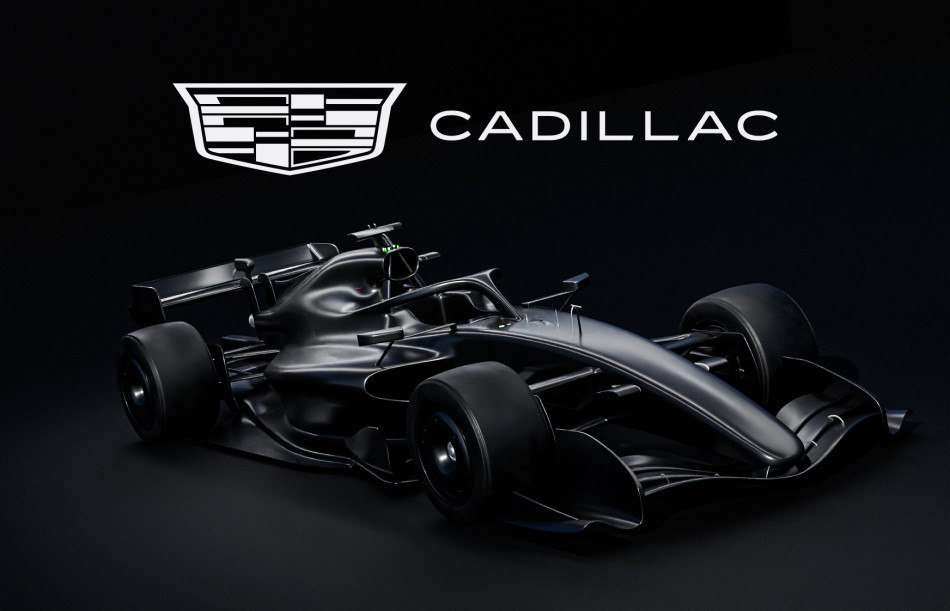
GM’s luxury brand is looking to transform its reputation from one that caters to older drivers to the backbone of a brand-new racing team. Rather than featuring the 2026 Cadillac lineup, the Super Bowl LX commercial will feature the Cadillac F1 team.
“The Super Bowl spot will take the team into millions of homes, while the Cadillac Countdown will give a front-row view in one of the busiest areas in the US,” said Dan Towriss, CEO of Cadillac Formula 1 Team Holdings.
Cadillac will become F1’s 11th team. Sergio Pérez and Valtteri Bottas will drive the Ferrari-powered Cadillac car in its debut season.
According to industry experts at AdAge, for most automakers, Super Bowl marketing is in the rearview mirror. The category, once a Big Game stalwart, is poised for another down year with only two brands—Toyota and Cadillac—confirming ad buys as of today. Instead of shelling out as much as $10 million for 30 seconds of airtime in the game, plus millions more for production costs, many automakers are seeking more value with their media buys.
Automakers are turning to more cost-effective options like streaming platforms, YouTube, and social media for their advertising budgets.
It would likely help if ad placement costs didn’t continually increase. Mike Marshall, head of global advertising for NBCUniversal, told Bloomberg that some ad slots for the Feb. 8 game on NBC have sold for $10 million. That’s a new record by a large margin.
The $10 million price tag is a 43% increase from 2022, when $7 million bought you 30 seconds of exposure. This year’s game is expected to attract an audience of up to 130 million viewers.
The typical cost for a 30-second commercial in the Super Bowl has risen 122% over the last decade. According to USA Today’s Ad Meter, here’s how much a Super Bowl commercial cost has risen over the last 25 years:
The car graveyard is growing faster than ever in 2026.
Every week, automakers announce another model getting the axe. In January alone, four models were dropped from the likes of Tesla, Dodge, Hyundai, and others. Some are old favorites that just couldn’t keep up. Others are failed experiments that never found a buyer. Either way, they’re all headed to the same place: automotive history.
The drumbeat of auto cancellations has grown so frequent that we decided to keep track of it all with a new resource: grimly named the Auto Obituaries. On this guide, we’ll be tracking every single cancellation as it happens in 2026. Check back often, because in today’s market, your favorite car could be next.

According to The Korea Herald, the Kia Niro EV has been discontinued. The first-generation Niro EV debuted in 2018, at a time when affordable electric cars were somewhat rare. The second generation debuted in 2021, bringing significant styling changes and a higher DC fast charging power input that made charging stops shorter.
All this being said, the Niro EV slowly went from lovable underdog to a hard-to-explain model in the Korean manufacturer’s U.S. lineup. With a starting price of roughly $40,000 and a 253-mile range, Kia’s cheapest EV stateside lost its shine in a market where the entry-level Tesla Model 3, which is a larger car that can go 321 miles on a full charge, starts from $36,990.
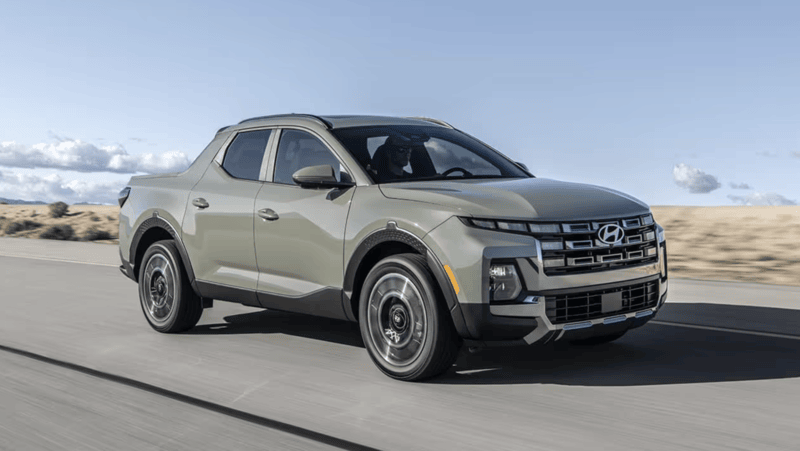
Hyundai is pulling the plug on the Santa Cruz compact pickup after just one generation, according to sources who spoke with Automotive News. Poor sales and bloated inventory are believed to be driving the decision. Ford’s Maverick outsold the Santa Cruz by a 6-to-1 margin in 2025, leaving Hyundai dealers sitting on nearly five months of unsold inventory by year’s end. Since their shared 2021 debut, the Maverick has racked up over 467,000 U.S. sales compared to just 140,000 for the Santa Cruz. The Maverick’s sub-$20,000 starting price significantly undercut the Santa Cruz’s $25,000 base MSRP. The Santa Cruz’s higher price, lack of a hybrid option, and polarizing design never caught on with buyers.
Hyundai isn’t abandoning trucks entirely. Hyundai plans to start building a midsize pickup in summer 2029, switching to traditional body-on-frame construction to compete with the Toyota Tacoma, Ford Ranger, and Chevrolet Colorado.
According to CarEdge, there were 226 days of supply for the Santa Cruz in late January, nearly triple the industry average.
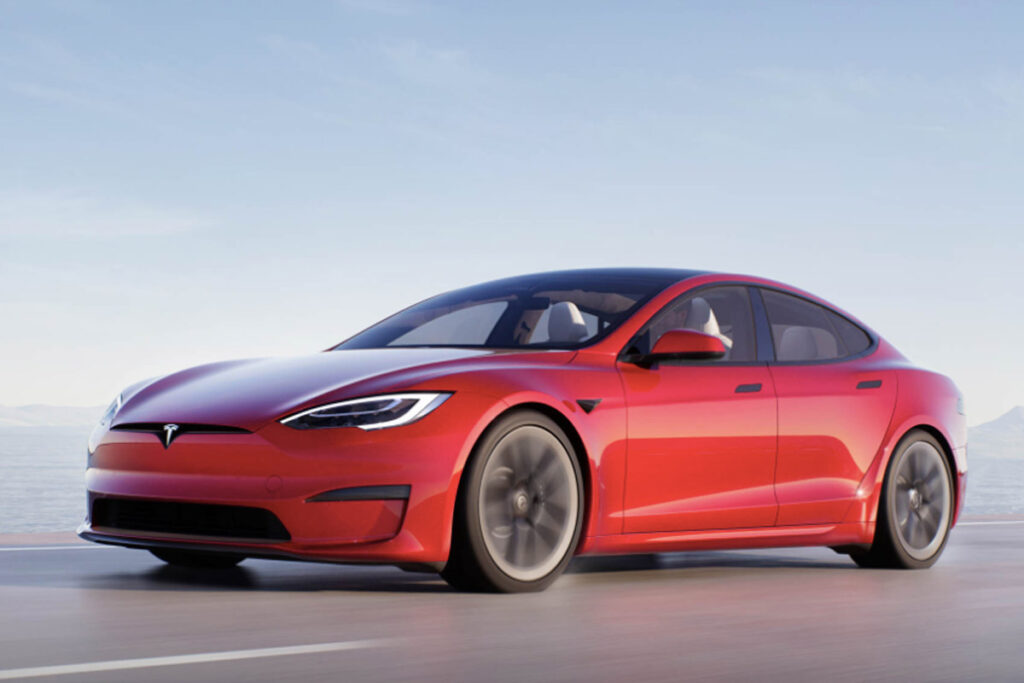
Tesla will end production of the Model S sedan and Model X crossover next quarter to make room for an Optimus robot assembly line at its California factory, CEO Elon Musk announced on January 28. Musk said discontinuing the models is part of Tesla’s shift from an automotive company to a “physical-AI provider” focused on autonomous vehicles, robotaxis, and humanoid robots.
Combined sales of the Model S, Model X, and Cybertruck plunged 40 percent in 2025 to just 50,850 units X, according to Automotive News.
The Model S launched in 2012 as Tesla’s first mass-market vehicle. Starting at $96,630 in 2026, the Model S has seen its fair share of price changes in recent years as demand peaked and then steadily fell.
The Model X followed in 2015 with signature falcon-wing doors and now starts at $101,630. Both models are being axed as Tesla doubles down on its higher-volume Model 3 and Model Y, which sold nearly 1.6 million units globally last year despite a 7 percent decline.

The Dodge Hornet has been discontinued after just a few years on the market, with Stellantis pointing to “shifts in the policy environment” as the reason for axing the Italy-built crossover. In reality, the Hornet has just always been a very poor seller.
Stellantis initially announced in July that the Hornet would be postponed for the 2026 model year while the company evaluated U.S. tariff impacts, but production has now officially ended.
Built alongside the Alfa Romeo Tonale, the Hornet launched in 2023 with both conventional gasoline and plug-in hybrid options, starting at $31,990 for the base GT model X. It joins a long list of short-lived Dodge small crossovers, including the Caliber, Nitro, and Journey.
These cars are sticking around for now, but were recently making headlines for similar reasons. Stay tuned, as this may be a sign of things to come.
In January, Volkswagen announced that the Tennessee-built ID.4 will soon be renamed the ID.Tiguan. Following the end of U.S. federal EV incentives, ID.4 sales fell off a cliff. With policy changes being cited by nearly every OEM in recent lineup announcements, we wouldn’t be surprised if we soon learn that the ID.4 is canceled. It’s a great EV if you can find one at the right price, so we hope a name change will brighten its future.
General Motors has indicated that the recently resurrected Chevrolet Bolt will only live to see 18 months of production before it is canceled yet again. The Bolt was always a popular EV, largely due to the attainable price point around $30,000. However, policy changes seem to have gotten the best of GM’s much-hyped affordable EV strategy. At least the Bolt will stick around for much of 2027.
Wondering which cars will be axed next? Check out the slowest-selling cars in America.

In 2026, getting top dollar for your trade-in requires more preparation and strategy than in previous years.
Here’s why: 7-year-old vehicles traded in during 2025 had an average value of $14,400, a 72% increase from 2019, when they were valued at $8,400, according to a recent report. That’s usually great news for sellers, but there’s a catch.
Despite rising used-car values, many drivers still get less than expected when trading in. The gap between projected and actual resale values is widening as new and used car prices converge. Without knowledge and preparation, you’re likely to leave money on the table.
We consulted CarEdge’s consumer advocates to find out how to get the best trade-in value in 2026. The common theme? Prepared, informed buyers get the best deals. Let’s take a look at how you can top-dollar for your trade-in this year.
Many drivers aren’t aware that some parts of a car trade-in contract are negotiable, primarily because dealers present the agreement as a package.
The number one rule for getting the most for your trade-in is to always treat it as a separate transaction. The car salesperson WILL do their best to tie your trade-in to your purchase. That’s a recipe for a low-ball offer. Negotiating your car purchase and trade-in together gives the dealer more opportunities to profit at your expense. Handle them separately to maximize your trade-in value.
In most cases, the appraisal of your trade-in value isn’t the final offer. Before you arrive at the dealership, get several online offers and values for your car, so you know what it should be worth. Be honest with yourself about the condition of your car when getting these values.
Having several online offers from CarEdge’s free tool, CarFax, Carvana, and others (as well as the KBB Value) not only gives you an up-to-date assessment of your vehicle’s trade-in value, it is your source of leverage against dealer offers.
Go one step further and get trade-in offers in writing from at least two dealerships, ideally three or more. They’ll need to see your vehicle in person to do this, but it’s worth the hassle. You’re likely to get hundreds of dollars more (or thousands, in some cases) by not skipping this step. It’s work on your end, but work that pays.
Having service records on hand can help your trade-in value, too. However, with the widespread use of CarFax and online service records, this is less crucial in 2026. It merely helps to show that the car has been taken care of.
Getting your car detailed can also help you achieve a higher trade-in value, but don’t spend hundreds of dollars on this. A good interior and exterior cleaning at home is usually best for your wallet, and for getting a fair offer for your trade-in.
This is an important one. You’d be shocked to see how effective the following questions are at getting more for your trade-in: “Is that your best offer? Do you mind checking the numbers again? I believe it’s worth more than that.”
In many cases, they’ll ‘check with their manager’ and come back with at least $100 more in value, often more. And that’s all just from showing that you’re not going to just accept the bare minimum for your vehicle.
Knowing what your vehicle offers is crucial when negotiating trade-in offers, as its specific trim level may raise its value. The original window sticker can help you identify these features. It’s likely sitting in your glove compartment.
For example, mid-to-upper level trims of a specific model tend to offer features that include but aren’t limited to:
Anything that’s not standard equipment on your model’s base trim is fair game. Did you get work done recently? Noting new parts and repairs can increase offers for any trim level.
While 2026 is set to offer higher average trade-in offers, some periods are more ideal for maximizing value. Edmunds data shows that Q1 and Q2 are the best times for trade-ins, as used car values tend to trend higher.
Additionally, since a car loses more value the longer you have it in your driveway, it’s more appealing during Q1 and Q2 compared to the end of the year when it’s about to become another model year older.

What kind of vehicle are you trading-in? If you’re trading-in an all-wheel drive SUV, winter can be an opportune time to get top dollar. Softer-selling segments like a convertible may benefit from a trade-in during the warmer months.
Is the air conditioning out on your trade-in? You won’t get top dollar for it during the heat of summer!
Are your tire tread getting low? If so, the icy winter months aren’t the best time to sell. It all matters if you’re aiming to get top dollar for your car!
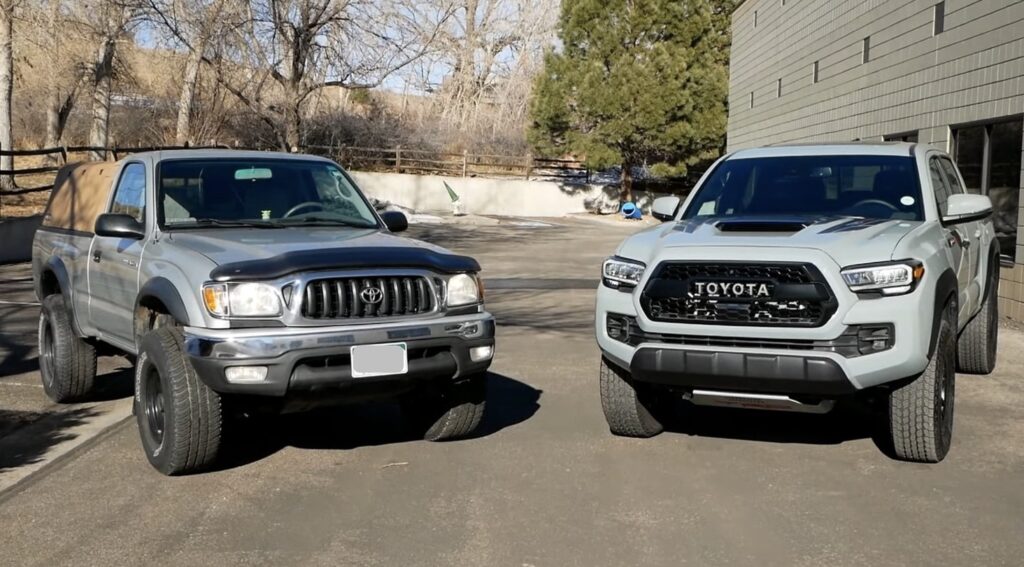
When considering trade-in timing, mileage often comes to mind. Luckily, there’s no major drop-off after certain milestones, as long as your vehicle has been well-kept, which you can help prove with documents like timely service records.
In comparison, model years matter more. It may be obvious to some, but many sellers are surprised to learn that like-for-like, a five year-old car with just 30,000 miles on the odometer is still going to be worth significantly less than a two-year old car with 50,000 miles. Model year matters to buyers, especially if there’s a chance your trade-in will go to auction.
Where a vehicle was built used to be a non-factor; however, a car’s manufacturing location can now play a significant role in resale value due to tariffs.
Depending on the country, automakers exporting vehicles to the U.S. face tariff rates roughly ranging from 10% to 27.5% on a car’s declared value, increasing dealer replacement costs for impacted new models. When these replacement prices increase, dealers have more incentive to lean on already-imported used models, giving you added leverage if you have an imported brand with limited U.S. production.
Examples of these brands can include:
If you follow the news in 2026, you know that the tariff situation seems to change weekly. Even so, sharing this bit of information can still give you more negotiation power, as it shows you’re an informed buyer (and seller).
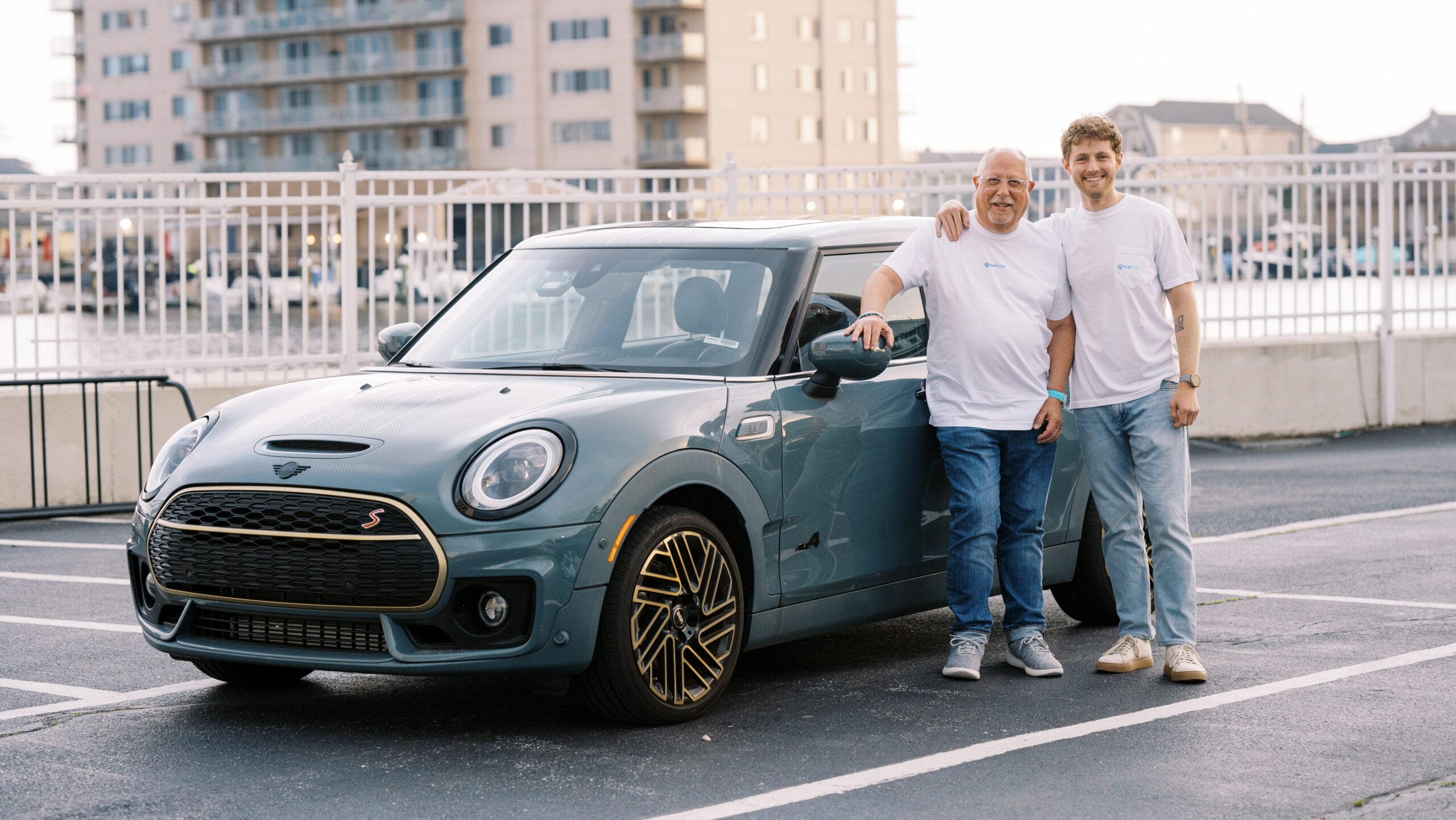
What if you didn’t have to go back and forth to dealerships, negotiating with pushy salespeople all along the way? Wouldn’t it be nice to have an experiences automotive professional do it all for you? That’s what we offer with CarEdge’s car buying service. From finding the perfect trim and paint color to negotiating every aspect of your deal (including your trade-in), we make car-buying easy.
Learn more about CarEdge Concierge, and take the stress out of your big purchase!
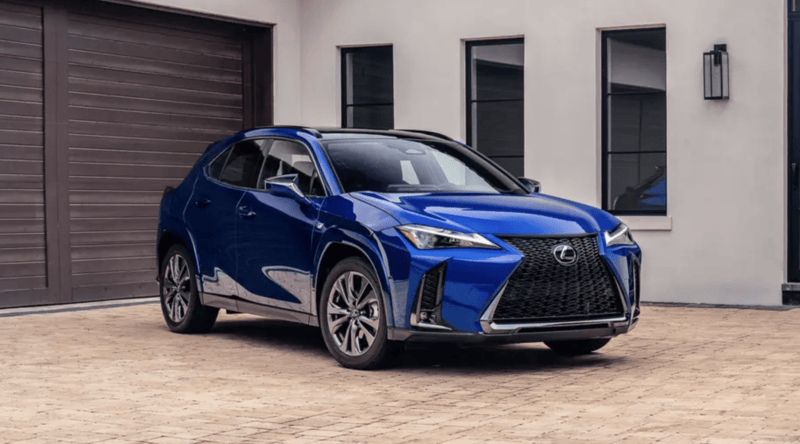
While everyone’s lining up for the same RAV4s, CR-Vs, and F-150s, there are plenty of excellent vehicles that offer similar value, without the markups or slim inventory. These 10 cars fly under the radar, and that’s actually good news for you. Less demand means better negotiating power, bigger discounts, and often, better manufacturer incentives.
We’ve focused this list on two things that matter most when playing it smart: reliability and affordability.
All vehicles start under $40,000. All offer legitimate value. If you disagree with any cars you see here, drop us a note on the CarEdge Community Forum. Maybe you’ll even change our minds!
Without further ado, these are the cars that we think are worth the test drive before you settle for the best-seller in your neighbor’s driveway.
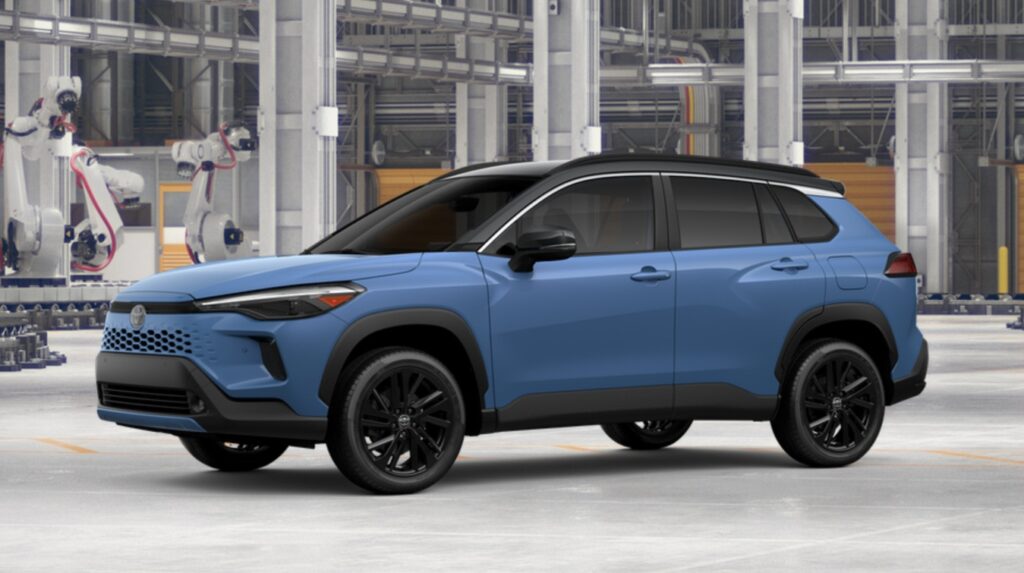
Starting Price: $30,745 MSRP with destination fees
Why It’s Underrated: Everyone wants the RAV4 Hybrid, so they overlook its smaller, cheaper sibling. Before you get in line for a 2026 RAV4, we think the less popular Corolla Cross Hybrid is worth a look.
The Corolla Cross Hybrid sits on Toyota’s proven platform, gets 42 mpg combined, and costs thousands less than a comparable RAV4 Hybrid. Consider this: the Corolla Cross XSE costs $8,000 less than the 2026 RAV4 XSE. It has nearly identical reliability credentials—because both models share Toyota’s 5th generation hybrid powertrain.
The interior is nicer than you’d expect at this price point, but it’s still a budget model. Plus, you can actually find these on dealer lots without a markup, unlike their RAV4 cousins.
Toyota sold just 100,000 copies of the Corolla Cross in 2025, despite tallying 478,000 sales for the very similar RAV4.

Starting Price: $28,445 MSRP with destination fees
Why It’s Underrated: People think it’s too small and too slow. They’re missing the point.
The Crosstrek is consistently in the top tier of Consumer Reports’ reliability rankings. It comes standard with all-wheel drive (most competitors charge $1,500-2,000 for that), gets excellent safety scores, and has one of the lowest cost-of-ownership figures in its class.
Yes, the base engine is underwhelming. But if you’re buying a Crosstrek for drag racing, you’ve already made a mistake. This is a get-to-work-in-a-snowstorm, haul-camping-gear type of compact crossover.
Subaru often brings low-APR incentives to the Crosstrek.

Starting Price: $31,485 MSRP with destination fees
Why It’s Underrated: The CX-5 has been around for over a decade with minimal issues. It has a borderline premium interior that rivals luxury brands, handles better than anything in its class, and has a low overall cost of ownership.
Better yet, Mazda routinely offers better manufacturer incentives than you’ll find for the RAV4 or CR-V. See the best offers of the month.
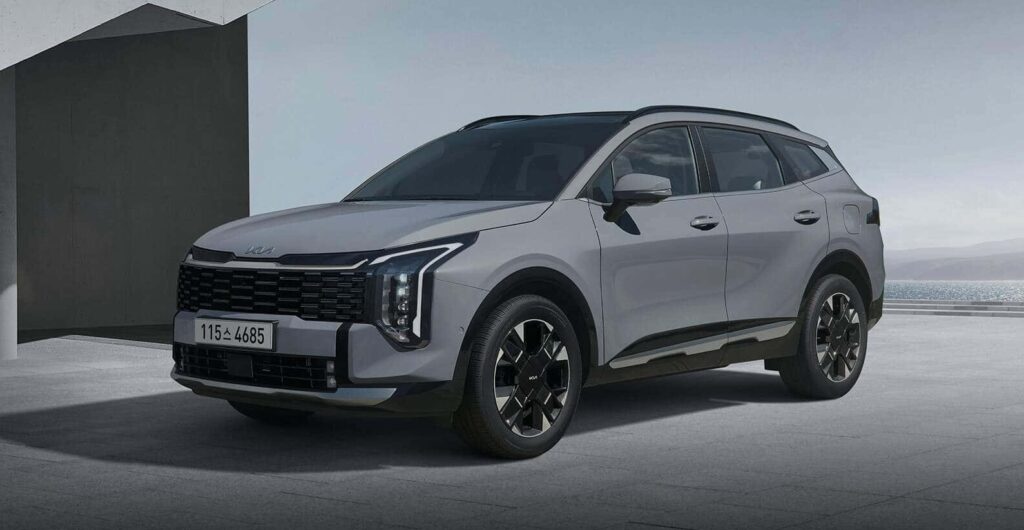
Starting Price: $31,985 MSRP with destination fees
Why It’s Underrated: To many, Kia’s reputation is stuck in 2005. That’s unfortunate, because their vehicles aren’t.
The Sportage Hybrid won U.S. News’ “Best Cars for the Money” award. It comes loaded with features that cost extra on Toyota and Honda. Worried about reliability? Kia is winning over skeptics with a 10-year/100,000-mile powertrain warranty.
Kia’s reliability has genuinely improved. They’re not Toyota-level yet, but they’re solid mid-tier, and that warranty gives you coverage longer than most people keep their vehicles anyway. The hybrid system delivers excellent fuel economy without the Toyota markup.
According to EPA testing, the 2026 Sportage Hybrid is good for 43 miles per gallon in combined city/highway driving. That’s a few MPGs better than most RAV4 trim options!
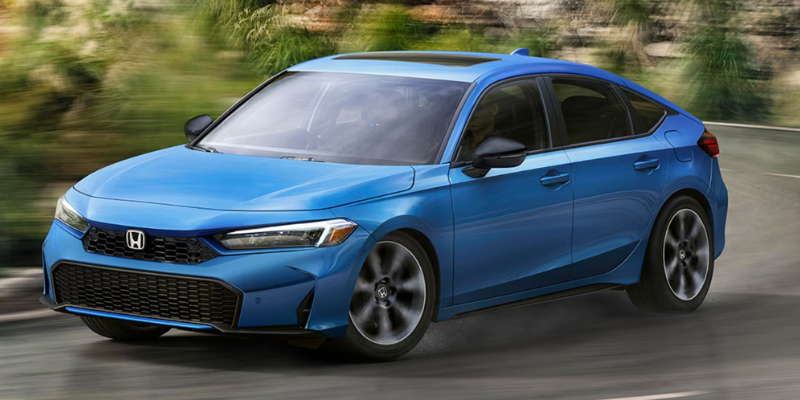
Starting Price: $25,890 MSRP with destination fees
Why It’s Underrated: Are you sure you want to join the compact crossover club? The Civic is a legendary car full of value and character. In fact, along with the Toyota Camry, it’s one of the only sedans that still ranks in the top 10 sellers by volume. Looking to keep your car budget in check? That’s another reason to love the Civic: it starts at $25,890.
Unless you regularly haul a big family or go off-road, SUV drivers are paying extra for ride height you don’t need. The Civic gets better gas mileage, costs less to insure, is easier to park, and will last just as long as any crossover.
After peaking at 377,000 sales back in 2017, Honda sold just 238,000 Civics in 2025.
Starting Price: $38,250 MSRP with destination fees
Why It’s Underrated: People assume luxury means expensive repairs. With Lexus, that assumption is wrong.
The UX is the most reliable luxury subcompact SUV according to Consumer Reports. Lexus has topped J.D. Power’s dependability rankings three years running. What’s behind their success? To be frank, a Lexus is Toyota engineering with a nicer interior.
In 2026, the UX comes standard with a hybrid powertrain good for over 40 miles per gallon. This means hundreds of dollars in annual fuel savings for the average driver.
Yes, it’s smaller than German competitors. But it’s also more reliable than German competitors, cheaper to maintain, and will probably still feel premium in 10 years when others are nickel-and-diming you for sensors and software updates.
Browse Lexus UX listings near you

Starting Price: $27,950 MSRP with destination fees
Why It’s Underrated: People think bigger is always better. In urban environments, a large SUV can be a headache.
The HR-V brings Honda’s legendary reliability to the subcompact crossover segment. Consumer Reports gives it above-average reliability ratings, and Honda’s track record for affordable maintenance speaks for itself.
The real magic is the interior space. Honda’s engineers are wizards at maximizing every inch. The cargo area is impressive for a vehicle of this size, and the rear seat is more spacious than many midsize SUVs. Pair that with decent fuel economy (28 mpg combined) and Honda’s reputation for going 200,000+ miles on an engine, and you have a smart choice for anyone who doesn’t need to tow a boat.
Last year, Honda sold 148,000 copies of the HR-V. That’s one-third of the sales that the CR-V achieved.
Buying a car doesn’t have to be miserable. Here’s a wild thought: what if you could just have an expert handle it all for you, from finding the right fit to negotiating every aspect of your deal?
That’s exactly what we do at CarEdge.
Since launching our car buying service a few years back, we’ve negotiated over 3,000 deals for drivers around the nation. On average, CarEdge clients save $2,200 by letting us negotiate on their behalf. Say goodbye to the ‘traditional’ way to buy a car, and let’s get you the price, and experience, you deserve!

Stepping into a car dealership can feel like entering a high-stakes poker game, but with the right guidance, you can confidently call their bluff. CarEdge’s Ray Shefska lifts the veil on dealership tactics with secrets from his impressive 40+ year tenure in the industry. While maximizing profits is part of their playbook, you don’t have to be an unwitting participant. Here’s how you can outsmart the car dealership sales team
Correct answer: I have a total out-the-door price in mind. I’d like to stay focused on that.
Wrong answer: Yes, I don’t want my monthly payment to be more than $700 per month.
Why: Once the dealer knows what your monthly payment goal is, they immediately start thinking about how much wiggle room they have for add-on products, incentives and other odds and ends of the deal. Once you share your desired monthly payment, you’ll be negotiating that number for the rest of the deal. This makes it alarmingly easy to lose sight of how much you’re actually paying for the car.
Correct answer: I just want to know what the out-the-door number is, can we stay focused on that for now?
Wrong answer: I think I could put between $5,000 and $10,000 down. It depends on what the price of the car is, and how much you give me for the trade-in.
Why: This question is another tactic the salesperson uses to turn you into a ‘payment buyer’. Yes, you’ll eventually have to tell them what your down payment is, but do NOT volunteer that information too early in the negotiation! Car dealership salespeople are going to.
Note: Often, the salesperson will phrase this question as if it’s coming from the bank. For example, “The bank typically wants you to put 20% cash down or more. Were you planning on doing that?” You can still refuse to answer this question early on in the conversation. Remember, you’re still trying to get the out-the-door price from them. That’s the number that matters.
Correct answer: I haven’t decided yet. Once we’ve established an out-the-door number, we can discuss things like that.
Wrong answer: Yes of course, how much can you give me for it?
Why: You should always treat buying a car and trading in as TWO separate transactions, because they truly are. See what your car is worth with offers from multiple online buyers here.
These are the questions you’re most likely to encounter at the finance office. For even more tips, examples and advice, see our Finance Office Cheat Sheet. It’s one of our many free resources!
Correct answer: I have thought about this and I’ve even been pre-approved with competitive credit unions, so I do understand what my loan terms should be in order to keep my payment affordable.
Wrong answer: No, I haven’t thought about it yet. Can you help me lower my payment even further?
Why: When you express uncertainty about your desired loan term, finance managers spot an opportunity to manipulate the loan term to make a deal appear more attractive. By extending the loan term, they can “lower” your monthly payments, even if it ends up costing you more in the long run due to interest.
Correct answer: Yes, if you can beat the rate I have on my pre-approval from the credit union, I’d consider it. The rate and the payment would need to come down enough to justify it.
Wrong answer: Sure! That sounds easier.
Why: Be sure to mention that your payment would need to come down in addition to getting a lower interest rate. Why? All too often, the finance manager can offer you a slightly lower interest rate, only to trick you into add-on products later, meaning that your monthly payment ends up the same or even higher than it was originally.
Are you interested in our tire care package for just $6 per month? Or theft protection for just $10 per month?
Correct answer: Thanks, but for each of these products, I need to see the total cost of the product, not just the monthly payment.
Wrong answer: Awesome, wow I see that this theft protection only adds $10 per month!
Why: Expect them to show you the monthly payment, not the total price of the products on their menu. You’ll have to ask for them to point out the total price. Remember this: A product that adds ‘just’ $10 to your monthly car payment over a 60-month loan term will actually cost you $600.
Would you pay $600 for something like tire protection or theft protection? Or, could you buy these products elsewhere for half the price? This is how you should think about the menu products.
The finance office is not the time to lose sight of the number that matters: the out-the-door price!
Your Guide to Car Dealer Fees: What’s legit, and what’s not?
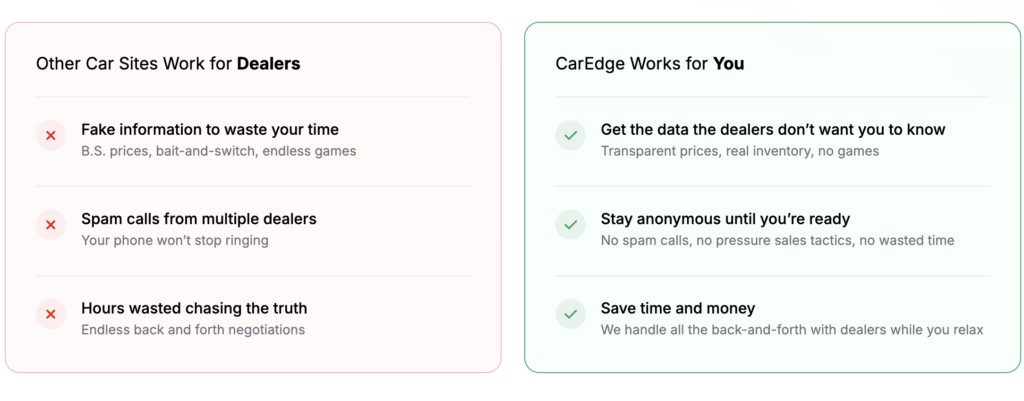
Ready to outsmart the dealerships? Our seasoned experts will 1) find the car you’re looking for, 2) negotiate your deal, from start to finish, 3) arrange the paperwork so you just sign on the dotted line. Want home delivery? We can do that too!
Here’s how CarEdge Concierge works.
Remember that when buying or leasing a car, knowledge is power!
Finding a new, quality SUV for under $40,000 is getting increasingly difficult. The average transaction price of a new vehicle is now $50,000 as car prices continue to outpace wage growth. In other words, it’s getting harder to afford a new car in America. Still, great value can be found if you know where to look.
We’re here to save you time and money with five of the best SUVs under $40,000. These top picks offer the best overall value, features, and reliability. Our list includes compact crossover favorites, an affordable three-row SUV, and one leftover 2025 model worth considering.
Here are the best-value SUVs and crossovers for new car buyers in 2026.
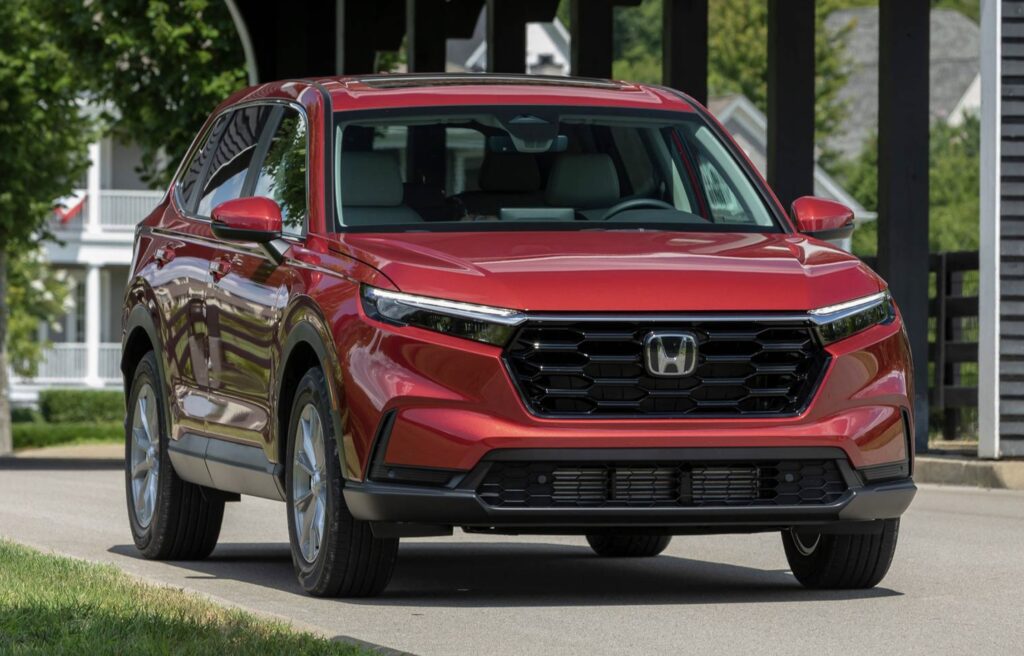
The 2026 Honda CR-V TrailSport Hybrid starts at $38,800, but the destination fee alone can put you over $40,000. In comparison, the 2026 CR-V Sport Hybrid offers stylish compact efficiency at a $35,630 base price. This hybrid electric vehicle’s (HEV) mileage is rated at a competitive 43/36 city/highway mpg in front-wheel drive (FWD) and 40/34 city/highway mpg in AWD.
Many economy compact hybrid SUVs force you to sacrifice too much power, but this model’s 2.0-liter 4-cylinder engine, paired with two electric motors, meets daily driving needs with 204 net horsepower. Sporty styling elements include dual exhaust finishers and 18-inch gloss-black alloy wheels, while features like roof rails optimize utility.
Cloth seats with orange contrast stitching help the interior avoid a boring feel, and necessities like a power moonroof and wireless Apple CarPlay/Android Auto are standard. On the safety front, advanced driver-assist systems are plentiful, delivering peace of mind via features like blind-spot and cross-traffic monitors.
CR-V hybrids have a track record of reliability since their 2020 production year debut, but extra-cautious buyers can rest assured knowing that this model comes with an excellent 8-year or 100,000-mile battery warranty, whichever comes first.
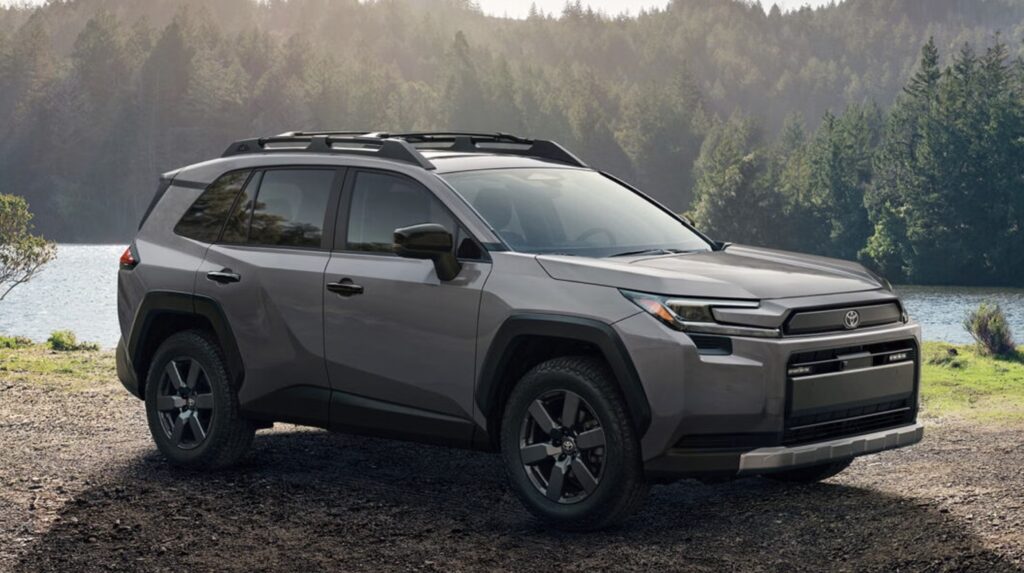
The RAV4 remained the US’s most popular SUV in 2025, and Toyota reported that the model also experienced its best-ever sales year.
So, what makes this vehicle stand out?
To start, 2026 is the first model year where the RAV4 is exclusively hybrid, so its $31,900 starting price represents value in more ways than one. Besides hybrid efficiency, the base LE’s accessible price gives you room to graduate to the XLE Premium trim, which starts at $36,100. Toyota does a solid job distinguishing the XLE Premium from the entry-level LE with synthetic leather seats, a height-adjustable power liftgate, and heated front seats.
If you’re wondering whether you should choose the 2026 RAV4 XLE Premium or the 2026 CR-V Sport Hybrid, it’s worth considering that the RAV4 has better mileage at 47/40 city/highway mpg and higher net horsepower at 236. However, keep in mind that the CR-V Sport Hybrid offers 3.2 additional inches of rear legroom. Regarding battery coverage, the 2026 RAV4 XLE Premium matches the CR-V Sport Hybrid’s warranty, and J.D. Power rated its quality and reliability at 77/100, according to US News & World Report.
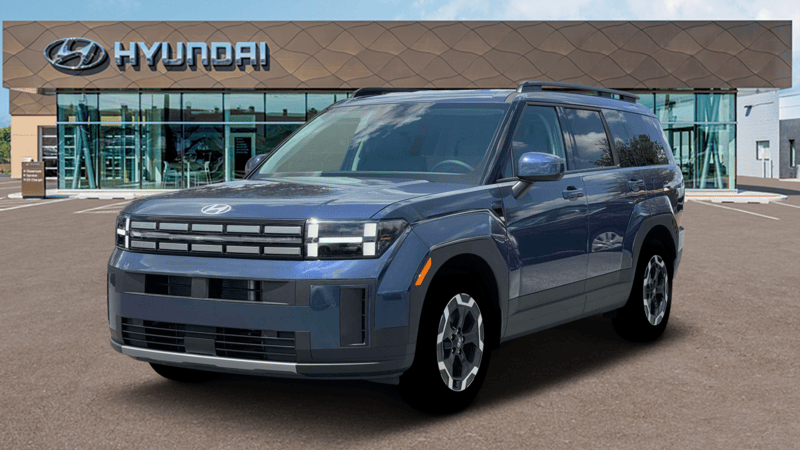
Drivers shopping for a three-row midsize SUV should consider the 2026 Hyundai Santa Fe SEL for its sharp exterior, robust powertrain, and spacious interior. The entry-level Santa Fe SE starts at $34,800, but, like the RAV4 XLE Premium, you can step up to the SEL without getting too close to $40,000.
The 2026 Hyundai Santa FE SEL, starting at $37,340, offers a premium look and feel without the luxury price tag. Synthetic leather seats, digital key compatibility, and wireless charging are among this trim’s standard features, enhancing daily drives. A 2.5-liter 4-cylinder engine delivers 277 horsepower, and front/rear legroom dimensions are competitive at 44.4 inches and 42.3 inches, respectively.
The third row is best reserved for kids and teens, but cargo capacity with the third row folded is good to excellent at 40.5 cu ft. Drivers looking to balance on-road performance with off-road capability can equip the Santa Fe SEL with optional HTRAC AWD, and J.D. Power awarded the model with a solid 81/100 quality and reliability rating.
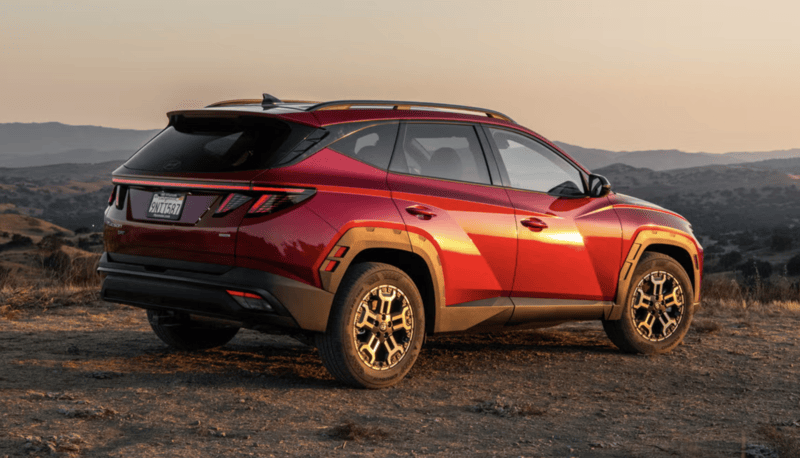
The 2026 Hyundai Tucson is our list’s most budget-friendly recommendation, as its top-tier Limited trim is still under $40,000 with a $38,645 starting price. However, the Tucson’s second-highest trim, the XRT, stands out as this model’s value pick, starting at $33,225.
Hyundai’s Tucson XRT is ideal for drivers seeking rugged looks, but not serious off-road performance. The Tucson XRT decision to emphasize adventurous form over function isn’t necessarily a downside, given that many off-road-performance SUVs contain features drivers pay for, but make little use of in the long run. These features can include an electronic locking rear differential, optimizing traction on terrain like sand or rocks by locking the rear wheels so they spin at the same time, but moderate trails don’t require this capability.
The 2026 Tucson XRT isn’t a hybrid, but its fuel economy is solid at 25/33 city/highway mpg. Blacked-out exterior styling enhances curb appeal, and its 12.3-inch infotainment touchscreen is 3.3 inches larger than the CR-V Sport Hybrid’s. J.D. Power gave the 2026 Tucson an 83/100 reliability rating, and its 10-year/100,000-mile powertrain limited warranty is industry-leading.
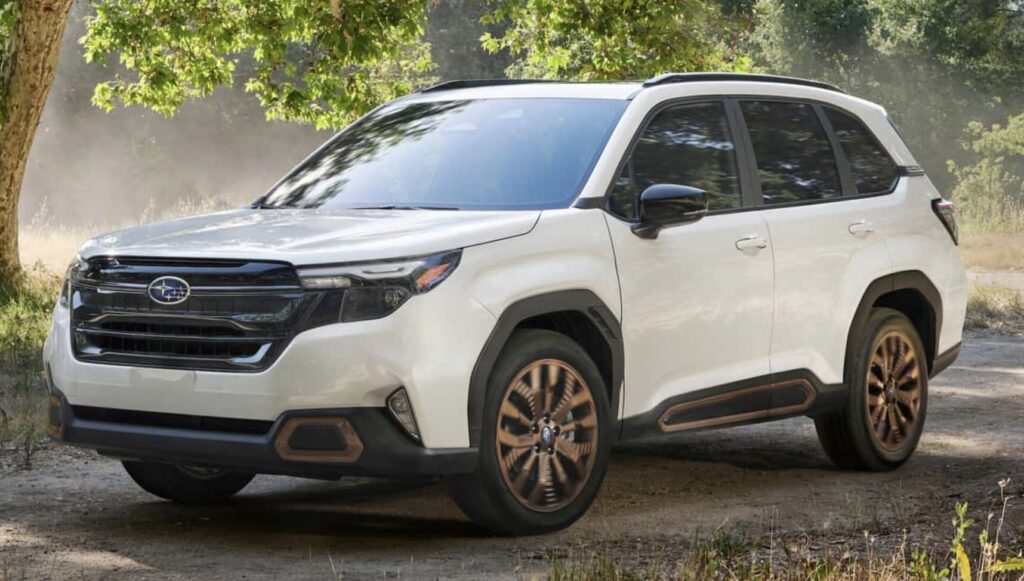
We’d be remiss not to include at least one off-road-focused SUV. The 2025 Subaru Forester Wilderness, starting at $36,285, is prepared for rugged travels with standard AWD, an elevated 9.2-inch ground clearance — which surpasses competitors like the RAV4 TRD by 0.6 inches — and dual-function X-MODE with specialized Snow/Dirt and Deep Snow/Mud settings. Copper-finish interior and exterior accents give this trim a unique look, and the 180-degree front view monitor is great for elevating environmental awareness on or off the beaten path. With an 81/100 J.D. Power quality and reliability score, the 2025 Forester Wilderness is on par with the rest of our list’s 2026 picks.
Most off-road capable SUVs start at over $40,000 (think Ford Bronco Big Bend, Toyota 4Runner SR5), so the Forester Wilderness stands out as an exception. Potential real-world discounts and incentives for remaining 2025 Forester Wilderness models solidify its value, especially given the public’s focus on 2026’s redesign. The 2026 Forester Wilderness still starts at under $40,000, but expect to pay over $40,000 with transaction fees, as its sticker price is $38,385.
Are you ready to shop for these SUVs? Perhaps you have some more budget flexibility and would like to opt for a larger three-row SUV, or a top-tier trim from our recommendations. Either way, CarEdge has you covered. Before you visit dealerships, check out our free car-buying cheat sheets to help you negotiate confidently.
If you’d rather let a car buying pro find the SUV you’re looking for and negotiate on your behalf, check out CarEdge Concierge today. It’s the easiest, least stressful path to a great deal on a new or used SUV. Whether you plan to buy or lease, our experts negotiate the best deal so you can skip the hassle.

California lawyers have pushed back against Uber’s ballot initiative to cap personal injury attorney fees for car crash cases. Uber claims that if California voters pass the ballot measure, victims will receive a larger percentage of settlement money. However, lawyers fighting the initiative argue that the change would financially undermine their specialty, making it more challenging for plaintiffs to find an attorney.
Since California personal injury lawyers handling car crashes work on a contingency basis, fewer attorneys might be motivated to take on riskier cases, potentially leaving rideshare giants like Uber with lower accountability for crashes. As Uber gathers signatures for the November ballot initiative, dozens of attorneys have raised over $46 million to fight Uber’s initiative, according to the Los Angeles Times.
If approved, the California Constitution would be amended to require car accident victims to receive at least 75% of the total damages recovered. Currently, there is no constitutional minimum, as victims negotiate on a personal basis with lawyers. The American Bar Association reports that personal injury attorneys typically take 33% to 40% of a client’s payout today.
Personal injury firm Cohen & Marzban in Los Angeles states that in 2026, minor injuries, such as sprains, mild whiplash, and soft-tissue damage requiring limited treatment, result in settlements averaging $5,000 to $25,000. Moderate injuries, which can include broken bones, concussions, and extensive tissue damage needing surgery or months of recovery, can generate settlements ranging from $30,000 to $85,000. Severe or catastrophic injuries like spinal cord/traumatic brain injuries, severe burns, and permanent disabilities can result in settlements of $250,000 to over $3 million.
While a California initiative statute requires 546,651 signatures to appear on November’s ballot, an initiative constitutional amendment, such as the one Uber’s pushing for, needs 874,641 signatures. Uber has until June 8, 2026 to submit the signatures. Despite some initiatives showing a percentage of signatures reached, California’s Secretary of State website doesn’t yet display Uber’s progress.
The initiative’s filing states that it wouldn’t restrict fee arrangements for defendants’ attorneys, so lawyers representing companies like Uber don’t face fee limits, while capping victim lawyer payments. This dynamic could result in plaintiffs receiving weaker representation and smaller settlements.
Nicholas Rowley, a lawyer involved in the Consumer Attorneys of California effort to protect consumer legal rights, said: “Uber knows darn well what they’ve done. This law is designed to wipe out ordinary working people’s ability to get representation,” the Los Angeles Times reports.
For certain medical expenses such as future care, Uber’s initiative would increase victims’ burden of proof while limiting the amounts they may recover. Lien-based medical care, common among car crash victims, allows those harmed to receive medical care at no upfront cost, as medical providers agree to a lien on future settlements from auto insurers.
If Uber limits settlements from one of its at-fault drivers’ insurance, doctors could be more hesitant to provide victims with crucial lien-based treatment. Doctor-led political action committee Providers for Patient Care has raised over $4 million to fight Uber’s initiative, claiming it would prevent treatment.
Uber has also filed federal racketeering lawsuits against the Downtown LA Law Group and the law offices of Jacob Emrani in Southern California, claiming attorneys struck side agreements with doctors to increase medical bills through unnecessary procedures, resulting in lawyers receiving higher payouts.
Imagine arriving back at the dealership as you complete the test drive on a vehicle you’ve been researching for weeks. As delighted as you are to confirm that it meets your requirements—on paper and in person—anticipation builds as you consider the next logical step: negotiations. When the salesperson asks, “How did it go? Are we ready to talk numbers?” beads of sweat start to form.
You don’t need an advanced degree in negotiating strategies to get the best deal on a car in 2026. We spoke to CarEdge co-founder and 43-year industry veteran Ray Shefska to find out how the car buying pros negotiate with confidence. Follow the steps below to guide the conversation toward the one number that will make or break the sale.
There’s no doubt that several variables affect the car-buying process. All at the same time, you might be considering what monthly payment you can afford, how much down payment you can make, and whether to buy new or used. However, you can simplify the process by focusing on one thing at a time. In most cases, isolating these variables provides additional data to help you make a more informed final decision.
For example, focusing on your monthly car allowance gives you a dollar amount to keep in mind for expenses like your car payment, insurance, and maintenance. We recommend staying within the 10% rule to protect your overall finances. If you want a specific type of car—like a sedan or an SUV—you can narrow your options further. When you’re at the dealership, the most important variable you need to focus on is the out-the-door (OTD) price.
It’s ALWAYS best to focus on the out-the-door price before discussing any other number.

It’s important to recognize that the OTD price on a vehicle is completely separate from the Monroney sticker price that’s typically displayed on the car’s window. Dealers will advertise the sticker price to attract potential buyers, but the final price you pay could be thousands of dollars more. The out-the-door price represents the amount you agree to pay for the vehicle plus all of the following fees (or more):
By sticking to your guns and asking for the OTD price upfront, you’re signaling to the salesperson that you’re ready to talk numbers—but only based on the car’s value, not how much you can pay toward the vehicle’s final price every month. This shift in conversation works in your favor because you can determine whether you’re getting a fair price and what additional fees the dealership’s trying to sneak into your final deal.
Another key benefit of getting an OTD price in writing is that you can then take that offer to other dealers, and have them compete your for your business! But always get your OTD price in writing.
Before you shop, see the Out-the-Door Price with our FREE calculator.
Before we delve too far into this step, let’s make one thing clear: you should absolutely stay within your full budget when you’re looking to purchase a car. We recommend you use the 10% rule as a guide to avoid stretching yourself too thin financially. However, any discussions of a monthly budget fail to address the overall amount you’re paying for the car—the OTD price—which is the more important figure to focus on during negotiations.
Car deals can (and often will) use your monthly budget against you. In 2026, we’re seeing something that was once unthinkable: the rise of 84-month car loans, and sometimes even longer terms. The reason is simple: As car prices are pushed higher, it’s a lot easier to convince buyers that they can afford it if the monthly payment stays the same. They do this by extending the loan repayment period.
Why is this bad for drivers? Not only will you be paying more in interest with longer loan terms, you’re much more likely to end up in negative equity, meaning that you owe more than your car is worth. If you end up selling or trading-in your car, you’ll actually OWE money for it.
In simple terms, avoid discussing your monthly budget with any salesperson. Stay far away from loans longer than 72 months.
After all, monthly budgets can fluctuate according to how much you put down and what loan term lengths you negotiate. Avoid sharing concrete numbers because the less you say, the better. It’s okay to play hardball without being too hard about it, because you want to demonstrate that you’re willing to work with them if they’ll reciprocate.
Whether you decide to pay in cash, obtain a loan, or opt for a lease, keep your options open. Insist on negotiating the out-the-door price first and then following up with how you’d like to proceed from there. If the salesperson mentions any current finance or lease incentives, they should be in addition to the OTD price as a bonus, not a reason to fold on negotiations and pay more.
When you know the out-the-door price, you can then focus on the next variable: whether paying in cash, financing a loan, or signing a lease best suits your financial situation. Remember, vehicles are not investments, but it’s worth the time it takes to seek out exceptional finance offers if you’re ready to pull the trigger. If you want to try out leasing instead, check out our guide to leasing and how to interpret your lease purchase agreement.
Convenience can actually cost you money at the car dealership. When you bundle the trade-in of your current vehicle with the purchase of your next one, you risk losing out on both ends. Any appraisals or purchase agreements for your trade-in should be handled separately, especially if you still owe money on your existing vehicle.
👉 Trade-In Tactics For Success — the complete guide!
Admittedly, this tried-and-true process of getting a better deal on your next car purchase does take time and initiative. If you struggle with either or both, partner with a CarEdge Concierge to make car buying easy. Our experts handle every step of the process, from reaching out to dealerships and coordinating test drives to reviewing the paperwork and scheduling delivery for you.
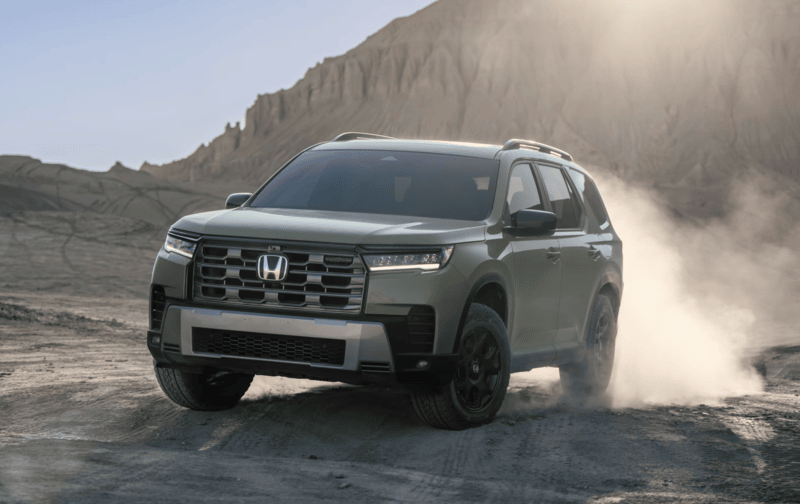
Knowing which five popular SUVs to avoid in 2026 starts with understanding why you should stay away from certain models. Rather than hinging on quality or reliability, our list of SUVs to avoid in 2026 highlights models with downsides like steeper depreciation, higher ownership costs, lower incentives, and price increases despite few changes.
Understanding which SUV value traps to avoid in 2026 is especially important this year, given stubbornly high MSRPs, mixed incentives, and the disruption that comes with electrification.
Here’s a look at five SUVs to avoid in 2026 in order to protect your wallet.
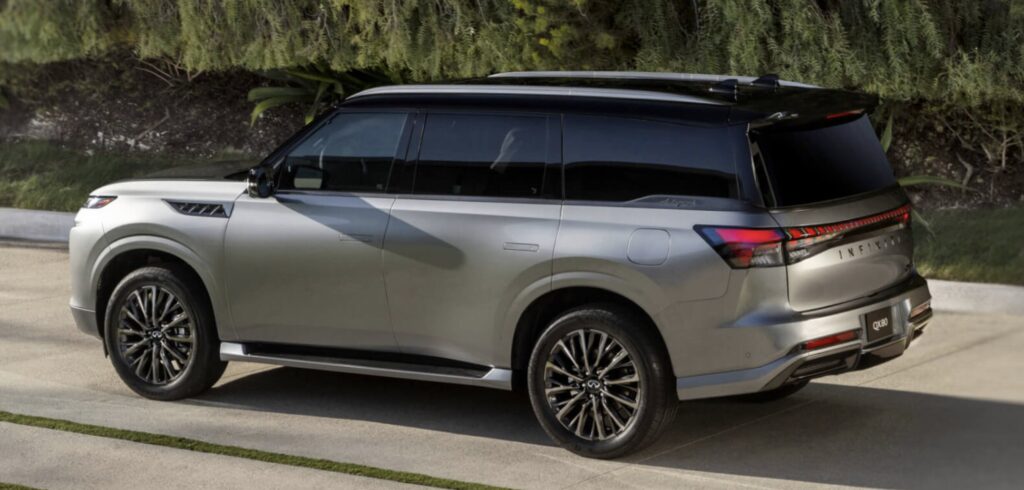
The Infiniti QX80 achieved record-breaking sales in 2025, moving 13,590 units. Following a 2014 model-year rebrand from the QX56, the QX80 has garnered a following for its robust powertrain, luxurious looks, and well-appointed tech.
However, the QX80 is forecast to experience significant depreciation. Infiniti increased the QX80’s starting price from $74,150 in 2024 to $82,450 for 2025. In 2026, the price was bumped even higher to $83,750. Using CarEdge’s depreciation calculator, a new, $83,750 Infiniti QX80 is likely to depreciate by 69% over five years when driven 13,500 miles annually, resulting in a $25,576 resale value.
Luxury cars generally also depreciate faster, and the 2026 QX80 faces tough competition from rivals like BMW’s X7 while sharing a platform with cheaper alternatives, such as Nissan’s Armada. The 2025 QX80 was a complete redesign, so this year’s model means you’re paying more for a carryover. While Infiniti is replacing the QX80 Sensory trim with the Sport grade for 2026, the Sport doesn’t offer enhanced performance; just athletic looks.
In fairness, luxury buyers are less concerned with depreciation. Still, plenty of shoppers in between price points consider splurging on something more premium, and these are the ones that are best off looking elsewhere.
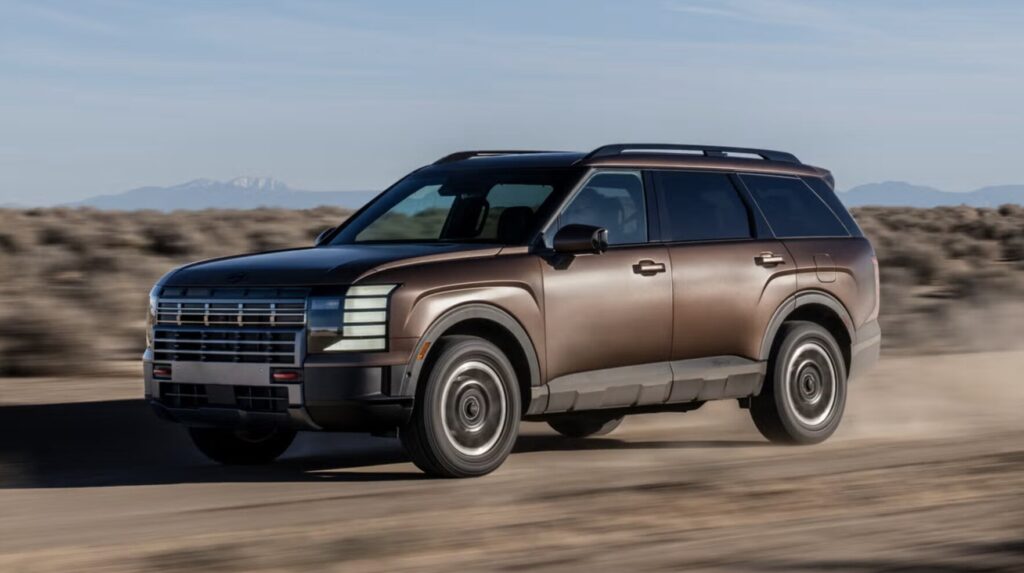
Like the Infiniti QX80, the 2025 Hyundai Palisade set a sales record in 2025. The mid-size Palisade has maintained popularity thanks to its spacious three-row configuration and near-luxury design, especially in the top-tier Calligraphy trim. However, the Palisade Calligraphy received a 7% price hike for 2026. That means justifying the already high price tag will be a lot harder for shoppers moving forward.
Starting at $54,560, the 2026 Palisade Calligraphy is far more affordable than three-row luxury models like the 2026 QX80 (class discrepancy noted), but that doesn’t necessarily mean it’s a smart buy. As the Palisade’s peak grade, the Calligraphy is full of luxury features that would be expensive to repair, such as massaging seats, a center console sterilization bin, and comprehensive advanced driver-assistance systems (ADAS). You should also avoid the Palisade Calligraphy if you’re seeking a sportier luxury SUV with a more immediate throttle response.
As we saw with the QX80, buyers have less incentive to shoulder price increases if the model is a carryover, but this isn’t the only time you should avoid price hikes. There’s also the problem of trim stacking, which is when manufacturers offer extensive trims to inflate prices for minor feature additions.
The 2026 Pilot isn’t a bad mid-size SUV in terms of quality or reliability, but shoppers could benefit from Honda streamlining its seven-trim lineup.
Other popular Honda SUVs, such as the CR-V, have seven trims, but the CR-V includes distinct hybrid and pure gas grades. In contrast, the 2026 Pilot remains exclusively a pure gas model, so drivers end up paying more as they move up its trims, without significant perks like a hybrid option.
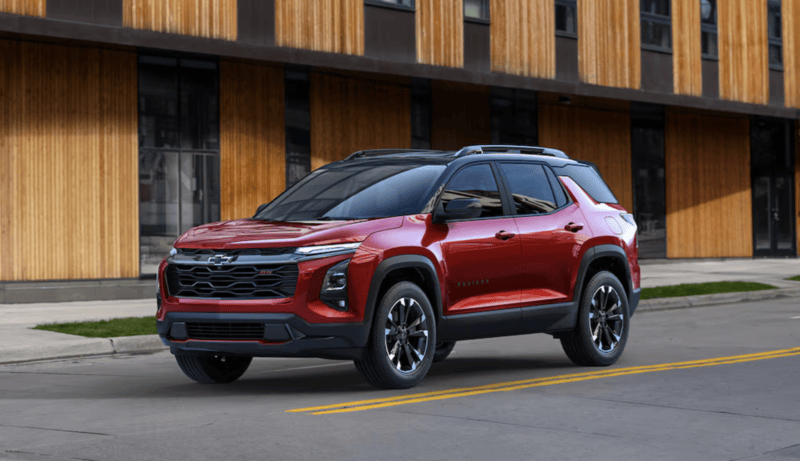
The Equinox consistently stands as Chevrolet’s top-selling compact SUV. Reasons for its popularity include a sub-$30,000 starting price, sharp design language, and ample connectivity. However, its base trim’s cost has crept up $200 despite carrying over from 2025’s redesign, and its value retention relative to comparable rivals is modest.
For example, CarEdge’s depreciation calculator shows that an entry-level 2026 Equinox purchased for $28,800 and driven 13,500 miles annually is forecasted to depreciate by 52% over five years, resulting in a $13,792 resale value. If you buy a rival’s base trim, such as the 2026 CR-V’s starting at $30,920, it’ll depreciate 29% after five years under the same mileage, resulting in a resale value of $21,950.
For crossover buyers willing to pay a little more for a better equipped vehicle with higher reliability, the all-new 2026 Toyota RAV4 is a great option for just $3,000 more.

Starting at $53,225, the fully-loaded Highlander Platinum is one of the most expensive Toyota SUVs on the market. This is despite the fact that the similarly-equipped Highlander XLE is $8,000 less. After dropping 2025’s base LE trim and making all-wheel drive (AWD) standard, the Highlander’s entry-level price has increased by $5,000 in 2026.
Jumps like these place the Highlander in a more premium market, but budget-conscious shoppers are more likely to overlook this, given the model’s popularity. Additionally, the Highlander’s popularity leaves fewer incentives available and motivates buyers to overpay for the fully loaded experience, which carries a higher depreciation risk.
Our vehicle depreciation calculator isn’t the only free resource you can use to find your ibest value SUV in 2026. CarEdge’s free car-buying cheat sheets streamline shopping by teaching confident negotiation skills, supplying first-time buyers with key tips, highlighting must-know dealership language, and more.
Prefer to have a seasoned professional negotiate your SUV deal from start to finish? We make it happen every day! Learn how it works.