
CarEdge saved me over 4,500 dollars on a brand new Honda Pilot. I can't say thank you enough.
Price intelligence
Find a wide range of vehicle listings with market insights on new and used listings near you.
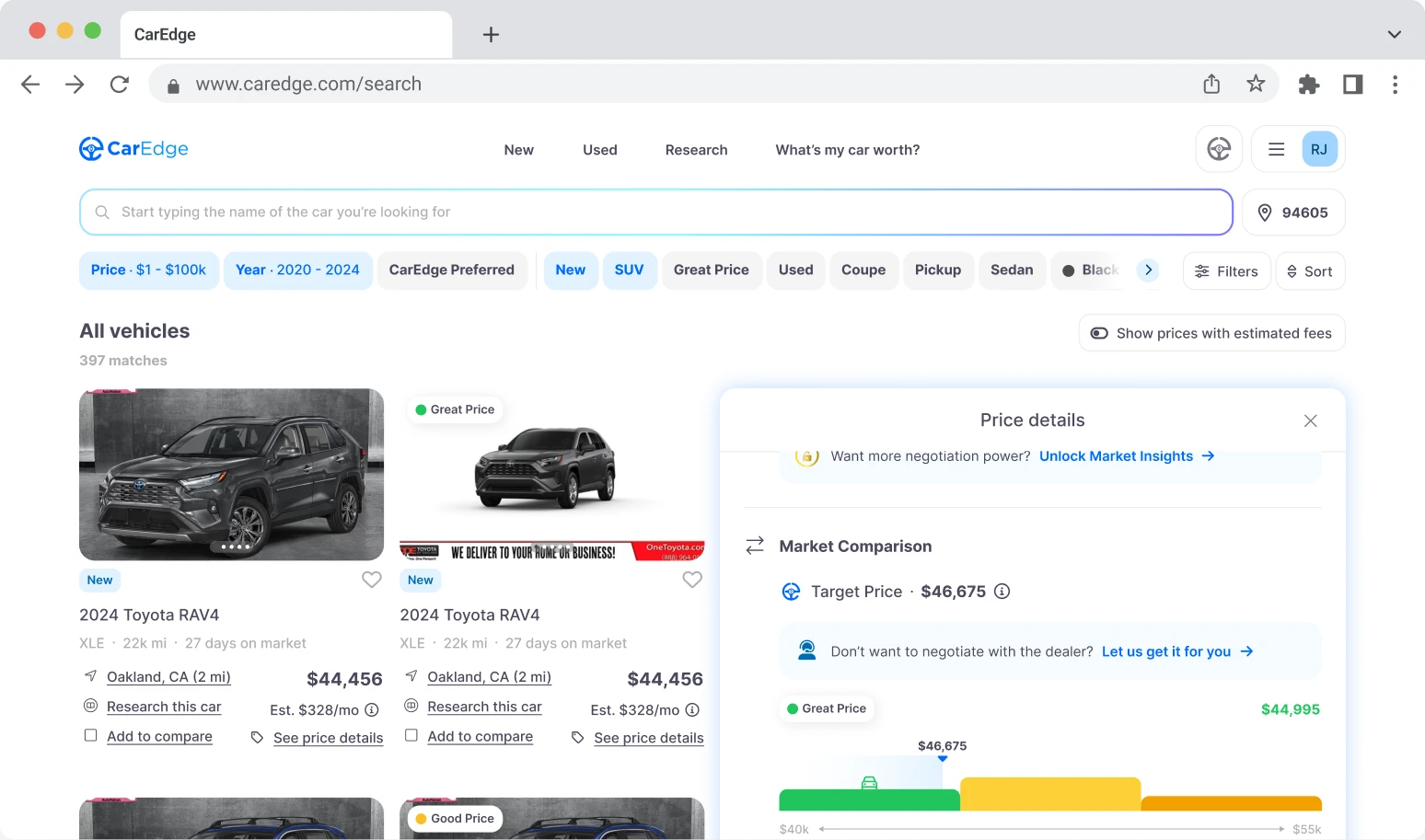

What can I do with CarEdge?
 CarEdge Insights
What can I do with CarEdge?
Get access to exclusive information so you can make an informed car buying decision — all in one place.

Find a wide range of vehicle listings with market insights on new and used listings near you.
Track your vehicle’s value and cash in when the time is right to sell.

Access to our proprietary data to help you find the right car, at the right price. Find these unlocked on every listing after subscribing.

With our expert-led, tech-enabled car buying service, we will locate, negotiate, and deliver your vehicle so you can get a new car hassle free.


Help us personalize your CarEdge experience — it only takes a second.
Your answers help us personalize your CarEdge journey — we’ll follow up with tips and next steps that match your buying timeline.

Ford just dropped a major deal that’s sure to grab attention — and save you thousands if you’re car shopping this spring. As new auto tariffs take effect, Ford is flipping the script with its bold new “From America, For America” campaign. What does that mean for you? Starting now, most new Ford and Lincoln vehicles are available at employee pricing — yes, the same deal Ford workers get.
Ford’s promotion is expected to run through June 2, giving shoppers an extended window to snag steep discounts on nearly every model in the lineup. But Ford isn’t doing this purely out of a good gesture. We’ll take a look at how Ford’s inventory situation is ripe for a clearance sale.
According to CarEdge Pro, Ford is sitting on a mountain of unsold inventory — over 522,000 new vehicles nationwide in early April, which equals a 122-day supply. More than 194,000 of those are leftover 2024 models, which dealers are eager to move before newer shipments arrive.
Ford’s inventory levels have been well above the industry average for months, and with 25% tariffs on imported vehicles kicking in, the pressure is on. Ford’s North American operations are expected to take a hit, and this employee pricing strategy looks like a smart play to clear out excess inventory quickly — before the market gets even more volatile.

Normally reserved for Ford employees, “A Plan” pricing gives you access to the lowest available price on a new vehicle — well below MSRP. Typically, this is referred to as Ford Invoice Pricing. Now, Ford is extending that deal to everyday buyers in an effort to cut through the confusion as tariffs begin to ripple through the market.
Thousands in savings are now on the table, especially on popular models like the F-150, Escape, Explorer, and even foreign-built Fords like the Maverick, Bronco Sport, and Mustang Mach-E.
Here’s a look at what’s included in Ford’s employee pricing promotion from April to June 2025.
Included models:
Excluded models:
This is a retail-focused promotion, so it’s aimed squarely at individual car buyers looking to save on a new Ford this spring.
Here’s a real-world example of employee pricing at the dealership, courtesy of one of our CarEdge Car Buying Service customers. The A Plan pricing that Ford is offering is in red:
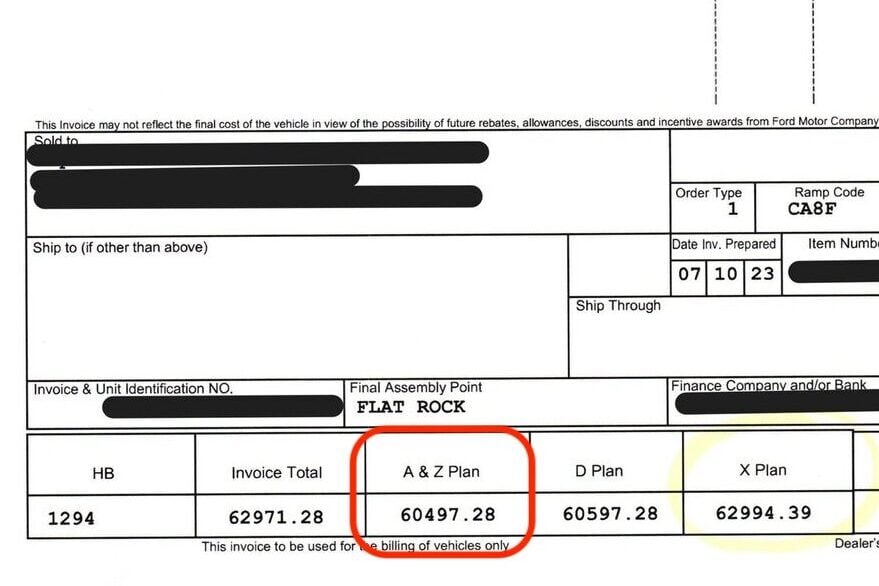
Ford’s offer is for ‘A Plan’ employee pricing, which you can see above alongside various other incentive levels. Wondering what ‘DB’ is? It’s something the public normally doesn’t see: dealer holdback. Dealer holdback is an amount of money paid to a car dealership from the manufacturer on each new vehicle they sell. As you can see, Ford’s promotion is a great deal, offering rock-bottom prices just as new cars are set to rise due to tariffs.
In a statement to The Detroit News, Ford execs said they want to bring “clarity and certainty” to buyers amid rising prices and economic uncertainty. With plenty of inventory sitting on dealer lots and consumer sentiment cooling, Ford is hoping this price drop will keep buyers engaged — even as tariffs drive up costs behind the scenes.
“Even after a really strong March, our inventory levels are super healthy across our dealer network,” said Robert Kaffl, Director of U.S. Sales and Dealer Relations at Ford. “This employee pricing adds some certainty to what could be an uncertain situation.”
In other words, Ford has an oversupply of new cars and trucks in 2025. With tariffs casting tremendous uncertainty in the broader car market, and Ford looking to bear the brunt of tariff impacts, Ford is looking to get ahead of the situation with what amounts to a clearance sale. We may even see competing OEMs, notably GM and Stellantis, follow suit to remain competitive.
Employee pricing often means thousands off MSRP, but if you want to know exactly how much you’ll save on the Ford you’ve got your eye on, we’ve got the perfect tool for you.
👉 Check the Dealer Invoice Price on Any Ford
With the CarEdge Dealer Invoice tool, you can:
Invoice pricing is a great estimation of Ford’s employee pricing. It’s simply the price of the vehicle, with all dealership profits removed. If you’re looking to estimate how much you could save with Ford employee pricing, our Dealer Invoice Price tool is what you’re looking for.
If you’ve been waiting for the right time to buy a Ford, this might be it. With employee pricing available to all and inventory high, Ford dealers are ready to deal. But don’t wait too long — this promotion ends June 2, and exclusions apply to newly launched models.Want to get the best price? Check the dealer invoice price first, then go in with confidence. Happy spring car shopping! We’ll share the best spring car deals as they arrive. We keep track of all of the best manufacturer offers over at CarEdge Best Deals.

With the arrival of automotive tariffs, the cost of importing vehicles—and the parts they’re made from—is on the rise. For car buyers looking to dodge the steepest price hikes, shopping for a vehicle assembled in the United States could help soften the blow. In 2026, there are 117 new car and truck models with final assembly in the U.S. From SUVs built in the South to pickups rolling off lines in the Midwest, there are plenty of options for shoppers who want to support domestic manufacturing and potentially avoid the worst of the tariff impacts.
But before you jump to conclusions, there are a few important caveats to understand.
Automotive supply chains are global, and final assembly is just one piece of the puzzle. While the models listed here are all assembled in the United States, many of their parts are sourced from around the world—especially from our North American neighbors in Canada and Mexico. Some of these vehicles are even produced outside the U.S. for other markets, though we’ve focused only on those assembled for sale here at home.
It’s also important to note that the latest round of tariffs applies to imported car parts, not just fully assembled vehicles. That means even models built in American factories may see price increases if key components are subject to tariffs. So while U.S. final assembly offers some insulation from global trade headwinds, it doesn’t make a car completely immune.
Below you will find all 117 cars, trucks, SUVs and EVs with final assembly in the United States of America in 2026. These vehicles are made in facilities around the country, however it’s worth reminding readers that each one of these cars could not be finished without global supply chains.
These are the cars and trucks made in America in 2026:
| Make | Model | Locations of U.S. Final Assembly |
|---|---|---|
| Acura | TLX | Marysville, Ohio, USA |
| Acura | Integra | Marysville, Ohio, USA |
| Acura | MDX | Marysville, Ohio, USA |
| Acura | RDX | Marysville, Ohio, USA |
| Acura | ZDX | Spring Hill, Tennessee, USA |
| BMW | X3 | Spartanburg, South Carolina, USA |
| BMW | X4 | Spartanburg, South Carolina, USA |
| BMW | X5 | Spartanburg, South Carolina, USA |
| BMW | X6 | Spartanburg, South Carolina, USA |
| BMW | X7 | Spartanburg, South Carolina, USA |
| BMW | XM | Spartanburg, South Carolina, USA |
| Buick | Enclave | Lansing, Michigan, USA |
| Cadillac | Celestiq | Warren, Michigan, USA |
| Cadillac | CT4 | Lansing, Michigan, USA |
| Cadillac | CT5 | Lansing, Michigan, USA |
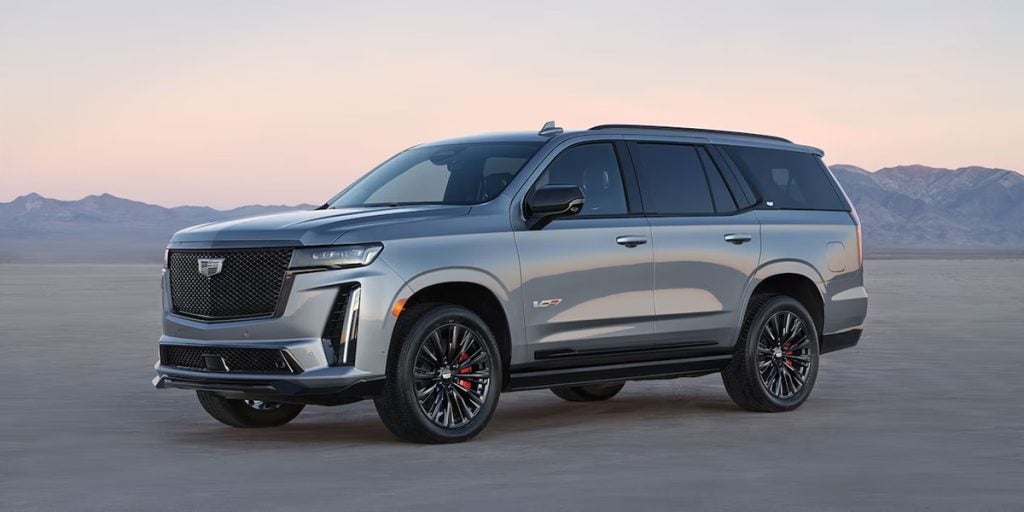
| Cadillac | Escalade | Arlington, Texas, USA |
| Cadillac | Escalade IQ | Detroit, Michigan, USA |
| Cadillac | Lyriq | Spring Hill, Tennessee, USA |
| Cadillac | Vistiq | Spring Hill, Tennessee, USA |
| Cadillac | XT5 | Spring Hill, Tennessee, USA |
| Cadillac | XT6 | Spring Hill, Tennessee, USA |
| Chevrolet | Corvette | Bowling Green, Kentucky, USA |
| Chevrolet | Tahoe | Arlington, Texas, USA |
| Chevrolet | Suburban | Arlington, Texas, USA |
| Chevrolet | Traverse | Lansing, Michigan, USA |
| Chevrolet | Colorado | Wentzville, Missouri, USA |
| Chevrolet | Silverado 1500/2500 | Flint, Michigan, Springfield, Ohio, and Fort Wayne, Indiana, USA |
| Chevrolet | Silverado EV | Detroit, Michigan, USA |
| Dodge | Durango | Detroit, Michigan, USA |
| Ford | Bronco | Wayne, Michigan, USA |
| Ford | Escape | Louisville, Kentucky, USA |
| Ford | Expedition | Louisville, Kentucky, USA |
| Ford | Explorer | Chicago, Illinois, USA |
| Ford | F-150 | Dearborn, Michigan and Kansas City, Missouri, USA |
| Ford | F-150 Lightning | Dearborn, Michigan, USA |
| Ford | Ranger | Wayne, Michigan, USA |
| Ford | Super Duty | Louisville, Kentucky and Avon Lake, Ohio, USA |
| Ford | Mustang | Flat Rock, Michigan, USA |
| Genesis | GV70 | Montgomery, Alabama, USA |
| GMC | Acadia | Delta Township, Michigan, USA |
| GMC | Hummer EV | Detroit, Michigan, USA |
| GMC | Yukon | Arlington, Texas, USA |
| GMC | Canyon | Wentzville, Missouri, USA |
| GMC | Sierra | Roanoke, Indiana, USA |
| GMC | Sierra EV | Detroit, Michigan, USA |
| Honda | Accord | Marysville, Ohio, USA |
| Honda | Civic | Greensburg, Indiana and East Liberty, Ohio, USA |
| Honda | CR-V | Greensburg, Indiana and East Liberty, Ohio, USA |
| Honda | Passport | Lincoln, Alabama, USA |
| Honda | Pilot | Lincoln, Alabama, USA |
| Honda | Ridgeline | Lincoln, Alabama, USA |
| Honda | Odyssey | Lincoln, Alabama, USA |
| Hyundai | Elantra | Montgomery, Alabama, USA |
| Hyundai | Sonata | Montgomery, Alabama, USA |
| Hyundai | Tucson | Montgomery, Alabama, USA |
| Hyundai | IONIQ 5 | Georgia, USA |
| Hyundai | IONIQ 9 | Georgia, USA |
| Hyundai | Santa Cruz | Montgomery, Alabama, USA |
| Hyundai | Santa Fe | Montgomery, Alabama, USA |
| Infiniti | QX60 | Smyrna, Tennessee, USA |
| Jeep | Grand Cherokee | Detroit, Michigan, USA |
| Jeep | Wagoneer | Warren, Michigan, USA |
| Jeep | Grand Wagoneer | Warren, Michigan, USA |
| Jeep | Wrangler | Toledo, Ohio, USA |
| Jeep | Gladiator | Toledo, Ohio, USA |
| Kia | EV6 | West Point, Georgia, USA |
| Kia | EV9 | West Point, Georgia, USA |
| Kia | K5 | West Point, Georgia, USA |
| Kia | Telluride | West Point, Georgia, USA |
| Kia | Sportage | West Point, Georgia, USA |
| Kia | Sorento | West Point, Georgia, USA |
| Lexus | ES | Georgetown, Kentucky, USA |
| Lexus | TX | Princeton, Indiana, USA |
| Lincoln | Aviator | Chicago, Illinois, USA |
| Lincoln | Corsair | Louisville, Kentucky, USA |
| Lincoln | Navigator | Louisville, Kentucky, USA |
| Lucid | Air | Casa Grande, Arizona, USA |
| Lucid | Gravity | Casa Grande, Arizona, USA |
| Mazda | CX-50 | Huntsville, Alabama, USA |
| Mercedes-Benz | GLE | Tuscaloosa, Alabama, USA |
| Mercedes-Benz | GLS | Tuscaloosa, Alabama, USA |
| Mercedes-Benz | EQE SUV | Tuscaloosa, Alabama, USA |
| Mercedes-Benz | EQS SUV | Tuscaloosa, Alabama, USA |
| Nissan | Altima | Smyrna, Tennessee, USA |
| Nissan | Rogue | Smyrna, Tennessee, USA |
| Nissan | LEAF | Smyrna, Tennessee, USA |
| Nissan | Pathfinder | Smyrna, Tennessee, USA |
| Nissan | Frontier | Canton, Mississippi, USA |
| Nissan | Titan | Canton, Mississippi, USA |
| Nissan | Murano | Canton, Mississippi, USA |
| Polestar | Polestar 3 | Ridgeville, South Carolina, USA |
| Ram | Ram 1500 | Sterling Heights, Michigan, USA |
| Rivian | R1T | Normal, Illinois, USA |
| Rivian | R1S | Normal, Illinois, USA |
| Subaru | Crosstrek | Lafayette, Indiana, USA |
| Subaru | Outback | Lafayette, Indiana, USA |
| Subaru | Legacy | Lafayette, Indiana, USA |
| Subaru | Ascent | Lafayette, Indiana, USA |
| Tesla | Model 3 | Fremont, California, USA |
| Tesla | Model Y | Austin, Texas, USA |
| Tesla | Cybertruck | Austin, Texas, USA |
| Tesla | Model S | Fremont, California, USA |
| Tesla | Model X | Fremont, California, USA |
| Toyota | Corolla | Blue Springs, Mississippi, USA |
| Toyota | Camry | Georgetown, Kentucky, USA |
| Toyota | RAV4 | Georgetown, Kentucky, USA |
| Toyota | Highlander | Princeton, Indiana, USA |
| Toyota | Grand Highlander | Princeton, Indiana, USA |
| Toyota | Sequoia | San Antonio, Texas, USA |
| Toyota | Sienna | San Antonio, Texas, USA |
| Toyota | Tundra | San Antonio, Texas, USA |
| Toyota | Corolla Cross | Huntsville, Alabama, USA |
| VinFast | VF8 | North Carolina, USA |
| VinFast | VF9 | North Carolina, USA |
| Volkswagen | Atlas Cross Sport | Chattanooga, Tennessee, USA |
| Volkswagen | Atlas | Chattanooga, Tennessee, USA |
| Volkswagen | ID.4 | Chattanooga, Tennessee, USA |
| Volvo | S60 | Ridgeville, South Carolina, USA |
| Volvo | EX90 | Ridgeville, South Carolina, USA |

As tariffs begin to reshape the auto market, shopping for a model with final assembly in the United States is one way to prepare for potential price hikes. These American-made vehicles may be less exposed to the harshest impacts, but they’re not completely shielded. Global supply chains mean that many parts are still imported and subject to new tariffs.
While it remains true that automakers may absorb some of the added costs from tariffs, it’s undeniable that the longer tariffs stay in place, the more likely price hikes are for models down the road. We may see sub-$30,000 cars vanish from the market if tariffs stick around for too long.
If you’re in the market for a new car, it’s more important than ever to stay informed. Use our Auto Tariff Checker to see if the car you’re considering could be affected by rising import costs. With the right tools and a little planning, you can stay ahead of the market and make a smarter buying decision.
It’s already tough to find a new car under $30,000 — and if new tariffs on imported vehicles go into effect, it’s about to get even harder.
The Trump administration’s new 25% tariffs on imported cars and parts could add thousands to the price of some of America’s most affordable vehicles, according to Bloomberg reporting in Automotive News. Models built in South Korea, Mexico, and Canada — including popular budget models from General Motors, Hyundai, Ford, and Nissan — would be hit hardest. The result? Some of the cheapest new cars on the market might disappear entirely.
Car prices are already near record highs, with the average new vehicle now costing nearly $48,641 according to the latest market update. For budget-conscious drivers, the small pool of new cars under $30,000 is one of the last affordable options. But about half of those vehicles are built outside the U.S., meaning they’re directly in the crosshairs of these tariffs.
According to Cox Automotive, vehicles assembled in Mexico or Canada could see average price hikes of $5,855 if the tariffs are fully passed on to consumers. And because these tariffs target the very models designed to be affordable, the impact could be especially painful for first-time buyers, younger drivers, and working-class families.
Here’s a look at the latest round of tariffs from the Trump administration as of March 28, 2025:
| Targeted Countries | Product | Tariff | Status |
|---|---|---|---|
| All imports | Steel, aluminum | 25% | Began March 12, 2025 |
| All imports | Semiconductors | 25% | Expected in early April 2025 |
| All imports | Pharmaceuticals | 25% | Expected in early April 2025 |
| All imports | Cars, auto parts | 25% | To begin on April 3 for cars, May 3 for parts |
| All imports | Copper | Unknown | Unclear |

Here are just a few of the vehicles that could be affected:
See if your next car is impacted by tariffs with our free auto tariff checker:
There are a few exceptions. Honda and Toyota still build some affordable cars in the U.S., including:
If these tariffs take effect, these could be the last true “budget” new cars made in America. These two cars are already among the fastest-selling cars in America. With fewer affordable options to come, competition, and even prices, may soon increase.
Industry leaders are sounding the alarm. Ford CEO Jim Farley is not mincing words, saying at an industry conference that 25% tariffs would be “devastating” and would “blow a hole in the U.S. industry that we’ve never seen.” Stellantis chairman John Elkann warned that the tariffs could threaten affordability and hurt demand. Even Trump has acknowledged that vehicle prices may rise, though he argues that long-term gains in domestic manufacturing will be worth the short-term pain.
But in the meantime, automakers will face tough decisions. Some may stop importing their most affordable vehicles altogether. Others might simply pass the cost along to buyers.
This tariff fight comes at a time when car affordability is already stretched thin. High interest rates and inventory shortages have pushed many would-be new car buyers into the used market. But even there, things aren’t easy.
The average used car now in inventory is over six years old. This marks an all-time high as drivers hold on to their vehicles for longer. The pandemic disrupted production, and we’re still feeling the ripple effects today. Fewer lease returns and a tighter supply of 1- to 3-year-old models have driven up prices on older used cars, too. If tariffs price out would-be new car buyers from the market, we could see used car prices climb higher yet again.
We track used car prices weekly here
If you’re in the market for a car under $30,000, it may be time to act before prices rise even further. Now is a good time to compare the latest manufacturer incentives, from zero percent financing to cheap lease deals. Unfortunately, some of these models are more likely to disappear entirely due to tariffs eliminating slim profit margins for budget models.
If you’re looking to stretch your budget but you’re not ready to buy, you might find better value in a lightly used car in the months ahead. However, if tariffs stick around for several months or more, even used car prices are likely to be impacted. CarEdge is tracking these developments closely. Check out our Vehicle Tariff Checker to see how your favorite model might be impacted.
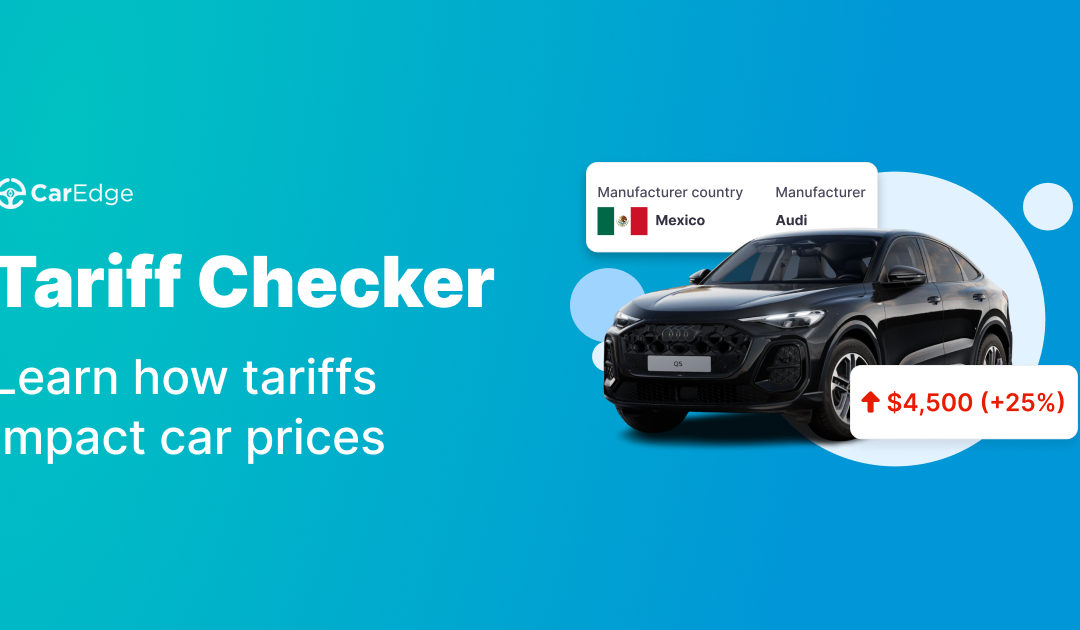
President Trump has signed sweeping new auto tariffs for vehicles built outside of the U.S., marking a significant escalation in the administration’s ongoing trade battle. The move could directly impact car prices across the board, including the vehicle you might be shopping for in 2025.
Check if the car you’re considering is impacted by the new tariffs with this free Auto Tariff Calculator.
On March 26, President Donald Trump announced a 25% tariff on vehicles manufactured outside the United States, set to begin on April 3, as outlined in a March 26 executive order from the White House. In addition to vehicles, specific auto parts—such as engines, transmissions, and key powertrain and electrical components—will also face the 25% tariff. These tariffs on auto parts will take effect by May 3.
The new tariffs are part of Trump’s broader “reciprocal tariff” strategy, officially set to begin April 2. However, the president signaled earlier this week that auto-specific levies would come sooner — and now it’s happening. Markets reacted swiftly to the news, with auto stocks taking a dive following Bloomberg’s initial report that new tariffs were arriving early.
“We’re going to apply a 25 percent tariff to all cars not built in the United States,” Trump said during a White House press conference. “We’re raising the base rate from 2.5 percent to 25 percent.”
According to the March 26 executive order, there are few exemptions for the new tariffs on imported cars and components. Parts that qualify for duty-free treatment under the United States-Mexico-Canada Agreement (USMCA) will be exempt from the new tariffs—at least until the Commerce Department creates a system to apply the tariffs solely to the non-U.S. portion of those parts. For vehicles from Canada and Mexico that meet USMCA requirements, the tariffs will apply only to the value of their non-U.S. content.
These price hikes could significantly reduce car sales in the U.S. and trigger job losses across major auto manufacturing states like Michigan, Ohio, Indiana, Illinois, Missouri, Texas, South Carolina, and Alabama, as well as in Ontario, Canada.
However, the policy also drew praise from the United Auto Workers (UAW) union, which called it a “historic” win for American labor. UAW President Shawn Fain said the tariffs help reverse decades of “harmful” free trade deals that hurt working-class communities. In a statement, the union urged automakers not to pass the added costs on to consumers and expressed support for legislation requiring them to absorb the impact. The UAW also called for federal aid to protect workers from any disruptions caused by reshoring efforts.
With nearly half of all new vehicles sold in the U.S. in 2024 coming from overseas, and $474 billion in automotive imports last year alone, the economic ripple effects could be far-reaching. Key exporters to the U.S. include Mexico, Japan, South Korea, Canada, and Germany.
Whether you’re eyeing a new Honda, BMW, Hyundai, or even a Jeep or Ford, today’s announcement could raise prices across the board. Even U.S.-assembled cars aren’t immune if they rely on imported parts or manufacturing partnerships abroad. However, some cars will be impacted more severely than others.
The new auto tariffs are expected to sharply increase new car prices, according to the Anderson Economic Group. CEO Patrick L. Anderson told Automotive News that buyers and workers alike could feel the effects within weeks, with vehicle costs projected to rise by $4,000 to $10,000—even for many models considered “American.”
Auto prices are already sky-high in 2025. Industry analysts also expect auto insurance rates to rise due to tariffs in 2025.
President Trump argues the tariffs will strengthen the U.S. auto industry by pushing production stateside. On Monday, he touted Hyundai’s $21 billion U.S. expansion as proof that his approach is working. Still, the global auto market is deeply interconnected, and relocating manufacturing isn’t something that happens overnight.
Automakers — including executives from Ford and Stellantis — have warned the administration that sudden tariffs could stall production, threaten U.S. jobs, and create more uncertainty in an already fragile supply chain.
Whether you’re planning to buy new, lease, or even wait it out, it’s more important than ever to know how these tariffs could affect the price of the vehicle you’re considering. Even the used car market will see impacts as some new car buyers shift their buying plans.
For car shoppers, it’s time to take a closer look at what’s coming next. Use our free Auto Tariff Calculator to find out if the car you’re shopping for is likely to be hit by these new tariffs.
We’re keeping a close eye on what comes next — and we’ll update you as the situation unfolds. In the meantime, make sure you go into your next car deal with eyes wide open.

Spring car buying season is here, and that means so are some of the best car deals we’ve seen in months. 2025 models are filling dealer lots, yet many automakers are struggling to offload last year’s inventory. That means more negotiating power for you, if you know where to look.
Based on current market trends, these five automakers are most likely to roll out the biggest discounts, low-APR offers, and lease specials in April 2025.
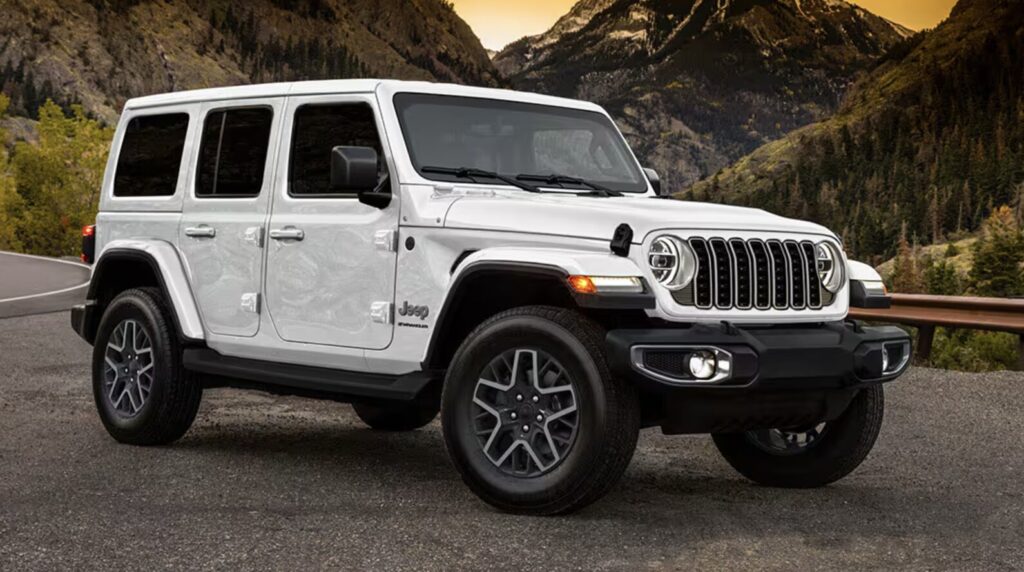
Jeep continues to lead the pack when it comes to excess inventory, and that means buyers can expect another month of strong incentives.
Here’s why Jeep will likely offer big deals in April:
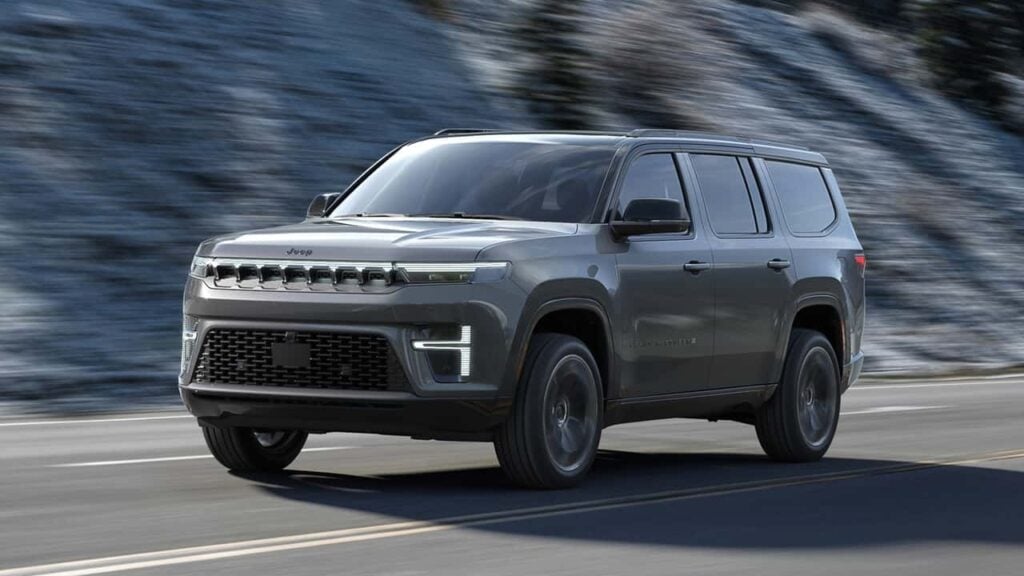
Jeep’s move upmarket hasn’t worked out as planned. As a result, premium models like the Grand Wagoneer and the all-new Wagoneer S electric SUV are being deeply discounted. Expect 0% APR offers and aggressive lease specials across Jeep’s SUV lineup in April.
Get FREE Pro & Find the BEST Jeep Deals Near You

Nissan’s U.S. outlook is shaky, and its overstocked lots reflect that. With warnings about Nissan’s financial challenges growing more urgent, it’s not clear if the automaker will survive to see the next decade. But for now, slowing sales equals bigger incentives for buyers in 2025.
Here’s why we expect Nissan to offer some of the best deals in April:
Nissan’s deep incentives might not help their bottom line, but they’re great for shoppers. Expect continued 0% APR offers on models like the Rogue and Altima, plus lease and finance specials to help move aging stock.
Get Your FREE Guide to Buying a Nissan – And Saving More

Mazda is facing inventory pressure it hasn’t seen in years. If sales don’t catch up, expect Mazda to start rolling out more aggressive deals in April.
Why Mazda could be a top pick for April savings:
In March, Mazda offered 0.9% APR for 36 months across much of its lineup. For April, we’re watching for a return to 0% APR for 60 months on models like the CX-50, CX-90, and Mazda 3.
See Mazda’s Best Offers This Month

Ram is sitting on a mountain of trucks, and dealers are eager to make room for 2025 models. With slowing demand and rising prices, April could be one of the best times to buy a truck.
Current Inventory Snapshot:
Ram’s problem is affordability. Many of their trucks are priced near or above $80,000, and that’s tough to finance in today’s high-interest-rate environment. In March, Ram offered 1.9% APR for 72 months and up to $6,500 in cash allowances. April deals could be even better.
See the Best Truck Deals in YOUR ZIP Code

Ford is heading into April with bloated inventory, especially for its most popular SUVs and trucks. That’s a sign that bigger deals are on the way.
Ford’s Inventory Situation:
So far, Ford has focused the best incentives on EVs. However, if gas-powered inventory keeps piling up, expect larger discounts and better APR offers on SUVs and trucks in April.
Compare Ford Deals in Your Area
April 2025 is shaping up to be a great month for car shoppers, especially if you’re flexible about the brand or model. Jeep, Nissan, Mazda, Ram, and Ford are all under pressure to move vehicles quickly. That gives you the upper hand in negotiations.
For car buyers, that means:
🚗 Before you buy, make sure you’re getting the best deal possible. Use CarEdge’s Free Car Buyer’s Guide to compare offers, track inventory trends, and negotiate with confidence.

Selling your car online has never been easier, thanks to instant cash offers (ICOs) from companies like CarMax, Carvana, and EchoPark. But not all offers are equal—some look great at first glance but come with hidden fees, inconvenient conditions, or last-minute price changes. If you’re considering selling your car, here’s what you need to know to get the best deal.

The biggest mistake car sellers make is accepting the first offer they receive without checking other options. Instant cash offers can vary widely depending on the buyer, and some companies may offer significantly more for your car than others. The best way to get an accurate comparison is to request quotes from multiple online buyers on the same day. Market values fluctuate frequently, so comparing offers within a short timeframe ensures you’re getting a fair and competitive price. Here’s the easiest way to compare offers.
With this critical step covered, let’s talk about what sellers should do to ensure they’re getting the most money possible when selling a car online.
Most instant cash offers are only valid for a limited time—some for 7 days, while others expire in 24-48 hours. A shorter window might pressure you into accepting an offer before comparing other options. If possible, get multiple offers on the same day to ensure an accurate comparison.
Some online car buyers reduce their offer after an in-person inspection, citing previously unmentioned damages or wear and tear. Others may charge processing fees, title transfer fees, or towing costs. Be sure to ask about any potential deductions before finalizing the sale.
Many instant offers are based on self-reported vehicle condition—but companies may have different standards for what qualifies as “excellent” or “good” condition. Some buyers are more lenient with minor cosmetic damage, while others use it as a reason to lower their offer during the final inspection.
The value of your car can change daily based on market demand. Seasonal trends, fuel prices, and overall supply can all impact how much your car is worth. For the best results, compare offers on the same day rather than over several weeks.
Not all buyers value your car the same way. Some companies purchase cars at wholesale prices to resell at auctions, while others aim for retail resale. Large dealerships or national online retailers often provide better offers than local dealers relying on auction pricing.
Some services make selling your car simple, while others require extra effort. Consider factors like:
Choose a buyer that offers a smooth, hassle-free process.
If your car still has a loan balance, find out whether the buyer will handle the payoff directly or if you’ll need to settle it first. Also, ensure the buyer provides clear title transfer documentation to avoid future liability issues.
Before accepting an offer, check online reviews to see if other sellers have had good experiences. Some companies are known for bait-and-switch tactics, while others have a strong reputation for fair pricing and fast transactions.
Some dealerships offer higher instant cash offers if you’re trading in rather than selling outright. If you plan to buy another car soon, check if a trade-in deal can get you more value.

Instant cash offers can be a great way to sell your car quickly, but taking the time to compare them properly can save you hundreds or even thousands of dollars. By considering offer expiration dates, potential deductions, and how the sale is handled, you can ensure you’re getting the best deal possible. Compare offers with CarEdge in minutes — no commitment required!
Reviewed: 5 Best Instant Cash Offer Sites to Sell Your Car [2025]
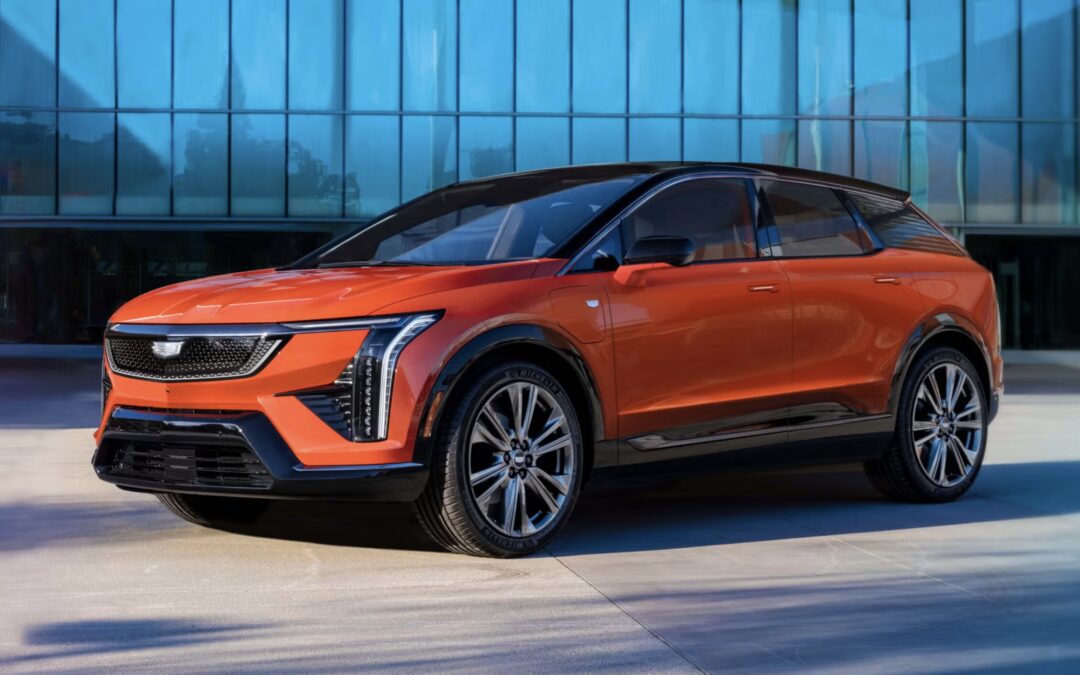
The electrification of transportation is a global phenomenon, one that the United States is a part of, but not leading. Around the world, electric vehicle adoption is surging, from Asia and Europe to emerging markets in Latin America and even Africa. Recent sales figures prove that EVs are not just a passing trend. Here’s a look at the latest EV market trends in 2025, proving that electric vehicles continue to gain ground despite political and economic challenges.
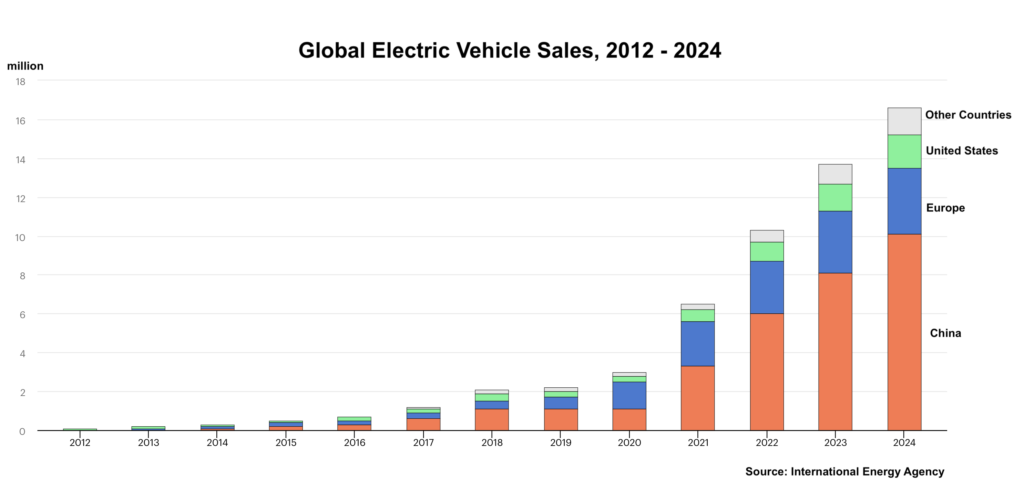
Many skeptics dismiss EVs as a politically driven fad, but they overlook a crucial fact: electrification is a global movement, not just a regional trend. Globally, electric vehicle sales increased 25% in 2024. Analysis from the International Energy Agency and OurWorldInData shows that global sales of vehicles powered by internal combustion engines (ICE) peaked back in 2018. EVs, plug-in hybrids, and mild hybrids have steadily gained market share as ICE cars have declined globally. While the U.S. has made significant strides in EV adoption, it still lags behind many other major markets.
For the time being, China is the leader in EVs, at least among global superpowers. It’s without a doubt the world’s largest EV market in terms of annual sales. In 2024, battery electric vehicle (BEV) market share in China reached an impressive 27%, with 11 million EVs sold.
In 2024, battery electric vehicles made up 14% of new car sales in the European Union and just 8% in the U.S. The United Kingdom is charging ahead (pun intended), with one in five new cars sold being fully electric. France followed with 16% BEV market share, while Germany declined to 14% as incentives ended. Several European nations have surpassed the 50% mark, with Norway leading the world at 89% BEV market share in 2024. Iceland and Sweden are close behind.
A surprising leader in the Americas is Costa Rica, where 17% of new cars sold in 2024 were BEVs. While the U.S. is making progress, it is clear that the country is not at the forefront of the EV revolution. However, recent market trends show that demand is growing, and more Americans are making the switch.
Although several countries are well ahead of the United States in EV adoption, progress in the U.S. continues nonetheless. Cox Automotive’s latest EV Market Monitor for February 2025 provides compelling data on the continued growth of electric vehicles in the country.

While new EV sales saw a slight month-over-month decline due to expected seasonal trends, last month marked an all-time record high for the month of February. Year-over-year, new EV sales volume increased by 10.5%, though market share dipped slightly to 7.7%. Luxury brands performed particularly well:
👉 See EV market share by brand
Used EV sales saw an impressive 34.2% increase year-over-year in February, highlighting the growing demand for pre-owned electric models. Tesla maintained its dominance in the used EV market, accounting for 39.9% of total sales. However, month-over-month, Tesla’s used EV sales volume dipped by 9.2%.
The market supply of used EVs also reflected shifting dynamics, with the days’ supply reaching 49 days, a slight 5.9% month-over-month increase but a notable 21.5% year-over-year decrease. This suggests that used EVs are selling at a much faster rate than the previous year, reinforcing their growing appeal among buyers.
The cost of EV ownership is gradually becoming more accessible. In February, the average transaction price (ATP) for new EVs was $55,273, marking a 1.2% month-over-month decline but a 3.7% increase year-over-year. Incentives for new EVs reached 14.9% of ATP, making them more affordable for consumers. This is much higher than incentive levels in the overall market, which totaled 7.1% of the average transaction price.
On the used market, the average listing price for EVs was $38,057, reflecting a 1.8% month-over-month increase and a 1.6% year-over-year rise. Notably, 39% of used EVs sold were priced under $25,000, offering budget-friendly options for buyers looking to go electric. These trends indicate a growing affordability that could encourage wider adoption in the near future.

With 70 fully electric models available in the U.S. market in 2025 and a dozen more launching by the end of the year, EV buyers have more choices than ever before. One of the biggest hurdles to EV adoption—charging infrastructure—is improving rapidly.
The numbers don’t lie. Electric vehicles are not just a niche product but a growing force in the auto industry. While the U.S. may trail behind some international markets, EV adoption continues to rise, with new and used EV sales increasing year over year. Prices are becoming more competitive, and charging infrastructure is expanding rapidly. Despite political headwinds, the momentum behind EVs is undeniable.
Future innovations will help to accelerate the switch, even if ICE-powered vehicles remain in the market for decades to come. Chinese automaker BYD just teased 5-minute charge times, and numerous automakers have advanced solid-state batteries in development. Charging is getting even better with the automaker-funded Ionna charging network growing quickly in 2025. The future is looking bright for those considering the switch to an EV.
Find the most negotiable EVs near you with CarEdge Best Deals — the easiest way to find the biggest incentives for any new car. Shopping used? CarEdge Pro reveals aging inventory that’s ripe for negotiation. We’re here to help you save time, money, and hassle with your next car purchase, no matter what you’re in the market for.
If you’re looking to buy a used car, you may want to rethink your purchasing timeline. April is likely to be the worst month of the year to do so. Used car prices remain high, and are likely headed even higher as seasonal influences drive up demand. Heres what buyers and sellers should consider before entering the used car market in April 2025.

In spring of 2025, the average used car price is $25,128. Unfortunately, prices are expected to climb even higher in April. Why? It’s a perfect storm of factors: tax refunds are hitting bank accounts, spring fever is in the air, and summer road trips are on the horizon. The demand for used cars surges every April, making it a tough time for buyers looking for a deal.
The biggest headwind for used car buyers in April? Seasonality. As the above graph of used car prices shows, prices rise like clockwork each April. Warmer weather (and Uncle Sam’s paychecks) bring buyers out in full force each year as winter comes to an end.
Adding fuel to the fire, the lingering effects of the pandemic-era production shortages are still impacting the market. Between 2020 and 2023, 19.6 million vehicles were never built due to supply chain disruptions. That’s nearly 20 million fewer used cars making their way into the market over time, and the reduced supply continues to push prices higher.
Recent data from Black Book shows that used car prices are climbing sharply.
“The market gained momentum last week, recording the largest single-week increase since early April of last year. Bidder activity was strong nationwide, driven by discussions about tariffs—despite the one-month reprieve for the auto industry—and typical signs of a robust spring buying season, resulting in larger-than-usual increases.”
At wholesale auctions, Black Book’s latest weekly report continues notable trends we’ve seen over the past month:
Previous weeks have shown similar trends in the wholesale used car market. This tells us that newer, low-mileage used cars are getting more expensive, while older, higher-mileage vehicles remain more negotiable. If you’re set on buying a used car this spring, consider expanding your search to older models with more miles to avoid the sharpest price increases.
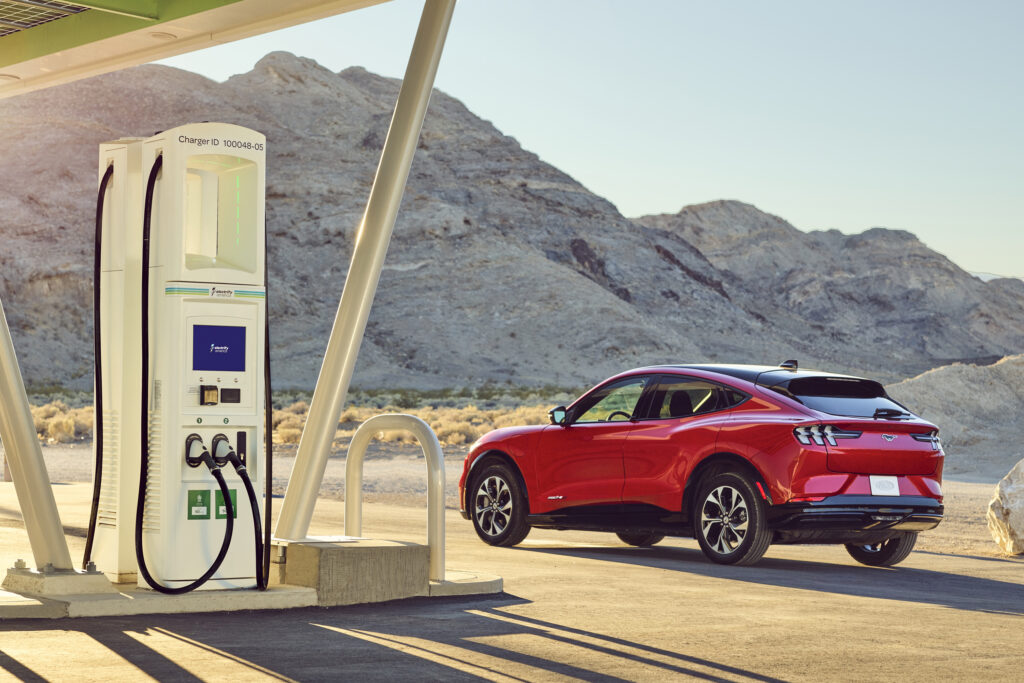
While the overall used car market is tough for buyers, there are a few segments where deals still exist:
Financing a used car in 2025 is no bargain either. The Federal Reserve’s 2024 rate cuts did little to ease auto loan rates. It’s crucial for drivers to consider the impact of today’s loan rates before setting a budget. You may be shocked by how much your payment increases with APRs this high. The average used car loan APR is 14%, but if you have poor credit, you could see rates closer to 20% APR.
To put that into perspective, let’s say you finance $25,000 over 72 months at 14% APR. Over the life of the loan, you’ll pay $12,090 in interest alone—raising your total cost of ownership by nearly 50%.
If you have good credit, you might be better off considering a new car with a low APR offer. Right now, there are 34 models available with 0% financing and dozens more with rates under 3% APR. Even though new cars cost more upfront, lower interest rates could save you thousands over time.
If you’re thinking about selling or trading in your car, April is one of the best times to do it. Rising used car prices mean you’ll get top dollar, especially for low-mileage models that are in high demand. Take advantage of the seasonal market trends and get the most money for your vehicle while demand is strong.
Compare Instant Cash Offers in Seconds — No Commitment, No Phone Calls, Just Cash!
For most buyers, waiting until after the spring price surge cools down is the best strategy. If you have to buy now, consider shopping for older, high-mileage cars or highly-rated used EVs, and compare APR offers carefully to avoid overpaying on interest.
For sellers, the time is now. April’s used car prices will offer your best bet to maximize resale value before the market levels off later in the year.
Thinking about buying or selling? Use CarEdge Pro to track market trends and find the best deal possible. We’re consumer advocates on your side!
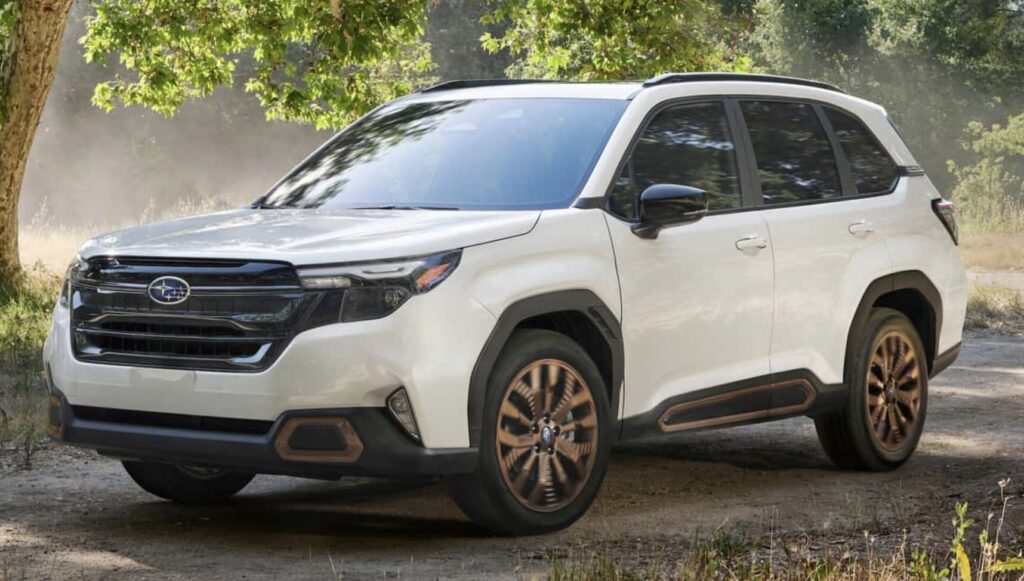
When shopping for a new car, many buyers look for a balance between safety and reliability—but these two factors don’t always go hand in hand. The latest 2025 car safety ratings from the Insurance Institute for Highway Safety (IIHS) reveal a surprising disconnect between crash-test performance and long-term dependability. While 48 models earned IIHS Top Safety Pick (TSP) or Top Safety Pick+ (TSP+) ratings, many of these “safest” cars come with questionable reliability based on the latest ratings from Consumer Reports. Here’s what drivers should know about reliability and safety before buying a car in 2025.
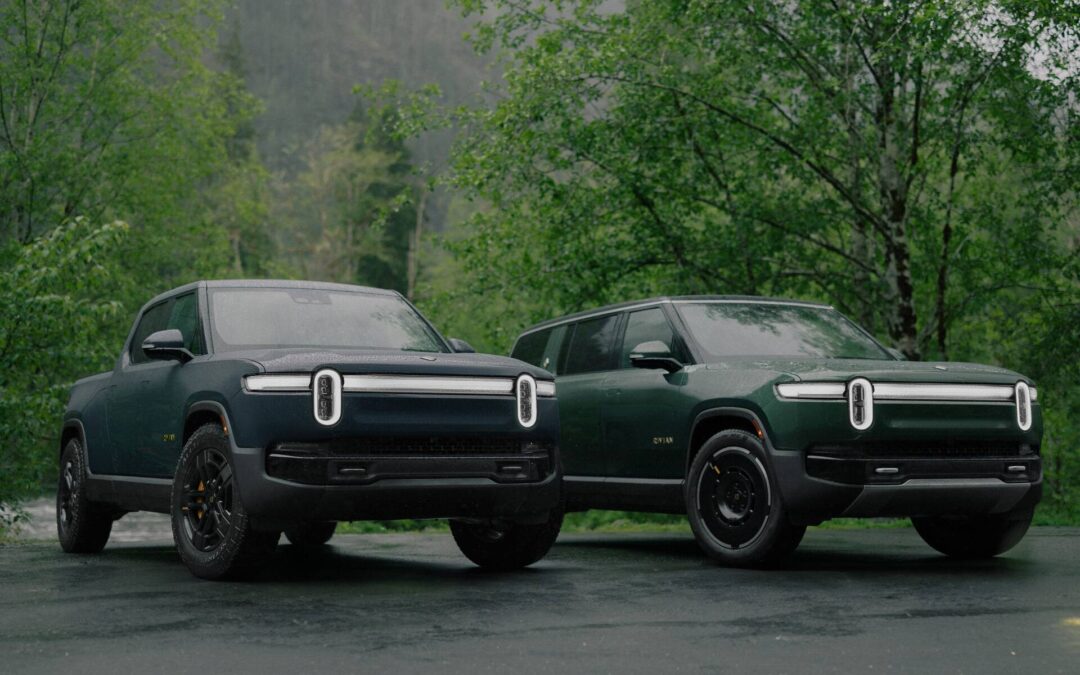
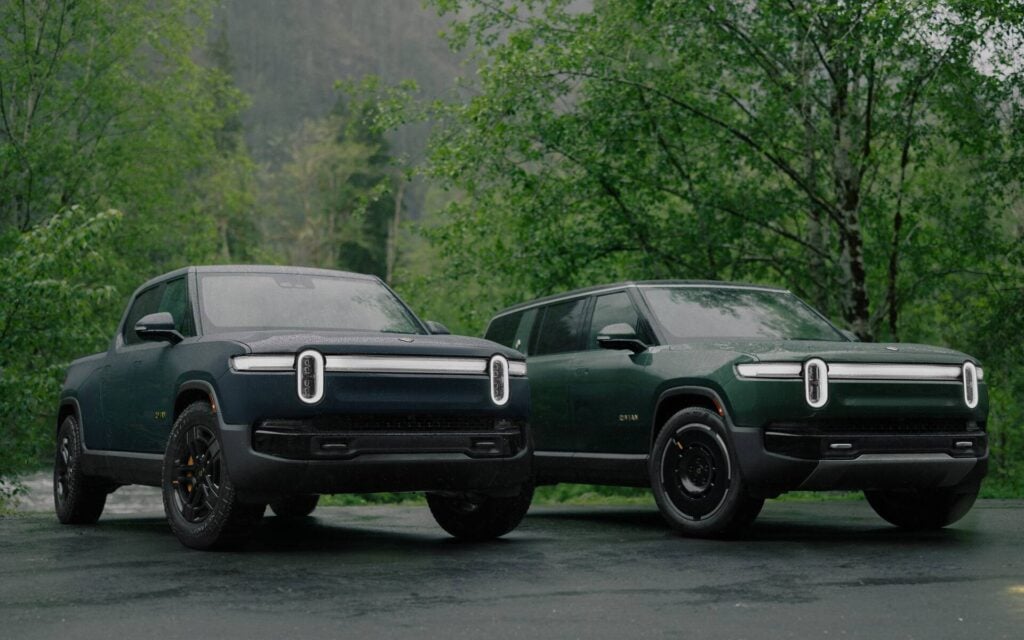
In 2025, the IIHS awarded far fewer Top Safety Picks than the previous year—just 48, compared to 71 in 2024. This year’s safest vehicles are dominated by import brands, with only five American-made models making the cut: the Chevrolet Traverse, Lincoln Nautilus, Ford Mustang Mach-E, Rivian R1S, and Rivian R1T.
Surprisingly, many of the best-selling cars and trucks in the U.S. did not receive Top Safety Pick ratings, including the five most popular vehicles in America: the Ford F-150, Chevrolet Silverado, Toyota RAV4, Honda CR-V, and Tesla Model Y.
Out of the 25 best-selling cars in the United States last year, only five made the IIHS Top Safety Pick list for 2025:
While a high safety rating might seem like a green light for purchase, it doesn’t always mean the car will be dependable. Consumer Reports’ 2025 reliability predictions show a concerning trend: some of the safest cars on the road today are among the least reliable. These ratings are based on vehicle powertrain history, recalls, and real-world consumer complaints.
Here are five of the biggest disconnects between safety and reliability for 2025:
To give you a complete view, here is the full list of 2025 Top Safety Pick and Top Safety Pick+ models, along with their Consumer Reports reliability ratings. This data highlights the wide range of reliability scores among the safest vehicles available today:
| Model Year | Make | Model | IIHS Rating (2025) | CR Reliability Rating |
|---|---|---|---|---|
| 2025 | Subaru | Forester | Top Safety Pick | 98 / 100 |
| 2025 | Lexus | NX | Top Safety Pick | 77 / 100 |
| 2025 | Mazda | 3 Sedan | Top Safety Pick+ | 72 / 100 |
| 2025 | Mazda | 3 Hatchback | Top Safety Pick+ | 72 / 100 |
| 2025 | Honda | HR-V | Top Safety Pick+ | 71 / 100 |
| 2025 | Honda | Accord | Top Safety Pick+ | 64 / 100 |
| 2025 | Mazda | CX-30 | Top Safety Pick+ | 64 / 100 |
| 2025 | BMW | X5 | Top Safety Pick+ | 61 / 100 |
| 2025 | Audi | Q7 | Top Safety Pick+ | 61 / 100 |
| 2025 | Honda | Civic Sedan | Top Safety Pick | 59 / 100 |
| 2025 | Honda | Civic Hatchback | Top Safety Pick+ | 59 / 100 |
| 2025 | Honda | Pilot | Top Safety Pick | 59 / 100 |
| 2025 | Toyota | Camry | Top Safety Pick+ | 56 / 100 |
| 2025 | Acura | Integra | Top Safety Pick | 55 / 100 |
| 2025 | Infiniti | QX60 | Top Safety Pick | 55 / 100 |
| 2025 | Hyundai | Tucson | Top Safety Pick+ | 54 / 100 |
| 2025 | Chevrolet | Traverse | Top Safety Pick | 52 / 100 |
| 2025 | Genesis | GV80 | Top Safety Pick+ | 51 / 100 |
| 2025 | Hyundai | IONIQ 6 | Top Safety Pick+ | 50 / 100 |
| 2025 | Subaru | Ascent | Top Safety Pick | 50 / 100 |
| 2025 | Hyundai | Kona | Top Safety Pick+ | 49 / 100 |
| 2025 | Genesis | GV60 | Top Safety Pick+ | 47 / 100 |
| 2025 | Mazda | CX-50 | Top Safety Pick+ | 47 / 100 |
| 2025 | Mercedes-Benz | C-Class | Top Safety Pick+ | 46 / 100 |
| 2025 | Acura | MDX | Top Safety Pick | 46 / 100 |
| 2025 | Genesis | G90 | Top Safety Pick | 45 / 100 |
| 2025 | Ford | Mustang Mach-E | Top Safety Pick+ | 43 / 100 |
| 2025 | Hyundai | Santa Fe | Top Safety Pick+ | 42 / 100 |
| 2025 | Kia | EV9 | Top Safety Pick+ | 42 / 100 |
| 2025 | Kia | Telluride | Top Safety Pick+ | 42 / 100 |
| 2025 | Volvo | XC90 | Top Safety Pick+ | 42 / 100 |
| 2025 | Subaru | Solterra | Top Safety Pick+ | 38 / 100 |
| 2025 | Nissan | Pathfinder | Top Safety Pick+ | 38 / 100 |
| 2025 | Genesis | GV70 | Top Safety Pick+ | 35 / 100 |
| 2025 | Genesis | Electrified GV70 | Top Safety Pick+ | 35 / 100 |
| 2025 | Toyota | Tundra | Top Safety Pick+ | 32 / 100 |
| 2025 | Hyundai | IONIQ 5 | Top Safety Pick+ | 30 / 100 |
| 2025 | Mercedes-Benz | GLC | Top Safety Pick+ | 30 / 100 |
| 2025 | Mercedes-Benz | GLE | Top Safety Pick+ | 30 / 100 |
| 2025 | Infiniti | QX80 | Top Safety Pick+ | 30 / 100 |
| 2025 | Mazda | CX-70 | Top Safety Pick+ | 29 / 100 |
| 2025 | Mazda | CX-90 | Top Safety Pick+ | 29 / 100 |
| 2025 | Lincoln | Nautilus | Top Safety Pick+ | 24 / 100 |
| 2025 | Rivian | R1T | Top Safety Pick | 20 / 100 |
| 2025 | Mazda | CX-70 PHEV | Top Safety Pick+ | 15 / 100 |
| 2025 | Mazda | CX-90 PHEV | Top Safety Pick+ | 15 / 100 |
| 2025 | Rivian | R1S | Top Safety Pick+ | 9 / 100 |
| 2025 | Volvo | XC90 Plug-In Hybrid | Top Safety Pick | N/A |
A car’s safety rating is crucial, but it’s only half the picture. Vehicles with high crash-test scores but poor reliability can lead to frustrating ownership experiences, costly repairs, and potential long-term headaches. Before making a purchase, it’s essential to consider both safety and reliability rankings, along with real-world owner feedback.
At CarEdge, we help car shoppers make informed decisions with data-driven insights. Whether you’re searching for a vehicle that’s safe, reliable, or both, our tools and expert guidance ensure you drive away with confidence.
Explore CarEdge’s Free Buyer’s Guide to compare the latest safety, reliability, and cost-of-ownership data on your next vehicle.

Spring is shaping up to be an interesting season for new car buyers. Tax refunds are giving consumers extra cash to put toward a purchase, yet overall consumer confidence has dipped as tariffs make headlines. Meanwhile, inventory levels continue to climb, and new car prices are on a downward trend. For car buyers looking to get the best deal this spring, knowing which brands have the most and least inventory is crucial.
Here’s where the car market stands as buyers head out for test drives this spring.
As of March 2025, the total U.S. supply of unsold new vehicles stood at 2.99 million units, marking a 12.8% increase in inventory year over year. Cox Automotive’s latest Data Point reports that February’s new car sales pace picked up by 13.6% compared to January and 5.9% year over year. The latest car buying report shows that buyers are still making moves despite sliding consumer sentiment.
Overall inventory levels remain high, with an 89-day supply of new cars at the start of March. That’s a notable 10% drop from February but still well above pre-pandemic levels. The takeaway? There are more cars on dealer lots, giving buyers better negotiating power. It’s officially a buyer’s market. Incentives will be on the rise as April new car deals are announced in the weeks ahead.
It’s important for spring car buyers to know that the deals are in the details. The new cars with the biggest discounts and highest negotiability are those with a growing oversupply. Fortunately, online car buying tools make it possible to find the most negotiable cars and trucks, all from the comfort of your home.
Not all brands are facing the same inventory trends. Hyundai inventory has risen the most, up 38 days year over year, while Jeep and Ram have declined the most, down 54 and 56 days, respectively. Among top-selling brands, Ford has the most inventory in March, with 138 days of supply sitting on dealer lots. In other words, it would take over four months to sell Ford’s lot inventory at today’s selling rates. This fictional scenario would be without any new deliveries from the factory.
Here’s a look at how all of the major OEMs in America stack up in terms of today’s supply of new cars. For context, anywhere from 60 to 90 days of supply is generally considered ‘normal’ in today’s auto market.
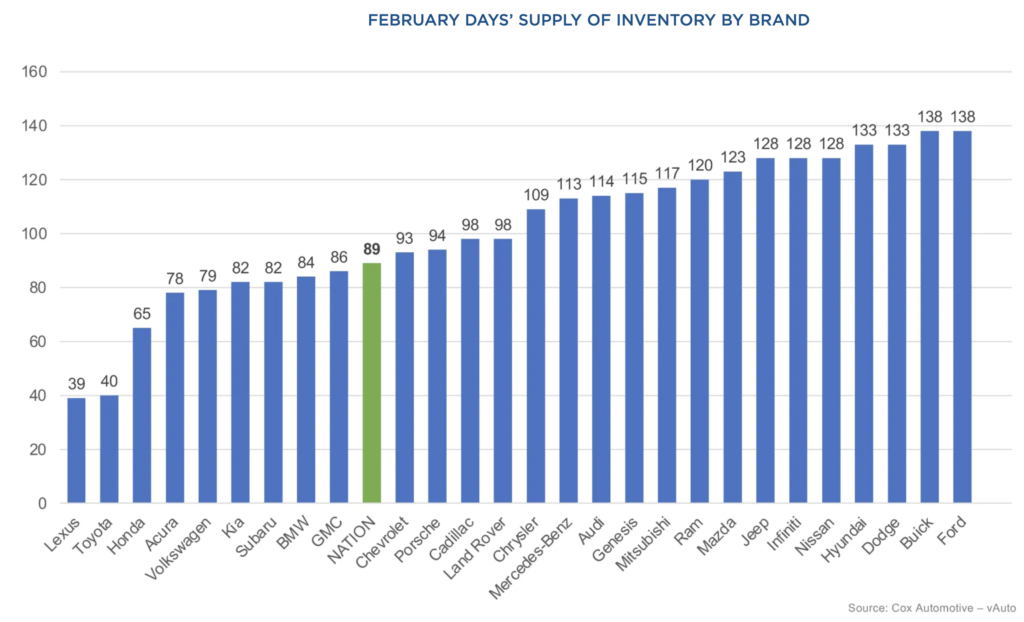
Despite falling inventory, Jeep, Ram, and other Stellantis brands remain near the top of the list. Automakers with greater than 120 days of market supply are going to consistently have the best new car deals this spring. Buyers looking for a Ford, Hyundai, Nissan, or Jeep are likely to have the upper hand in car price negotiations. This is especially true when using car buying tools to find aging inventory that has been on the market for longer.
In Spring 2025, the average new vehicle listing price now sits at $48,316. In the post-pandemic K-shaped economic recovery that has continued, buyers of ultra-luxury models continue to thrive, while budget-conscious drivers struggle with a lack of options.
Cox Automotive noted that luxury sales are thriving, despite waning consumer sentiment. “Through the end of February, more than 52,000 new vehicles transacted at prices above $100,000, up from 46,000 in the first two months of 2024. Five years ago, in January and February of 2020, just over 12,000 six-figure vehicles were sold.”
The best-selling car brands in America do share something in common: relative affordability.
The six best-selling brands — Toyota, Ford, Chevrolet, Honda, Hyundai, and Kia — offered an average price of $42,524, making them more affordable than the overall market.
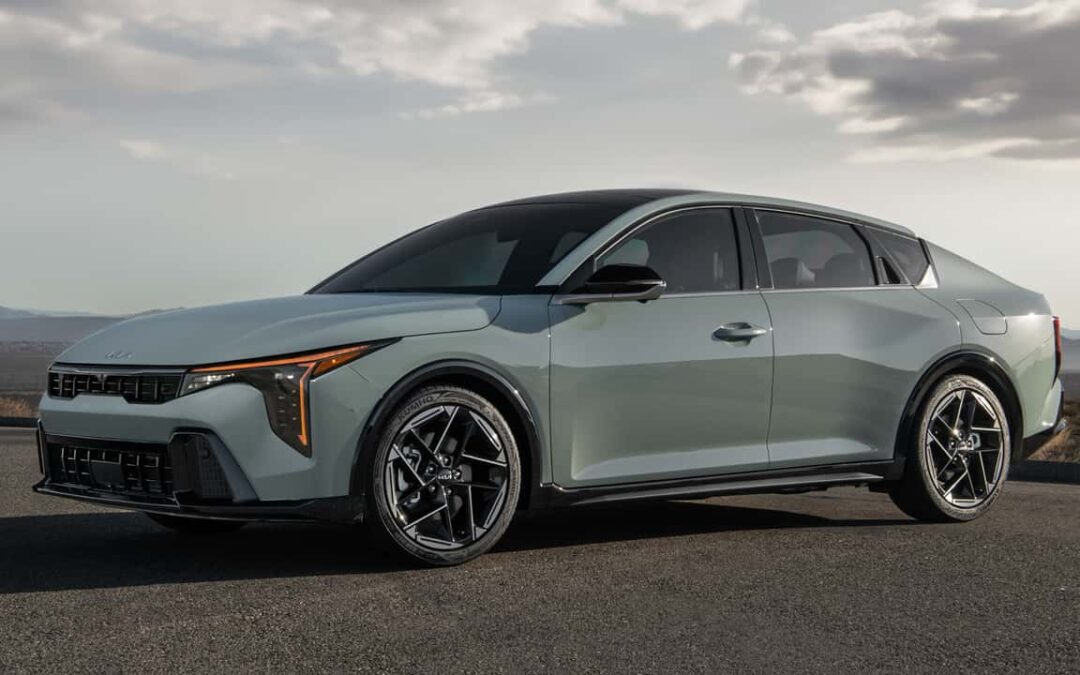
For budget-conscious buyers, the market for sub-$20,000 vehicles is shrinking fast. Available inventory in this segment dropped 17% month over month, leaving the Mitsubishi Mirage as the last new car routinely selling for under $20,000. The Nissan Versa ($20,149 average listing price) and Kia Forte ($22,085 average listing price) remain some of the most affordable options still widely available. The Kia Forte has been replaced by the Kia K4 for 2025, and unsurprisingly, comes with a higher price tag.
In 2025, the auto market has seen a 9% increase in vehicles priced over $80,000. More than 75,000 new vehicles are now listed at over $100,000, compared to fewer than 50,000 a year ago. Clearly, the luxury car market is growing, while those who rely on affordable transportation options are priced out of the market entirely.
With incentives holding steady at 7.1% of the average transaction price ($3,392), buyers can still find opportunities this spring. Higher inventory levels mean dealers are more motivated to negotiate, especially for brands with surplus stock like Ford, Hyundai, Nissan, and Jeep. However, potential policy changes, including the impacts of tariffs, could impact pricing later in the year as 2026 models are unveiled.
March and April of 2025 present a mixed bag for car buyers. If you’re looking for a deal, focus on automakers with higher inventory levels. Find aging new car inventory that’s primed to sell at a discount. These will always be the most negotiable cars. If possible, take advantage of the best financing, cash, and lease incentives of the month. If you don’t see what you’re looking for, consider waiting for April’s best car deals to be announced. Deals change often, and you could end up saving thousands of dollars.
With negotiation know-how and familiarity with your local car market, you’ll be prepared to drive home a deal you can be proud of in no time.