
CarEdge saved me over 4,500 dollars on a brand new Honda Pilot. I can't say thank you enough.
Price intelligence
Find a wide range of vehicle listings with market insights on new and used listings near you.

What can I do with CarEdge?
 CarEdge Insights
What can I do with CarEdge?
Get access to exclusive information so you can make an informed car buying decision — all in one place.

Find a wide range of vehicle listings with market insights on new and used listings near you.
Track your vehicle’s value and cash in when the time is right to sell.

Access to our proprietary data to help you find the right car, at the right price. Find these unlocked on every listing after subscribing.

With our expert-led, tech-enabled car buying service, we will locate, negotiate, and deliver your vehicle so you can get a new car hassle free.


Help us personalize your CarEdge experience — it only takes a second.
Your answers help us personalize your CarEdge journey — we’ll follow up with tips and next steps that match your buying timeline.

We’re asking new and used car buyers a few simple questions to better understand price sensitivity in 2025’s car market. Thank you for contributing to our research!
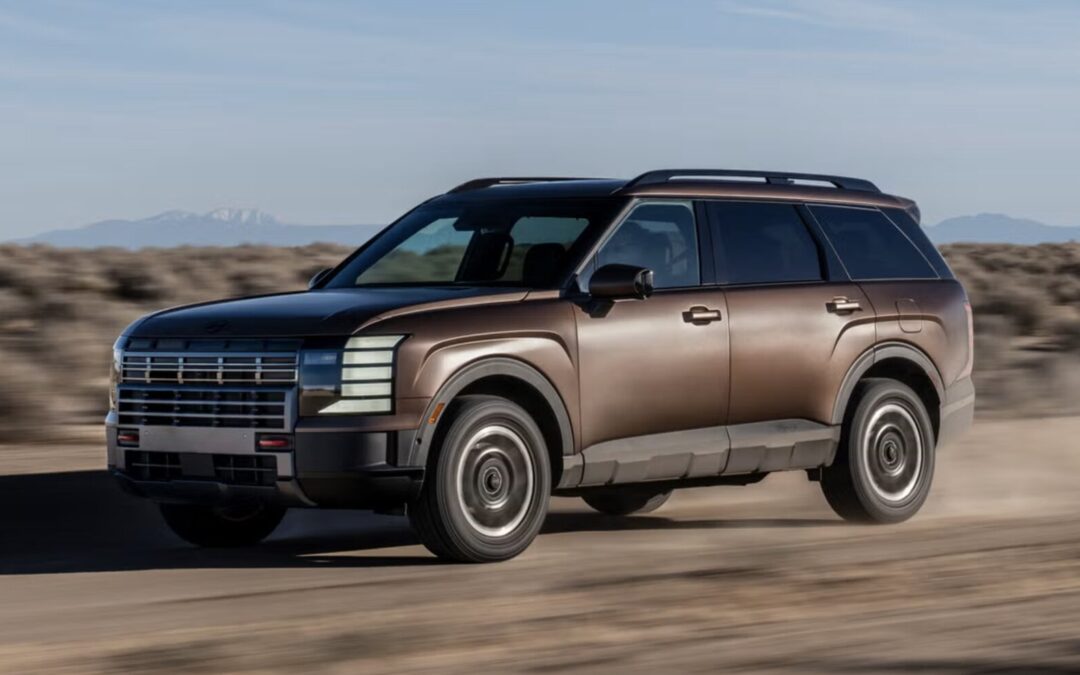
The 2026 model year welcomes both highly-anticipated debuts and meaningful updates to some of the most popular cars on the market. From redesigned best-sellers to all-new models, there’s a lot on the horizon for car shoppers who aren’t in a rush to buy right now. Plus, most of these cars will arrive in customer hands within just a few months. Whether you’re after better tech, faster charging, or just reimagined styling, these upcoming 2026 cars, hatchbacks, and SUVs are worth the wait.
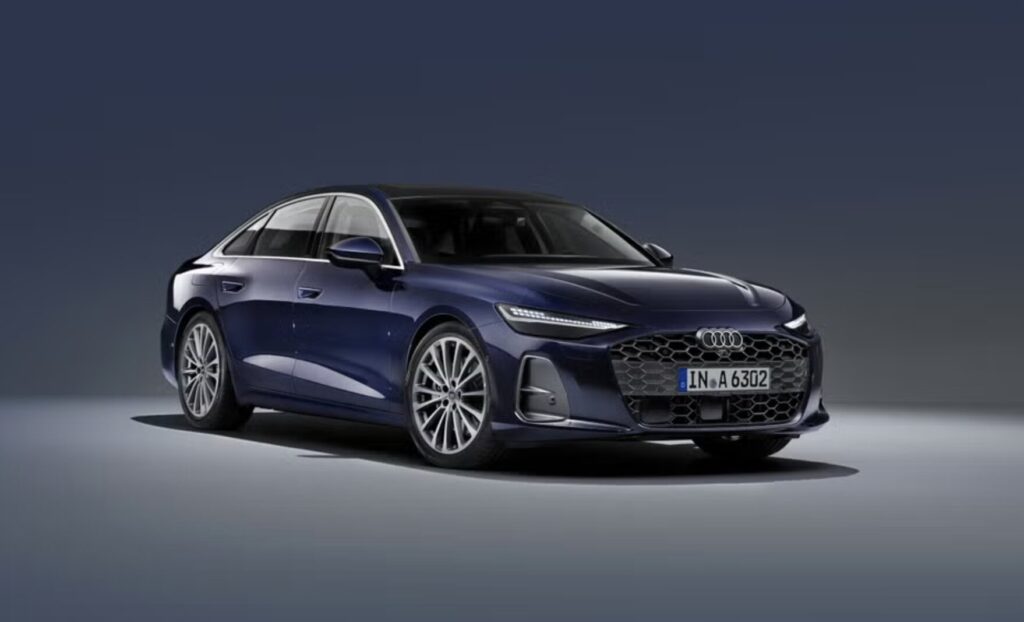
The next-generation Audi A6 stays true to what it does best: executive-class refinement without the flash. Redesigned from the ground up, the 2026 A6 brings new exterior styling, a tech-heavy cabin with massive digital displays, and a long list of standard safety features.
Under the hood, U.S. models will come standard with a turbocharged 3.0-liter V6 producing 362 horsepower paired with Quattro all-wheel drive. Options like adaptive air suspension and four-wheel steering add an additional touch of refinement.
📆 Expected arrival: Late 2025
Where will it be made? Germany (To be impacted by auto tariffs)
Why it’s worth waiting for: Substantial luxury upgrades, new looks, and V6 power in a segment where others are going four-cylinder.

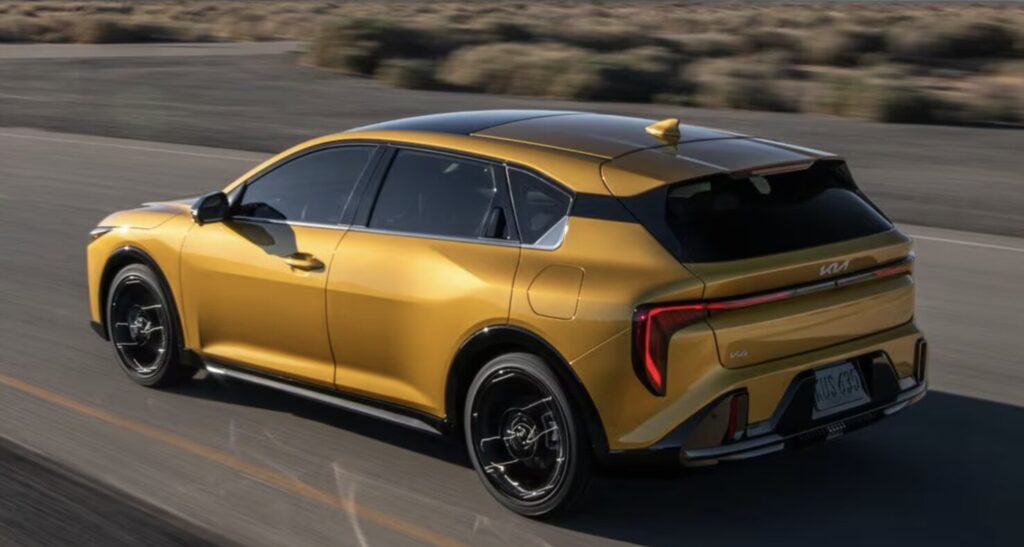
Kia’s K4 sedan is already making waves, and now the hatchback version promises even more. Kia’s replacement for the discontinued Forte is orders of magnitude more compelling as a value-packed compact car.
Think of the K4 Hatchback as a car designed with global markets in mind — we’re just lucky that it’s coming to the U.S. It’s about 11 inches shorter than the sedan, making it easier to park and maneuver, yet it packs up to 59.3 cubic feet of cargo space with the rear seats folded—almost SUV-like utility in a sleek, compact form.
Interior and powertrain specs largely mirror the sedan, which is good news if you’re already a fan of the K4.
📆 Expected arrival: Mid-to-late 2025
Where will it be made? Mexico (To be impacted by auto tariffs)
Why it’s worth waiting for: A rare new compact hatchback that blends smart packaging with sharp design.
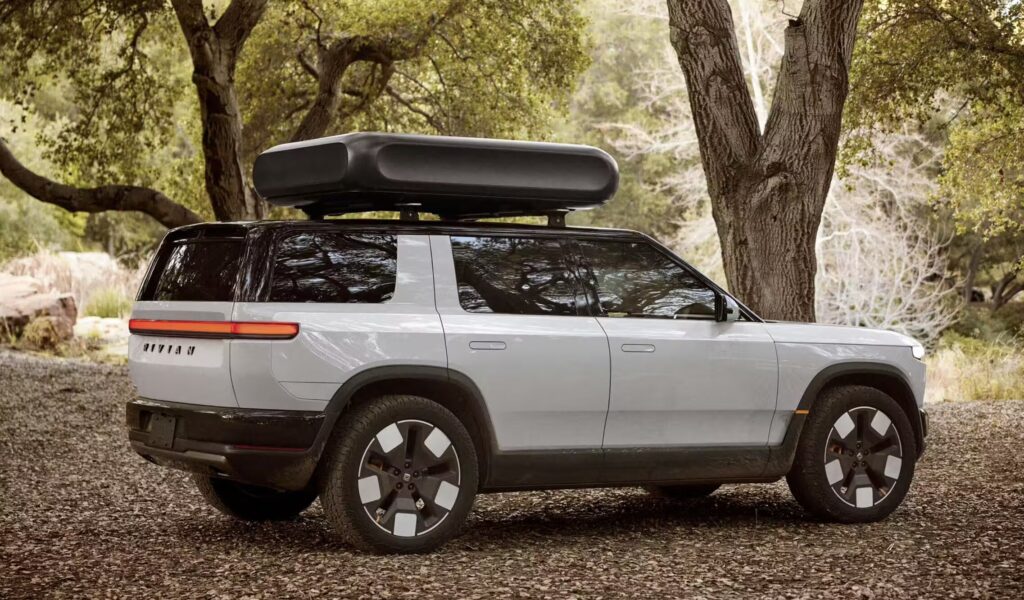
Rivian’s upcoming R2 SUV is shaping up to be one of the most compelling electric vehicles under $50K. Smaller and more affordable than the R1S, the R2 targets the same crowd as the Tesla Model Y and Ford Mustang Mach-E, but with Rivian’s adventure-ready edge.
Expect single-, dual-, and tri-motor configurations, with most specs good for 300 miles of range. Rivian has shared a few interesting features, like two gloveboxes, a new type of haptic knob on the steering wheel, and a very flexible interior. Plus, the R2 features the NACS (Tesla) charging port, so it’s easy to utilize the 20,000+ Tesla Superchargers around the U.S.
Rivian intends to enter the European market with the R2 at some point.
📆 Expected arrival: Early 2026
Where will it be made? Illinois and Georgia, USA
Why it’s worth waiting for: Rivian DNA at a more accessible price, plus true utility in a long-range, fast-charging electric SUV.
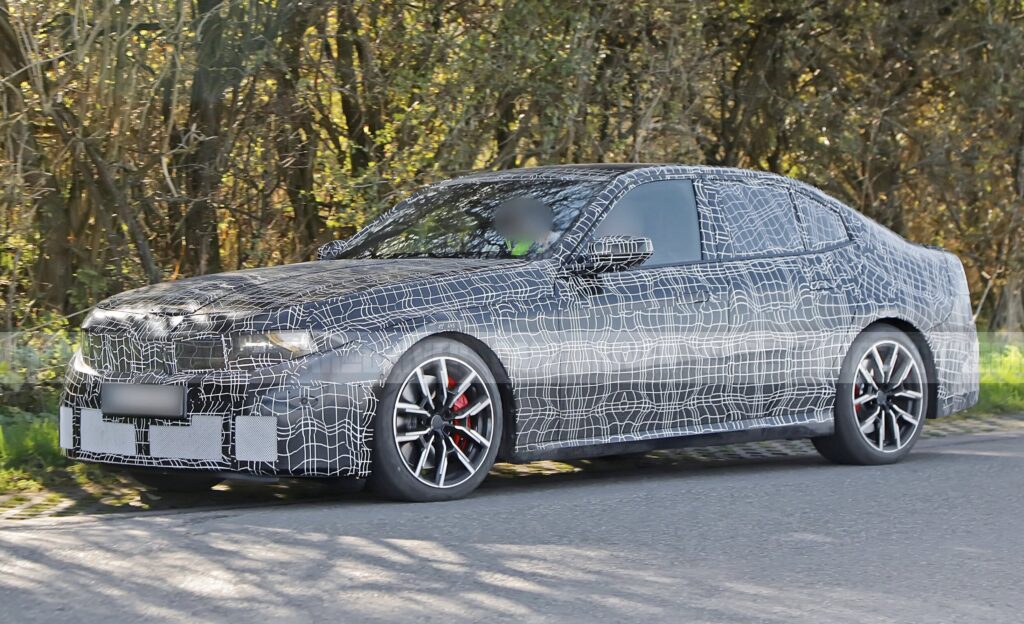
The BMW 3-Series is getting a full redesign for 2026, and it’s expected to blend Neue Klasse-inspired looks with major tech upgrades. While full specs are still under wraps, we anticipate the usual mix of turbocharged four- and six-cylinder engines, plus a new electric variant.
Inside, BMW is expected to roll out a wall-to-wall digital dashboard and next-gen iDrive software. A new M3 (gas and electric) is also in the pipeline. The 2026 3-Series is long-awaited. Basically, the 3-Series has been due for an upgrade for quite some time, and it’s finally happening.
EV-curious? The 3-Series will be accompanied by an all-electric BMW i3 in 2026. The BMW i4 has been one of the best-selling electric luxury sedans for some time, so BMW has high hopes for the new i3.
📆 Expected arrival: Mid-2025
Where will it be made? Mexico (To be impacted by auto tariffs)
Why it’s worth waiting for: The next-gen 3-Series should raise the bar again for tech and driving fun in a luxury sedan.

After initially discontinuing the Bolt EV, GM made a U-turn. The all-new 2026 Bolt EV is coming back with improved charging speeds, better range, and a price tag that should stay right around $30,000.
Now built on GM’s Ultium platform and produced at the Kansas City-area Fairfax plant, the Bolt EV is expected to undercut the Equinox EV and offer NACS charging capability for easy access to Tesla Superchargers. By 2026, the Bolt will have more competition in the budget EV segment than ever before, including a next generation Nissan LEAF. However, GM’s excitement for the new Bolt EV is contagious, and we’re looking forward to the Bolt EV arriving late this year.
We don’t yet have any images of the next-gen Bolt EV, but we expect it to resemble the larger Equinox EV in design language.
📆 Expected arrival: Late 2025
Where will it be made? Kansas, USA
Why it’s worth waiting for: One of the few affordable EVs with fast charging and a proven following—now better than ever.
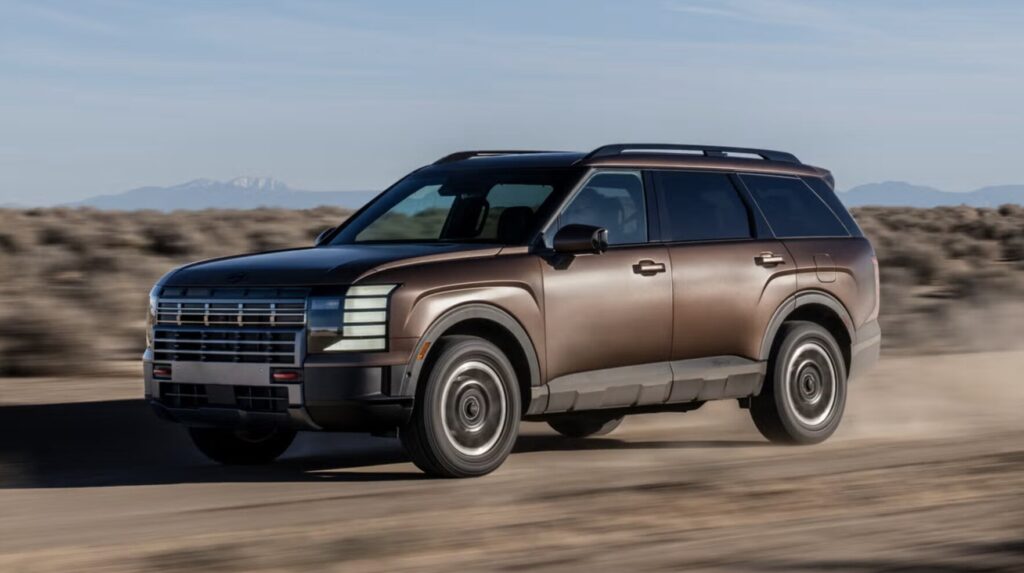
Hyundai’s popular three-row SUV gets a major upgrade for 2026, and it’s aiming upscale. The new Palisade is longer, wider, and packed with more tech and comfort features. Most importantly, a new 329-hp hybrid powertrain joins the lineup, alongside a redesigned V6.
The hybrid could deliver over 30 mpg and up to 620 miles of range, while still towing up to 4,000 pounds. V6 versions will continue to tow 5,000 pounds and come standard with an updated 8-speed automatic.
The most noticeable change for the 2026 Palisade will be its looks. With a bold front fascia and unique running lights, Hyundai is about to launch yet another eye-catching SUV on the heels of the redesigned Santa Fe and the popular IONIQ 5 EV.
📆 Expected arrival: Late 2025
Where will it be made? South Korea (To be impacted by auto tariffs)
Why it’s worth waiting for: A hybrid three-row that blends comfort, efficiency, and capability.
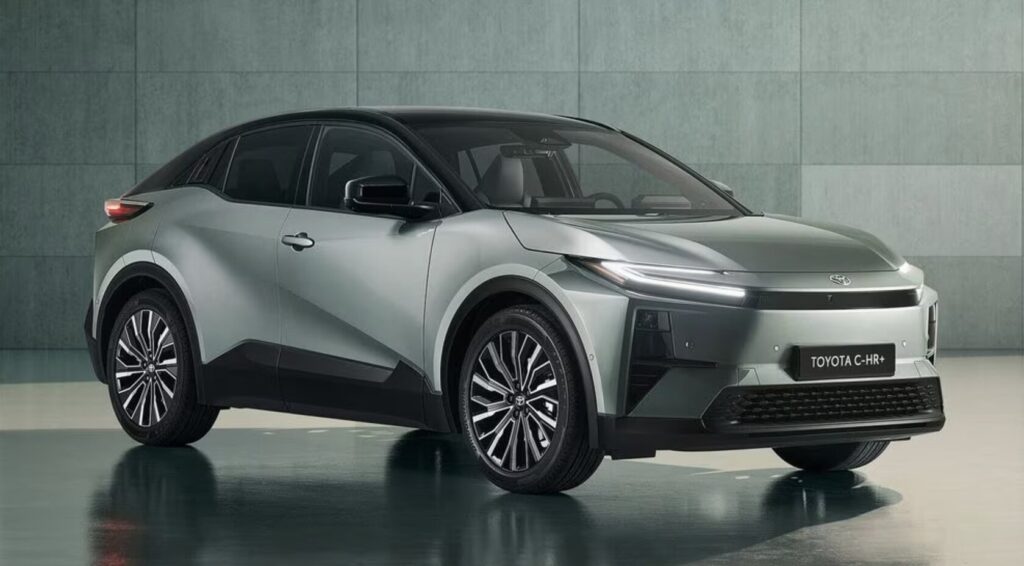
Toyota’s long-overdue push into electric vehicles gains serious momentum with two models in 2026: the reimagined and improved bZ4X, and the revival of the CH-R as an EV. Built on the same platform as the bZ4X, this upcoming EV crossover looks sharper, drives better, and—most importantly—should cost a lot less.
There’s a catch: it’s not officially confirmed if the CH-R+ will be coming to the U.S. market, but signs point towards its arrival sometime in 2026 following a debut in the European market. If Toyota hits the mark and keeps the price in the low-to-mid $30,000s, the CH-R+ could finally give EV buyers a true budget-friendly alternative with up to 300 miles of range, fast charging, and sleek looks.
📆 Expected arrival: 2026
Where will it be made? Unknown
Why it’s worth waiting for: Toyota reliability in an electric crossover that might actually be affordable. We hope it arrives stateside!
If you’re in no rush to buy, the 2026 model year could be worth the wait—especially if you’re looking for next-gen tech, EV upgrades, or something new altogether. That said, don’t overlook the fact that tariffs and supply chain changes could shift delivery timelines or pricing. Stay flexible, and keep your eye on preorder timelines if one of these catches your eye.
🔎 Looking to buy before then? Check out local listings and protect your wallet with total cost of ownership data using CarEdge Research. Remember, you can have our experts negotiate your deal if you’re ready to buy without the stress or dealership hassle.
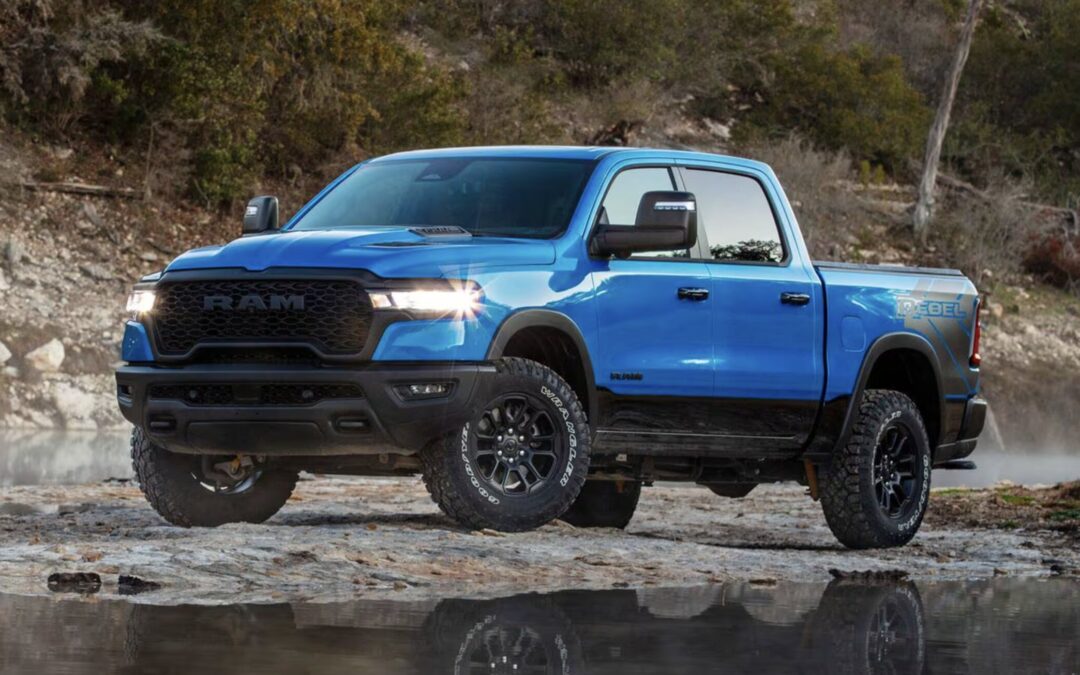
In April 2025, Stellantis announced its “Freedom of Choice” employee pricing program for Jeep, Ram, Dodge, and other brands sold in the U.S. The name sounds empowering, especially during a time of uncertainty around tariffs and rising vehicle costs.
But here’s the fine print: employee pricing cannot be combined with any other offers. Car shoppers can choose the offer that works best for them, and rarely does that turn out to be employee pricing.
We reviewed Stellantis’ current incentives and compared employee pricing savings to the brand’s traditional financing and cash offers. The verdict? In most cases, you’ll save more by skipping employee pricing entirely.

Jeep, Ram, Dodge, and Chrysler shoppers have reportedly been told by dealers that this month’s employee pricing offer roughly equates to 5% below dealer invoice pricing, plus a $200 administrative fee. Using our free Dealer Invoice Price calculator, we did some simple math to estimate what buyers will end up paying with the “Freedom of Choice” employee pricing offer.
Here’s our closest estimation of how much you can save with Stellantis employee pricing compared to the best manufacturer incentives:
| Model | Estimated Employee Pricing Savings | Savings From Other Offers |
| Ram 1500 | $1,700 – $5,800 | Up to $10,500 |
| Jeep Grand Cherokee | $900 – $1,800 | Up to $7,000 |
| Jeep Wrangler | $800 – $1,200 | $4,000 – $6,000 |
| Jeep Compass | $500 – $700 | Up to $7,500 |
| Dodge Durango | $1,200 – $1,500 | $1,000 |
When we look at the best available incentives, we see exactly why employee pricing is rarely the better offer:
The bottom line: The other incentives usually beat employee pricing by thousands—especially if you qualify as a current lessee.

There’s one notable exception: the Dodge Durango. With only $1,000 in cash available through traditional incentives, employee pricing of $1,200 to $1,500 may offer a slight edge.
However, this is the exception, not the rule. On every other top-selling Stellantis model we analyzed, employee pricing resulted in smaller savings than the cash or APR offers already on the table.
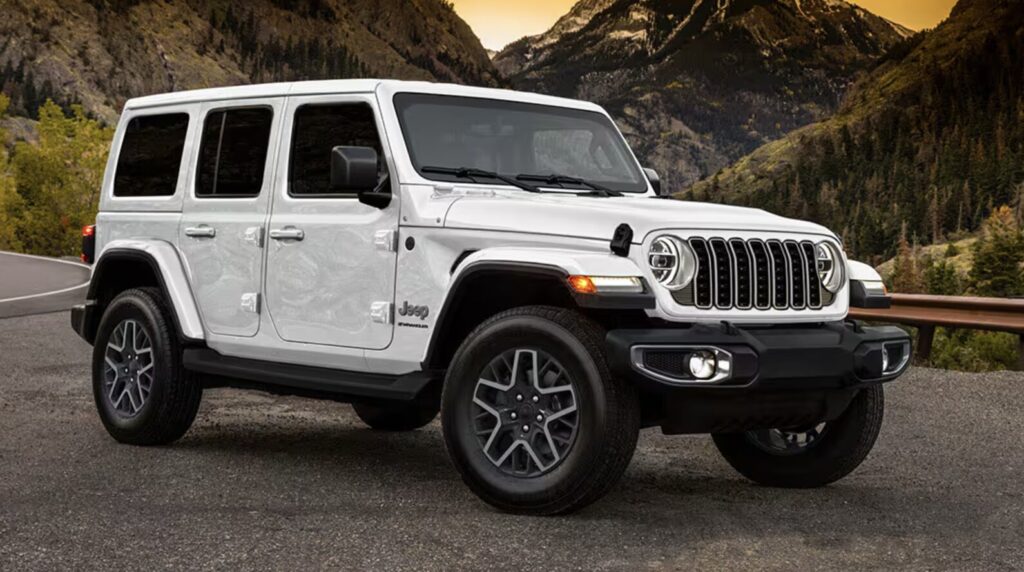
Stellantis wants to frame this promotion as a win for buyers—but in practice, it’s a strategic move to repackage existing discounts under a new label. And with auto tariffs now in effect, automakers are under pressure to maintain demand as affordability takes a hit.
Here’s the current context:
Not really — at least, not for most buyers. This promotion is about reshaping perception more than reducing prices. The idea of paying “what the employees pay” sounds like a deal. But when it’s your money on the line, the only numbers that matter are how much you’ll actually save.
Before you head to the dealership:
👉 Take these car buying cheat sheets with you to the dealership!
And remember , you can always have us negotiate the best deal on your behalf. We’re simply here to help!
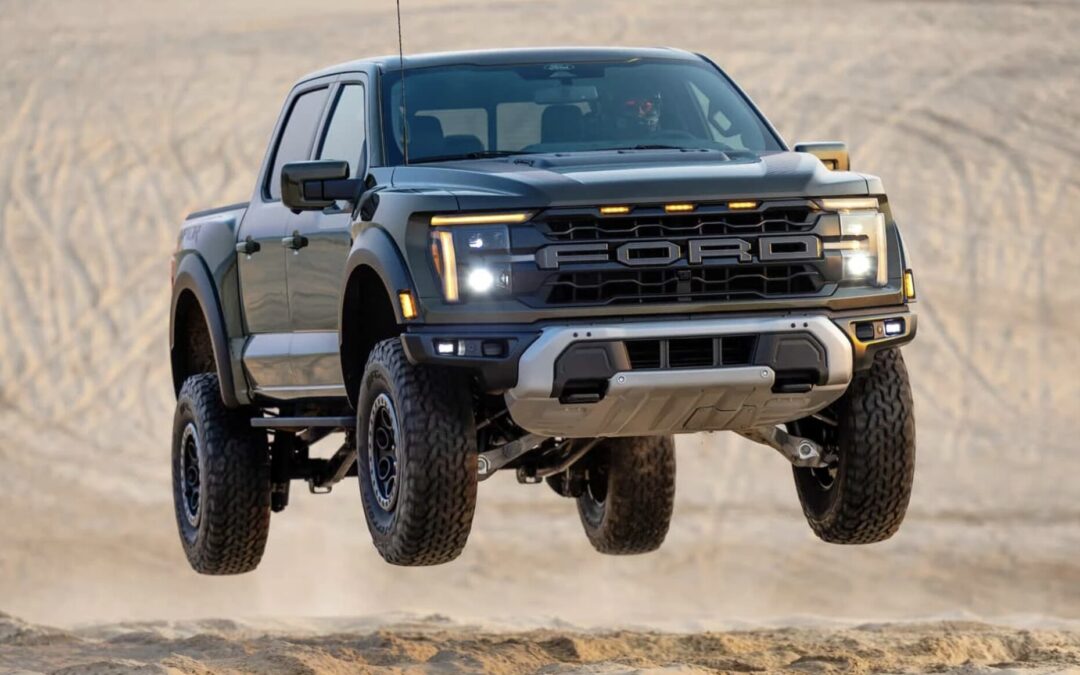
When Ford announced its “From America. For America.” employee pricing campaign in April 2025, it sounded like a patriotic win for car shoppers. After all, employee pricing has long been viewed as a golden ticket to deep discounts, especially as tariffs threaten to send prices higher. And in June, Ford has decided to extend employee pricing through Fourth of July weekend.
But is it really the deal it seems to be?
We dug into the numbers, comparing Ford’s employee pricing offers to last month’s manufacturer incentives and actual dealer invoice prices. The result? Some Ford shoppers may actually save less with this flashy promotion than they could have with traditional offers. Let’s break it down.

To determine if Ford’s employee pricing offer is indeed a good deal, it helps to take a look back at previous incentives. Here’s what Ford was offering in March 2025:
Now compare that to the Ford’s employee pricing offers this month:
| Model | Employee Pricing |
| Ford F-150 Lightning | $4,800 off MSRP |
| Ford Mustang Mach-E | $2,115 off |
| Ford Edge | $1,650 off |
| Ford Explorer | $3,000 off |
| Ford Expedition | $4,200 off |
| Ford F-150 | $3,100 off |
| Ford Bronco | $1,800 off |
| Ford Mustang | $2,350 off |
At first glance, those look like solid discounts, and in some cases they are. But there’s more to the story. These discounts are straight from Ford’s Employee pricing page. Ford does not share savings for higher trims, which is what most buyers are looking for.
👉 Luckily, we have an easy way for you to see roughly what you’d pay with employee pricing. For any Ford model and trim, see the Dealer Invoice Price with our free tool to get a ballpark estimate of employee pricing.

There are a few standout models where April’s deals actually beat what was available in March. However, these models share something in common: Most of these are the slower-selling Fords on the lineup in 2025:
Why these stand out: Ford is combining employee pricing with financing offers on slow-selling or heavily incentivized models. That can stack up to serious savings—but only for a select few models.

For other Ford models, employee pricing offers less value than what was available just last month.
Here’s how much less you’d save with employee pricing compared to previous incentives back in March:
| Model | Employee Pricing Savings (vs. March) |
| Ford Expedition | $3,285 less |
| Ford F-150 | $1,252 less |
| Ford Bronco | $1,464 less |
| Ford Mustang | $914 less |
Why the difference? These models lost their low-interest APR offers. Employee pricing only lowers the sticker price—but if you’re financing, the interest savings from March made a bigger impact on your total cost.
Ford’s employee pricing campaign is designed to sound impressive—especially during a time when several Ford models are impacted by tariffs. But from a buyer’s standpoint, it’s more of a marketing rebrand than a true price drop.
In early April, the Trump administration’s 25% tariff on imported vehicles officially took effect, sending shockwaves through the auto industry. While Ford assembles many of its models in the U.S., the brand still relies on imported components—and foreign-built models like the Mustang Mach-E are now more expensive to bring in. Faced with rising cost pressure and public concern about affordability, Ford launched its “From America. For America.” employee pricing campaign to frame itself as the patriotic, price-friendly choice.
But look past the headlines, and the math tells a different story:
In short, ongoing tariffs are putting pressure on Ford’s pricing and inventory strategy, and this employee pricing rollout is less about passing along massive savings to buyers—and more about staying competitive in a shifting market. It’s a convenient narrative, but the real savings vary widely by model, and in some cases, buyers would have been better off last month.
Before you sign on the dotted line, know what a great deal actually looks like. The best way to do that?
See how employee pricing compares to what others are really paying—and to what the dealer paid. You might find that the “discount” isn’t much of a discount at all.
Another smart tip? Always look at the total cost of ownership, not just the sticker price. Getting stuck with an unreliable car that’s costly to insure can cost you thousands of dollars added transportation costs!
The campaign appears to be as much about marketing and managing inventory in the face of rising tariffs and high stock levels as it is about providing genuine discounts. To determine if the “employee pricing” is truly a good deal, potential buyers should compare it against dealer invoice prices and consider the total cost of ownership, rather than relying solely on the advertised savings.
As always, buyers who do their homework and compare invoice prices, financing offers, and available incentives come out ahead. Luckily, we’ve got the tools for you to make an empowered purchase, whether you’re shopping Ford’s employee pricing offers or any other vehicle.
![10 Cars with the Lowest Cost of Ownership [2025 Data]](https://caredge.com/wp-content/uploads/2024/07/2024-07-11_The-Hidden-Costs-of-Owning-a-Car_Blog-Header-Image_1920x1080_v1-1080x675.jpg)
Looking for a car that won’t drain your wallet over time? With rising prices and high interest rates still making headlines in 2025, keeping an eye on total cost of ownership is more important than ever. From depreciation and insurance to fuel and maintenance, CarEdge Research has identified the ten cars with the lowest five-year cost to own. These models aren’t just affordable upfront—they’re built to save you money in the long run.
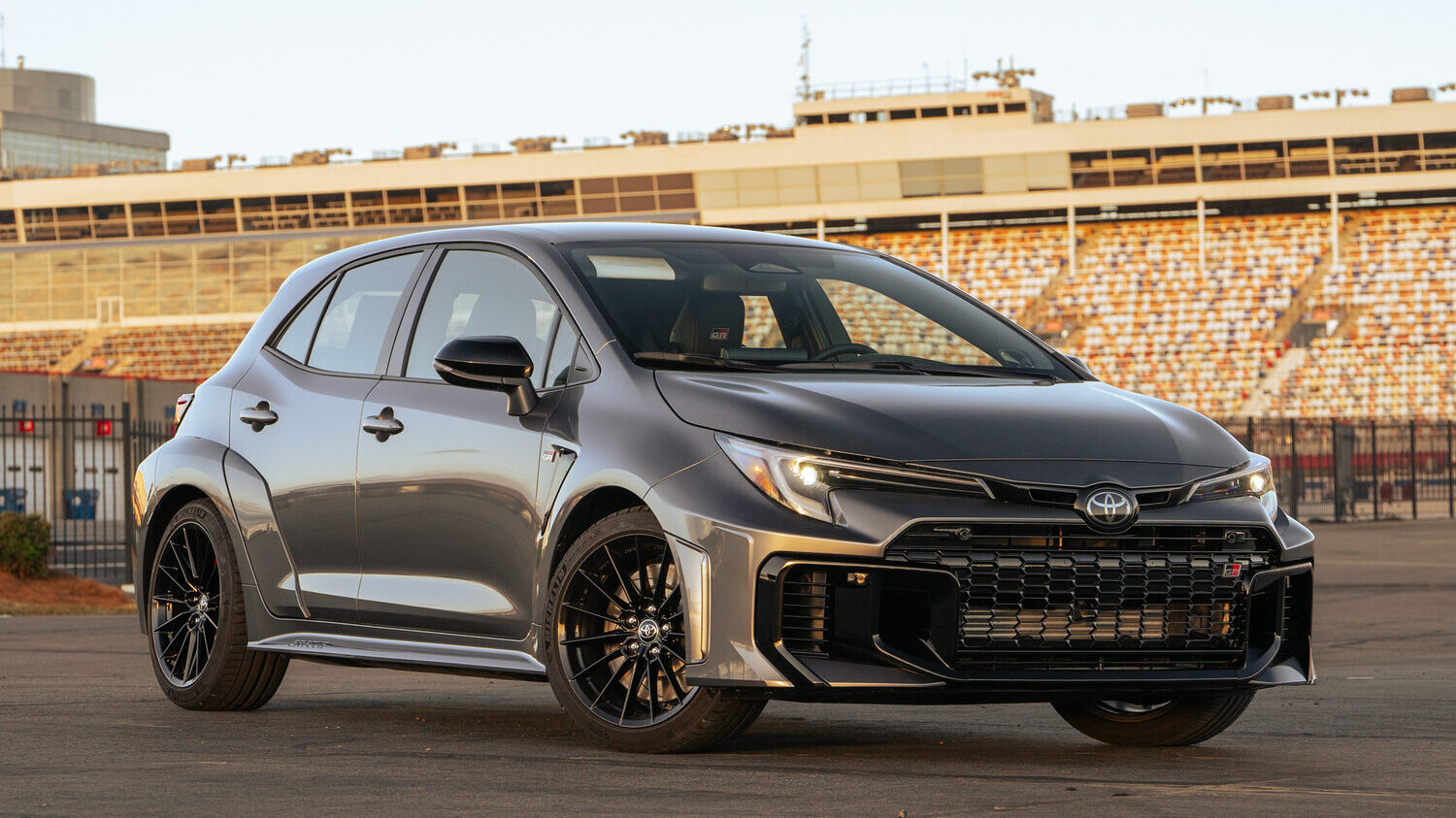
Predicted 5-Year Total Cost of Ownership: $29,686
Starting MSRP with Destination Fees: $24,915
Predicted 5-Year Depreciation: – $5,164
Known for its great fuel economy and excellent reliability, the Corolla is a favorite among city drivers and commuters alike. In 2025, the Corolla is available as both a sedan and hatchback. Low depreciation and high resale value keep it among the top budget-friendly choices. One stand out for the Corolla: depreciation, or the lack thereof. The Corolla sees the least depreciation of any new car on sale today.
See Toyota Corolla Cost of Ownership Data

Predicted 5-Year Total Cost of Ownership: $31,581
Starting MSRP with Destination Fees: $21,650
Predicted 5-Year Depreciation: – $7,460
The Hyundai Venue is one of the most affordable crossovers you can buy in 2025. This subcompact SUV is popular for its unique exterior styling, surprisingly roomy interior, and value-packed trim levels. With a starting price of just $21,650, the Venue is one of the last truly affordable cars in America.
See Hyundai Venue Cost of Ownership Data
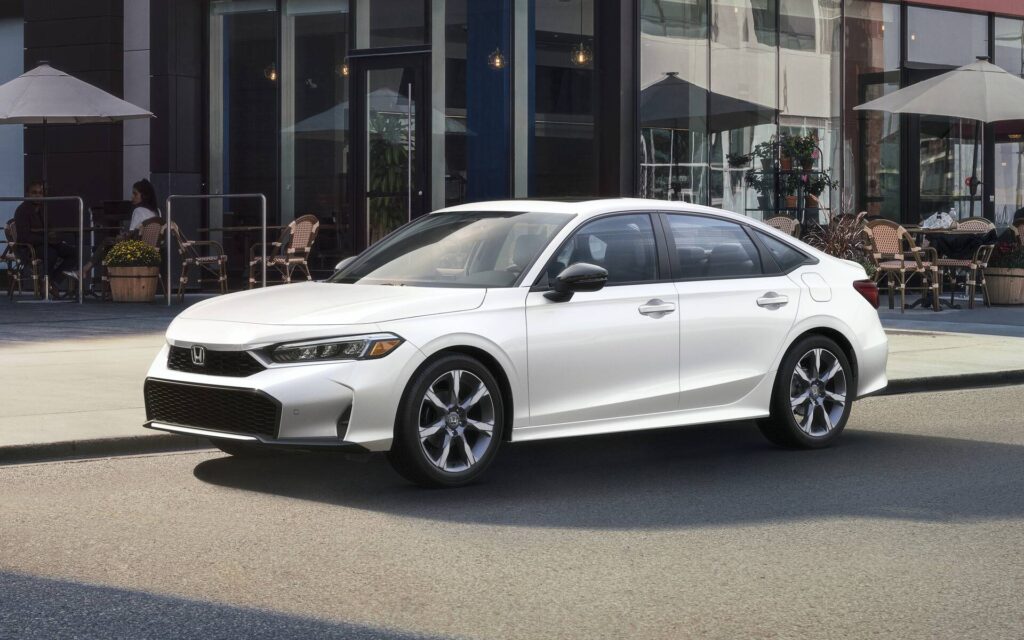
Predicted 5-Year Total Cost of Ownership: $33,356
Starting MSRP with Destination Fees: $25,400
Predicted 5-Year Depreciation: – $8,572
The Honda Civic continues to be one of the most well-rounded compact cars on the market. With excellent fuel economy, top-tier safety ratings, and a reputation for long-term reliability, it’s no surprise the Civic ranks among the cars with the lowest total ownership costs.
See Honda Civic Cost of Ownership Data

Predicted 5-Year Total Cost of Ownership: $33,392
Starting MSRP with Destination Fees: $23,165
Predicted 5-Year Depreciation: – $9,963
The all-new Kia K4 replaces the outgoing Forte and brings sharper looks and more tech to the compact sedan segment. It’s already gaining traction as one of the best values in 2025. An electric version of the K4 is on the way for 2026, but the gas-powered model offers exceptional affordability today. We don’t expect the electric companion to start under $30,000 when it arrives.
See Kia K4 Cost of Ownership Data

Predicted 5-Year Total Cost of Ownership: $33,425
Starting MSRP with Destination Fees: $22,730
Predicted 5-Year Depreciation: – $8,828
The Nissan Sentra is a budget-friendly compact sedan known for its overall value for the low price. It may fly under the radar, but the Sentra deserves more fans with some of the lowest five-year costs in the segment.
See Nissan Sentra Cost of Ownership Data

Predicted 5-Year Total Cost of Ownership: $33,547
Starting MSRP with Destination Fees: $24,780
Predicted 5-Year Depreciation: – $9,062
Standard all-wheel drive and a reputation for durability help the Subaru Impreza stand out in a sea of compact sedans. Following the discontinuation of the Legacy, the Impreza is now Subaru’s only mainstream sedan. For drivers in colder climates, it’s an unbeatable value.
See Subaru Impreza Cost of Ownership Data

Predicted 5-Year Total Cost of Ownership: $35,005
Starting MSRP with Destination Fees: $23,220
Predicted 5-Year Depreciation: – $9,334
Redesigned for 2025, the Nissan Kicks brings a bold new look, updated tech, and more space to the compact crossover market. It’s a popular pick for first-time buyers and those wanting SUV practicality without the SUV price. Despite the upgrades, it remains one of the cheapest cars to own over five years.
See Nissan Kicks Cost of Ownership Data

Predicted 5-Year Total Cost of Ownership: $35,108
Starting MSRP with Destination Fees: $23,460
Predicted 5-Year Depreciation: – $9,271
A household name for decades, the Toyota Corolla sedan is known for bulletproof reliability and low operating costs. With strong resale value and minimal maintenance expenses, the Corolla continues to be one of the safest bets for anyone looking to save money over time.
See Toyota Corolla Cost of Ownership Data

Predicted 5-Year Total Cost of Ownership: $35,337
Starting MSRP with Destination Fees: $18,337
Predicted 5-Year Depreciation: – $9,562
The Nissan Versa remains America’s cheapest new car—at least for a little while longer. Nissan has announced the Versa will be discontinued after the 2025 model year. Known for its simplicity and low cost of entry, the Versa still offers one of the lowest costs of ownership of any new car on sale.
See Nissan Versa Cost of Ownership Data

Predicted 5-Year Total Cost of Ownership: $36,460
Starting MSRP with Destination Fees: $21,895
Predicted 5-Year Depreciation: – $11,863
Completely reimagined in 2024, the Chevrolet Trax has quickly become one of Chevy’s best sellers. With SUV looks, compact car pricing, and great standard tech, the Trax is ideal for drivers who want more for less. Its low price and fuel efficiency help keep five-year ownership costs impressively low.
See Chevrolet Trax Cost of Ownership Data
What was officially the cheapest new car on sale in America has been discontinued following the 2024 model year. Starting at just $18,015, the Mirage was so bare bones that it appears to have been too cheap for most budget buyers, who tended to opt for better equipped models in the $20,000 – $25,000 price range. Mitsubishi sold fewer than 30,000 of the Mirage in all of 2024.
As of April 2025, 5,000 new Mirages remain on dealership lots nationwide. It’s worth noting that the Mirage has a 5-year cost to own of just $30,325. However, due to its discontinuation and dwindling inventory, we omitted it from the official top 10.
On a similar note, the Kia Forte would’ve made this list if it hadn’t already been replaced by the Kia K4. Just 288 new Fortes are left unsold as of April. If you’re lucky enough to drive one home, expect a low cost of ownership of just $33,910 over the first five years of ownership.
It’s easy to focus on MSRP when shopping for a new car, but the sticker price only tells part of the story. Insurance, maintenance, and depreciation can quietly add thousands to your total cost over time, even for a new car. Every model on this list proves that affordable ownership is still possible in 2025, but only if you make a smart purchase.
Whether you’re shopping new or used, don’t just ask what a car costs today—ask what it’ll cost you tomorrow. For deeper insights, explore cost of ownership and depreciation data for every model at CarEdge Research.
On April 9, President Trump announced a 90-day pause on most reciprocal tariffs, marking a temporary shift in U.S. trade strategy. However, there was one glaring exception: automotive tariffs remain firmly in place.
At a White House press conference, Treasury Secretary Scott Bessent confirmed that the pause does not apply to sectoral tariffs like those affecting the auto industry. That means the 25% duty on imported vehicles that took effect on April 3, along with steel and aluminum levies, are still being enforced.
With the pause on reciprocal tariffs, many consumers and analysts are wondering what would happen if auto tariffs were next on the chopping block. Let’s be clear: as of April 9, auto tariffs are NOT paused. But as trade negotiations continue, it’s worth exploring how a change in that policy might impact car prices, inventory, and the broader market.
Despite the current uncertainty, automakers are preparing for the 2026 model year. Some, like Honda (with the new 2026 Passport) and Porsche (with the upcoming 911), have already announced higher prices for 2026 models.
Why does that matter? Because automakers plan MSRPs months—even years—in advance. And tariff policy plays a big role in those decisions. Even American brands are affected. The higher the tariff burden on imported components or vehicles, the higher the MSRP is likely to be, even for U.S.-assembled cars that rely on global supply chains.
The continued enforcement of auto tariffs through this summer and beyond means automakers will build 2026 pricing with the uncertain trade environment in mind. Simply put, consumers should expect higher prices as automakers set prices for next year’s models.
See Every Car and Truck Manufactured in the U.S.
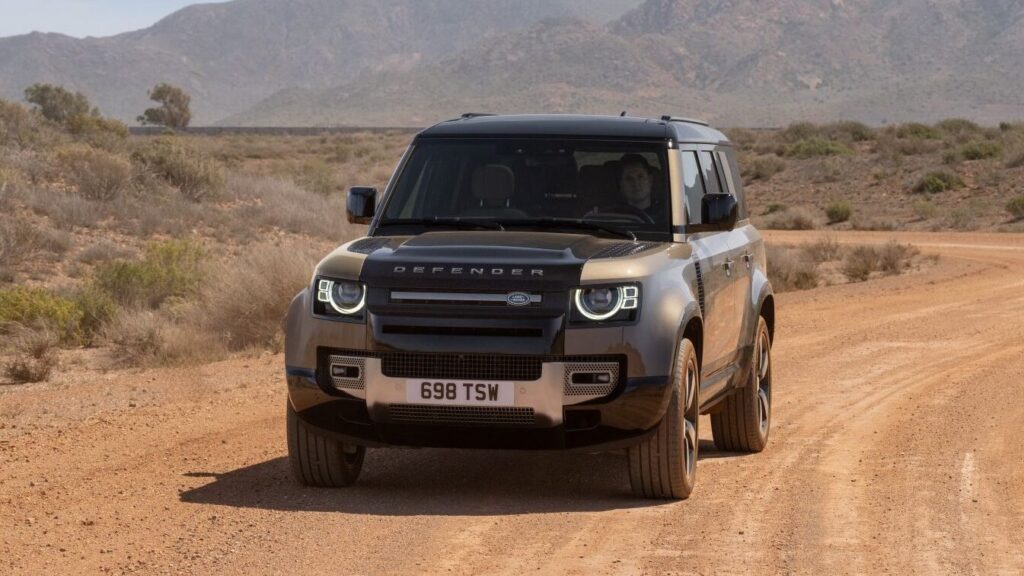
A few European automakers have already reacted decisively: Audi and Jaguar Land Rover have paused all shipments of new vehicles from its European factories to the United States. Neither automaker has any production in the United States. Both Audi and JLR import 100% of their U.S. lineup from overseas plants.
If auto tariffs continue without a pause or significant reduction, we can expect to see additional overseas auto brands pausing shipments to the U.S. market.
It hasn’t happened yet. Despite the big news on April 9, 2025 that most reciprocal tariffs are paused for 90 days, it’s important for car buyers to understand that these developments do not impact tariffs on new car imports. But, what if trade negotiations do result in a pause in the weeks or months ahead?
If the U.S. were to pause auto tariffs, we’d likely see a rush of vehicles into the American market from automakers looking to take advantage of the window before tariffs return. Luxury car brands would scramble to send inventory to the U.S. market as quickly as possible.
European automakers would move fastest: brands like BMW, Mercedes-Benz, and Volkswagen Group (including Audi and Porsche) would likely prioritize North American shipments.
For example, neither Audi nor Porsche produce any of their models in North America. Every vehicle sold here is shipped in from Europe. If tariffs were lifted, even temporarily, these brands would scramble to flood the market with inventory. Cargo ships full of luxury SUVs and sports cars could hit American shores within weeks.
Asian automakers have a large manufacturing presence in the U.S. these days, but we’d see plenty of imported models arrive at ports as quickly as a cargo ship can cross 5,000 miles of the Pacific Ocean. Automakers with manufacturing facilities in Canada and Mexico have been partly shielded by the USMCA agreement, but we’d likely see a rush of those vehicles into the United States, too.
With so many vehicles arriving on U.S. shores, it’s possible that new car prices may soften due to a temporary buildup of imported cars. Whether or not prices would meaningfully fall would depend on the scale and duration of a future tariff pause.
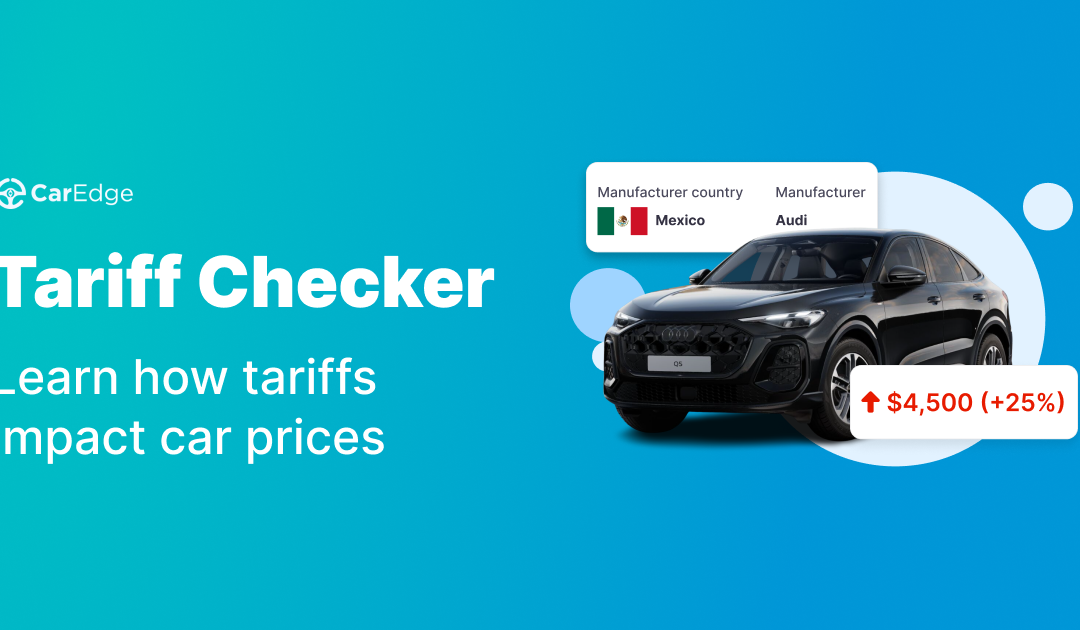
👉 Free Auto Tariff Checker: See if your next car is impacted
A temporary pause in U.S. auto tariffs would send ripples across the global car market. Here’s what we might see:
– Short-term inventory surge: European and Asian automakers could ship in as many vehicles as possible during the pause. This could temporarily ease tight inventory for luxury models in the U.S.
– Price volatility: If OEMs believe tariffs might return soon, they may still keep MSRPs high to account for risk. However, dealers may offer temporary discounts to move sudden surpluses.
– Trade policy whiplash: Repeated changes to tariff policy make long-term planning difficult for both automakers and car buyers. This uncertainty trickles down to prices, supply chain strategies, and even where vehicles are manufactured.
– Pressure on U.S. brands: If imports flood the market, U.S. automakers might respond with better deals or financing to stay competitive.

While most reciprocal tariffs have been paused, auto tariffs remain fully in effect as of April 9. This has real implications for car pricing and availability, especially for luxury imports.
If you’re in the market for a car, especially a European model, pay close attention to trade news. A sudden policy shift could bring a wave of new inventory — or trigger another round of price hikes.
For now, the best thing you can do is stay informed and shop smart. Use tools like CarEdge’s Free Car Buyer’s Guide and local car market insights to track local inventory and get the best deal, no matter what direction trade winds blow.
Looking for a great deal on a new car or truck this spring? Some of the biggest automaker discounts we’ve seen all year are here in April, with up to $10,500 off MSRP on full-size trucks, SUVs, and EVs. We’ve rounded up the 10 best cash discounts available right now, with savings that could make a serious dent in your out-the-door price. Keep in mind that most of these offers expire at the end of the month, so if you see something you like, act fast.
Don’t shop without your personal buyer’s guide (100% Free)
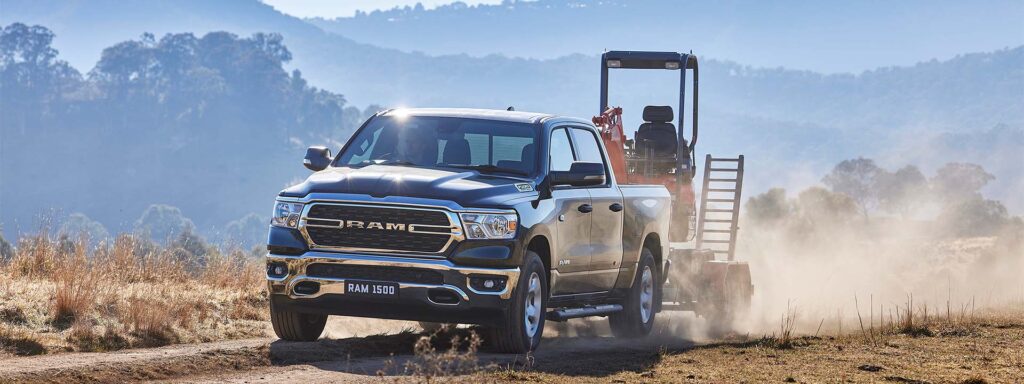
April Savings: Up to $10,500 cash allowance with V6 engine
Offer valid through: 4/30/2025
Ram is back with a huge cash offer this month, and a headline-making employee pricing offer. Current FCA US lessees can qualify for up to $10,500 in total cash savings when financing a 2025 Ram 1500 equipped with the V6. With summer truck season around the corner, this might be one of the best opportunities all year on a full-size truck.
Compare Ram 1500 depreciation, cost of ownership, and more
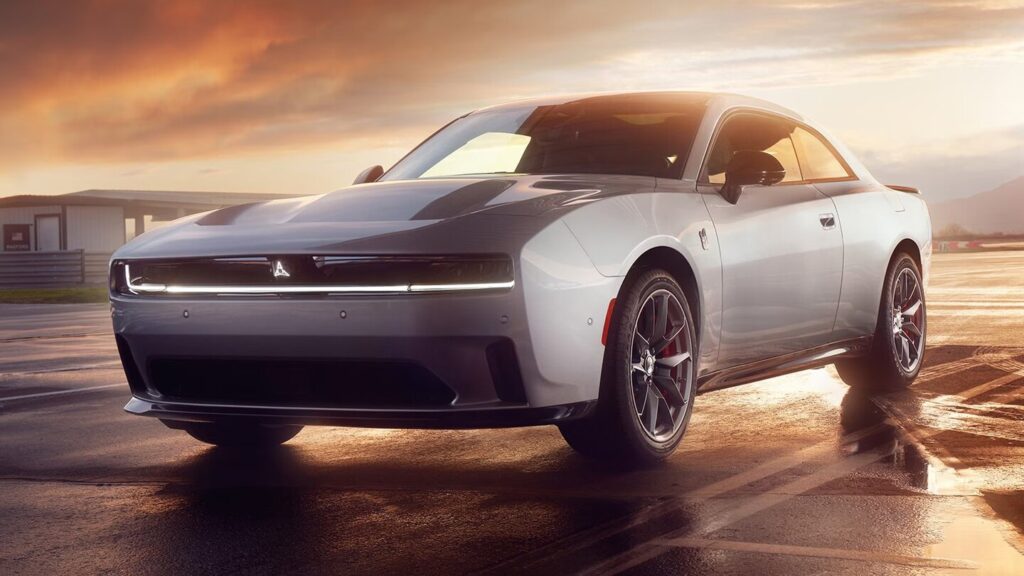
April Savings: $10,500 customer cash (cannot be combined with financing)
Offer valid through: 4/30/2025
Dodge is having a tough time convincing fans of muscle cars that the electric Charger is worth a test drive. Demand didn’t really slow, it never picked up to begin with. The 2024 Charger Daytona is available with a $10,500 cash allowance in April. Prefer to finance? You can choose 0% APR for 72 months plus $3,000 bonus cash instead.
See Dodge Charger listings in your city

April Savings: $10,000 for current FCA lessees, or 0% APR for 72 months
Offer valid through: 4/30/2025
The Dodge Hornet continues to be a hot discount target. Why? Stellantis still has nearly 4,000 2024s to sell in April. Buyers can get up to $10,000 in bonus cash or opt for interest-free financing for 72 months. It’s important to consider the Hornet’s poor value rating before you buy.
Before you buy: Compare Dodge Hornet cost of ownership ratings

April Savings: $8,000 cash for Trailhawk 4xe and above
Offer valid through: 4/30/2025
Jeep is offering big savings on its plug-in hybrid Grand Cherokee, with up to $8,000 in bonus cash available. If you’re more into financing, 0% APR for 72 months is also on the table. April is a smart time to buy this efficient SUV with off-road capability. However, don’t expect resale value to hold up.
Compare Jeep Grand Cherokee depreciation, cost of ownership, and more

April Savings: $7,000 for competitive brand owners; $5,000 + 0% APR for others
Offer valid through: 4/30/2025
Jeep is offering aggressive conquest bonuses on the Wagoneer. If you currently drive a non-FCA vehicle, you can get $7,000 in cash with this conquest incentive. Prefer to finance? Opt for 0% APR and $5,000 bonus cash. Either way, you’ll get luxury-level comfort in a full-size SUV.
See discounted Jeep Wagoneer listings in your city
April Savings: $6,450 for current FCA lessees
Offer valid through: 4/30/2025
The 2024 Durango is now offered with Employee Pricing For All, and on top of that, Stellantis is stacking up to $6,450 in bonus cash for lessees. However, this is only a good deal if you don’t mind the depreciation and sketchy reliability.
Compare Dodge Durango listings near you
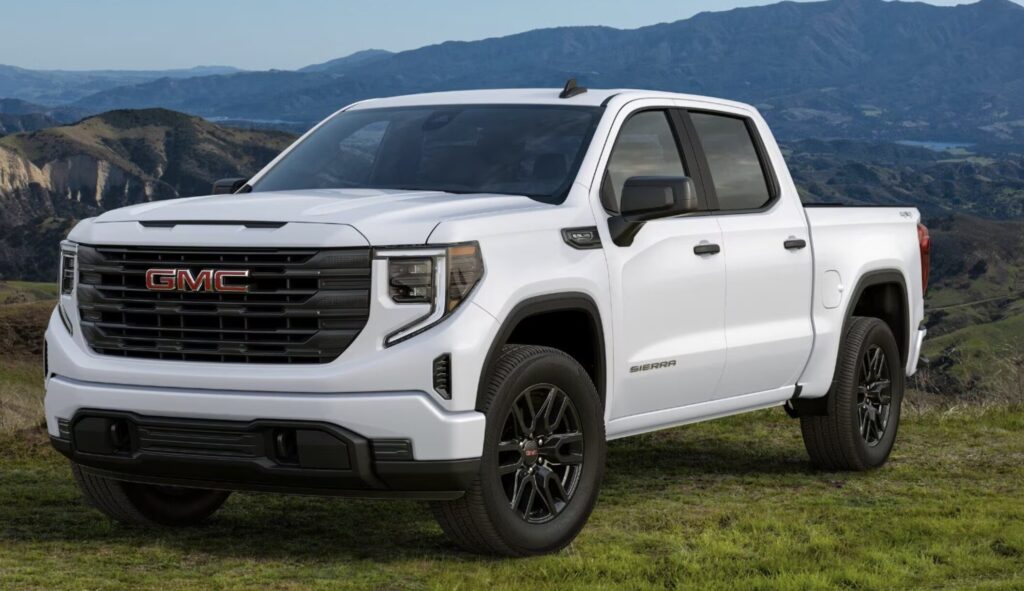
April Savings: $7,850 total value for current GMC/Buick lessees
Offer valid through: 4/30/2025
The 2025 Sierra 1500 is available with $6,500 purchase allowance and an additional $1,350 engine credit for the TurboMax configuration. Truck buyers looking to stick with GM will find this one of the most competitive offers this month.
👉 See the rest of the best truck deals in April
Compare GMC Sierra 1500 depreciation, cost of ownership, and more
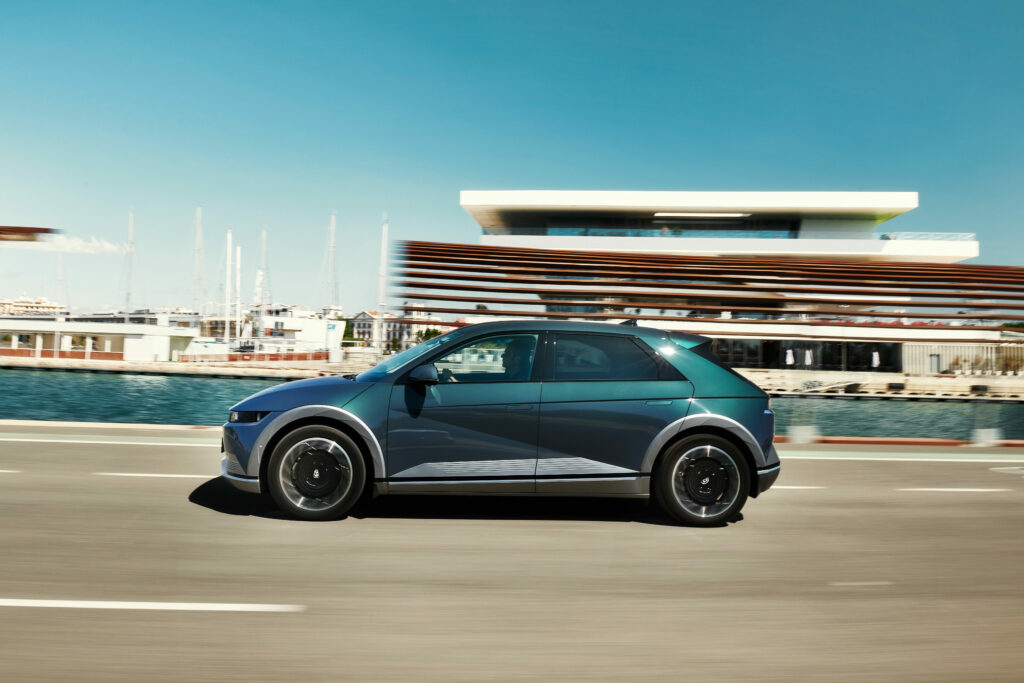
April Savings: $7,500 retail bonus cash
Offer valid through: 4/30/2025
Hyundai is offering $7,500 in retail bonus cash on its best-selling EV. While it’s not stackable with financing, this brings the IONIQ 5 into a much more competitive price bracket — especially for those missing out on the federal EV tax credit. It’s unclear how much longer federal EV incentives will last, but at least the 2025 IONIQ 5 will qualify for the time being, as it’s manufactured in Georgia.
See Hyundai IONIQ 5 depreciation, cost of ownership, and more
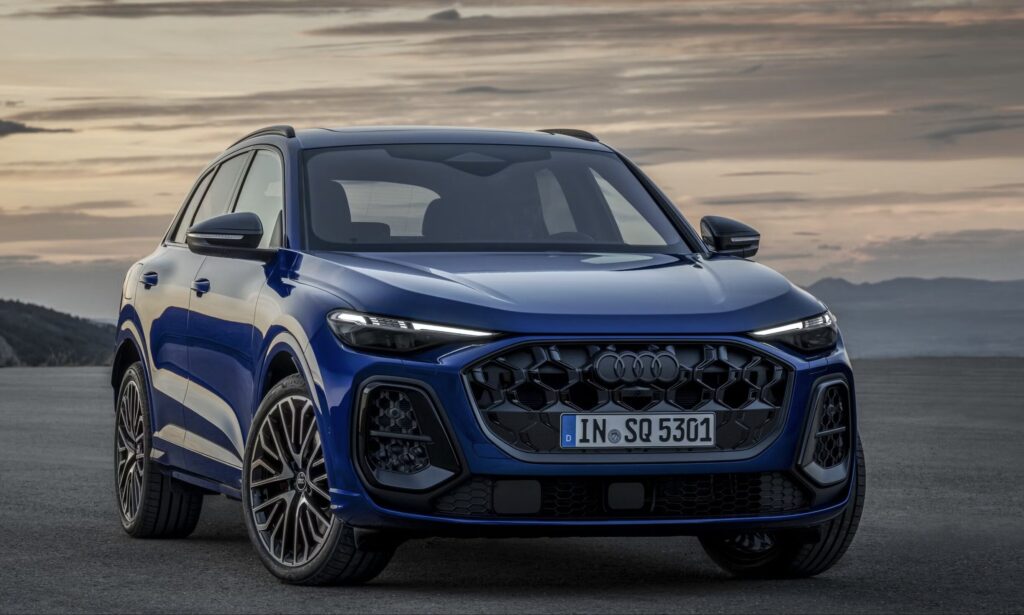
April Savings: $5,000 customer cash
Offer valid through: 4/30/2025
With auto tariffs hitting luxury brands hard, Audi is stepping up incentives. The SQ5 quattro now comes with a $5,000 customer cash bonus. That’s real money off a high-performance luxury SUV with trademark Audi refinement.
Compare Audi SQ5 listings in your city
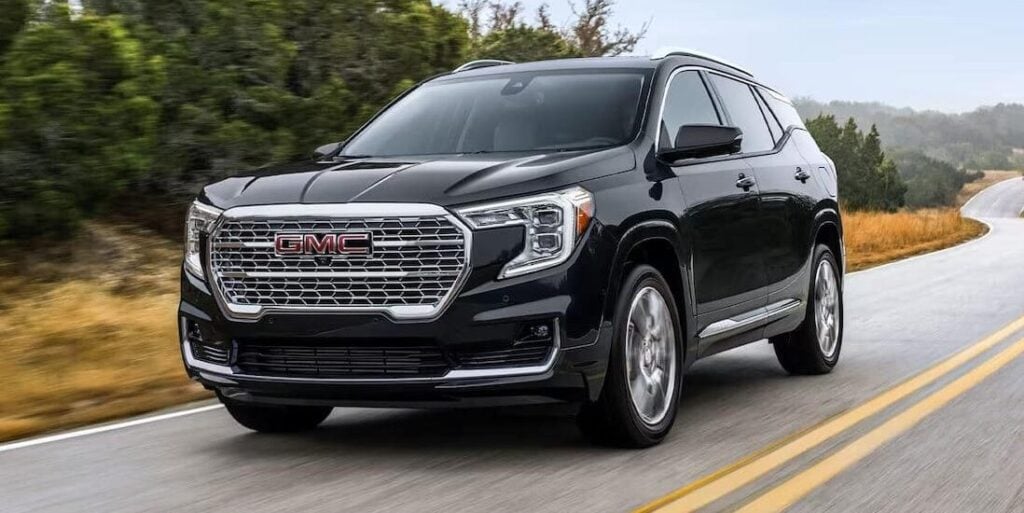
April Savings: $3,000 off MSRP
Offer valid through: 4/30/2025
The GMC Terrain is one of the most affordable SUVs in its class, and this month’s $3,000 cash allowance makes it even more enticing. Note: this offer can’t be combined with financing or leasing. Be wary of high expected depreciation for the Terrain.
👉 Compare GMC Terrain depreciation, cost of ownership, and more
April deals feature surprisingly large cash discounts, especially considering mounting automotive tariffs. Several factors are driving these hefty incentives this spring:
At CarEdge, we help you make the most of these opportunities. Check out our cost-of-ownership tools, local market insights, and expert negotiation help to maximize your savings. If one of these offers looks good to you, don’t wait — these deals will expire at the end of the month!

Imagine this: you’re driving to work, and a letter from your car’s manufacturer is waiting at home. It’s not a routine service reminder—it’s a recall notice. Now what?
Car recalls happen more often than you might think. Millions of vehicles are recalled every year in the U.S. due to safety issues ranging from faulty airbags to stalling engines. Whether you already own the car or you’re thinking about buying one, it’s essential to understand how recalls work and what steps to take.
This guide covers everything you need to know, from checking your car for recalls to handling repairs and protecting yourself when buying a new or used car. Let’s dive in.
A vehicle recall is issued when a manufacturer or the National Highway Traffic Safety Administration (NHTSA) determines that a car has a safety-related defect or doesn’t comply with federal safety standards. These issues can put drivers, passengers, or others on the road at risk.
There are two main types of recall-related actions:
Recalls are typically communicated to owners by mail, email, or phone. But here’s the catch: automakers can’t always reach second or third owners. That’s why it’s so important to check for recalls regularly, especially if you bought a used vehicle.

Checking your vehicle for a recall is fast, free, and only takes a minute.
You can also check on your automaker’s website to monitor recalls over time.
Tip: Set a calendar reminder to check for recalls every 6-12 months. Some recalls are issued years after a car is sold!

If you find out your vehicle has an open recall, don’t panic—but don’t wait either.
Important note: If the recall was just announced, a fix may not be available yet. If this is the case, follow the instructions detailed in the recall for how to proceed until your recall repair is completed. In extreme cases, this may even include not driving the vehicle.
Important: Even if the issue seems minor or your car “feels fine,” safety-related recall repairs should never be ignored.
Yes, but mostly if the issue hasn’t been fixed.
Unrepaired recalls can:
If you’re thinking about selling or trading in your vehicle, take care of any outstanding recalls first. Resolving your car’s recalls is free and improves resale value. That’s a win-win!
Here’s a tip that can save you major headaches: always check for recalls before you buy. This is critical whether the vehicle is new or used. Brand-new vehicles can have recalls, but dealers are responsible for fixing the issue before selling the impacted vehicles.
It might surprise you, but some new cars sitting on dealership lots also have open recalls, especially if the fix isn’t immediately available.
Pro tip: If you’re buying from a private seller, run a full vehicle history report and VIN recall check before committing.
Recalls are serious safety issues that can impact your life, your passengers, and others on the road. The good news? Manufacturers are legally required to fix them for free. All it takes is a few minutes of your time to check and act.
Whether you’re already behind the wheel or shopping for your next car, knowing how to check for recalls and what to do next gives you peace of mind—and possibly saves lives.
Shop smart with CarEdge. Each listing includes NHTSA recall information, with links directly to the latest updates from the agency. CarEdge Car Search even includes any ongoing investigations that may lead to a future recall. We’re simply here to provide the most transparent car buying experience possible, and we hope this information helps. Stay safe out there!
Wondering which SUVs will hold their value best in today’s unpredictable car market? The latest CarEdge Research update reveals the 2025 SUVs with the best resale value, based on total cost of ownership, projected depreciation, and real-world market data. Whether you’re buying new or used, these models are the smart picks for long-term value.

Predicted Depreciation: 25% over 5 years
5-Year Resale Value: $46,648
The Toyota 4Runner continues its reign as one of the top SUVs for resale value. When buying new, the 4Runner is expected to retain 75% of its original value after five years of ownership, assuming typical driving habits. With a market day supply of 71 days, it’s moderately negotiable if you’re buying new.
If you buy a 4Runner that is two years old, you could save $11,361 compared to buying new. When buying a two-year old 4Runner, expect only $4,105 in depreciation over the first three years of ownership. That’s not bad at all.
In 2025, the average price for a three-year-old 4Runner is $41,978.
👉 See the complete Toyota 4Runner resale value and cost of ownership analysis

Predicted Depreciation: 31% over 5 years
5-Year Resale Value: $26,223
The Toyota RAV4 is still one of the most dependable crossovers on the road, something Toyota fans have bragged about for years. In addition to excellent reliability, the RAV4 holds its value surprisingly well. With typical driving habits, the RAV4 is expected to retain 69% of its original value after five years.
What if you buy used? Buying a two-year-old RAV4 could save you $6,000 versus new. This assumes a selling price of $37,774 when new.
Used three-year-old RAV4s sell for $28,876 on average in 2025. But if you’re eyeing a new one, good luck negotiating—market supply sits at just 31 days.
👉 See the complete Toyota RAV4 resale value and cost of ownership analysis
Predicted Depreciation: 31% over 5 years
5-Year Resale Value: $16,590
The Hyundai Venue might be a budget-friendly SUV, but it still holds value well. When buying a new Venue, you can expect it to retain 69% of its value after five years. With a 98-day supply, there’s room to negotiate if buying new.
If you go used, a two-year-old Venue can save you about $5,000 over buying new, and your depreciation over the next three years is just $2,253—hard to beat. Three-year-old Venues sell for around $17,826 in 2025.
👉 See the complete Hyundai Venue resale value and cost of ownership analysis

Predicted Depreciation: 32% over 5 years
5-Year Resale Value: $21,218
With Honda’s reputation for reliability, the HR-V is a solid choice for long-term ownership. On average, buying a gently used HR-V saves you $5,655, and depreciation over three years lands just above $4,000.
Used three-year-old HR-Vs sell for about $21,519. New models are not very negotiable, with a 59-day market supply. For comparison, the overall auto market averages 83 days of market supply right now.
👉 See the complete Honda HR-V resale value and cost of ownership analysis

Predicted Depreciation: 32% over 5 years
5-Year Resale Value: $21,278
The Corolla Cross is a newer addition to Toyota’s SUV lineup, and it’s already proving to be a leader in SUV resale value. It’s popular for many reasons, including affordability, safety, and high fuel economy to name a few. With a tight 33-day supply, you won’t find many bargains on new inventory. The Corolla Cross is manufactured in Alabama, so it’s likely to avoid direct impacts for auto tariffs.
Three-year-old models sell for an average price of $24,024 in 2025. For some, it may be worth it to buy new with such low depreciation.
👉 See the complete Toyota Corolla Cross resale value and cost of ownership analysis

Predicted Depreciation: 32% over 5 years
5-Year Resale Value: $32,949
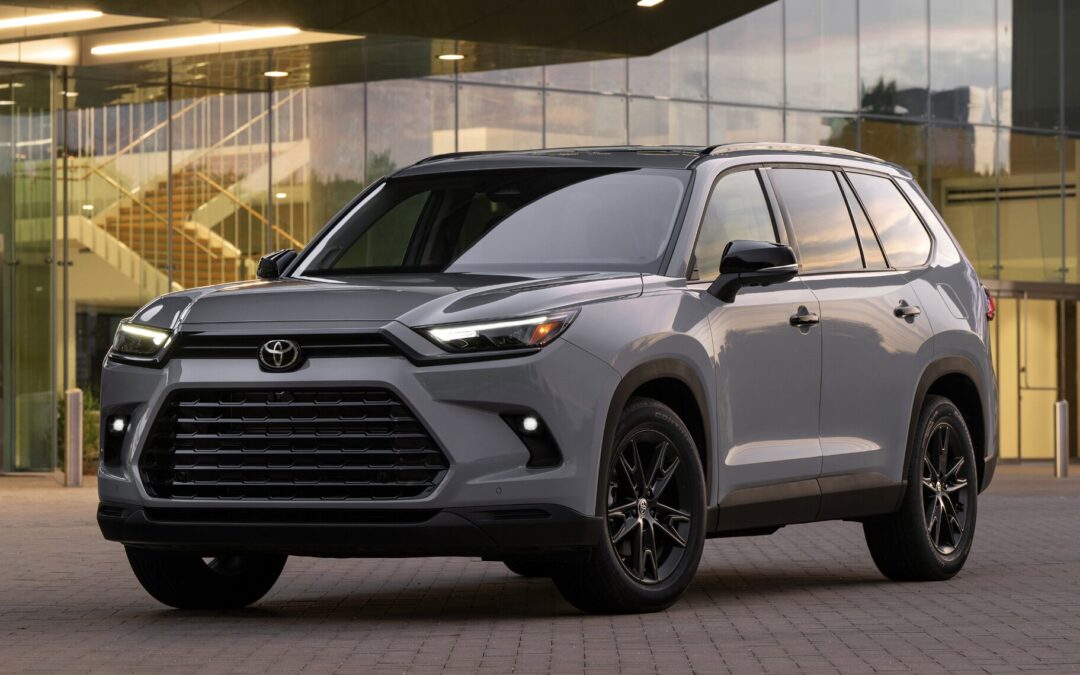
A newcomer to the Toyota SUV lineup, the Crown Signia shows early signs of holding its value well. The Crown Signia is the larger sibling to the Toyota Crown, which replaced the Avalon a few years back. Used pricing isn’t widely available yet, but new models are in high demand with a 31-day supply.
👉 See the complete Toyota Crown Signia resale value and cost of ownership analysis
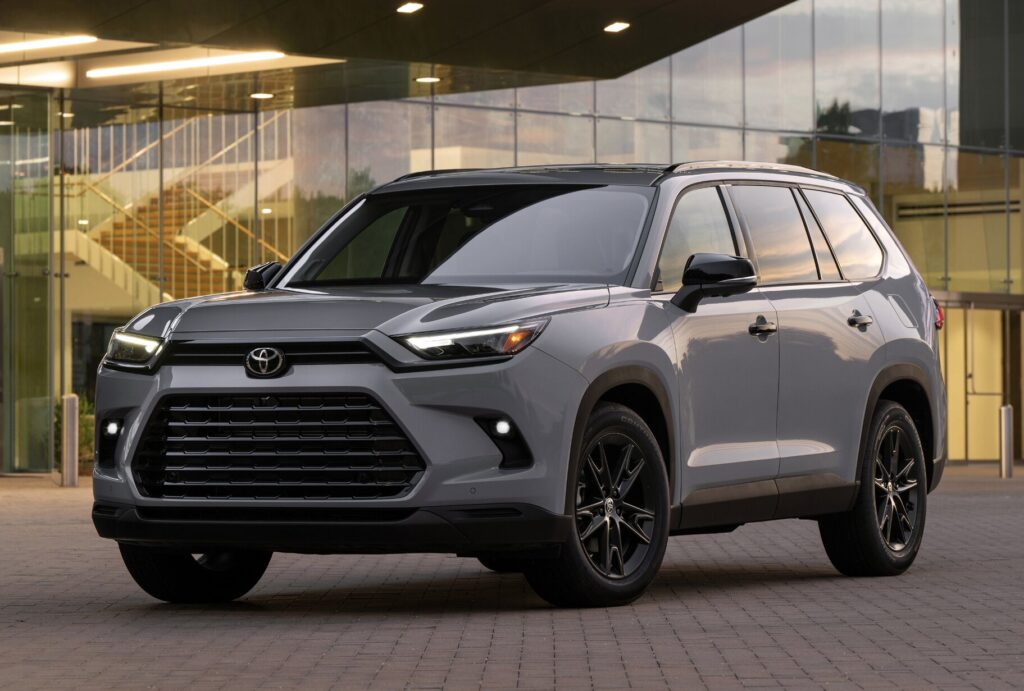
Predicted Depreciation: 32% over 5 years
5-Year Resale Value: $37,545
One of Toyota’s most family-friendly options, the Grand Highlander blends space, reliability, and excellent resale value. New supply is limited with just 34 days of market supply. It will be tough to negotiate Grand Highlander prices in 2025, but markups are uncommon.
Buying a gently used Grand Highlander (about two years old) should save you nearly $12,000. Over the next three years, depreciation would be about $5,613 when buying used.
👉 See the complete Toyota Grand Highlander resale value and cost of ownership analysis
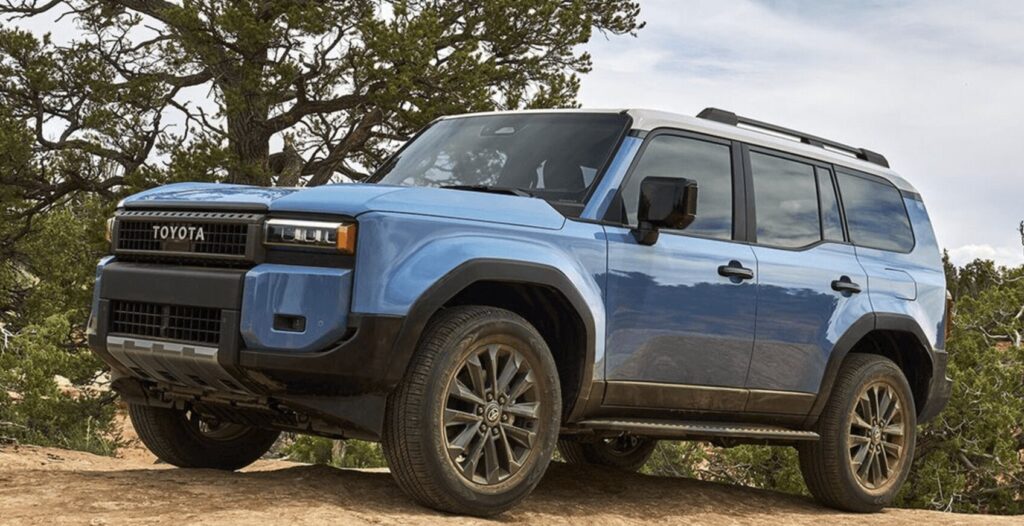
Predicted Depreciation: 32% over 5 years
5-Year Resale Value: $42,074
Back after a short hiatus, the new Toyota Land Cruiser is already holding value like a champ. The Land Cruiser is forecast to retain 68% of its original value after five years. With a 45-day supply, there’s modest room for negotiation if buying new. It’s not cheap, however. The 2025 Land Cruiser starts at $58,150 with mandatory destination fees. That makes it one of the most expensive Toyota models on sale today.
👉 See the complete Toyota Land Cruiser resale value and cost of ownership analysis
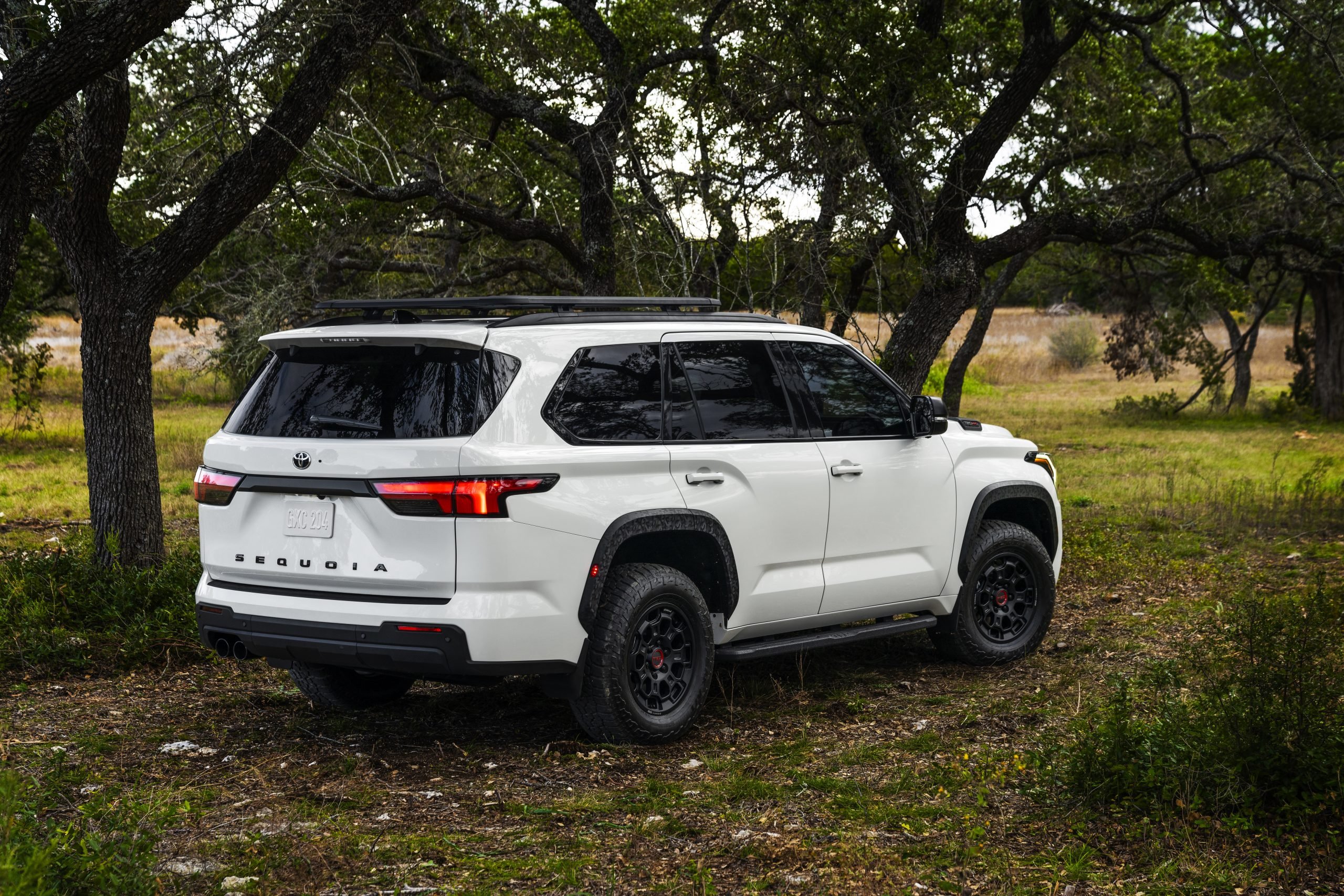
Predicted Depreciation: 33% over 5 years
5-Year Resale Value: $54,387
The Toyota Sequoia is the most expensive SUV on this list—but it still manages to retain value impressively well. Looking to spend less? Buy it two years old and save about $11,000 on average. If you go this route, expect $15,746 in depreciation if you own it for three years.
New models are moderately negotiable with a 49-day supply. That’s far below the industry average of 83 days of supply, but is decently high for a Toyota.
👉 See the complete Toyota Sequoia resale value and cost of ownership analysis
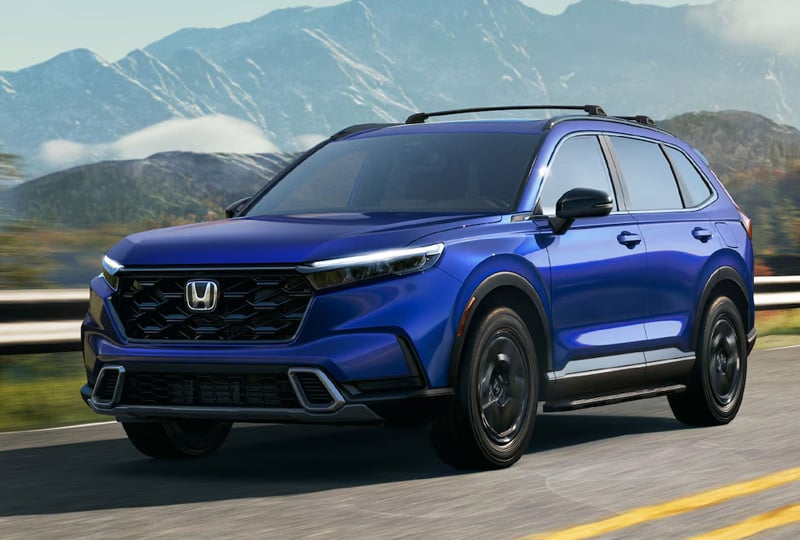
Predicted Depreciation: 33% over 5 years
5-Year Resale Value: $26,527
The Honda CR-V remains one of the best-selling SUVs in America, and for good reason. Its strong resale value reflects consistent reliability, broad appeal, and efficient performance. With just 33% depreciation forecasted over the first five years of ownership, it holds its own in today’s market.
However, don’t expect huge discounts on a new CR-V. With 41 days of market supply in 2025, it’s tough to negotiate this popular crossover—unless you find highly negotiable inventory that’s been sitting on the dealership lot for many months.
👉 See the complete Honda CR-V resale value and cost of ownership analysis
If you’re shopping for an SUV in 2025, don’t just consider price—resale value matters more than ever. Every SUV on this list ranks among the top in CarEdge’s total cost of ownership data, helping you to avoid unexpected depreciation. Buying a car is never an investment, but it’s smart to know what to expect.
Explore resale value and cost of ownership comparisons at CarEdge Research

In a move to match Ford’s aggressive April incentives, Stellantis has launched a major new discount program — employee pricing for all. From now through April 30, 2025, buyers can score what amounts to invoice pricing on most new 2024 and 2025 Chrysler, Dodge, Jeep, and Ram vehicles.
Whether you’re eyeing a Jeep SUV or a Ram 1500, you can now take advantage of deep discounts typically reserved for Stellantis employees and their families.
“This week we launched aggressive and consistent incentive and marketing support for April, including an exciting and competitive enhancement that will allow our customers ‘America’s Freedom of Choice’ between employee price or current cash incentives,” said a Stellantis spokesperson on April 4.
How much can you expect to save with employee pricing offers? Here’s how free dealer invoice pricing tools can be used to estimate your savings before you head to the dealership.
The latest Stellantis promotion extends to most 2024 and 2025 models, with just a few exceptions like the high-performance Ram 1500 RHO and Jeep Wrangler Rubicon 392. That means some of the brand’s most popular vehicles now come with discounts that will knock thousands off MSRP.
What makes Stellantis’ offer different from Ford’s employee pricing offer? The nationwide promotion from Stellantis gives buyers the freedom to choose either employee pricing or other cash incentives — whichever results in a better deal at the dealership.
Stellantis has good reason to offer steep discounts. The automaker is struggling with mounting inventory and stagnant sales, with all Stellantis brands seeing above average inventory levels in April. Tariffs are adding further uncertainty for the ‘Big Three’ Detroit automaker.
Here’s a look at what’s included in Stellantis’ employee pricing promotion from April 2025. Eligible vehicles include these top sellers. We’ve included the latest market inventory numbers courtesy of CarEdge Pro. For perspective, the market average is 83 days of supply in early April:
Stellantis brands have some of the highest inventory in the auto industry right now. I bet you could guess another major automaker with a glut of inventory right now. You guessed it: Ford. As tariff impacts spook the car market, we wouldn’t be surprised if Nissan, Mazda, or Hyundai announce employee pricing promotions over the next month.

Employee pricing often means thousands off MSRP, but if you want to know exactly how much you’ll save on the Ram truck or Jeep you’ve got your eye on, we’ve got the perfect tool for you.
👉 Check the Dealer Invoice Price on Any Stellantis Vehicle (Jeep, Ram, Chrysler, Dodge & more)
With the CarEdge Dealer Invoice tool, you can:
Invoice pricing is a great estimation of employee pricing. It’s simply the price of the vehicle, with all dealership profits removed. If you’re looking to estimate how much you could save with Stellantis employee pricing in April, our Dealer Invoice Price tool is what you’re looking for.
With Ford offering A-Plan pricing to all shoppers this month and Stellantis matching with their own employee pricing program, April 2025 is shaping up to be a rare moment of real competition in new car pricing. If you’re in the market for a new truck, SUV, or family hauler, it’s worth comparing both brands while inventory remains strong. If you’re a fan of other OEMs, it may be wise to see if they match Ford and Stellantis with their own employee pricing discounts in the weeks ahead.
We’ll stay on top of the latest announcements on automaker incentives as the industry grapples with economic uncertainty.