
CarEdge saved me over 4,500 dollars on a brand new Honda Pilot. I can't say thank you enough.
Price intelligence
Find a wide range of vehicle listings with market insights on new and used listings near you.
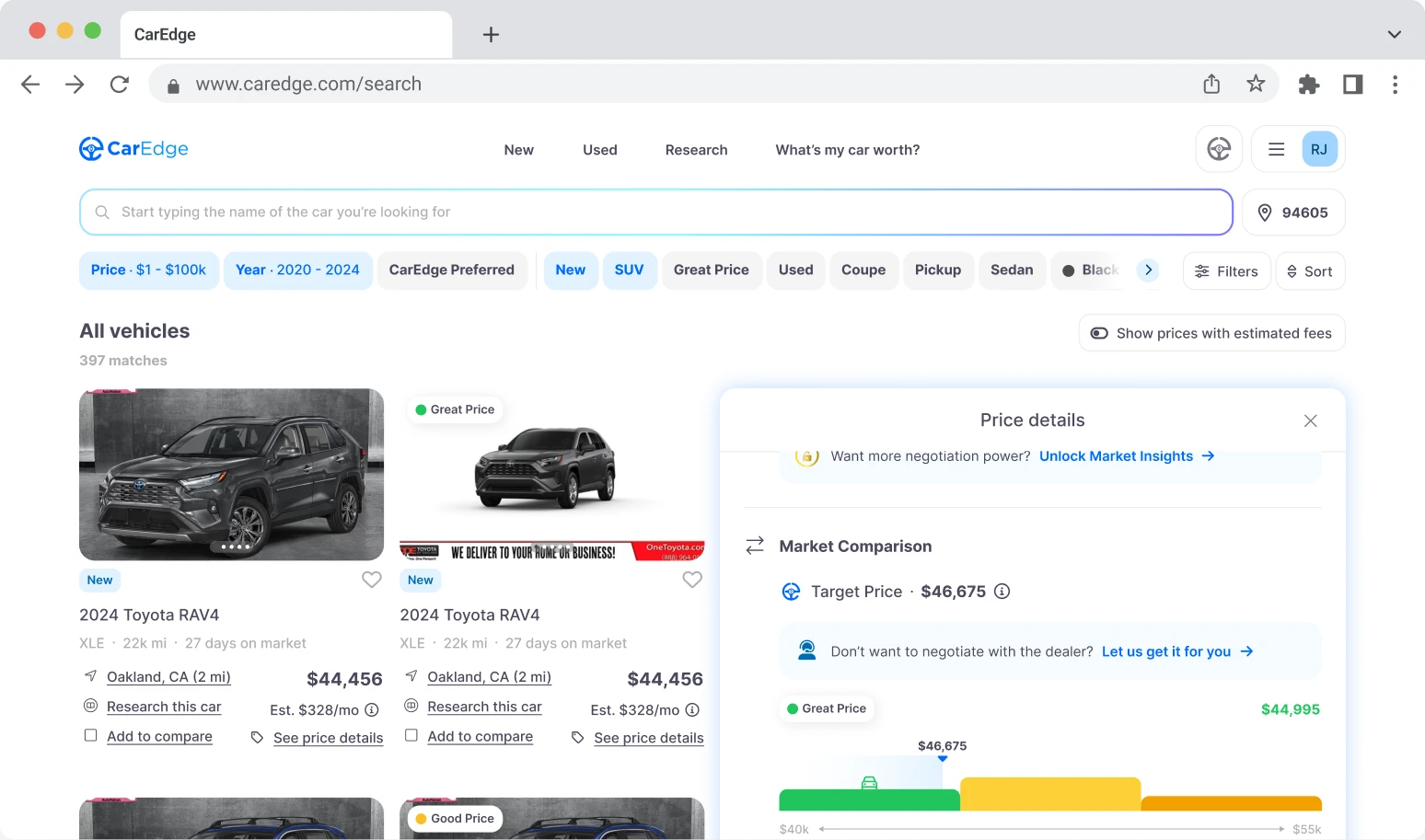

What can I do with CarEdge?
 CarEdge Insights
What can I do with CarEdge?
Get access to exclusive information so you can make an informed car buying decision — all in one place.

Find a wide range of vehicle listings with market insights on new and used listings near you.
Track your vehicle’s value and cash in when the time is right to sell.

Access to our proprietary data to help you find the right car, at the right price. Find these unlocked on every listing after subscribing.

With our expert-led, tech-enabled car buying service, we will locate, negotiate, and deliver your vehicle so you can get a new car hassle free.


Help us personalize your CarEdge experience — it only takes a second.
Your answers help us personalize your CarEdge journey — we’ll follow up with tips and next steps that match your buying timeline.

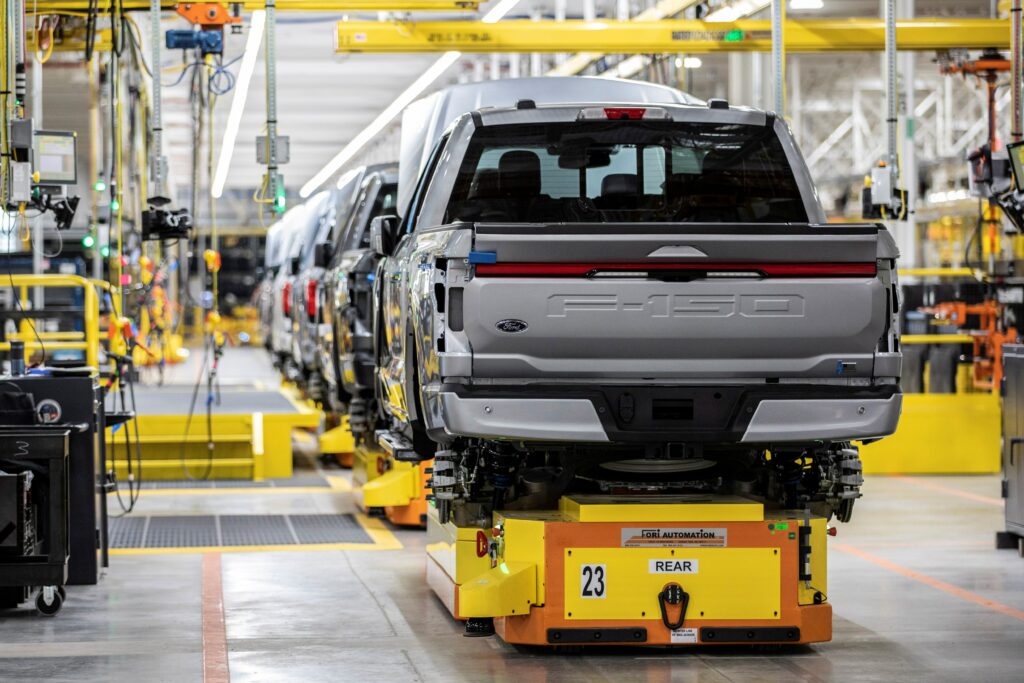
2025 Update: The average transaction price for an EV rose slightly last month. Check out the details below.
Car buying is the second biggest expense most consumers will ever make, and more drivers are getting squeezed into $1,000/month car payments. With an EV, you can save hundreds of dollars per month in fuel costs, but the upfront cost of getting into an electric car is substantial. Here’s the average price of an electric car today, and how much prices have increased over the past three years.
As of the most recent data from December 2024, the average transaction price for a new car (of any powertrain) was $49,740 according to Kelley Blue Book. That’s up slightly from the month prior. In December 2024, the average new electric car price was $55,544.
In 2025, the average price paid for a new EV is 12% higher than the overall new car market average. How does this compare to the recent past? In 2024, electric car prices averaged 16% more than the overall market average. In 2023, EV prices averaged more than 8% higher than the overall market.
EV prices appear to have stabilized, and remain a premium segment in most cases. It’s also true that overall new car prices are much higher than historical norms, regardless of powertrain. According to KBB, new EV pricing peaked in June 2022 at $66,997, and has fallen by $11,453 since.

An abundance of luxury options continues to keep the average price of an electric car well above gas counterparts. Affordable options like the Chevrolet Equinox EV have arrived, but so have expensive electric trucks like the Tesla Cybertruck and offerings from GM.
Electric truck prices are generally expensive (see electric truck prices here). For instance, the Chevrolet Silverado EV is not as affordable as originally claimed. Most electric trucks cost over $75,000 once trim and spec availability is considered.
Although the average EV sells for 12% more than gas-powered models, here’s a breakdown of the starting MSRP for the top 10 electric car models on sale right now. As you can see, not all EVs are quite this expensive:
The average starting price for the top 10 best-selling electric cars in America is $48,899, which is 10% lower than six months prior.
In January 2020, the average electric car price was $54,668, or 42% higher than the overall market average. By 2023, the average cost of a new EV was $53,376 or about 10% higher than the overall new car market. Of course, this reflects the overall rising prices in the broader new car market. Here’s how the average cost of an electric car has changed monthly from January 2020 to 2025.
| 1-2020 | 2-2020 | 3-2020 | 4-2020 | 5-2020 | 6-2020 | 7-2020 | 8-2020 | 9-2020 | 10-2020 | 11-2020 | 12-2020 | 1-2021 | 2-2021 | 3-2021 | 4-2021 | 5-2021 | 6-2021 | 7-2021 | 8-2021 | 9-2021 | 10-2021 | 11-2021 | 12-2021 | 1-2022 | 2-2022 | 3-2022 | 4-2022 | 5-2022 | 6-2022 | 7-2022 | 8-2022 | 9-2022 | 10-2022 | 11-2022 | 12-2022 | 1-2023 | 2-2023 | 3-2023 | 4-2023 | 5-2023 | 6-2023 | 7-2023 | 8-2023 | 9-2023 | 10-2023 | 11-2023 | 12-2023 | 1-2024 | 2-2024 | 3-2024 | 4-2024 | 5-2024 | 6-2024 | 7-2024 | 8-2024 | 9-2024 | 10-2024 | 11-2024 | 12-2024 | |
|---|---|---|---|---|---|---|---|---|---|---|---|---|---|---|---|---|---|---|---|---|---|---|---|---|---|---|---|---|---|---|---|---|---|---|---|---|---|---|---|---|---|---|---|---|---|---|---|---|---|---|---|---|---|---|---|---|---|---|---|---|
| Average EV Price | $54,669 | $56,326 | $56,059 | $57,757 | $58,863 | $57,480 | $57,346 | $57,346 | $54,381 | $52,947 | $53,117 | $53,811 | $57,750 | $57,491 | $56,503 | $56,059 | $56,140 | $58,914 | $56,110 | $57,540 | $56,312 | $55,625 | $56,437 | $63,821 | $62,876 | $64,807 | $66,386 | $65,094 | $64,553 | $66,997 | $66,645 | $66,524 | $65,291 | $64,249 | $65,041 | $61,448 | $58,725 | $58,385 | $58,940 | $55,089 | $55,488 | $53,438 | $53,469 | $52,212 | $50,683 | $51,715 | $52,362 | $53,611 | $55,353 | $53,707 | $54,021 | $55,252 | $56,648 | $56,371 | $56,520 | $56,575 | $57,580 | $56,902 | $55,105 | $55,544 |
| New Car Average | $38,747 | $38,550 | $38,812 | $39,904 | $39,138 | $39,731 | $39,512 | $39,571 | $40,159 | $40,770 | $40,937 | $41,335 | $41,248 | $41,366 | $40,680 | $41,172 | $41,534 | $42,633 | $43,056 | $43,418 | $45,031 | $46,026 | $46,329 | $47,243 | $46,404 | $46,082 | $46,223 | $46,676 | $47,275 | $48,043 | $48,182 | $48,301 | $48,094 | $48,281 | $48,681 | $49,507 | $49,388 | $48,763 | $48,008 | $48,275 | $48,528 | $48,808 | $48,334 | $48,126 | $47,899 | $47,936 | $48,247 | $48,759 | $47,401 | $47,244 | $47,218 | $48,368 | $48,389 | $48,424 | $48,166 | $47,870 | $48,397 | $48,623 | $48,724 | $49,740 |
We track EV market share monthly. Here’s where things stand today.
Regardless of whether you think an EV might be in your future, CarEdge Car Search is the best way to shop online with more transparent pricing, and auto industry insights dealers don’t want you to see. Check it out today!

The Consumer Financial protection Bureau (CFPB) is concerned about Americans getting deeper into debt. It’s not credit cards or mortgages that are raising red flags, it’s auto loans. Today, the average car payment is $733 per month. That’s nearly $9,000 a year in car payments alone. Rising car prices are leading to larger loan amounts and record-high monthly payments. The CFPB just released new data that shows auto loan delinquency rates increasing dramatically for deep subprime borrowers.
Just how concerned is the Bureau? The latest auto lending data shows that borrowers with poor credit are struggling to make ends meet, largely due to the surging costs of owning a vehicle.
“We are particularly concerned about the impact of these changes on consumers’ financial health, especially for consumers with near-prime or subprime credit scores,” said the report.
Let’s take a closer look at the most recent auto lending data, why delinquencies are rising, and what lies ahead for tomorrow’s car buyer.
One in three Americans falls within a subprime lending tier, which includes credit scores under 620. So when the federal bureau tasked with keeping tabs on American spending habits sounds the alarm, lenders listen.
The CFPB measures auto loan delinquency rates by quarter after loan origination. The loan origination year is called the vintage, and delinquency rates are tracked by quarter since the vintage was originated. This is considered the best way to detect when borrowers are taking on more debt than they can handle.
Here’s what the Bureau highlighted in their latest report.
“When looking at delinquency in the first two years after purchase, loans originated in 2021 and 2022 are starting to show higher delinquency rates relative to loans originated in previous years, even when compared to loans unaffected by pandemic-related stimulus payments. For example, auto loans originated in 2021 have a delinquency rate of 0.67 percent in the sixth quarter after origination, which is 13 percent higher than the delinquency rate of auto loans originated in 2018.”
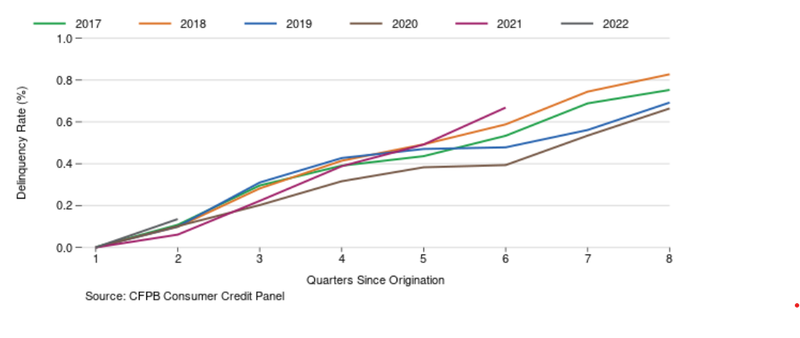
Borrowers with poor credit are faring much worse.
“This trend is even more pronounced for consumers with subprime and deep subprime credit scores. For example, 2022 vintage auto loans for consumers with deep subprime credit scores were 2.4 percent delinquent two quarters after origination, which is a 33 percent increase from the previous five-year high set in 2020.”
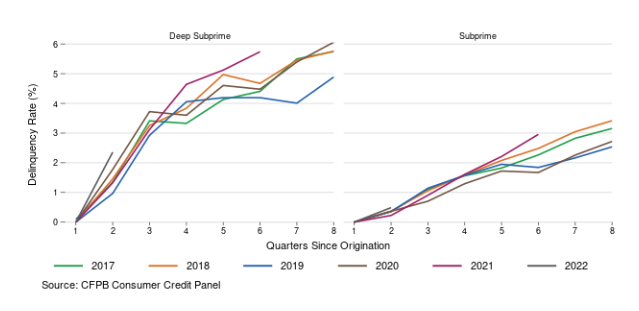
Cars are more expensive, interest rates are rising quickly, and together that equals record-high monthly auto payments. Over the past year, the average car payment has risen from $623/month to $733/month. Go back further in time, and the average car payment was $502 in 2017. When auto loan payments increase nearly 50% in just five years, lower income borrowers are the first to feel the impacts.
Pandemic stimulus packages are over, and household budgets are struggling to adjust as consumer price indices show inflation at 40-year highs. With stimulus money gone (and student loan forbearance set to end at the end of the year), Americans have less money to spend on car payments. Car prices are up as much as 40% since pre-pandemic times, but there’s less money to go around.
The federal reserve has made it clear that it will become more expensive to borrow money. Higher-risk borrowers are footing the bill in the form of MUCH higher interest rates. To get a better sense of just how bad it is for subprime borrowers right now, we crunched the numbers to find out how the average auto loan interest rates are adding well over $10,000 to the total cost of an auto loan.
| Credit score | Average APR, New Car | Average Amount Financed | Total Interest Paid (60 Months) | Total Cost (Principal + Interest) 60 Mo. Loan | Total Interest Paid (72 Months) | Total Cost (Principal + Interest) 72 Mo. Loan |
|---|---|---|---|---|---|---|
| Superprime: 781-850 | 2.96%. | $36,725 | $2,830 | $39,555 | $3,403 | $40,128 |
| Prime: 661-780 | 4.03%. | $41,969 | $4,440 | $46,409 | $5,348 | $47,317 |
| Near Prime: 601-660 | 6.57%. | $42,461 | $7,470 | $49,931 | $9,032 | $51,493 |
| Subprime: 501-600 | 9.75%. | $38,802 | $10,378 | $49,180 | $12,603 | $51,405 |
| Deep subprime: 300-500 | 12.84%. | $33,978 | $12,241 | $46,219 | $14,925 | $48,903 |
Used car buyers with subprime credit have it even worse, with the average deep subprime rates over 20%.
| Credit score | Average APR, Used Car | Average Amount Financed | Total Interest Paid (60 Months) | Total Cost (Principal + Interest) 60 Mo. Loan | Total Interest Paid (72 Months) | Total Cost (Principal + Interest) 72 Mo. Loan |
|---|---|---|---|---|---|---|
| Superprime: 781-850 | 3.68% | $28,639 | $2,759 | $31,398 | $3,322 | $31,961 |
| Prime: 661-780 | 5.53% | $30,473 | $4,477 | $34,950 | $5,404 | $35,877 |
| Near-Prime: 601-660 | 10.33% | $28,598 | $8,139 | $36,737 | $9,891 | $38,489 |
| Subprime: 501-600 | 16.85% | $23,935 | $11,640 | $35,575 | $14,258 | $38,193 |
| Deep subprime: 300-500 | 20.43% | $20,311 | $12,248 | $32,559 | $15,057 | $35,368 |
Borrowing less money at lower interest rates for shorter terms is the only way out of runaway interest debt. It’s easier said than done.
The CFPB says it is focused on ensuring a fair, transparent, and competitive auto lending market. The Bureau aims to do this by ensuring affordable credit for auto loans, monitoring practices in auto loan servicing and collections, and fostering competition among subprime lenders.
The first step towards keeping auto loan debt under control is to spend less. But there’s only so much that government oversight can do. New car inventory remains historically low (but improving for some), and OEMs announce more MSRP hikes every week it seems. Automakers have been blatantly stating that they plan to keep inventory low long-term, and that’s going to keep new car prices high. And then there’s inflation.
Is there a silver lining? If you’re willing to consider a used car, you have more negotiating power than at any point in the past year. Data from Black Book shows more used cars sitting on dealer lots for longer, and the bubble has officially burst at wholesale auctions. Dealers are eager to sell their inventory to minimize losses in a rapidly softening used car market. The result is more willingness to negotiate.
Don’t settle for the sticker price. In fact, we think you should aim to negotiate between five percent and ten percent off of the sticker price on a used car. Thinking of selling? Selling sooner rather than later will get you more money as the used car market softens.
What do you think about the latest auto lending numbers? It’s hardly a surprise when car payments cost as much as rent in much of the nation.

The best EVs under $50,000 are more capable than ever before. But that doesn’t mean that they’re equally suited for the diverse needs of today’s drivers. Whether you’re hauling a family or looking for your next ridesharing car, these are the best EVs under $50k that are available now.
To qualify for federal EV incentives, ensure you purchase a Tennessee-built VIN.
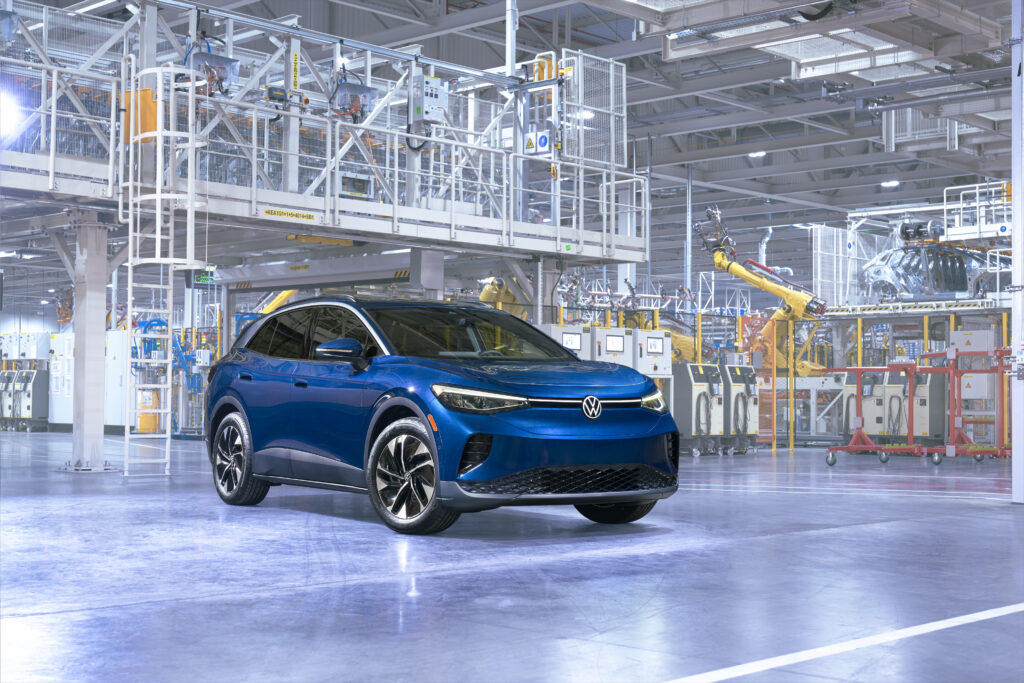
Price: $37,495 – $53,995
Range: 208 – 293 miles
Charging Speed: 130 kilowatts (standard) to 170 kilowatts (Pro); Add 200 miles of range in 28 minutes

Tax Credit: The U.S.-built ID.4 qualifies for at least half of the new EV tax credit. Make sure yours is built at the Chattanooga, Tennessee factory! See full details here.
Did You Know? The 2024 VW ID.4 includes three years of free 30-minute charging sessions at Electrify America. For those who travel often, this incentive could be worth hundreds of dollars.
Build and price your own ID.4 at vw.com
After a price drop, the cheapest Tesla is available for thousands less. No dealers, no markups!
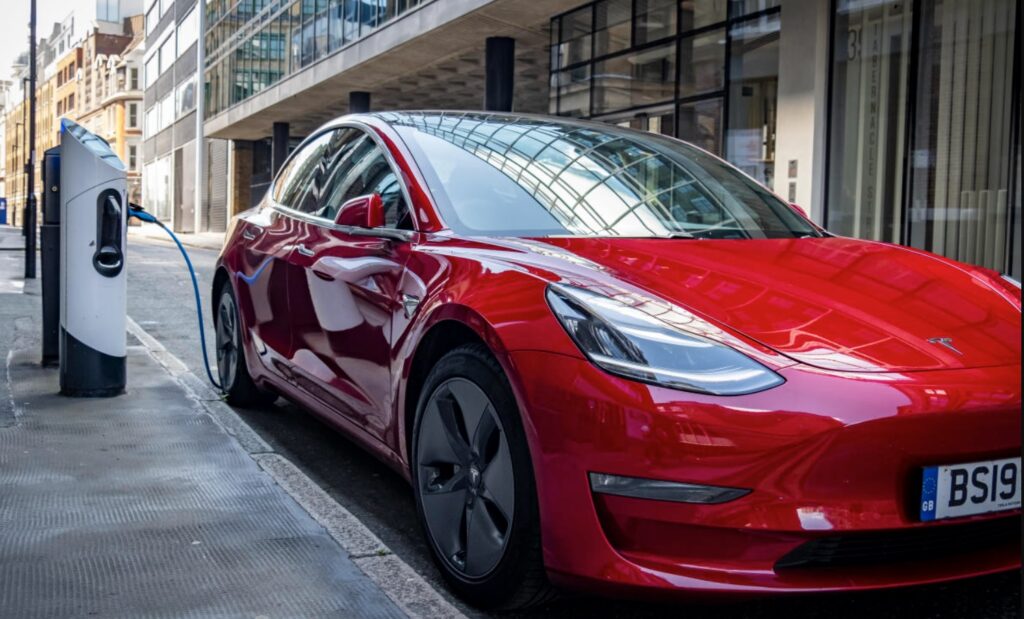
Price (rear-wheel drive): $42,380 (including destination charges)
Range: 272 miles
Charging Speed: 170 kilowatt max (adds 200 miles in 30 minutes of charging)
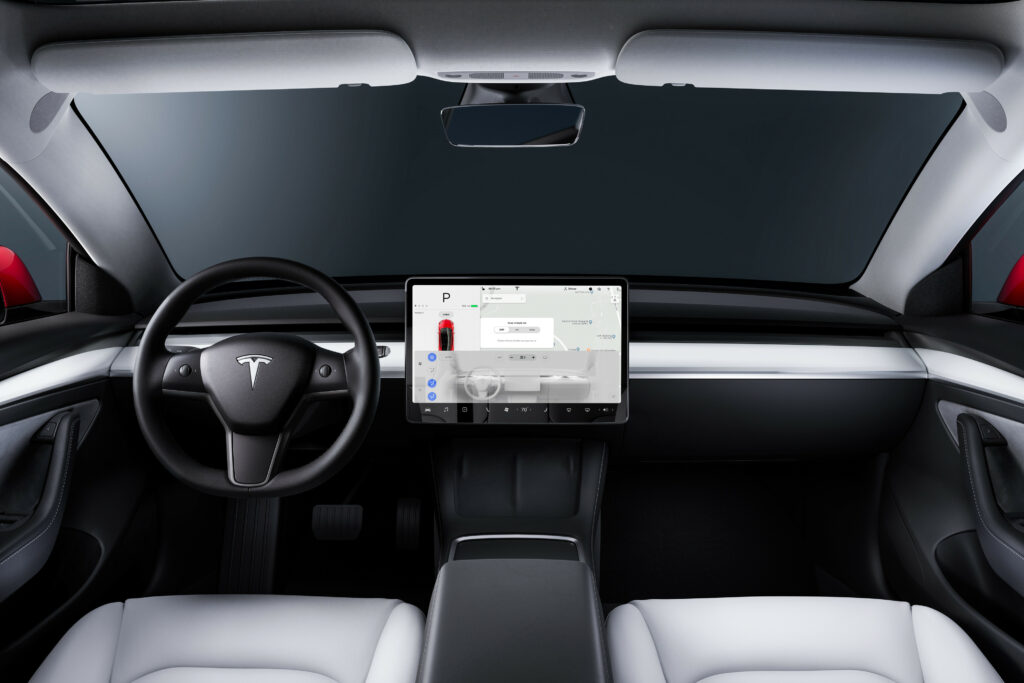
Federal Tax Credit: In 2024, the rear-wheel drive and all-wheel drive variants of the Tesla Model 3 have again lost the federal EV tax credit. This time, it’s not due to high sales, but because of battery sourcing.
Did You Know? Used Tesla prices have fallen dramatically since price cuts for new Tesla models were announced. See the latest used Tesla price forecast here.
Build and price the Model 3 at Tesla.com
As long as your Bolt has the new battery post-recall, the Bolt is by far the most affordable electric option available. But it’s not for road trips with the family.
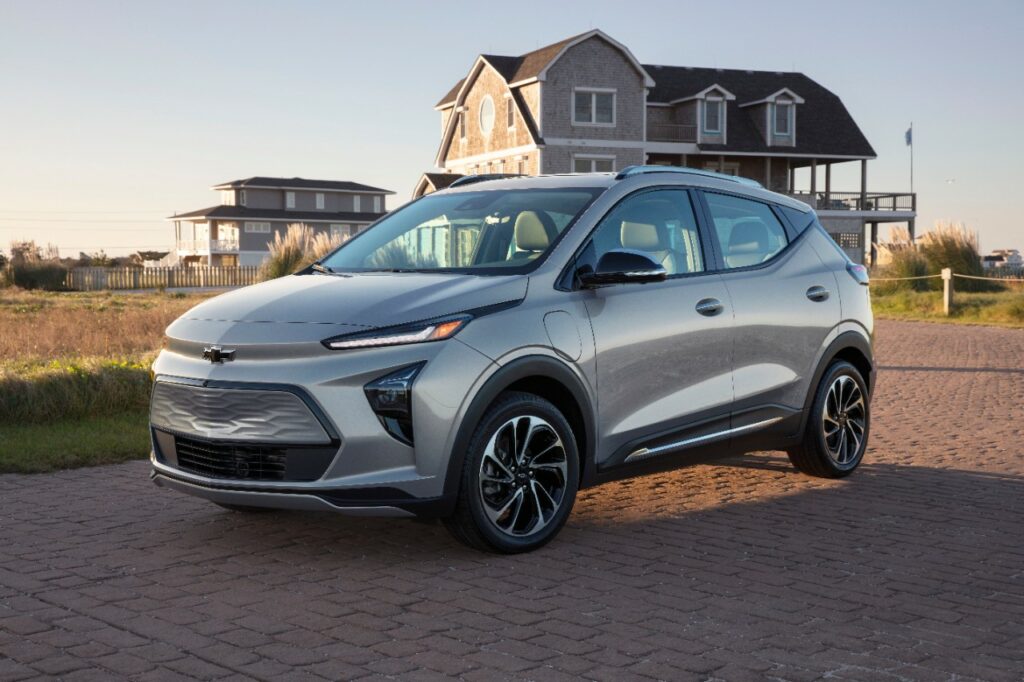
Price: $26,595 – $38,995
Range: 247 to 259 miles
Charging Speed: 55 kilowatt max (adds 200 miles in one hour of charging)

Federal Tax Credit: In 2024, the Bolt again qualifies for federal EV incentives. See full details here.
Did You Know? The Bolt has great range, but charges slowly. We think this is a great budget option for around town, but not for cross-country road trips.
Build and price your own Bolt EV or EUV at chevrolet.com
The new IONIQ 5 may have stolen the show, but the Kona EV is thousands of dollars cheaper. It’s one of the best EV values well under $50k. If you take frequent road trips, the Kona’s slow charging could be a deal breaker.

Price: $33,550 – $41,550
Range: 258 miles
Charging Speed: 100 kilowatt max (180 miles added in 47 minutes)

Federal Tax Credit: In 2022, the new revisions to the EV tax credit took away this incentive from the Kona EV. See full details here. State incentives may apply.
Did You Know? The all-new Hyundai IONIQ 5 has stolen the show with more range, MUCH faster charging, and better looks. Although MSRP starts closer to $45,000, dealer markups make it hard to find one under $50,000. More on that below.
Build and price your own Kona EV at hyundaiusa.com
Don’t like the looks of the Kona EV? The Niro is the same vehicle on the inside. Note that the Niro and Kona EVs are based on older EV powertrains, and charge quite slowly. Go for the Kia EV6 or IONIQ 5 for faster charging.

Price: From $40,875 with destination fees
Range: 253 miles
Charging Speed: 100 kilowatt max at a DC fast charger (adds 177 miles of range in about 45 minutes)

Federal Tax Credit: The new revisions to the EV tax credit took away this incentive from the Niro EV. See full details here. State incentives may apply.
Did You Know? The 2024 model year introduces a plug-in hybrid version with 33 miles of all-electric range. This is a great option for frequent travelers, rural drivers, and those without a place to charge at home.
Build and price your own Niro EV or plug-in hybrid
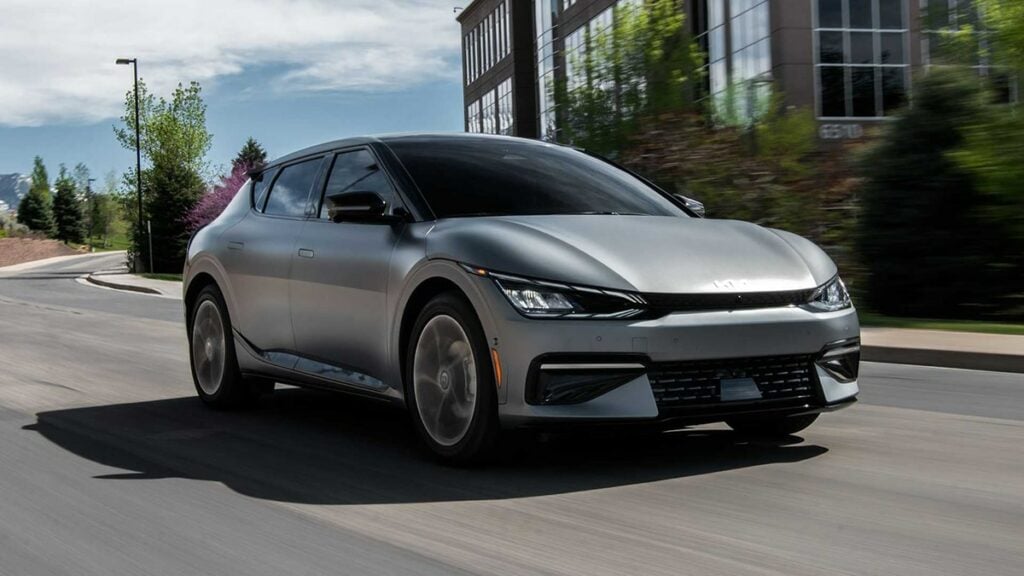
Price: $43,800 (Wind Rear-Wheel Drive)
Range: 310 miles
Charging Speed: 235 kilowatt max at a DC fast charger (adds 200 miles of range in about 20 minutes)
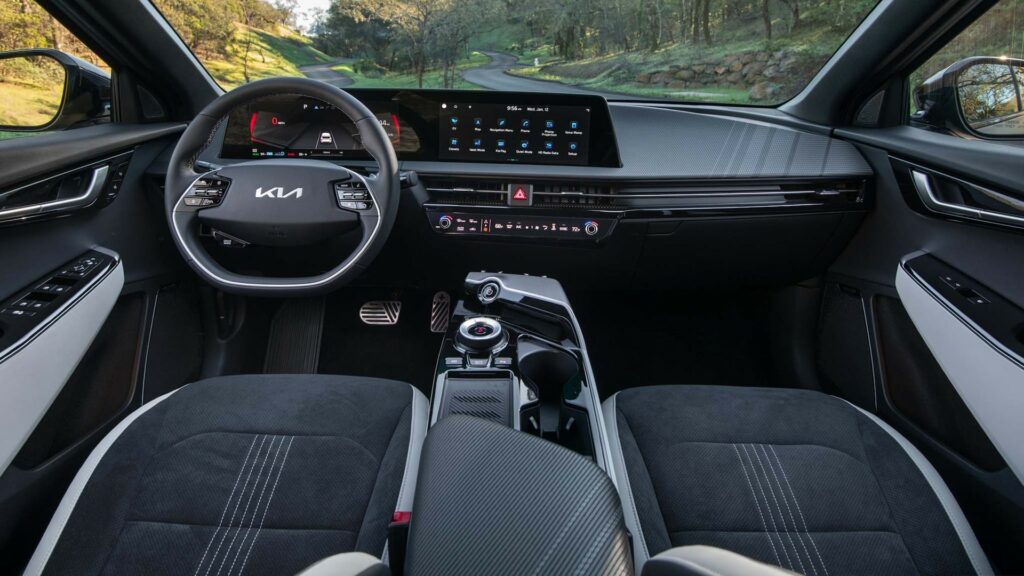
Federal Tax Credit: The new revisions to the EV tax credit took away this incentive from the EV6. See full details here. State incentives may apply.
Did You Know? The Kia EV6 is based on the same e-GMP electric platform as the Hyundai IONIQ 5. If the looks of the EV6 are too much for you, maybe the IONIQ 5 is up your alley. The EV6 comes with 1,000 kilowatt-hours of free charging at Electrify America. That’s about 15 charging sessions from 10% to 80%.
Build and price your own EV6 at kia.com
Despite winning so many awards in 2022, Hyundai has struggled to sell the IONIQ 5 due to the loss of the federal tax credit. See the latest IONIQ 5 inventory in your area.

Price: From $43,785 (SE Standard Range). Gain more range from $45,000+.
Range: 220 miles (Standard Range) to 310 miles
Charging Speed: 235 kilowatt max at a DC fast charger (adds 200 miles of range in about 20 minutes)

Federal Tax Credit: The new revisions to the EV tax credit took away this incentive from the IONIQ 5. See full details here. State incentives may apply.
Did You Know? The IONIQ 5 and it’s sibling the Kia EV6 are by far the fastest-charging EVs under $50,000. The IONIQ 5 has two years of free charging at Electrify America.
Build and price your own IONIQ 5 and hyundaiusa.com
Last but certainly not least, the entry-level Mustang Mach-E starts under $50k. Finding one without a dealer markup is a challenge.
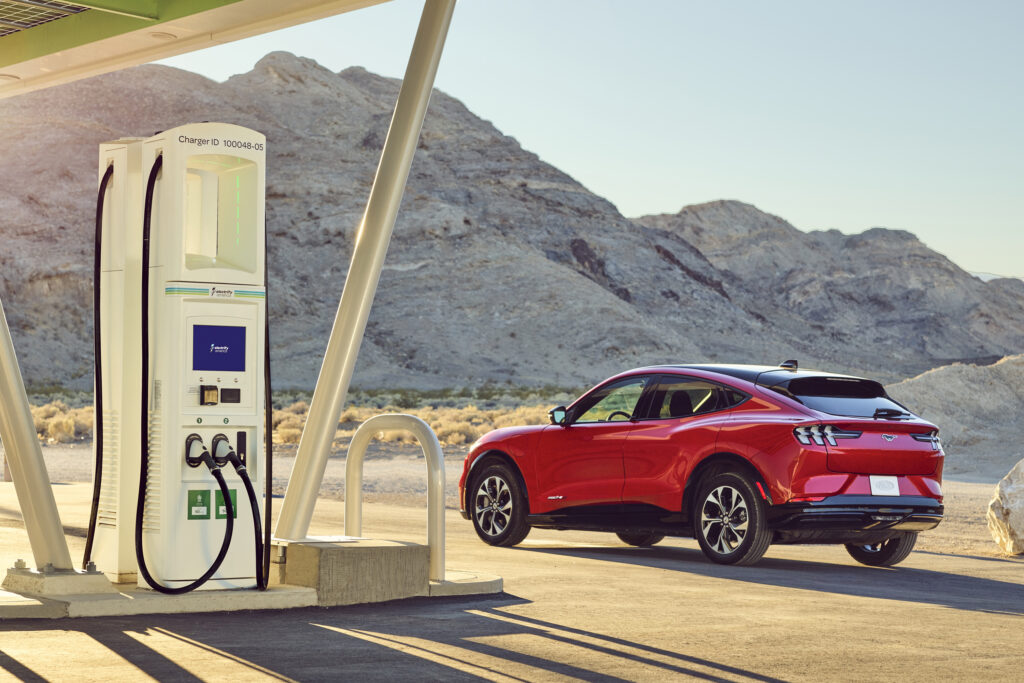
Price: Starting at $45,995
Range: 247 miles (Standard Range battery)
Charging Speed: 150 kilowatt max speeds (adds 170 miles of range in 35 minutes)

Federal Tax Credit: The Mustang Mach-E is made in Mexico, so it continues to qualify for at least half of the new EV tax credit. Qualification for the full credit depends on the battery supplier. See the latest from the federal government.
Did You Know? The Mustang Mach-E is one of the top-selling EVs in America, although it remains far behind Tesla.
Build and price your Mustang Mach-E at Ford.com
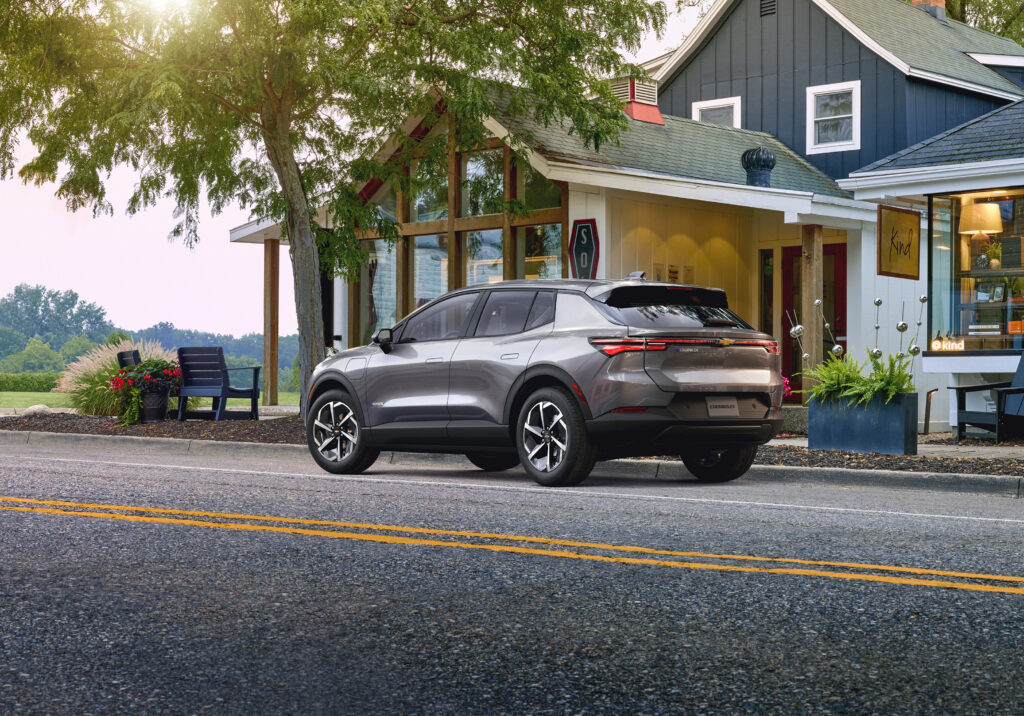
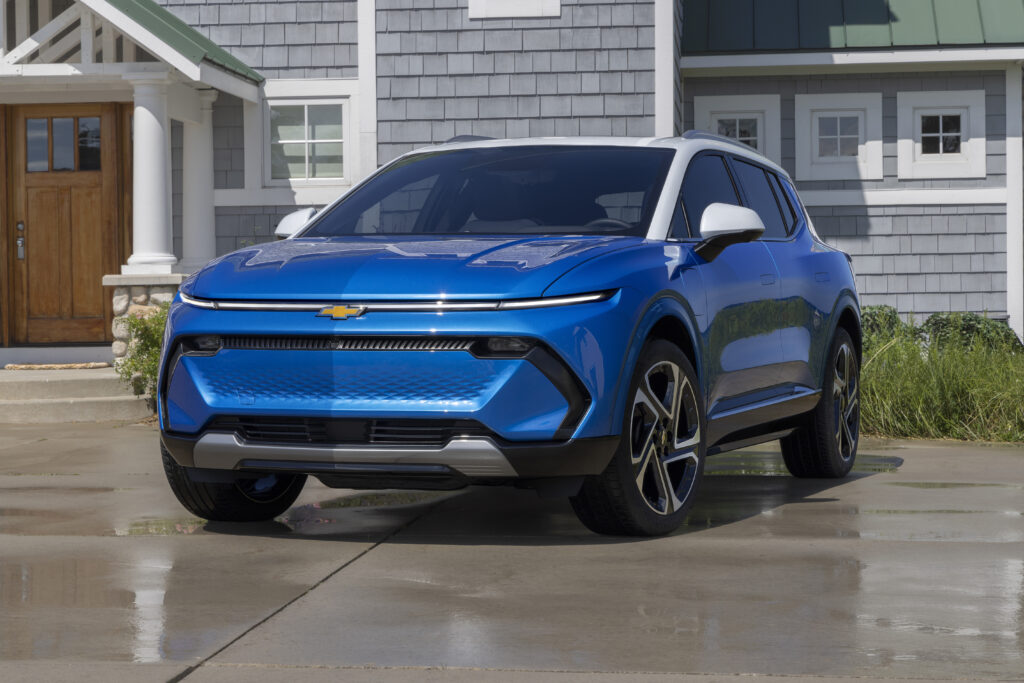
The Equinox EV was recently introduced, and GM still claims that it will start “around $30,000.” Even if the most preferred trim options run closer to $40,000, the Equinox EV looks to be a great deal.
Here are the standout specs GM has released:
See every detail released so far, from trim options to expected pricing
Don’t forget that both state and federal EV incentives may apply. Here’s our full breakdown of which models are likely to qualify. For the first time, a used EV tax credit is available, but very few models qualify due to the price cap. We’ve got the full details covered here.
Not sure which path is right for you? Head over to the CarEdge community forum to chat with auto experts with years of experience. I’m on the forum daily!

For the fifth-month in a row, new car prices climbed to a new record in August. Car buyers continue to pay more, even as signs point towards the bubble bursting. The latest industry insights from Kelly Blue Book and TrueCar make it clear that new car prices have yet to peak.
According to new data released this week by Kelley Blue Book, the new vehicle average transaction price (ATP) increased to $48,301 in August 2022, climbing 0.5% since July. August’s new car prices were 10.8% higher ($4,712) year-over-year from August of 2021. Luxury sales remain very strong, now making up 17.5% of overall market share.
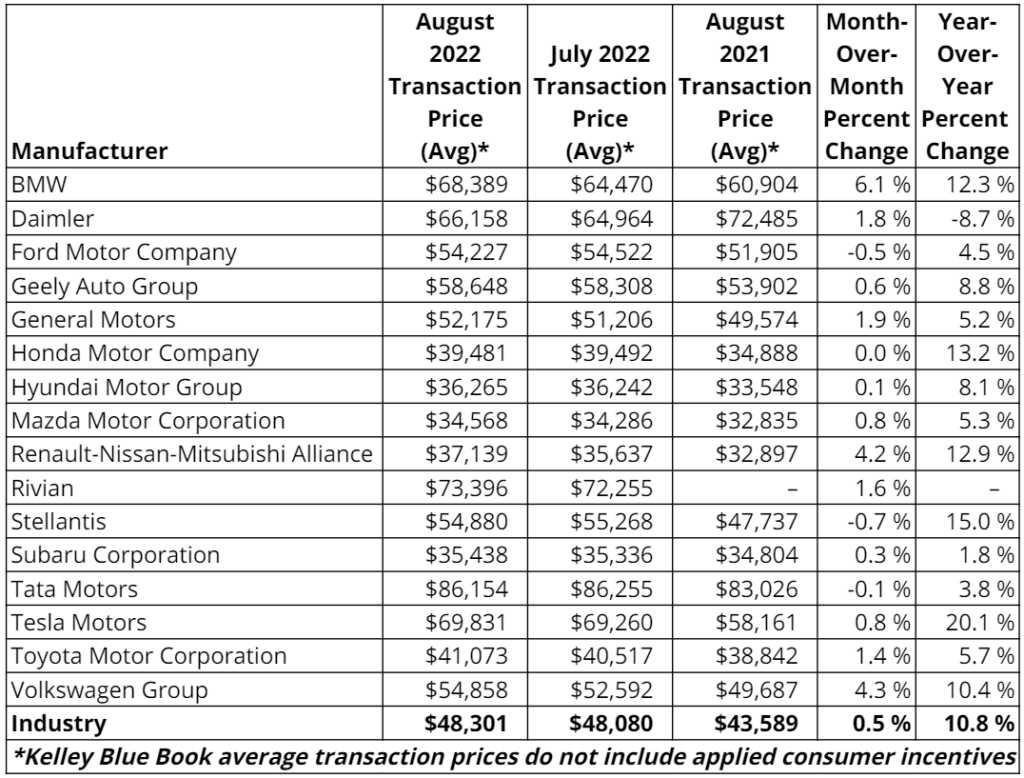
There were 1.2 million units in inventory in August. At 43 days’ supply, that’s an improvement year-over-year. Still, new car inventory remains well below historical norms. See the latest new car inventory for each manufacturer here.
Ram, Volvo, Lincoln, Buick, Alfa Romeo and Fiat have the most competitive prices right now, selling 1% or more below MSRP in August. Hyundai, Land Rover, Honda and Kia continue transacted between 5-and-9% over sticker last month. Non-luxury vehicle buyers paid on average $1,102 above sticker price, an increase from July.
The average price paid for a new non-luxury vehicle last month was $44,559. Luxury buyers paid $65,935 on average, but KBB points out that luxury prices are averaging closer to MSRP than they had in months past. Non-luxury buyers paid $1,102 over MSRP in August, an increase since July.
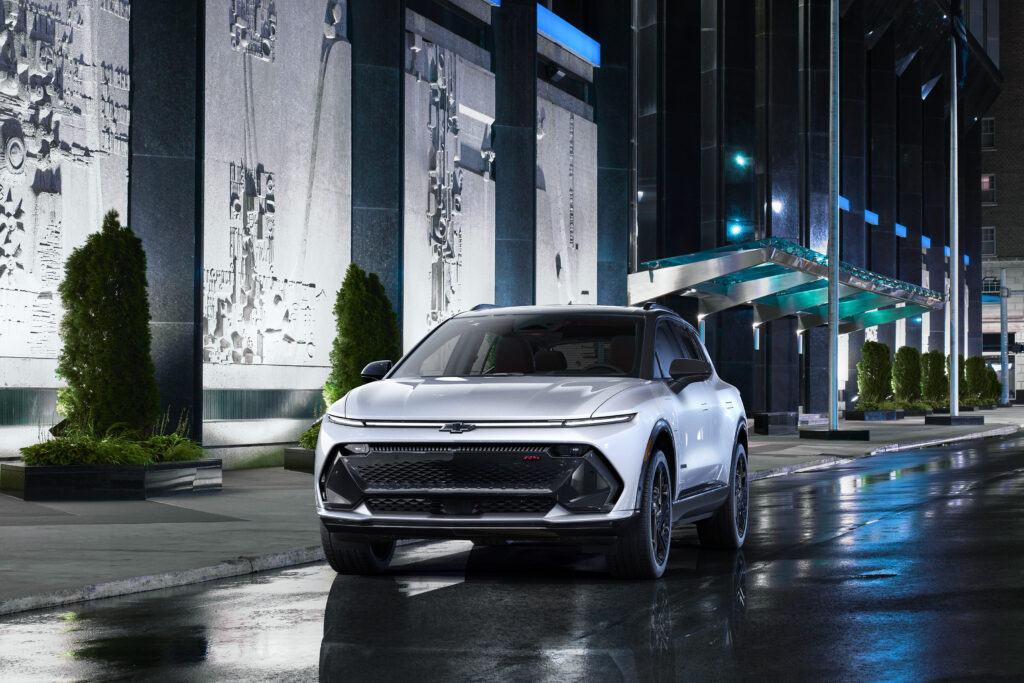
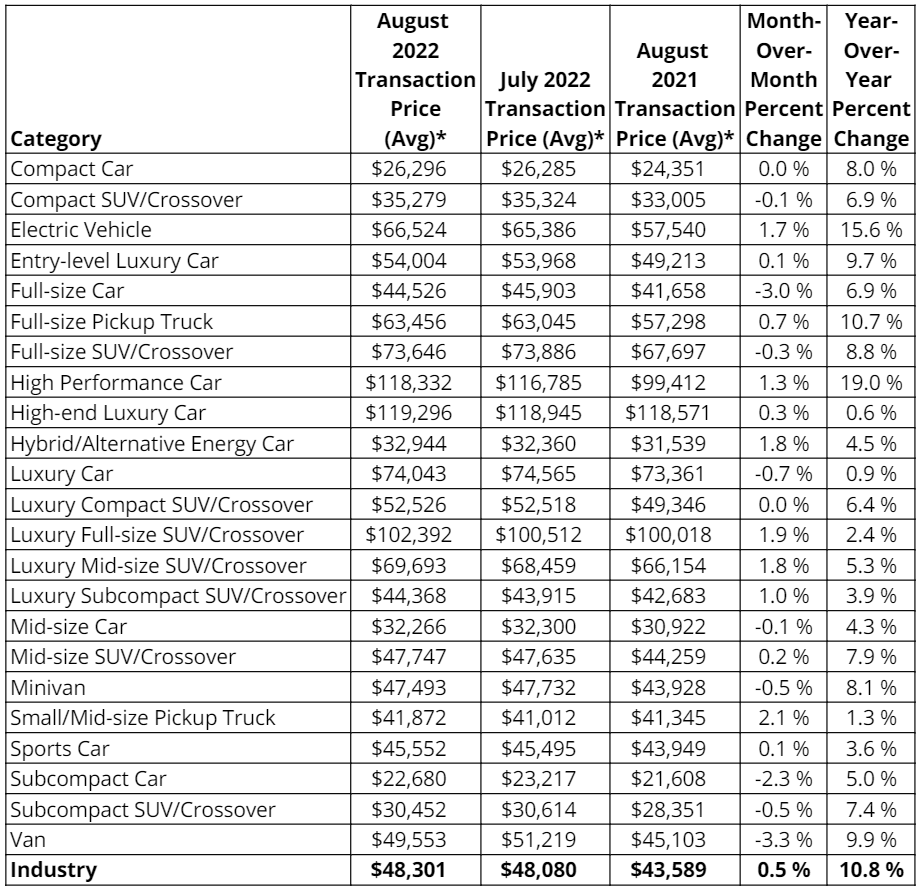
What price parity? It might be time to give up on that dream, at least for the short-term. The average price paid for a new electric vehicle rose by 1.7% in August. EV prices are now 15.6% higher than they were one year ago. The average price for a new electric vehicle is now $66,524, according to Kelley Blue Book.
Here’s how each market segment fared in August:
Manufacturer incentives slowed to a trickle in the second half of 2021, and they’ve yet to return in any meaningful way. KBB found that incentives decreased slightly in August, averaging only 2.3% of the average transaction price. Incentive spending remains at 20-year lows.
Some OEMs are more generous than others right now. Data from TrueCar shows that Stellantis (Jeep, Dodge, Ram, Chrysler) incentives are highest right now, but only at 4.6% of ATP on average. Volkswagen, Nissan and General Motors were all between 3.3% and 3.6% of ATP in August. For perspective, most automakers were offering incentives totaling between 6% and 8% of transaction prices one year ago.
August’s average ATP of $48,301 is more than 80% of the median household income in 15 states. How much worse can it get before new car prices come back to reality? Sadly, even automaker executives note that they’re still selling every car they can manage to make right now. Demand remains strong, so there’s no incentive to lower prices right now.
In fact, automakers are being forthright about their realization that keeping dealer lot inventory slim is best for them and the dealers. This summer, Nissan executive Ashwani Gupta shared the brand’s intention to keep inventory low, and his acknowledgement of who this strategy benefits.
“We have learned that this is more efficient,” Gupta said. “And this is good for dealers. The dealer is ordering a car that is already requested by a customer.”
Today’s car buyers have more leverage than at any time in the past year, if only they would negotiate a deal on a used car insteadWe’ve heard it all before, but what makes August’s data significant is the contrast with now 12 weeks in a row of major weekly price declines at wholesale auctions.
As the average price of a new car continues to inch towards $50,000, we must take a step back to understand how we got here, and where we’re headed. On the new vehicle front, the new record was driven by the continued popularity of luxury models, tight but improving inventory, and historically low manufacturer incentives.
Kelley Blue Book notes that luxury share remains near an all-time high at 17.5% of auto sales. This inevitably pushes market averages higher, but it points to a larger underlying problem – new cars are becoming a luxury item out of reach for many. Automakers continue to announce cancellations of their more affordable offerings. The Chevy Sonic, Hyundai Veloster, Mazda CX-3 and Volkswagen Passat to name a few. It’s clear that they’re laser-focused on higher-margin models, no matter how much it further damages vehicle affordability.
We’ve pointed out for weeks that your best shot at a deal is in the used car market right now. You don’t have to spend over $50,000 on a new car with a $1,000/month payment. The used car market is certainly softening at wholesale auctions. Wholesale prices are down roughly 7.5% in three months, with luxury segments seeing sharper declines.
Dealers are becoming anxious about the real possibility of losing money on used inventory they paid too much for just weeks ago. It costs them money to hold inventory, and they’re eager to sell right now. Everyone should be able to negotiate 5% to 10% off of the sticker price right when shopping used vehicles right now. Not sure how to go about doing that? Our very own auto experts are ready to empower you with the skills at the CarEdge Community.

General Motors finally released details about what could turn out to be the most important electric vehicle of the decade. Yes, Tesla pioneered the mass production of EVs in the 2010s, but GM intends to bring them to the masses with affordable pricing. Now that we know almost everything about the 2024 Equinox EV, how does it compare to the Chevy Bolt EV and EUV, and the many higher-priced electric crossovers on the road? Plus, we’ll also go over why I don’t think the Equinox EV will cost $30,000, despite GM’s comments.
Only two big questions remain after GM released details and new images of the Equinox EV in September. Although we don’t yet know exact pricing or battery capacity, the latest press releases have revealed a future-ready EV with great range, decent charging, and GM’s reiterated $30,000 price tag. Let’s dig into the details, and why I sincerely think this model alone will be a make-or-break moment for the electrification of America’s legacy automakers.
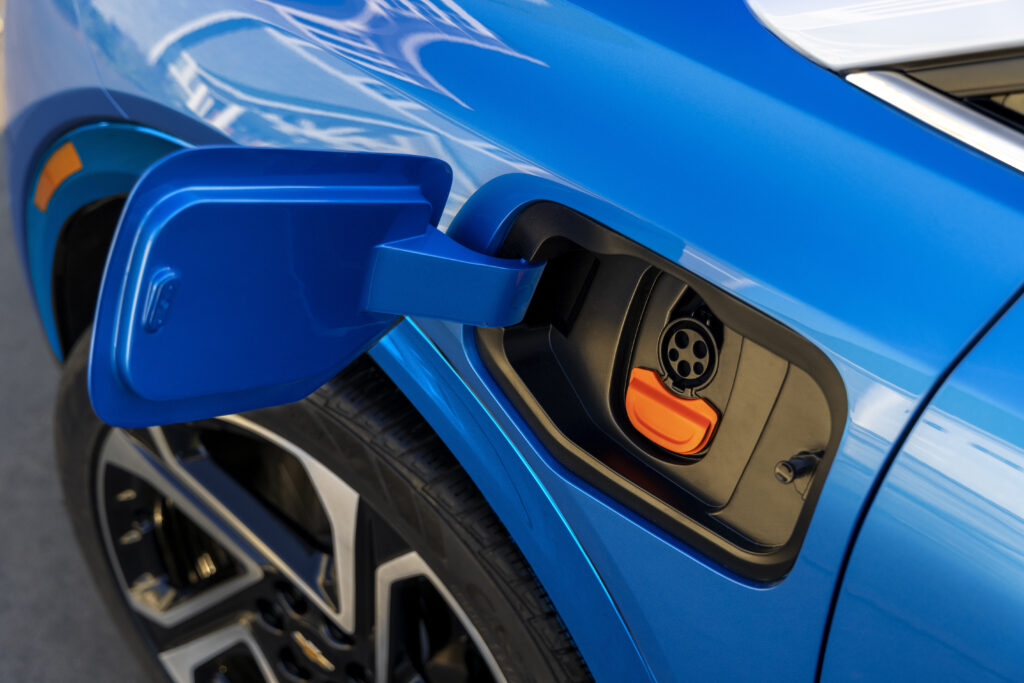
The Equinox EV will be available in standard and extended range battery options. Front-wheel drive will offer either battery capacity, and all-wheel drive will only be offered with the long-range pack. GM has not divulged the battery capacity figures, but we do know that the Equinox EV will be powered by the Ultium electric platform that GM engineered in partnership with LG Energy Solutions. That’s great news, as the Ultium battery has proven to be a game changer in the GMC Hummer EV and Cadillac Lyriq.
These are the unofficial range figures that GM shared with us:
On the performance side, the Equinox won’t compete with the more powerful Blazer EV, or many of the other segment competitors for that matter. It’s becoming clear the GM wants the Equinox to stand out for every day functionality and eye-catching affordability.
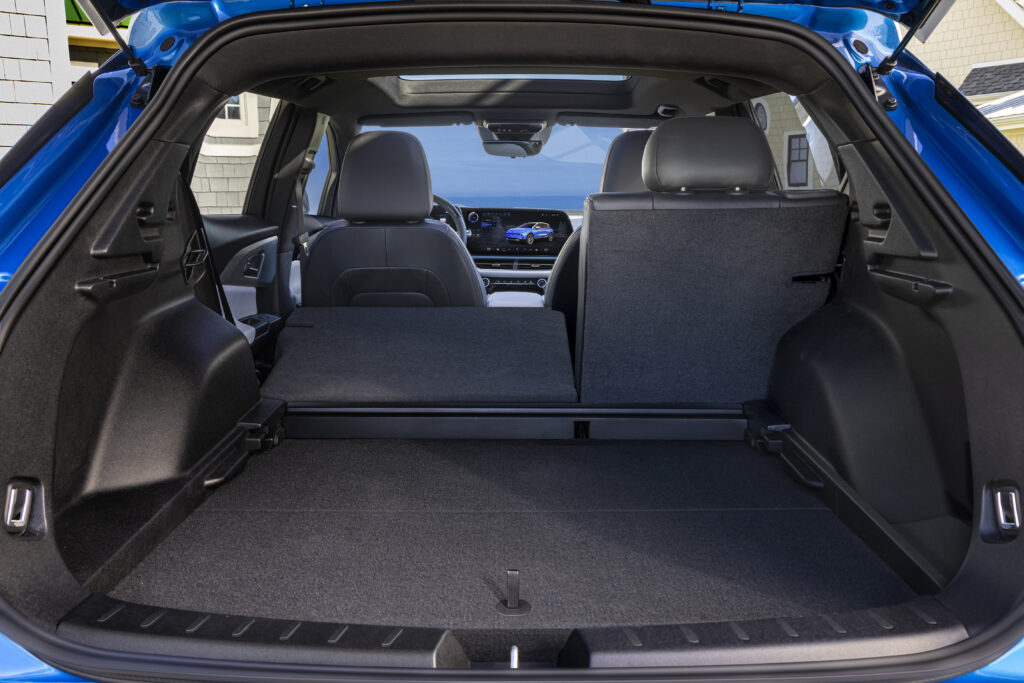
GM has not released official passenger and cargo volume numbers, but they did release some key numbers. The Equinox EV is larger than the gas-powered Equinox. It’s 7.4 inches longer overall with a wheelbase that is 9 inches wider. The much wider wheelbase creates more interior space, similar to how other automakers have make crossovers feel a lot more like larger SUVs. In terms of overall width, the EV is 3 inches wider than the gas version.
The Equinox EV is one inch shorter than the gas version, and that’s definitely for aerodynamic reasons.
We’ll update this page as more info becomes available.
This was the only letdown in my book, but it’s not a deal breaker. General Motors has often touted the next-generation capabilities of its Ultium batteries. More range, faster charging, better efficiency. The Ultium-powered Cadillac Lyriq charges at 190 kilowatts and the GMC Hummer EV peaks at 180 kW, so I was a bit confused to see that the Equinox EV is limited to 150 kilowatt charging speeds at a DC fast charger. It’s totally possible that CEO Mary Barra and the crew are taking a page out of Porsche’s EV gameplan: underpromise and overdeliver.
Even with 150 kw charging speeds, what matters more is the charging curve. Early testing with the Hummer EV shows that at 65% state of charge, the Hummer was still pulling 170 kilowatts. That’s a great sign. Combined with GM’s claimed ability for the Equinox EV to add 70 miles of range in 10 minutes, and it starts to sound like a pretty sweet deal for those who travel at a leisurely pace.
To summarize:
When charging any electric car at home, you have two options. No additional installation is required to simply ‘trickle-charge’, which means plugging in to a standard three-prong wall outlet. Commonly known as level one charging, this would add just 3-5 miles of range per hour, but drivers like myself find it to be plenty enough since I leave my car plugged in all night, and I don’t drive more than 30 miles on most days.
If you drive over 40 miles per day at least a few times each week, you’ll either want to install a level 2 home charger, or plan to spend time at public charging stations. A trained electrician will be needed to install a level 2 charger, and equipment plus labor can add up to a few thousand dollars. If you do go the level 2 route, you’ll be rewarded with MUCH faster home charging.
The Equinox EV will have some of the fastest home charging available from any EV, including luxury options. The Equinox’s standard level 2 charging is rated at 11.5 kilowatts, which is noticeably higher power than most EVs today (limited to 6 to 9 kilowatts at level 2). The higher trims of the Equinox EV will go even further to 19.2 kW home charging. With that, the Equinox RT and RS could add 51 miles of range per hour.
Don’t forget that EVs typically charge overnight while you sleep. It can be tempting to compare home charging times to a quick gas station fill-up, but life with an EV is altogether a different automotive lifestyle.
What comes standard: if you’re a fan of massive horizontal touchscreens, we have good news. The Equinox comes standard with an 11 inch infotainment touchscreen, a separate 11 inch digital gauge cluster, manual cloth seats, and 250 miles of estimated range from Chevrolet’s standard battery.
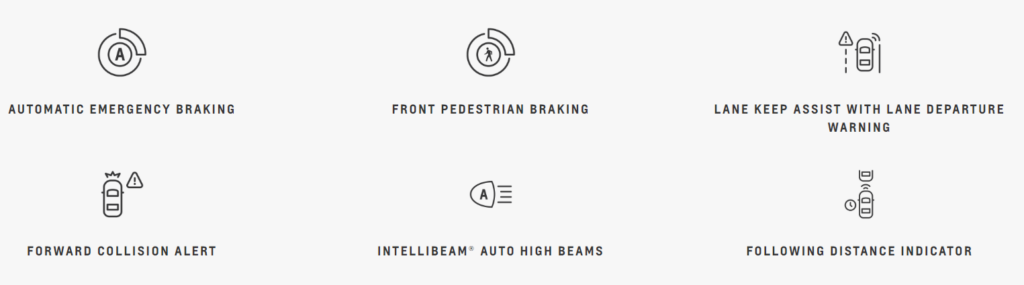
Standard safety features are generous. Standard Chevy Safety Assist includes:
Additional safety and assist features are available in higher trims, as detailed below.
Starting price: GM says “around $30,000 before incentives”; CarEdge expected price: $32,000
The 1LT includes all of the standard features mentioned above, including:
Starting price: TBD; CarEdge expected price: $37,000
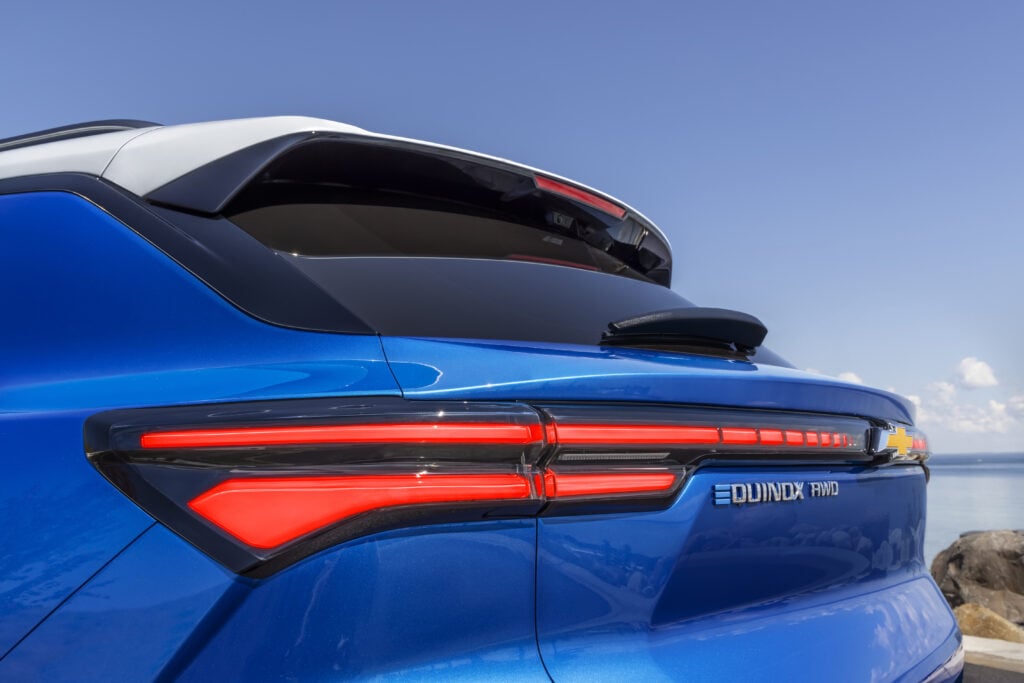
The Equinox 2LT is likely to be the option for the budget-conscious EV buyer who wants more range, improved looks, and niceties like heated seats. The 2LT adds:
Starting price: TBD; CarEdge expected price: $48,000 – $55,000

The 3LT has most of the bells and whistles, but pricing will likely undercut its nearest competitors like the Ford Mustang Mach-E and Kia EV6. Available options like all-wheel drive, heads-up display and SuperCruise are expected to drive a fully-loaded Equinox 3LT to a substantially higher price.
In addition to the features included in lower trims, the 3LT includes:
Starting price: TBD; CarEdge expected price: $52,000
GM has decided to launch the electric Equinox in the fall of 2023 with the 2RS trim. This is the entry-level sporty trim option. It’s all about looks.
Starting price: TBD; CarEdge expected price: $60,000
Available 19.2 kilowatt home charging is the real standout option with the 3RS. Aesthetically, this is as close as the Equinox EV gets to its sportier sibling, the 2022 Chevy Blazer SS EV.
The 3RS also includes:
Why do I think the higher trims will costs over $20,000 more than GM’s “aroud $30,000” starting price? It’s VERY difficult to make money selling EVs at $40,000 right now, not to mention ten grand cheaper. Ford recently admitted they aren’t turning a profit on the Equinox’s rival the Mustang Mach-E. Raw material prices have shot up by over 100% since 2020, and inflation is real.
In August of 2022, President Biden signed the Inflation Reduction Act of 2022 into law. With the new law arrived a completely revamped EV tax credit and future rebate. We’ve already covered the details of the new EV tax credit and which models will qualify, but here’s a summary of the biggest changes:
The Equinox EV will qualify for at least half ($3,750) of the new EV tax credit. GM plans to build it in Mexico with Ultium batteries made in America. Whether or not the Equinox qualifies for the full $7,500 will depend on where GM sources the lithium and other minerals in their batteries.
Yes, it’s true: With incentives, the 2024 Equinox EV may cost as little as $23,000. That would be a true turning point in EV adoption.
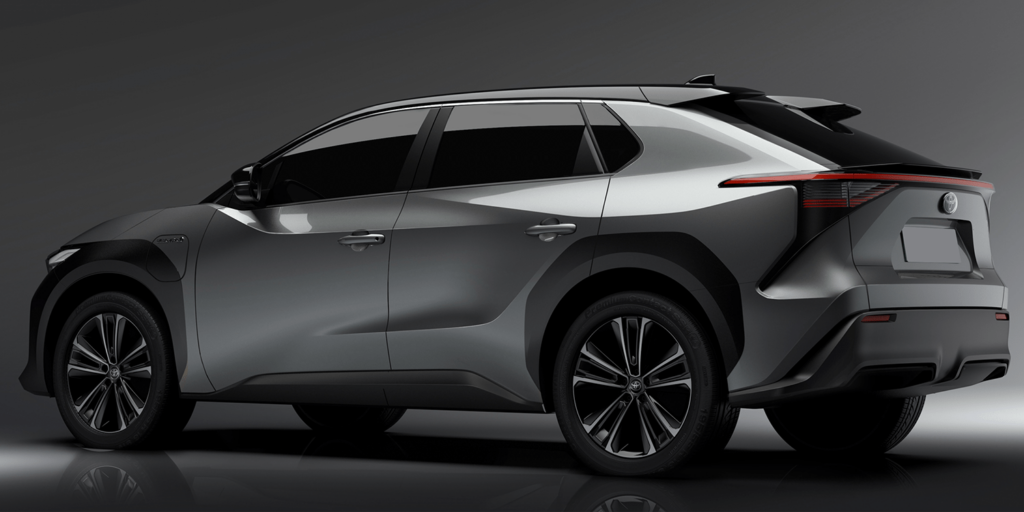
The 2024 Chevrolet Equinox EV will be up against stiff competition in this burgeoning electric crossover segment. These are some of the most popular competitors:
Stay tuned to the latest EV coverage by subscribing to our CarEdge Electric YouTube channel. Join the thousands of EV buyers, owners and enthusiasts in the Electric Vehicle forum at caredge.kinsta.cloud. Bring your questions, the community has answers!

Car sales increased for the first time in more than a year in August. While overall market conditions seem to be improving, many automakers are still in a tough spot (we’re looking at you Toyota, Honda, and Subaru). Will increasing new car inventory and sales lead to more manufacturer incentives and lower prices? Here’s what the August data reveals, and what new trends suggest for car buyers in September 2022.
Industry analysts at LMC Automotive and TrueCar are reporting that for the first time since last summer, new car sales increased last month. Excluding fleet sales, TrueCar expects U.S. retail deliveries of new vehicles to be 1,015,575 units, up 6 percent from a year ago and up about 3% from July 2022.
As CarEdge’s Ray Shefska points out, an extra day in August really helped pump up sales numbers for some automakers. August’s seasonally adjusted annualized rate (SAAR) for new vehicle sales (light duty models) is approximately 13 million, which is down 14 percent from August 2021. U.S. new car sales are still in a slump, but August sales numbers are showing some signs of improvement.
LMC Automotive reported total light-vehicle sales rose 4 percent to 1.13 million (including fleet sales). Taken together, August would mark the first monthly year-over-year gain since summer 2021. Does that mean the auto industry has come out of rock bottom?
Is the American auto industry climbing back to normal? The best answer we have with August sales data is … maybe? Only seven automakers report monthly U.S. sales figures, and that leaves a massive data gap that severely limits the interpretation of monthly sales. Ford, Honda, Hyundai, Kia, Subaru, Toyota and Volvo release sales data monthly, but big names like General Motors, Stellantis and Tesla don’t. The seven who do tallied 617,363 sales in August, down 1.8 percent year-over-year, according to the Automotive News Research & Data Center.
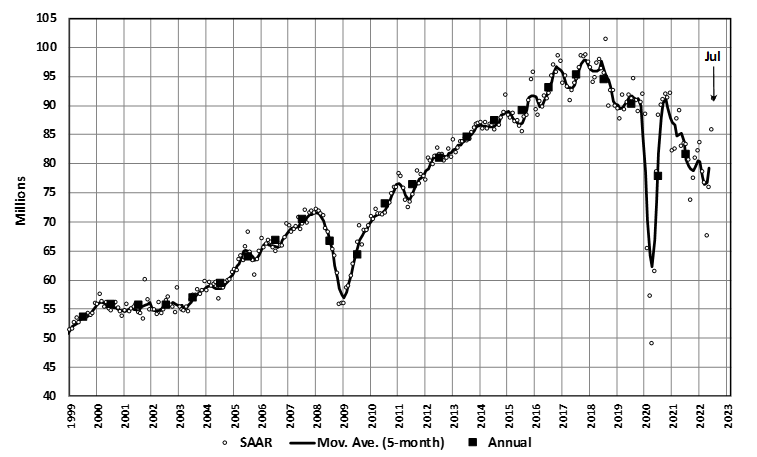
From the automaker perspective, just how you feel about last month’s data depends on who you work for. Experts at Cox Automotive take the latest numbers with a grain of salt. Cox Automotive Senior Economist Charlie Chesbrough shared his cautious optimism. “There are small signs that new-vehicle inventory levels are stabilizing, but they are also not getting significantly better. Some automakers have far more inventory than others, and some are managing their operations more efficiently.”
Meanwhile, TrueCar’s analysts see the data as validation for what they’ve predicted for months. “August is shaping up to confirm our early predictions that the industry may be turning the corner,” said Zack Krelle, Industry Analyst at TrueCar. “We’re seeing consecutive month over month increases for incentives, while average transaction prices are softening. Inventory is also slowly growing, and sales are improving slightly.”
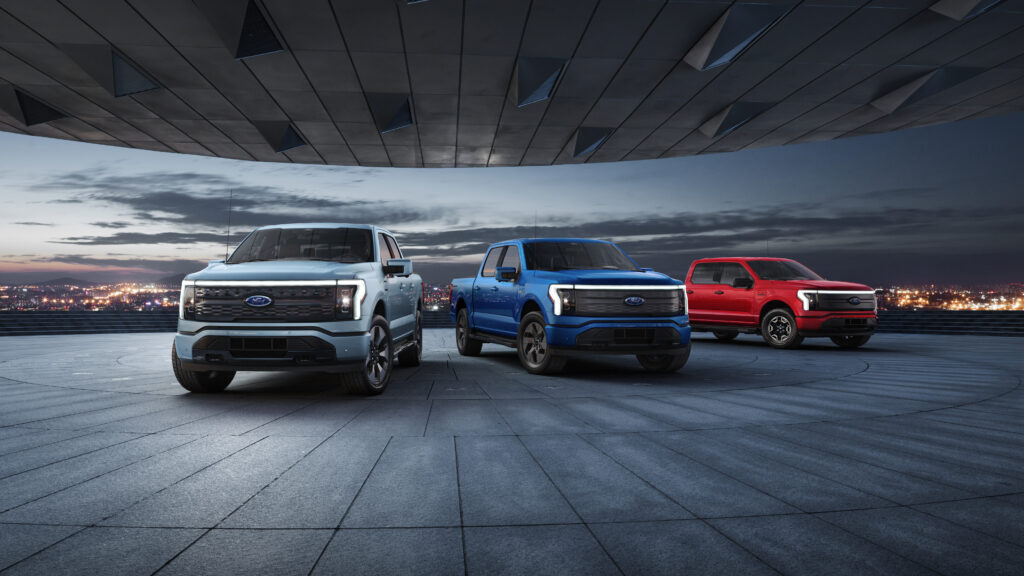
When it comes to winners, Ford Motor Company was the shining example of what many see as better times ahead. In August, total Ford Motor Company sales increased 27.3 percent to 158,088 units. Plus, there’s even better news if you’re in the market to buy. Ford ended August with 254,400 vehicles in dealer stock or in transit (although one has to wonder how many are actually on dealer’s lots right now), up from 250,200 at the end of July and 210,800 a year earlier.
The F-150 added a new accolade last month: best-selling electric truck. Ford says that electric vehicle sales were up 307 percent year-over-year. The automaker cited the Ram pickup, Tesla Model 3 and Model X as the Lightning’s top three conquests.
Demand remained strong, with more than 76,000 retail orders placed for 2023 model vehicles last month, a 41 percent increase compared with 2022 model orders in August last year.
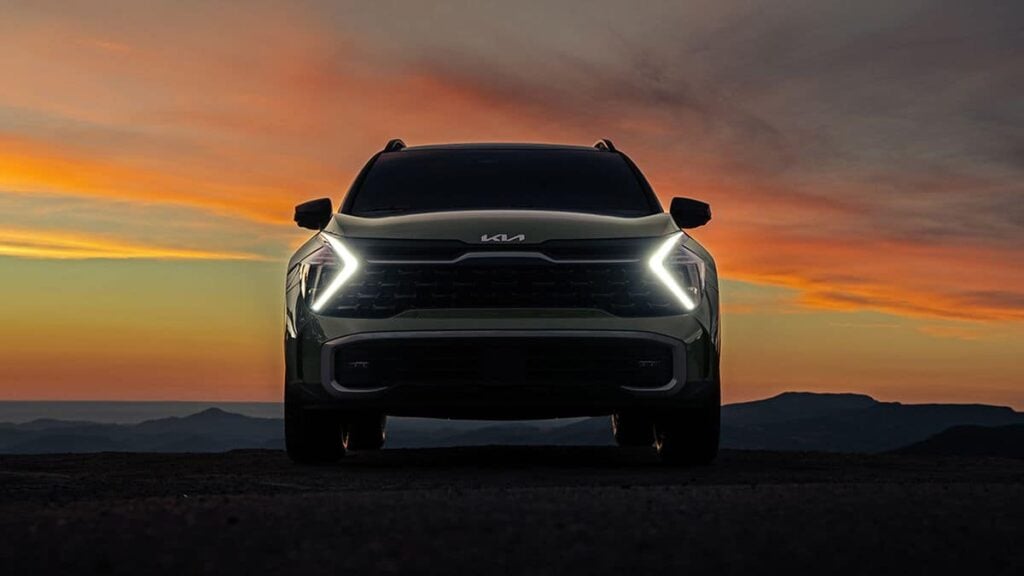
Hyundai and Kia snapped a five-months of sales declines in August. Hyundai’s U.S. sales were up 14 percent, and Kia sales increased 22 percent. Inventory is also looking marginally better for the two brands. Hyundai Motor America said it ended August with 19,209 vehicles trucks in U.S. inventory, up from 14,784 at the end of July but still only about half of the 39,357 it had a year earlier.
“This month we’re seeing Hyundai and Kia doing well, which I believe is in part due to the freshness of their lineups, with greater design changes than other OEMs,” said Justin Colon, Vice President of OEM Solutions at TrueCar.
New car sales slipped at Toyota and Honda in August as Japanese automakers were continuing to feel the direct impacts of Asian supply chain disruptions. Toyota’s sales fell 9.8 percent, and Honda was down 38 percent. Honda’s Acura brand was even worse, with sales down 47 percent. Honda’s U.S. monthly sales have dropped for 13 months straight.
Check here for the latest new car inventory numbers (updated as they become available)
Other bits of good news were to be found in August sales reports. Still, it’s important to zoom out and remind ourselves that small monthly gains are dwarfed by over a year of sinking inventory, higher prices, and fewer manufacturer incentives. For example, incentive spending was down 52% from last year but up 9% from July 2022. TrueCar estimates that the average transaction price in August was down slightly from July, but is still up 10% from a year ago. Buying a car remains very expensive, however rising interest rates, slightly better inventory and a softening used car market are all giving car buyers more to think about as we head into autumn.
Our very own Ray Shefska had this to say about August sales numbers. “The Seasonally-Adjusted Annualized Rate (SAAR) is still significantly below where they thought it would be earlier this year. That doesn’t leave me feeling optimistic. I think we all need to wait until early October before drawing conclusions. By that time, we’ll have every automaker’s Q3 2022 sales numbers to pore over. It’s hard to draw any conclusions when only a few automakers report monthly sales numbers. After a year of bad news on the inventory front, automakers and car buyers alike are ready for optimism. Patience is key to informed car buying in a time like this.”

If you’re thinking about hauling the kids off to school with zero emissions, today’s EVs offer more range, faster charging and greater fuel savings. The best electric cars and SUVs for families are available in a wide range of options to meet your needs, and an even wider range of price points. These are the best electric crossovers and SUVs on sale in 2024.
If you need space for four, five, or maybe six people (plus those furry friends), these 3-row electric SUVs are built for you.

Reviewers absolutely LOVE the new Kia EV9. As the first mainstream 3-row electric SUV to hit the American market, the EV9 was highly anticipated. We can confirm that it has been worth the wait. Step inside this full-size SUV, and you’ll immediately note the spaciousness and luxurious feel of this premium-feeling Kia. This one is worth a test drive.
Price: $56,395 – $75,395
Range: 230 – 304 miles
Charging (public fast charger): can add 200 miles in 18 minutes
Passenger volume: 159 cubic feet (three rows, seats 6)
Cargo volume behind second row: 44 cubic feet
Total cargo volume: 82 cubic feet
NHTSA safety rating: Not Rated (5-Star Euro Rating)
See Kia EV9 new and used listings with local market data.
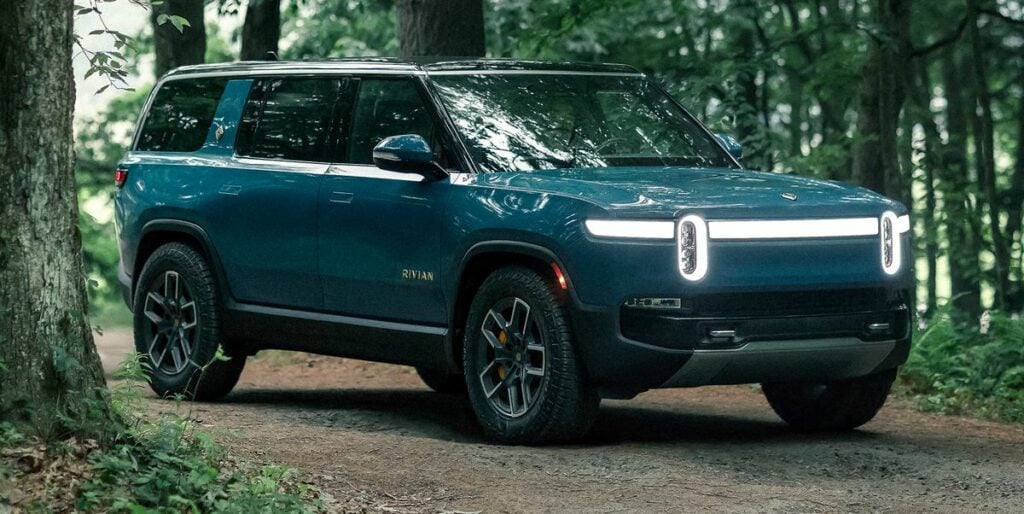
Rivian is just beginning to ramp up production and sales of the Rivian R1S, the full-size electric SUV companion to the R1T electric truck. The 2024 Rivian R1S is a blend of luxury and off-road capability. This 3-row EV is made in America, at a converted manufacturing facility in Normal, Illinois. We can only recommend this great vehicle if you live within a reasonable distance of one of Rivian’s service centers. If you end up needing service, you don’t want to pay for a long-distance tow truck!
Price: Starting at $74,900
Range: 316 miles
Charging (Public fast charger): can add 140 miles in 20 minutes
Passenger volume: (three-row SUV)
Cargo volume behind second row: 46.7 cubic feet
Total cargo volume: 104.7 cubic feet
Safety rating: Top Safety Pick+ by IIHS
Learn more about the Rivian R1S.
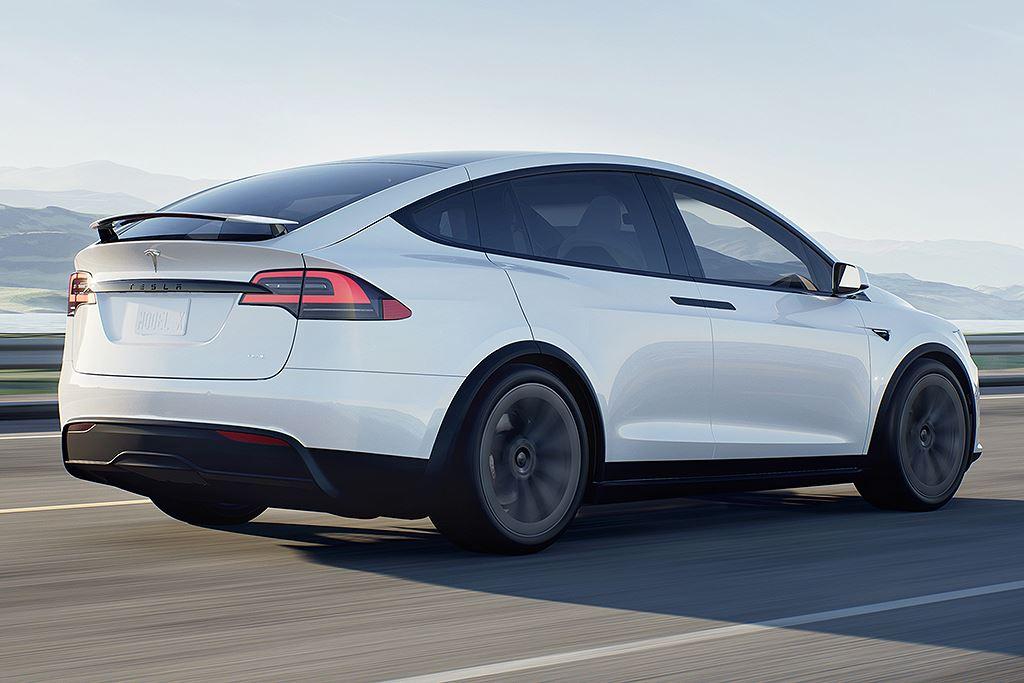
With gull-wing doors and a massive glass roof, there’s no hiding the fact that the Tesla Model X is a luxury SUV. In 2024, the Model X has seen multiple price cuts, and now starts around $80,000.
Price: $79,990 to $120,000+
Range: 351 miles
Charging (Public fast charger): can add 200 miles in 15 minutes
Passenger volume: N/A (three rows)
Cargo volume behind second row: 42.5 cubic feet
Total cargo volume: 92.3 cubic feet
Safety rating: 5 stars from Euro NCAP
See Tesla Model X new and used listings.
These electric crossover SUVs are the highest-rated, most-loved EVs for families today. Although they lack a third row, they’re plenty big enough for most families of four. Spaciousness, pricing, range and charging speeds vary from one electric model to another. We’ve also included NHTSA safety ratings if they’re available.

The Model Y is the best-selling electric vehicle in America. Model Y prices have fallen 20% from 2022’s highs. It’s now possible to buy a Model Y for well below $50,000 with the point-of-sale EV tax credit. Although it’s known for autonomous driving, the full capability (known as FSD) is a $15,000 package.
Price: $49,990 to $74,990
Range: 279 to 330 miles
Charging (Public fast charger): can add 200 miles in 15 minutes
Passenger volume: 106 cubic feet
Cargo volume behind second row: 26.6 cubic feet
Total cargo volume: 72 cubic feet
NHTSA safety rating: 5 stars
See Model Y new and used listings.
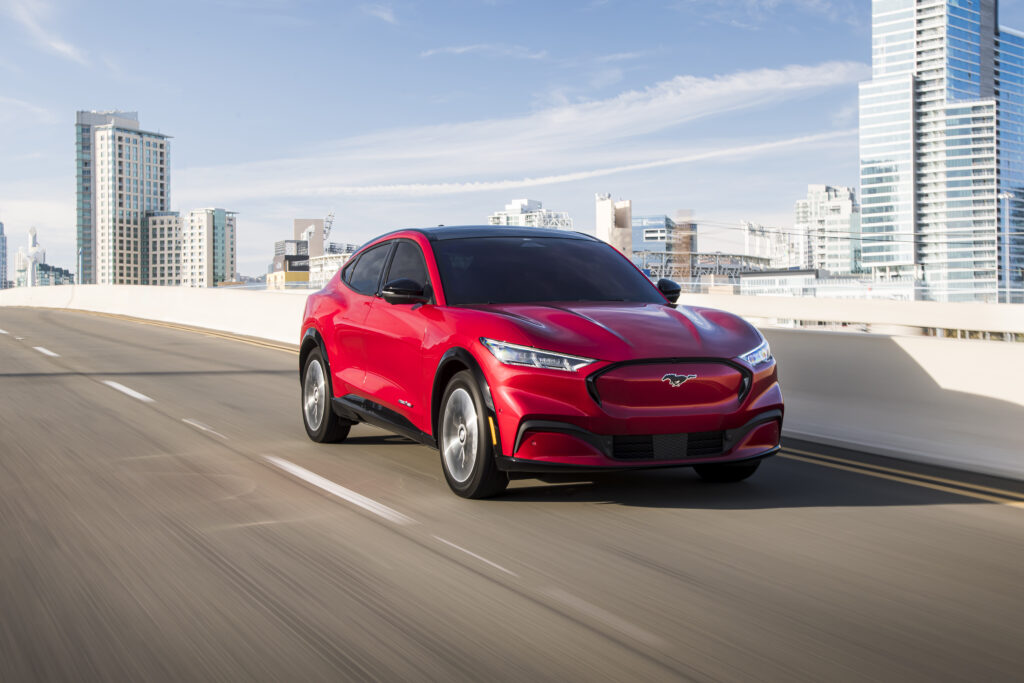
Ford’s first serious EV is very popular among small families and speed freaks alike. If the Mustang brand has a special place in your heart, this just might be the EV for you.
Price: $45,995 to $63,575+
Range: 224 to 312 miles of range
Charging (Public fast charger): can add 120 miles in 20 minutes
Passenger volume: 104.5 cubic feet
Cargo volume behind second row: 29.7 cubic feet
Total cargo volume: 59.7 cubic feet
Safety rating: IIHS Top Safety Pick
See Mustang Mach-E new and used listings.

I can confidently say that the IONIQ 5 is a great family car, and that’s because my wife and I haul our own kiddo around in this segment-bending electric crossover with hot hatch flavors. The IONIQ 5 has won many awards, including Car and Driver’s 2022 EV of the Year. It charges VERY fast, and that’s what I love most about the car.
Price: $40,925 to $57,400+
Range: 220 to 303 miles
Charging (Public fast charger): Adds 200 miles of range in 20 minutes
Passenger volume: 106.5 cubic feet
Cargo volume behind second row: 27.2 cubic feet
Total cargo volume: 59.3 cubic feet
Safety rating: Top Safety Pick Plus from IIHS
See Hyundai IONIQ 5 new and used listings.
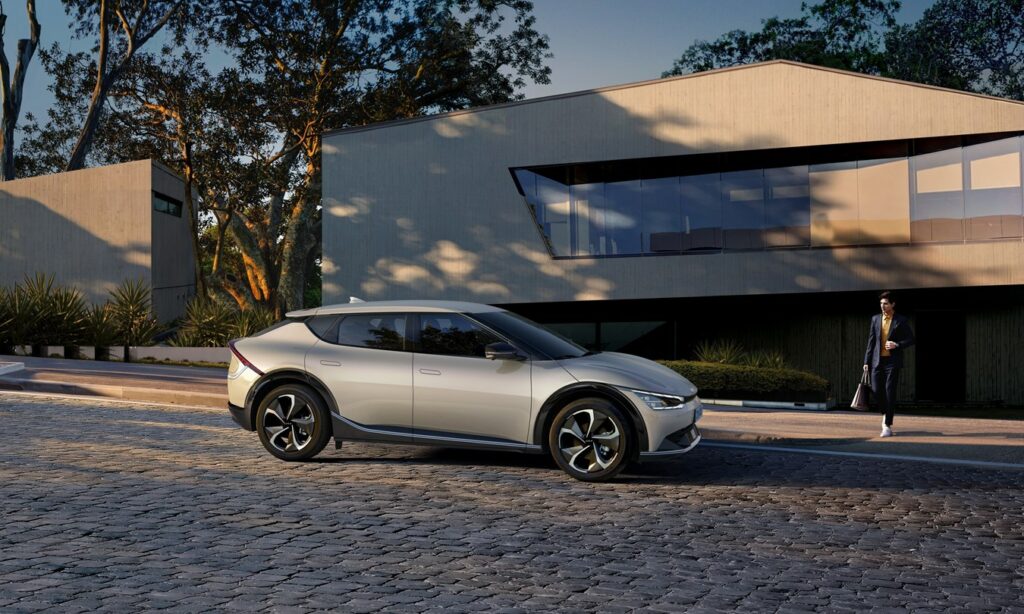
The spaceship-styled EV6 is Kia’s version of the Hyundai IONIQ 5, which shares the e-GMP electric powertrain. The Kia EV6 has slightly less passenger and cargo space than the Hyundai, but it’s better range and equally fast charging make it an obvious feature on this list of best electric cars for families.
One thing to bear in mind: most EVs, including the EV6 and IONIQ 5, have a flat floor, meaning that there’s a bit more interior space than it would appear. The best thing you can do is check one out in person!
Price: $43,920 to $61,600+
Range: 274 to 310 miles
Charging (Public fast charger): Adds 200 miles of range in 20 minutes
Passenger volume: 103 cubic feet
Cargo volume behind second row: 24.4 cubic feet
Total cargo volume: 50.2 cubic feet
Safety rating: In Europe, the EV6 earned 5 stars
See Kia EV6 new and used listings.
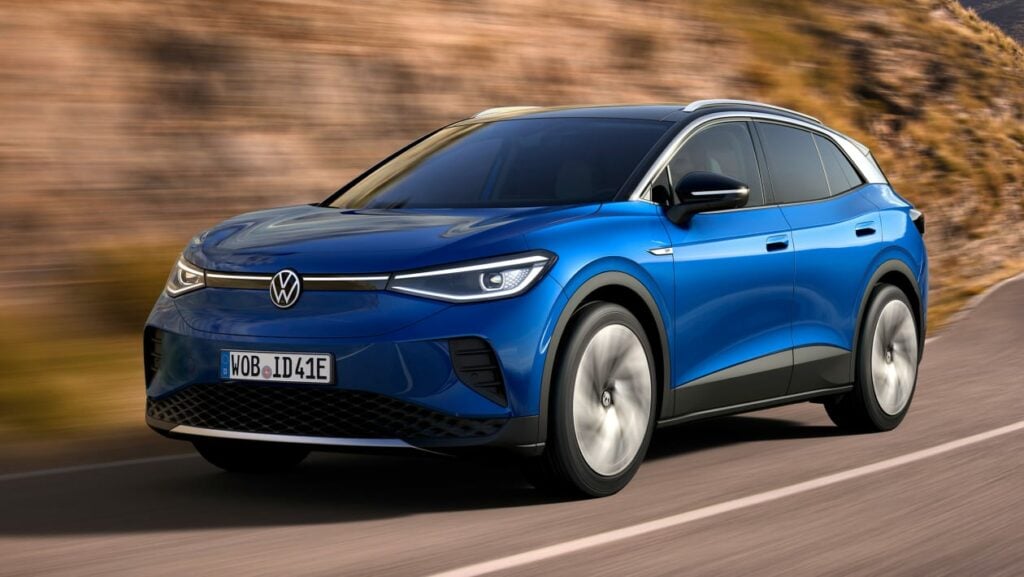
We have great news for those in search of an affordable and capable EV that qualifies for the federal tax credit. The ID.4 is now made in Tennessee at Volkswagen’s Chattanooga plant! The newest American-made EV is equipped with decent range, okay charging, and a comfortable interior that’s designed for families. However, don’t expect Tesla-level infotainment. The ID.4 is best for those who are content with the simpler things in life.
Charging speeds are merely okay, but the 2024 model year gets a decent improvement.
Price: $38,790 to $55,000
Range: 208 to 275 miles
Charging (Public fast charger): Adds up to 190 miles of range in 30 minutes
Passenger volume: 99.9 cubic feet
Cargo volume behind second row: 30.3 cubic feet
Total cargo volume: 64.2 cubic feet
Safety rating: Top Safety Pick Plus
See Volkswagen ID.4 new and used listings.
The Inflation Reduction Act eliminated the original EV tax credit and replaced it with a completely revised tax credit. For vehicles that qualify, up to $7,500 in tax credits are available. However, the incentive is based on battery sourcing, which will be determined by the automakers. Income limits restrict buyer eligibility, too. See the full details on qualifying models here.
There’s also a used EV tax credit for the first time, but a price cap of $25,000 eliminates every single family EV on this list.
Generous state and local incentives may make the switch to an EV much more affordable, depending on where you live. See the most generous state-level EV incentives, and check with the DSIRE clean energy incentive database to find more incentives for your specific location.
Which family-size electric car are you considering? Let us know in the comments, or better yet join the conversation at our CarEdge Community forum.
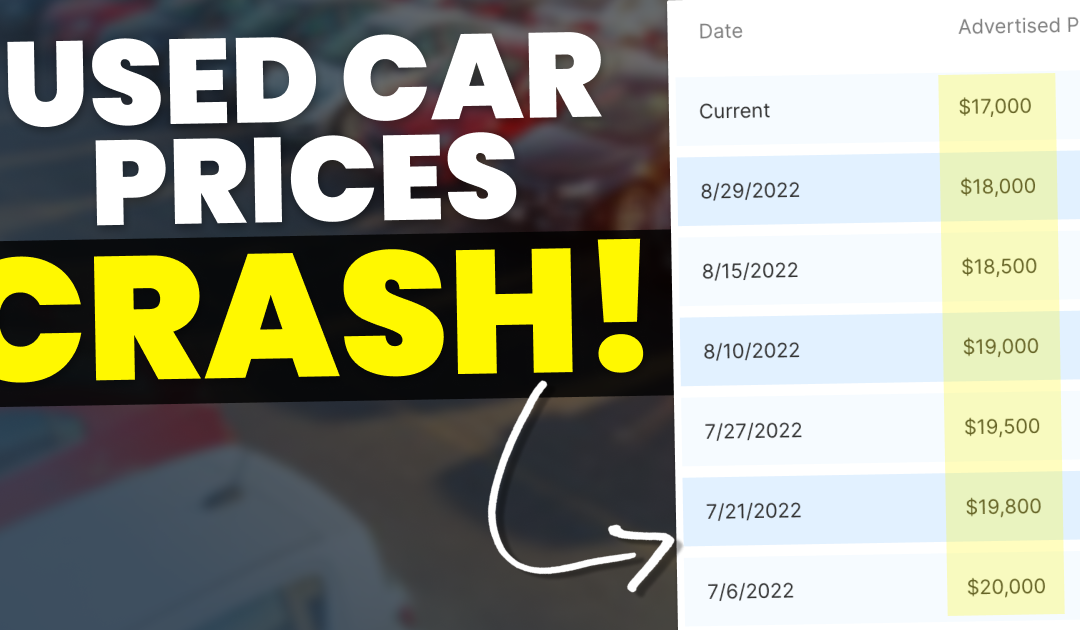
At CarEdge, empowering you is what drives us. Car buying, selling and ownership are too often accompanied by hassles and headaches. We do our best to save time & money with real advice from auto experts. Right now, the used car market is going through some big changes. In 2023, buyers have more leverage. For four months in a row, used car prices have declined at the wholesale level. Retail prices are softening, and we’re seeing more CarEdge members negotiate better and better deals.
If you’re in the market to buy a used car your goal should be to get 5-10% off of the dealer’s advertised price. Still, some brands are more negotiable than others. In this guide we’ll walk you through what has changed in the market, why you have leverage, and how you can get that 10% off.
Let’s dive in!
Data from Black Book reveals that days to turn, a metric used to measure how long cars sit on the lot before selling, is increasing. At the same time, there are more used cars for sale right now than at any other point of 2022. Supply is up.
Increasing dealer inventories, paired with higher interest rates, means that car dealers are paying more “floorplanning” cost than they have in years. Floorplanning is the interest payments car dealers make on their inventory. Just like you and me, car dealers typically finance the purchase of their inventory, which means that as inventory sits and interest rates rise, dealers have a financial incentive to negotiate and lower their prices to sell vehicles.
Dealers are once again working hard to sell cars. How do they do that? They lower their prices. Suddenly, with the softening of the market, more dealers are negotiating again, and many are starting to drop their used car prices rapidly. A quick look at CarEdge Car Search shows that more vehicles are seeing price drops. Take a look at this 2021 Chevrolet Equinox, for example. This dealer has discounted the price by 14% in ONE MONTH.
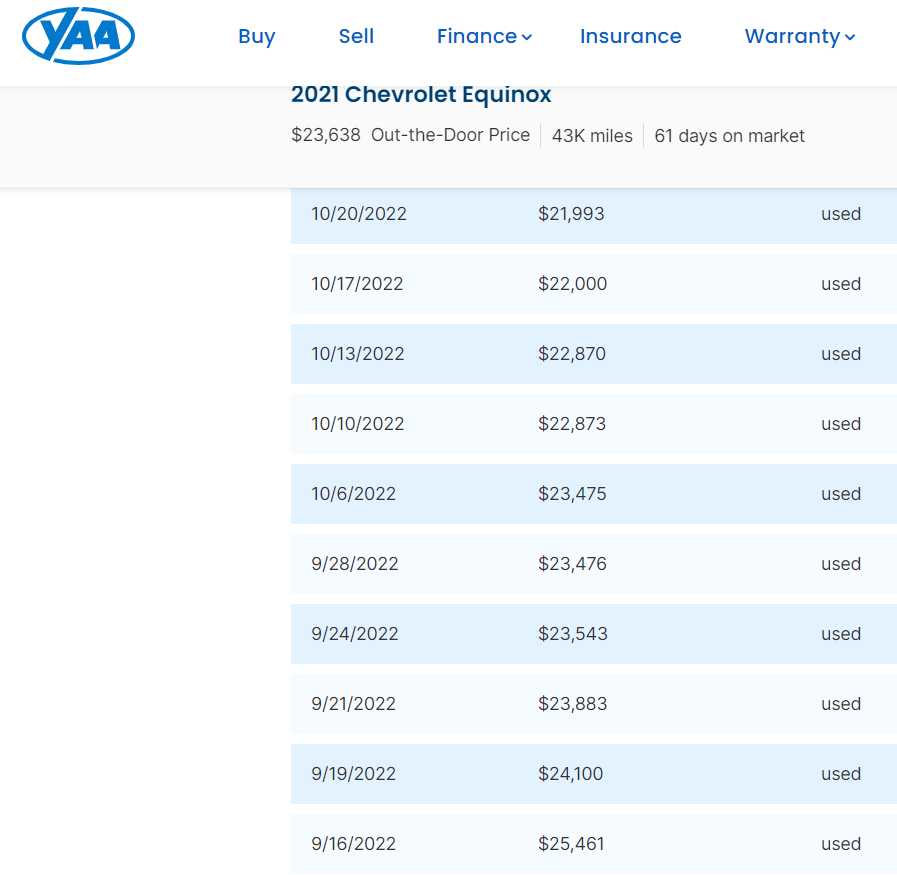
Over the past 35 days this dealer has dropped the advertised price by $3,500! That’s a 14% decrease in price in one month. Wow! As you can see, the most recent price declines are more significant. This is because the dealer is feeling the pressure of increased carrying costs, and a softening wholesale market (they can’t simply go to the auction and sell this car to make money like they could earlier in the year).
Use this information to your advantage! If you went to this dealership and requested an out the door price, be prepared to negotiate an additional 10% off of that amount. Why not? You already know the dealer is desperate to sell this car. Even if you end up with just 5% off, that’s still a win!
When you go to negotiate a used car, know that these are the five reasons why they’ll be willing to negotiate with you. Feel free to even print this out and show them if they give you a hard time!
In fact, you can now finance with CarEdge to secure a low rate through our credit union partners. Not interested? You can still use your pre-approval as leverage to negotiate a lower APR at the dealership. Learn more about financing your car purchase with CarEdge!
Some dealers just don’t look at the big picture and are oblivious to the car price trends we’re seeing right now. Not every car dealer understands that right now is the time to give up some of the profit they had planned to make on a vehicle in order to make a sale today before prices drop further in weeks to come. CarEdge Car Dealer Reviews and Markups.org are great places to learn what others have experienced at dealerships near you. Crowdsourcing car buying experiences is changing the game for the better!
With both new and used car prices still greatly inflated, it’s important to think about how today’s buying decisions could affect your future finances. New car prices are up 6% year-over-year, and 24% since July 2020. There’s no sign of new car prices coming down, and automakers seem to be announcing MSRP hikes weekly.
Deal School is 100% FREE! Learn how to negotiate!
If you’re determined to buy a new car, don’t expect MSRPs to go down at all. However, more buyers who work with CarEdge are able to buy at MSRP, with some even securing a deal under MSRP. Check out our latest success stories!
Work with dealers selling cars without markups. They’re not common, but they’re certainly out there. With MSRPs likely to increase in 2023, consider yourself a winner if you buy the new car you want with zero markups or dealer add-ons. Don’t forget, you can challenge dealer add-ons!
On the other hand, used cars are more negotiable than at any point in time this year. If you’re looking for a better deal, here’s what you need to know: used car prices are declining at the retail level, but we expect price drops to continue for many weeks to come. There will be better deals in the weeks ahead.
While making long-term predictions is difficult right now, we’re confident that used car prices will be even more negotiable (with lower sticker prices) at the end of November than they are today.
If you are in the market for a used car right now, your goal should be to negotiate 5-10% off of the sticker price, or consider waiting a few more weeks (or longer) for the market to soften further.
Yes. As a buyer you have more leverage than at any point in the past 18 months. Does this mean used car prices are “good” or “fair”? No way. Used car prices rose 45% in 2021, so finding a true bargain is next to impossible. Used car prices remain inflated, but for those who need a vehicle, market conditions have improved, and are likely to continue to improve. Here’s what’s clear: you have more leverage today than at any other time in 2022.
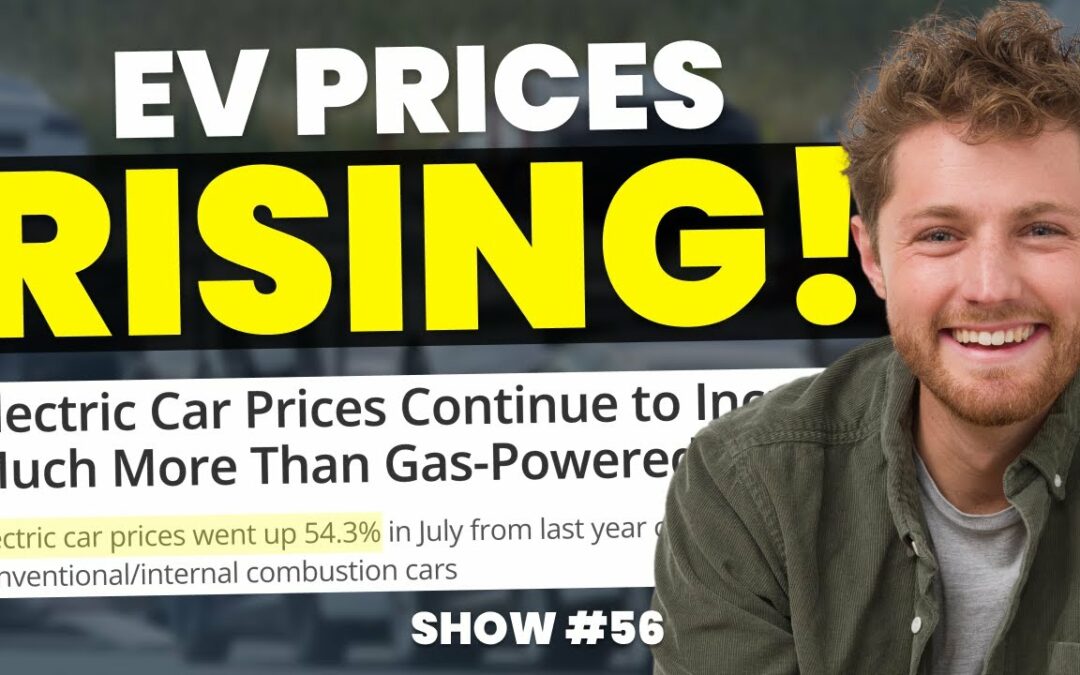
In 2019, market analysis and research firm Deloitte predicted that electric vehicles would reach price parity with combustion-powered counterparts in 2022. One year later, General Motors Chief Technology Officer Matt Tsien shared his optimism about EV prices. Cost parity between EVs and conventionally powered vehicles “will come sooner than many people think,” he said during a keynote speech at a Society of Automotive Analysts event. Skip forward to the second half of 2022, and EV prices are running away from ICE cars. The latest analysis from iSeeCars.com reveals just how much more expensive used EVs are, and recent MSRP hikes are driving new EV prices even higher.
Used car prices are dropping rapidly at the wholesale level, however buyers have yet to see any significant price drops at the retail level. Over the past eight weeks, used car prices have dropped nearly 5 percent at dealer auctions. Could the car price bubble be finally coming to an end? If you’re in the market for an electric vehicle or plug-in hybrid, we’re far from it.
According to data from iSeeCars, used electric car prices saw an increase of 54.3% from July of 2021 to July 2022. Over the same period, gas-powered cars were up just 10.1%. Number crunchers at iSeeCars analyzed the prices of over 13.8 million 1-5 year old used cars sold between January and July of 2021 and 2022 to determine the price growth of electric cars compared to ICE vehicles.
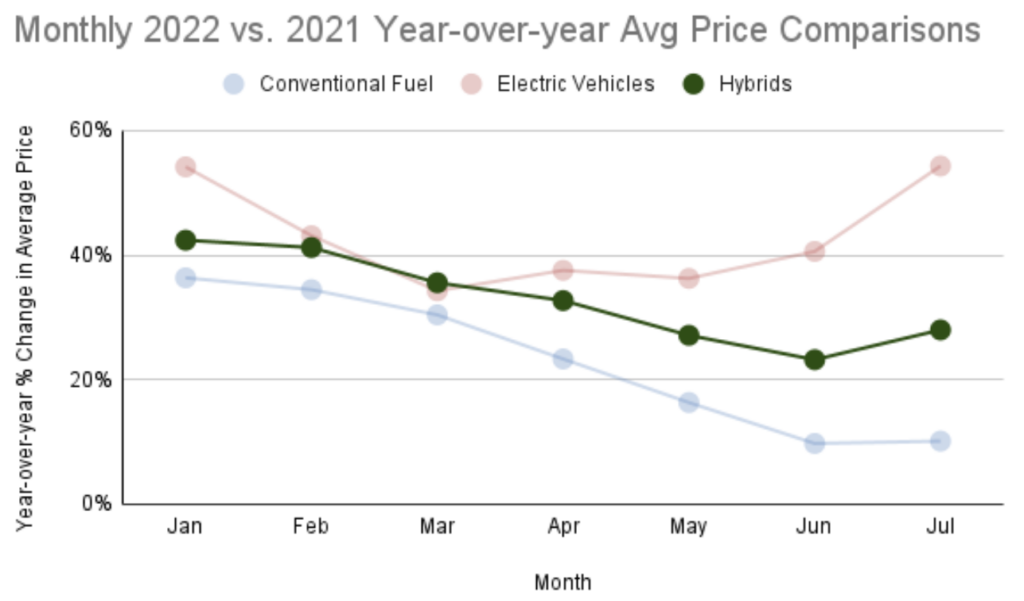
As gas prices reached new records this spring, the demand for EVs rose in parallel. However, a closer look at the data reveals that the few affordable electric cars on the market saw the greatest price increases, and by a long shot.
At a time when the average EV transaction price is over $66,000, the future of electric mobility is riding on the success of more affordable options. The number of sub-$40,000 EVs seems to be shrinking by the day.
iSeeCars found that America’s two most affordable electric cars saw prices increase the most. Used Chevrolet Bolt prices were up 29.3% since 2021, and used Nissan Leaf prices were up 45%. For the Leaf (which starts at $27,800 new), this massive price spike translates to an average sale price of $28,787 in July 2022. The average used Chevy Bolt sold for $28,291 last month. Considering the specs of the Bolt (notably charging capabilities), that’s a lot of money for a used EV.
With DC fast charging times typically around 45 minutes to one hour to add 200 miles of range, both of these electric models are likely to see drastic depreciation as much faster charging EVs become more commonplace. This is especially true for the Leaf, which lacks the decent range of the Bolt.
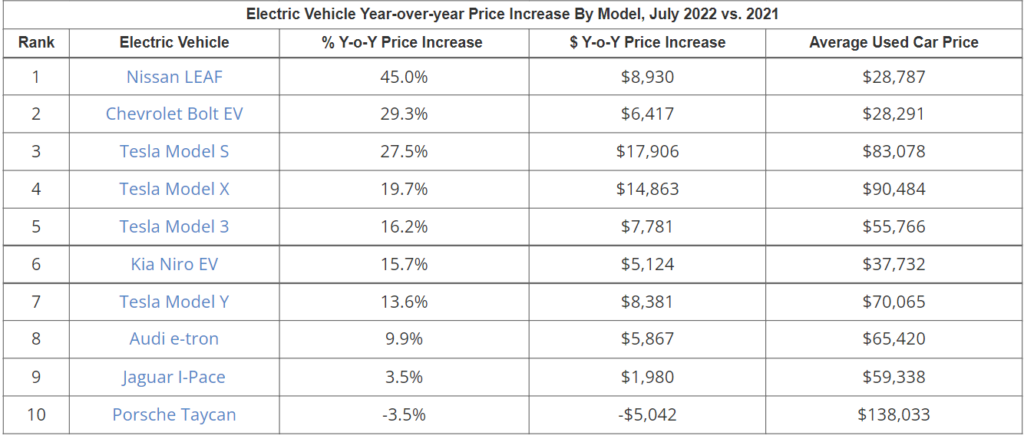
The Kia Niro EV seems to be the outlier here. With 239 miles of EPA-rated range and 77 kilowatt DC fast charging capability, it almost seems like a good deal with used Niro EV prices ‘only’ increasing 15.7% year-over-year. At the time of writing, used Kia Niro EVs are priced between $35,000 and $43,000.
New electric vehicles are seeing price hikes, too. Just last week, Ford announced that the 2023 Mustang Mach-E was getting a massive price increase. The base Select trim now starts at $48,195 (up $3,200). The rear-wheel drive option was eliminated, effectively canceling the most affordable Mustang Mach-E. The most popular trim, the Premium AWD Mustang Mach-E, now starts at $56,175 before the $1,300 destination fee. That’s a $6,075 increase from earlier in 2022.
When Ford reopened F-150 Lightning orders in August, the news was accompanied by a $6,000 to $8,500 price increase. The most affordable F-150 Lightning now starts at $46,974. Most buyers will want the XLT with extended range, and that option now starts at $80,974. Will Ford lower the price by $1,000 to qualify for the new EV tax credit? We’ll find out soon enough.
Tesla prices are up over 20% since early 2021. The Model 3 is now 27% more expensive, and the most popular EV in America, the Model Y, now costs 30% more with a starting price of $65,990. Rivian made headlines when they canceled the most affordable configuration of the Rivian R1T electric truck. Anyone with basic math skills (or a calculator) can see that new and used EVs alike are becoming more expensive.
This right here is the question we’re all doing our best to answer. Still, it’s hard to tell. Here’s what needs to happen before EV prices will go down:
Is there any good news? It depends on which EVs you’re interested in, and your buying timeline. The new EV tax credit is the first to ever offer a used EV tax credit and future rebate, however strict eligibility requirements for both are causing an uproar. For some, buying an EV may soon be thousands of dollars cheaper. For others, federal EV incentives vanished when President Biden signed the Inflation Reduction Act of 2022 into law. See which new EVs and used EVs qualify for the revised incentives.
Want to stay informed about the latest EV pricing, ownership and development news? Join the CarEdge Community for free. Our Electric Vehicle forum is the place to be for EV discussion, advice and expert consultation!

We track new car inventory monthly, and it’s been encouraging to see automakers like Ford and Toyota having more cars shipped to dealers. Still, automakers are selling every car they can make. With that said, more drivers are placing factory orders for vehicle builds that might not arrive until well into next year, or worse. Here’s how long car buyers are waiting for the vehicle they want. We want to send a special thank you to CarEdge Coach Mario for sharing this update with our audience!
Important note: These times are strictly for factory ordered cars. Many of these models are now available on dealer lots.
Hyundai Motors owns 51% of Kia, and the two Korean automakers have grown increasingly close over the past decade. Today, many of their vehicles share components, and therefore have been similarly impacted by supply chain constraints.
These are the factory order wait times our team of Car Coaches is hearing in 2025:
Right now, buyers placing orders for a Subaru are regularly being told that the wait time for delivery will be between one and four months, and in some cases longer. Subaru was hit hard by the chip shortage, and has yet to pull out of the slump.
In general, 2-3 months wait can be expected for any custom-ordered Subaru in 2025. Here are some additional details from what CarEdge Coaches are seeing:
How long you should expect to wait depends on the Toyota model and spec that you want. For Toyota deliveries, you’ll be looking for an available allocation rather than a custom order. For Toyota hybrids and plug-in hybrids, wait times are generally much longer.
In 2025, most Toyota models no longer have long waitlists for an available allocation, with the exceptions being the Prius, GR86, GR Corolla, Grand Highlander Hybrid, Land Cruiser, Sienna, Supra M/T and Spec Edition TRD Pro. For these models, you can expect to wait 3-4 months for an allocation that’s not already spoken for.
It is worth noting that more Toyota hybrid models may start seeing longer wait times as demand increases during summer buying season.
On average, Honda factory orders (or allocations) placed today can expect a short wait before delivery, generally less than two months. The only remaining Honda models with inventory constraints are the Civic Si and Civic Type R.
Otherwise, these are the Honda factory order wait times we’re seeing in 2025:
Accord: Immediate
Civic: 1-2 months
CR-V: 1-2 months
CR-V Hybrid: 2-3 months
Odyssey: 1-2 months
Pilot: 1-2 months
Ridgeline: Immediate
For Jeep and Ram factory orders, wait times depend on what model and trim you want. Don’t forget that these two brands have the highest new car inventory in the industry right now, so lot inventory is especially negotiable. Don’t expect the same negotiability with Ram and Jeep factory orders.
These are the Ram truck factory wait times our team is encountering in 2025:
Ram 1500: 2-3 months
Ram Super Duty: 3-5 months
Jeep factory orders: 8 – 10 weeks

These are the Ford factory order wait times we’re seeing this year:
Bronco: 6-9 months
Ford F-150: 5-6 month wait time for higher trims (King Ranch, Tremor, Platinum), less than 3 months on XL, XLT and Lariat
F-250: 2-3 months
F-350: 2-3 months
Mustang: 3 months
Tesla regularly updates wait times for the Model Y, Model 3, Model S and Model X. As of 2025, here are Tesla wait times as shared on Tesla.com. Note that there are many possible configurations that affect estimated delivery dates, so check Tesla’s configurator for the most accurate estimate.

Ready to outsmart the dealerships? Download your 100% free car buying cheat sheets today. From negotiating a deal to leasing a car the smart way, it’s all available for instant download. Get your cheat sheets today!