
CarEdge saved me over 4,500 dollars on a brand new Honda Pilot. I can't say thank you enough.
Price intelligence
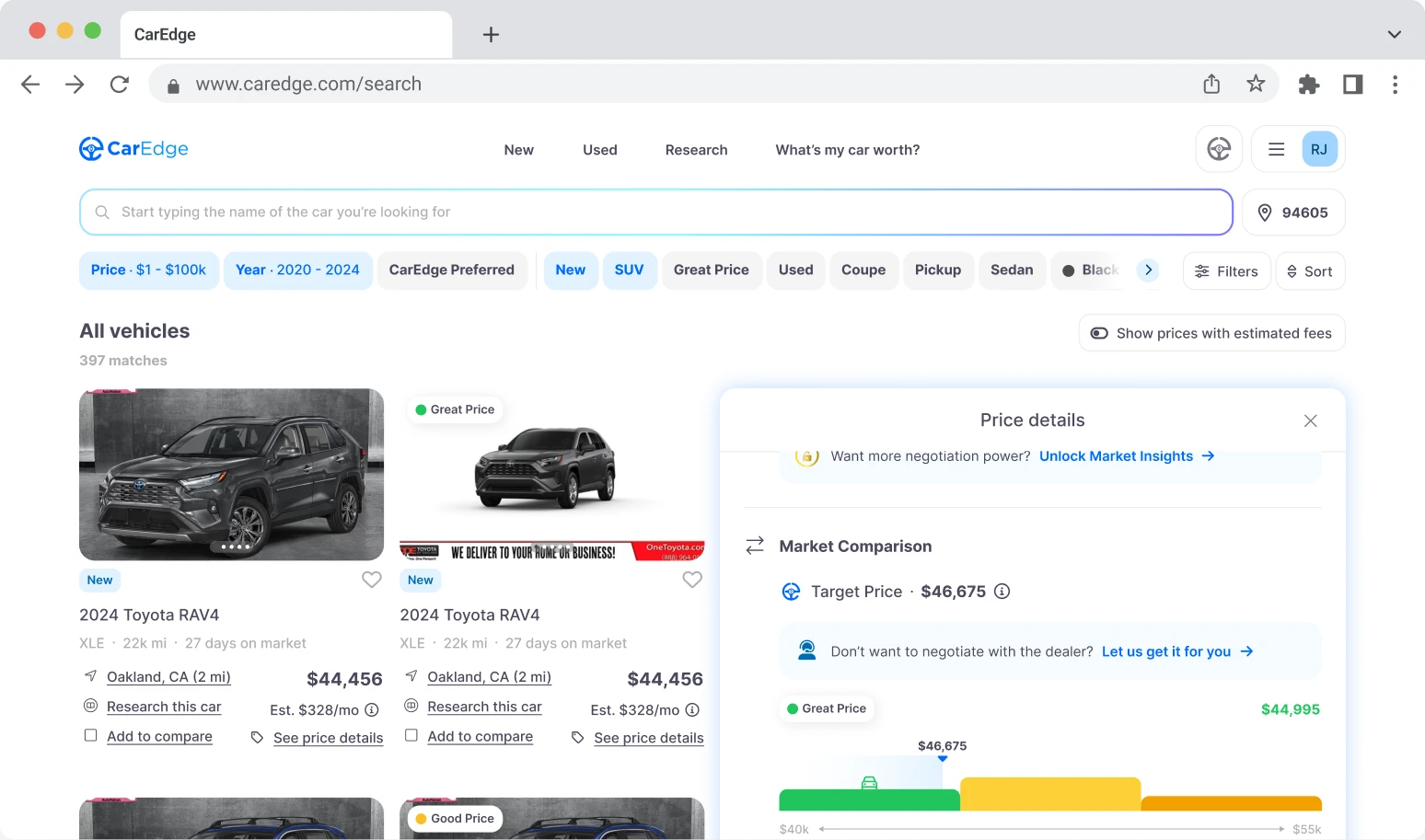
Find a wide range of vehicle listings with market insights on new and used listings near you.

What can I do with CarEdge?
 CarEdge Insights
What can I do with CarEdge?
Get access to exclusive information so you can make an informed car buying decision — all in one place.

Find a wide range of vehicle listings with market insights on new and used listings near you.
Track your vehicle’s value and cash in when the time is right to sell.

Access to our proprietary data to help you find the right car, at the right price. Find these unlocked on every listing after subscribing.

With our expert-led, tech-enabled car buying service, we will locate, negotiate, and deliver your vehicle so you can get a new car hassle free.


Help us personalize your CarEdge experience — it only takes a second.
Your answers help us personalize your CarEdge journey — we’ll follow up with tips and next steps that match your buying timeline.


As electric cars continue to enter the mainstream, the tug-of-war between EV startups and legacy giants is intensifying. With federal EV tax credits now expired, how will EV sales trend? Will Tesla hold its lead, or will Ford, General Motors and the rest catch up? Bookmark this page for the latest quarterly and monthly sales and market share updates for electric vehicles in the United States.
Q4 2025 EV sales numbers reflect the dip analysts expected following the end of federal EV subsidies in September:
In the fourth quarter of 2025, battery electric vehicle market share was 5.7% of all new car sales in the United States. This is down from 8.7% one year prior, and the all-time high of 10.5% in Q3 2025.
Here’s how U.S. EV sales totals in Q4 2025 compare to the past three years:
| Automaker | Q1 2022 | Q2 2022 | Q3 2022 | Q4 2022 | Q1 2023 | Q2 2023 | Q3 2023 | Q4 2023 | Q1 2024 | Q2 2024 | Q3 2024 | Q4 2024 | Q1 2025 | Q2 2025 | Q3 2025 | Q4 2025 |
|---|---|---|---|---|---|---|---|---|---|---|---|---|---|---|---|---|
| Tesla (estimate) | 129,743 | 130,047 | 114,000 | 131,574 | 161,630 | 175,262 | 156,621 | 161,375 | 140,187 | 164,264 | 166,923 | 154,900 | 128,100 | 143,535 | 179,525 | 138,000 |
| Ford Motor Company | 6,734 | 15,273 | 18,257 | 20,339 | 10,866 | 14,843 | 20,962 | 25,937 | 20,223 | 23,957 | 23,509 | 30,176 | 22,550 | 16,438 | 30,612 | 14,513 |
| General Motors | 457 | 7,217 | 15,156 | 16,150 | 20,670 | 15,652 | 20,057 | 19,469 | 16,169 | 21,930 | 32,095 | 43,982 | 31,887 | 46,280 | 66,501 | 25,219 |
| Nissan | 4,371 | 3,251 | 1,276 | 3,308 | 5,214 | 4,215 | 6,074 | 5,113 | 5,284 | 7,128 | 10,066 | 8,546 | 6,471 | 9,073 | 3,934 | 577 |
| Volkswagen Group | 7,932 | 8,961 | 11,893 | 15,193 | 15,723 | 13,977 | 20,295 | 20,403 | 13,806 | 11,904 | 11,900 | 9,755 | 19,827 | 11,043 | 37,400 | 4,940 |
| Hyundai Group (incl. Kia) | 15,480 | 17,979 | 9,796 | 9,641 | 14,346 | 21,696 | 30,757 | 25,447 | 22,936 | 37,044 | 29,609 | 39,649 | 22,995 | 21,493 | 48,650 | 14,000 |
| Subaru | 0 | 0 | 0 | 919 | 1,359 | 1,613 | 2,791 | 3,109 | 1,147 | 4,238 | 3,752 | 3,310 | 3,131 | 3,370 | 3,471 | 743 |
| Toyota Motor N.A. | 0 | 0 | 240 | 985 | 1,840 | 2,893 | 4,221 | 5,718 | 3,500 | 11,607 | 6,851 | 6,309 | 7,064 | 5,964 | 5,032 | 4,406 |
| Mercedes-Benz | 2,091 | 1,959 | 2,717 | 5,656 | 5,053 | 9,029 | 10,423 | 10,767 | 12,250 | 9,270 | 9,447 | 3,763 | 3,472 | 4,611 | 5,973 | 2,455 |
| Mazda | 0 | 0 | 0 | 324 | 15 | 51 | 34 | 0 | 0 | 0 | 0 | 0 | 0 | 0 | 0 | 0 |
| BMW Group | 1,171 | 1,082 | 4,337 | 7,099 | 6,585 | 11,990 | 13,594 | 15,364 | 11,455 | 14,081 | 13,028 | 13,876 | 14,234 | 11,094 | 10,950 | 7,888 |
| Jaguar | 0 | 114 | 0 | 298 | 8 | 80 | 86 | 78 | 256 | 1,188 | 779 | 763 | 381 | N/A | N/A | N/A |
| Stellantis | 0 | 0 | 0 | 0 | 0 | 0 | 0 | 0 | 0 | 204 | 235 | 531 | 4,990 | 2,352 | 6,939 | 840 |
| Volvo-Polestar | 3,092 | 4,518 | 3,510 | 5,616 | 5,228 | 7,608 | 7,797 | 6,531 | 3,279 | 2,285 | 3,913 | 3,028 | 2,718 | 2,898 | 3,058 | 2,129 |
| Rivian | 1,227 | 4,467 | 6,584 | 8,054 | 7,946 | 12,640 | 15,564 | 13,553 | 13,588 | 13,790 | 10,018 | 8,503 | 8,640 | 10,599 | 13,201 | 9,745 |
| Lucid | 460 | 482 | 1,398 | 1,060 | 1,368 | 1,659 | 1,618 | 1,512 | 1,967 | 1,855 | 2,781 | 3,099 | 2,400 | 2,635 | 4,078 | 4,330 |
| Vinfast | - | - | - | - | 110 | 740 | 1,159 | 1,120 | 927 | 1,225 | N/A | 1,800 | 525 | N/A | N/A | N/A |
| TOTAL US EV sales | 173,561 | 196,788 | 188,924 | 226,789 | 258,882 | 295,355 | 313,086 | 317,168 | 268,909 | 330,463 | 346,309 | 348,879 | 296,227 | 310,839 | 437,487 | 234,171 |
| Honda Motor Co | 0 | 0 | 0 | 0 | 0 | 0 | 0 | 0 | 0 | 1,873 | 15,291 | 18,838 | 14,374 | 12,278 | 22,236 | 2,704 |
| Additional EV Models | - | - | - | - | - | - | - | - | - | - | - | - | 5,930 | 3,508 | 2,288 | 1,645 |
Data source: Cox Automotive
See the latest Q4 2025 EV market share by automaker below. Calculations are based on sales totals from Cox Automotive.
| Automaker | Q1 2022 | Q2 2022 | Q3 2022 | Q4 2022 | Q1 2023 | Q2 2023 | Q3 2023 | Q4 2023 | Q1 2024 | Q2 2024 | Q3 2024 | Q4 2024 | Q1 2025 | Q2 2025 | Q3 2025 | Q4 2025 |
|---|---|---|---|---|---|---|---|---|---|---|---|---|---|---|---|---|
| Tesla | 74.8 | 66.1 | 60.3 | 58.0 | 62.4 | 59.3 | 50.0 | 50.9 | 52.1 | 49.7 | 48.2 | 44.4 | 43.5 | 46.2 | 40.9 | 58.9 |
| Ford | 4.4 | 7.8 | 9.7 | 9.0 | 4.2 | 5.0 | 6.7 | 8.2 | 7.5 | 7.2 | 8.6 | 8.7 | 7.7 | 5.3 | 7.0 | 6.2 |
| General Motors | 0.3 | 3.7 | 8.0 | 7.2 | 8.0 | 5.3 | 6.1 | 6.1 | 6.0 | 6.6 | 9.3 | 12.6 | 10.8 | 14.9 | 15.2 | 10.8 |
| Nissan | 2.5 | 1.7 | 0.7 | 1.5 | 2.0 | 1.4 | 1.9 | 1.6 | 2.0 | 2.2 | 2.9 | 2.5 | 2.2 | 2.9 | 1.0 | 0.1 |
| Volkswagen Group | 4.6 | 4.6 | 6.3 | 6.7 | 6.1 | 4.8 | 6.5 | 6.4 | 5.1 | 3.6 | 3.4 | 2.8 | 6.7 | 3.6 | 8.5 | 2.1 |
| Hyundai Motor Group (incl. Kia) | 8.9 | 9.1 | 5.2 | 4.3 | 5.6 | 7.3 | 9.9 | 8.0 | 8.5 | 11.2 | 6.8 | 11.4 | 7.8 | 6.9 | 11.1 | 6.0 |
| Mercedes-Benz | 1.2 | 1.0 | 1.4 | 2.5 | 2.0 | 3.1 | 3.3 | 3.4 | 4.6 | 2.8 | 2.7 | 1.2 | 1.2 | 1.5 | 1.4 | 1.0 |
| Mazda | 0.1 | 0.1 | 0.0 | 0.0 | 0.0 | 0.0 | 0.0 | 0.0 | 0.0 | 0.0 | 0.0 | 0.0 | 0.0 | 0.0 | 0.0 | 0.0 |
| Toyota Motor N.A. | 0.0 | 0.0 | 0.0 | 0.4 | 0.7 | 1.0 | 1.3 | 1.8 | 1.3 | 3.5 | 2.0 | 1.8 | 2.4 | 1.9 | 1.1 | 1.9 |
| Subaru | 0.0 | 0.0 | 0.0 | 0.4 | 0.5 | 0.5 | 0.9 | 1.0 | 0.4 | 1.3 | 1.1 | 1.0 | 1.1 | 1.1 | 0.8 | 0.3 |
| BMW | 0.7 | 0.5 | 2.3 | 3.1 | 2.5 | 3.9 | 4.2 | 4.8 | 4.3 | 4.3 | 3.8 | 4.0 | 4.8 | 3.6 | 2.5 | 3.4 |
| Stellantis | 0.0 | 0.0 | 0.0 | 0.0 | 0.0 | 0.0 | 0.0 | 0.0 | 0.0 | 0.0 | 0.0 | 0.1 | 1.7 | 0.8 | 1.6 | 0.4 |
| Jaguar | 0.1 | 0.1 | 0.0 | 0.0 | 0.0 | 0.0 | 0.0 | 0.0 | 0.0 | 0.4 | 0.2 | 0.2 | 0.1 | 0.0 | 0.0 | 0.0 |
| Rivian | 0.7 | 2.3 | 3.5 | 3.1 | 3.1 | 4.3 | 5.0 | 4.3 | 5.1 | 4.2 | 2.9 | 2.4 | 2.9 | 3.4 | 3.0 | 4.2 |
| Lucid | 0.3 | 0.2 | 0.7 | 0.5 | 0.5 | 0.6 | 0.5 | 0.5 | 0.7 | 0.6 | 0.8 | 0.9 | 0.8 | 0.8 | 0.9 | 1.8 |
| Vinfast | 0.0 | 0.0 | 0.0 | 0.0 | 0.0 | 0.3 | 0.4 | 0.4 | 0.3 | 0.3 | 0.0 | 0.5 | 0.1 | 0.1 | 0.0 | 0.0 |
| Volvo/Polestar | 1.9 | 2.3 | 1.9 | 1.6 | 2.0 | 2.6 | 2.5 | 2.1 | 1.2 | 0.7 | 1.1 | 0.9 | 1.0 | 0.9 | 0.7 | 0.9 |
| Honda Motor Co | 0.0 | 0.0 | 0.0 | 0.0 | 0.0 | 0.0 | 0.0 | 0.0 | 0.0 | 0.5 | 4.4 | 5.4 | 4.8 | 4.0 | 5.1 | 1.2 |
| Other EV Sales | - | - | - | - | - | - | - | - | - | - | - | - | 2.0 | 2.0 | 0.5 | 0.7 |
Data source: Cox Automotive
After several consecutive quarters of decline, Tesla’s share of U.S. EV sales jumped to 59% in Q4 2025. Tesla remains the dominant player in an increasingly crowded field. According to analyses by Cox Automotive, Tesla sales accounted for 45% of all new EV sales in 2026, down slightly from 49% in 2024. At the start of 2022, Tesla had a 75% EV market share in America.
After EV sales sunk in the fourth quarter for Ford and Hyundai Motor Group, General Motors is now firmly in second place. In 2026, Ford is pulling back on EVs, and GM isn’t planning any product launches. Toyota and Subaru, on the other hand, are launching several new models early this year. Will Toyota catch up to the leading legacy automakers? We’ll see how sales trend in the first quarter of 2026.
| Q1 2023 | Q2 2023 | Q3 2023 | Q4 2023 | Q1 2024 | Q2 2024 | Q3 2024 | Q4 2024 | Q1 2025 | Q2 2025 | Q3 2025 | Q4 2025 | |
| Battery Electric Vehicles (BEV) | 7.3% | 7.2% | 7.9% | 8.1% | 7.3% | 8.0% | 8.9% | 8.7% | 7.5% | 7.4% | 10.5% | 5.7% |
| Electrified (HEV, PHEV, BEV) | 14.5% | 16.0% | 17.7% | 16.0% | 17.8% | 19.1% | 21.2% | 30.7% | TBD | TBD | TBD | TBD |
In 2024, the US EV market share reached 8.1% of all light vehicle sales, up from 7.3% of sales in 2023. In 2022, 5.8% of the new cars Americans bought were fully electric, which was a sharp increase from 3.2% in 2021.
According to EIA.gov, Combined sales of hybrid vehicles, plug-in hybrids, and battery electric vehicles in the United States rose to 16.3% of total new light-duty vehicle sales in 2023. In 2022, hybrid, plug-in hybrid, and BEV sales were 12.9% of total sales.

Electrified powertrains continue to see rapid growth, despite less growth in the electric-only segment.
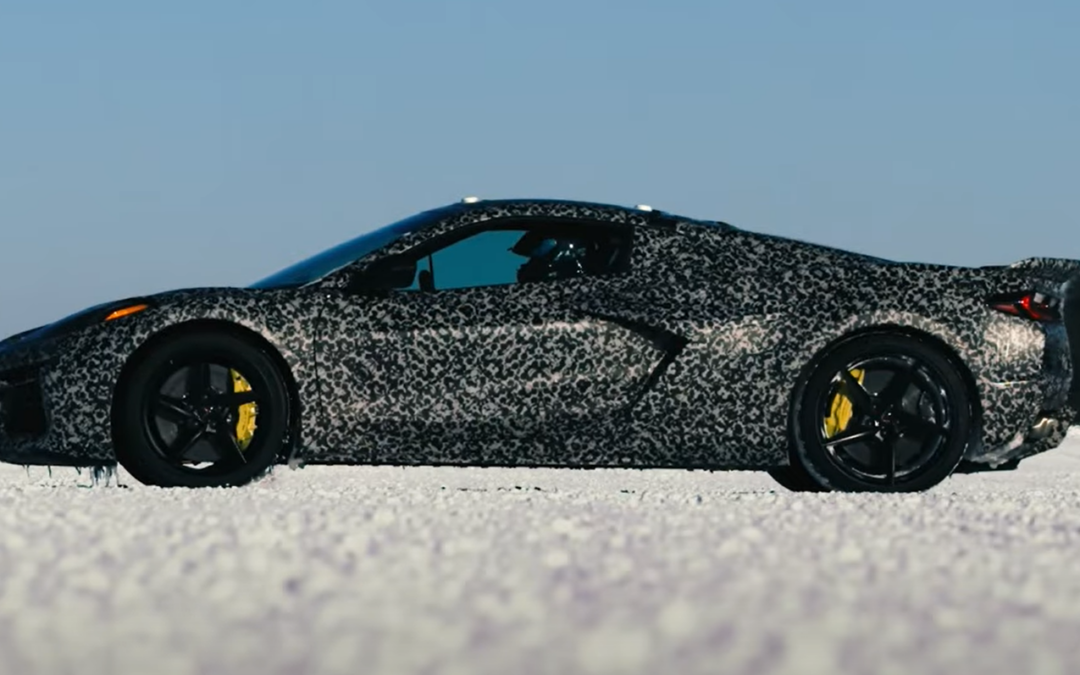

General Motors President Mark Reuss told CNBC Monday that ‘electrified’ and fully-electric Chevrolet Corvette versions will be out as soon as 2023. An electric Corvette has long been rumored, but this is the first official news about the Corvette EV. 2022 and especially 2023 are shaping up to be pivotal years for GM’s electrification strategy, as the automaker looks beyond the Chevy Bolt towards mainstream EVs like the Silverado EV and Chevrolet Equinox EV.
First, GM will debut an electrified Corvette in 2023. This will be either a hybrid Corvette, a plug-in hybrid, or both. News of a hybrid Corvette may perplex Corvette aficionados, however other performance cars have seen much success with hybrid powertrains, including the BMW i8 and the new McLaren Artura.
To those accustomed to associating General Motor’s electric vehicles with appliance-looking Chevy Bolts, fear not. The new electric Corvette will be powered by the all-new Ultium battery and electric motor platform. The Ultium platform recently made its production debut in the Cadillac Lyriq luxury crossover, as well as the lavish GMC Hummer EV. GM partnered with LG Chem to engineer the Ultium battery. LG Chem also makes batteries for Tesla, Lucid, Stellantis, and other automakers.
The strengths of the Ultium platform are lowered battery costs, higher energy efficiency, and faster charging. All three of these improvements are going to be central to GM’s fight to compete with both Tesla and Ford in the years to come.
General Motors CEO Mary Barra says that the new Ultium electric platform will unlock battery production at scale for less than $100 per kilowatt-hour. Combined with Ultium’s improved efficiency and ultra-fast charging (at up to 350 kW speeds), GM is banking on their new platform to catch up to Tesla. In fact, the Ultium battery and motor powertrain was chosen by Honda’s engineers to power the upcoming Honda Prologue electric SUV.
For now, General Motors President Mark Reuss is not sharing many details. He did liken the announcement of the Corvette EV to the coming 2023 Corvette Z06, so he’s setting the bar high. Chevrolet shared a 30-second teaser video, and all-wheel drive looks likely. That would put the Corvette EV on par with competing electric sports cars, including Teslas. We’ll be sure to update this page with the latest once more details are announced.
What do you think about the electric Corvette? Join the CarEdge Community to connect with auto enthusiasts and car buying experts. We’ve helped members save thousands of dollars in today’s hectic market. Join the fastest-growing automotive community online at CarEdge to see why car ownership minus the headaches is changing the game.
If you’re in the market for an affordable electric vehicle, you’ve likely already arrived at the realization that ‘affordable’ doesn’t mean cheap in 2022. In fact, our own CarEdge list of the best affordable electric cars features one car (the Tesla Model 3) that now starts just shy of $50,000. Are there any truly cheap electric cars available today? You may be surprised with what we found.
After earlier rumors suggested that the Nissan LEAF was to be discontinued, a Nissan executive recently stated that the LEAF is here to stay. That’s GREAT news for EV affordability.
We must point out that General Motors decided to slash the price of the LEAF’s competitor, the Chevy Bolt, to steal the title of ‘cheapest EV in America.’ More on that below.
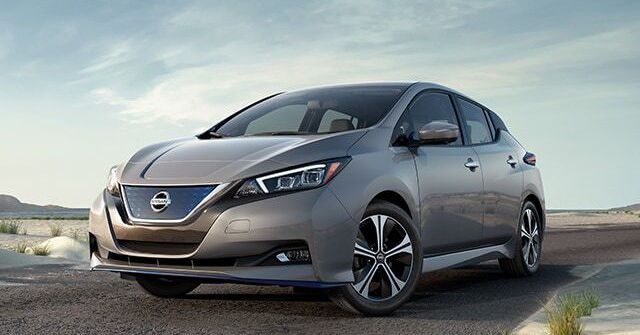
Price: Starting at $27,400
Range: 150 to 226 miles, depending on battery size
Charging Speed: Either 50 kW or 100 kW speeds, depending on battery
Tax credit: It qualifies!
Available at dealers now: See who has inventory at CarEdge Car Search: Nissan Leaf
Tesla is the face of electric cars today, but for years it was the Nissan Leaf at center stage. When Nissan brought the Leaf to market in 2010, it was a short-ranged novelty that somehow began to catch on. With just 73 miles of range on a good day, the first iteration of the Leaf was a bug-eyed appliance good for around town, but not much else.
Over a decade later, and the 2022 Nissan Leaf is a lot better than the first. However, it’s still a budget vehicle, and you get what you pay for. Still, it’s a great entry point into EVs for many. The Leaf now has enough range to make regional travel realistic, but charging speeds have unfortunately remained too slow to make it easy. If you’re eager to get into an electric car for under $30,000, you’ll surely want to check out the 2022 Nissan Leaf.
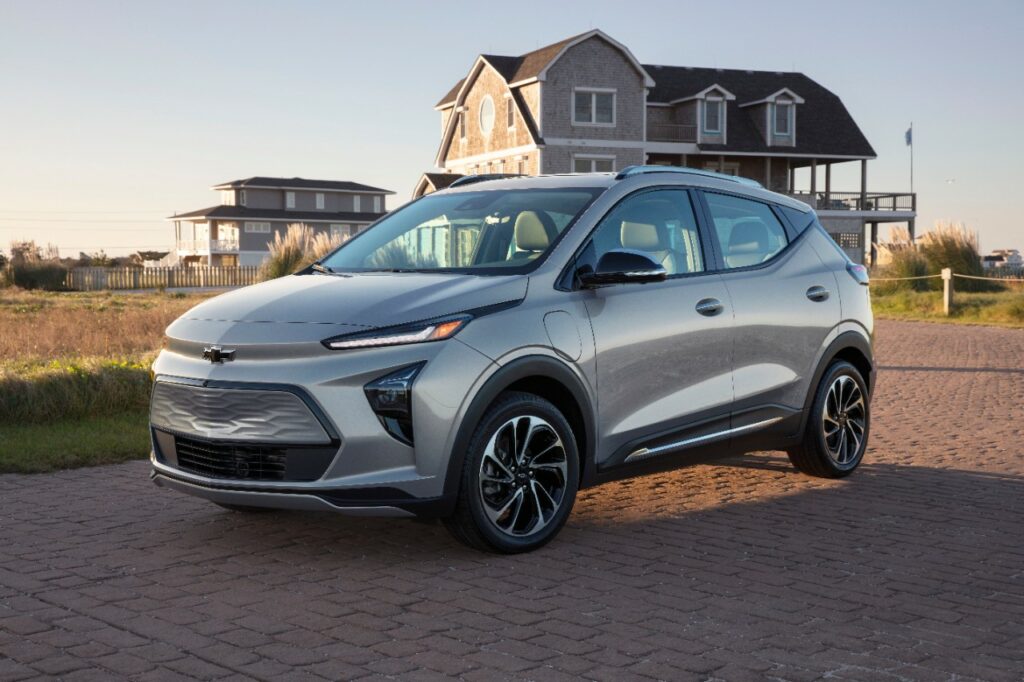
Price: Starting at $26,595
Range: 259 miles
Charging Speed: 55 kW speeds (adds 100 miles in 30 minutes of charging)
Tax Credit: The Bolt no longer qualifies for the federal EV tax credit, but state incentives may apply
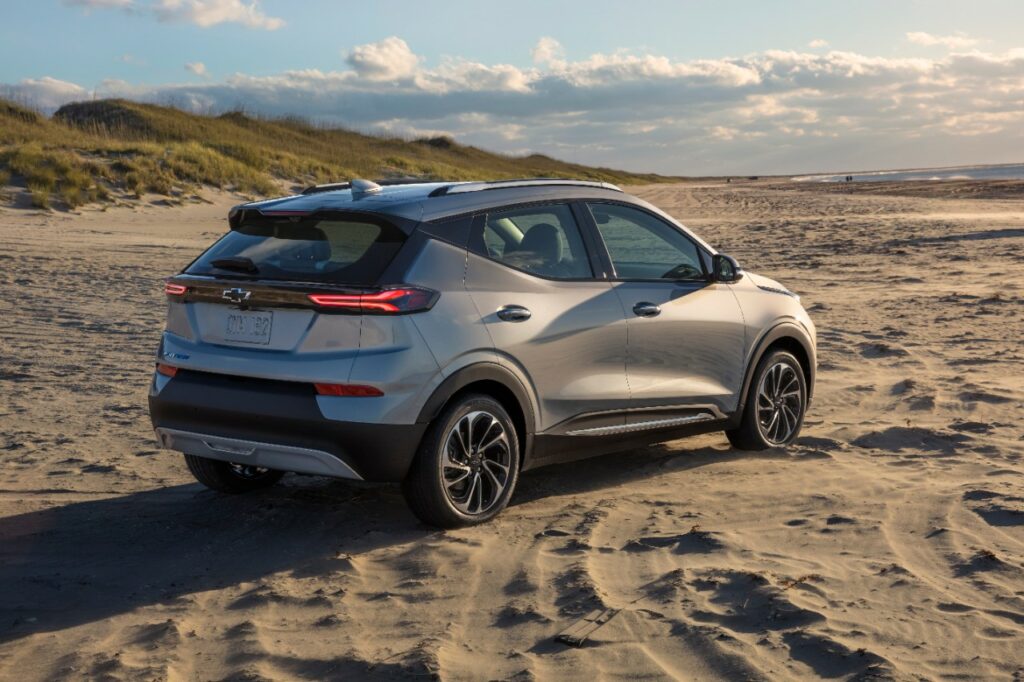
The 2023 Chevy Bolt is the cheapest electric car today. It is available at dealers nationwide, as long as the mandatory recall fixes have been completed. See who has inventory at CarEdge Car Search: Chevrolet Bolt and Bolt EUV
General Motors has sold over 100,000 Chevrolet Bolt EVs since launching the subcompact crossover in 2016. In 2021, the Bolt gained a new sibling: the larger Bolt EUV. Shortly after the Bolt EUV joined the show, several Bolt battery fires spurred a very urgent recall into action. When all was said and done, battery supplier LG Chem was found to be responsible for the Bolt battery fires, and agreed to pay General Motors $2 billion in damages.
Fast forward to 2022, and most Chevrolet Bolt’s (all for sale) have received new battery packs. The Bolt is a GREAT deal now that it’s fixed. If you’re never in a rush on road trips (or just plan to use the car around town), the 2022 Chevrolet Bolt is worth a look. It charges painfully slow, but hey, it is the cheapest electric car today.
If you check out used Bolts, request official documentation showing that all recall work was completed. The Bolt will be eligible for the new EV tax credit here in the United States, but only after 1/1/2023. See our full guide to EV tax credits for more info.
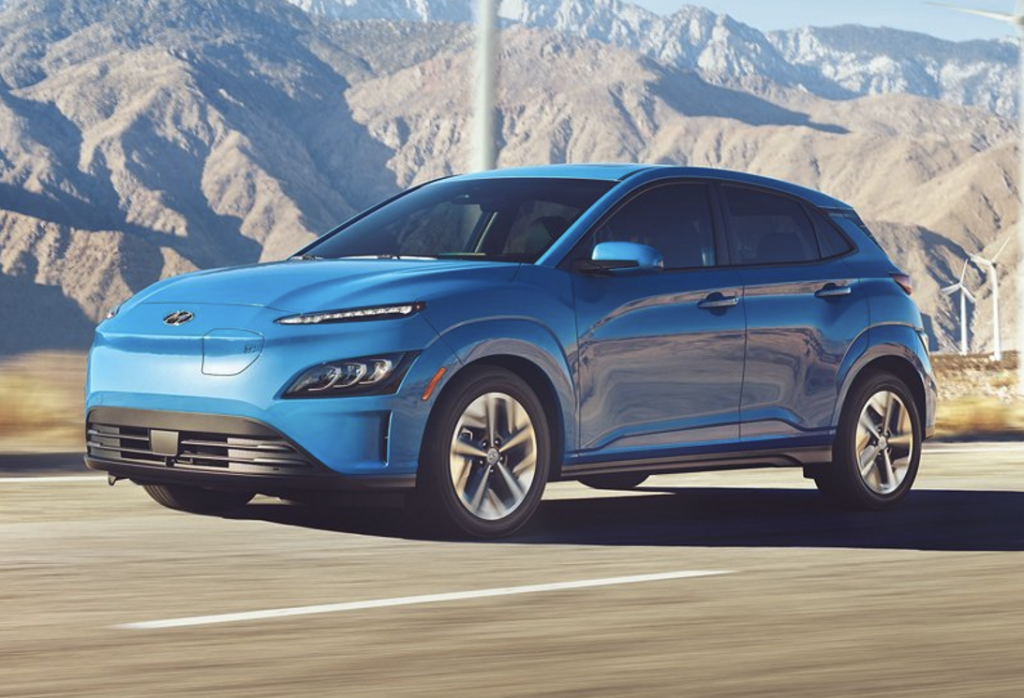
Price: Starting at $34,000
Range: 258 miles
Charging Speed: 100 kW speeds (180 miles added in 47 minutes)
Tax Credit: It qualifies!
Available at dealers nationwide. See who has inventory at CarEdge Car Search: Hyundai Kona EV
The 2022 Hyundai Kona EV is no Tesla, but it has decent range and room to fit most lifestyles. Plus, it’s really cheap AND still qualifies for the $7,500 federal tax credit.
For just $34,000 before incentives, you can become the owner of the original Hyundai EV. This front-wheel drive subcompact crossover gets 258 miles on the charge, exceptional range for a budget EV. Some owners get over 275 miles on a single charge. The Limited trim, top-of-the-line option comes in at $42,500.
If you plug in at home, charging to 100% from a 240-volt dryer outlet will only take you about 9 hours from 10% state of charge. That will get you a full battery overnight while you’re sleeping. At a fast charger, the Kona is behind the competition. In 47 minutes, the Kona Electric charges from 10% to 80% capacity.
The all-new Hyundai IONIQ 5 has stolen the show with more range, MUCH faster charging, and retro looks, but it starts closer to $45,000 with destination and availability is very limited. For those who are willing to give up a few luxuries, the Hyundai Kona EV is a solid choice.
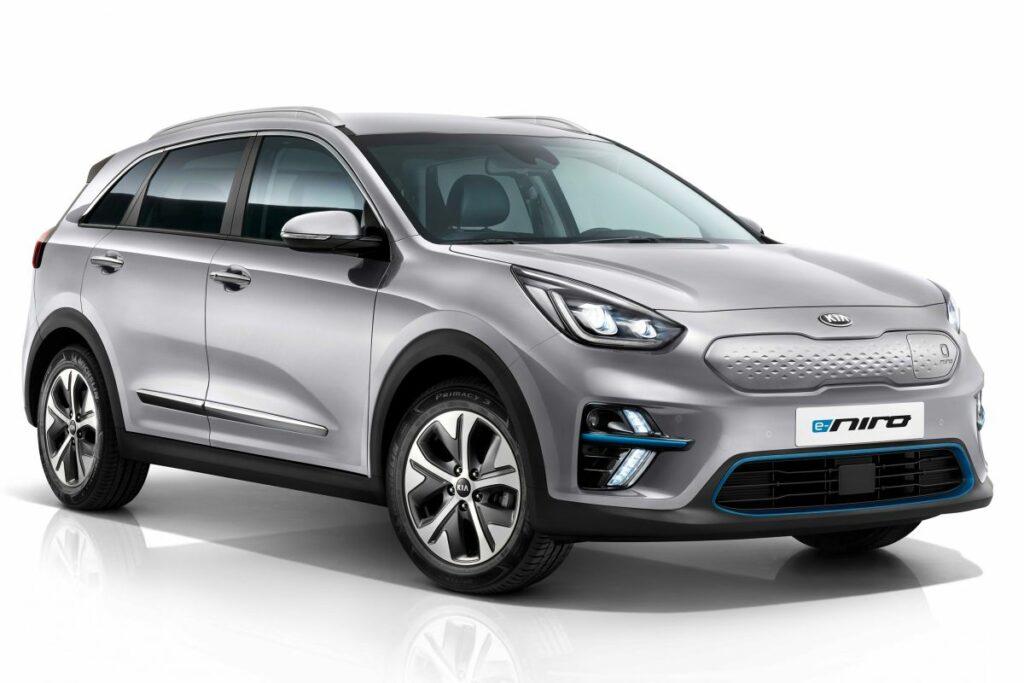
Price: Starting at $39,990
Range: 239 miles
Charging Speed: 100 kW at a DC fast charger (adds 100 miles of range in about 30 minutes)
Tax Credit: It qualifies!
Available at dealers nationwide. See who has inventory at CarEdge Car Search: Kia Niro EV
The Kia Niro electric version is the sibling to the aforementioned Hyundai Kona EV. Both source their power from a 64 kilowatt-hour battery, which is a tad smaller than more expensive electric cars. The Niro EV can charge at up to 100 kilowatt speeds at a fast charger. At least that’s better than the Nissan LEAF and Chevy Bolt.
The Niro EV’s back seat is slightly more spacious than the Kona’s, so it’s more popular with families and those with large pets. There’s also a plug-in hybrid version. For just a few thousand dollars more, keep in mind that you could check out the base trims of the newer Kia EV6, Hyundai IONIQ 5 and Volkswagen ID.4.
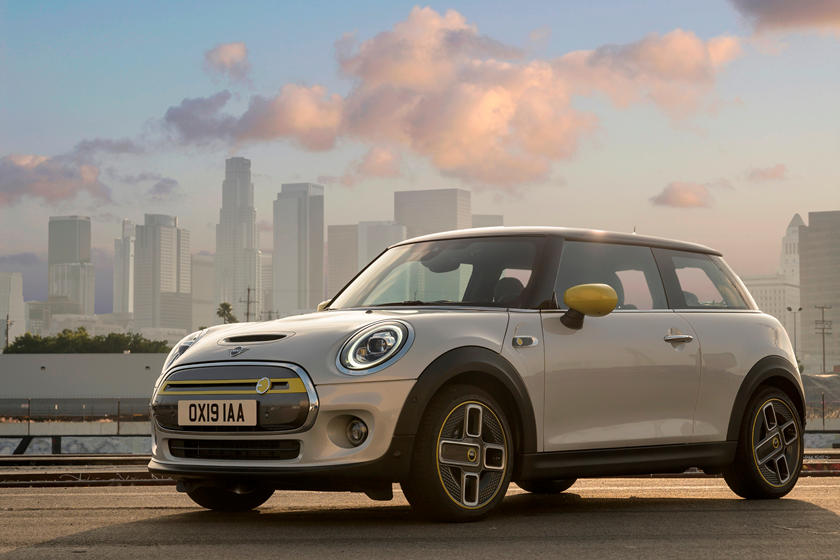
Price: $30,750
Range: 114 miles
Charging Speed: 50 kW speeds (about 90 miles of range in 36 minutes)
Tax Credit: It qualifies!
Available at select dealers nationwide. See who has inventory at CarEdge Car Search: MINI Cooper Electric
For just over $30,000, you can own an electric Mini. It’s practically a luxury golf cart! Jokes aside, it’s not a bad deal IF you don’t plan to go very far. With 114 miles of EPA-rated range, it’s a zippy way to scoot around town.
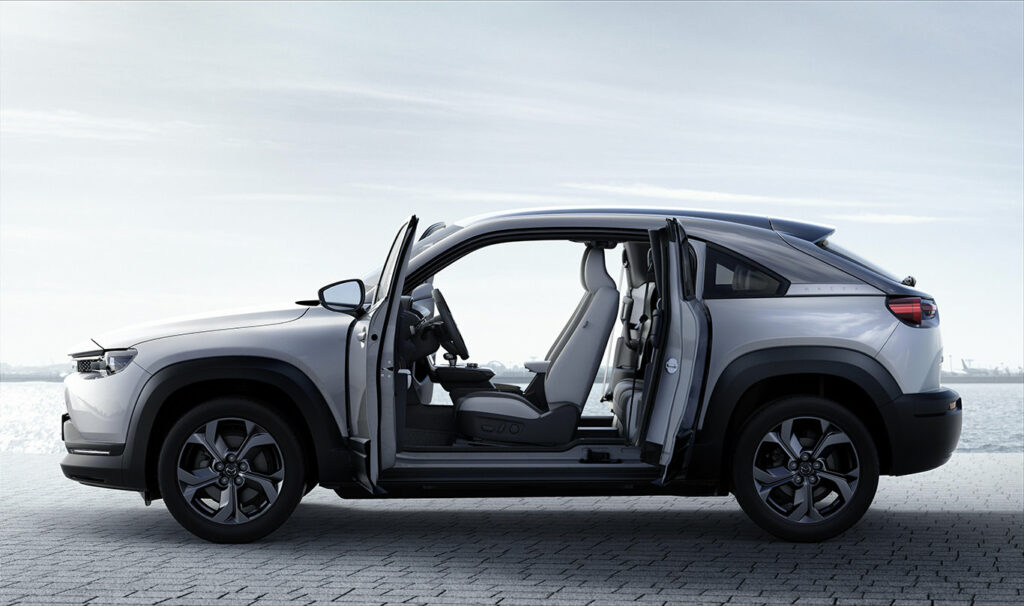
Price: $34,695
Range: 100 miles
Available in California to those who don’t travel much. Check it out if you must at CarEdge Car Search: Mazda MX-30
Why didn’t I include Mazda’s first fully-electric vehicle on this list? It’s a brand-new model, yet it only gets 100 miles of range on a charge. That, and the fact that it is only sold in California as a regulatory compliance vehicle for now. Come on, Mazda! That’s not enough range to safely make it across Los Angeles!
An electric car under $35,000? Sounds like science fiction, but as you can see, a few can be had for what used to be considered average car prices. Most of these cheap electric cars don’t have the best range, the fastest charging or the need for speed, but they won’t drain the bank like a Tesla will. Let me know which cheap EVs you’re checking out in 2022.
Some parting advice: consider all options, and test drive as many electric vehicles as you can. You’ll be amazed at what’s out there, and even more amazed at what’s to come.
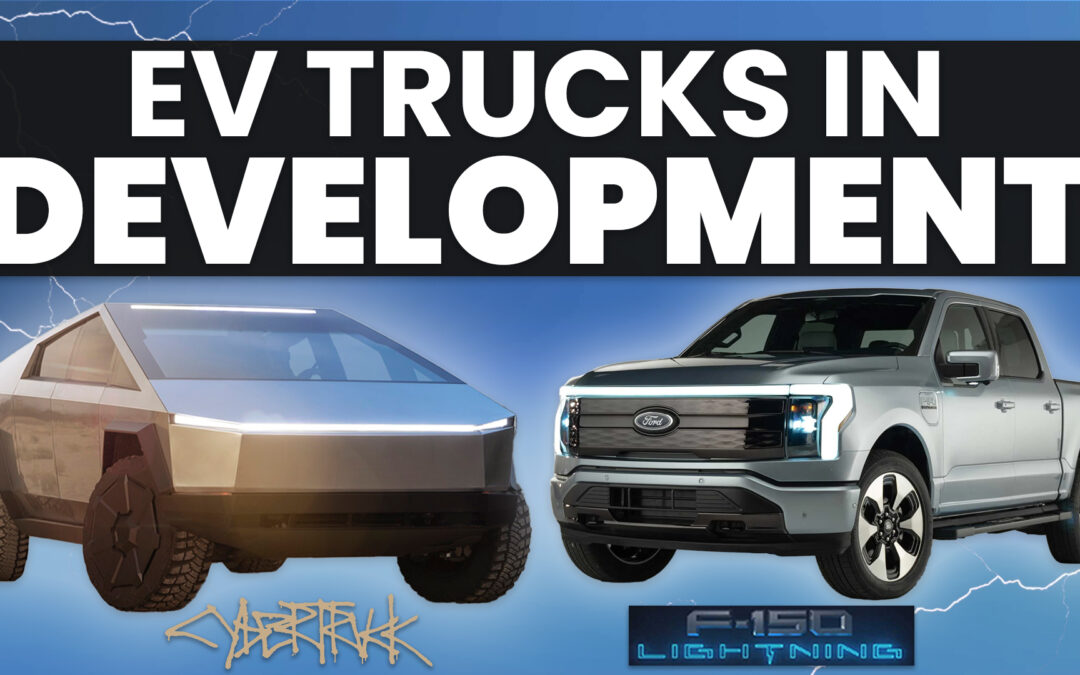
Electric trucks are few and far between on highways, but they’re all the rage online. There are fewer than 3,000 electric trucks on the road today, but at least 1.5 million reservations are in the books for upcoming electric truck models. Will trucks ever catch up to crossovers in the electrification of the auto industry? With how many models are in the development pipeline, it will be interesting to find out. Let’s take a look at every electric truck on the way, and the few you might catch a glimpse of in 2022.
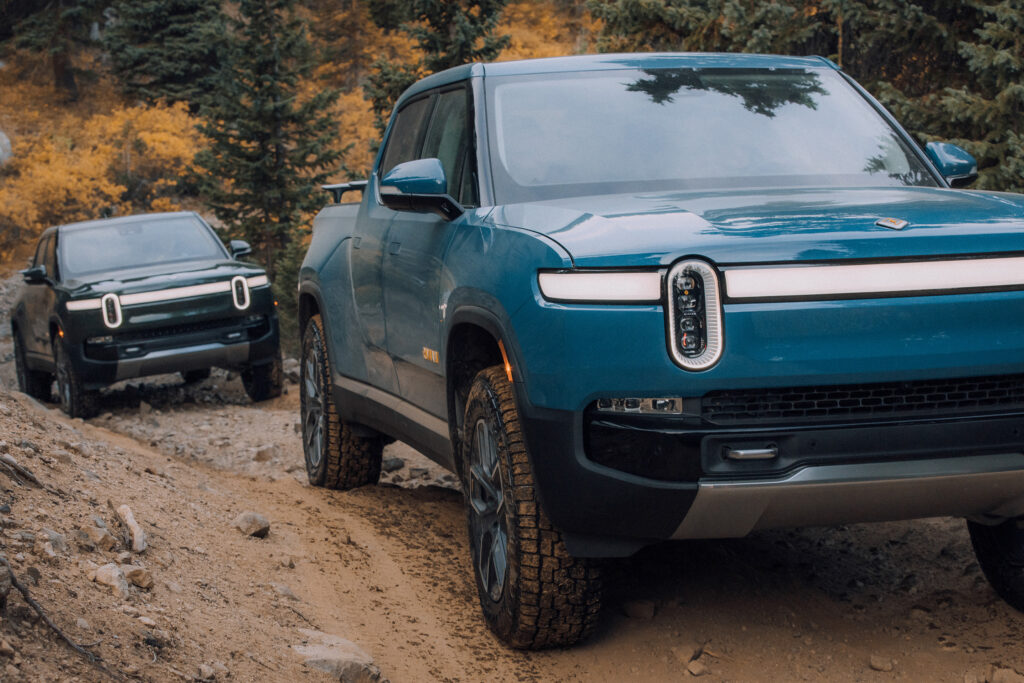
Introduced: Late 2021
Range: 314 miles
Fuel economy: 71 MPGe
Cost to charge 0 – 100% at home: $19
Price: $78,975 – $121,690
“It’s bigger than a Ford Ranger, smaller than a F-150, and a whole lot more expensive.”
The 2022 Rivian R1T is the most common electric truck on the road today, but that doesn’t mean it will be easy to find one. About 2,000 have been sold as of spring 2022. As is often the case, supply shortages (and inflation) have put a damper on the much-anticipated rollout of Rivian’s first model.
Nevertheless, it’s a very capable truck. The R1T can tow more than 11,000 pounds and the pickup offers a payload capacity of 1760 pounds. And it’s fast, with a 0-60 time of 3.3 seconds. It’s a rugged, outdoorsy-themed truck for those who use their pickup for more play than work. If you’re in the market for one, get in line. If you’re lucky (and have a deep wallet), you just might take delivery of one by the end of 2023. Rivian prices recently jumped by $10,000 – $20,000, so don’t expect a Rivian for the original price of $69,000.
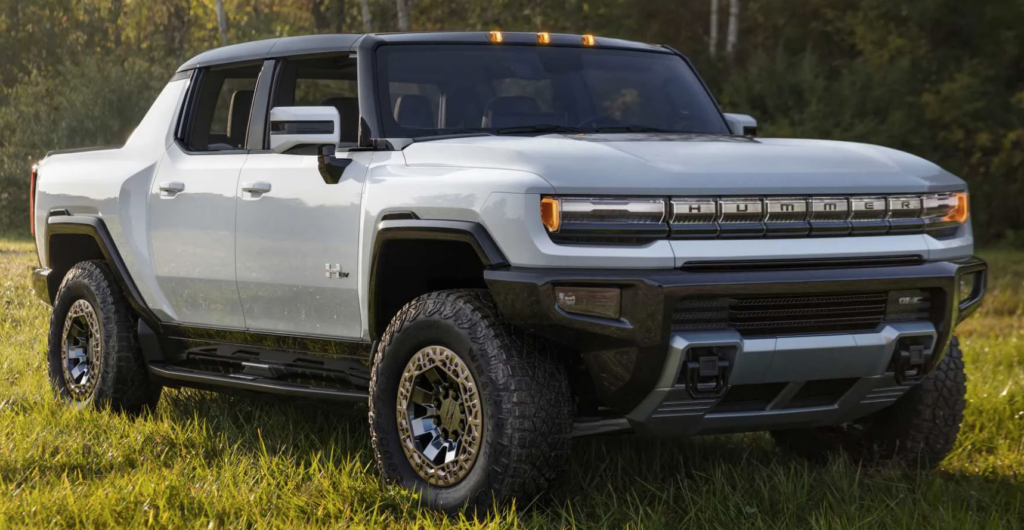
Introduced: Late 2021
Range: 329 miles
Fuel economy: 47 MPGe
Cost to charge 0 – 100% at home: $30
Price: $80,000 – $110,000+
“American excess at its finest….. and least efficient.”
If you would like a 9,000-pound, crab-walking mammoth of a truck that can seemingly overcome physics to reach 60 miles per hour in three seconds, General Motors has you covered. The revived Hummer is a large luxury truck meant to turn heads more than it’s meant to haul stuff to the worksite.
The Hummer EV’s #1 party trick is the crab-walk. That’s when the truck turns using all four weeks, allowing it to slide through traffic. The EPA-rated range of 329 miles is a bit misleading. It has a MASSIVE 212 kilowatt-hour battery. That’s triple the capacity of most electric crossovers! While technically it starts around $80,000, used ones are already selling for a quarter of a million dollars.
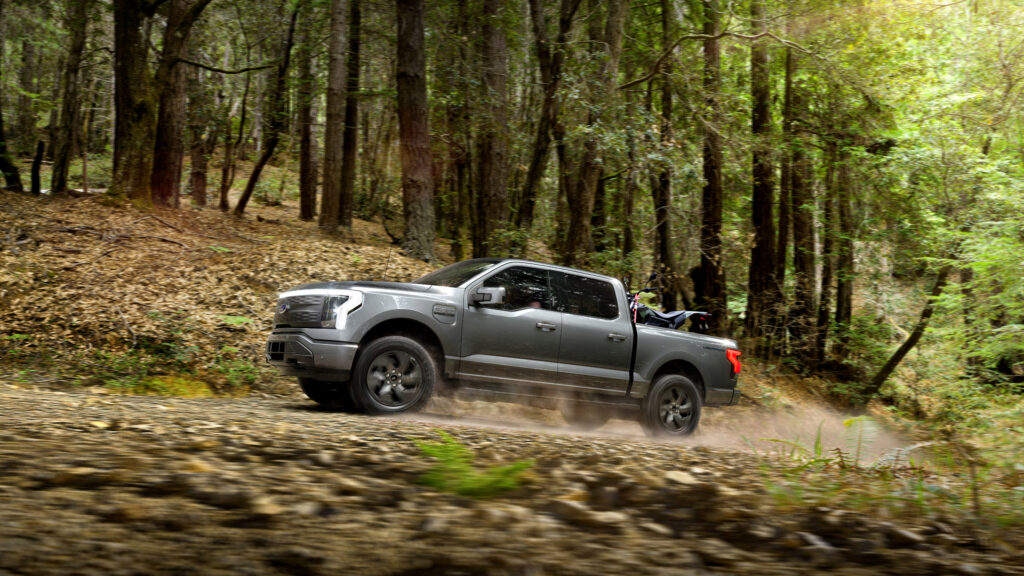
Introduced: Late 2022
Range: 230 – 300 miles
Fuel economy: 68 MPGe
Cost to charge 0 – 100% at home: $14 – $20
Price: $39,974 – $90,874
“This will be the first mass-produced electric truck on the market, but we’re bracing for the dealer markups.”
We recently detailed all we know about the upcoming electric F-150 in a special CarEdge preview. It turns out that truck fans are REALLY looking forward to the Lightning. The question remains, can Ford make enough of them?
Here’s What Stands Out With the F-150 Lightning:
Ford has 200,000 reservations in the books for the F-150 Lightning, so new orders can expect a 2024 delivery. If you’re patient, this just might be worth the wait.
Here’s everything we know about the Ford F-150 Lightning.
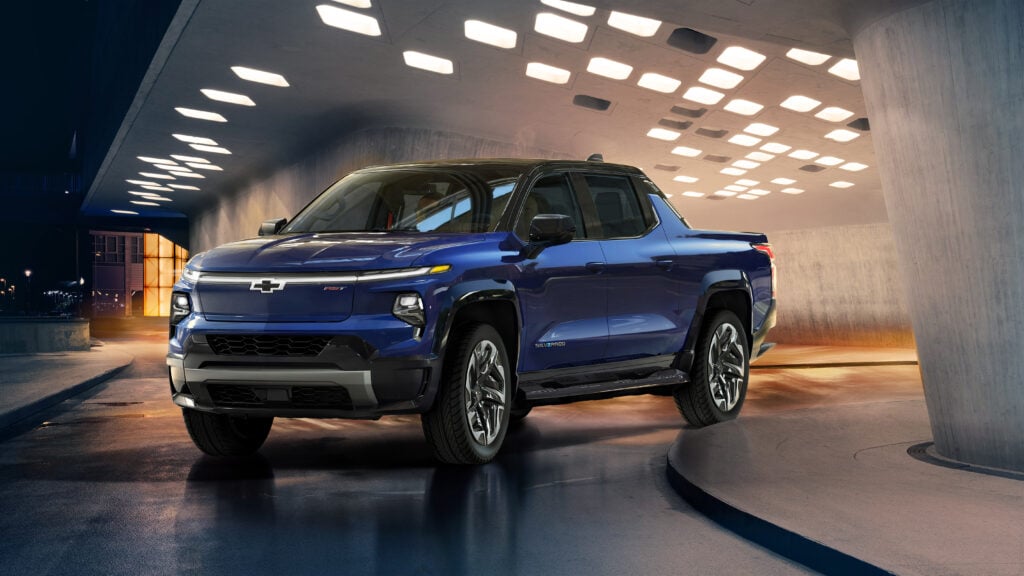
Introduced: Spring 2023
Range: Up to 400 miles (depending on battery size/trim)
Cost to charge 0 – 100% at home: $28
Price: $39,900 – $80,000+
“It’s the direct competitor to the F-150 Lightning, but it will charge a LOT faster.”
When Ford made such a big deal with the unveiling of the F-150 Lightning, we all knew General Motors would be cooking up something special. The Chevrolet Silverado EV was unveiled at last, and the specs and looks have exceeded expectations. Chevy claims it has faster charging, more power, and more range than the Ford.
It’s a flexible truck too, and one that’s definitely going to see some worksite use. The storage capacity of the 5-foot-11-inch bed can be extended to 9 feet with the ’available’ Multi-Flex Midgate.
GM says that the new Silverado is basically a rolling generator, if you buy the required accessories. “When combined with the available accessory power bar, the Silverado EV’s PowerBase charging system offers up to 10 outlets, to provide a total of 10.2kW of all-electric power for countless worksite or recreational needs, including powering your home, with the required equipment.” It can even charge other electric vehicles!
Learn more about the Chevrolet Silverado EV in our in-depth analysis.
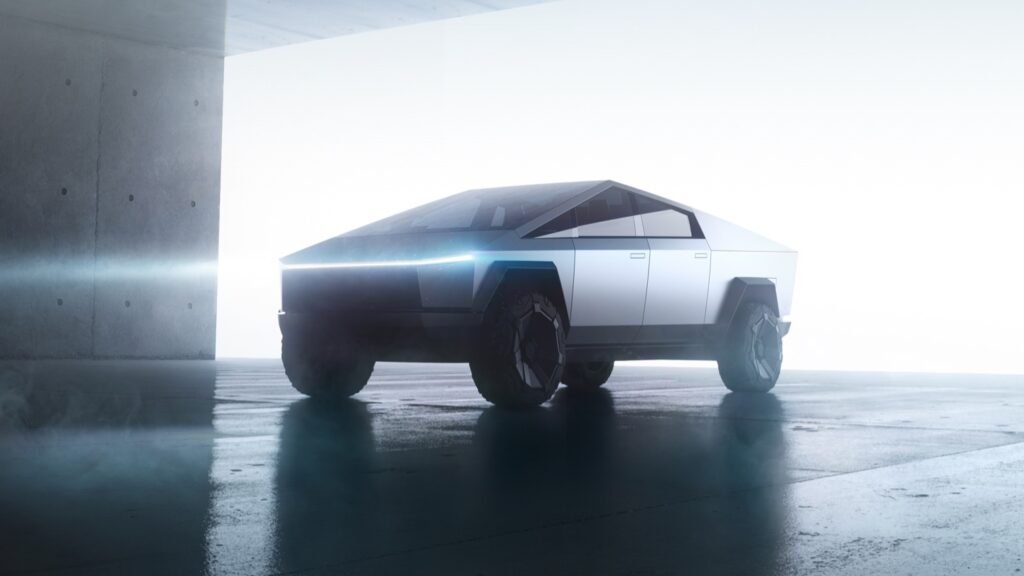
Introduced: 2023
Range: Up to 400 miles
Price: Unavailable
“Did someone make a truck in Minecraft?!”
Ever since Tesla pulled the curtains back in November 2019, the world has divided into two camps: those who adore the Cybertruck’s angular, Mars-ready looks, and those who abhor it. No matter what your opinion is, it’s still just an idea for now. Tesla has repeatedly pushed back its arrival, and now says that 2023 will be the start of production.
The Cybertruck will have 3,500 pounds of payload capacity, and can tow 14,000 pounds. Those specs are on another level for sure. It’s also a performance-oriented truck, with a 0-60 time of 2.9 seconds. Pricing had previously been announced to start at $40,000 for rear-wheel drive base variants, but that was later removed from the Tesla website. We expect pricing to range from $55,000 to over $80,000, but it’s pure speculation at this point.
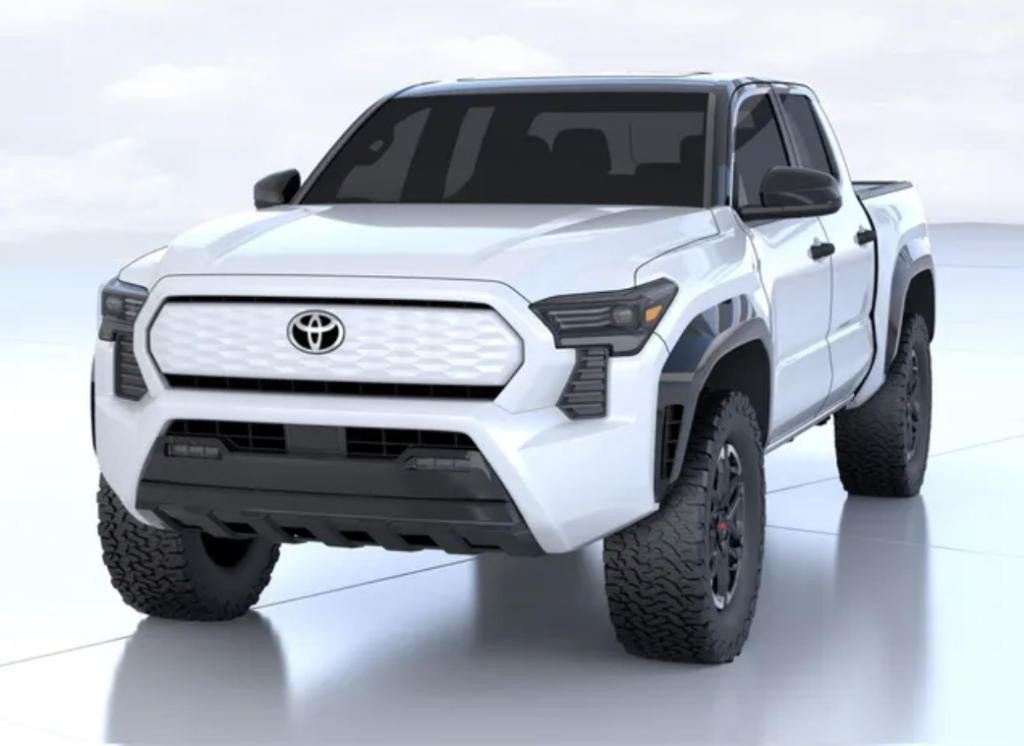
In late 2021, Toyota teased the above image of an electric truck. It closely resembles an electric Tacoma, which would be a dream come true for many Toyota fans. They haven’t said a word since, but we’ll update you with the latest once we know more.
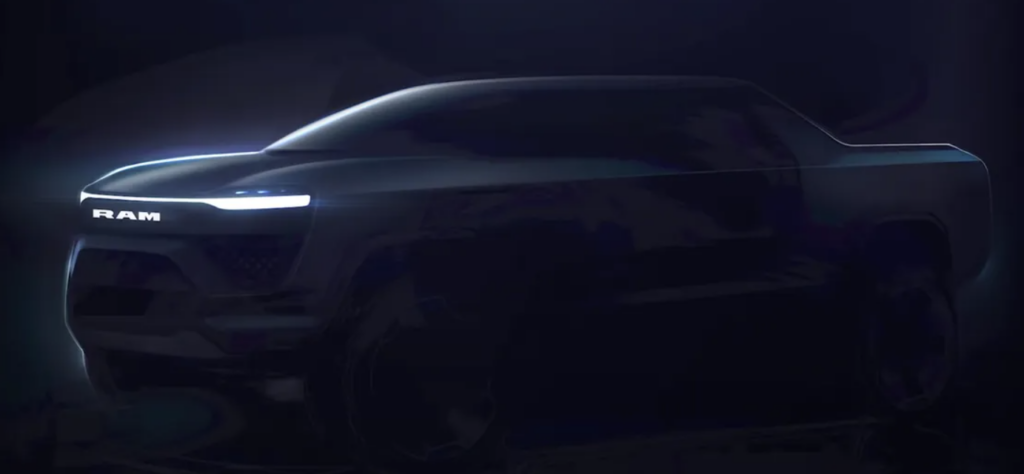
Stellantis has taken its sweet time getting into EVs. In 2024, the Ram 1500 electric truck will make a debut with a range of up to 500 miles and futuristic design cues. It will be capable of fast-charging, a quick 0-60 time, andthe latest tech from Stellantis.
The electric Ram 1500 will be built on the new STLA platform that is currently in development. More to come.
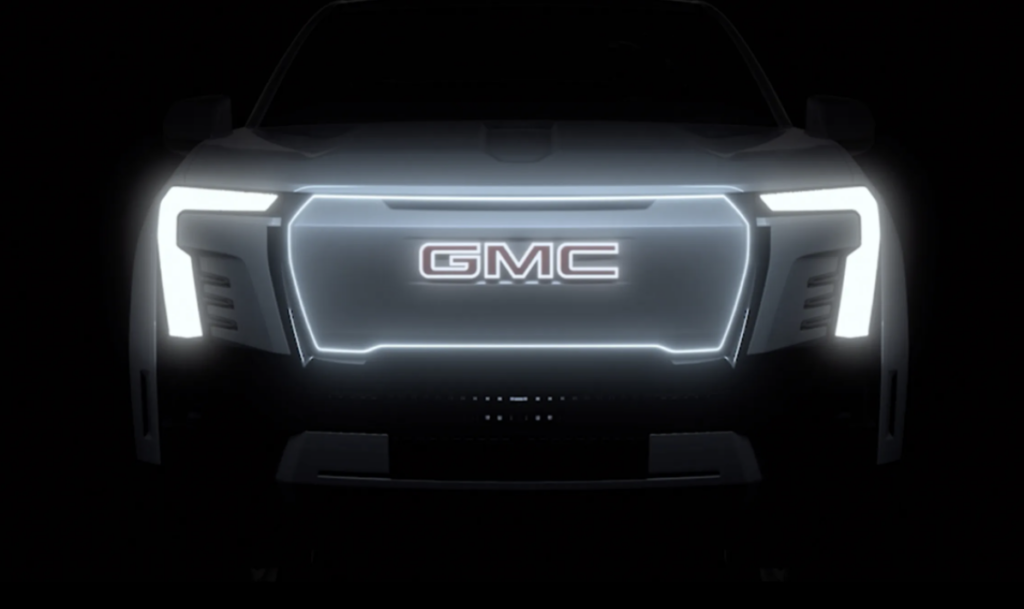
They say it’s coming, but we don’t know much yet. The electric Sierra will share the same powertrain engineering as the Silverado EV.
“Like the GMC Hummer EV, the electric Sierra will be purposefully built on the Ultium Platform with the premium materials and capability customers have come to expect from GMC trucks,” says GMC.
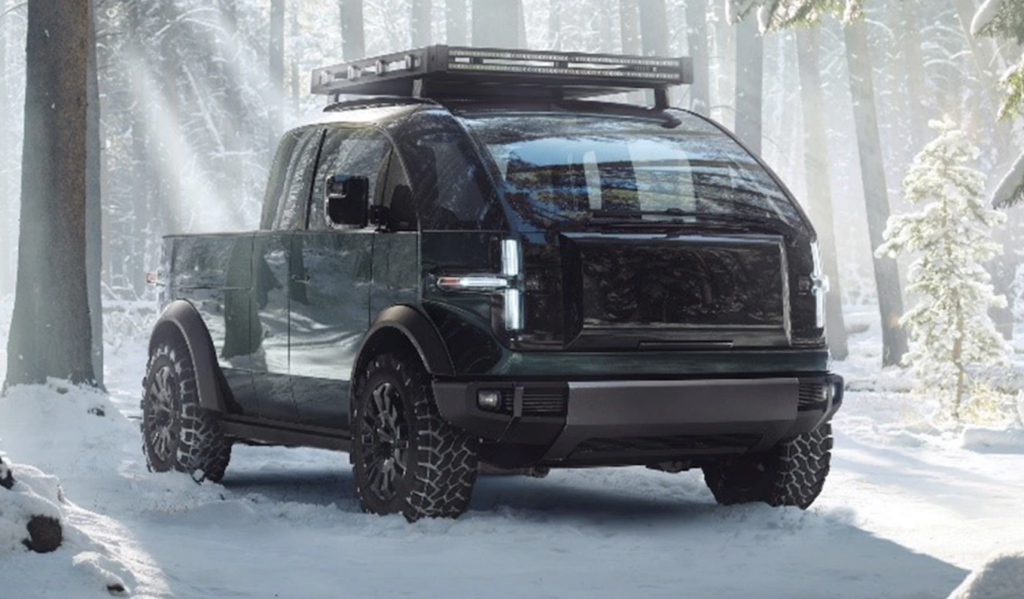
The Canoo ‘Pickup Truck’ has more in common with the Tesla Cybertruck that one might suspect. It’s weird-looking, has space-age ambitions, and has been repeatedly delayed. Canoo has undergone multiple leadership shakeups, and that has delayed the launch of Canoo’s first products by a few years (and counting).
The Canoo truck has a targeted payload capacity of 1,800 pounds, a 6’ 8” bed when extended, and about 500 horsepower. At least 200 miles of range are to be expected on a charge. Hopefully it turns out to be at least 250 miles considering the competition.
As odd and mysterious as the Canoo Pickup Truck is for now, the EV startup already scored a significant contract, at least symbolically. NASA selected Canoo to transport astronauts to the upcoming Artemis spaceships for missions to the moon in 2025.
With a bit of luck, the Canoo truck just might be available to reservation holders in 2023. Learn more about Canoo here.

The State of Texas is alleging in a new lawsuit that online car retailer Vroom has routinely failed to disclose vehicle history, vehicle features, and work done on vehicles it sold to customers in Texas. On April 20, Texas Attorney General Ken Paxton filed a lawsuit in the District Court of Travis County against Vroom, which also operates as Texas Direct Auto.
An unrelated class-action lawsuit has already been filed against the online retailer, and Florida has filed a complaint regarding Vroom’s title transfer issues in the state. Consumer advocacy groups have repeatedly issued warnings following the multitude of complaints received about Vroom.
The lawsuit notes that since 2020, consumers have filed nearly 5,000 complaints with the Better
Business Bureau and Office of the Attorney General of Texas. The vast majority of complaints have been filed over the past year. The lawsuit states that Vroom has “not managed their growth effectively and have allowed inadequate systems and procedures to spiral into violations of the DTPA [Texas Deceptive Trade Practices Consumer protection Act].”
Specifically, the lawsuit alleges the following violations:
The State of Texas’ lawsuit details a few examples of the poor conditions of vehicles misleadingly sold to Texas customers.
“In one case, within hours of delivery, a Texas consumer reportedly noticed that the oil change and engine service lights came on, and there was an irregularity in the windshield and scratches on the wheel. The consumer took the vehicle to a nearby dealership, and after an inspection was told it needed spark plugs, new filters, an oil change, and a radiator leak to be repaired.”
“In another case, a Texas consumer complained that when Defendants delivered the vehicle, the consumer immediately noticed a strong odor in the interior that she described as similar to being near a boat. She noted that the interior carpet looked as if it had been completely replaced. The next day, she took it to a mechanic for a standard inspection. The inspection identified several areas of internal rust that could only be caused by sitting in water for an extended amount of time, as well as other conditions that indicated flood damage.”
Yet another example quoted a Vroom customer whose ‘new’ car needed $8,000 in repairs soon after buying from the online retailer. In a sad but almost comical case, a customer bought a car from Vroom with a driver’s seat that was pushed as far back as it could go without the ability to move it forward. So much for the “rigorous inspection process” that Vroom claims to abide by.
The Texas lawsuit against Vroom also details numerous examples of title and registration delays stretching far beyond the 60-day window permitted for registering a new vehicle.
In 2021, Vroom reported well over $2.4 billion in revenues. profits rose 171% year-over-year to $164.7 million. With a class action lawsuit already filed and the States of both Florida and Texas hot on their tails, Vroom’s honeymoon with the American consumer may be coming to an abrupt end. We’ll keep you up to date with the latest at caredge.kinsta.cloud.
Have you experienced something similar at Vroom or any other car retailer, including a traditional dealership? Leave a review of your car buying experience to help others avoid headaches. Had an amazing experience? Your review can help car buyers give their business to honest dealers who deserve it. You can also simply view the results to see what others are experiencing near you!
If you think you’ve been the victim of deceptive dealer practices, you can find contact info for every state’s attorney general and consumer protection office here.
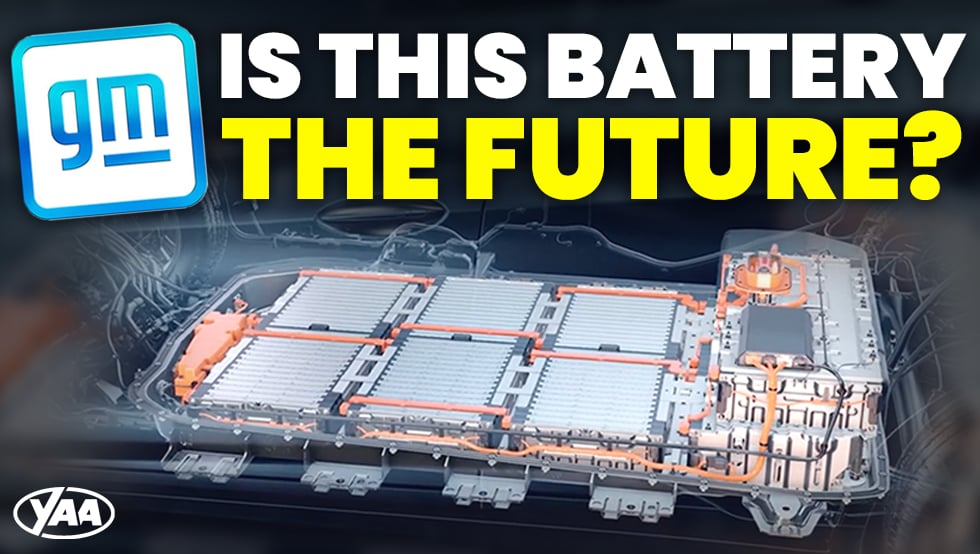
My very own Hyundai IONIQ 5 has a special trick up its sleeve. In fact, even Tesla can’t claim it. In 2022, very few electric cars are engineered with 800-volt architecture. While still an outlier, all signs point towards an auto industry heading in the direction of faster charging, better efficiency, and smaller battery sizes – all of which are unlocked by promising 800-volt electrical systems in EVs.
The mass adoption of electric vehicles largely depends on the ability to find real solutions for a few ownership challenges for today’s EV drivers:
Most electric vehicles in 2022 are built on 400-volt systems, but these systems have limits. Indeed, some automakers are quite happy with their 400-volt EV platforms. Tesla manages to find other ways of mastering efficiency and power delivery, and has not mentioned plans for a voltage upgrade. One BMW senior engineer called settling with a 400-volt platform the “best compromise”, but not everyone agrees.
800-volt systems can deliver double the power through the same current, or if desired, the same power through half the current. The result is roughly 50% faster charging for the same battery size. As a result, batteries can be made smaller and overall weight is reduced, increasing efficiency and ideally lowering the cost of the vehicle.
Would a car need a massive battery with a 500-mile range if it can charge a smaller battery that’s good for 250 miles in just 15 minutes? What is that smaller battery was A LOT cheaper?
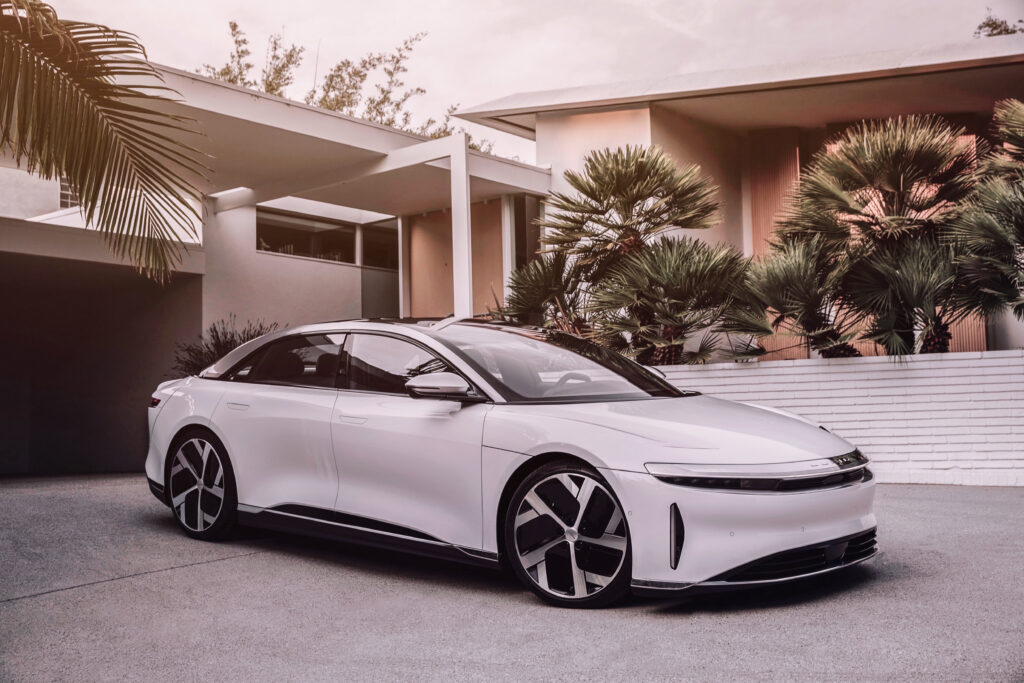
In 2022, just a few electric vehicles use 800-volt systems for power delivery and charging.
Of particular interest is the different paths taken by Ford and GM for their upcoming electric trucks. The F-150 Lightning is built on 400-volt architecture, while the Chevrolet Silverado EV is jumping to 800-volt architecture, and the result is much faster charging speeds for the Chevy. Will this matter to consumers, or will brand loyalty win out?
Why doesn’t Tesla use 800-volt charging? We’re not sure, but clearly they’ve found success with their existing 400-volt architecture.
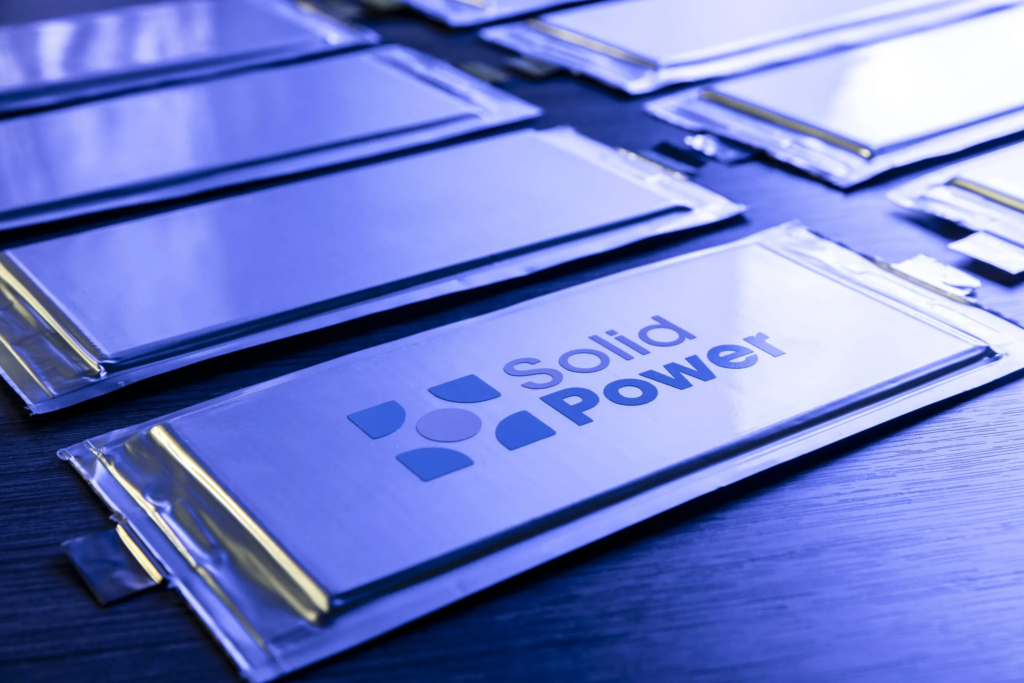
Fortunately, a whole host of solutions are uniting to offer a better way forward for EVs. And it’s not all about charging speeds. Solid-state batteries are finally approaching real-world usability following decades of research and development. For the better part of the last decade, $100 per kilowatt-hour was the affordability target for battery development. That goal was reached, but the latest raw material shortages are sending prices back up, and electric car prices have gone up accordingly. The U.S. Department of Energy thinks that $60 per kilowatt-hour is within reach, however it’s increasingly looking like solid-state batteries may offer the only path to such low-cost batteries.
Toyota says it will be the first to bring a solid-state battery into a production vehicle. In typical Toyota fashion, their solid-state battery will debut in a hybrid powertrain rather than a full battery-electric vehicle. It looks like the world will see what solid-state battery chemistry is capable of in 2025.
Faster charging, better range, and (hopefully) lower prices are promised time and time again with every new EV model announcement. 800-volt architecture and solid-state batteries are the headlining developments that automakers are working on behind the scenes. We didn’t even touch on new battery chemistries, manufacturing methods, and electric motor breakthroughs in the works. We’ll have to save that for another day, as there’s always something new to talk about in the EV space.
But the promise of faster charging and energy-dense batteries begs the question: would you take faster charging over more range? It’s looking like that will be the EV debate of the decade. What are your thoughts? Let us know in a comment or over at the CarEdge Community Forum. What matters most when you head out on a journey?


Maryland Attorney General Brian E. Frosh announced that his office’s Consumer protection Division has reached a settlement with Koons Kia of Owings Mills, MD to address allegations of the systematic practice of forcing customers to pay for hidden fees and phony freight charges.
The settlement requires Koons Kia to stop charging car buyers fees, other than taxes or title
fees, if the fees were not included in the advertised price for a vehicle. The dealership also
agreed not to charge consumers for shipping if freight charges were already included in the advertised price for the vehicle.
Koons Kia agreed to return all fees it collected from consumers other than taxes and title fees that were not included in the advertised price of the vehicle, as well as all freight charges that were already included in the advertised price of the vehicle.
Attorney General Frosh estimates that more than $1 million will be returned to consumers. Koons Kia also agreed to pay the Consumer protection Division $100,000 for the costs associated with the investigation.
“Car dealers must honor the price they advertise for their vehicles,” said Attorney General Frosh.
“I am glad that Maryland consumers will receive refunds for the fees that they paid above the
advertised price.”
Consumers who are owed refunds under the settlement will be contacted directly by the Maryland Attorney General’s Consumer protection Division.
Tales of dishonest pricing and unfriendly dealer tactics are unfortunately commonplace. That’s why CarEdge exists; to put car buyers back in control of their purchase. If you or anyone you know have experienced something similar to what happened to customers of Koons Kia, please see our new resource on how to contact your state’s attorney general office and consumer protection division.
Dealers take complaints filed with the attorney general’s office very seriously, and this serves as a reminder why.
If you’re still shopping for a new or used vehicle, follow these steps to push back against forced dealer add-ons.


At CarEdge, we recently shared the steps you can take to challenge dealer add-ons, but what if it’s too late? When do misleading pricing, forced add-ons and financing games cross legal boundaries? Does the consumer have any recourse? Here’s what you need to know, and how you can file a complaint against a car dealer.
Did a dealer sneak fees or add-ons into the contract after you agreed upon the price? Were there two versions of the final paperwork, one with add-ons that you weren’t supposed to see? Did someone in the finance office tell you that you could only secure financing if you purchased a product? These are all justifiable reasons for filing a complaint.
Where should you start? Before paperwork is signed, follow these steps to push back and demand transparency. If the car has already been bought and driven off the lot and the dealership management refuses to right their wrongs, filing a complaint with the state attorney general’s office will surely get their attention.
Here’s how to contact your state’s attorney general to file a complaint against a car dealer in all 50 states, DC and Puerto Rico:
Dealerships would rather not become the subject of legal action, so the mere mention of filing a complaint with the attorney general could be the motivation they need to make things right for you. If the state consumer protection agency receives too many complaints about a particular dealership or dealer group, the whole business can ultimately be at stake.
Keep your auto advocates at CarEdge in the loop if you’re thinking about filing a complaint. Don’t forget to leave a review of the dealership you worked with at CarEdge Car Dealer Reviews to let others know what you experienced.
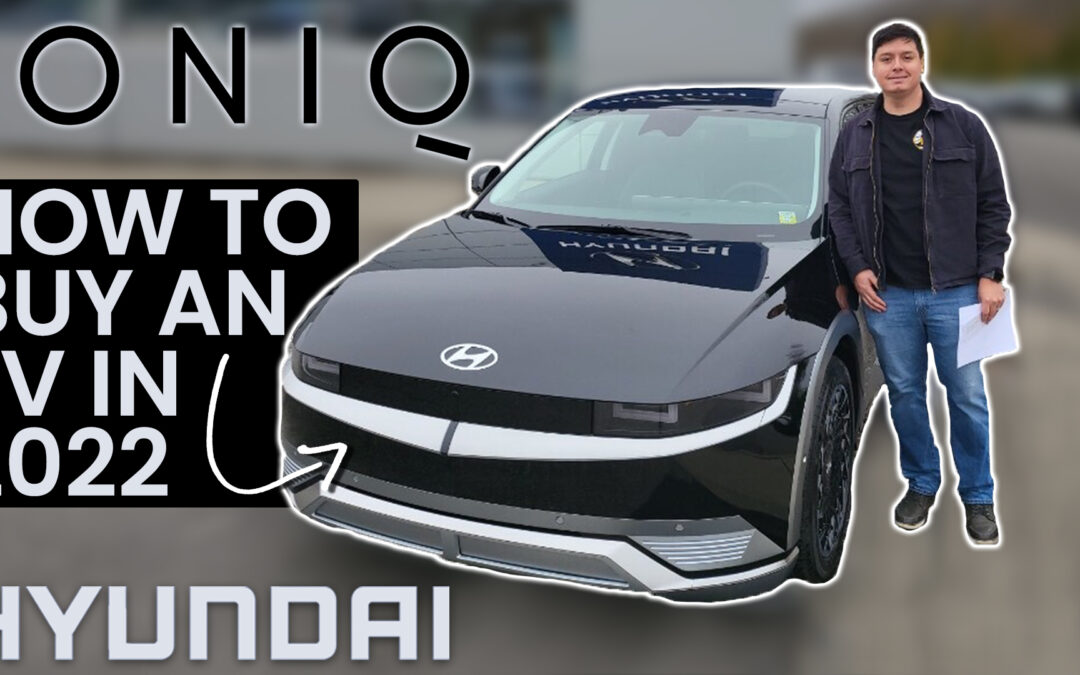
Buying an EV today is no walk in the park, but a good deal can be had with patience, research and flexibility. And having just gone through this process myself, I can confirm it was totally worth the work. These are my secrets to success, and how you can adapt these buying strategies to your unique situation in 2023.
Plus, be sure to check out the free template below to help you find the best deal on an EV in today’s competitive market.
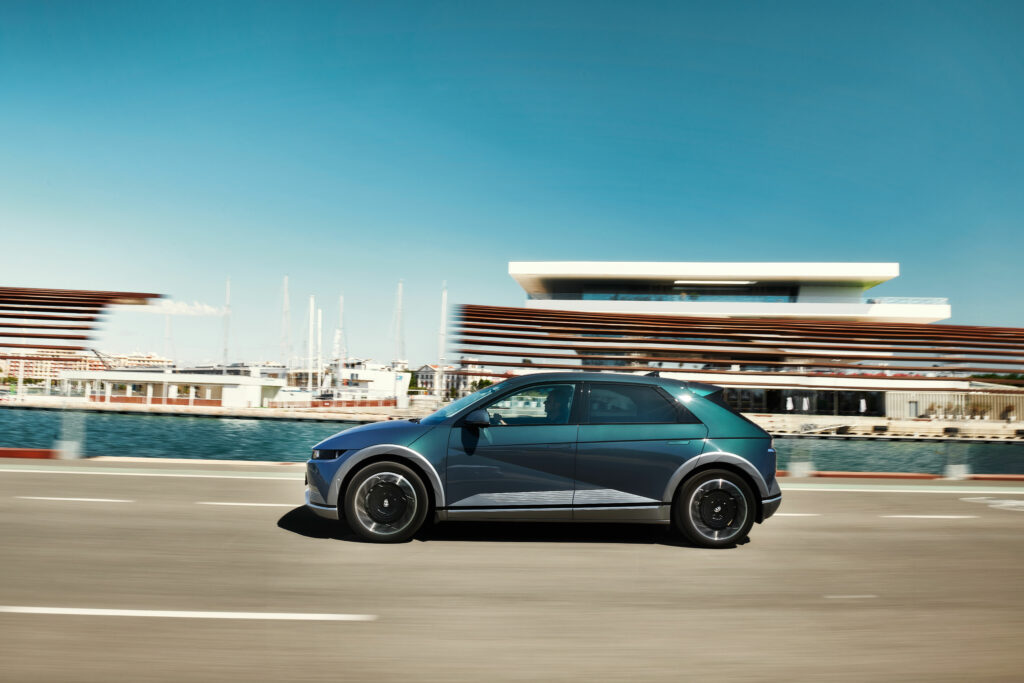
In 2023, it will save you a lot of strife to figure this out from the get-go. Which electric car models are you serious about? Are you solely considering Tesla with their direct-to-consumer, non-negotiable prices, or are you heading out to dealerships to find the best deal? Have you test driven your favorite EVs or even rented them on a service like Turo?
Once you have your short list of electric cars, trucks or SUVs that made the cut, it’s time to talk trim options, powertrains, and colors.
Do you prefer better range, or traction and acceleration? For some, all-wheel drive versus rear-wheel drive is front of mind. My driveway in snowy West Virginia is as steep as it gets, so I knew that AWD was a must for me. There’s always a tradeoff though. RWD electric cars get better range, sometimes 20% more. However, they’re not as fast for the speed freaks out there. Do you care more about going the extra mile on the highway, or zipping around town with the best 0-60 time?
And then there’s charging time. Before you settle on an EV model, have a plan for how you’ll charge it. If you live near a major metro area or along a major interstate, don’t fret. Fast chargers are already available near you. However, charging at home is MUCH more affordable.
Would you be okay with adding a few miles of driving range per hour (30 miles overnight) by simply plugging in to a normal 110 Volt wall outlet? Or would you rather spend $1000 on the installation of a faster charger for your home? The answer to that question may depend on what the rated range and charging speeds of your car are.
It’s often easier to find a base trim at MSRP. I just experienced the hassle of finding a fully-loaded IONIQ 5 Limited in America. There aren’t many out there. Depending on the EV you’re in the market for, finding the trim you want may or may not be a challenge. For Tesla, it’s a non-issue. I’ve found that the only way to avoid regretting your trim selection is to experience each trim firsthand.
Remember: The average price for an EV remains 20% higher than the overall market in 2023. Buying an EV under MSRP is possible, as proven by our own CarEdge Car Coaches. However, if a higher trim makes it more likely that you’ll keep the vehicle long-term, it might be worth it to shell out a few thousand more dollars to get the upgrade. I’m glad I did.
The real value (and fuel/maintenance savings) of an EV will only be had if you keep it long-term (or if it ends up keeping good residual value down the road).
How long are you willing to wait? How far are you willing to go over MSRP? What will you do if the dealer tries to force add-ons? Would you be patient to save thousands of dollars? These are all questions you should be asking yourself early on.
As ridiculous as it is, I took a one-way flight 600 miles to New York to pick up my lovely new car at MSRP. Sure, I could have bought a base trim with a $3000 markup a few hours away, but my plane ticket was only $250. What are you willing to do for the perfect car at the perfect price (by 2022 standards)? How far would you go? Would you rather travel to pick up the electric car, or pay $1,000 – $2,000 for delivery?
How much are you willing to pay? Strictly the manufacturer-suggested retail price (MSRP), or a tad more? What will be your plan of action if the perfect car is local for $2,000 or $3,000 over, but the same car is at MSRP five hours away? Remember, EVs ARE negotiable in 2023.
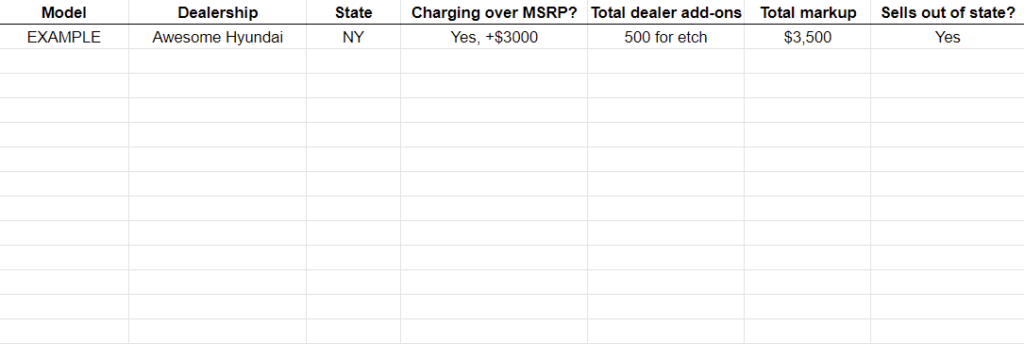
I’m a spreadsheet guy. Google Sheets and Microsoft Excel are my best friends. Perhaps you prefer lists on a notepad or on your phone. Whatever the case, get organized. If you don’t, you may end up calling the same dealership twice, or even worse, losing track of where the best deals are.
Here are some important things to keep track of:
Here’s an example template that you can copy and make your own.
I can not emphasize the importance of staying organized throughout your car search, especially if you don’t want to spend more time than absolutely necessary on this.
Now it’s time to contact dealers and fill up that spreadsheet. Fingers crossed! Do you prefer phone calls, or messaging the internet sales team? I was impatient, so I called each dealer, and if it sounded like they might be one to work with, I then began the email process. It’s VERY wise to document all communications (especially about pricing) in emails or at least text messages.
Don’t make it any harder than it has to be. Start with a search radius you’re comfortable with, and work outward from there. In fact, start with CarEdge Car Search to find the inventory leads, and don’t forget to check out CarEdge Car Dealer Reviews, where dozens of electric car buyers have already shared their dealership experiences. Don’t forget to add yours!
When you find what you want (hopefully with no dealer markup and no or negotiable add-ons, find out if you can place a deposit. Some dealerships don’t accept deposits, which means you’d have to show up on the day the car arrives. Even then, nothing is a guarantee. Do a risk/reward analysis.
Does the price and spec of the car justify what it would take to get the car?
When you find the deal you’d like to move forward with, get EVERYTHING in writing.
Specifically, these bits of info should be documented at the very least:
Make sure you’re aware of the possible arrival date if awaiting a shipment. Be flexible. My delivery date was actually moved up, but others have had to wait a few extra weeks.
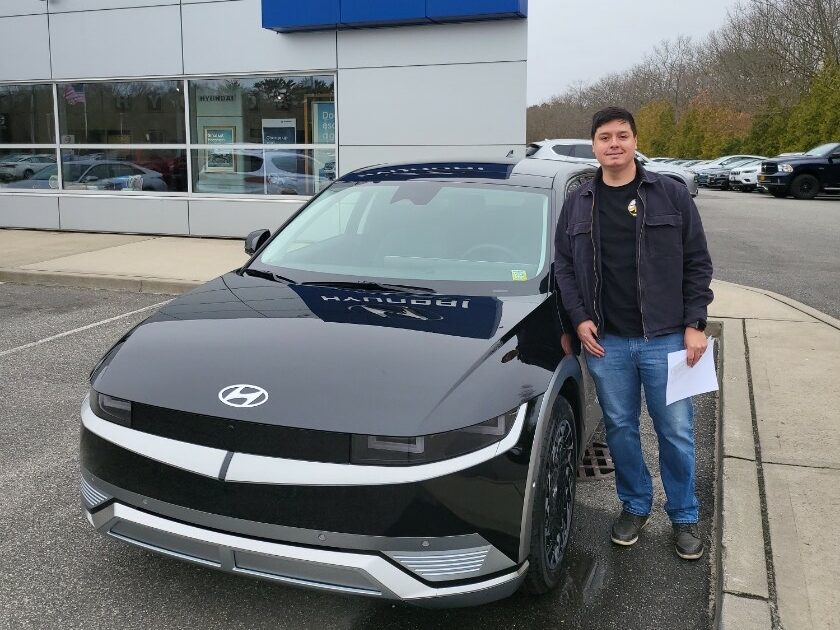
Even in today’s hectic, supply-constrained auto market, I’m confident that electric car buyers can find a great deal by following this game plan. Clearly, documenting everything is my thesis. Let us know if you have any questions, thoughts or suggestions. We’d especially love to know how your electric car buying experience turns out!
Be sure to leave a dealer review to help others find pro-consumer dealerships!
Plus, check out our new CarEdge Electric live show every Monday, Wednesday and Friday. We’re excited for what’s to come, and we’re thrilled to have you along for the ride.

When purchasing a new vehicle, navigating the world of dealer add-ons can be a confusing and sometimes costly experience. These extra features, services, or accessories may be presented as essential or highly beneficial, but they often come with a hefty price tag. In this comprehensive guide, we will demystify dealer add-ons, helping you understand their true value and make informed decisions during your car-buying journey. From extended warranties to paint protection, learn how to challenge dealer add-ons and avoid paying for unnecessary extras, ultimately saving you money on your new vehicle purchase.
Say you’ve found the perfect car or truck, and it’s listed ‘at MSRP’, or maybe even a bit less. You think you’re in for a good deal, and you’re aware that it can be hard to come by in 2023. The salesperson is talking it up, and it’s working.
As you start to talk numbers at the sales desk, they slyly mention the paint protection, theft protection, etching, door guards and nitrogen-inflated tires. Maybe even some pinstripes. These ‘forced’ front-end dealer add-ons are going to cost you $2,000, but he says not to worry, every car at the dealership has these ‘products’ added. Supposedly, they can’t be removed, and refusal to pay for them could be a deal-breaker.
What do you do next? These are the steps to take when confronted with front-end dealer add-ons.

When buying a car, the contract should work in your favor. Every dealer add-on does come with a contract. However, the dealership may ‘assume’ that you’re not interested in reading it.
When presented with the product contract, you have three surprisingly simple options:
The add-on product’s contract will say in bold that it is VOLUNTARY and NOT NECESSARY to obtain financing. Here’s proof. Point that out, and be clear and direct. This is not the time to beat around the bush. It might even have a declination box where you can sign that you reject the product offered.
Remember, you can get most dealer add-ons for hundreds of dollars less elsewhere. That dealer quoting you $400 for pinstripes will pretend they don’t know you can get them on your own for $100. Or, that anti-theft etching costs just $20 (not the $300 they’ll charge you).
The salesperson or sales manager may refuse to budge at this point. Well, they’re not forcing you to sign the contract, so don’t! Tell them you’re prepared to walk away and take your business elsewhere if these add-ons aren’t removed from the purchase order.
Make sure you receive a copy of the product contract whether you buy it or decline it. It’s part of dealership compliance, so they can’t say no. And voila! You’ve done your documentation due diligence.
Understandably, it’s a hassle to leave a deal so late in the game and start over again elsewhere. But is avoiding the hassle really worth the markup the dealer is demanding, often over $3,000, maybe even $5,000? It’s your financial decision, and you’re in control. It’s time to empower your buying experience by demanding transparency from the dealer.
Remember the most direct path to transparency when confronted with forced dealer add-ons is to demand to see the contract for each add-on. The same is true when canceling or rejecting an extended warranty at the dealership.
Have Questions That Need Answers? CarEdge Advocates Are Here For You
Learn more about how our team of Car Coaches is ready to help you negotiate a better deal today. Yes, that includes dealer add-ons. We save customers thousands of dollars every day by doing just that! Check out these CarEdge success stories.
Let us know what you think, and what you’ve experienced buying a car. Don’t forget to join the CarEdge Community, where you can find one-on-one car buying advice, the latest car reviews, and thousands of consumers just like you who are looking for the best deals with the least hassle. We can’t wait to meet you.