CarEdge saved me over 4,500 dollars on a brand new Honda Pilot. I can't say thank you enough.
Price intelligence
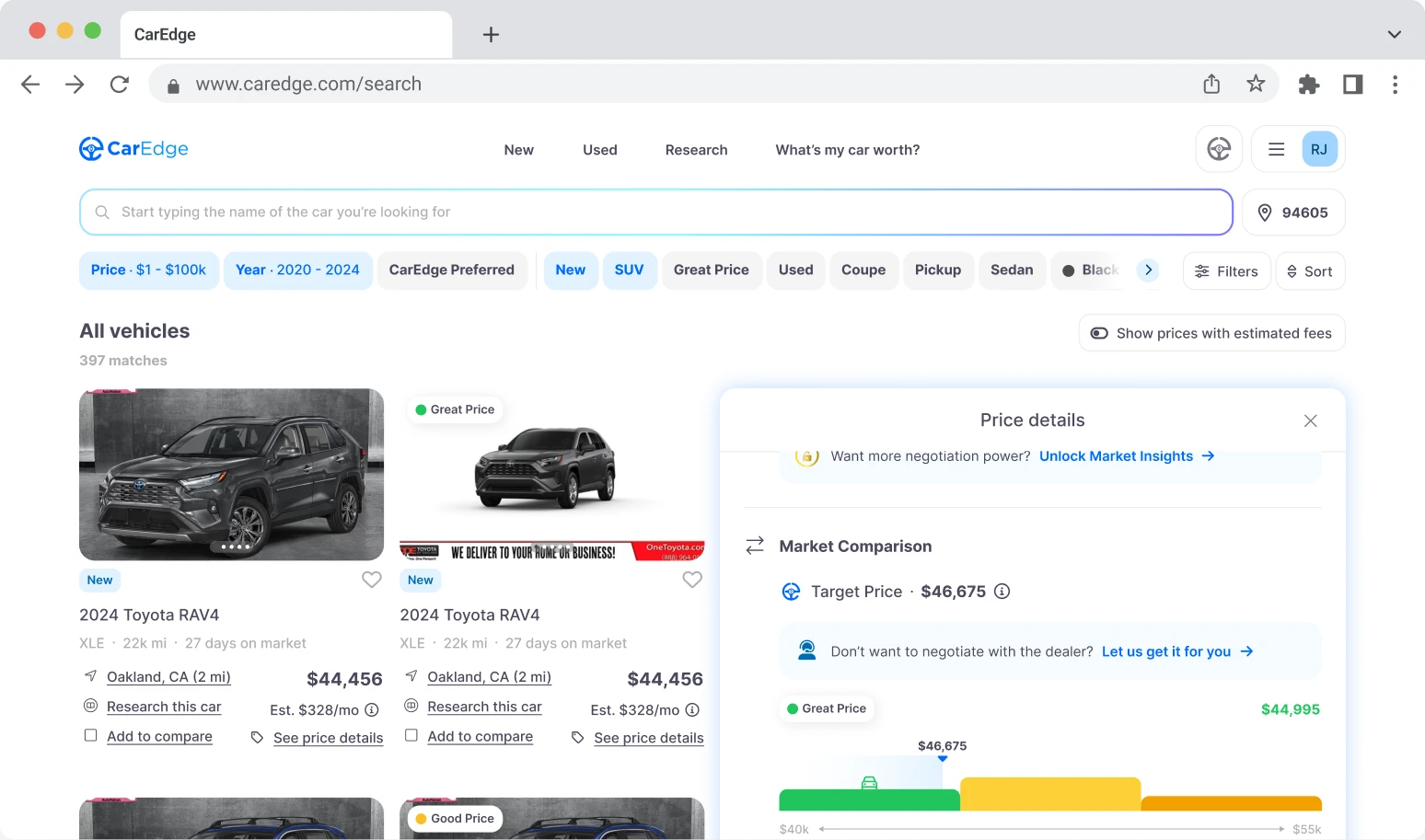
Find a wide range of vehicle listings with market insights on new and used listings near you.

What can I do with CarEdge?
 CarEdge Insights
What can I do with CarEdge?
Get access to exclusive information so you can make an informed car buying decision — all in one place.

Find a wide range of vehicle listings with market insights on new and used listings near you.
Track your vehicle’s value and cash in when the time is right to sell.

Access to our proprietary data to help you find the right car, at the right price. Find these unlocked on every listing after subscribing.

With our expert-led, tech-enabled car buying service, we will locate, negotiate, and deliver your vehicle so you can get a new car hassle free.


Help us personalize your CarEdge experience — it only takes a second.
Your answers help us personalize your CarEdge journey — we’ll follow up with tips and next steps that match your buying timeline.

Spring 2022 Update: Volkswagen of America has announced upcoming updates for the 2022 model year
Back in 2015, I don’t think anyone would have guessed that Volkswagen would be a leader in electric transportation just five years into the future. VW had been knowingly installing emissions testing defeat devices in cars for years before they were caught red-handed. The dieselgate scandal was a make-or-break moment for the largest automaker in the world. At times, it appeared that consumers were angry enough to turn their backs on VW after its 87-year history.
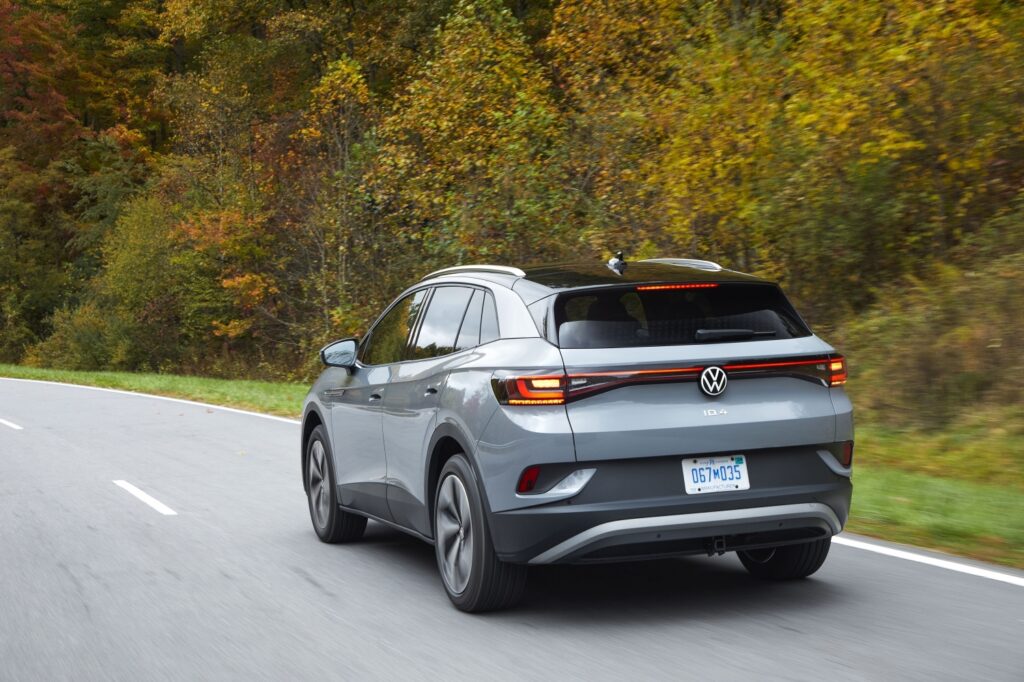
How did VW make it out alive? After sharing a new path forward, a shuffle in leadership, and an abundance of apologies, Volkswagen announced plans to invest in the production of electric vehicles with the goal of having 25% of annual sales being electric by 2025. With VW leadership drawing parallels between the classic Beetle and this ‘electric vehicle for the masses’, the 2022 Volkswagen ID.4 is the chosen symbol of the automaker’s new era.
Volkswagen’s all-electric ID.4 crossover represents second chances, a corporate gamble and five years of intensive engineering. At least $48 billion dollars have been funneled into the development of the all-new MEB battery electric platform that the ID.4 sits on. VW says that ID stands for Intelligent Design. Will the ID.4’s tech, powertrain and comfort appeal to car buyers looking for the smart choice for their next vehicle?
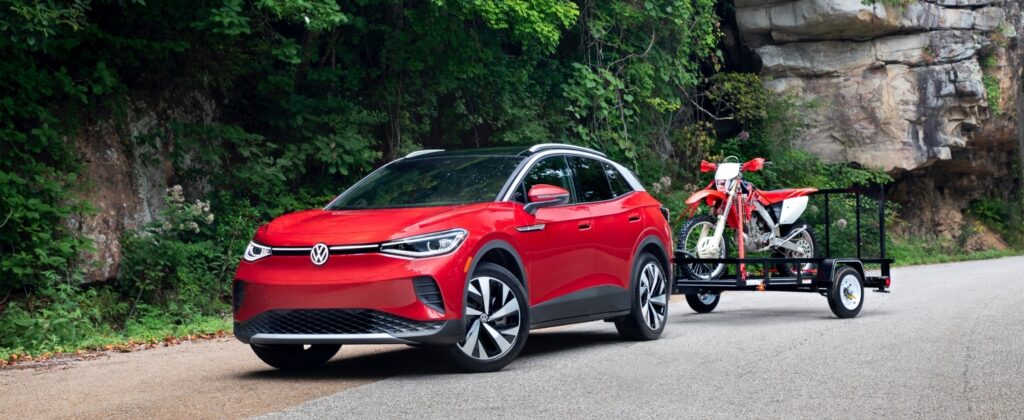
Volkswagen likes to point out that the ID.4 is their first rear-wheel drive car since the Beetle. The ID.4’s single-motor option features a rear-mounted motor that produces 201 horsepower, 229 lb-ft of torque and a 0-60 time of 7.6 seconds. It’s not fast, but acceleration is smooth and steadily supplied. It’s a different kind of spaceship feel than what you get in a Tesla, but the ease of gliding to highway speeds in near silence is satisfying in its own right. The RWD variant can tow up to 2,200 pounds, but only the First Edition came with an included tow hitch.
The all-wheel drive version of the ID.4 is where this crossover really shines. Adding another motor to the front axle increases horsepower to 295 with 339 lb-ft of torque and a very satisfying 0-60 time of just 5.4 seconds. However, it’s not quite a car you’d take to the track. The handling is well-tuned for attacking winding roads in inclement weather, although it maintains a more family-oriented demeanor. At the front is an induction motor that only engages when extra power or traction is needed. The additional power enables 2,700 pounds of towing. A few off-roading tests have shown that it isn’t equipped for rugged overlanding, at least not without some modification.
The 2021 ID.4 earned a Top Safety Pick+ from the Insurance Institute for Highway Safety, and a five-star rating from the National Highway Traffic Safety Administration’s rigorous crash testing.
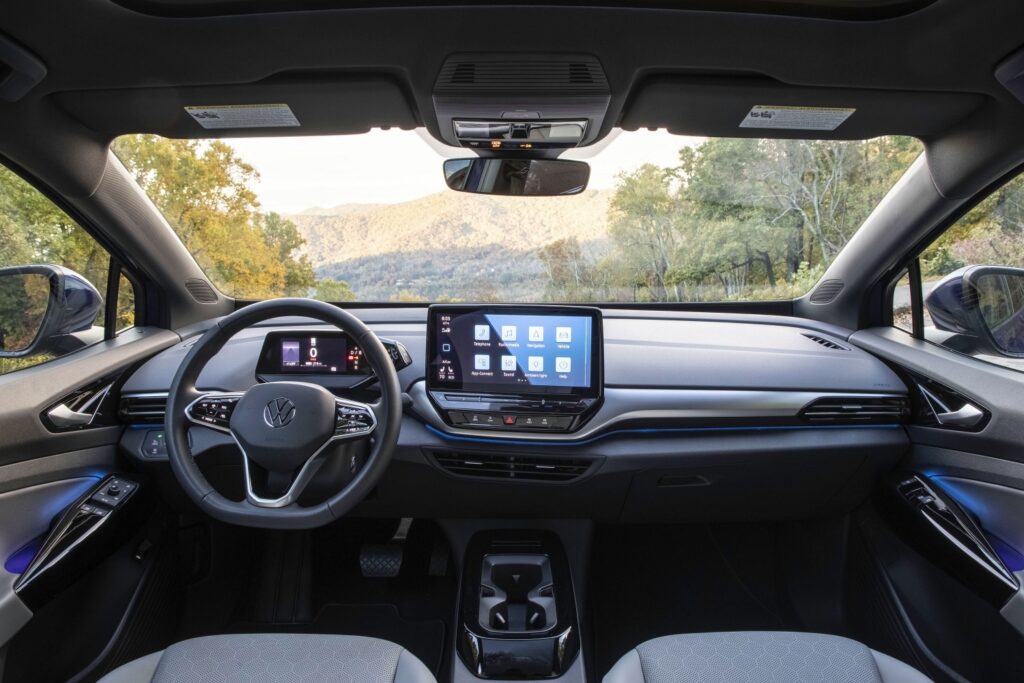
Stepping inside the ID.4 is a blend of the familiar and next-generation minimalism. There’s no front trunk (or frunk), but there are plenty of other reminders that this is an electric car. Kind of like a Tesla, nearly all controls are accessed via the 10 to 12 inch infotainment screen, with size depending on the trim. There’s something here that even a Model Y doesn’t have: a second screen for the gauge cluster, mounted right behind the steering wheel. It displays speed, remaining range and navigation guidance in an easy-to-see location. This extra screen makes driving the ID.4 feel much more comfortable and carefree.
Overuse of haptic controls on the steering wheel and beneath the infotainment screen may be an issue for some drivers, but in my experience, the rest of the interior’s design more than makes up for the occasional inconvenience. The cavernous cabin has 101 cubic feet of passenger volume, which puts it on par with the Toyota Rav4 and Honda CR-V. Backseat passengers have more than enough leg and headroom, even those who are well over six feet in height. The 30.3 cubic feet of cargo room provides ample space for groceries and such, and that expands to 64.2 cubic feet with the rear seats folded down.
All ID.4’s include Travel Assist, Volkswagen’s new driver assistance technology. It’s essentially a combination of lane centering and adaptive cruise control, and drivers love it so far. VW plans to improve Travel Assist and other tech features in all of its upcoming EVs via over-the-air updates.
The 2022 Volkswagen ID.4 is available in Pro, Pro S and Gradient trim levels. The base Pro starts at $41,190 including destination charges. The Pro interior features gray and black cloth seating, a 10” infotainment screen, and heated front seats. For an additional $3,680, the AWD Pro adds a heated windshield and steering wheel, a tow hitch and an extra 0.6” of ground clearance. One of the most lauded interior features is the interior accent lighting. The driver or passenger can choose out of 10 colors to illuminate the front dash and doors, creating a very personalized feel.
The exterior is largely the same among ID.4 trims. The Pro gets LED headlights and taillights, but not the sci-fi-inspired projector LEDs of higher trims. 19” alloy wheels on the base trim is quite the treat. The ID.4 has more ground clearance than most competitors. RWD versions have 8.2 inches of clearance, and AWD cars are lifted up to 8.7 inches. That’s far above the Ford Mustang Mach-E and Tesla Model Y, and matched that of the popular Subaru Forester.
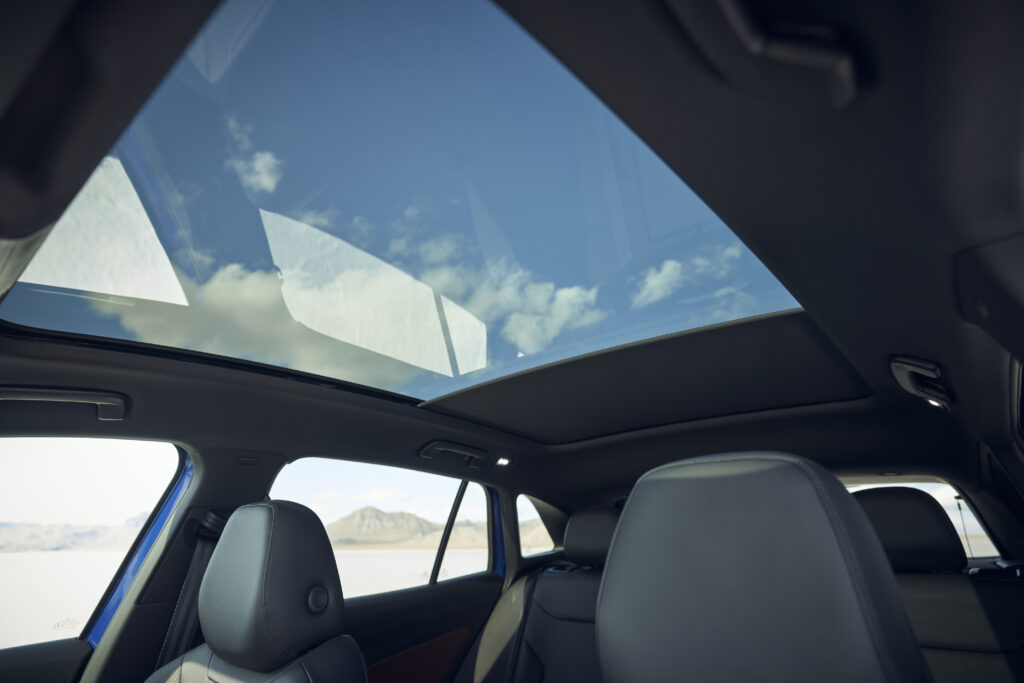
The Pro S package is an additional $4,500. For the money, a panoramic glass roof (with an electric sunshade), 12” infotainment screen and a choice of lunar gray or black and brown vegan leather perforated (but not ventilated) seats. The Pro S trim gets 8-way power-adjusting seats with 4-way lumbar support that also has a massage setting. A power liftgate is included with the Pro S too. Taken together, the interior of the ID.4 Pro S feels a class above the price point.
At the top of the ID.4’s trim options is the Gradient package that can be added to the Pro S for an extra $1,500. The Gradient package adds silver accents, a black roof, 20 inch rims and unlocks the Kings Red paint option.
The range of the 2022 Volkswagen ID.4 is just enough to make it great for road trips, however it’s a notch below the best of the best. On the EPA test cycle, the 2021 model is rated for 260 miles in the RWD Pro trim, and 250 miles in the RWD Pro S. For AWD variants, there’s a 10 mile penalty. Real-world highway testing shows that the ID.4 can go 220-240 miles at 70 mph with ease, and nearly 300 miles on a charge in the city. VW has hinted at a minor range increase for the 2022 model year. Unlike most other EVs, drivers can opt in or out of full regenerative braking. ‘D’ mode lets the vehicle coast to a stop much like a combustion vehicle. ‘B’ mode turns up regenerative braking to the max, and returns more power to the battery during every time your foot lets off the accelerator pedal. It’s nice to have options.
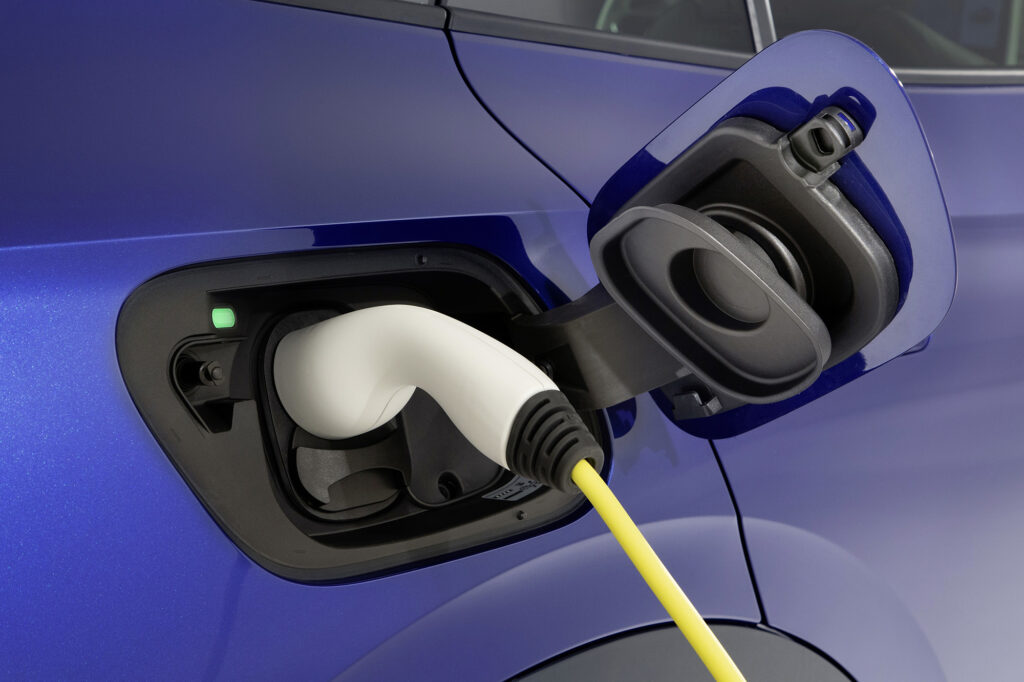
Over 80% of EV charging is done at home, and the ID.4 gets it done without a hassle. The car comes with a 120 volt ‘level 1’ charger that is only meant to be used for overnight charging. If quicker speeds are necessary, a level 2 charger can be installed on a 240 Volt dryer outlet to charge the car from empty to full in about seven hours. On road trips, the 2021 ID.4 can charge at speeds of up to 125 kW. That comes out to about 38 minutes to charge from 0% to 80% (adding about 200 miles of range). All electric vehicles charge slowly over 80% state of charge, so it would make sense to hop from charger to charger and unplug each time the car reaches 80%. Stopping every 200 miles or so to charge and take a travel break would work well for most drivers.
Volkswagen recently teased increases to both range and charging speed for the upcoming 2022 ID.4. Charging speeds will likely be increased to either 150 or 175 kW. That would save drivers several minutes at each charging stop. Over-the-air updates might even push these upgrades to 2021 models already on the road. They also confirmed the continuation of one of the Volkswagen ID.4’s most compelling selling points: three years of free fast-charging at Electrify America stations. All current ID.4 owners have this incentive with unlimited mileage, but there are some indications that mileage limits may apply for 2022 buyers. Still, three years of free fast-charging could save drivers a lot of money.
In simplest terms, think of the 2022 Volkswagen ID.4 as a sleek, futuristic and minimalist Tiguan. Interior dimensions are similar, but the ID.4 packs more power. Just about the only thing the Tiguan does better is go more miles between refueling stops. Still, electricity is far more affordable than gas. When charging isn’t free, a full ‘tank’ of electrons rarely costs more than $20.
As of December 2021, the two direct competitors to the ID.4 are the Ford Mustang Mach-E and the Tesla Model Y. The electric crossover family is about to grow rapidly in 2022 as more automakers bring models to market. Volkswagen says it’s not trying to compete with Tesla It’s an unavoidable comparison to make when the Model Y is the top-selling electric SUV in America. It’s true that the Tesla has more power, more range and better tech, but it’s also nearly twice the price of the ID.4 once federal EV incentives are taken into consideration. If EV incentives get revised in 2022, the two could end up being closer in overall price.
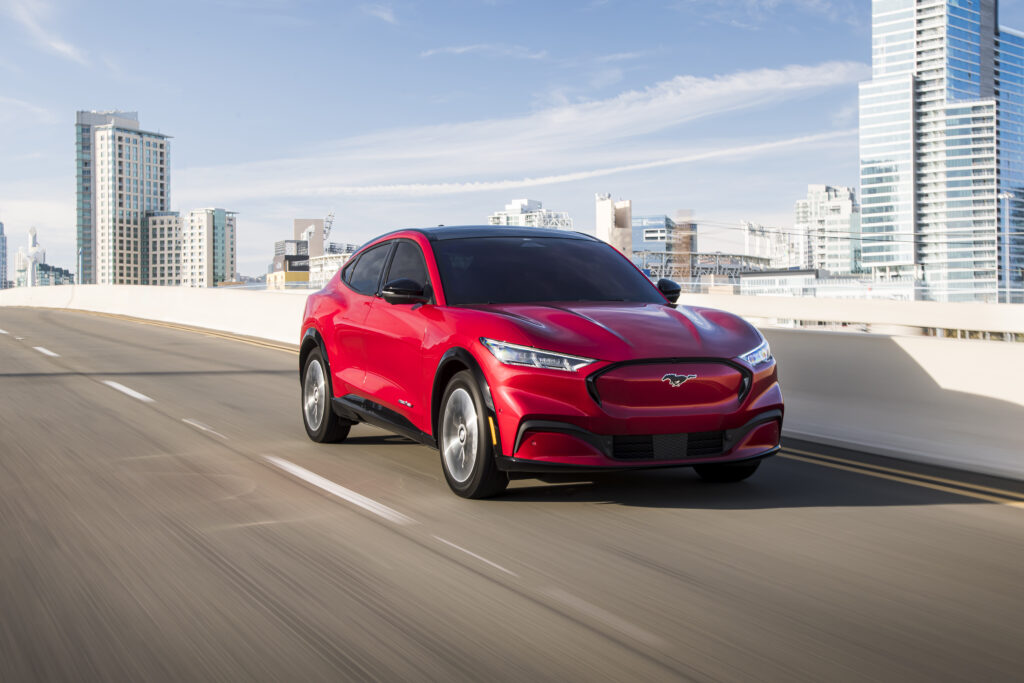
The Ford Mustang Mach-E has more in common with the Model Y than it does with the ID.4. The handling, size and range of the Mach-E are about midway between the ID.4 and Model Y. The Mach-E is a sporty crossover, and can be a downright track beast in the GT Performance trim. It features a tad more interior space, plus a frunk for added cargo room. The 15.5” infotainment screen is more akin to Tesla, and so is the firmness of the ride. Reviewers note that fit and finish is far better (as it should be) with the ID.4 and Mustang Mach-E than you’re likely to find on any Model Y. As Elon Musk likes to say, making cars is hard.
In 2022, the Subaru Solterra will make an entry into the market. This AWD electric crossover will compete with the all-wheel drive versions of the ID.4. From Subaru’s recent unveiling at the 2021 LA Auto Show, we can already see that the ID.4 has the upperhand. The ID.4 has more power, more interior room and far more range than the estimates Subaru has shared. We won’t know how the prices of the two compare for a few more months.
The 2022 Volkswagen ID.4 is a great fit for most driving lifestyles. It’s a particularly compelling car in the base Pro trim with rear-wheel drive. Volkswagen’s EVs still qualify for the $7500 federal EV tax credit in the US, which can turn the entry-level ID.4 into a $34,000 purchase. That’s an amazing value in today’s market.
A combination of high demand and the ongoing chip shortage have pushed delivery wait times out to six months or more when you order from VW’s website and arrange to pick up from your chosen dealer. Some have had luck finding an ID.4 to purchase on a dealer lot.
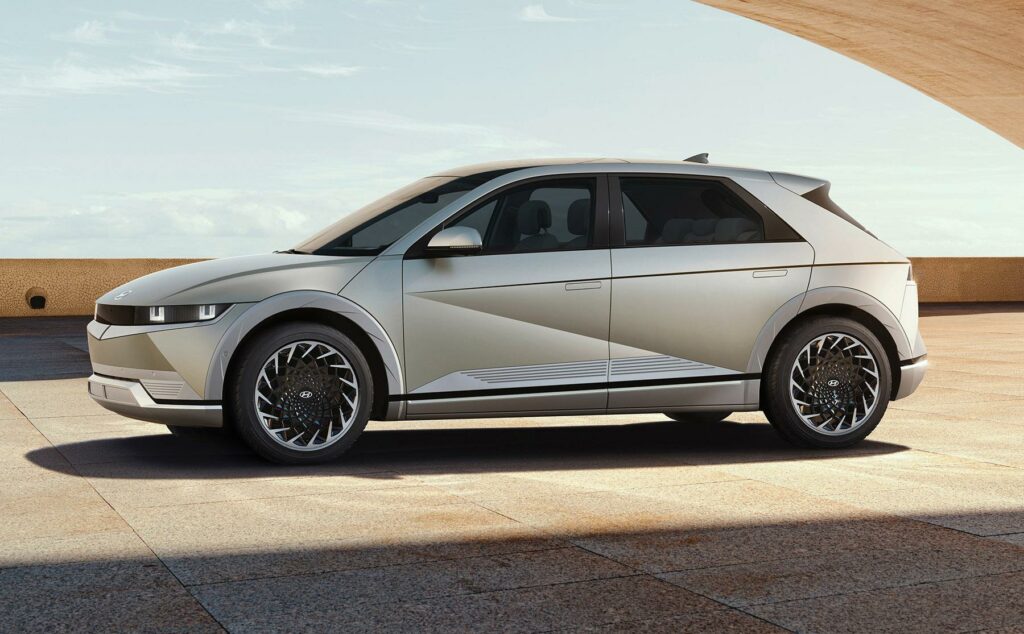
There’s a lot of competition on the way, and that’s something that buyers in today’s market should bear in mind. The Subaru Solterra, Nissan Ariya, Hyundai IONIQ 5 and Kia EV6 are just some of the amazing EVs arriving by the end of 2022. Nevertheless, the ID.4 is an excellent car, and 2022 updates could strengthen this EV’s appeal even further. Stay tuned for the latest EV updates here on CarEdge. Which electric crossover appeals to you?
You can now find ID.4’s and hundreds of other models for sale on our new CarEdge car listing service. Check it out and let us know what you think!

Through the ups and downs of the auto market, one thing remains the same: every state has a documentation fee. Also known as a doc fee, this isn’t like the other fees you’ll encounter. Be sure to familiarize yourself with what car dealer fees you should and shouldn’t pay.
The price of a car is never what it seems. There’s the selling price, the fees, the add-ons, and taxes. When it’s all said and done, you end up with the out-the-door price, and one of the line items you’ll see on your purchase agreement is a “doc fee”. Car dealer doc fees show up on EVERY car deal, and on this page we’ve aggregated all the car dealer doc fees by state for 2026.
Some states (like California and New York) cap the dealer doc fee. Others, such as Florida, don’t cap the doc fee. We’ve gathered the average doc fee that you should expect a dealership to charge in every state. If a dealer is charging more, you should try to negotiate the price down. Download this FREE negotiation cheat sheet!
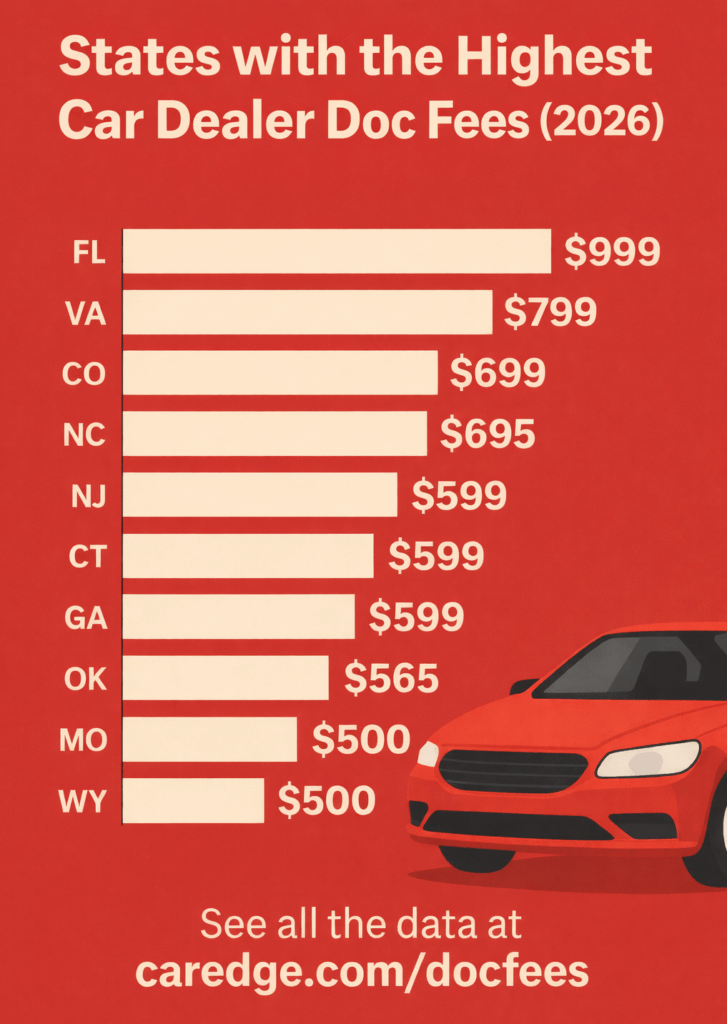
We’ve also included the average title and registration fee you should expect to pay in each state.
| State | Average Doc Fee | Title Fee | Total Registration Fees | More Info |
|---|---|---|---|---|
| AK | $299 | $15 | $245 | More info |
| AL | $489 | $18 | $393 | More info |
| AR | $129 | $10 | $28 | More info |
| AZ | $499 | $4 | $564 | More info |
| CA | $85 | $25 | $524 | More info |
| CO | $699 | $7 | $595 | More info |
| CT | $599 | $25 | $180 | More info |
| DC | $300 | $26 | $185 | More info |
| DE | $475 | $35 | $45 | More info |
| FL | $999 | $75 | $297 | More info |
| GA | $599 | $18 | $20 | More info |
| HI | $395 | $5 | $78 | More info |
| IA | $180 | $25 | $333 | More info |
| ID | $399 | $14 | $126 | More info |
| IL | $347 | $155 | $151 | More info |
| IN | $199 | $15 | $38 | More info |
| KS | $499 | $10 | $80 | More info |
| KY | $450 | $6 | $26 | More info |
| LA | $425 | $77 | $64 | More info |
| MA | $459 | $75 | $60 | More info |
| MD | $499 | $100 | $187 | More info |
| ME | $499 | $33 | $40 | More info |
| MI | $260 | $15 | $128 | More info |
| MN | $125 | $8 | $69 | More info |
| MO | $565 | $9 | $57 | More info |
| MS | $425 | $8 | $719 | More info |
| MT | $299 | $12 | $237 | More info |
| NC | $699 | $56 | $370 | More info |
| ND | $299 | $5 | $123 | More info |
| NE | $299 | $10 | $83 | More info |
| NH | $375 | $25 | $51 | More info |
| NJ | $695 | $60 | $271 | More info |
| NM | $339 | $3 | $60 | More info |
| NV | $499 | $20 | $49 | More info |
| NY | $175 | $50 | $146 | More info |
| OH | $250 | $15 | $31 | More info |
| OK | $599 | $11 | $100 | More info |
| OR | $250 | $106 | $169 | More info |
| PA | $449 | $58 | $39 | More info |
| RI | $399 | $53 | $58 | More info |
| SC | $400 | $15 | $40 | More info |
| SD | $200 | $10 | $122 | More info |
| TN | $499 | $14 | $29 | More info |
| TX | $150 | $33 | $74 | More info |
| UT | $299 | $6 | $57 | More info |
| VA | $799 | $15 | $36 | More info |
| VT | $200 | $35 | $78 | More info |
| WA | $199 | $15 | $73 | More info |
| WI | $299 | $165 | $85 | More info |
| WV | $250 | $15 | $52 | More info |
| WY | $500 | $15 | $616 | More info |
In today’s market you will likely not be able to negotiate the dealer doc fee. That being said, we have this complete guide to car dealer fees you should never pay.
You can find this data incorporated into our out the door price (OTD) calculator. When you are shopping for a new or used car it is important that you understand the total “out the door” price that you will be paying. Dealers like to get you to talk about monthly budget, however the most important things is to negotiate the OTD price.
Registration fees and taxes are generally paid in the state where you reside and where the vehicle will be titled and registered. If you buy from a dealership, they may collect your home state’s taxes and registration fees at the time of purchase and handle the paperwork for you. This saves you lots of time and hassle. If the dealer doesn’t handle it, you’ll need to register the vehicle yourself at your local Department of Motor Vehicles (DMV) or equivalent agency. Unfortunately, vehicle registration fees are not negotiable, and are set by state law.
Here’s a look at vehicle registration fees by state as of 2026:


Ready to outsmart the dealerships? Download your 100% free car buying cheat sheets today. From negotiating a deal to leasing a car the smart way, it’s all available for instant download. Get your cheat sheets today!

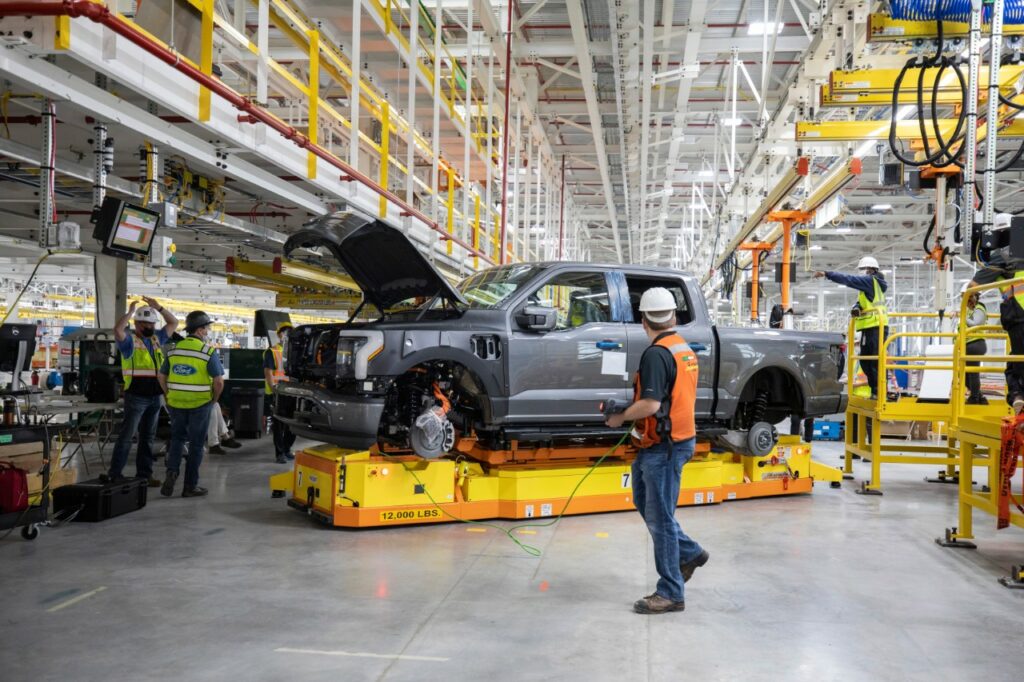
This year’s LA Auto Show marks a turning point for the auto industry. What seemed unlikely a decade ago is now very real: like it or not, OEMs are committed to electrification. There are a whole host of reasons for the shift, from international climate initiatives and clean transport incentives, to simply responding to Tesla overtaking market share. Every automaker has its own strategy. Some are going it alone, while many are laying the groundwork for new partnerships with competitors. And as 2021 comes to a close, all OEMs have at least this in common: they’re planning to electrify and they’re spending a LOT of money doing it. Here are the latest updates on the major players in the North American auto market.
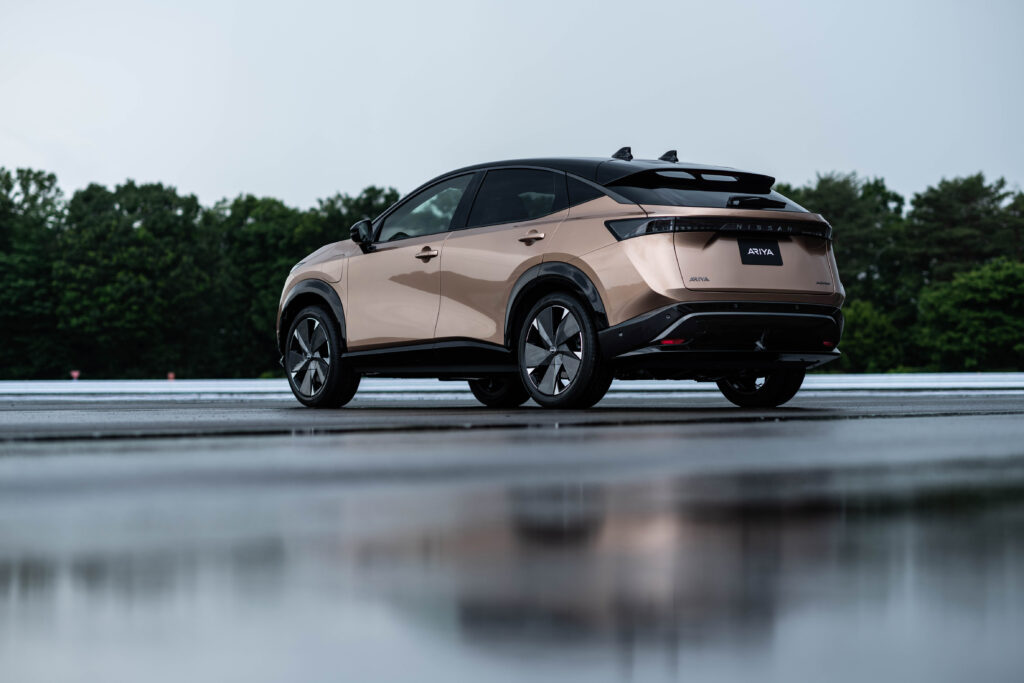
The 2011 Nissan Leaf changed the world and spurred interest in electrified transportation. The Leaf led EV sales for several years before falling behind the likes of the Chevrolet Bolt and the Tesla lineup. The turmoil of Nissan’s leadership surely didn’t do electrification any favors. But here we are, a decade after they brought EVs to the masses, and Nissan has unveiled the successor to the Leaf, the 2023 Nissan Ariya. This compact crossover is the start of something bigger.
The Japanese OEM just announced ‘Ambition 2030’, a roadmap for electrification. In just five years time, Nissan says it will spend at least $17.6 billion in EVs and battery tech. That includes the engineering and production of its own solid-state battery by 2028, which would be a major feat for any automaker. Another part of the investment is a new $1.3 billion electric vehicle hub in England where it will build an all-electric crossover. By 2030, Nissan says that half of their lineup will be EVs. Will it be enough to reclaim EV dominance?
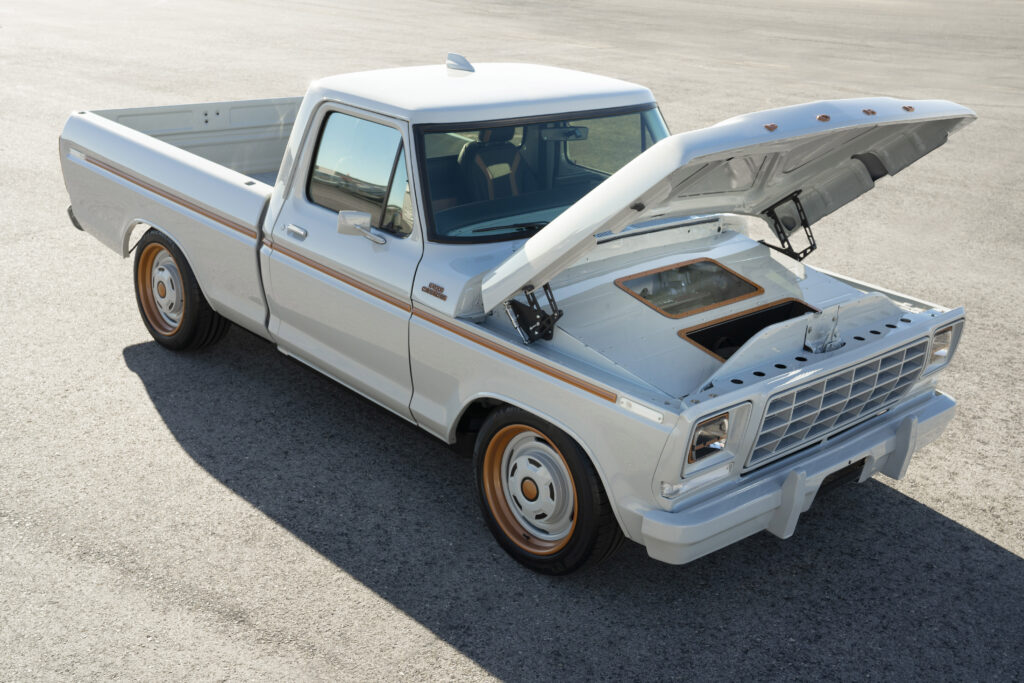
Ford is determined to catch up to Tesla, and they’re not afraid to say that publicly. Having acknowledged their status as an EV underdog, Ford isn’t making any excuses. Instead, they’re writing checks. The Detroit giant is spending $22 billion through 2025 to electrify its lineup, starting with the 2021 Mustang Mach-E, a controversially-named top seller and Tesla Model Y competitor.
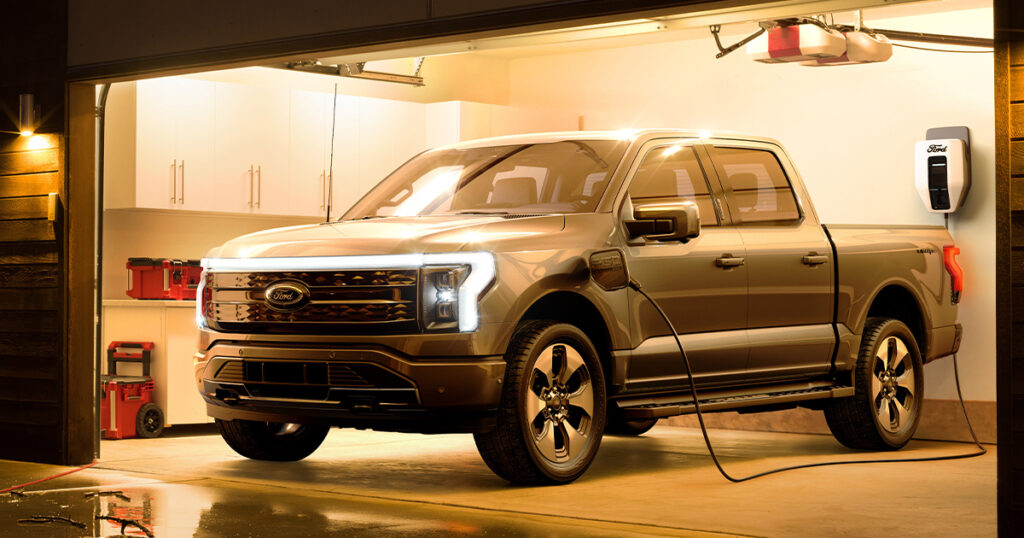
Next up, the F-150 Lightning. Ford is so confident in its electrification strategy that it’s giving its best-selling model the EV treatment. With over 200,000 reservations in the books, it looks like Ford has their work laid out for them. Ford says that F-150 Lightning reservations placed today may not be delivered until 2024 due to order backlogs.
In an even greater leap towards an EV future, Ford announced BlueOval City, which they call Ford’s “largest, most advanced, most efficient auto production complex.” The massive facility will be constructed on a nearly 6-square-mile site in Tennessee. It will produce F-series electric trucks and Ford’s future battery platforms. Moreover, a new BlueOval SK Battery Park is to be built in Kentucky with the goal of powering a new lineup of Ford and Lincoln EVs.
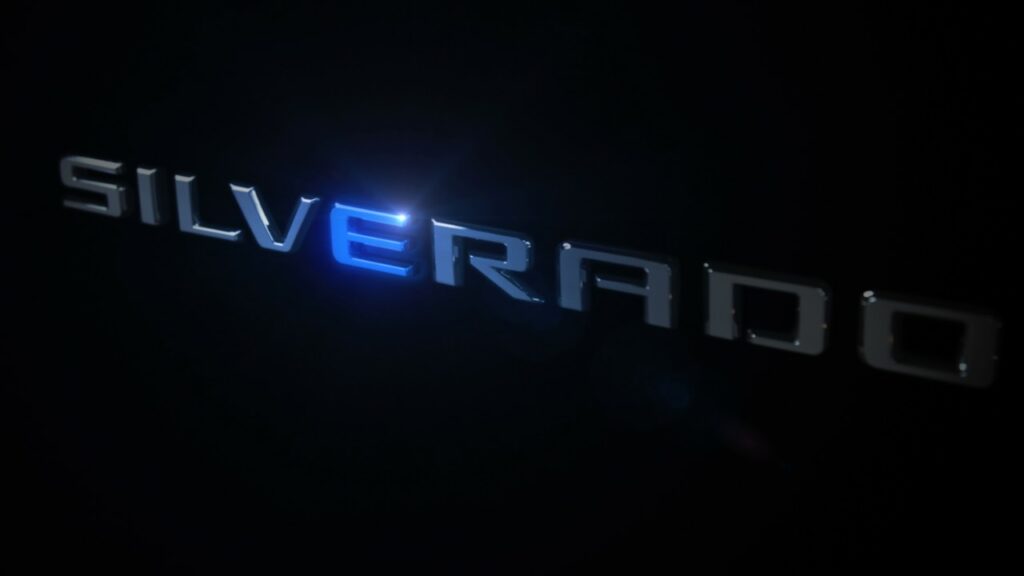
GM plans to stop selling combustion vehicles by 2035, so that means one of two things: GM is either going all-in with EVs, or they plan to go out of business. Jokes aside, the General is playing the long game. GM has been investing heavily in the development of its proprietary Ultium battery technology as it prepares to launch a slew of EVs.
Unless you’ve been living under an automotive rock for the past year, you probably know that the Chevy Bolt has been going through some rough times to say the least. Battery fires have been traced to problems with how LG Energy Solutions engineered the battery pack for GM. There’s a stop-sale on new Bolt’s, and all Bolt owners are advised to park away from buildings and limit charging to 80%. The automaker has to spend $1.8 billion fixing the Bolt recall, so I’m sure they will want to avoid similar problems going forward. GM’s Bolt blunder is certainly going to turn a lot of folks away from EVs, so here’s hoping that their new Ultium platform can convince the public that their EVs are worth a test drive.
2021 has arguably been the turning point for the automotive industry. Now that the future points towards electrification, OEMs like GM are increasing their planned investments in EVs and their infrastructure ecosystem. For example, GM recently announced that they are increasing their commitment to develop EVs and autonomous vehicles by $8 billion additional dollars by 2025, amounting to a total commitment of $35 billion. In a recent press release, GM shared that they intend for combustion-powered sales to fuel their growth strategy. The roadmap includes working with partners to build new battery facilities, creating a charging network, and converting the entire Detroit-Hamtramck Assembly center into ‘Factory Zero’, an all-EV production center with over 4 million square feet.
The Cadillac brand will be exclusively electric by 2030, and the highly-praised Cadillac Lyric EV is almost here. And of course there’s the $100,000+ GMC Hummer EV coming out next year. But we’ll know Chevrolet is serious about EVs when there’s an electric Silverado, which is scheduled to arrive in 2023-2024. The automaker is relying on the new Ultium batteries to produce a desirable electric truck with a range of up to 400 miles on a charge at a compelling price point.

Now that Fiat Chrysler Automobiles (FCA) and PSA Group (European brands Peugeot, Citroen and more) have merged to create Stellantis, the conglomerate is trying to agree on a path forward towards electrification. Stellantis CEO Carlos Tavares recently complained to Reuters about the added costs of engineering and building EVs, which isn’t surprising considering that subsidiary Ferrari publicly says they aren’t very interested in electrification.
Despite the dread of some of the leadership, Stellantis is far more committed to EVs than FCA was on its own. At ‘Stellantis EV Day 2021’, the group announced $35.5 billion in EV investment through 2025. Every Jeep will have an electrified option by 2025, and an electric Ram 1500 pickup truck and Dodge performance EV will hit the roads by the same year. Their target for North America is 40% electrification (including plug-in hybrids) in 2025.
Not only is Hyundai-Kia on a roll, they are investing heavily in American manufacturing for their rapidly electrifying lineup. They recently shared a $7.4 billion investment in America between now and 2025, with the goal of producing American-made battery electric vehicles. Hyundai-Kia is also investing heavily in autonomous vehicle development and urban air mobility. You know, as in flying cars. By 2025, they plan to have 23 EVs and hydrogen fuel cell vehicles on the market, with more to follow. So there’s a lot to look forward to from the group.
Hyundai’s retro-inspired yet very futuristic IONIQ 5 has garnered attention at the 2021 LA Auto Show along with its sibling, the Kia EV6. Hyundai’s Kona EV has sold well, but it doesn’t turn any heads. The next generation of electric Hyundai’s and Kia’s are sure to change that if the Kia EV9 and Hyundai IONIQ 7 are any indication of what’s to come.
Honda doesn’t have a single dedicated EV in the North American market, but has had success with its funky Honda ‘e’ in Europe. Nevertheless, Honda has big plans. CEO Toshihiro Mibe recently shared that the automaker is aiming for 2040 vehicle sales to be 100% EVs and hydrogen fuel cell vehicles. They expect that figure to reach 40% by 2030. As far as investment goes, Honda is putting their money where their mouth is and investing $46.3 billion in research and development initiatives, including electrification, over the next six years. But there’s a long way to go. In 2020, Honda sold 4.46 million cars globally, but only 14,000 were electric.
When will Honda begin to make a splash in the American EV market? Well, no sooner than late 2023. Honda’s pride and joy is the upcoming 2024 Prologue EV, a SUV that will use GM’s Ultium battery platform. You read that right. Honda is depending on GM to deliver the most important part of their most important car of the decade. The EVs in development will surely have Acura-branded counterparts too.
In 2025, Mazda plans to introduce a unique EV platform, ‘SkyActive EV Scalable Architecture.’ For now, Mazda only intends to bring three full EVs to the American market by 2025. The company’s first, the MX-30, is out now in California and includes a very insufficient estimated range of 100 miles. For perspective, a 2013 Nissan Leaf got better miles than that. We’ll see if Mazda gets serious about EVs with an accelerated timeline.
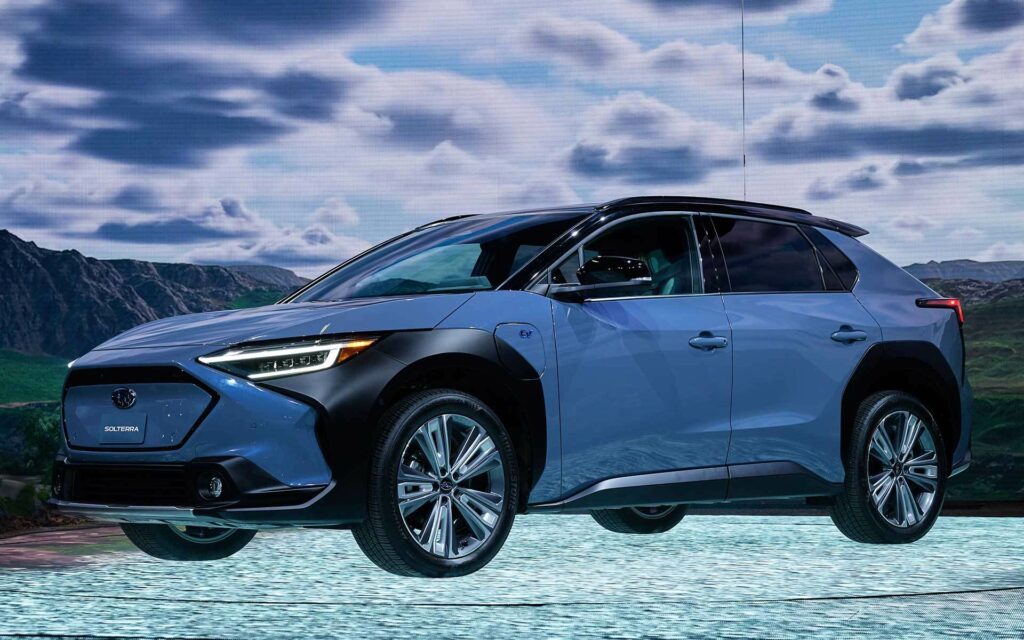
Subaru has been receiving plenty of attention as of late for its fruitful collaboration with Toyota to produce a new EV platform that both automakers will use for the time being. The 2021 LA Auto Show has featured the unveiling of the first all-electric all-wheel drive Subaru, the 2023 Subaru Solterra. It’s the sister to Toyota’s new bZ4X EV. Subaru is playing a bit of catch up in the electrified all-wheel drive space, but they have a plan. They recently announced plans for a new $272 million dollar R&D center in Tokyo that will employ some 2,800 people with the goal of facilitating the push to EVs.
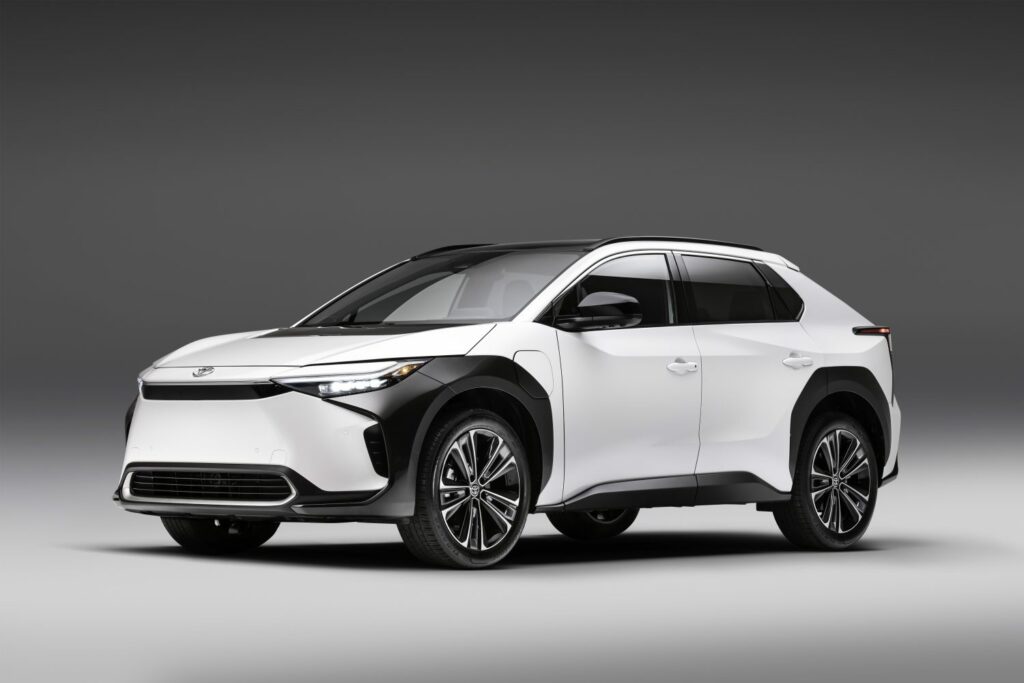
In 1995, Toyota made headlines when it unveiled a concept car at the Tokyo Auto Show that was powered by both combustion and electric motors. This concept would go on to become the first mass-produced hybrid, the 1997 Toyota Prius. 25 years later, the hybrid pioneer is lagging behind other automakers in the push to further electrify. As recently as this year, Toyota and Lexus have frequently trash talked EVs. From claiming that they prefer “self-charging hybrids” (there’s no such thing!!!), to investing heavily in the incredibly inconvenient hydrogen-powered Mirai, Toyota has kicked the ball down the road for the last decade when it comes to electrification. But things started to accelerate in 2019 when Toyota expanded its existing partnership with Subaru to include the development of a battery electric vehicle.
At the 2021 LA Auto Show, we got our first look at the fruits of the Toyota-Subaru collab. On Toyota’s side, the result is a compelling EV with an eye-rolling name: the 2022 Toyota bZ4X. Apparently bZ stands for beyond zero, as in zero emissions. Subaru simultaneously unveiled its first all-electric all-wheel drive vehicle, the Solterra.
So Toyota is off to the races. What’s next in their roadmap to electrification? In October, Toyota announced plans to invest $3.4 billion in US-built batteries through 2030. Globally, Toyota says it’s investing $13.5 billion in battery development, with the headline goal of reducing battery costs by 50% by 2030. They’ve also established a partnership with Panasonic for battery R&D. Toyota plans to expand the Beyond Zero line of cars into seven different models by 2025, and an additional eight EVs will be introduced into other Toyota segments. If all goes as planned, Toyota’s lineup will be hardly recognizable five years from now.
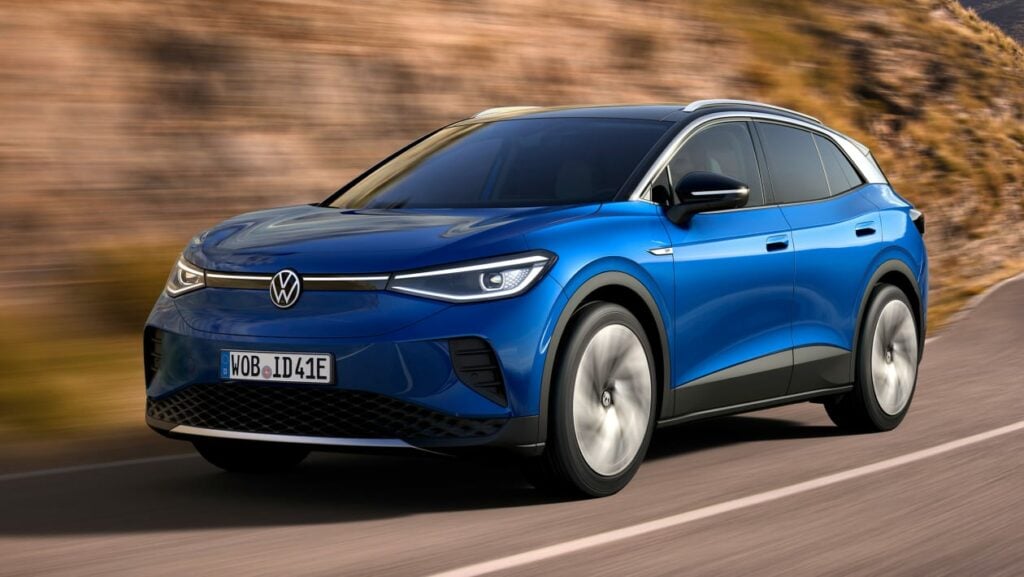
In Europe, German EVs are arguably the face of electrification. While it’s true that Tesla and Asian EVs are quickly making inroads, Volkswagen, Audi and Porsche are doing very well in the European EV market. The irony? Volkswagen Group’s electric leadership came directly out of the dieselgate emissions scandal. Following the debacle, VW intended to rebrand itself as an automaker committed to righting wrongs and going green once and for all. And to a large extent, the rebranding has been a success.
VW Group has allocated over $86 billion for technology development between now and 2025. CEO Herbert Diess says that nearly all of it will be spent on electrification initiatives. In fact, he recently shared with CNBC that VW aims to have at least 50% of total vehicle sales to be electric by 2030.
Here in the US, VW has already started converting a large portion of its Chattanooga, Tennessee factory into a production facility for American-made ID.4 electric crossovers. The conversion will cost about $800 million. The Chattanooga factory recently celebrated its 10th anniversary, and over 3,800 people are employed there.
The Porsche Taycan has seen immense success and rave reviews. It’s the top-selling non-SUV Porsche of 2021, despite a sticker price that stretches from $94,000 to $188,000. Porsche, a subsidiary of Volkswagen Group, has led the electrification of luxury performance in Europe. They’re also investing in a network of public fast-chargers and destination chargers. At least 7,500 charging points are going to be available worldwide by 2025. This is all part of Porsche’s plan to spend about $17 billion on electrification through 2025.
BMW has been a bit of an internal combustion holdout. Not long ago, CEO Oliver Zipse declared that gas engine development will continue and that demand for internal combustion “will remain robust for many years to come.” However, even Zipse says that he expects BMW’s EV sales to grow by at least 50% year-over-year for at least the next few years. By 2025, they expect 25% of BMW’s sales to be EVs. What about investment? The latest tally shows BMW has plans to invest $23.8 billion in battery technology and EVs. They seem to be dabbling in hydrogen fuel cells too, a technology that has yet to show scalable promise.
Mercedes-Benz maker Daimler announced in July that it intends to invest $47 billion in electrification by 2030, with the explicit goal of taking on Tesla. Daimler says that the overhaul of operations could result in job cuts. Most notably, the transition will result in an 80% drop in combustion engine investments by 2026, just five years from now. In essence, Mercedes-Benz is going all in for EVs. Daimler recently purchased British electric motor engineering firm YASA Limited, and is making strides towards battery development.
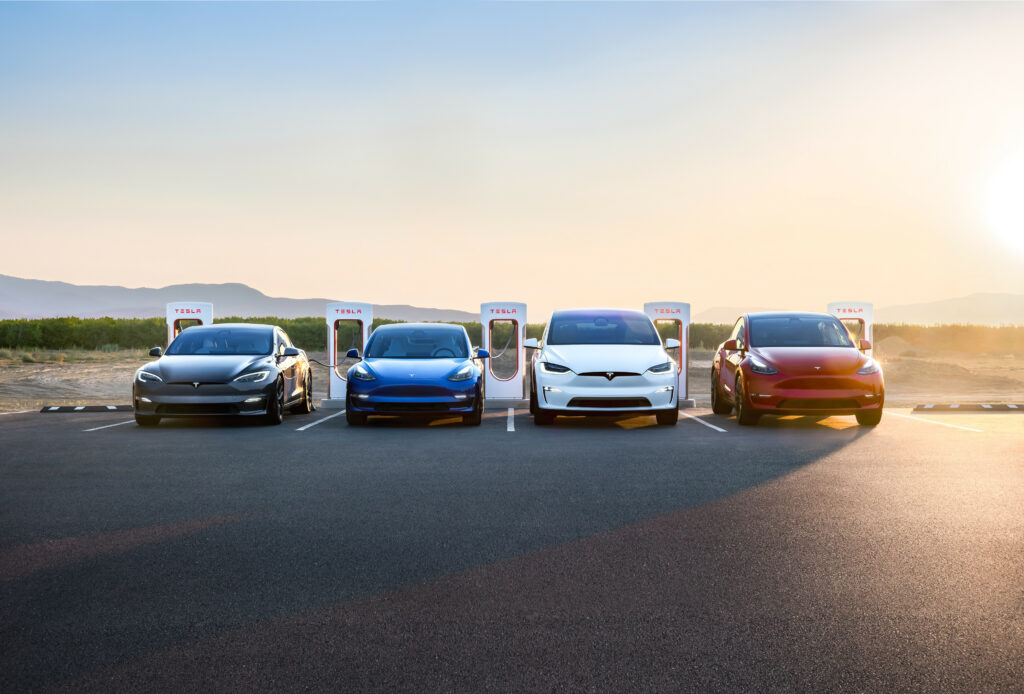
Legacy OEM’s have a solid shot at catching up to Tesla, but there’s also the possibility that we’re witnessing a great realigning of sorts in the North American auto industry. As it stands today, Ford, Volkswagen Group, GM and Hyundai-Kia are best positioned to dominate the EV industry alongside Tesla, but all OEM’s are throwing money and infrastructure at electrification. What do you think the outcome will be? Will the big three and German giants be as powerful in a decade as they are now? Only time, money and a battery-powered arms race will tell.

Can a car dealer charge you more than the manufactures suggested retail price (MSRP)? If you live in the United States, the answer is yes.
W,e’ll walk you through the laws that allow car dealers to sell their inventory priced over MSRP. We’ve included a bonus “craziest markups” section at the bottom of this post to give you some context as to how out of control new car pricing currently is.
In this post we’ll also give you some suggestions for how you can find dealers that are not marking their new cars over MSRP, as well as the “word tracks” you can use when trying to negotiate with a salesperson or sales manager.
Let’s dive in!
Many goods are sold by manufacturers through their network of dealers or agents. Think about insurance as an example. Many insurance products are sold by an agent, who is simply a licensed producer that represents an insurer. Could you buy insurance directly from the insurer? Sure, some companies allow for that, but not all. Many insurance companies don’t want to have to deal with selling their own product. As strange as that sounds, it’s pretty common, and instead of selling directly to consumers they employ agents to do that for them.
The same dynamic applies in retail automotive. Can you buy a car directly from a manufacturer? Yes. Do most manufacturers not sell directly to consumers because they don’t want to deal with all that it entails? YES. The hassle of dealing with customers, plus franchise dealer laws in all 50 states make it an easy decision for automakers to leverage their dealer partners to sell cars. The exception in 2025 and beyond is with direct-to-consumer automakers like Tesla, Rivian, and Lucid.
So long as most new cars are sold through dealers, the dealers will have their discretion to price their inventory however they’d like. MSRP does stand for manufacturers suggested retail price after all. At the end of the day, the franchise dealer model is simple:
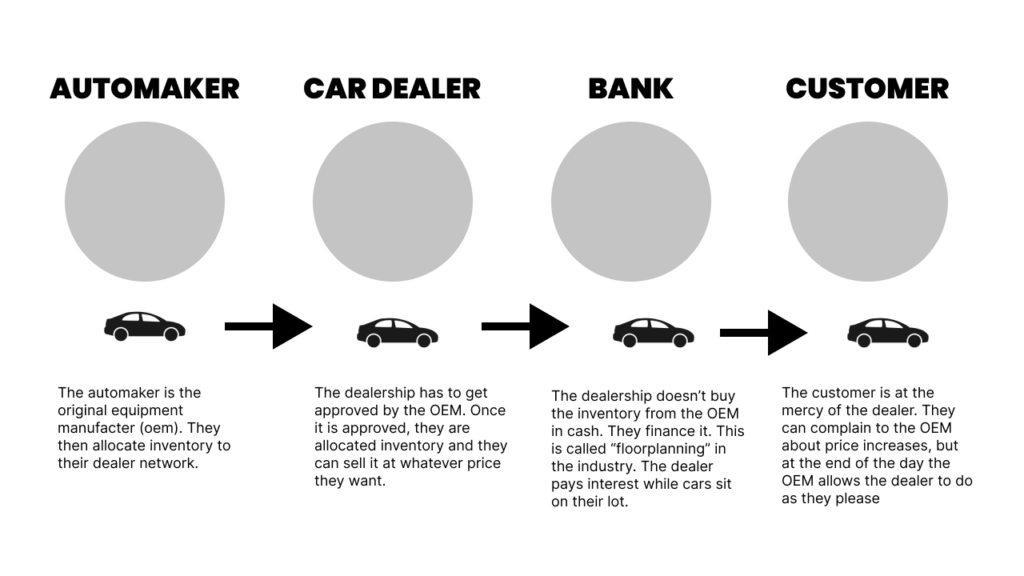
The automaker is responsible for producing the vehicle. The dealer is responsible for selling the vehicle. The bank is responsible for financing the purchase of inventory for the dealer. The customer is responsible for negotiating and purchasing the vehicle.
Within the franchise agreements that dealers sign with their OEMs they do not have rules that prevent them from marking up vehicles beyond the suggested retail price. If automakers wanted to be consumer advocates and cap the price of their vehicles, they could do this by simply adding and enforcing a price cap rule with their dealer body.
This will likely never happen. Why? Because gross profit on new cars has never been higher, and automakers and dealers alike are enjoying this new reality. If automakers attempted to stop their dealers from selling above MSRP they would be picking a fight with their best customer (remember, the dealer buys the inventory from them!).
Some dealerships refuse to sell their cars for more than MSRP. That’s great. The issue is that they add all sorts of add-ons and accessories to a vehicle that you didn’t ask for. Here’s a perfect example of that from a Land Rover dealership:
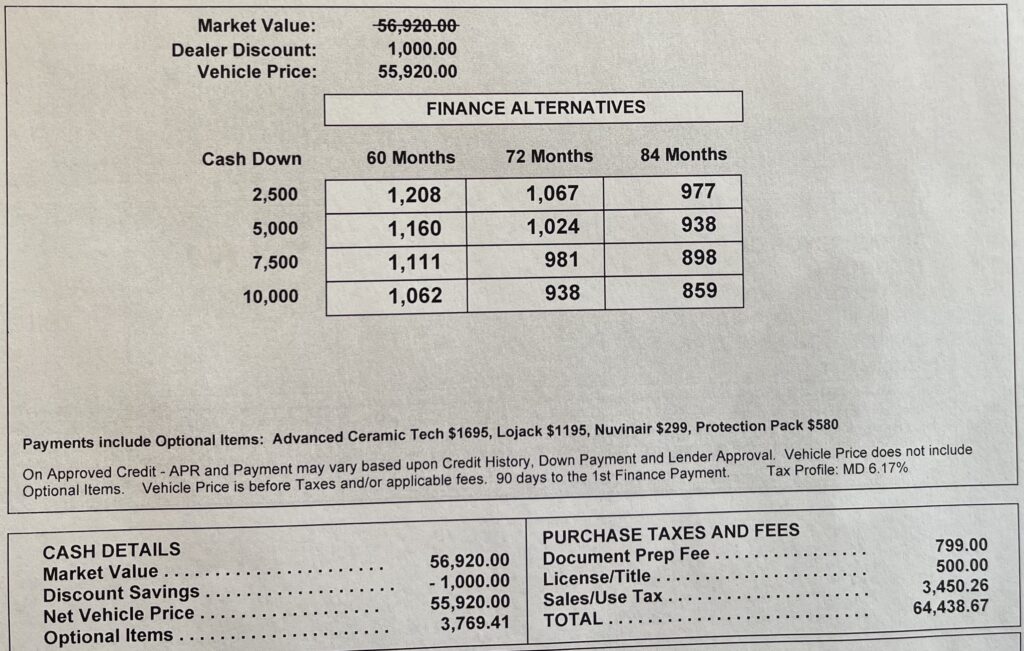
In this case the dealer discounted their price by $1,000. That’s awesome! Then they added $3,769.41 in accessories and add-ons…
The accessories they added are:
Our recommendation in this case (and in the current market) would be to negotiate the cost of the accessories down to the dealer’s cost. The dealership incurs a cost to their service department to install these products. That cost is likely a few hundred dollars (refer to the table below). With that in mind, you’ll want to ask for the RO (repair order) they issued for the installation of the accessories.
| Item | Cost to Dealer | Retail Price | Dealer profit |
| Interior protection | $50 | $500 | $450 |
| Paint protection | $100 | $850 | $750 |
| Undercoating | $200 | $700 | $500 |
| Rustproofing | $50 | $800 | $750 |
| Car alarm | $300 | $800 | $500 |
| VIN etching | $75 | $400 | $325 |
| Lojack | $325 | $1,000 | $675 |
| Nitrogen-filled tires | $35 | $250 | $215 |
| Window tinting | $25 | $300 | $275 |
Many car dealerships are selling their new cars above MSRP, and they aren’t shy about it. Every new car comes with a window sticker, also known as a Monroney Label. Many dealers are adding additional stickers to new cars with their additional dealer markup. Here’s an example:
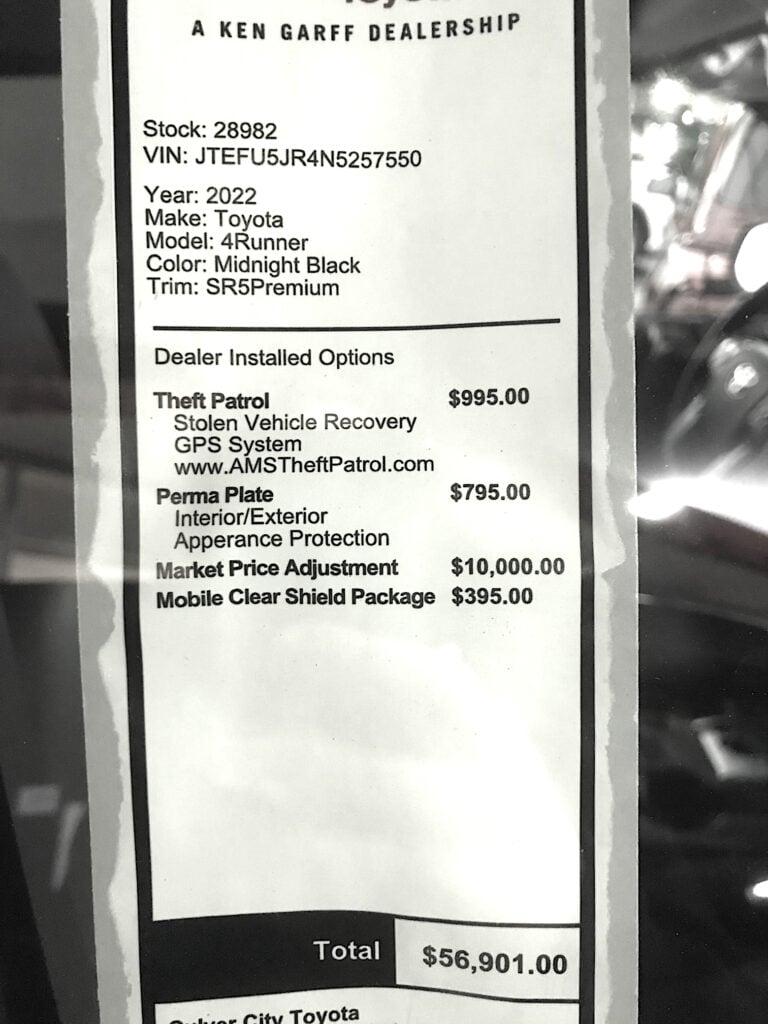
In this case the dealership added both add-ons (Theft Patrol, Perma Plate, and Mobile Clear Shield Package), and a “Market Price Adjustment” of $10,000. The market adjustment is additional dealer markup. You get nothing in exchange for having paid an additional $10,000. It is pure profit for the dealership.
What can you do when a new car is for sale over MSRP? How can you negotiate a lower price? Well, as always, remember “if it’s taxable, it’s negotiable.” That means if it’s taxed on the bill of sale, you can negotiate its price.
As a refresher, here are the fees that you can and cannot negotiate on.
When it comes to additional dealer markup and add-ons we encourage you to not settle for what the dealer is asking for. Dig your heels in a bit and try and get some money back in your pocket. Just because they are asking for $10,000 in additional markup doesn’t mean they won’t accept $5,000.
If the dealer is adamant about their pricing and won’t budge, consider factory ordering a new vehicle. When you factory order you can get a legally binding signed buyers order for the agreed upon selling price at the time you place the order.

If you found this article helpful, you’ll love what we have in store for you at CarEdge. From free car buying guides to expert negotiation help, we’re proud to make car buying easy for every shopper. Check us out!

One of the greatest benefits of owning an electric vehicle is the affordability and convenience of plugging in. Charging shouldn’t be a hassle. In fact, waking up every morning with a full ‘tank’ of electrons is an added convenience that saves time and money. But EVs are a new way of doing things, and adapting may involve a learning curve. We’ll address five common myths about charging at home while exploring a range of options for today’s EVs.
This myth confuses EV road tripping with day-to-day ownership. Ready to have your mind blown? With an EV, you wake up with a full battery every single morning. Just charge your car while you sleep! How often do you go on road trips? On the interstate, it’s true that you can expect to spend roughly 20-40 minutes plugged in at a fast charger every 200 miles or so. For most drivers, road trips are few and far between, making the public charging inconvenience worth it in exchange for the many benefits of the EV lifestyle.
Once again, this myth confuses long-distance travel with how 90% of EV charging is done: at home. Not only is electricity far cheaper than gasoline, electric vehicles are also much more efficient than vehicles powered by internal combustion engines. Smart home chargers can even schedule charging for the off-peak times when electricity is cheapest, which is usually in the dead of night.
Public fast charging sessions CAN be as costly as a tank of gas. But bear in mind that you’ll only use these fast chargers when you’re traveling long distances away from home. Want to avoid the most expensive charging stations? Simply do a little trip planning ahead of time using tools like PlugShare. Volkswagen, Hyundai and others have offered a period of free charging for new car buyers. Free charging incentives are something to consider when shopping for a new EV.
Real-world charging cost examples: America’s best-selling EV, the Tesla Model 3, has a usable battery capacity of about 77 kilowatt-hours, which will power about 350 miles of driving in the city, or 310 miles on the highway. The average residential electric rate in the US is $0.16 per kilowatt-hour (kWh). Say you return home after a long day of driving and plug in. A full charge from empty to 100% will only cost $12.32 at $0.16 per kWh. But say you’re on the road, and you need to stop at EVgo or a Tesla Supercharger. At $0.50/kWh, public chargers can be more than twice the price of home charging. A full charge at one of these ‘expensive’ stations might cost you $30-40. Not bad comparable to today’s gas prices.
All EVs come with a free ‘trickle charger’, also known as a ‘level 1’ charger. This is the kind of charger you simply plug into a regular 120 volt wall outlet. These chargers provide about 3-4 miles of charge per hour, but if you leave your car plugged in at home overnight, 12 hours will get you over 36 miles of added range. The average American drives just 25 miles per day. For the typical driver, a level 1 charger is enough to wake up to a full battery every morning.
If you regularly drive more than 50 miles a day and don’t want to stop by a public fast charger to top off your battery, then installing a faster ‘level 2’ home charger may be worth the expense. A level 2 charger requires a 240 volt outlet, the same kind that’s used for large home appliances like washers and dryers. Installing a 240 V outlet and buying a level 2 charger is not cheap. Parts and labor will set you back between $850-$2,000 in most cases. However, if you have a 240 V outlet already within reach of where you’ll charge your car, all you need to do is buy the level 2 charger. A decent level 2 charger sells for $300-$600. Many electric utility companies offer big rebates for EV charger installation, so be sure to check before you write it off as too expensive.
If your 240 V outlet is already supplying an appliance with power, you can purchase a splitter from NeoCharge, Splitvolt, or another maker. A splitter plugs in directly to the 240 V outlet. You then plug both the appliance and EV charger into the splitter. The appliance will always receive priority. When not in use, the splitter sends energy to the car charger. Splitters are often on sale for less than $350.
If, like most American drivers, you can manage just fine with the level 1 trickle charger, you won’t need to update any of your home’s electrical wiring. If you drive more than 50 miles each day frequently, you can either visit public fast chargers or opt to install a level 2 charger at your home. If you need to install a level 2 charger, there’s a chance that you’ll need an electrician to do some work, and possibly even upgrade your home to a modern circuit breaker box. If that’s required, you may need to spend somewhere between $1000-$2,000 for electrical upgrades. But in most cases, you won’t need to spend a dime on upgrades.
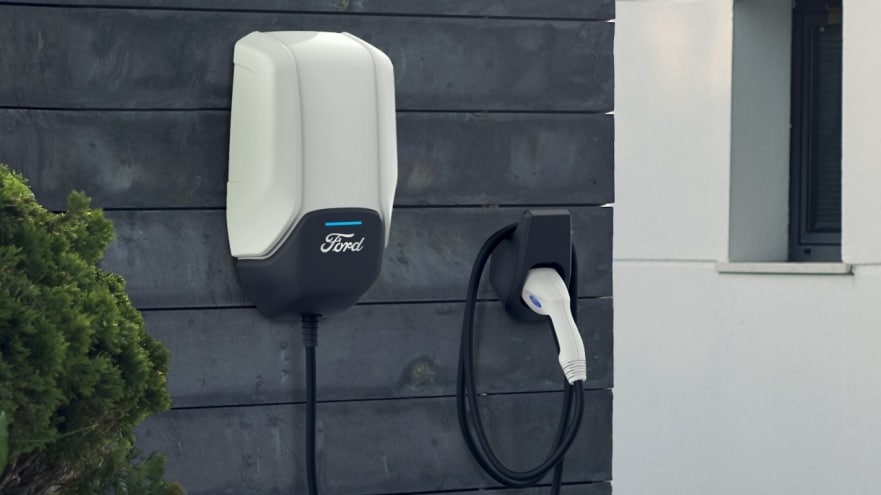
A garage is just a matter of convenience. Sure, garages are great, but there’s nothing wrong with charging in your driveway. EVs were engineered to safely charge in any weather conditions. No one would buy them if you had to worry about electrocution on a daily basis! If you live in an apartment, townhome or condo, check with the property managers to see if there’s a dedicated spot for EV charging. Many communities now encourage EV charging and provide residents with access to complimentary level 2 chargers. Perhaps your inquiry will be the motivation they need to install some EV chargers.
Charging an EV is not the hassle it’s worked up to be. It is a big shift in the automotive lifestyle, but it brings benefits and cost savings that combustion vehicles can’t offer. You’ll most likely be able to fill up your battery every night with no additional expenses needed, but that can change for drivers who regularly go the distance. Hopefully this myth-busting resource will help you decide if EVs are right for you.

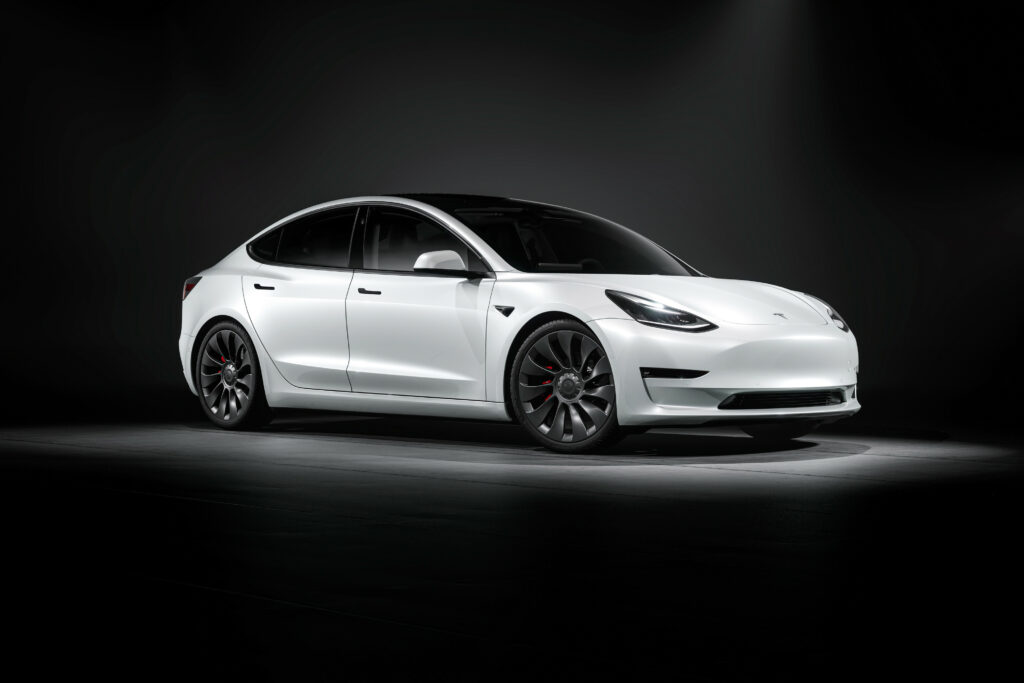
(Updated June 2022) A recent survey says that 23% of American drivers say they’re considering an EV for their next vehicle purchase. Some are looking to save on fuel, and others are trying to reduce their carbon footprint. Many are turning to the Tesla Model 3, the most affordable Tesla available today. This sporty sedan is receiving some upgrades for the 2022 ‘model year.’ Tesla doesn’t follow the traditional model year cycle, but they’ve shared some immediate updates for their base model and long range sedans. We’ll cover how much the Model 3 costs, performance and specs, and just how long you’ll wait to take delivery in 2022.
Tesla has decided to rename the Standard Range Plus base version of the Model 3 the ‘Rear-Wheel Drive’ variant. Perhaps calling something ‘standard’ just wasn’t on-brand for the luxury automaker. This base trim has received some 2022 upgrades, most notably an increase in range from 262 miles to 272 miles on a charge with the included 18” aero wheels. If you add the 19” sport wheels, the range drops to 267 miles. Tesla has announced that it’s moving all base trims to new battery chemistry. The new lithium iron phosphate (LFP) batteries will allow the car to repeatedly charge to 100% without risking as much harm to the life of the battery. New battery tech could be partially responsible for the range upgrade we’re seeing.
The Rear-Wheel Drive Model 3 is powered by a single electric motor that produces 296 hp and 277 pound-feet of torque. Tesla has actually increased the 0-60 time for 2022, raising it to 5.8 seconds for the RWD trim. This software-limited acceleration could also contribute to the quoted higher range. At a Tesla Supercharger or other fast charger, its 60 kWh battery pack can accept up to 170 kW when nearly empty. In the real world, that means charging from 10-80% (adding 190 miles of range) takes about 26 minutes.
The 2022 Tesla Model 3 Rear-Wheel Drive now sells for a notoriously non-negotiable $46,990, plus the $1,200 destination and doc fee. So the cheapest Tesla is now $48,190. Just a year ago, it was $38,190.
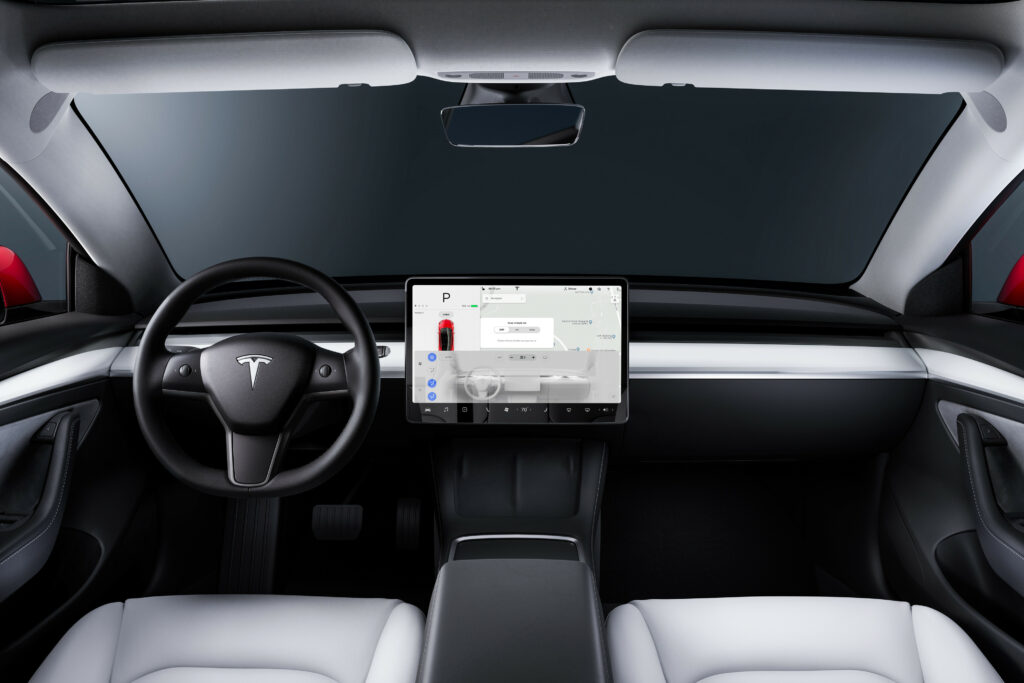
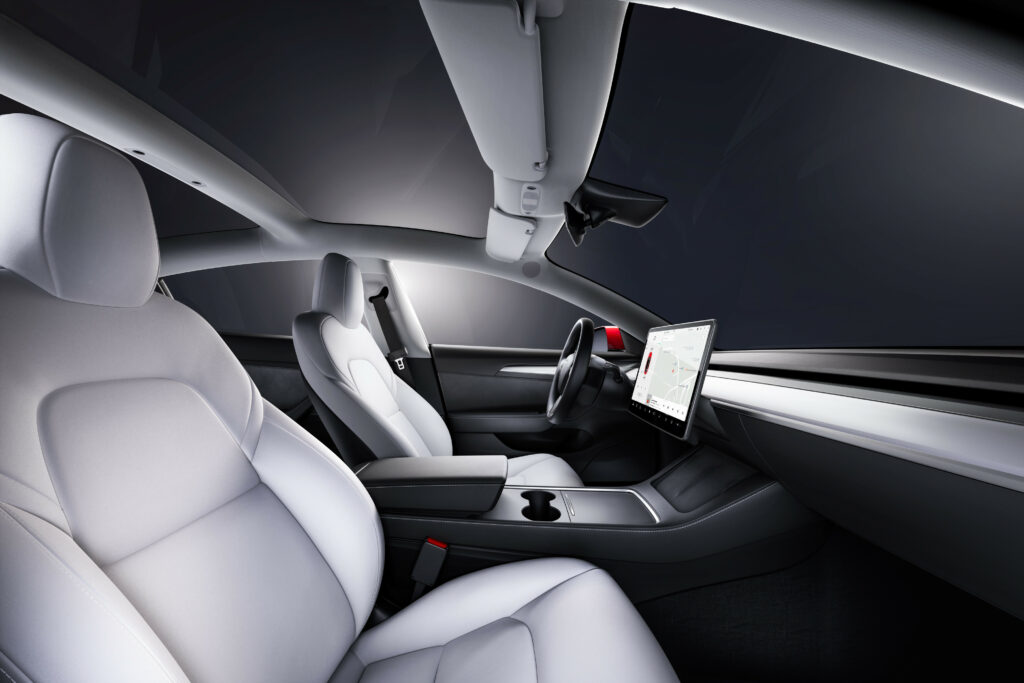
The Model 3’s interior features are typical Tesla, and the 2022 upgrades eliminate a few differences between the Long Range and base Rear-Wheel Drive trims. RWD now comes with a heated steering wheel and heated front and rear seats (if there’s enough chips for that!). This means that reduced audio quality is the main difference that will stand out between the interiors of the two. The RWD Model 3 includes the 15 inch horizontal touchscreen that Tesla is known for. Everything from your speedometer to Netflix and arcade games can be found on there, but Tesla’s Premium Connectivity package (remote wifi) is an additional $10/month. There’s no Apple CarPlay or Android Auto though.
All Model 3 trims come with 23 cubic feet of storage, with 15 cubic feet of space in the trunk alone. The seating area includes 97 cubic feet of total passenger space, which is quite good for a mid-size sedan. And then there’s that glass roof, which creates the illusion of even more interior room, but can be a pain since there’s no retractable sunshade. Black vegan leather comes standard, and white seats can be added for $1,000. Every exterior color except white and midnight silver will set you back between $1,000 – $2,000 more.
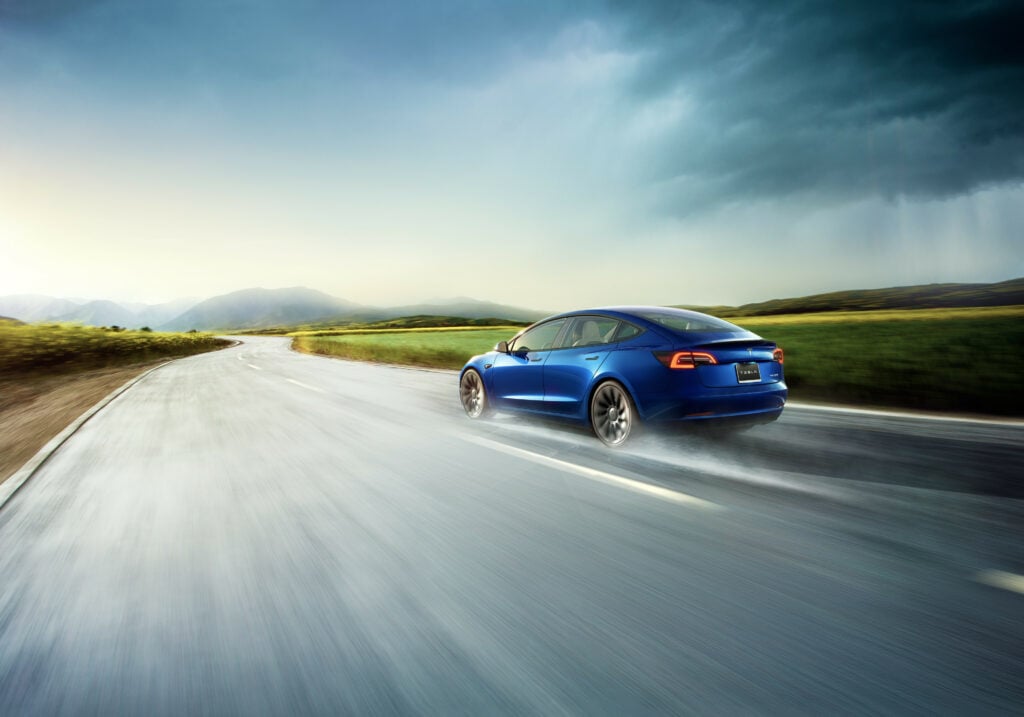
The mid-level spec for the Model 3 is the all-wheel drive Long Range variant, which now has an MSRP of $57,990, and $59,190 with destination charges. With taxes and fees, a Model 3 Long Range will cost over $63,000 in 2022, with exact pricing depending on state sales tax.
That’s quite the hefty price tag, so what do you get for that kind of money? If range is your top concern, the Model 3 Long Range offers a solution with 358 miles of EPA-rated range, up from 353. Supreme efficiency and a 80 kWh battery pack gives the Long Range Model 3 one of the highest range ratings in today’s EV market. Electric all-wheel drive powertrains feature two motors, one powering each axle. If one motor were to ever stop working, electric all-wheel drive vehicles could continue the journey with the power of the remaining motor. Dual-motor power brings the AWD Model 3 to 60 mph in just 4.2 seconds. The AWD powertrain is excellent, but the 5.5 inch ground clearance will prevent most off-roading.
The Model 3 Long Range offers a few other upgrades over the RWD version. The Long Range can accept a 250 kW charge rate, which cuts charging time from 0-80% down to 32 minutes. Premium audio supplies 14 speakers, 1 subwoofer, 2 amps, and immersive sound. LED fog lamps are included.
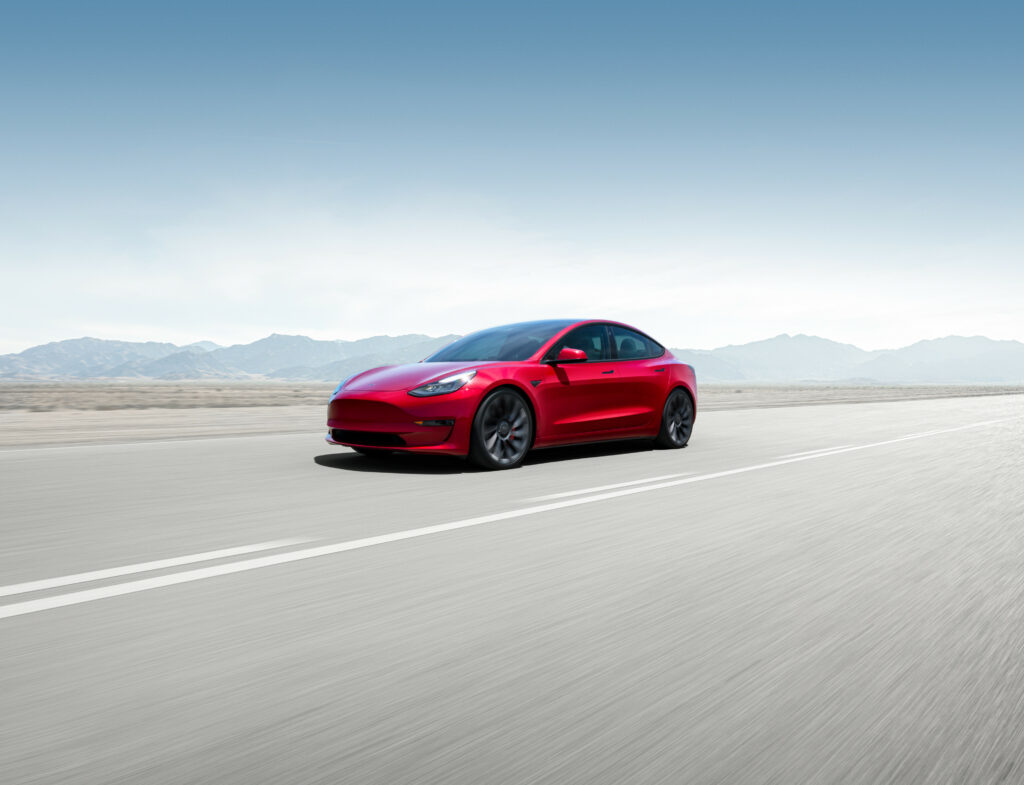
The track-minded Model 3 Performance’s 450 horsepower and 471 lb-ft of torque propel it to 60 mph in just 3.1 seconds. The extra power chops the range down to a still-respectable 315 miles. Pricing for the Model 3 Performance starts at $61,190. Tesla has not yet announced any 2022 updates for the Performance version.
Autopilot (essentially adaptive cruise control + lane centering) is standard with all Tesla’s. The beta version of Full Self-Driving (FSD) can be added to any Tesla for an additional $12,000. It’s important to note that FSD is far from perfect, and it requires driver attention at all times. Some early access FSD testers say that it demands even more attention than regular driving for the time being. Tesla employs cameras for its autonomous driving, whereas most automakers use some combination of radar and camera inputs. All Tesla’s receive over-the-air updates, so FSD and other tech features are subject to change.
Tesla prices have increased across the board in 2021. Three factors seem to be at play that are contributing to this. First, the elephant in the room: chips. The chip shortage is affecting multiple components in electric vehicles. Tesla seems to have fared better than most with regards to semiconductor supply, but at a cost. Next, there’s demand. Following record-breaking sales in every quarter of 2021, demand continues to outpace supply. Will Tesla buyers pay $10,000 more for a Model 3? If wait times are any indication, it seems like they are. On top of demand from the ‘little guys’, Hertz just ordered at least 100,000 Model 3’s.
Finally, there’s the likelihood of federal incentives once again applying to Tesla vehicles. It’s been years since Tesla last qualified for the $7,500 federal tax credit for EVs. Automakers are eligible until they sell 200,000 EVs, a milestone Tesla reached in 2017. With ongoing debate in congress, revisions to the EV federal tax credit are far from certain.
For car buyers looking to go electric, the Model 3 offers a sporty, minimalist design for those hoping to avoid range anxiety. This is an EV made for road tripping. Tesla’s Supercharger network, over-the-air updates and critically-acclaimed Full Self-Driving are just some of the reasons this electric sedan has been America’s top-seller for three years. Tesla updates are one heck of a moving target, as multiple updates are transmitted to cars every year via over-the-air updates. We’ll keep you updated with what you need to know at CarEdge. The EV space is getting crowded quickly, and the competition has its sights set on Tesla. What do you think? How much longer will the Model 3 remain king of the EVs?
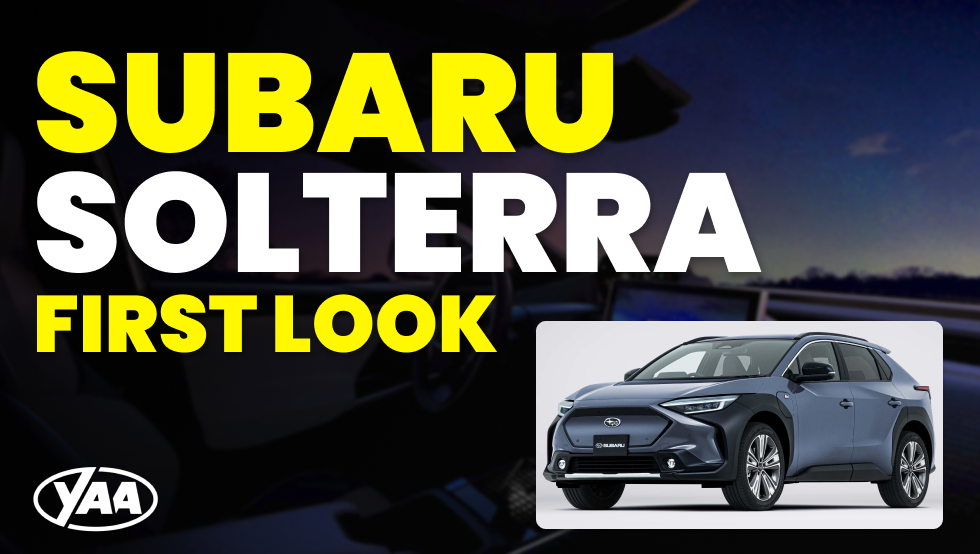
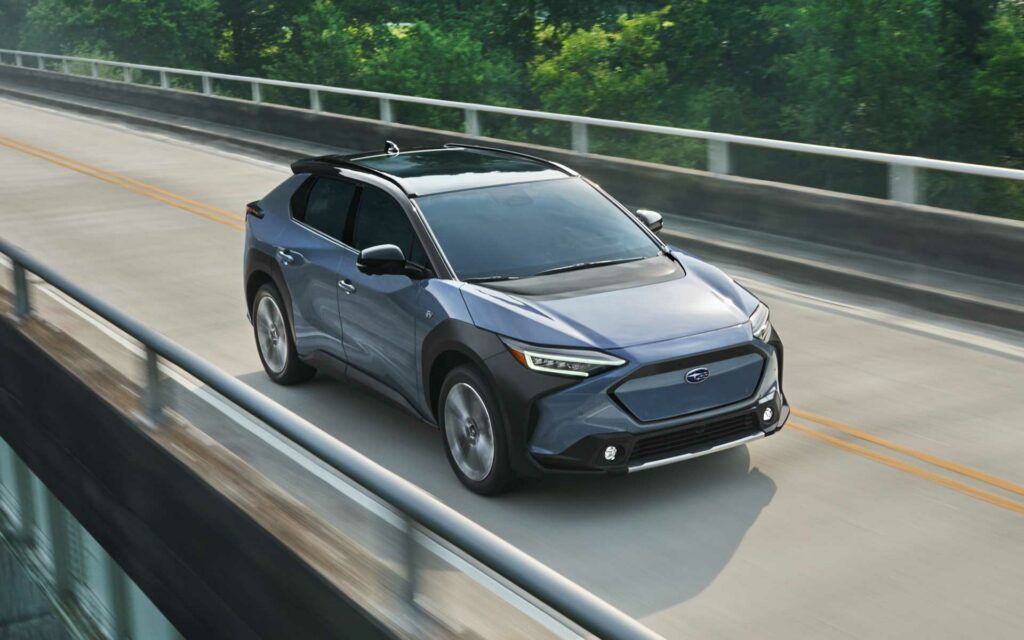
October update: For months, the Subaru Solterra and its Toyota sibling the bZ4X were under a recall and stop-sale. The Solterra recall was due to the risk of the wheels literally falling off. Finally, a fix is in, and the Solterra is about to go on sale. But is it worth the lofty price?
Subaru is known for two things: standard all-wheel drive, and diehard fans who will never drive anything else. It was big news when Subaru announced the first EV to join the lineup. As the owner of a Forester myself, I had high expectations.
Now that the Solterra is here, I’m disappointed. There are a few serious deal-breakers. The newly-released EPA range figures will make road trips a hassle, and slow charging speeds are not going to help. Solterra Pricing? It’s not cheap. Here’s what we know about the 2023 Subaru Solterra.
In April, Subaru Solterra prices were announced. Hopefully there aren’t any dealer markups, because Solterra prices are already pretty high for the slow charging and mediocre range. But at least you get AWD with solid ground clearance.
| Base MSRP | Destination | MSRP + Destination | |
| Subaru Solterra Premium | $44,995 | +$1,225 | $46,220 |
| Subaru Solterra Limited | $48,495 | +$1,225 | $49,720 |
| Subaru Solterra Touring | $51,995 | +$1,225 | $53,220 |
Official EPA range for the Solterra is 228 miles in the Premium trim (with 18″ wheels), and 222 miles with the Limited and Touring trims. Considering the Solterra has a 72.8 kilowatt-hour battery, that’s not very good efficiency.
A length of 184.6”, width of 73.2” and height of 64.9” makes it similar in size to the Forester, but the exterior design language is hardly similar.
The front fascia is not unlike a more angular version of the Mustang Mach-E, with a faux grill outline and aggressive LED headlights. Black plastic cladding above the front wheel wells won’t bother most buyers, but it might be too much plastic for some. The rear of the Solterra features c-shaped taillights that just might be Toyota-inspired. Overall, the Solterra is definitely a model you’ll want to see in person before deciding if it fits your style.
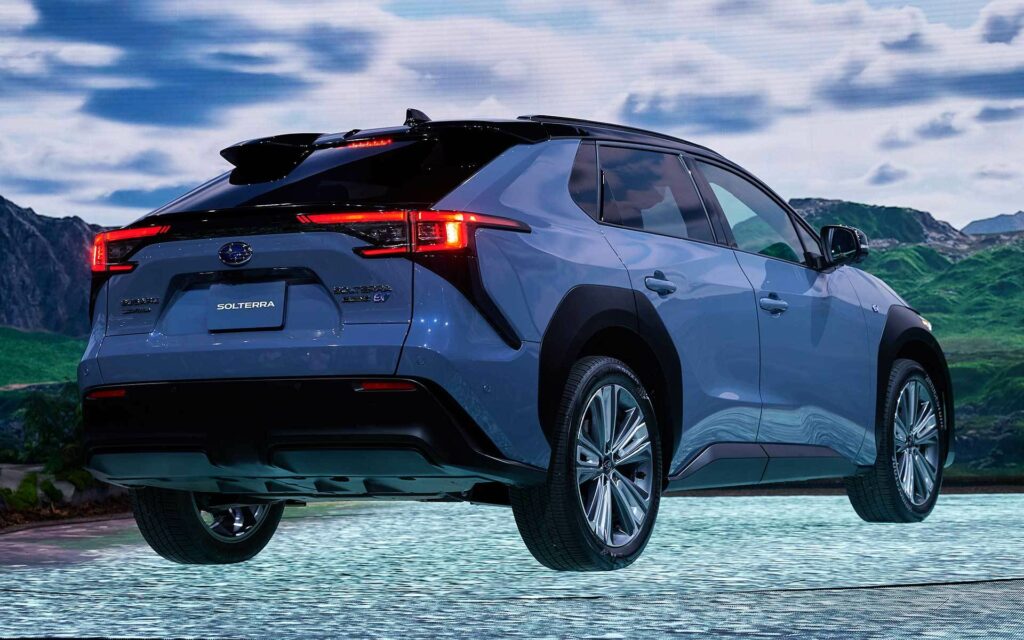
The Subaru Solterra’s off-roading capabilities are bolstered by 8.3” of ground clearance and the new e-SUBARU symmetrical all-wheel drive system. Subaru says that the new AWD system channels smooth linear output from Subaru StarDrive Technology, which enhances traction in all kinds of weather and terrain.
The front and rear electric motors produce a combined output of 215 horsepower, which is a tad more than the gas-powered Forester and Outback. StarDrive delivers on-demand torque (248 lb-feet) and multiple regenerative braking modes to replenish the battery without compromising ride comfort.
All electric AWD systems have the added benefit of quicker reaction times versus combustion counterparts, as electricity simply moves faster with fewer parts. These days, fewer parts could be key to overcoming inventory shortages. If you hit a patch of black ice, the e-SUBARU AWD system will always respond quicker than the gas-powered equivalent. As with internal combustion models, Subaru continues to offer X-MODE to improve performance in low-friction conditions.
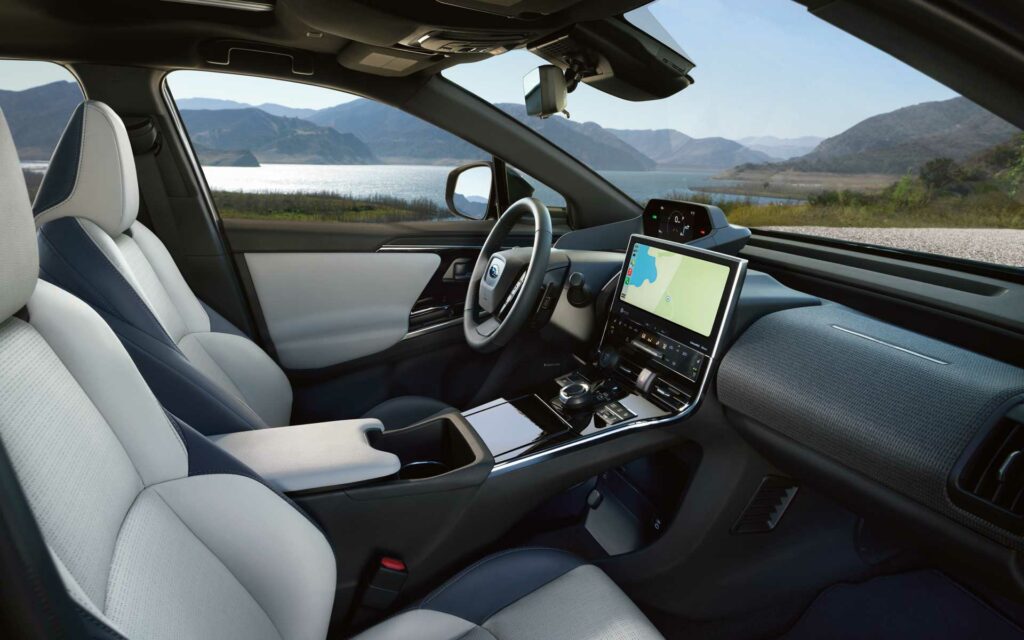
The Solterra’s interior design features may not appeal to those looking for a more minimalist atmosphere. The interior features a large 12.3” center display with a mix of haptic and physical controls, complimented by a smaller display that serves as the gauge cluster above a somewhat small steering wheel.
This digital gauge cluster is placed quite far from the driver’s seating position, but we won’t know how noticeable that is until taking it for a drive. The Solterra might be a welcome sight to those distressed by the absence of physical controls in some newer models. But if you’re anti-piano black, you won’t be too happy with its abundant use throughout the cabin. Interior dimensions are on par with the Forester, with 126 cubic feet of total passenger + cargo volume, 96 cubic feet of passenger space and 30 cubic feet of cargo area.
The Solterra comes standard with a long list of driver assist technologies:
The EPA rated the Subaru Solterra’s range at 222 miles for the slightly heavier Limited trim, and 228 miles for other trim options. For a 2023 model, that figure is below nearly all of the competition in the electric crossover segment, even among those with AWD. All trims come with a 71.4 kWh battery, which is quite big for such a mediocre range estimate.
Here’s how the Subaru Solterra’s all-wheel drive competitors compare:
The Solterra’s charging speed is limited to 100 kW at a DC fast charger. That’s even more disappointing than the EPA range figures! Some new EVs, such as the all-wheel drive Hyundai IONIQ 5, make up for mediocre range figures with impressive charging.
Subaru claims that the Solterra can charge from 10% to 80% in 56 minutes. Do you want to wait around for an hour to gain 180 miles of range? I have a small child, so I sure wouldn’t.
Before you go off dismissing EVs as slow-charging appliances on wheels, take a look at how the Subaru Solterra’s competitors fare:
Surveys show that between 80% and 90% of EV charging is done at home. However, Solterra drivers will have to factor in hours of charging time when heading out on a long road trip.

This year’s Los Angeles Auto Show features the debut of several electric vehicles to the North American market. With so many competitively priced EVs hitting the roads next year and the likelihood of expanded EV rebates or tax credits, the future is looking electric. After the cancellation of the 2020 LA Auto Show, legacy automakers and industry newcomers alike are eager to show off their latest and greatest. We’ll take a closer look at nine production-ready EVs that stand out as top contenders in this rapidly growing market.
Nissan was an EV pioneer when it launched the Leaf back in 2011. For years, Nissan led the pack, only to fall to the likes of the Chevy Bolt and Tesla in the second half of the 2010s. So Nissan’s all-new Ariya has a lot to live up to, and it will be up against plenty of crossover competition.
This electric crossover features futuristic design language and a suite of next-gen tech. Dual 12” screens provide the driver with Nissan’s latest infotainment and digital gauge cluster. The car is capable of receiving remote over-the-air updates to improve performance and tech, a feature popularized by Tesla.
The interior is open and roomy, but the sloping roof design makes for just 15 to 17 cubic feet of rear cargo space, depending on whether AWD adds a rear motor. The 300 mile target range is on par with class leaders like the Model Y and Mustang Mach-E. However, charging speed is not impressive at just 130 kW, likely requiring around 35-40 minutes to charge to 80% on a road trip. But keep in mind that most EV charging is done at home overnight.
The three front-wheel drive trims produce 238 horsepower, reaching 60 mph in 7.4 seconds. Nissan clearly thinks highly of the Ariya, as it’s priced above several competitors. The Venture+ base trim starts at $45,950 before incentives, and the premium Platinum+ offers AWD and 389 HP for $58,950. During the reservation period, Nissan only offers its e-4ORCE AWD on the top Platinum trim.
In 2019, Toyota announced that it was teaming up with Subaru to develop a new electric platform that would power the two automaker’s EVs in the 2020s. Now, we get to see the fruits of their research and development. The 2023 Toyota bZ4X is the first offering from Toyota’s new Beyond Zero class of vehicles.
This Rav4-sized compact crossover has a low roofline and polarizing exterior design, akin to a crossover version of a Prius. But there’s plenty of space with 30 cubic feet of cargo room. A big 12” screen stands out, and there’s a mix of haptic and old-school physical controls. Front-wheel drive is standard, offering up to 250 miles of range. It’s not terribly quick, with just 201 HP in FWD models.
The bZ4X arrives in spring of 2022 with an expected base price under $40,000 before incentives.
Subaru’s half of the partnership with Toyota has resulted in the all-new Solterra electric compact crossover. Spoiler alert: It’s nearly identical to the Toyota bZ4X, with one unsurprising distinction. The Solterra features standard all-wheel drive and ground clearance suitable for light off-roading at 8.3”, matched only by the Volkswagen ID.4.
Lugging around the extra weight from the second motor hurts the Solterra’s range, as it’s expected to be rated for just over 220 miles on a charge. For a 2023 model, that’s a bit disappointing, especially for an automaker that prides itself in going off the beaten path (where chargers are few and far between).
The estimated starting price is expected to be in the mid to upper $30,000’s for the lower trims, likely reaching into the $45,000 range fully-loaded.
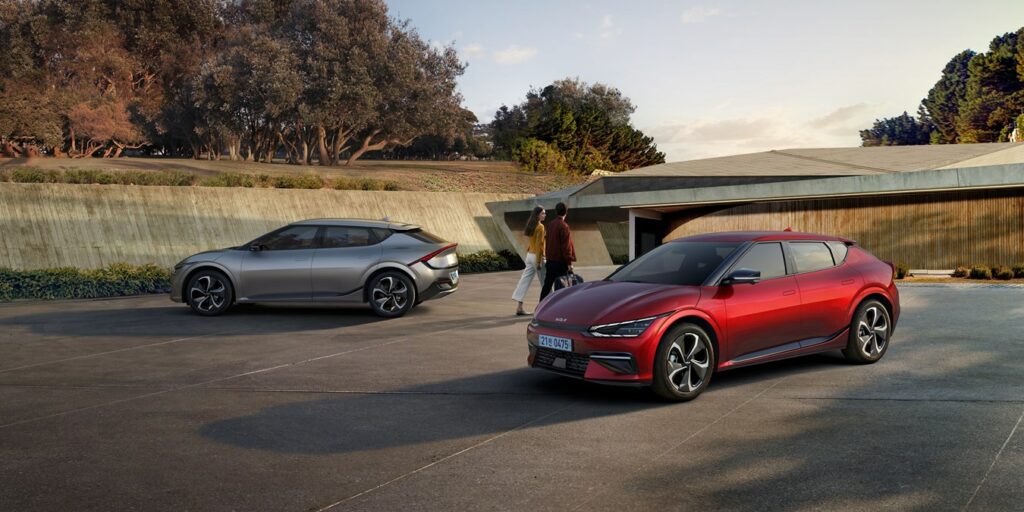
Kia’s first dedicated EV and companion to the popular eNiro takes the automaker’s EV game to the next level. Kia and sister company Hyundai have unveiled their new e-GMP electric platform, and the results are impressive. The EV6 is getting rave reviews in Europe where it’s already on the road, and it seems to be a serious contender for EV market share.
With range up to 300 miles and fast charging from 10 to 80% in just 18 minutes (!), the EV6 is a sign of the electric offerings to come in the mid-2020s. Don’t let the base version’s 58 kWh battery and 167 horsepower fool you; most rear-wheel drive trims come with a 77.4 kWh battery (on par with class leaders) and 225 hp. All-wheel drive brings the power: 320 hp comes standard with AWD, and the GT option launches it to a very impressive 576 hp and a 0-60 time of 3.5 seconds.
This Kia has turned out to be a real Model Y competitor. Price options are to be determined, but the EV6 is likely to start in the mid-40s.
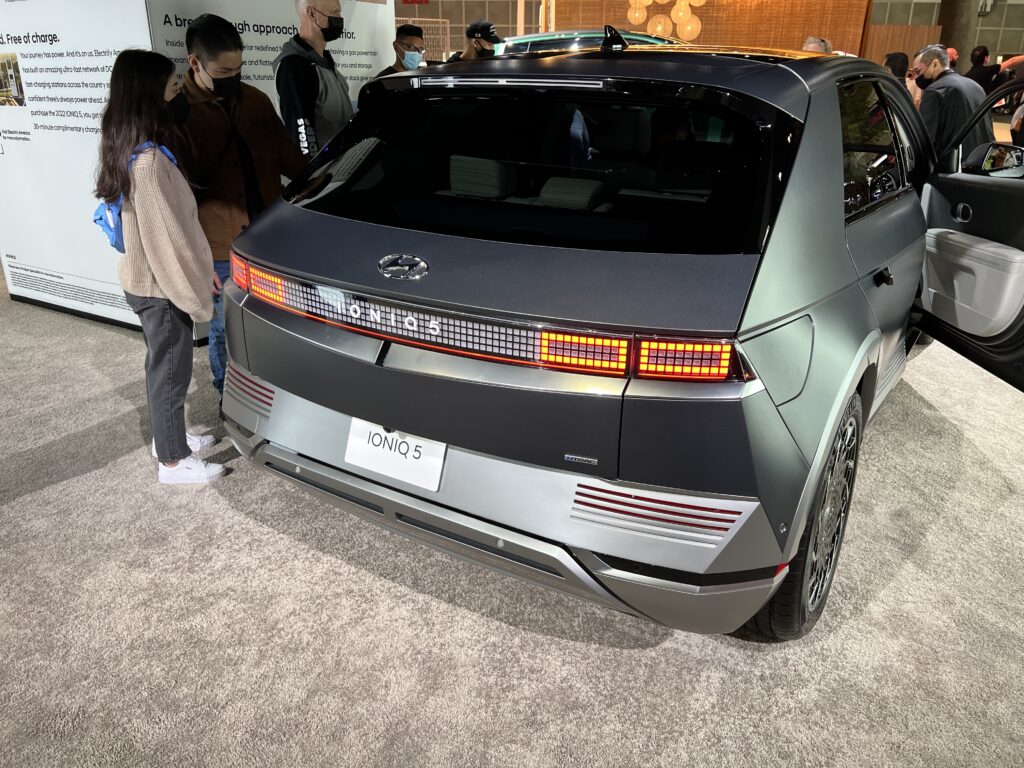
Rarely does an all-new car enter the market with the novelty that the Hyundai IONIQ 5 is bringing to North America. Hyundai’s bold, futuristic yet retro design is unlike anything else on the road. It’s like science fiction made real. Hyundai says the design is partly inspired by the 1975 Hyundai Pony, South Korea’s first mass-produced car for export.
The result is an angular and pixel-inspired Tucson-sized crossover. Although it’s the Kia EV6’s e-GMP platform sibling, they don’t share any design language. The IONIQ 5 comes in three trims. Standard rear-wheel drive produces 225 hp and a 0-60 time of 7.4 seconds. All-wheel drive brings that up to 320 hp and a zippy 0-60 of 5.2 seconds.
Range is impressive but not exceptional. RWD variants are expected to have about 300 miles of range, and AWD offers 269 miles. Like the EV6, the 350 kW level 3 charging speed is class-leading with over 200 miles of range added in just 18 minutes. Unlike most of today’s EVs, the IONIQ 5 and EV6 are capable of bidirectional charging. This means that you can plug household appliances into the car for power in the event of a power outage or remote camping adventure.
Hyundai still has not released pricing for the US, but if Canada’s prices are any hint, expect it to start in the mid 40s.
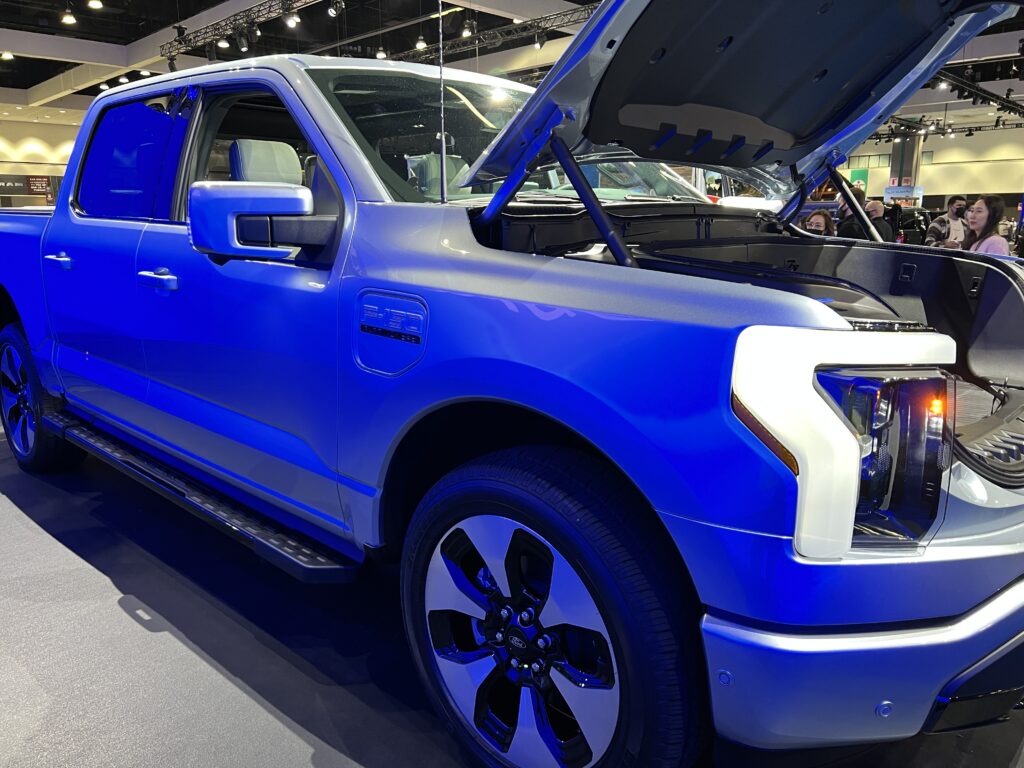
Ford’s success with the popular albeit controversially named Mustang Mach-E has shown that the top-selling automaker in America is serious about electrification. Now, Ford is electrifying its most popular segment: trucks. The F-150 has been the best-selling truck for 44 years, so it’s a bold move to introduce a new powertrain. But if nearly 200,000 preorders is any indication, the strategy is working out for Ford.
The F-150 Lightning checks all the boxes and then some. The standard-range battery offers 230 miles of range, and the long-range battery brings it up to 300 miles. Payload is an impressive 2,000 pounds, and it can tow up to 10,000 pounds. It’s not yet clear how much range is eaten up by towing.
The 4×4 variants powered by two separate motors add head-turning power, carrying the truck to 60 mph in the mid-4 second range. Ford’s BlueCruise driver assistance technology allows for hands-free driving on over 100,000 miles of US roads. Yet another impressive feature of the Lightning is the gigantic frunk, or front trunk, that occupies the space under the hood.
Pricing starts at $39,974 for the commercially-focused Pro trim, but the real value and comfort features start at $52,974 for the XLT, and levels up to over $89,874 for the Platinum. Ford says that lifetime maintenance costs will be about 40% less than internal combustion equivalents, and fleet operators are taking notice. There’s a lot to love about this electric truck, and it will be interesting to see how it compares to the elusive Tesla Cybertruck and GM’s upcoming electric trucks.
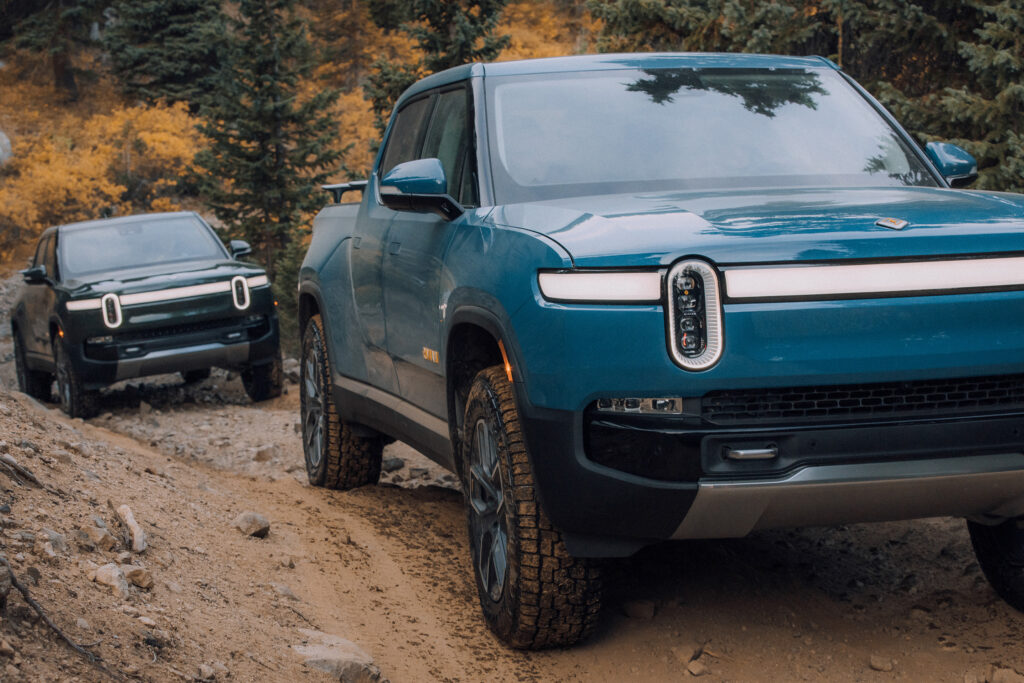
As of 2020, there were zero electric trucks available to North American buyers, but that’s all about to change in a big way. The next few years are going to see exploding growth in the electric truck market, with legacy automakers like Ford and GM introducing trucks alongside newcomers like Rivian and Tesla.
Among the emerging crowd, the Rivian R1T stands out. It’s a boldly futuristic truck designed with adventure in mind. It’s less of a truck for the construction site, and more of a truck for overlanding and exploring wilderness. Backed by both Ford and Amazon, Rivian has put in over a decade of research and development into the design of its first vehicle.
The result is a mid-size crew-cab pickup with 300 to 400 miles of range, depending on battery options. A host of driver assistance features and intuitive tech make the Rivian an excellent choice for the highway and the trail. The R1T is powered by up to 800 hp and launches to 60 mph in as little as 3.0 seconds. An adjustable air suspension lifts the ground clearance up to 14 inches in off-roading situations, while making it possible to lower the clearance significantly on the highway for better fuel economy. Towing is up to 11,000 pounds and payload capacity is 1760 pounds.
The Rivian R1T starts at $67,500 for the Explore trim with a 300+ mile range. The Adventure package with the extended-range battery will set you back $83,000. Rivian also has a full-sized SUV in the works, and they’re beginning to fill Amazon’s order for 100,000 electric delivery vehicles. You read that right! That’s a lot of demand for a company that has delivered well under 1,000 vehicles at the time of this writing.
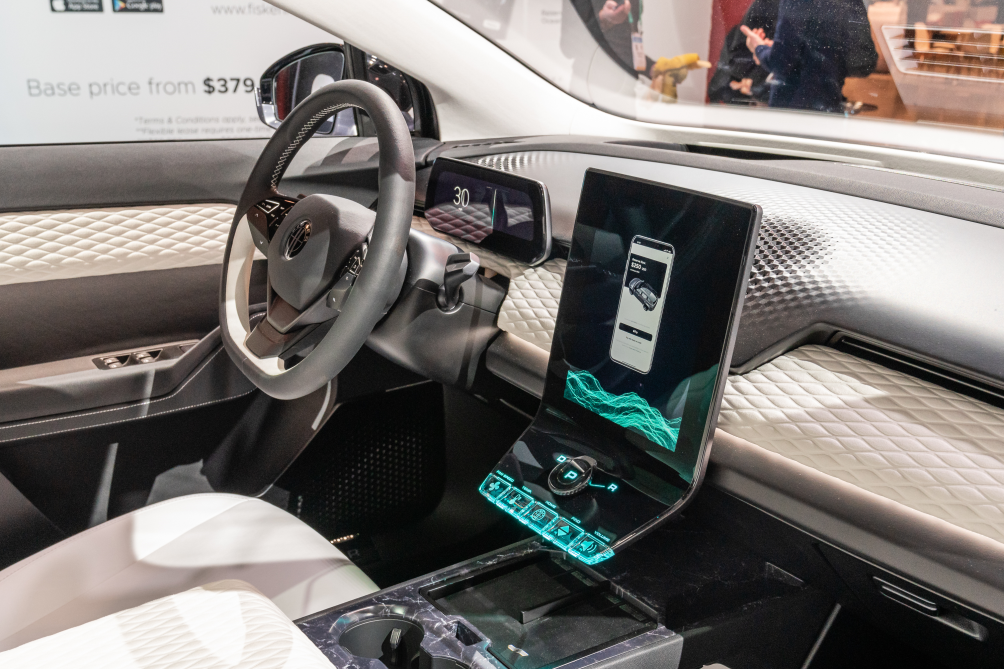
Henrik Fisker’s electric ambitions got off to a rough start a decade ago. The Fisker Karma sports car sold 2,000 units before issues with the battery supplier ceased production in 2012. But Fisker is back and they mean business. The stylish Fisker Ocean compact SUV is all the rage at this year’s LA Auto Show. Mr. Fisker is a veteran designer at heart, so it’s only natural that the Ocean is a truly beautiful car.
Starting at a competitive $37,500, the base trim offers 250 miles of range and 275 hp. The upgraded Ocean Ultra bumps up to 340 miles of range, all-wheel drive and a sporty 540 hp with a 0-60 time of 3.9 seconds. But that’s not all. For $69,000, the Ocean Extreme offers a 3.6 second 0-60 time and over 350 miles of range. Fisker is even going to offer a no-commitment lease option for just $379/month, which is basically a subscription service.
On top of the impressive specs and pricing, the Fisker Ocean is largely made of recycled and sustainable materials, and some trims will include a rooftop solar panel. Fisker says he wants this fresh start to produce the highest quality vehicles from day one. That’s why they’ve teamed up with Austrian automaker Magna to produce the Ocean. Magna has made cars for Mercedes-Benz, BMW and Jaguar for decades, so it’s safe to say Fisker’s production is in good hands.
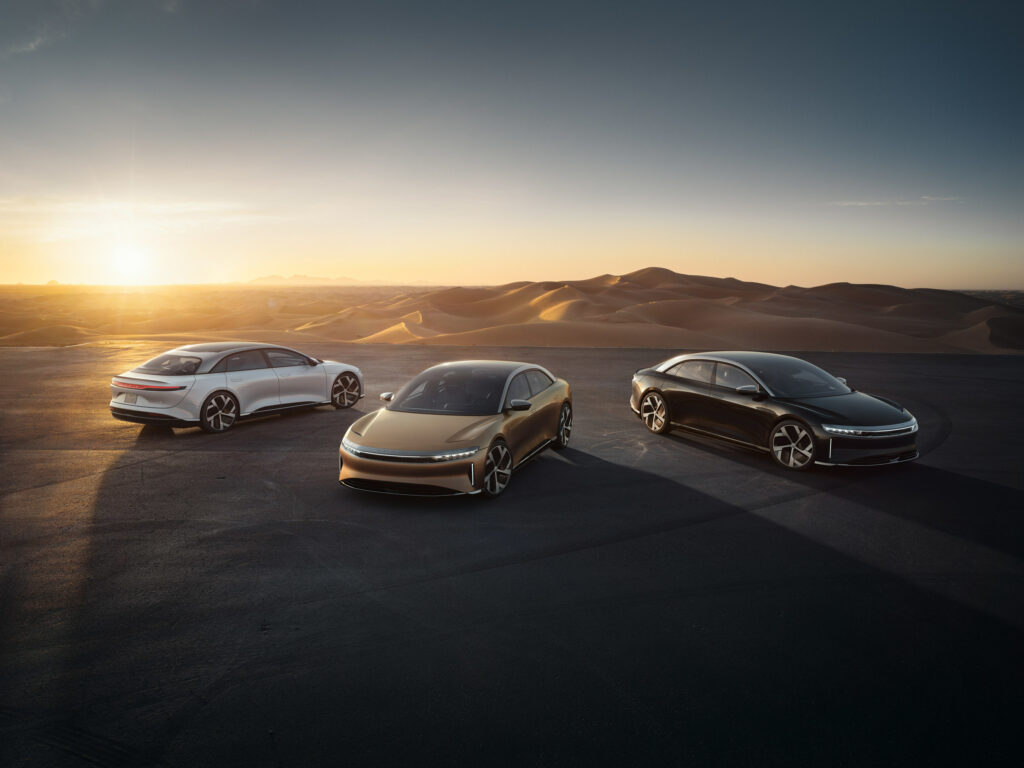
This ultra-luxury sedan is pushing the frontier of EV technology, but at a luxury price point. The base Air Pure starts at $78,900, and top trims exceed $170,000. What do buyers get for that kind of money? The EPA-rated range of up to 520 miles is industry-leading, beating even the Tesla Model S.
The Air Dream Edition Performance produces 1,111 hp and a 0-60 time of just 2.5 seconds. The interior has been described as pure luxury, with panoramic screens, an expansive glass roof and nearly silent cabin standing out to those lucky enough to get a test drive.
Lucid is already building cars at its new plant in Arizona. Following Tesla’s example, the new automaker plans to first produce luxury vehicles before eventually offering more affordable models. An SUV is in the pipeline too. This startup is one to watch.
The 2021 Los Angeles Auto Show has been a stage for automakers to share their commitment to electrification. Beyond the production-ready EVs, several concept designs also made their debut. By 2030, industry experts estimate that at least one out of four new cars sold in America will be electric. What we’re seeing in the unveiling of 2022-2023 models is competition. And when automakers innovate and compete for your business, it’s almost always a win for the consumer.
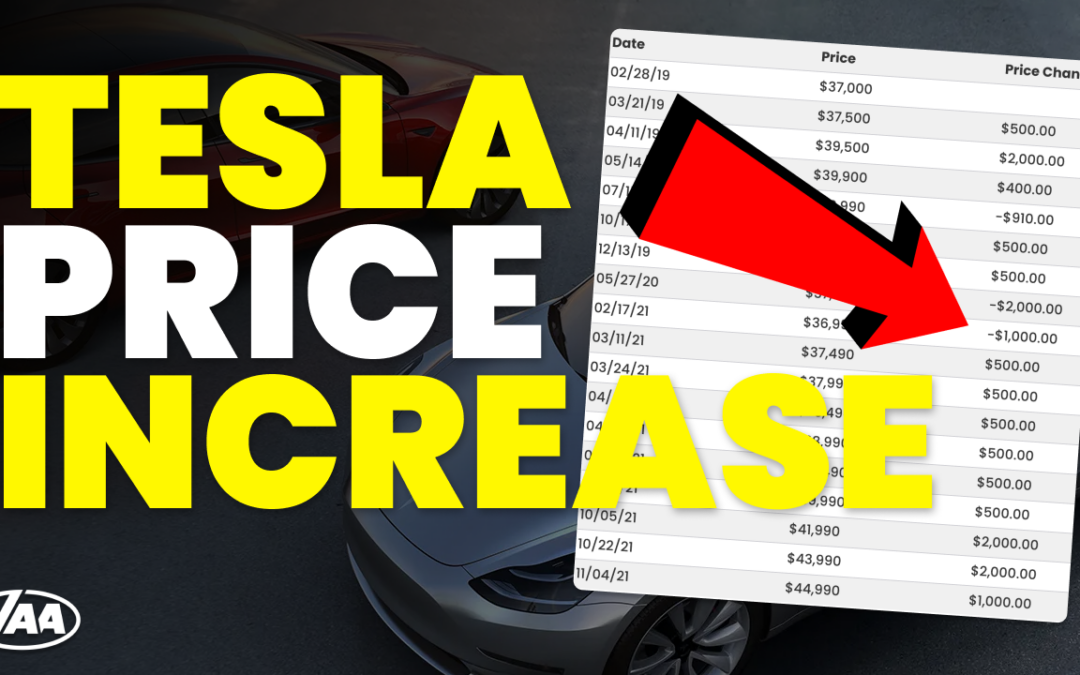
Tesla price increases used to be a somewhat infrequent and relatively innocuous occurrence. Not anymore. So far in 2021 the Model 3 has increased in price (MSRP) 23%. The Model Y is not far behind at a 20% price hike!
What’s behind the Tesla price increases? Should we expect to see more? Does this effect existing orders? Are other automakers increasing their prices this much? Let’s address this and more below!
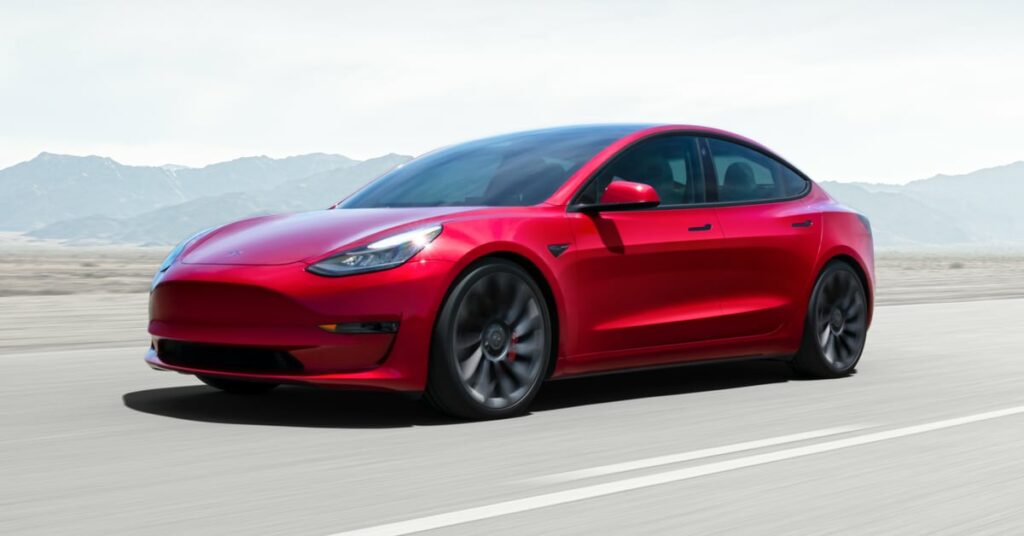
First, let’s start by simply looking at the data.
Tesla has not been shy about increases the price of their most affordable vehicle (the Model 3). Below is a table of Model 3 Standard Range Plus (SR+) base MSRP from February of 2019 to today.
| Date | Price | Price Change |
| 02/28/19 | $37,000 | |
| 03/21/19 | $37,500 | $500.00 |
| 04/11/19 | $39,500 | $2,000.00 |
| 05/14/19 | $39,900 | $400.00 |
| 07/15/19 | $38,990 | -$910.00 |
| 10/17/19 | $39,490 | $500.00 |
| 12/13/19 | $39,990 | $500.00 |
| 05/27/20 | $37,990 | -$2,000.00 |
| 02/17/21 | $36,990 | -$1,000.00 |
| 03/11/21 | $37,490 | $500.00 |
| 03/24/21 | $37,990 | $500.00 |
| 04/08/21 | $38,490 | $500.00 |
| 04/22/21 | $38,990 | $500.00 |
| 05/06/21 | $39,490 | $500.00 |
| 05/21/21 | $39,990 | $500.00 |
| 10/05/21 | $41,990 | $2,000.00 |
| 10/22/21 | $43,990 | $2,000.00 |
| 11/04/21 | $44,990 | $1,000.00 |
Since February of 2019 there have been 18 MSRP changes for the Model 3 SR+. 3 have been price decreases, 15 have been price increases. As you can see, just in the past few months the Model 3 has increased in price by $5,000.
This may have something to do with the fact that new EV tax credits are likely to increase consumer demand in 2022.
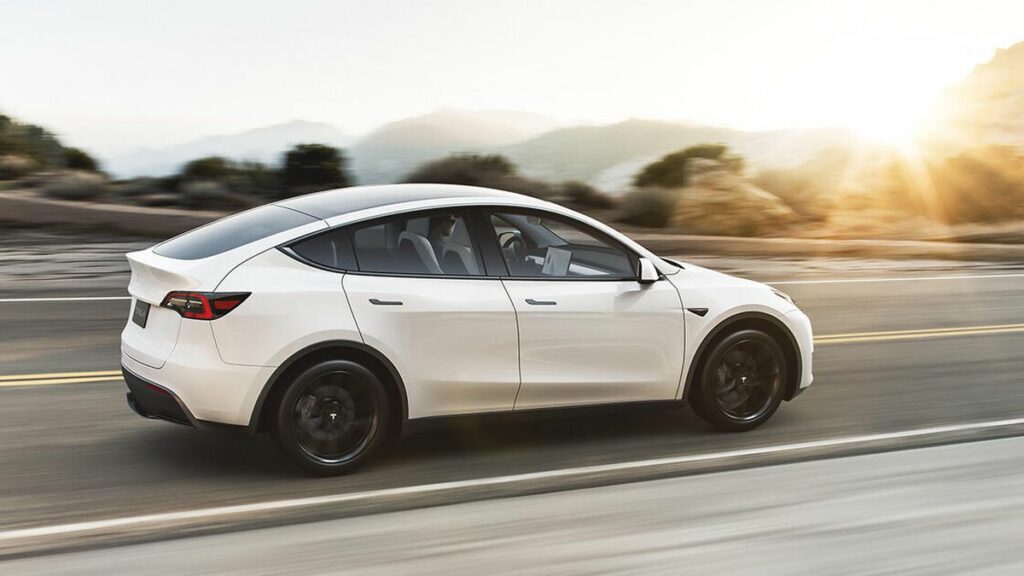
Tesla’s Model Y was first available for purchase in March of 2019. Since then the most common version, the LR-AWD (long range all wheel drive) trim has seen its price increase considerably.
| Date | Price | Price Change |
| 03/15/19 | $51,000 | |
| 03/24/19 | $52,000 | $1,000.00 |
| 01/29/20 | $52,990 | $990.00 |
| 07/11/20 | $49,990 | -$3,000.00 |
| 02/21/21 | $48,990 | -$1,000.00 |
| 03/11/21 | $49,900 | $910.00 |
| 04/08/21 | $50,490 | $590.00 |
| 04/22/21 | $50,990 | $500.00 |
| 05/06/21 | $51,490 | $500.00 |
| 05/21/21 | $51,990 | $500.00 |
| 06/09/21 | $52,490 | $500.00 |
| 06/25/21 | $52,990 | $500.00 |
| 07/22/21 | $53,990 | $1,000.00 |
| 10/05/21 | $54,990 | $1,000.00 |
| 10/22/21 | $56,990 | $2,000.00 |
| 11/04/21 | $57,990 | $1,000.00 |
| 11/11/21 | $58,990 | $1,000.00 |
Similarly to the Model 3, the Model Y has seen both price decreases (2) and price increases (14). The Model Y has increased in price more than $5,000 in the past few months. This is likely due to the imminent EV tax credits that will be passed as part of the Build Back Better bill.
No! While we expect automakers to increase their base MSRPs considerably in 2022, we have yet to see any other manufacturer increase them as much as Tesla.
Toyota has come closest with their nearly 20% price increase for the newly redesigned 2022 Toyota Tundra, however that is a brand new redesign. No other automakers has increased their mid-year production models MSRP anywhere near as much as Tesla has.
There are two primary factors as to why Tesla is increasing their MSRP so aggressively right now. The first relates to ongoing supply chain disruptions and the chip shortage. The second has to do with new EV tax credits that will most certainly drive an increase in Tesla demand.
The ongoing chip shortage has impacted all automakers, and Tesla has not been immune to it. While their production numbers have been healthy (especially relative to peers), Tesla has struggled to produce vehicles to their specifications. Earlier in 2021 Tesla silently began removing some features and functionality from their vehicles because of a lack of chips.
There is obviously a “supply side” issue thanks to global supply chain struggles and the chip shortage, but what about demand?

Demand for new Teslas has been healthy, and it should only increase in 2022. New EV tax credits will increase Tesla demand. Previous EV tax credits no longer apply to Tesla, however the credits that will be available in 2022 will. It makes sense that Tesla is increasing their prices right now, because when consumers get $7,500 (or more) in tax credits from the government, they’ll still feel like they’re getting a great deal.
Pair a decreasing supply with an increase in EV demand, and you can start to see why Tesla is proactively raising their prices. Not to mention there is higher inflation than prior years, and you can begin to fully comprehend why we’ve seen Tesla prices increase as much as they have.

2023 Update: Major revisions to the EV tax credit were signed into law as part of the Inflation Reduction Act of 2022.
Here’s what you need to know about the latest EV tax credit revision proposal:
As you can see, the EV tax credit is becoming a lot more complicated.
All 755 pages of the Inflation Reduction Act can be read here. The EV tax credit begins on page 381.
The EV tax credit update is not all good news. Several popular electric models would be kicked out of the tax credit until assembly, battery production and raw materials sourcing happens in North America.
These are electric vehicles that would not qualify for the tax credit under the proposed revision:
Official eligibility is a moving target it seems. We recommend checking the latest updates directly from the U.S. government at fueleconomy.gov for a list of eligible vehicles.
But don’t forget about state incentives…
See the states with the BEST EV incentives, from sales tax exemptions to generous rebates!
In 2023, current EV tax credits are nonrefundable, meaning the best you can get from the current EV tax credit is cancelling out other federal income taxes you owe, with no refund beyond that. The revised electric vehicle tax credits will become refundable beginning in 2024, meaning you could potentially get money back from the government for simply buying an EV.
Thinking about buying an extended warranty? Get a free quote from CarEdge first!
Let’s break down the proposed 2022 EV tax credits. Don’t forget to check out the best state-level EV incentives too.
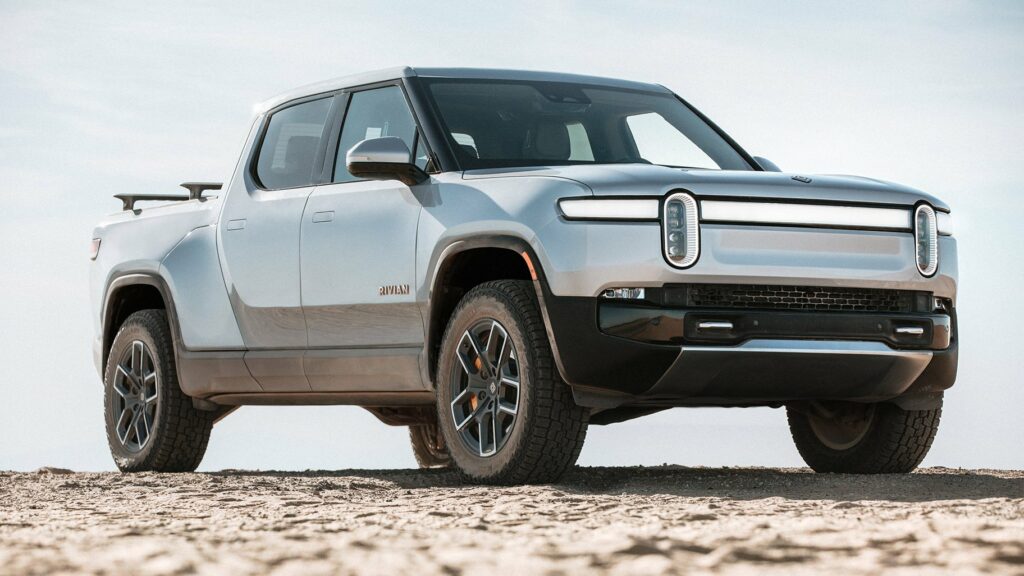
The Build Back Better Act would have increased the maximum electric vehicle tax credit to $12,500, however it was defeated in Congress. The BBB EV tax credit provisions controversially included an additional $4,500 incentive for EVs assembled at unionized plants.
The original EV tax credit in place from 2009 to August 2022 took away the incentive once an automaker sold 200,000 EVs or PHEVs. For this reason, Tesla and GM had lost eligibility, but are now getting it back (as long as vehicles remain under the price caps).
The new clean vehicle credit establishes the following income caps based on adjusted gross income (AGI):
Great news for Model Y buyers, but bad news for fans of the IONIQ 5, EV6 and several other foreign-made electric cars. The Inflation Reduction Act’s Clean Vehicle Credit returns incentives to some, and takes incentives away from others.
See the FULL list of qualifying electric vehicles here.
This page will update as we learn more about proposed updates to EV tax credits in 2022.