
CarEdge saved me over 4,500 dollars on a brand new Honda Pilot. I can't say thank you enough.
Price intelligence
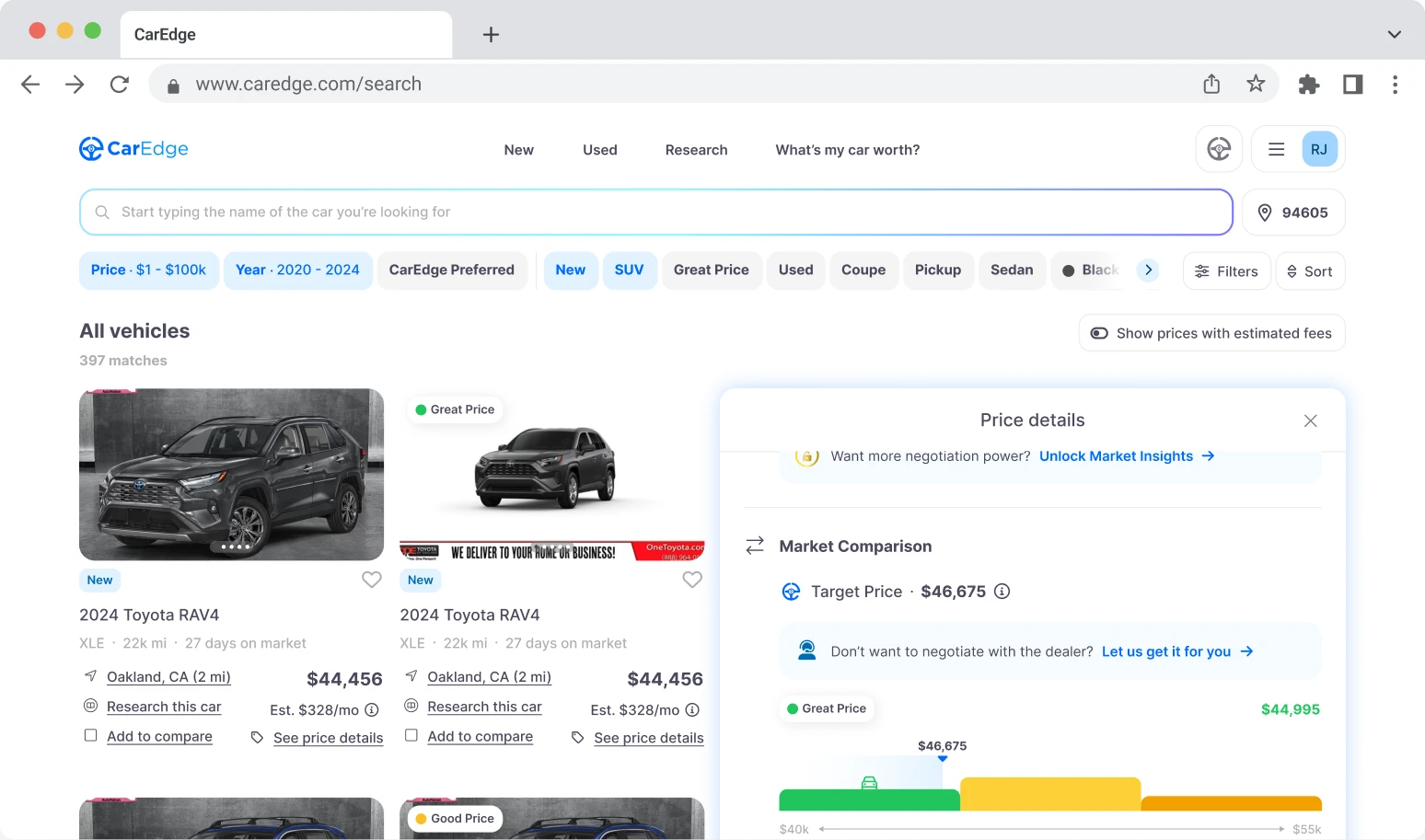
Find a wide range of vehicle listings with market insights on new and used listings near you.

What can I do with CarEdge?
 CarEdge Insights
What can I do with CarEdge?
Get access to exclusive information so you can make an informed car buying decision — all in one place.

Find a wide range of vehicle listings with market insights on new and used listings near you.
Track your vehicle’s value and cash in when the time is right to sell.

Access to our proprietary data to help you find the right car, at the right price. Find these unlocked on every listing after subscribing.

With our expert-led, tech-enabled car buying service, we will locate, negotiate, and deliver your vehicle so you can get a new car hassle free.


Help us personalize your CarEdge experience — it only takes a second.
Your answers help us personalize your CarEdge journey — we’ll follow up with tips and next steps that match your buying timeline.

As 2023 comes to a close, the new car market is brimming with opportunities for big savings. With an increase in inventory and the arrival of 2024 models, Mazda and Subaru dealers, along with their manufacturers, are feeling an increased urgency to sell off their current stock. Here, we’ve highlighted the best year-end deals for Mazda and Subaru in 2023, with the spotlight on low APR SUVs available for a limited time.

Starting MSRP: $29,300
Current Market Day Supply: 115 days
Negotiability Score: High
0% APR for 60 months + No payments for 90 days (ends 1/2/24)
The CX-5 comes with standard all-wheel drive, a rarity outside of Subaru. 2024 model year CX-5s have recently arrived at dealership lots, and with zero percent financing, it’s clear that Mazda is looking to sell them immediately. Mazda also has several models at 0.9% to 1.9% APR in December, including the popular CX-30, CX-50, and the large CX-90.
2024 Mazda CX-5 dealer inventory is down slightly over the past month, from 144 days of supply to 115 days of supply. That’s still twice the market norm of roughly 60 days. This indicates that Mazda dealers should be willing to negotiate, at least before the end of 2023. Dealers and salespeople are eager to meet year-end sales targets.
See 2024 Mazda models at $500 below invoice, and 2023 Mazda models at $1,000 below invoice!
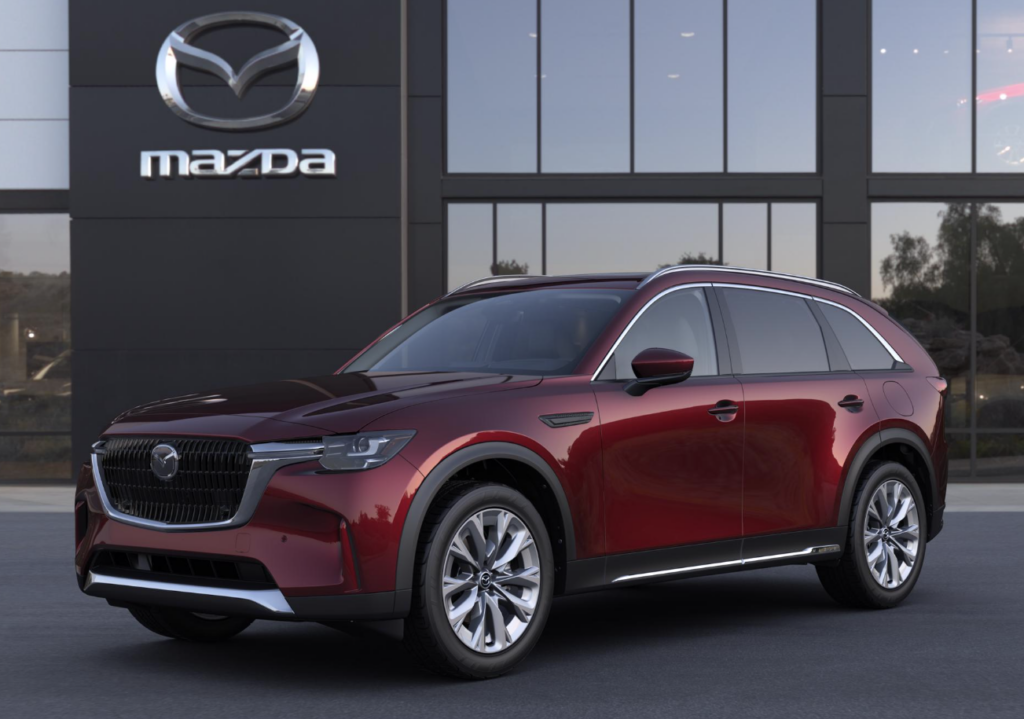
2024 Mazda CX-90

Starting MSRP: $39,595
Current Market Day Supply: 135 days
Negotiability Score: High
0% APR for 36 months + No payments for 90 days (ends 1/2/24)
This Mazda offer applies to the Turbo Select, Turbo Preferred, Turbo Preferred Plus, Turbo Premium, or Turbo Premium Plus trims only. The 3-row CX-90 is Mazda’s largest model, with 74.3 cubic feet of cargo volume with the seats down. It comfortably seats 7 passengers. Reviewers agree that the all-new CX-90 is a shockingly luxurious mid-size SUV, and represents incredible value at the price point.
With so many CX-90s shipped to dealer lots, inventory is currently very high at 135 days. With a financing offer like this, we’re left wondering why more SUV buyers aren’t taking advantage of this deal.
See Mazda CX-90 inventory priced at $500 below invoice!
Learn more about offer details.
2023 Mazda CX-30

Starting MSRP: $22,950
Current Market Day Supply: 32 days
Negotiability Score: Low
0% APR for 36 months + No payments for 90 days (ends 1/2/24)
The 2024 CX-30 gets a $2,000 price increase for 2024, so buyers are taking advantage of great financing offers for remaining 2023 CX-30 inventory. With standard all-wheel drive, 191 horsepower and combined 29 miles per gallon, this crossover is a compromise that simply works.
There are only 2,000 2023 CX-30s remaining nationwide, so this deal won’t last.
See Mazda CX-30 inventory priced at $1,000 below invoice!
Learn more about offer details.
Subaru is ending the year with a rare offer for its second most popular model, the Outback. If you haven’t sat in an Outback for several years, you’d be surprised how far this model has come. Featuring modern tech that perfectly compliments the Outback’s beloved all-terrain capability, this financing offer is one to get excited about.
2024 Subaru Outback

Starting MSRP: $28,895
Current Market Day Supply: 85 days
Negotiability Score: Above Average
1.9% APR for 48 months (ends 1/2/24)
Currently, there are nearly 27,000 Outbacks sitting on dealer lots, of which 26,000 are new 2024 models. With 85 days of market supply, there are more Outbacks available than normal. Negotiability is possible, but not what we’d consider likely. Dealers know the Outback is popular, and may be willing to hold on to them into the new year.
See Subaru Outback inventory with local market data.
For new car shoppers considering Subaru and Mazda, December 2023 is an exceptional time to find the year’s most attractive deals. With a range of incentives, the year-end rush to sell, and the availability of 2023 Subaru and Mazda models, holding off until 2024 might mean missing out on current opportunities.
The situation in the used car market, however, is less clear-cut. Recent trends indicate a drop in prices, but the full impact of these changes and their duration remains to be seen. Particularly for Subaru and Mazda used cars, the market’s fluctuating dynamics make predicting the best time to buy in 2024 somewhat uncertain. See our December used car market update here.
Free Car Buying Help Is Here

Ready to outsmart the dealerships? Download your 100% free car buying cheat sheets today. From negotiating a deal to leasing a car the smart way, it’s all available for instant download. Get your cheat sheets today!

CarEdge is offering $200 off of mechanical and electronics warranties through the end of March. Better yet, CarEdge’s extended warranties are the exact same coverage that you get at dealerships, but for hundreds of dollars less. Here’s everything you need to know about the best extended warranty deal today.

With CarEdge’s $200 off warranty discount, you can get an extended warranty for several hundred dollars less than at the dealerships.
Why are CarEdge’s extended warranties so affordable? It’s simple: there’s a set, small markup to help the company keep the lights on, with no gimmicks or commissions. While most car dealers mark up warranties by several hundred dollars, CarEdge keeps just a fraction of that.

Under Mechanical Warranty coverage, CarEdge offers exclusionary coverage for most vehicles. This is insurance industry jargon that means your vehicle is covered from “bumper-to-bumper” for everything but normal wear and tear, routine maintenance, and anything that is explicitly listed in the contract. Learn more about what’s covered.
CarEdge also offers an Electronics Warranty, which protects your wallet from costly electronics repairs. Your car is a rolling computer, so why risk being on the hook for hundreds of dollars in repairs, if not more? View a sample contract to learn more about what’s covered.
Have additional questions? Give us a call at 800.674.5042 for immediate assistance.

Stay safe when you’re on the road with 24/7 towing (up to 150 miles) with no out of pocket cost. We’ll put a spare on for you, jump your battery, or assist with key lockout. CarEdge warranties are built on trust, something that’s hard-earned but easily lost. We won’t let you down.
Save $200 on Electronic and Mechanical Warranties through March 31, 2024. Get your free quote in just a few minutes.
Our plans are managed by AUL Corporation, a nationally-recognized, award-winning plan administrator with over 30 years of dealership experience and an A+ rating from the Better Business Bureau. AUL works with hundreds of the largest auto dealers in America, and is backed by an “A” rated carrier with over $32 billion in assets.
In the era of auto warranty scams and annoying robocalls, CarEdge set out to do things differently. Over the past three years, CarEdge has earned the trust of thousands of drivers nationwide by making a simple promise: no robocalls, no spam, ever.
The proof is in the pudding. Check out these 100% authentic CarEdge reviews.

These savings run out on March 31, 2024. Get a free, no-hassle quote in minutes at CarEdge.com/extended-warranty.
We’re here to help!
Leasing is the most affordable way to get into a new car for many drivers, and 2023’s year-end sales present a rare opportunity to secure a phenomenal deal. In December, $0 down lease offers are finally here for popular SUV models. These are the best SUV and crossover lease deals right now.
👉 Is leasing right for you? Check out our guide to understanding your lease.

Volkswagen has the best SUV lease offers right now. All of the following VW SUVs are eligible for $0 down, $0 due at signing, and $0 first month’s payment:
See Volkswagen listings with local market data, or learn more about this deal.
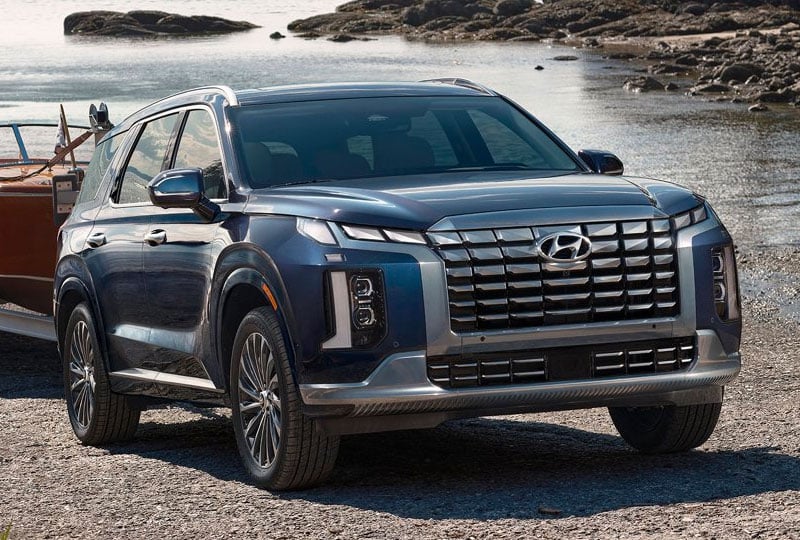
$0 due at lease signing, $489 per month for 36 months
See Palisade listings with local market data, or learn more about Hyundai lease deals.
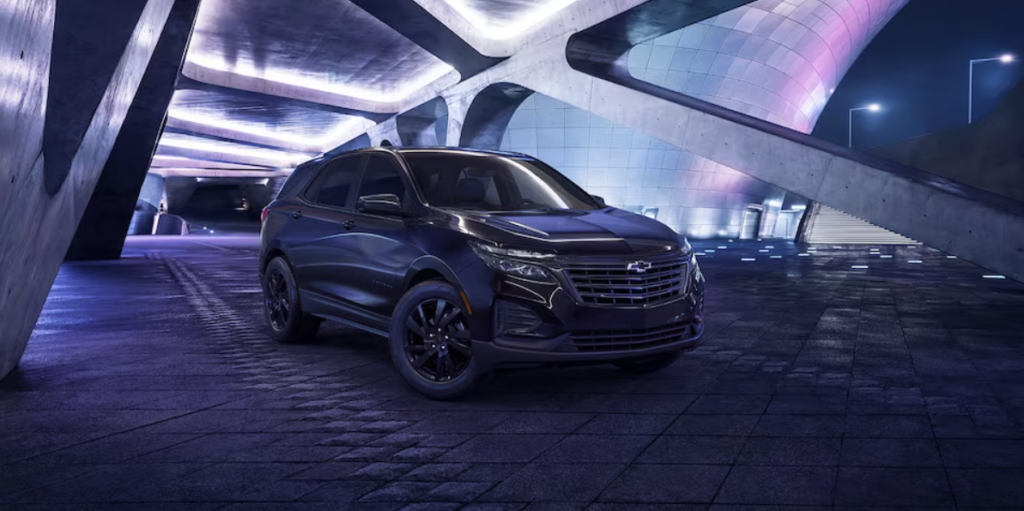
$299/month for 24 months with $1,409 due at signing
$309/month for 24 months with $2,059 due at signing
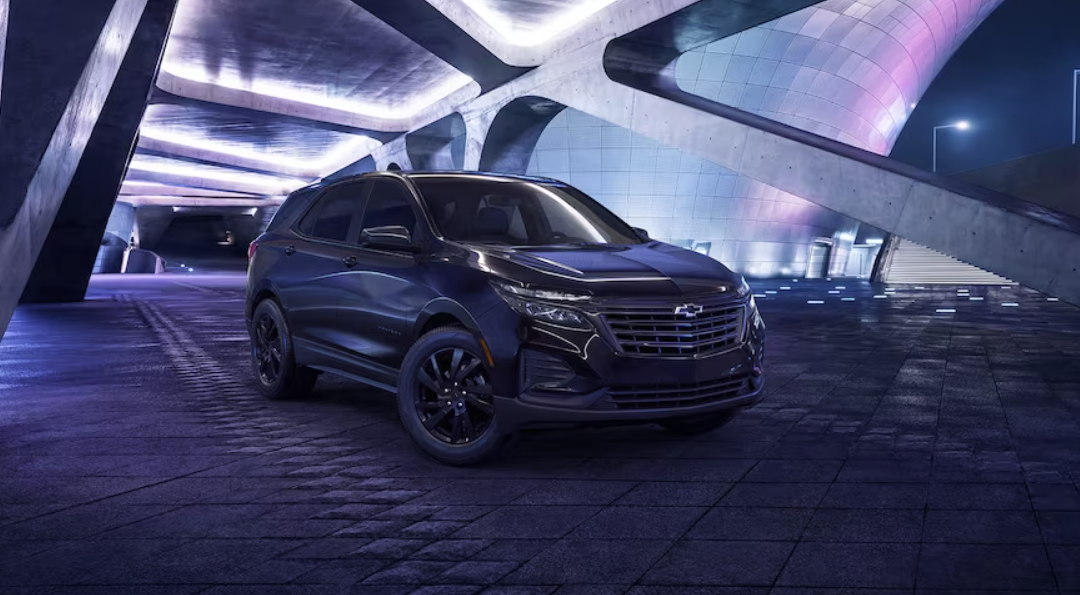
See Chevrolet listings with local market data, or learn more about this deal.
$349/month for 36 months with $2,999 due at signing
$280/month for 36 months with $2,999 due at signing
See Mazda listings with local market data, or learn more about this deal.
Ready to outsmart the dealerships? Download your 100% free car buying cheat sheets today. From negotiating a deal to leasing a car the smart way, it’s all available for instant download. Get your cheat sheets today!
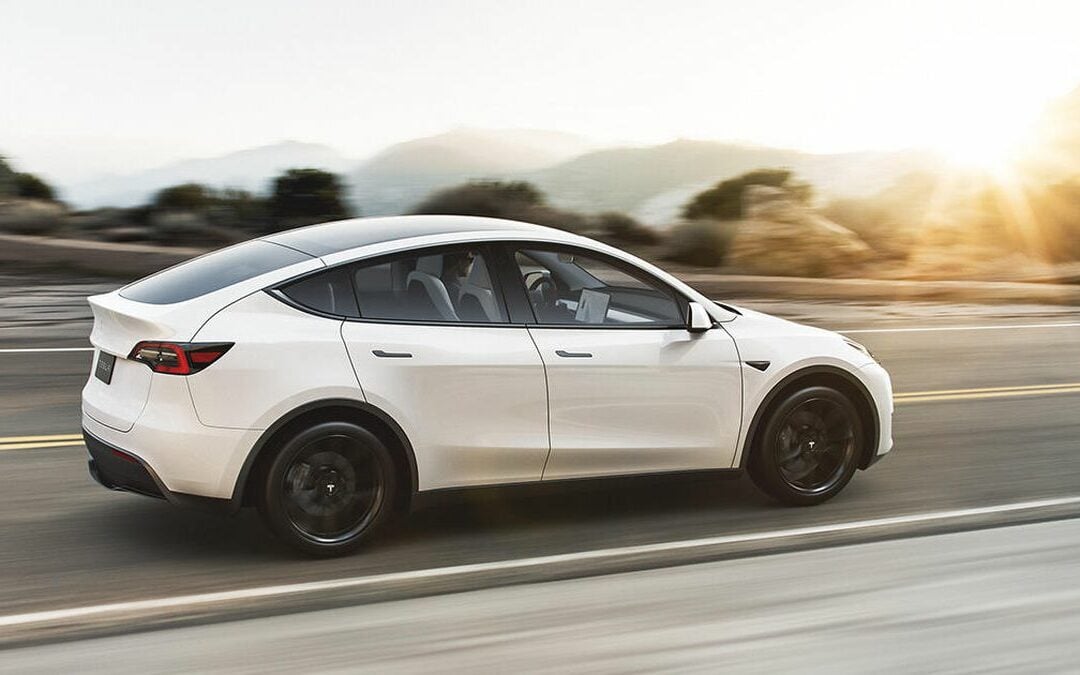
Why did most buyers stay away from used electric vehicles in years past? Most were fixated on the federal EV tax credit, which only applied to new EVs. Others were unsure about EV repair costs outside of warranty. But the calculus changes when used EV prices plummet like they have recently. Better yet, more and more models are qualifying for the federal used EV tax credit, which launched in January 2023. Here’s a look at the best used electric vehicle deals in December of 2023.
We’ve ranked the 10 best-selling EVs in America from most negotiable, to least negotiable based on market day supply.

New Average Transaction Price: $31,482
Used Average Transaction Price: $23,601
Used Market Day Supply: 100 days
Negotiability Score: Very High
The Chevrolet Bolt EV stands out as one of the most affordable electric vehicles in the American market. It’s an ideal entry-level EV, perfect for city driving and shorter road trips. Additionally, most used Bolt EVs fall within the price caps for the federal used EV tax credit, making them even more appealing.
However, the Bolt’s main drawback lies in its charging capabilities. With a peak charging rate of only 55 kW, it can take over an hour to gain 200 miles of range, which may be a concern for some buyers. In December, there are 3,487 used Chevrolet Bolts available for sale across America, with prices starting at just $10,995. Of these, 415 boast a clean record.
See pre-owned Chevy Bolt listings with the power of local market data.

New Average Transaction Price: $48,230
Used Average Transaction Price: $32,898
Used Market Day Supply: 85 days
Negotiability Score: Very High
The Volkswagen ID.4 boasts the advantage of being American-made at VW’s Chattanooga, Tennessee plant, making it eligible for the federal EV tax credit when new. Furthermore, used ID.4 models are available for around $25,000, potentially qualifying for the used EV tax credit as well. With charging speeds and range that are both average, it strikes a balance in the EV market.
However, the ID.4 is not designed for sporty performance; those seeking a more dynamic driving experience might consider other options on this list, excluding the Chevy Bolt. As of December, there are 655 used Volkswagen ID.4s for sale across America, with prices starting as low as $23,900, and 111 of these vehicles have a clean record
See pre-owned Volkswagen ID.4 listings with the power of local market data.

New Average Transaction Price: $56,546
Used Average Transaction Price: $41,100
Used Market Day Supply: 98 days
Negotiability Score: High
The Mustang Mach-E is a family-sized EV with the iconic Mustang’s spirit, offering a sporty edge to family hauling. However, it’s important to consider that its charging speeds are average, lagging behind competitors like Tesla, Hyundai, and Kia. For those interested, there are 1,327 used Mustang Mach-Es available for sale in America as of December, with prices starting at an enticing $23,999. Among these, 183 have a clean record.
See pre-owned Ford Mustang Mach-E listings with the power of local market data.

New Base MSRP: $74,990
Used Average Transaction Price: $39,674
Used Market Day Supply: 87 days
Negotiability Score: High
The Model S boasts luxury features and reliable fast charging, making it a premium choice in the electric vehicle segment. However, it’s important to note that it doesn’t offer the same cargo capacity as its siblings, the Model Y and Model X, which could be a deciding factor for some.
As of December, the market has 2,498 used Model S vehicles available across America, with prices starting remarkably low at $12,000 for a 2013 model. Among the listings, 363 have a clean record.
See pre-owned Tesla Model S listings with the power of local market data.
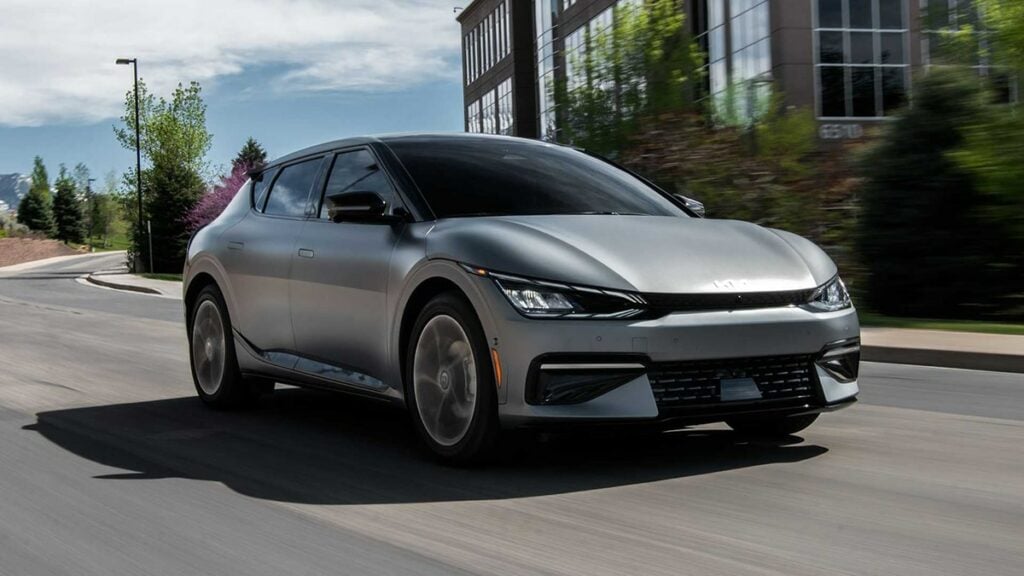
New Average Transaction Price: $52,520
Used Average Transaction Price: $40,834
Used Market Day Supply: 94 days
Negotiability Score: High
The Kia EV6, similar to the IONIQ 5, is renowned for its rapid charging capabilities and efficiency. However, buyers should note that it offers less interior cargo space typical of hatchbacks, rather than the larger capacity found in SUVs.
In the current market, there are 397 used Kia EV6s available for sale across America as of December, with the starting price at $24,922. Among these, 75 have a clean record.
See pre-owned Kia EV6 listings with the power of local market data.

New Base MSRP: $47,740
Used Average Transaction Price: $42,633
Used Market Day Supply: 57 days
Negotiability Score: Average
For car buyers considering a used Tesla Model Y, there are some key points to keep in mind. One of the major advantages is access to Tesla’s reliable and extensive Supercharger network, complemented by the convenience of frequent over-the-air updates that continually improve the vehicle.
However, potential buyers should be aware of occasional complaints regarding build quality issues. As of December, there are 2,226 used Model Ys available for sale across America, with prices starting as low as $27,500. Out of these, 339 have a clean record.
See pre-owned Tesla Model Y listings with the power of local market data.
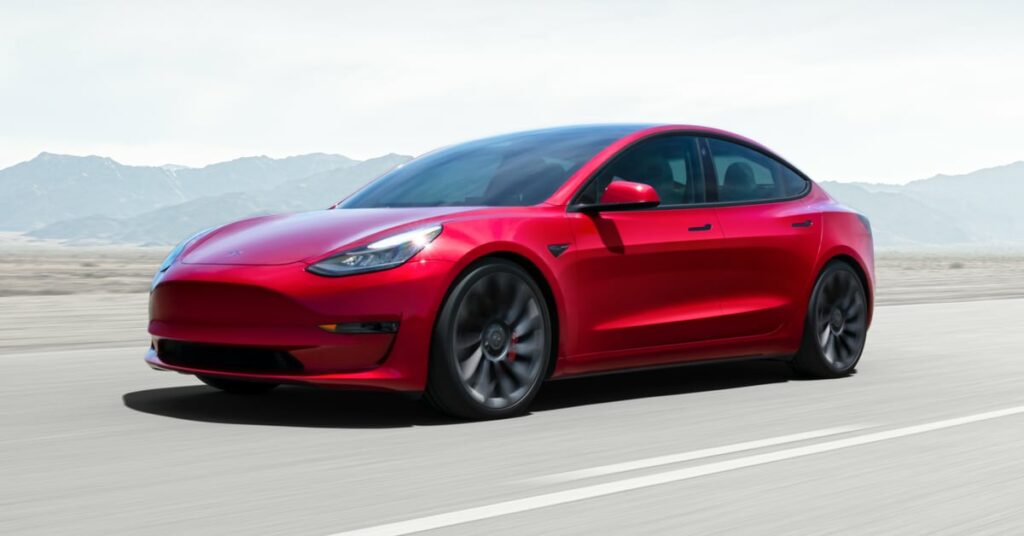
New Base MSRP: $40,240
Used Average Transaction Price: $33,368
Used Market Day Supply: 65 days
Negotiability Score: Average
The Model 3 is known for its time-tested reliability, exceptional range and efficiency, and access to Tesla’s extensive Supercharger network. However, it’s worth noting that as a sedan, the Model 3 doesn’t align with the current trend favoring SUVs and trucks. In December, there are 6,591 used Model 3s on the market in America, with prices starting at an attractive $16,990. Of these, 533 boast a clean record.
See pre-owned Tesla Model 3 listings with the power of local market data.

New Base MSRP: $79,990
Used Average Transaction Price: $54,284
Used Market Day Supply: 63 days
Negotiability Score: Average
The Tesla Model X combines the spaciousness of an SUV with the touch of luxury, notably featuring its distinctive gull-wing doors. While these doors add a unique flair, they can sometimes be more of an inconvenience in practical use. For those eyeing a 2020 or newer Model X, be prepared to invest a minimum of $50,000.
In the used car market this December, there are 1,391 Tesla Model X vehicles available across America, with the starting price as low as $23,100. Among these, 204 have a clean record, offering a variety of choices for those seeking a blend of luxury, space, and electric efficiency in their vehicle.
See pre-owned Tesla Model X listings with the power of local market data.

New Average Transaction Price: $50,581
Used Average Transaction Price: $38,965
Used Market Day Supply: 58 days
Negotiability Score: Average
The Hyundai IONIQ 5 stands out in the EV market with its e-GMP powertrain, making it one of the fastest-charging affordable electric vehicles available today. Additionally, several listings now fall within the negotiation range of the $25,000 price cap for the federal used EV tax credit, making it an attractive option for budget-conscious buyers.
However, its design is polarizing, often eliciting strong opinions; you either love its unique look or don’t. As of December, there are 389 used Hyundai IONIQ 5s for sale in America, with prices starting at a competitive $22,758. Of these, only 73 have a clean record.
See pre-owned Hyundai IONIQ 5 listings with the power of local market data.
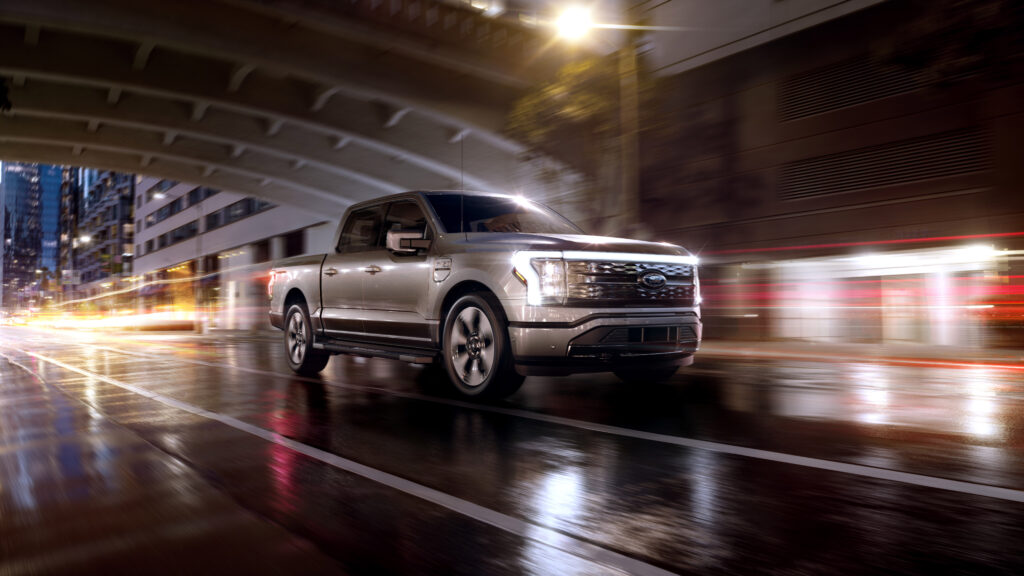
New Average Transaction Price: $71,118
Used Average Transaction Price: $68,430
Used Market Day Supply: 110 days
Negotiability Score: Very High
The Ford F-150 Lightning stands out as a full-sized electric truck capable of handling typical truck duties, a significant pro for those needing utility and eco-friendliness. However, like all electric trucks currently on the market, it experiences a significant reduction in range while towing, losing about half of its rated capacity.
Additionally, the F-150 Lightning’s charging speed is not the fastest; without access to home or workplace charging, adding 200 miles of range at a DC fast charger could take at least 45 minutes.
Ford dealers are resisting discounts, even after months of building inventory. That’s the sole reason why the F-150 Lightning isn’t ranked higher on this list of best used EV deals. In the used market, there are 516 F-150 Lightnings available for sale across America as of December, with prices starting at $39,995. Of these, only 56 have a clean record, offering options for those looking for a capable electric truck with practical utility.
See pre-owned F-150 Lightning listings with the power of local market data.
Ready to outsmart the dealerships? Download your 100% free car buying cheat sheets today. From negotiating a deal to leasing a car the smart way, it’s all available for instant download. Get your cheat sheets today!

As we wrap up summer and head into fall, the truck market is full of deals. With 2025 models arriving daily and dealers eager to sell remaining 2024 inventory, it’s a great time for negotiating, or letting us do it for you. Here’s our guide to the top truck deals of September 2024, featuring low APR financing, cash offers, and lease deals.

Starting MSRP: $40,350+
Negotiability Score: Very High (134 days of market supply)
0% APR financing for 60 months + up to $6,590 in cash savings
Nissan is fighting hard for truck market share in the U.S., with limited success. September’s zero percent financing offer is the best truck deal today. Plus, there are various cash offers that can total up to $6,590 in savings. Note that some of the cash incentives are only available as loyalty cash to current Nissan or Infiniti owners and lessees. This offer expires on 9/30/2024.
See Nissan Titan listings with local market data

Starting MSRP: $36,820+
Negotiability Score: High (202 days of market supply)
2024 Ram 1500: Up to $7,250 cash allowance on select V6 trucks
2024 Ram 1500 Classic: Up to $5,000 cash offer
Ram trucks are slow-selling, even though they seem to be everywhere you look on the road. To alleviate Ram’s oversupply of trucks, they’re offering big cash offers this month. This offer expires on 9/30/2024.
See Ram 1500 listings with local market data
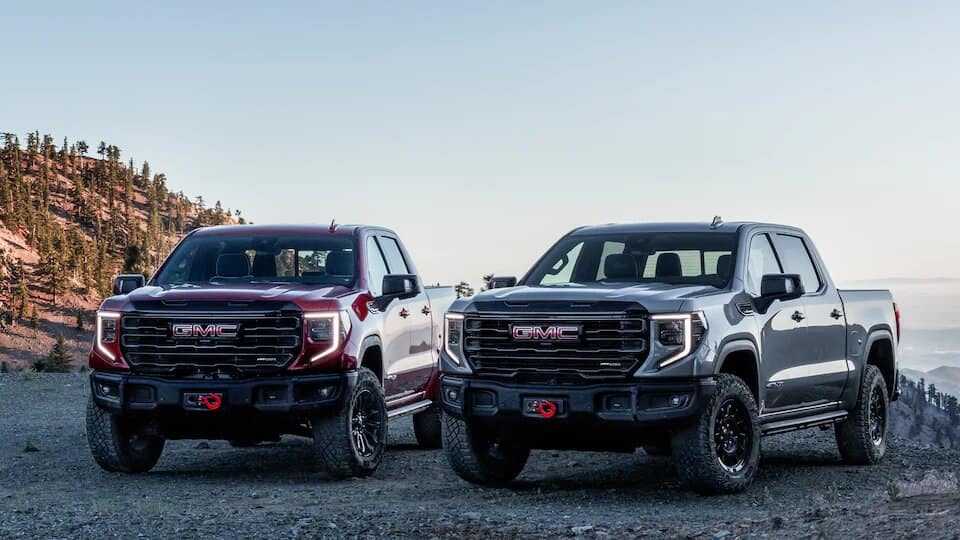
Starting MSRP: $51,900+
Negotiability Score: High (108 days of market supply)
1.9% APR + $6,000 cash allowance with a trade-in
GM is offering big incentives on both the Sierra 1500 and Silverado 1500 this month. This offer expires on 8/2/2024.
See GMC Sierra 1500 listings with local market data

Starting MSRP: $48,645+
Negotiability Score: High (96 days of market supply)
1.9% APR for 36 months, or lease for $409/month for 36 months with $4,949 due
With 96 days of market supply, there’s an abundance of 2024 Silverado 1500s on Chevy dealer lots. These APR and lease offers are great deals for truck fans. This offer expires on 9/30/2024.
See Chevrolet Silverado 1500 listings with local market data
Download your 100% free car buying cheat sheets today. From negotiating a deal to leasing the smart way, it’s all available for instant download. Ready to let a car buying pro take the wheel? CarEdge Concierge is the easiest way to buy a car today. Our team finds the vehicle you want, right down to the finest of details, and negotiates on your behalf. Home delivery is available. Learn more about CarEdge’s car buying service.