
CarEdge saved me over 4,500 dollars on a brand new Honda Pilot. I can't say thank you enough.
Price intelligence
Find a wide range of vehicle listings with market insights on new and used listings near you.
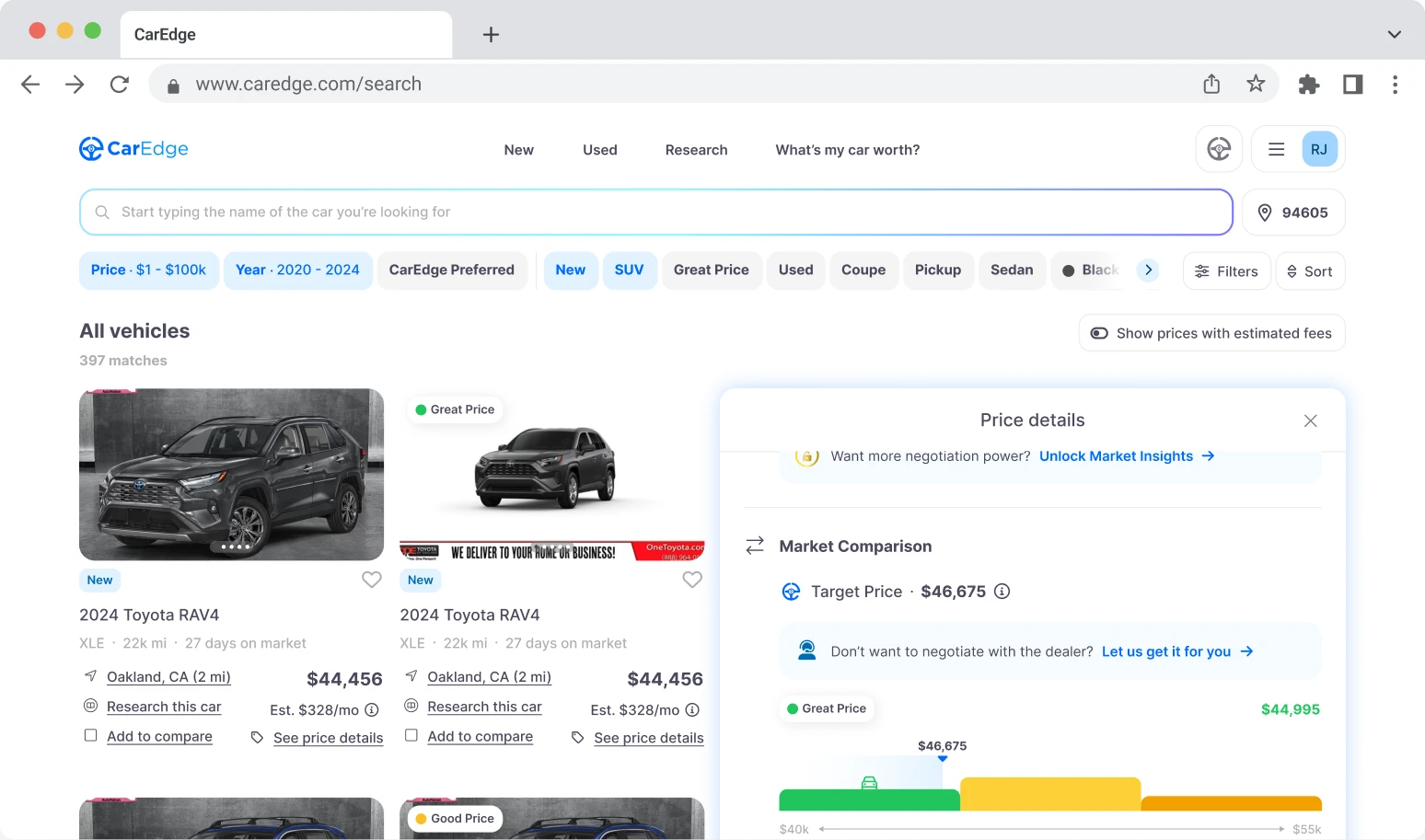

What can I do with CarEdge?
 CarEdge Insights
What can I do with CarEdge?
Get access to exclusive information so you can make an informed car buying decision — all in one place.

Find a wide range of vehicle listings with market insights on new and used listings near you.
Track your vehicle’s value and cash in when the time is right to sell.

Access to our proprietary data to help you find the right car, at the right price. Find these unlocked on every listing after subscribing.

With our expert-led, tech-enabled car buying service, we will locate, negotiate, and deliver your vehicle so you can get a new car hassle free.


Help us personalize your CarEdge experience — it only takes a second.
Your answers help us personalize your CarEdge journey — we’ll follow up with tips and next steps that match your buying timeline.
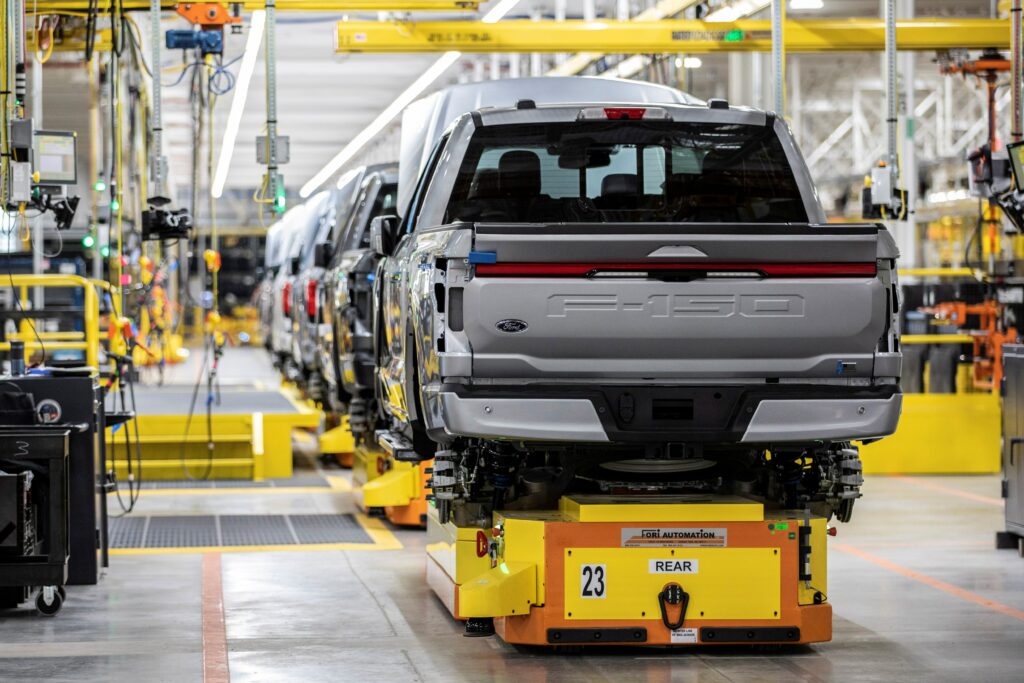
The Environmental protection Agency (EPA) unveiled its most stringent tailpipe pollution limits to date, a move that could significantly boost electric vehicle (EV) sales in the United States. These new emissions standards will apply to vehicles for the 2027-32 model years. The rules aim to decrease harmful pollutants from the transportation sector, the nation’s largest source of greenhouse gas emissions. In line with federal incentives and other investments, these new EPA rules are expected to accelerate the ongoing shift toward EVs.
According to EPA projections, by 2032, EVs could account for 67% of new light-duty vehicle sales and 46% of medium-duty vehicle sales. In 2022, electric vehicles made up 5.6% of new light-duty vehicle market share, and less than 1% of medium-duty vehicle sales. To achieve the EPA’s new goals, there will need to be 10x growth in EV market share in the United States.
See the latest EV market share update.
A recent study looked at driving patterns among medium-duty truck operators and found that 65 percent of medium-duty and 49 percent of heavy-duty trucks are electrifiable today. Poor charging infrastructure and high prices remain the top hurdles still to be overcome for commercial EV adoption.
The proposed new EPA rules are anticipated to save consumers $12,000 over the lifetime of a light-duty vehicle, compared to a vehicle not subject to the new pollution limits. EPA Administrator Michael Regan emphasized that these ambitious standards are achievable.
The new standards would require carbon dioxide emissions averaging just 82 grams/mile across an automaker’s total vehicle production by model year 2032. That’s a 56% reduction from the 2026 target. The EPA would impose regulatory penalties on companies that do not move quickly enough toward cleaner vehicle production.
There’s a lot to unpack in the full 700+ pages of the proposed rule. Check it out for yourself here.
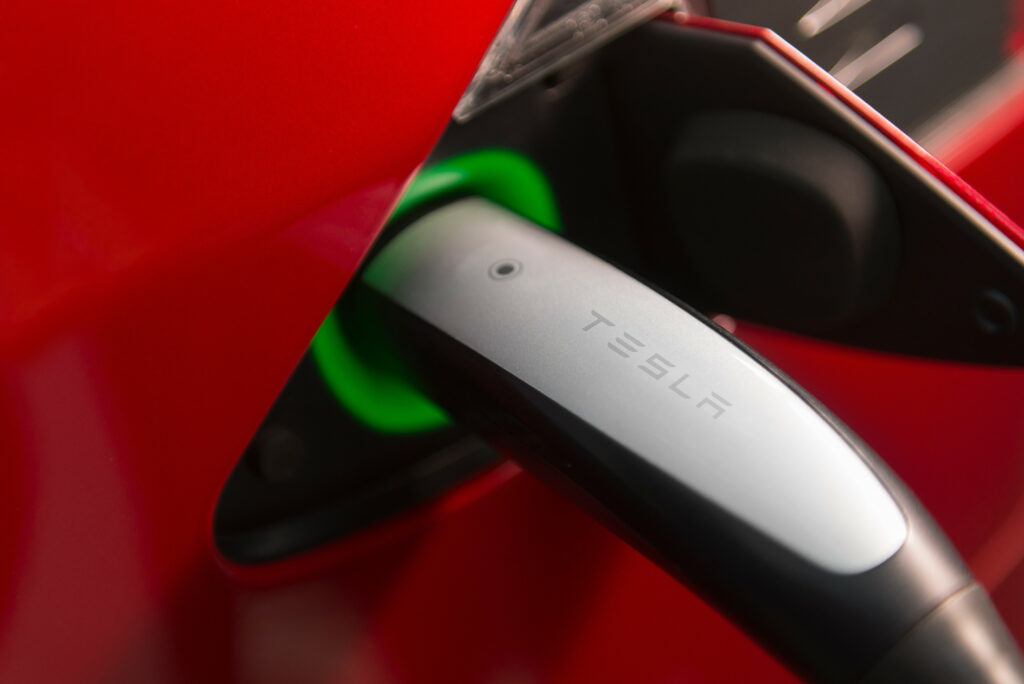
The new EPA regulations, if finalized, could support President Biden’s goal of having half of all new vehicles sold in the U.S. be zero-emission by 2030. This plan is essential for meeting U.S. commitments to reducing emissions. The U.S. aims to achieve 100% carbon pollution-free electricity by 2035, and attaining net-zero emissions economy-wide by 2050.
Greenhouse gas emissions from transportation account for about 27 percent of total U.S. greenhouse gas emissions. Transportation is the largest contributor of U.S. emissions. Although medium and heavy-duty trucks make up only 10 percent of the vehicles on the road, they produce 25 percent of all greenhouse gas emissions from transportation.
The Best (and Worst) Electric Cars in 2023
As electric vehicle adoption continues to grow, the automotive industry faces the challenge of accelerating electrification plans in response to these crucial regulatory changes.
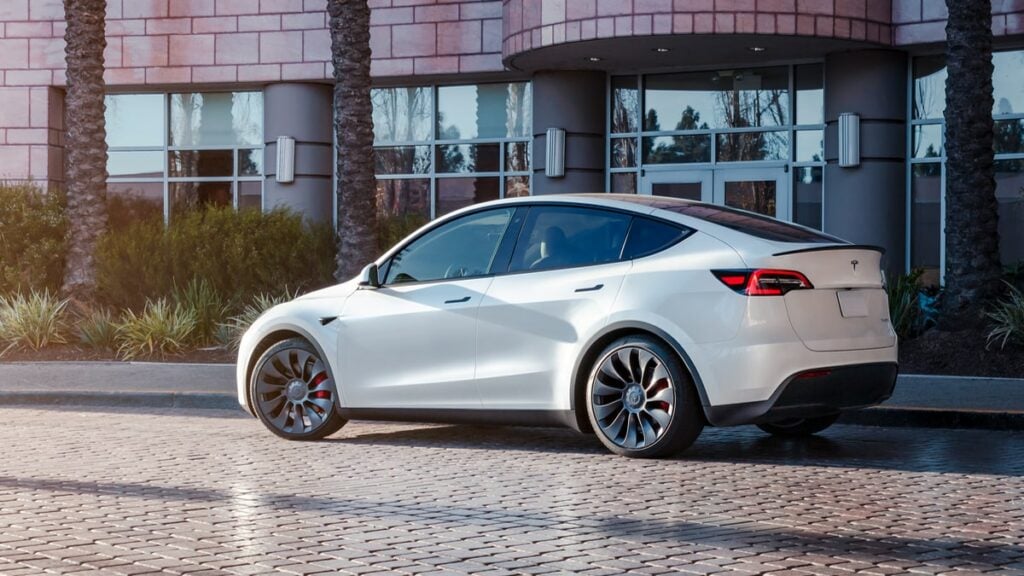
In the ever-evolving landscape of the electric car market, Tesla has been known for frequently adjusting its prices. As we enter 2023, Tesla has already made its sixth price change, and this time it’s a price cut. This is quite the contrast from the past two years, where Tesla prices rose significantly. However, since late 2022, Tesla has been dropping prices by up to 25%. In this article, we’ll take a closer look at Tesla’s latest price adjustment and see just how much the prices have dropped this time around.
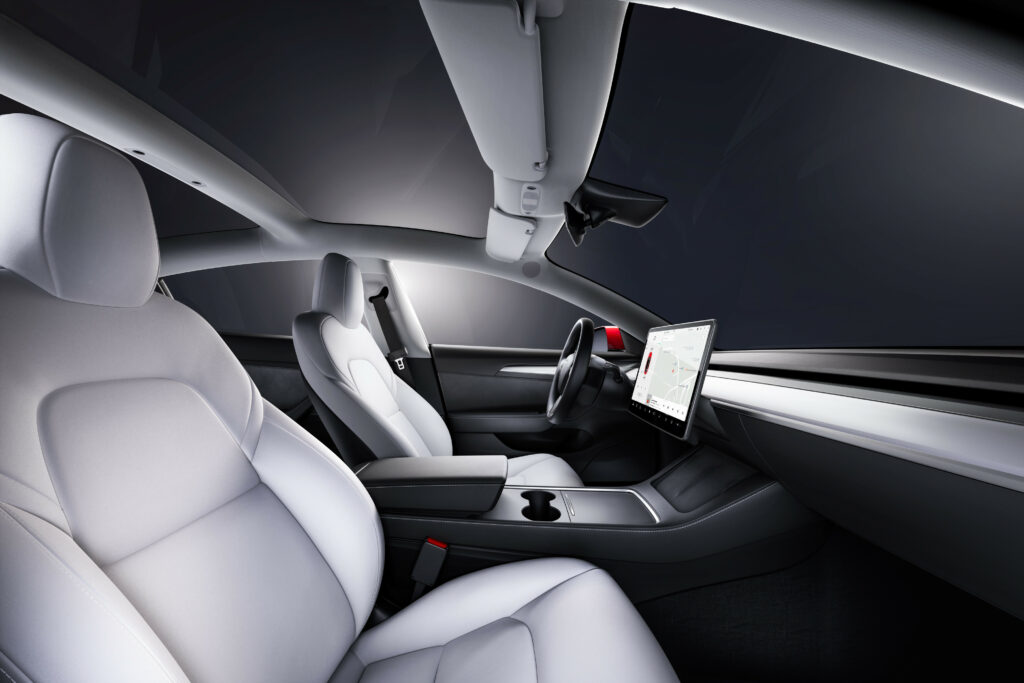
Tesla has made another price adjustment to their popular Model 3, marking the sixth price change of 2023. This time, the Rear-Wheel Drive (RWD) Model 3 has dropped from $42,990 to $41,990, making the lowest-priced Tesla even more affordable. The Model 3 Long Range remains unavailable for the time being, while the Model 3 Performance has been reduced to $52,990. However, it is worth noting that Tesla now advertises that the RWD Model 3 will lose half of the EV tax credit due to new battery sourcing rules. The battery supplier for the LFP batteries, CATL, is almost certainly the reason for the Model 3 losing half of the credit.
Here’s the latest on the EV tax credit from the IRS.
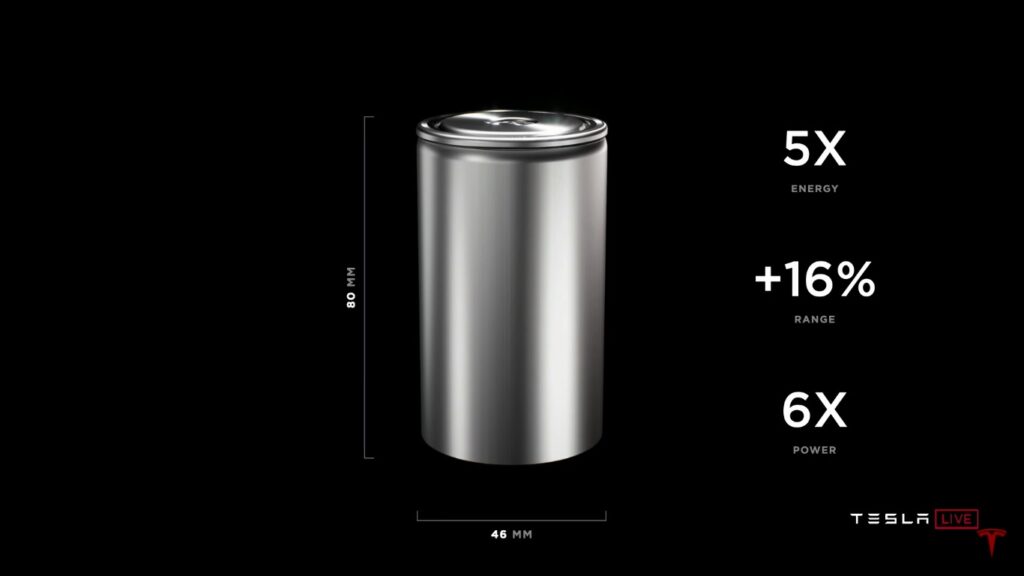
A brand new configuration is now available. The Standard Range AWD Model Y is now on the menu! The Standard Range Model Y is EPA-rated for 279 miles, and starts at $49,990. You can only order it in the 5-seater configuration. What makes the Standard Range Model Y so special? It is the first Tesla to include the new 4680 battery cells. These batteries are more energy dense, and are currently produced in Austin, Texas. The interior of the Standard Range Model Y is identical to the higher trim options.
The best-selling EV in America, the Model Y Long Range AWD, is back down to $52,990. In early 2023, Tesla had increased the price for this spec by $2,000, but has now eliminated that price hike. We’re back to where prices were several weeks ago.
The Model Y Performance received a price cut too, and is now down to $56,990.
Compare Model Y trim options, specs and prices at Tesla.com
The Model S sedan now starts at $84,990, a $5,000 cut from last month’s price. The Model S is rated for up to 396 miles of range. The Model S and X both feature the controversial yoke steering wheel.
The Model X starts at $94,990, also a $5,000 drop. The Model X is rated for up to 333 miles of range. It’s the quickest SUV on the market (and third-row at that…), with a 0-60 mph time of just 2.5 seconds.
With and without the EV tax credit, here’s where Tesla prices stand after the latest price cuts.
| Model 3 SR | Model 3 LR | Model 3 Perf. | Model Y SR | Model Y LR | Model Y Perf. | |
| Current Price | $41,990 | $48,990 | $52,990 | $49,990 | $52,990 | $56,990 |
| Eligible Credit | $3,750 | $7,500 | $7,500 | $7,500 | $7,500 | $7,500 |
| Price With Tax Credit | $38,240 | $41,490 | $45,490 | $42,490 | $45,490 | $49,490 |
The automaker delivered 422,875 vehicles globally in the first quarter. That’s a record for Q1 for Tesla, but it shows a slowed pace of growth. With the economy on shaky ground, many drivers are cutting back on discretionary spending. Yes, that includes your favorite Tesla. Throw in new federal guidance on the EV tax credit, and it starts to look like Tesla had more reasons to drop prices than not to.
We’ll stay on top of the latest. Check out these other reader favorites:
The Best Electric Cars For Families
Top EV Models of 2023 Compared for Performance, Range, and Value

Welcome to the ultimate electric car comparison for 2023, where we take a closer look at some of the best-selling EVs on the road. With the increasing popularity of electric cars, there are more options than ever before. We’ll compare the Tesla Model Y, Hyundai IONIQ 5, Kia EV6, Ford Mustang Mach-E, Volkswagen ID.4, and Tesla Model 3, analyzing their strengths and weaknesses in different categories. Whether you’re looking for the best value for your money, a family-friendly option, a budget-friendly choice, or the best car for road trips or performance, we’ve got you covered.
First up, the best-selling EV in America. Is it all that it’s cracked up to be? As electric vehicles continue to gain popularity, competition in the EV market is heating up. One of the most well-known and well-regarded brands in this space is Tesla, which offers several models to choose from. But is the Model Y the best of the best? Let’s dive in.
The 2023 Tesla Model Y is an impressive electric crossover SUV that offers a range of up to 330 miles on a single charge, making it a great choice for those who need to travel long distances. It comes with a range of features that are sure to impress, including a large infotainment display, autopilot semi-autonomous driving system, and an all-glass roof that adds an airy ambiance to the cabin. The Model Y also offers impressive acceleration, making it a great choice for those who value speed and performance. It’s also incredibly safe.
The Long Range AWD Model Y starts at $52,990, while the Model Y Performance starts at $56,990. Tesla recently dropped its prices by up to 13%, making the Model Y more affordable than ever before. The entry-level ‘Standard Range AWD’ model comes with a different battery pack than the other two, and its range is lower at 279 miles per charge. It has finally appeared on Tesla’s online configurator with a price of $49,990.
The all-wheel-drive Long Range offers an impressive 330 miles of range, while the Performance model’s estimated range drops to 303 miles.
The Model Y is equipped with a dual-motor all-wheel drive setup that allows for impressive acceleration. The Long Range model can go from zero to 60 mph in just 4.4 seconds, while the Performance model can achieve this in an even quicker 3.6 seconds. While the Model Y offers impressive acceleration, it doesn’t deliver the same level of driving satisfaction as the Model 3 due to the SUV body’s higher center of gravity. On the other hand, road noise is reduced in the Model Y compared to its sedan sibling.
Compared to other EVs on the market, the Model Y offers a range of impressive features, including autopilot semi-autonomous driving and a large infotainment display. However, it doesn’t offer the same level of build quality as luxury EV SUVs like the Audi Q8 e-tron, the Cadillac Lyriq, and the Genesis GV60. Many reviewers note that even the IONIQ 5 and EV6 have a better ride quality.
Additionally, the Model Y can feel clumsy on twisty roads and offers less driving range than some rivals, such as the Ford Mustang Mach-E and the Volkswagen ID.4. However, the Model Y does have one key feature that sets it apart from other EVs on the market: an optional third row of seats, making it a great choice for family buyers with small children. It’s VERY tight back there, so don’t expect to fit adults in the third row.
Overall, the 2023 Tesla Model Y is a solid choice for those in the market for an electric crossover SUV. It offers impressive acceleration and a range of impressive features that are sure to impress, and its third row of seats makes it a great choice for families. However, it does face stiff competition from other EVs on the market, so it’s important to consider all options before making a final decision.

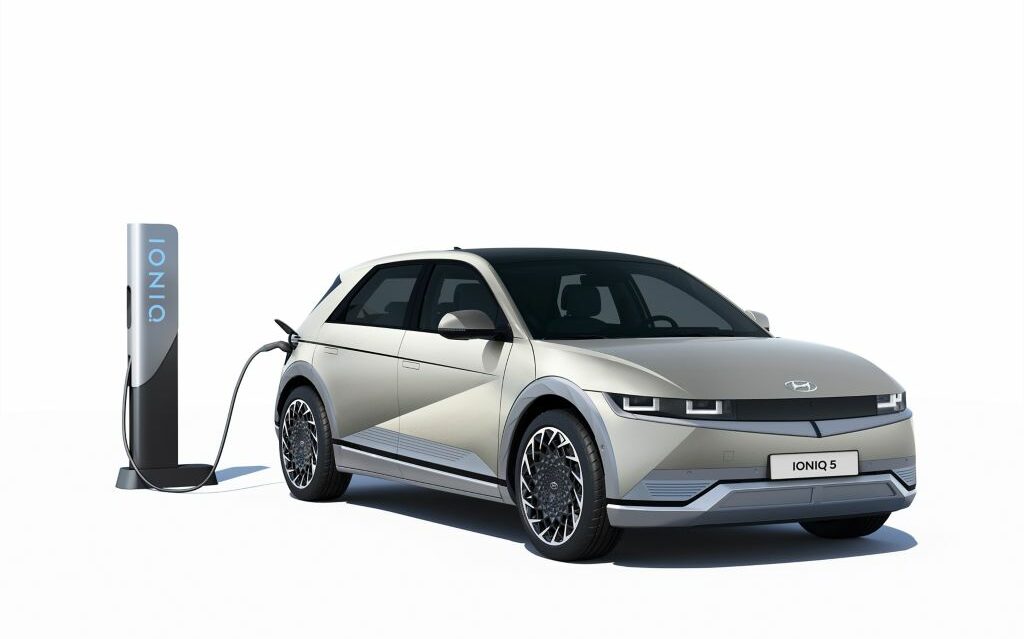
The Hyundai IONIQ 5 is an electric SUV that combines modern electrification with a touch of retro design. This SUV is a standout performer in its category, thanks to its impressive fast-charging capabilities and notable driving range. With a range of power options, and a spread of pricing and range availability, the IONIQ 5 makes for a compelling choice for anyone considering their first EV purchase.
The IONIQ 5 is Hyundai’s all-electric SUV that features a head-turning design with a digitized dashboard and eco-friendly materials. It offers quick charging times, ample passenger and cargo space, and modern infotainment and connectivity features. The IONIQ 5 boasts a 350-kW DC fast-charging capacity, which allows it to charge as quickly as far more expensive and luxurious EVs, like the Porsche Taycan and Lucid Air. Inside, the IONIQ 5’s cabin features a flat floor, allowing for more room for passengers and cargo.
Price and Range
The 2023 Hyundai IONIQ 5 starts at $41,450 for the SE RWD Standard Range, which can run for 220 miles on a single charge. But that’s not the best value. The SE rear-wheel drive with more power and a bigger battery starts at $45,500, and is good for an EPA-rated 303 miles on a charge. The SEL version, which comes highly recommended, is priced from $47,450. The top-of-the-line Limited trim comes in at $52,600, and featured a glass roof, heads-up display, 20” wheels, and other premium features.
All-wheel drive adds a second electric motor, creating more combined power and costs $3,500 extra. The IONIQ 5 has a range of up to 303 miles with a single motor and 266 miles with all-wheel drive. That’s a minor increase from the 2022 model.
The standard-range battery paired with a single, rear-mounted electric motor generates 168 horsepower. The longer-range battery generates 225 horsepower and 258 pound-feet of torque, which propels the IONIQ 5 to 60 mph in 7.4 seconds with rear-wheel drive. The all-wheel-drive version is much more powerful, with 320 horsepower and 446 pound-feet, and goes from 0 to 60 mph in just 4.5 seconds, according to testing from Car and Driver and others.
The IONIQ 5 compares favorably to other popular EV SUVs, such as the Ford Mustang Mach-E and Volkswagen ID.4. It boasts better charging speeds and a longer range than most competitors in its class, as well as a more spacious interior. The IONIQ 5’s starting price is also competitive, especially considering its impressive performance and features. Sadly, dealer markups have plagued the IONIQ 5 from the start. Hopefully, 2023 will see the demise of these anti-consumer markups. Overall, the IONIQ 5 is a great choice for anyone looking for a stylish and capable electric SUV.
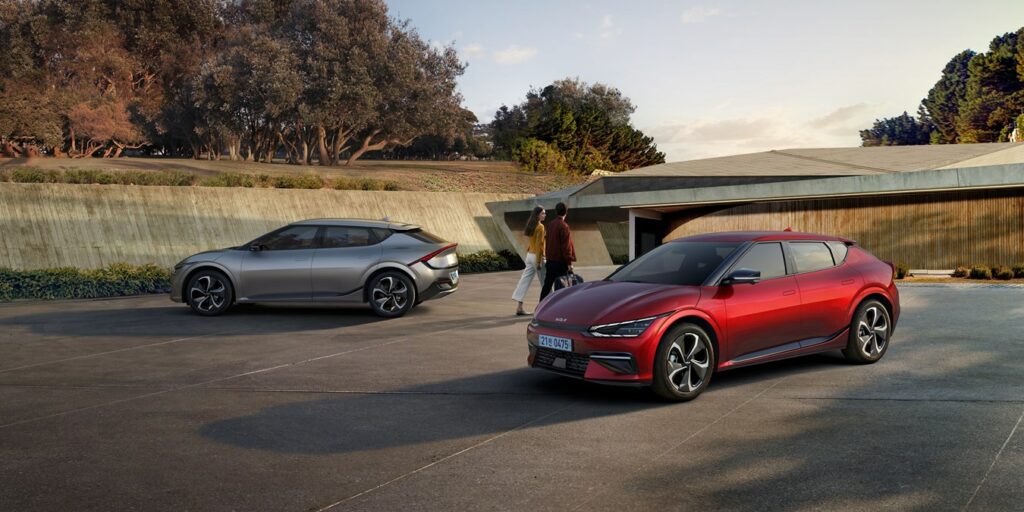
The Kia EV6 is a standout electric SUV that is turning heads in the EV market. The EV6 boasts a bold look all its own and athletic road manners that make it a joy to drive.
The EV6 is an SUV that’s easy to live with, fun-to-drive, and a good value. It’s one of our favorite EVs because its traits add up to a well-rounded electric vehicle. The interior is spacious and quiet, making it a comfortable ride for passengers. Plus, the EV6 has excellent acceleration and handling, particularly for an SUV. For hot-shoe drivers, the GT model is the one to get, with its impressive 576 horsepower that’s enough to make Stinger owners envious as it blows by them.
The Kia EV6 is costlier than nearly all other non-luxury electric SUVs, with a base price of $48,700. That’s for the base Wind trim with rear-wheel drive. The midrange EV6 GT-Line with RWD starts at $52,900. All-wheel-drive versions of the Wind and GT-Line start at $52,900 and $57,600, respectively. The new EV6 GT is more expensive but more capable, starting at $61,600. The EV6 offers two battery sizes: a 58.0-kWh and a 77.4-kWh pack. The smaller, standard battery has an EPA-rated range of 232 miles, while the larger, long-range battery is EPA-rated at up to 310 miles. Opt for the performance-oriented GT model, and the range drops to a measly 206 miles per charge, even though it comes with the larger of the two batteries.
The EV6 is available with a single electric motor mounted on the rear axle that gives it rear-wheel drive or with electric motors on both front and rear that enable all-wheel drive. While all-wheel-drive models have a larger battery pack and either 320 or 576 total horsepower, the base rear-drive example has a smaller battery and just 167 horses. Opting for the bigger battery boosts the rear-drive EV6’s total system output to 225 horses. We drove a GT-Line AWD in Europe and enjoyed its satisfying acceleration, agile handling, and adjustable regenerative brake settings. At our test track, that 320-hp GT-Line model managed a brisk 4.5-second zero-to-60-mph time. If you prioritize maximum straight-line performance, the 576-hp GT has you covered; in our testing, it hit 60 mph in 3.2 seconds.
The EV6 is a strong contender in the EV market and is a direct competitor to the Tesla Model Y and Hyundai Ioniq 5. In terms of price, the EV6 is pricier than the Ioniq 5 but more affordable than the Model Y. While the Model Y has a longer range, the EV6 offers a respectable range and competitive performance. The Ioniq 5 has a similar range and performance to the EV6, but the EV6’s styling and features give it a unique edge. Ultimately, choosing between these three cars will come down to personal preferences, but the EV6 is a strong option that should not be overlooked.

The 2023 Ford Mustang Mach-E is a highly versatile electric crossover that has made a name for itself in the EV market. It offers a range of equipment packages to suit different customer preferences and lifestyles, ranging from the content-rich Premium model to the performance-oriented GT. The Mach-E is agile, quick, and boasts an appealing exterior, an upscale interior with the latest tech, and impressive range and capability.
The Mustang Mach-E’s design is sleek, modern, and sporty, with its elongated hood, sweeping roofline, and signature pony badge on the front. The interior is also impressive, with a streamlined dashboard, customizable ambient interior lighting, and a huge vertically mounted touchscreen for infotainment. The Mach-E’s battery is located under the floor, which maximizes passenger and cargo space, and the front trunk is made of durable plastics that can be rinsed and drained. The Mach-E also has an array of features such as heated front seats, a heated steering wheel, and wireless charging.
The 2023 Ford Mustang Mach-E’s pricing starts at $45,995 for the rear-drive Select model, and the GT Extended Range model is priced at $63,575+. The Premium model’s estimated range has been increased to 290 miles, while the Mach-E’s range varies between 224 and 312 miles, depending on the battery pack and the configuration of electric motors. Although it isn’t as impressive as some of the longest-range Tesla models, the Mach-E’s fast-charging capability and mobile charging device make up for it.
The 2023 Mustang Mach-E is available with either a standard-range 70.0-kWh battery or an extended-range 91.0-kWh pack. The electric motor is mounted on the rear or both axles, creating either rear-wheel or all-wheel drive, respectively. The GT and GT Performance models have motors that combine to produce 480 horsepower and up to 634 pound-feet of torque, which can propel the Mach-E GT Performance from zero to 60 mph in just 3.5 seconds. Other models have between 266 and 346 horsepower and 317 to 428 pound-feet of torque.
The Mustang Mach-E is a highly competitive EV that has won awards for its impressive performance and design. However, it has since lost the title of EV of the Year to the cheaper and similarly impressive Hyundai Ioniq 5. The Mach-E’s range and performance are impressive, but its price point may be a drawback for some buyers. Overall, the Mach-E offers a lot of features, range, and capability that make it a worthy contender in the EV market.
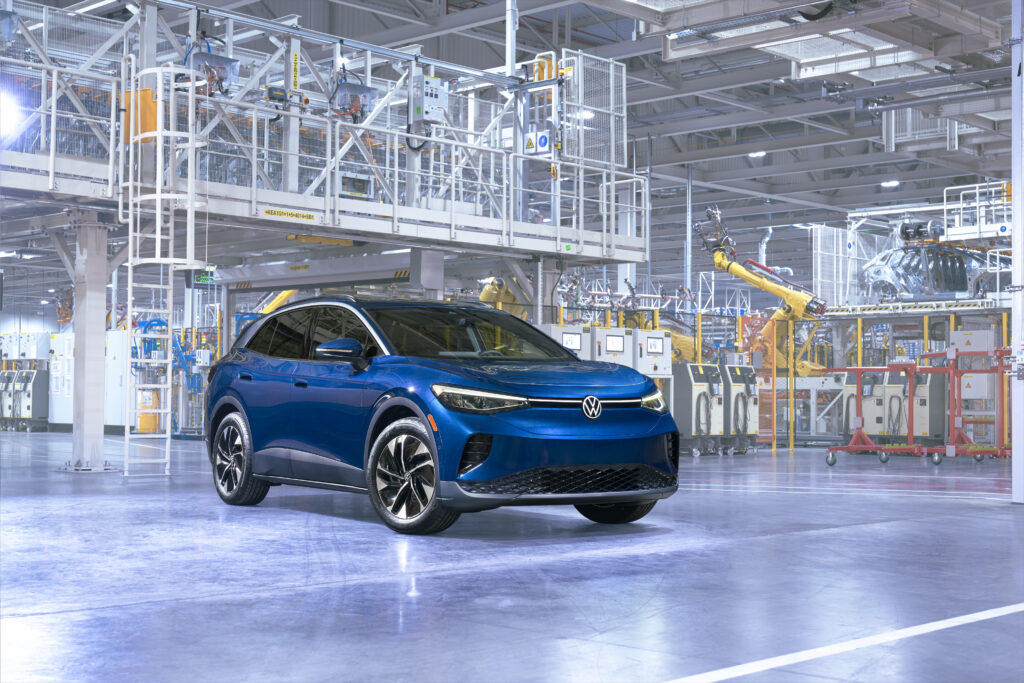
The 2023 Volkswagen ID.4 is the German automaker’s answer to the electric SUV craze that has taken the world by storm. Designed to provide an affordable and practical option for those looking to switch from internal combustion, the ID.4 boasts an impressive driving range, fast charging capabilities, and a comfortable, spacious cabin. While it faces stiff competition from established players like the Tesla Model Y and the Ford Mustang Mach-E, the ID.4 holds its own with its attractive pricing and a well-rounded package that blends practicality with comfort.
The Volkswagen ID.4 is an excellent electric SUV that pairs practicality with comfort, making it a great choice for drivers looking to make the switch from internal combustion. It comes standard with DC fast-charging capability, allowing for relatively quick and easy charging at public stations. The ID.4 also boasts a spacious interior with high-tech features, ambient lighting, and generous cargo space, making it a practical choice for families or those who require extra storage.
With a starting MSRP of $37,495 for the Standard trim and $42,495 for the S trim, the Volkswagen ID.4 is an affordable electric SUV that won’t break the bank. However, the base Standard trim pairs its attractive price tag with a smaller 58-kWh battery and only around 208 miles of range, which may not be sufficient for some drivers. In contrast, the all-wheel-drive Pro S Plus model, which starts at $50,195, comes with the larger 82-kWh battery and a maximum range of about 275 miles per charge.
The ID.4 comes with a single rear-mounted motor that produces 201 horsepower, but drivers can opt for the all-wheel-drive model, which comes with a second motor and ups power output to 295 horsepower. However, the ID.4’s driving demeanor was found to be less playful than its competitors, and its traditional gut-punch acceleration was also lacking, even in its most aggressive regenerative mode.
In comparison to the Tesla Model Y and the Hyundai IONIQ 5, the Volkswagen ID.4 falls short in terms of maximum range and performance. The Model Y offers an EPA estimated range of 330 miles, significantly more than the ID.4’s maximum range of about 275 miles. The IONIQ 5 offers slightly more horsepower than the ID.4, with a maximum power output of 305 horsepower. Additionally, the ID.4’s driving demeanor was found to be less playful than both the Model Y and the IONIQ 5, making it less enjoyable to drive. However, the ID.4’s lower starting price and practicality make it a solid choice for drivers looking for an affordable electric SUV with plenty of space and features.
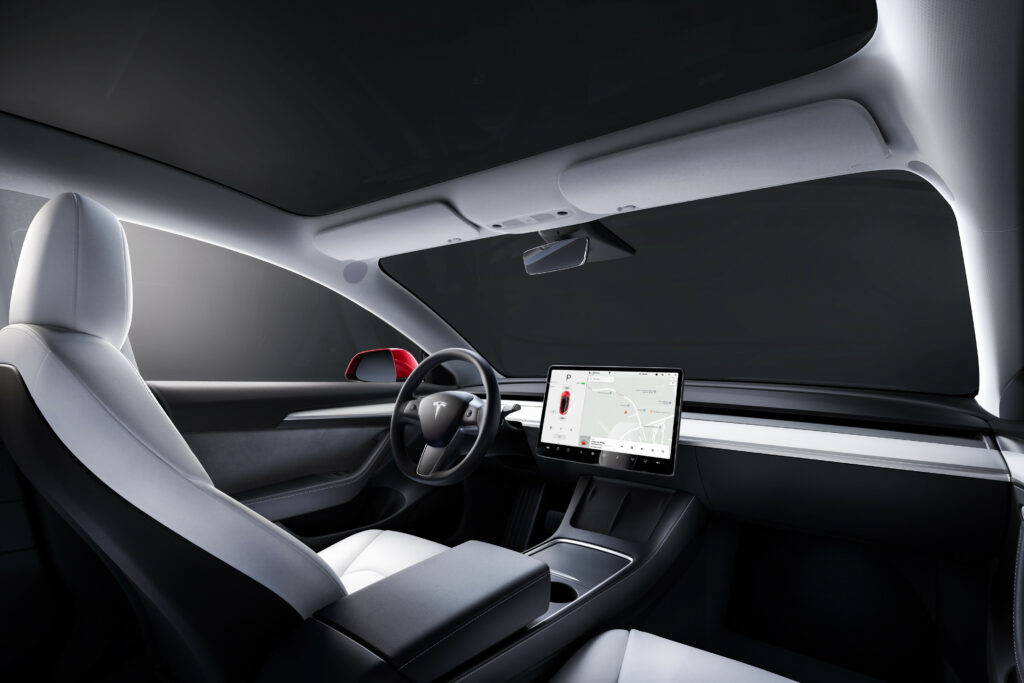
The Tesla Model 3 revolutionized the electric vehicle market with its compelling combination of affordability, performance, and long-range driving capability. Even as competition from newcomers like the Hyundai Ioniq 6 and the Polestar 2 has grown, the Model 3 remains a bestseller thanks to its unique features.
Tesla’s Model 3 electric sedan is incredibly fun to drive, and its low center of gravity gives it excellent handling on the road. It accelerates quickly and smoothly thanks to its powerful electric motor, which delivers a punchy response right from the start. The Model 3 Long Range edition provides an impressive 358 miles of range, while the Performance trim delivers extra power and a sportier appearance.
The 2023 Tesla Model 3 is priced at $41,990 for the base rear-wheel-drive model with an estimated range of 272 miles. The Long Range and Performance trims both offer longer ranges of 358 and 315 miles, respectively, with the Performance model coming in at just under $52,990. Buyers can add Full Self-Driving Capability for an additional $15K.
The Model 3’s electric motor provides instant torque, allowing it to go from 0 to 60 mph in 5.1 seconds in the Long Range model and an impressive 3.5 seconds in the Performance edition. The Model 3 is known for its low center of gravity, resulting in excellent handling and a smooth ride. The steering is precise, and the Model 3 feels planted and stable in corners. Road noise is noticeable inside the cabin, but it’s a minor issue.
The Model 3 remains a top contender in the EV market, thanks to its performance, range, and overall appeal. The build quality has been a concern, with some reports of inconsistent assembly and questionable durability. Still, the Model 3’s range, power, and handling set it apart from the competition. Its interior is unlike any other car on the market, with almost everything controlled by a touchscreen in the center of the dashboard. The Model 3’s driver-assist system is impressive, but its name, Autopilot, is misleading. It’s a driver-assist system, not a self-driving feature.
Overall, the Tesla Model 3 is an excellent electric sedan and remains a bestseller for good reason. Its combination of range, performance, and fun driving make it a top choice for many EV buyers.

Tesla Model 3: With a starting price of $42,990 and a maximum range of 358 miles, the Model 3 offers impressive value for money, along with strong performance and smooth driving experience.
Hyundai IONIQ 5: The IONIQ 5 boasts a spacious and versatile interior with ample room for passengers and cargo, making it an excellent choice for families. It also has a range of up to 300 miles, ensuring long-distance trips are possible without frequent recharging.
Kia EV6: The EV6 offers super-fast charging, with up to 210 miles of range added in just 18 minutes. This makes it ideal for drivers who frequently make long-distance trips and don’t want to spend a lot of time at charging stations.
Volkswagen ID.4: The ID.4 has a starting price of $39,995, making it an affordable option for those looking to switch to an electric vehicle. Despite its budget-friendly price tag, it offers a comfortable ride, good handling, and a range of up to 250 miles.
Tesla Model Y: The Model Y boasts a range of up to 326 miles and Tesla’s extensive Supercharger network, making it an excellent choice for road trips. It also has a spacious interior and plenty of cargo space, making long drives comfortable and convenient.
Mustang Mach-E GT: The Mustang Mach-E GT delivers thrilling performance with its 480 horsepower electric motor, which can accelerate from 0 to 60 mph in just 3.5 seconds. It also has a sporty design and a range of up to 270 miles, making it a great choice for those who want an electric vehicle with an edge.
In conclusion, this electric car comparison has highlighted some of the top-performing and most popular electric vehicles on the market in 2023. Each of these models has its own unique strengths and weaknesses, making them suitable for different lifestyles and driving needs. Whether you prioritize performance, range, value for money, or family-friendliness, there is an EV on this list for you. As more manufacturers enter the EV market, we can expect to see even more innovation and competition, leading to even better options for drivers.
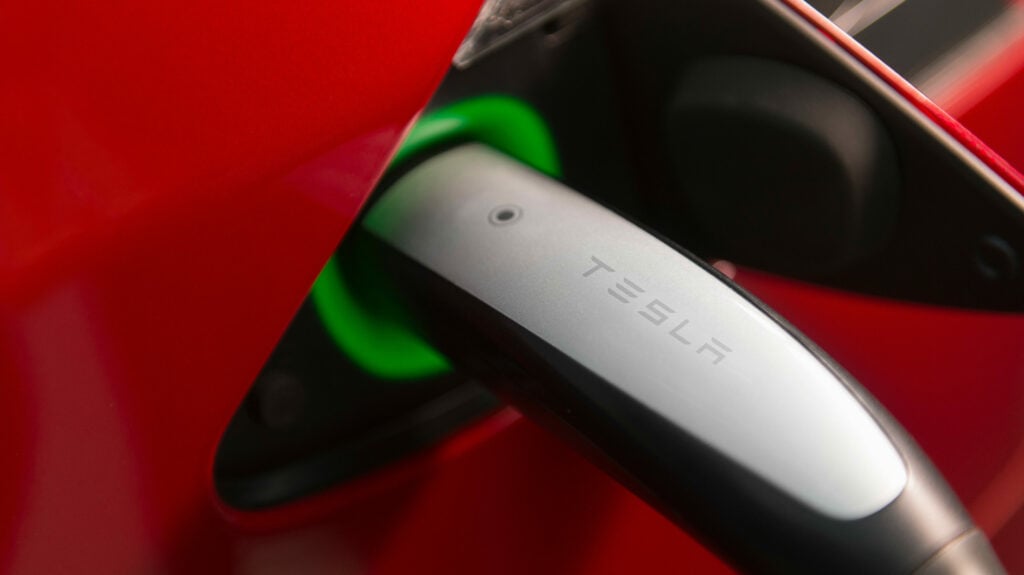
The U.S. Treasury Department has announced new electric vehicle tax credit sourcing rules that will take effect in April, aiming to incentivize domestic production and reduce reliance on foreign supply chains. The new rules will remove full eligibility for several popular EVs. These amendments come months after the IRS issued preliminary EV tax credit rules. Here’s the latest from the federal government.
Starting April 18th, the $7,500 tax credit for new EVs will be split into two parts for qualifying vehicles and buyers. The new rules include:
Newly negotiated critical mineral agreements, such as the U.S.-Japan trade deal on EV battery minerals, will qualify. Other qualifying countries include Australia, Canada, Chile, Korea, and Mexico. This is huge news for fans of Hyundai and Kia EVs. The European Union is also in negotiations with the U.S. on a battery critical minerals deal.
Here’s a look at the proposed three-step process for determining the percentage of the value of the critical minerals in a battery that contribute toward meeting critical minerals requirement: 1) determine procurement chains, 2) identify qualifying critical minerals, and 3) calculate qualifying critical mineral content.
The U.S Treasury department also proposes a four-step process for determining the value and sourcing of batteries: 1) identify battery components that are manufactured or assembled in North America, 2) determine the incremental value of each battery component, including North American battery components, 3) determine the total incremental value of battery components, and 4) calculate the qualifying battery component content by dividing the total incremental value of North American battery components by the total incremental value of all battery components. Sound complicated? What else would you expect from government guidance. Check out the official press release here.
Starting April 18, 2023, new electric vehicles placed in service will need to adhere to the critical mineral and battery component requirements specified in the U.S. Treasury Department’s rule. To assist buyers, FuelEconomy.gov will provide a comprehensive list of eligible clean vehicles on that date. This list, submitted by qualified manufacturers to the IRS, will detail the vehicles meeting the new clean vehicle credit requirements, including the exact amount of the credit they are eligible for.
While the new EV tax credit sourcing rules aim to promote domestic EV supply chains and job creation, China still dominates the processing and refining of key battery minerals. The U.S. is working to build secure supply chains for critical minerals and focusing on domestic sourcing and production. However, EV incentives could be eliminated, at least partially, for several popular electric vehicles. Check back for the updated eligible vehicles list once it is made public on April 18, 2023.

Navigating the world of car loans can be daunting, but understanding how interest rates work is key to making a wise investment in your new or used vehicle. By learning how to save on car loan interest, you can potentially save thousands of dollars over the life of your loan. In this guide, we’ll explore expert tips for securing the best interest rates when buying both new and used cars. Already bought your car? We’ll dive into refinancing options too.

Your credit score plays a major role in determining the interest rate you’ll receive on a car loan. Lenders use credit scores to assess the risk associated with lending money, and a higher score often results in lower interest rates. Before shopping for a new car, check your credit score and work on improving it. Paying off outstanding debts, making timely payments, and keeping your credit utilization low can all help boost your score.
Don’t limit yourself to the dealership’s financing options. Shop around for car loans from banks, credit unions, and online lenders to find the best interest rates. Get pre-approved for loans from multiple lenders and compare the terms, fees, and interest rates to secure the best deal. Don’t forget to get a free quote with CarEdge-approved credit unions. Even if you decide to finance elsewhere, you can use our low rates as leverage when negotiating.
While a longer loan term may result in lower monthly payments, it also means you’ll pay more interest over the life of the loan. Opting for a shorter loan term can save you money in the long run by reducing the total interest paid. Keep in mind that this will result in higher monthly payments, so ensure it fits within your budget.
| Loan Amount | Interest Rate | Loan Term | Monthly Payment | Total Interest Paid |
| $25,000 | 4% | 36 mo | $738.01 | $2,568.36 |
| $25,000 | 4% | 60 mo | $460.59 | $4,635.40 |
A larger down payment can help you save on interest by reducing the loan amount and demonstrating to lenders that you’re financially responsible. Aim for a down payment of at least 20% of the car’s purchase price to minimize the interest costs and potentially qualify for a lower rate.
A large loan discount in the auto financing world refers to a reduction in interest rates or fees offered by a lender when a borrower takes out a car loan that exceeds a certain threshold. This practice is based on the principle that larger loans usually involve more significant risks for the lender, and the reduced interest rate or fees help to incentivize borrowers to choose that particular lender for their car financing needs.
Tier bumps in auto loans are a practice employed by some lenders to offer a more favorable interest rate to borrowers who may be on the cusp of qualifying for a better tier or category. Essentially, the lender “bumps” the borrower up to a higher tier, which comes with a lower interest rate, despite their credit score or financial profile not quite meeting the standard criteria for that tier. This practice can be particularly beneficial for car buyers who have borderline credit scores or are working on improving their financial situation.
Loan-to-value (LTV) ratio is an essential factor that lenders consider when determining interest rates for auto loans. The LTV ratio is the amount of the loan compared to the market value of the vehicle being financed. A higher LTV ratio typically indicates a higher risk for the lender, as it means they are financing a larger percentage of the vehicle’s value. In such cases, lenders may charge a higher interest rate to compensate for the increased risk. To secure a lower interest rate on an auto loan, aim for a lower LTV ratio by making a larger down payment or opting for a vehicle with a lower price tag.
Automakers often offer special financing deals or cash rebates to encourage new car sales. Keep an eye out for manufacturer incentives, such as low or 0% APR financing, which can significantly reduce your overall interest costs. Be sure to read the fine print and weigh the pros and cons of these offers before deciding. To make the most of your car loan interest savings, check out our guide on the best auto loan rates and learn how to secure the most favorable financing deals.

Certified Pre-Owned (CPO) vehicles are a great option for used car buyers seeking lower interest rates. These vehicles undergo rigorous inspections and often come with extended warranties, making them a lower-risk option for lenders. As a result, CPO vehicles typically qualify for lower interest rates compared to non-certified used cars.
Browse certified pre-owned (CPO) car listings at CarEdge Car Search
If you already have a car loan with a high interest rate, consider refinancing to save on interest costs. Refinancing involves taking out a new loan to pay off your existing loan, ideally with a lower interest rate. This can be a smart move if your credit score has improved since you initially took out the loan or if interest rates have dropped.
When buying a used car, use your trade-in as leverage to negotiate a better interest rate. Dealerships often make more profit from used car sales, so they may be more willing to offer lower interest rates to secure the deal. Research the value of your trade-in before negotiating to maximize its impact on your loan terms. Be sure to check the Black Book valuation of your trade-in with CarEdge Pro. Finally, you have access to the same car value data that dealers use!
Check out our guide to getting more for your trade-in
Dealerships may add a markup to the interest rate they offer on car loans, pocketing the difference as profit. Be aware of this practice and ask for a direct quote from the lender to ensure you’re getting the most competitive rate possible. If you have multiple loan pre-approvals, you can use them as leverage to negotiate the best rate with the dealer.
It’s smart to understand how dealers make money before negotiating.
If your car loan allows for early repayment without penalties, consider making extra payments or paying off the loan ahead of schedule. This can save you a significant amount of money on interest charges over the life of the loan. Just be sure to double-check your loan agreement for any prepayment penalties before proceeding.
By taking the time to research your options, improve your credit, and negotiate favorable loan terms, you can save thousands of dollars over the life of your loan. Remember, every bit of effort you put into securing a lower interest rate will pay off in the long run.
At CarEdge, we’re dedicated to helping you make the most informed decisions when purchasing a vehicle. Whether you’re looking for expert advice, comprehensive data, or personalized coaching, we’re here to help you save money and drive away with confidence. Check out our free resources, or explore our premium car buying help today and start your journey toward the best car loan interest rates available.

Buying a car can be an exciting yet daunting experience, especially with so many factors to consider and decisions to make. But fear not, as we’ve gathered top car buying tips from industry experts to help guide you through the process with confidence. By leveraging these expert insights, you’ll not only save money but also secure the best possible deal on your new car. So buckle up and let’s dive into these expert car buying tips for a smoother, smarter, and more successful car purchasing experience!
Determine a realistic budget for your car purchase based on your financial situation and needs. For example, if you earn $50,000 annually and can comfortably allocate 15% of your income for transportation, your budget would be $7,500, which comes out to $625 every month. Don’t forget about fuel and auto insurance!
Remember to factor in additional costs such as taxes, fees, and add-ons, which could increase the total cost of ownership. For instance, if you’ve set a budget of $20,000 and live in a state with an 8% sales tax, you should account for an additional $1,600 in taxes.
It’s also essential to be aware of optional add-ons offered by dealers, such as extended warranties, paint protection, or gap insurance, which could increase the overall cost. More on that below. Stick to your budget during negotiations to avoid overspending and ensure you get the best value for your money.
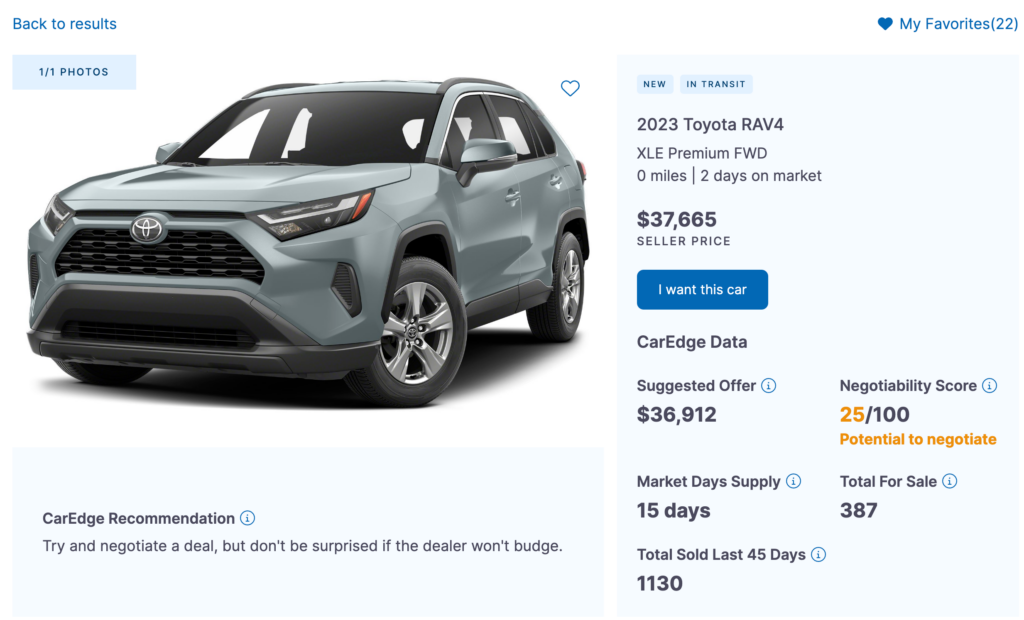
Understand how car dealerships make money so you can better negotiate on various aspects of the car deal. It’s crucial to research different elements of a car purchase, including dealer holdback, manufacturer incentives, and profit margins, to gain an advantage in negotiations.
Begin by researching the invoice price and the fair market value of the car you’re interested in. This information will give you a solid starting point for negotiations.
Investigate any available manufacturer incentives, such as cash rebates or low-interest financing offers, that can help you save money on your purchase. Be sure to factor these incentives into your negotiation strategy, as dealers might be more inclined to offer a better deal when incentives are available.
CarEdge can be an invaluable resource in your research process. Our comprehensive vehicle listings, depreciation data, and expert advice can help you make informed decisions and better understand the intricacies of car buying.
Utilize the car price negotiation cheat sheet to learn about strategies for effective negotiation. Be prepared to walk away, know when to negotiate on price, and don’t be afraid to play hardball to secure a better deal.
Know EXACTLY what to say with this cheat sheet

Be aware of unnecessary dealer add-ons that can inflate the price of a vehicle. Review the list of common add-ons, and challenge or refuse those that don’t provide value to you as a buyer.
Examples of unnecessary dealer add-ons include:
Check out our complete guide to challenging dealer add-ons
Explore various financing options available to you, such as bank loans, credit unions, or dealer financing. Compare interest rates and terms to secure the best financing deal that suits your needs.
In many cases, you’ll be able to find lower interest rates elsewhere. Dealers mark up their rates nine times out of ten. Get pre-approved with a trusted credit union for better financing rates that will save you thousands of dollars over your loan term.
Even if you choose not to finance with a credit union, you can use their lower rates as leverage when negotiating at the dealership.
Following these expert car buying tips can significantly enhance your car purchasing experience and save you money. By setting a budget, doing thorough research, employing effective negotiation techniques, challenging dealer add-ons, and shopping around for financing options, you’ll be well-equipped to secure the best possible deal on your new car. Remember, patience and persistence can make a significant difference in the outcome.
Ready to outsmart the dealerships? Download your 100% free car buying cheat sheets today. From negotiating a deal to leasing a car the smart way, it’s all available for instant download. Get your cheat sheets today!

As we navigate the new year, the automotive industry is showing signs of recovery, with new car sales expected to lift slightly in Q1 2023. In a recent press release, automotive research firm Edmunds shared its predictions for the industry, highlighting the potential for growth in sales volume. We’ll dive into the key findings from the press release, and summarize the standout data to provide a clear outlook on what’s in store for the car market.
According to Edmunds, new vehicle sales in the first quarter of 2023 are expected to reach approximately 3.9 million units, a 0.6% increase compared to Q1 2022. This growth is an encouraging sign for the automotive industry, which has faced numerous challenges over the past couple of years, including supply chain disruptions, inventory shortages, and fluctuating consumer demand.
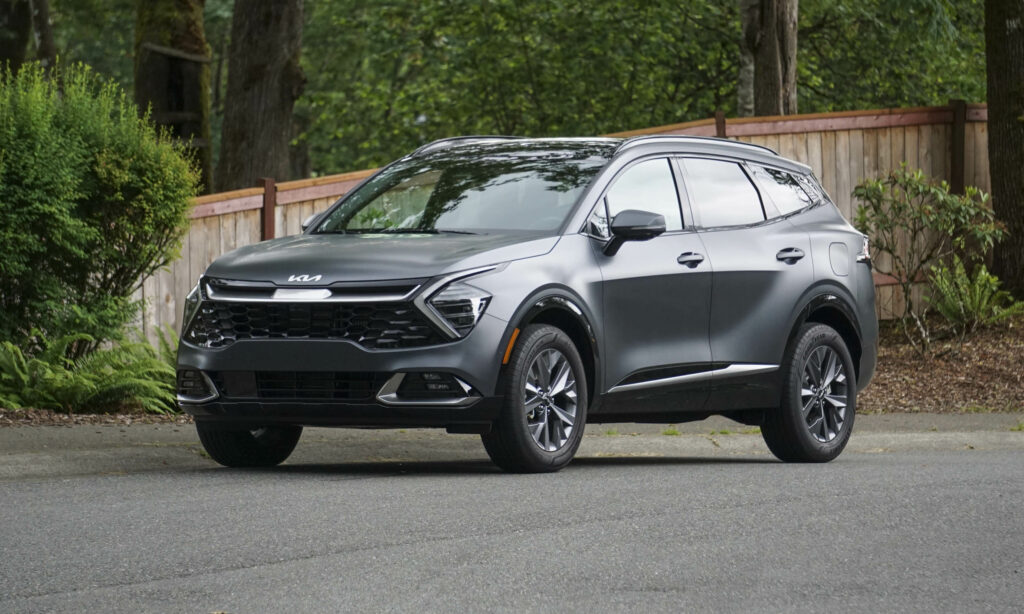
Edmunds’ predictions also shed light on the performance of various vehicle segments in Q1 2023. SUVs and trucks continue to dominate the market, with the SUV segment expected to account for 54.5% of new vehicle sales. Trucks follow closely, comprising 21.7% of the market share, while passenger cars trail behind at 23.8%. This trend highlights the ongoing consumer preference for SUVs and trucks, which offer more space, versatility, and capabilities compared to traditional passenger cars.
Back in 2021, SUVs held 52.5% of U.S. market share, trucks were 23.4%, and sedans were 24.1% of total light-duty sales. As we can see, vehicle sales by segment are holding relatively steady following the rapid rise of crossover SUVs in the past decade.
Edmunds also provides a breakdown of market share by manufacturer, with the top three spots held by General Motors (16.6%), Toyota (14.3%), and Ford (13.5%). These industry giants continue to lead the pack, benefiting from strong brand recognition, diverse vehicle lineups, and loyal customer bases. It’s important to note that these figures could still fluctuate, depending on factors such as production capabilities, consumer demand, and inventory availability.
In Summary: Q1 2023 New Vehicle Sales Predictions
Total Q1 2023 Sales: 3.9 million units (0.6% increase from Q1 2022)
SUVs: 54.5% market share
Trucks: 21.7% market share
Passenger Cars: 23.8% market share
General Motors: 16.6% market share
Toyota: 14.3% market share
Ford: 13.5% market share
The Q1 2023 new vehicle sales predictions from Edmunds paint an optimistic picture for the automotive industry, as sales are expected to lift slightly compared to the previous year. The data also highlights the ongoing dominance of SUVs and trucks in the market, as well as the strong positions held by major manufacturers like General Motors, Toyota, and Ford. As we move further into 2023, it will be interesting to see how these predictions pan out and whether the industry continues on its road to recovery.
As always, CarEdge will keep you updated on the latest trends and insights in the automotive world, helping you make informed decisions on your car-buying journey. Check out the different ways we can help you buy your next car for less. We’re real people helping drivers save real money! The proof is in the pudding: these success stories show how much the CarEdge Community saves every day.

Purchasing a vehicle is a significant investment, and understanding your potential monthly car payments is crucial to ensure it fits within your budget. One of the best ways to estimate your payments is by using a car payment calculator. With a plethora of options available, CarEdge’s tool stands out as an ultimate car payment calculator that is both user-friendly and reliable, and never sells your data to third parties. This article will guide you on using this top-ranking calculator, discuss the importance of understanding your monthly payments, and explain the factors that influence your car loan payments.
Just here for the calculator? No problem. Calculate your monthly car payment here.
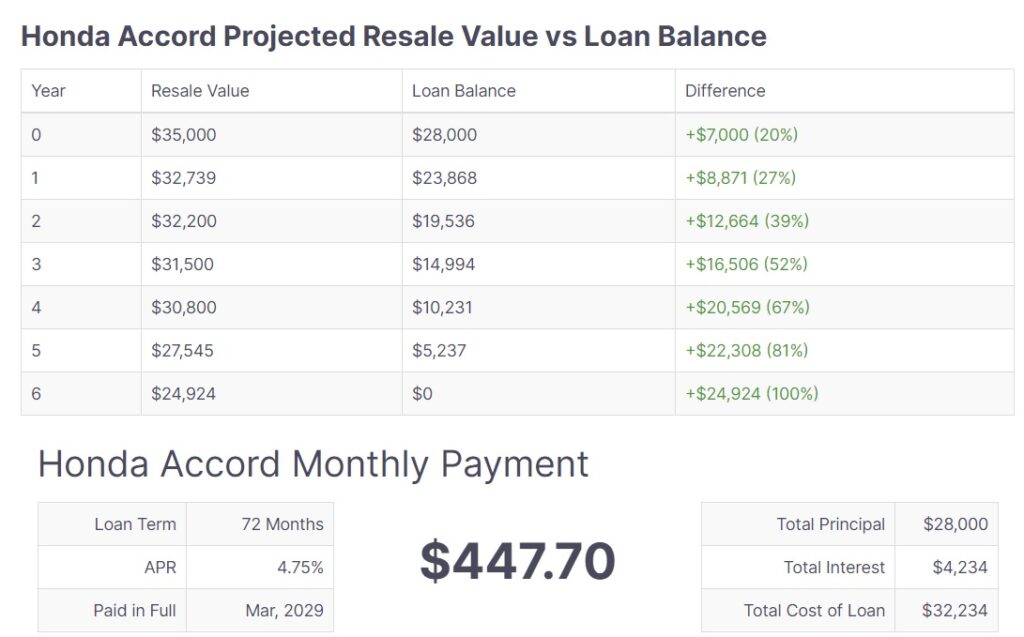
A reliable car payment calculator is an indispensable tool for potential car buyers. It helps you gauge whether a specific vehicle is affordable and prevents you from overextending your finances. While dealer salespeople may encourage you to focus solely on monthly payments, it’s essential to consider the overall price of the vehicle, interest rate, and loan term as well. This comprehensive approach ensures you make well-rounded decisions and avoid deceptive sales tactics that could cost you more in the long run.
Your monthly car loan payments depend on three primary factors:
The loan amount is the cost of the vehicle minus any down payment or trade-in value. The interest rate, determined by your credit score and market rates, represents the percentage charged by the lender for borrowing money. Lastly, the loan term refers to the duration of the loan, typically expressed in months or years. Balancing these factors helps you find the right car loan for your financial situation.
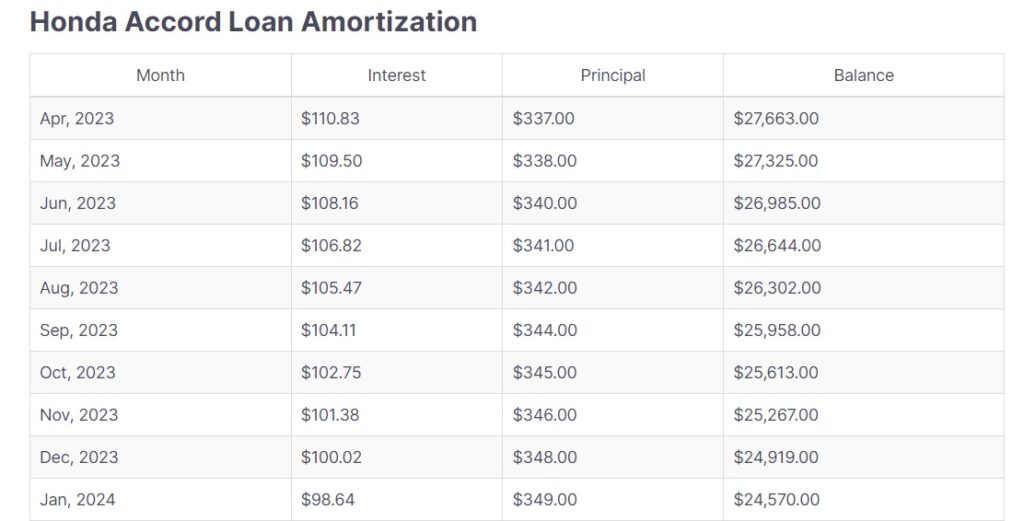
Car loan amortization is the process of breaking down the loan repayment into equal monthly installments over the loan term. It allows borrowers to understand how each payment contributes to the principal and interest components of the loan. In the initial phase of the loan term, a larger portion of the monthly payment goes towards interest, while a smaller portion is allocated to the principal. As the loan progresses, the interest component decreases, and the principal component increases, eventually leading to the loan’s full repayment. The CarEdge Car Payment Calculator shows your full amortization schedule, so you know exactly where your money is going.
Simplify your financing with one calculator that takes into account the loan amount, interest rate, and loan term to provide you with an accurate estimate. Plus, see resale value projections too!
Here’s how it works:
By following these simple steps, you can quickly and accurately estimate your monthly car payments and make informed decisions when purchasing a vehicle.
Visit caredge.com/financing to access the ultimate car payment calculator
Keep in mind that while monthly payments are an essential factor, they should not be the sole consideration when purchasing a vehicle. It’s crucial to account for the overall price, interest rate, and loan term to make the best decision possible.
CarEdge’s top-ranking car payment calculator simplifies the process of estimating your monthly payments, providing an accurate and user-friendly interface. By using this powerful tool, you can confidently navigate the car-buying process and find a vehicle that meets both your needs and financial requirements.

When you’re buying a car, one of the biggest decisions you need to make is how much money to put down. The down payment you make can have a significant impact on your monthly car payment, interest rate, and the overall cost of your loan. In this article, we’ll provide expert advice from CarEdge’s Ray Shefska and break down everything you need to know about choosing the right down payment for your budget.
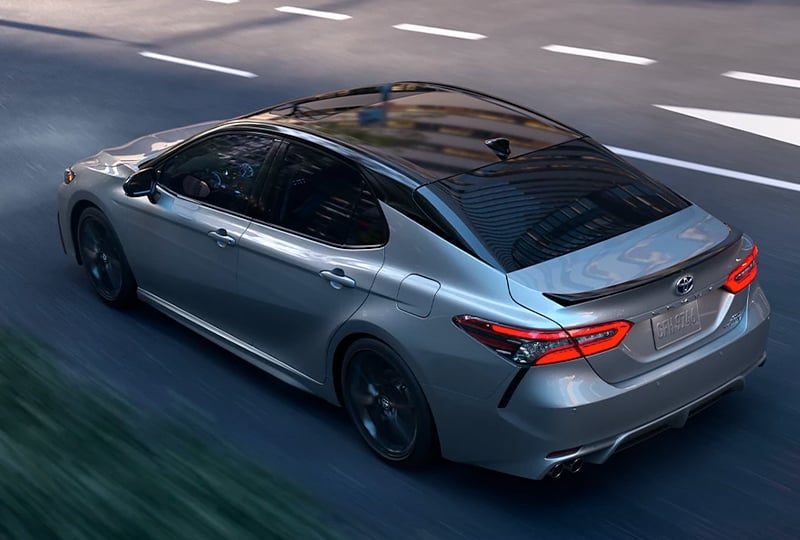
The down payment is the initial payment you make on a car, and it has a significant impact on the overall cost of your car. In this section, we’ll discuss the reasons why the down payment matters, including how it affects your monthly payments, interest rates, and loan terms.
CarEdge’s Ray Shefska shared this wisdom and advice: “I think that in today’s market the minimum down payment should be 20% of the total out-the-door price and if possible, upwards of 30%. That way, you have at least covered your taxes, tags, and doc fees, with some applied to the principal. Even with 20% down, I think that it still makes sense to look at GAP insurance, especially on a used car or a new car with a market adjustment.”
The credit bureau Experian says a 20% down payment might help shield you from depreciation. Depreciation refers to the ever-shrinking value of your car. The value of a new car declines about 20% in just the first year. Try out our depreciation calculator for the make and model you’re in the market for.
What does that look like in a real world example? It depends on the price of the car you’re thinking about buying. A 20% down payment for a $20,000 car is $4,000, but a 20% payment for a $60,000 car is $12,000. The monthly payments for each of these scenarios would be vastly different, despite having the same down payment percentage. More on that later.
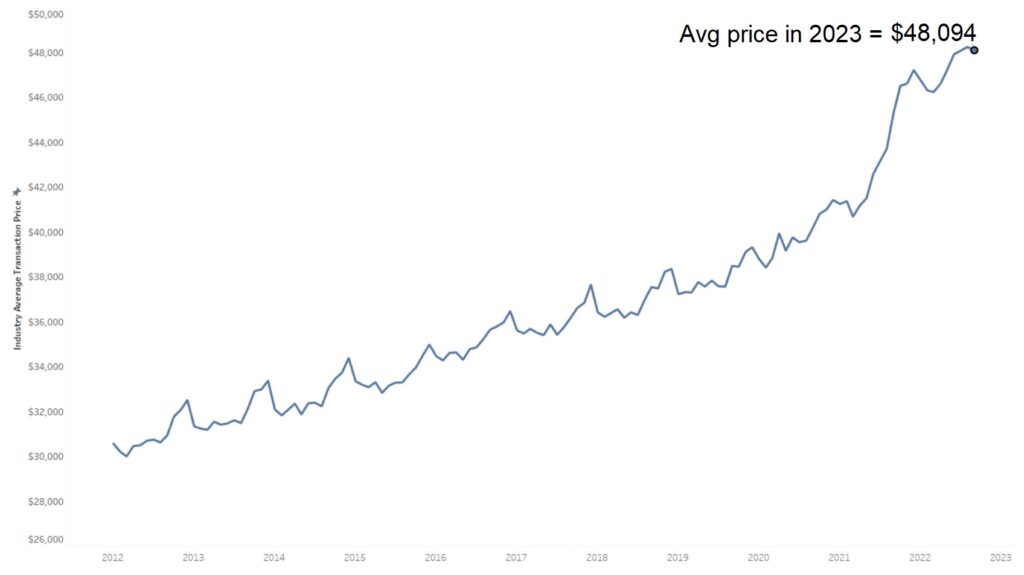
The average down payment on a car varies depending on whether it’s a new or used car. We’ll look at the latest data to see what the average down payment is today. We’ll also discuss why putting down a larger down payment can help protect you from depreciation.
In 2022, the average down payment on a new vehicle was just over $6,000, according to Edmunds. This is an increase of 27 percent from 2021, and is the highest it has ever been. The average down payment on used vehicles was $3,574 in 2022. For both new and used cars, the average down payment in 2022 was far below the recommended 20%. This partly explains why the average monthly payment for a new car is above $700/month in 2023. Over 15% of new car buyers pay over $1,000 a month, not including insurance or fuel.
The down payment amount can have a significant impact on financing. A larger down payment lowers the amount financed, which means a lower monthly payment and less interest paid over the life of the loan. It can also reduce the risk of being upside down on the loan. You don’t want to be end up owing more than the car is worth. On the other hand, a smaller down payment may lead to higher monthly payments and more interest paid over the life of the loan. It’s important to find the right balance between a down payment that fits your budget and financing that makes sense for you.
Auto loan rates are at a 14-year high. When your loan has a higher interest rate, you will avoid hundreds or even thousands of dollars in interest payments by making a larger down payment. Another option is to refinance to a lower rate as soon as possible. In many cases, by putting a few hundred more dollars down today, you’re saving much more in interest over the loan term.
According to the latest data from NerdWallet, the average auto loan rate in March 2023 is 6.07% for new cars and 10.26% for used cars. Borrowers with low credit scores qualify for even higher auto loan rates.
To better understand how your down payment affects your monthly car payments, we’ve created a table based on a used SUV priced at $35,000. Use this table as a guide to help you make an informed decision when buying a car and choosing a down payment amount.
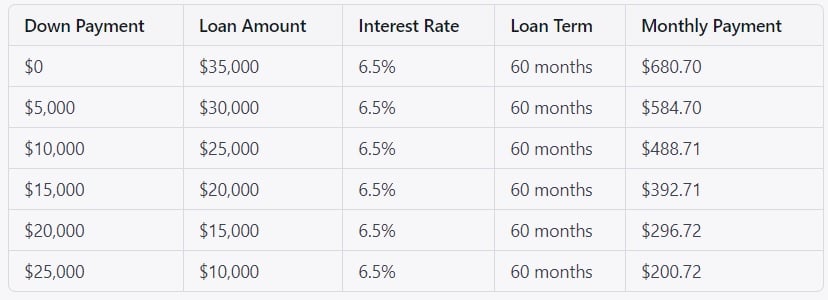
You can see that with a higher down payment, your loan amount decreases, and your monthly payment drops substantially.
What about interest? If you finance the FULL $35,000 in this example, you’d pay $6,088 in total interest over 60 months. However, if you put $10,000 down, you’re paying $4,300 in interest. The numbers don’t lie: a higher down payment will save you in the long run.

Why should you finance with a credit union? Credit unions offer the best rates, helping you save money for years to come. They offer lower rates than banks, have no hidden fees, and are known for their personal approach to customer service. Work with a CarEdge-approved credit union for the best rates. Drive your dream car at a rate you can afford.
We’ve got tools that empower you to make smarter car buying decisions. From the industry’s best car buying data package to CarEdge Concierge, we’ve got options to suit every driver and budget. CarEdge Coaches are here to help guide you through the car buying process. Our team of expert coaches is dedicated to providing personalized advice and support to help you save money and avoid costly mistakes. With CarEdge Coach, you’ll have access to one-on-one guidance from experienced professionals who understand the car buying process inside and out. Prefer a DIY experience? CarEdge Data is the perfect toolkit for you. Whether you have questions about financing options, down payment amounts, or negotiating with a dealership, we’re here to help you make informed decisions and achieve your car buying goals.

At CarEdge, we understand that car insurance can be a complicated and confusing topic. With so many variables and factors at play, it’s hard to know exactly how much you should be paying for car insurance. That’s why we’re here to help break down the average cost of car insurance in 2023 and what factors may impact your rates. We’ll also look at why car insurance rates are rising so fast.
According to NerdWallet’s 2023 rate analysis, the national average cost of car insurance has risen to $2,148 per year, or roughly $179 per month for full coverage insurance. However, it’s important to note that these are just averages, and your personal car insurance rate may vary based on several factors.
Factors that may impact your car insurance rates include your driving history, location, the type of coverage you select, and the make and model of your car. For example, if you have a poor driving record or a recent DUI, you can expect to pay more for car insurance than someone with a clean driving record and good credit.
To get an accurate quote for your specific situation, we encourage you to compare car insurance rates for free with CarEdge. In fact, 76% of drivers who shop around find a lower rate for the same coverage. So why not take a few minutes to see if you could be saving money on car insurance?
Take control of your car insurance costs and compare quotes for free with CarEdge today!
Despite a slight cooling in inflation, auto insurance prices are surging. How much have car insurance rates risen? Rates are up nearly 15% over the past year. A new report by Bankrate found that nationwide, premiums have risen more than $240 on average, topping $2,000 a year. Florida drivers saw the biggest jump, up nearly twice that amount to almost $3,200 a year. The higher cost of car insurance comes as supply chain issues are starting to ease, but the spike in repair costs is still driving insurance rates up across the board.
Insurance companies are fighting tooth and nail to spend less on claims. Claims tied up in court are one of the major driving forces for rising car premiums. “Most claims that are going through to the carriers are coming in with an attorney,” said Anakarina Callejas, an insurance agent at GreatFlorida who spoke to CBS News. “So, maybe a claim that could have been closed off rather quickly is now tied up in court, with higher and higher and higher expenses.” Those expenses are ultimately passed down to consumers.
Let’s take a closer look at how different factors may impact your car insurance rates.

Your driving history is one of the biggest factors that can impact your car insurance rates. If you have a clean driving record with no accidents or violations, you can expect to pay less for car insurance than someone with a history of accidents or tickets.
For example, a good driver with good credit can expect to pay an average of $2,148 per year for full coverage insurance. However, if you have an at-fault accident on your record, that price could jump to $3,164 per year. And if you have a recent DUI on your record, you can expect to pay even more, with an average cost of $3,933 per year for full coverage insurance, according to NerdWallet.
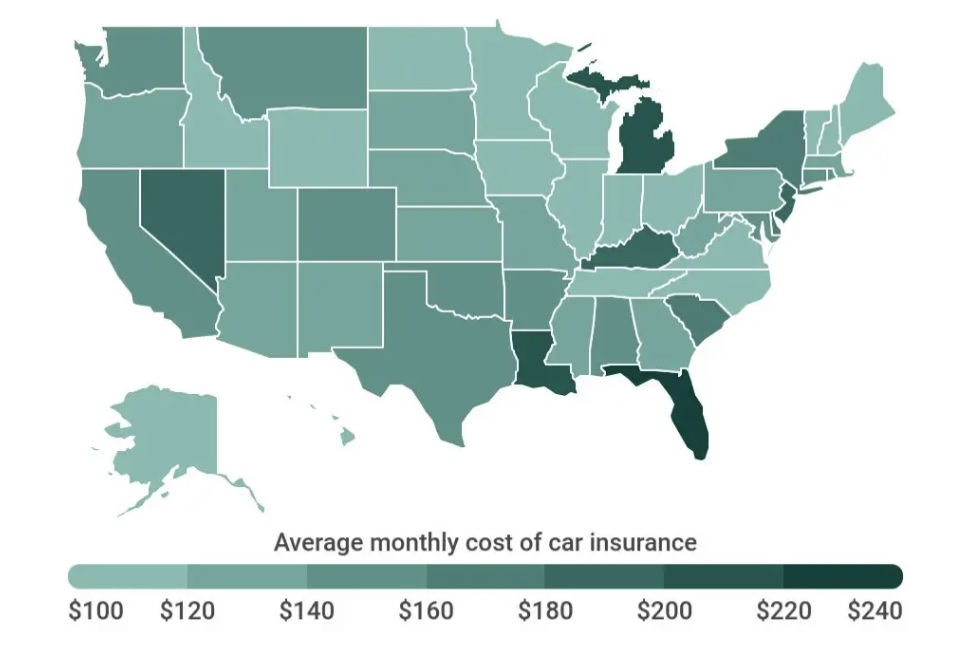
Your location can also impact your car insurance rates. If you live in a densely populated area with a high rate of accidents or thefts, you can expect to pay more for car insurance than someone who lives in a rural area.
For example, if you live in a city with a high rate of car thefts, your comprehensive insurance may be higher than someone who lives in a low-theft area. It’s important to consider these factors when you decide to shop around for better rates.
The type of coverage you select can also impact your car insurance rates. Full coverage insurance, which includes liability, comprehensive, collision, and additional insurance required by your state, is generally more expensive than minimum coverage insurance.
For example, a good driver with good credit can expect to pay an average of $685 per year for minimum coverage insurance, compared to $2,148 per year for full coverage insurance. However, it’s important to note that minimum coverage insurance may not provide enough protection in the event of an accident, so it’s important to consider your individual needs when selecting the right coverage.
Finally, the make and model of your car can also impact your car insurance rates. We covered this in detail in a recent blog. Cars that are more expensive to repair or that have a high rate of theft may be more expensive to insure than cars that are less expensive to repair or have a lower theft rate.
For example, if you have a luxury car or a sports car, you can expect to pay more for car insurance than someone with a more modest vehicle. It’s important to consider these factors when selecting a car to purchase.
These Are the Most and Least Expensive Cars to Insure
Several personal factors can impact your car insurance rates. Let’s break down some of the most common factors:
Driving Record: Your driving history is a key factor in determining your car insurance rate. If you have a clean driving record, meaning no accidents, DUIs, or other traffic violations, you can expect to pay less for car insurance than someone with a history of accidents or violations.
Credit Score: Your credit score can also impact your car insurance rate. Insurers use a credit-based insurance score to calculate rates in most states, which is similar to your regular credit score. If you have good credit, you can generally expect to pay less for car insurance than someone with poor credit.
Location: Where you live can also impact your car insurance rate. Insurance companies consider factors such as crime rates, population density, and weather patterns when setting rates for different regions. If you live in an area with a high crime rate or a lot of accidents, you can expect to pay more for car insurance than someone in a safer area.
Coverage Selection: The amount of coverage you select also affects your car insurance rate. If you opt for minimum coverage, you’ll pay less per month, but you’ll have less protection in the event of an accident. On the other hand, if you choose full coverage insurance, you’ll pay more per month, but you’ll have more protection in case of an accident.
Car Make and Model: The type of car you drive can also impact your car insurance rate. Cars that are more expensive to repair or replace can cost more to insure. For example, a sports car will generally cost more to insure than a sedan. These are the most and least expensive cars to insure today.
While some factors that affect your car insurance rates are out of your control, there are several things you can do to lower your rates:
Shop Around: Comparison shopping is one of the best ways to find a lower car insurance rate. CarEdge can help you compare quotes from multiple insurance providers for free, so you can find the best rate for the coverage you need. In fact, 76% of drivers who shop around find a lower rate for the same coverage.
Compare insurance quotes with expert help available (100% FREE)
Increase Your Deductible: Raising your deductible, or the amount you pay out of pocket in the event of an accident, can lower your monthly premium. However, make sure you can afford to pay the higher deductible if you need to file a claim.
Bundle Your Insurance: Many insurance companies offer discounts if you bundle your car insurance. You may want to bundle with homeowners or renters insurance.
Maintain a Good Credit Score: As mentioned earlier, your credit score can impact your car insurance rate. Maintaining a good credit score can help you qualify for lower rates.
Choose a Car That’s Cheaper to Insure: Before you buy a car, check with your insurance provider to see how much it will cost to insure. Choosing a car that’s cheaper to insure can help you save money on your car insurance rates. Check out the huge gap in insurance costs for new cars.
The national average cost of car insurance is $2,148 per year, according to NerdWallet’s 2023 rate analysis. However, your personal car insurance rate will vary based on several factors, including your driving history, location, coverage selection, and car make and model. By understanding these factors and taking steps to lower your rates, you can save money on car insurance without sacrificing the coverage you need.
Remember, comparing car insurance quotes is one of the best ways to find a lower rate. CarEdge can help you compare quotes from multiple providers for free, so you can find the best rate. Don’t overpay for car insurance – start comparing quotes today.